
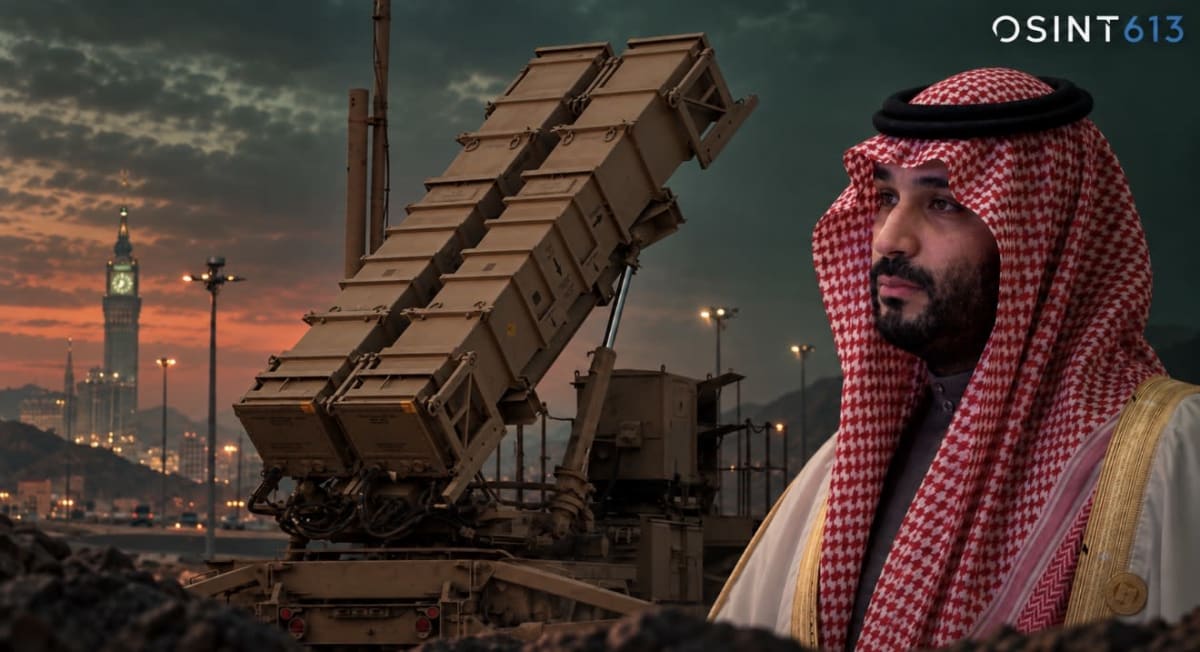

The last 72 hours have exposed the pressure on Saudi Arabia as the Houthis tighten their grip on the Red Sea, attack inside the kingdom and seek a separate understanding with Washington.
As of 10:15 PM Israel time on September 17, Saudi aircraft were striking targets across Yemen while Houthi missiles and drones continued reaching deep into the kingdom. The fighting is unfolding alongside a wider economic crisis, with Saudi Arabia’s main route for bypassing the Strait of Hormuz shut and its air defense stocks reportedly running low.
The Gulf’s defensive umbrella is a stockpile, and every interception consumes a missile that may take months or years to replace. The Houthis are testing that reality while using their control of Yemen’s Red Sea coast to threaten Saudi shipping and offer Washington a separate maritime arrangement.
What the Houthis Now Control

The Houthis took effective control of Yemen’s entire Red Sea coastline last week, including Mokha and Perim Island in the Bab el Mandeb Strait. They also seized the Greater and Lesser Hanish islands, giving the movement positions around one of the world’s most important maritime chokepoints.
The Houthis declared a blockade of Saudi Red Sea ports in late July and began targeting tankers owned or operated by Saudi companies. Commercial ships continue to transit Bab el Mandeb, but Saudi vessels remain exposed. That territorial leverage is what gives the Houthi offer of safe passage to other ships its weight.

Fighting Across Yemen
Saudi aircraft have carried out strikes across Taiz, Lahj, Al Jawf, Hajjah, Marib, Saada and Al Bayda. Fresh attacks on Thursday reportedly hit Hajjah and areas around Taiz, where Houthi media said three telecommunications towers were destroyed. The same outlets reported one civilian killed in Taiz and another wounded in Abs, while also claiming three children were killed by Saudi backed Yemeni forces. Those reports have not been independently confirmed.
The Houthis claim Saudi Arabia conducted more than 450 strikes during the past week, including 54 within a single 24 hour period. Saudi backed government forces say they are inflicting heavy losses across several fronts. Rashad al Alimi, who heads Yemen’s Saudi backed Presidential Leadership Council, told the French ambassador that recent Houthi gains along the Red Sea coast were temporary.
Attacks Inside Saudi Arabia
The Houthis said they attacked King Khalid Air Base at Khamis Mushait and Aramco facilities in Yanbu using missiles and drones. Saudi Arabia has not confirmed damage at either location. Houthi military spokesman Yahya Saree described the campaign as a “siege for siege equation” and said attacks deep inside Saudi Arabia would continue until the blockade on Yemen was lifted.
Saudi authorities say more than 70 people were wounded in Houthi attacks earlier in September. Another 13 civilians were injured Tuesday in attacks around Khamis Mushait, Abha and Taif, with seven homes and two vehicles damaged. In the latest incident over Taif, falling debris from an intercepted drone killed a Yemeni resident and wounded a Saudi citizen and a Pakistani resident. Buildings and vehicles were also damaged.

Saudi Arabia said another drone was intercepted south of Mecca at about 6:50 PM on September 15, before it entered the city’s restricted airspace. Wreckage reportedly fell south of the city. The coalition called it only the second attempted Houthi attack on Mecca, following a ballistic missile launch on July 27, 2017, and the first Mecca security alert in nearly a decade.
The Houthis denied targeting Mecca, while Abdul Malik al Houthi called the accusation a “heinous lie” intended to mobilize Muslim opinion against his movement. Pakistan and the Organization of Islamic Cooperation condemned the alleged attack. Iran said any attack on Mecca would be condemnable but argued that the interception of a drone did not establish its intended target.
Saudi F-15 Loss
The Houthis also claim they shot down a Saudi F15 over Marib. Footage showed fighters gathered around burned wreckage and holding what appeared to be part of a wing carrying Saudi markings. Different accounts of Saree’s statement described the weapon as either a locally produced surface to air or air to air missile.

Saudi Arabia has not acknowledged losing an aircraft.
The Oil Shock
Saudi Arabia had rerouted about 5 million barrels a day through the 745 mile East West pipeline to Yanbu after the Strait of Hormuz became unusable. Aramco Chief Executive Amin Nasser said the pipeline did more to cushion the supply shock than emergency reserve releases.

The Saudi Energy Ministry confirmed that the pipeline was shut after the September 11 attack. CNBC and NBC reported that the drones were launched from Iraq, not Yemen, and Saudi Arabia said it would not retaliate for now following a request from Iraq’s prime minister.
Saudi officials estimated repairs would take three to five weeks, while some industry estimates put the timeline at five to six weeks. Kpler analyst Matt Smith estimated that Saudi Arabia could lose about 120 million barrels if the pipeline remains closed for a month and storage at Yanbu is depleted. The International Energy Agency said Saudi crude supply had fallen to its lowest level in more than three decades. Brent settled at $105.66, WTI at $101.28, average U.S. gasoline reached $4.32 and diesel hit a record $6.23.
The Interceptor Math
Saudi Arabia has reportedly sought air defense support from France, Britain, Pakistan and Egypt. The Wall Street Journal reported that U.S. forces fired between 60 and 70 Patriot interceptors and more than 12 THAAD interceptors during a single week against roughly 20 Iranian ballistic missiles aimed at American forces in Jordan. That is at least three interceptors for every incoming missile.

Washington has refused Saudi requests to join a direct campaign against the Houthis. Instead, CENTCOM established a task force for intelligence sharing and planning support, hosted senior military leaders from eight countries in Germany and sent more than 100 advisers to assist the Saudis.
Saudi Arabia’s regional defense agreement has produced contradictory messages. Turkish and Pakistani officials told the Associated Press that they had received no Saudi request for support, while a Turkish official said the alliance still needed to be institutionalized before becoming operational. Pakistan’s Defence Minister Khawaja Asif then said Thursday that the time had come to implement the Mecca agreement.
Washington’s Separate Channel
Houthi representatives, including sanctioned official Mohammad Abdulsalam, met U.S. Embassy diplomats in Muscat to preserve the May 2025 ceasefire. The U.S. ambassador did not attend. The Houthis reportedly promised not to attack American vessels while maintaining their campaign against Saudi shipping.
President Donald Trump said the Houthis had contacted his administration, wanted the U.S. to remain outside the war and were allowing most ships to pass while maintaining restrictions on Saudi vessels. Vice President JD Vance confirmed that Washington was in direct contact with the Houthis and constant contact with Saudi Arabia.
The next diplomatic test will come at the United Nations General Assembly, where Trump is expected to meet Gulf leaders. Saudi Arabia enters those talks with its Hormuz bypass damaged, its interceptor stocks under pressure and the Houthis holding the coastline overlooking Bab el Mandeb.