
 Yated Ne'eman
The Giant Who Belonged to Another World: The Vilna Gaon Upon His 229th Yahrtzeit
Entering the Boundless Torah and Towering Spiritual World of the Vilna Gaon
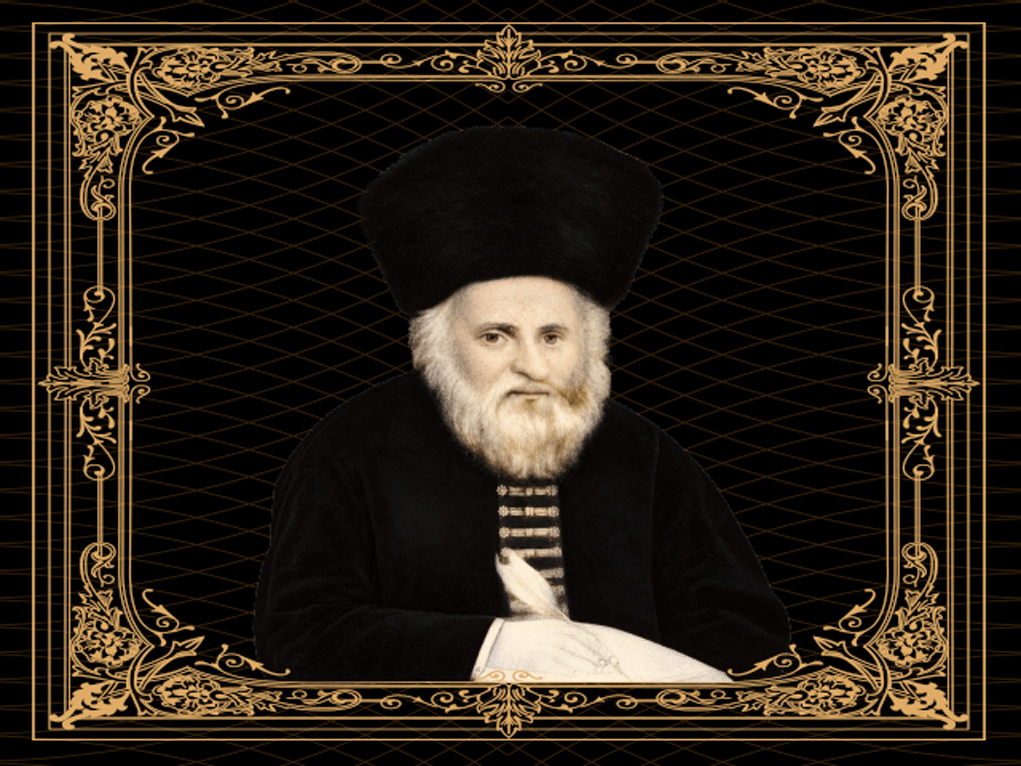
Upon the 229th anniversary of the histalkus of rabbon shel Yisroel, Rav Eliyohu of Vilna, whose yahrtzeit falls on the 19th of Tishrei, in the midst of the days of Chag HaSukkos, we have been privileged to present to the tzibbur of bnei Torah with a special, wide-ranging essay devoted to the exalted and extraordinary world of the Gra, one of the singular figures in the history of mesoras haTorah throughout the generations.
The stature of the Gra cannot be confined within the bounds of any particular era, sefer, or individual field of Torah. His light extends across Shas and poskim, mikra and Medrash, nigleh and nistar, halacha and dikduk, and his imprint was left upon the very form of Torah learning and upon the character of the bais medrash for generations to come.
For this special issue, Rav Michoel Sorotzkin graciously undertook to place before us a comprehensive maamar, the fruit of extensive iyun in the sources and in the teachings of the Gra and his talmidim. His purpose is not merely to recount the greatness of the Gra, but to open for the learner a window into the Gra’s unique derech hamachshovah.
In his distinctive style, by now well known to the readers of the Yated, broad-ranging bekius is woven together with penetrating lomdus, sensitivity to the precise language of the pesukim, and a constant search for the inner structure through which seemingly distant details are revealed as parts of a single, unified sugya. Through his study of the Gra’s Torah concerning Chag HaSukkos, an entire world unfolds before the reader, a world in which a single letter, a subtle change of wording, the calculation of the korbanos, or a halachic shiur can become a gateway to understanding an entire mehalech in Torah.
This is not merely a biographical essay, nor is it simply a collection of facts and chiddushim. Rather, it is an attempt to draw closer to the tzuras haTorah of the Gra, to his capacity to perceive the entirety of the Torah as one seamless whole, and to that wondrous greatness regarding which his talmidim and the gedolei hadoros who followed him testified in terms that we are scarcely accustomed to finding in reference to others.
Between the lines emerges the towering figure of the Gra: the sheer intensity of his hasmodah, the purity of his ameilus, the vast breadth of his knowledge, the incisiveness of his conclusions, and the profound depth of his kedusha. And it becomes apparent how, specifically on Chag HaSukkos, when shiur and sod, halacha and penimiyus, number and meaning all converge, one can gain some small taste of the unique world of one for whom the entirety of Torah stood as a single edifice.
There are gedolim whose greatness can be described through the seforim they authored, the talmidim they raised, the kehillos they led, or the mark they left upon a particular generation. The Vilna Gaon belongs to a far rarer order. Even the familiar descriptions of his hasmodah, his almost limitless bekius, his command of Bavli and Yerushalmi, Medrash, Tosefta, Rishonim, dikduk, Kabbolah and every chamber of Torah, true as they are, remain insufficient, because they describe what he possessed rather than what he was. On 19 Tishrei, during Chol Hamoed Sukkos, Klal Yisroel marks the 229th yahrtzeit of Rabbeinu Eliyohu of Vilna, yet the real task is not to reconstruct a biography. It is to approach, however inadequately, a mind and a neshomah in which the entire Torah seemed to exist as one indivisible reality. A variant spelling in Chumash, a halacha in Menochos, a line of Zohar, a posuk in Tehillim and a din in Rambam did not occupy separate compartments. They illuminated one another. What appears to an ordinary learner as a collection of distant mareh mekomos could, to the Gra, be one sugya whose parts had simply been scattered across Shas, poskim, Tanach and nistar.
This is perhaps the most essential key to understanding both the majesty and the difficulty of the Gra. His brevity can deceive. A few words in Biur HaGra may stand upon an enormous, invisible foundation of sources weighed against one another until only the conclusion remains visible. Rav Chaim Volozhiner repeatedly depicts a rebbi whose knowledge was not merely encyclopedic but structured, ordered, and tested against the totality of Torah. He also records the Gra’s refusal to receive Torah through supernatural revelation when such knowledge could come only as a gift without toil. The Gra wanted Torah through ameilus, through the chochmah that Hakadosh Boruch Hu grants a person who labors until the sugya yields. That fact is indispensable. His greatness was not a miracle that spared him effort. His greatness revealed itself precisely in the intensity of the effort, in the demand that every word be accounted for and every conclusion rest upon the deepest possible foundation.
Sukkos offers an unusually fitting window into this world. Few Yomim Tovim contain such an extraordinary union of the exact and the exalted. A sukkah is measured in tefochim and amos, yet it is also the tzeila dimeheimnusa. The four minim are governed by exact physical dinim, yet they become instruments of avodah through which the forces of din are sweetened. The korbanos of the Chag can be counted mathematically, yet Chazal connect their 70 porim to the 70 nations. The water poured upon the mizbei’ach is measured in a kli, yet its purpose is the brocha of the year’s rain. Within Sukkos, number and symbol, halacha and sod, measure and mystery constantly meet. It is therefore striking how naturally the Torah of the Gra on Sukkos reveals the qualities that defined him: breadth without vagueness, precision without narrowness, and a power to uncover unity where everyone else sees fragments.
To Know A Masechta
The introduction known as Aliyos Eliyohu, printed with Peas HaShulchan, records a scene that deserves to be read not merely as a story of memory but as a definition of the Gra’s conception of Torah knowledge. Shortly before Sukkos, the Gra told those standing before him that a talmid chochom should know at least one masechta by heart so that even while traveling, or while sitting in darkness without access to a sefer, he would never be severed from the mitzvah of v’hogisa bo yomam v’laylah. One of the talmidim accepted the charge with extraordinary seriousness and reviewed Maseches Sukkah again and again until he could recite it fluently. During Chol Hamoed he came before the Gra and proudly announced that he now knew the masechta baal peh. The Gra did not ask him to recite a daf. He asked instead how many machlokos appear between Rabi Meir and Rabi Yehudah, how many between Rabi Akiva and Rabi Tarfon, how many between Abaye and Rava, and how many among the other pairs of Tanna’im and Amora’im who shape the masechta. The talmid could not answer. The Gra then began to enumerate them, arranging the masechta by its sugyos, shittos, and recurring patterns, incorporating the Tosefta and Yerushalmi, and showing that what seemed to the talmid like a sequence of dapim was in fact a single constructed whole.
The distinction is profound. The talmid had achieved memory. The Gra possessed architecture. To know a masechta meant not simply to carry its words but to perceive its inner arrangement, to know which din belongs with which shittah, where one machlokes echoes another, and how a later sugya redefines an earlier one. In the course of that same demonstration, the Gra calculated that the number of invalid sukkos discussed through the sources corresponds to the gematria of the deficient spelling of sukkah, while the number of valid sukkos corresponds to the fuller spelling. Even here, the counting is not a parlor display of astonishing memory. It reflects a mind in which the entire masechta could be reorganized at will because every individual sugya had found its precise place within a total structure. This quality will return repeatedly in the chiddushim that follow. Again and again, the Gra sees a word or a letter only after seeing the entire system to which it belongs.
Minchosam V’niskeihem
The most elaborate of these cheshbonos begins with a seemingly insignificant letter. On the first three days of Sukkos, the Torah introduces the accompanying flour offerings and nesochim with the expression u’minchosam v’niskeihem. On the fourth day, in Bamidbar 29:24, the opening vav disappears, and the Torah writes simply minchosam v’niskeihem. The Gra explains this change through a combination of two mishnayos and a gemara in Menochos. The mishnah in Menochos 9:4 teaches that the nesochim of porim may be combined with those of eilim. The mishnah in Menochos 12:4 establishes that a voluntary mincha of 60 esronim may be placed in one kli, while 61 must be divided. The gemara in Menochos 15b teaches that a person may bring his korban on one day and its nesochim later. These dinim allow the first three days of Sukkos to be calculated as a single unit.
On the first day there are 13 porim. At three esronim for each par, they produce 39, and the two eilim add another four, yielding 43. On the second day, 12 porim produce 36, and the eilim again add four, giving 40. On the third day, 11 porim produce 33, plus four from the eilim, giving 37. Forty-three, 40, and 37 total exactly one 120 esronim. The first three days therefore fill two keilim of 60 with mathematical precision. The connecting vav remains appropriate throughout that unit. Once the third day is complete, however, both keilim are filled. The fourth day cannot join backward into them and begins a new cheshbon. The Torah therefore writes minchosam without the vav. The omitted letter marks the boundary between two halachic units. This, in essence, is the Gra’s cheshbon.
Building on the Gra’s explanation, it would appear to reveal something about the nature of the Mishnah’s statement that the nesochim of porim and eilim may be mixed. One might have understood this simply as a permissive rule, a heter to combine two materials when convenient. But the Gra’s cheshbon treats them as belonging naturally to one calculation. The din of me’arvin niskei eilim b’niskei porim is therefore not merely procedural. It reveals a common halachic identity in their mixture. Their compatibility is sufficiently essential that the Torah can build a textual vav around it. The missing vav on day four thus becomes a window not merely into arithmetic but into the very definition of the menochos themselves.
One may perhaps carry the cheshbon further. Across all seven days of Sukkos, 70 porim were brought. At three esronim per par, their menochos amount to 210. Fourteen eilim were brought, two each day, and at two esronim each, they contribute another 28. Because the menochos of porim and eilim belong to the same class of thicker mixture and may be combined, the total is 238 esronim. That number is the gematria of Rochel. On its own, such a gematria might be no more than striking, but it may be placed within a broader structure by drawing upon the Gra’s own words elsewhere.
It may be added in this connection that, in his peirush to Shir Hashirim 1:2, the Gra asks why the Torah changes its language regarding the se’ir of the Sukkos Mussofim. On the first, second, and fourth days it speaks of se’ir izim, while on the third, fifth, sixth, and seventh days it omits izim and speaks simply of a se’ir chatas. The Gemara in Sukkah 55b states that the 70 porim correspond to the 70 nations. The Gra explains, based upon the Zohar, that those nations are fundamentally rooted in Yishmoel and Eisov. The arithmetic of the porim divides exactly into two groups of 35. The first day contributes 13 to Yishmoel, the second adds 12 and brings the total to 25, and the fourth day’s ten completes 35 — precisely on those days the Torah uses se’ir izim. The remaining days contain eleven, nine, eight, and seven porim, again totalling 35, and these correspond to Eisov, the ish so’ir. There the word izim disappears.
Building on this division, Hoshana Rabbah takes on a particular significance. Rabbeinu Bachya, in Kad HaKemach under Aravah, calls Hoshana Rabbah “Yom Hachosam Hagadol” and connects its completion to the conclusion of the 70 porim. According to the Gra’s arrangement, the final day belongs to the portion corresponding to Eisov. At that point, the gemara in Bava Basra 123b becomes especially luminous. Chazal explain that Yaakov waited for the birth of Yosef because the seed of Eisov is ultimately delivered into the hand of the seed of Yosef, as the posuk declares, “V’hayoh Bais Yaakov eish, u’Bais Yosef lehovah, u’Bais Eisov l’kash.” Rashi on Bereishis 30:25 calls Yosef the sitno shel Eisov, the adversary of Eisov. Medrash Tadshe records that Yosef was born on the 21 of Tishrei, Hoshana Rabbah. Thus the very day that completes the 70 porim and concludes the segment associated with Eisov is the day upon which the force destined to oppose Eisov entered the world.
This line of thought leads from Yosef directly to Rochel. Yirmiyohu 31 gives us the eternal image of Rochel weeping for her children, and Hakadosh Boruch Hu responds, “Mini koleich mibechi v’einayich mi’dimoh,” with the promise that the children will return to their border. Rashi on Bereishis 48:7 explains that Yaakov buried Rochel on the road by Divine instruction so that when Nevuzaradan would lead her descendants into exile, she would emerge and cry on their behalf. A Medrash cited in the material places that exile on the 21st of Tishrei, Hoshana Rabbah. The gemara in Eruvin 19a speaks of tears descending like the waters of the shisin, and the Maharsha explains that those tears rise before Hakadosh Boruch Hu in place of nesochim. The 238 esronim of the combined par and ayil menochos now acquire an extraordinary resonance: they equal Rochel precisely at the point where the nesochim of Sukkos, the completion of the 70 porim, the birth of Yosef, and the tears of Rochel meet.
One may suggest one final remez. The word dimoh has the numerical value 119. The posuk speaks of Rochel’s eyes and her tears, einayich mi’dimoh. Two eyes, two tears, two times 119, again produce 238. What began with the missing vav of minchosam has opened into a structure that reaches from Menochos to Shir Hashirim, from the 70 nations to Yosef, from Hoshana Rabbah to Rochel’s tears. The power of the approach lies precisely in the order in which it develops. The edifice begins with exact halachic measurement, not symbolism. Only after the din has been established does the broader pattern emerge. That sequence is crucial to understanding the intellectual world of the Gra.
Achalkah Shechem
The posuk in Tehillim 108:8 states, “Elokim dibber b’kodsho e’elozoh, achalkah Shechem, v’Emek Sukkos amadeid.” A remarkable explanation is cited in the name of the Gra. The word Shechem has the numerical value 360, but the posuk says achalkah Shechem, I shall divide Shechem. If the value of the shin, 300, is divided in two, one receives 150. The chaf, 20, divided in two yields ten. The mem, 40, divided in two yields 20. These numbers correspond to the central shiurim of a sukkah. A minimum sukkah is seven tefochim wide and ten high. A wall seven by ten contains 70 square tefochim; two complete walls therefore contain 140, and a third wall one tefach wide and ten high adds ten, bringing the total to 150. The minimum height is ten tefochim, while the maximum height is 20 amos. Thus the three divided letters of Shechem yield 150, 10 and 20. This, in essence, is the remarkable explanation cited in the name of the Gra. One may add that the posuk’s next words, v’Emek Sukkos amadeid, continue the same language of measurement.
One may add that the minimum floor of the sukkah, seven by seven, contains 49 square tefochim, while amadeid itself has the gematria of 49. Yet there is an even more lomdishe possibility. The Rambam in Hilchos Sukkos 4:2 rules that where two complete adjacent walls stand, the third dofen may consist of slightly more than a tefach placed within three tefochim of the wall, allowing lavud to produce a halachic width of four tefochim. The Rambam in Hilchos Shabbos 16:2 establishes four tefochim as the minimum significant width of a mechitzah. If one calculates not merely the physical board but the halachic wall created through lavud, the two full walls contribute 140, and the third contributes forty, producing 180. The value of Shechem, 360, divided in half, is exactly 180.
The remez therefore raises a genuine conceptual question. Is lavud merely a rule that permits us to ignore a gap, or does it create a halachic reality in which the empty space itself is treated as part of the mechitzah? If the latter, then achalkah Shechem may be alluding not to the physical material of the sukkah but to the legal surface of its dofonos. In this way, a gematria becomes a doorway into the cheftza of a mechitzah. That transition from textual hint to halachic definition is precisely what makes the vort more than cleverness.
One may further suggest that the posuk contains still another dimension. Bereishis 35 describes Yaakov’s arrival at Beis El after leaving Shechem and repeatedly says that Elokim dibber ito, spoke with him there. The Torah records that Yaakov erected a matzeivah and poured a nesach upon it. Targum Yonasan explains that Yaakov poured both wine and water, corresponding to the wine and water that Yisroel would later pour on Sukkos. The opening words of the posuk in Tehillim can now be read anew. “Elokim dibber b’kodsho e’elozoh” evokes the repeated dibbur of Elokim at Beis El and points toward the future avodah of wine and water in the Bais Hamikdosh, an avodah accompanied by the extraordinary simcha described by the Rambam in Hilchos Lulav. Then comes achalkah Shechem: Yaakov separated from Shechem and ascended to Beis El. The conclusion, v’Emek Sukkos amadeid, returns to Sukkos and to the nesochim that Yaakov’s act foreshadowed. The inner letters of Sukkos carry the value 26, and half of Shechem is 180; together they equal 206, the gematria of dibber. The entire posuk can therefore be read as one unified structure linking Divine speech, Yaakov’s departure from Shechem, his pouring of wine and water, and the future simcha of Sukkos in the Mikdosh.
V’shofach Lo Kiton Al Ponov
The Mishnah in Sukkah 28b teaches that when rain falls and forces a person to leave the sukkah, the situation resembles an eved who comes limzog kos l’rabbo, to mix a cup for his master, and the master pours the kiton into his face. The Gra, in Yahel Or on Parashas Pinchas, explains the moshol through the transition from din to rachamim that characterizes Tishrei. Rosh Hashanah and Yom Kippur are days dominated by din, while Sukkos brings the avodah of hamtokas hadinim through the mitzvos that surround the Jew during the chag. The language of mezeg is therefore exact. Wine represents din and gevurah, while water represents chesed. Mixing water into wine softens its sharpness. The eved who comes to mix the cup represents the Jew entering the sukkah to sweeten din through chassodim. If rain drives him from the sukkah, the very water that was meant to affect the mezeg is cast back. The moshol is therefore not merely one of rejection. Every detail describes the inner avodah of the day. This, in essence, is the Gra’s explanation of the moshol.
Building on this, one may note that the word “kos” itself deepens the structure. The numerical value of kos, with the relevant reckoning, corresponds to Elokim, the Sheim associated with din. The Jew who enters the sukkah comes, in the language of the Gra, to mix that kos with chassodim. This enables us to return to the extraordinary calculation in Aliyos Eliyohu concerning the number of valid and invalid sukkos discussed throughout the sources. The Gra counted 85 sukkos pesulos, corresponding to sukkah in its deficient spelling, and 91 sukkos kesheiros, corresponding to the fuller spelling sukkah. These numbers are not merely another demonstration of memory. Placed beside the Gra’s explanation of the kos, they may be seen as part of the same conceptual structure.
The word sukkah choseir has the value 85; with the kollel it reaches 86, the value of Elokim, representing din standing by itself. Sukkah malei has the value 91. In his Likkutim, based upon the Zohar, the Gra explains that 91 is the joining of the Sheim Havoyoh, whose value is 26, with Adnus, whose value is 65. The Gemara in Sukkah 9a teaches that Sheim Shomayim rests upon the sukkah, deriving from Chag HaSukkos shivas yomim laShem, that just as the Chagigah belongs to Hashem, so too the sukkah possesses kedusha. The letters themselves may be read in this light. The outer letters, samech and hei, equal 65, corresponding to Adnus. The inner letters, vav and chaf, equal 26, corresponding to Havoyoh. The Sheim of rachamim rests within the Sheim associated with din. The valid sukkah, 91, is therefore the joining of the two sheimos, while the deficient sukkah remains at the level in which the full union has not taken place.
The Cheshek Shlomo, in his notes at the end of Maseches Sukkah, takes the matter still further. He notes that throughout Tanach the word sukkah is ordinarily written without the vav, and initially questions the mekubolim who build upon the full spelling whose gematria is 91. Where, he asks, does such a malei spelling actually appear? After searching, he records that he found the exceptional form in Tehillim 76:3, “Vayehi v’Sholeim sukko, u’Me’onoso b’Tzion.” Precisely where the posuk speaks of Sholeim, completeness, sukkah itself is written malei. He explains that in Olam Hazeh, while the Divine Name and throne are not yet revealed in their complete form, sukkah appears deficient. Le’osid lovo, when the Sheim is revealed in sheleimus, “vayehi v’Sholeim sukkah,” the sukkah too becomes malei.
Taken together, one may suggest that the entire sequence forms one coherent structure. The Gemara in Kiddushin 71a teaches “lo k’she’Ani nichtov Ani nikra,” that the Divine Name is written one way but pronounced through Adnus. The Maharsha explains the relationship of the Sheimos to din and rachamim and the future revelation in which the concealment will be removed. The kos as explained by the Gra, the water and wine, the 85 Sukkos pesulos, the 91 kesheiros, Havoyoh within Adnus, and the exceptional malei spelling in vayehi v’Sholeim sukkah are not separate vertlach arranged beside one another. They express one yesod from different directions. Sukkos is the movement from unmixed din toward the joining of din and rachamim, and the very spelling of the mitzvah records that movement.
Titzpeneim B’sukkah Me’riv Leshonos
In Tehillim 31:21-23 Dovid Hamelech says: “Tastireim b’seiser Ponecho me’ruchsei ish, titzpeneim b’sukkah me’riv leshonos. Boruch Hashem ki hifli chasdo li b’ir motzor. Va’ani omarti b’chofzi nigrazti mineged Einecha, ochein shomato kol tachanunai b’shavi Eilecha.”
The Gra, as cited in Nachalas Dovid, explains the words “titzpeneim b’sukkah me’riv leshonos” in a remarkable manner. The sukkah possesses a special segulah to protect from the destructive force of speech, for it is essentially a sukkas shalom. This is reflected in the very letters of sukkah. Its four letters emerge from four of the five motzo’os hapeh: samech from the teeth, vav from the lips, chaf from the palate, and hei from the throat. Only the letters whose motzo is the loshon itself are absent. Thus the word sukkah is formed through the organs of speech while conspicuously excluding the tongue, alluding to its power to shelter a person from riv leshonos. This, in essence, is the Gra’s explanation as cited in Nacholas Dovid.
From this point, the depth of this yesod may be further illuminated in light of Chazal concerning the Churban. In Gittin 57b, on the posuk “b’shot loshon teichovei,” Rashi explains that the destruction of the Bais Hamikdosh and the death of multitudes came through loshon hara. The Maharal in Chiddushei Aggados broadens this further and writes that the roots of all the great destructions are bound to cheit haloshon, beginning with the meraglim. Likewise, the Medrash cited in Otzar Hamidrashim traces the division of Malchus Yisroel and ultimately the Churban to the loshon hara of Tziva concerning Mefivoshes. The Gra’s description of the sukkah as protection from riv leshonos therefore acquires an entirely different dimension: the sukkah protects from the very force that destroys the place of the Shechinah. Sukkas shalom stands in direct opposition to the sin that produces pirud and Churban.
A further remez may perhaps illuminate the continuation of the pesukim. The Gemara in Gittin 88a expounds the posuk, “Vayishkod Hashem al hora’oh v’yevi’eha oleinu, ki tzaddik Hashem Elokeinu,” and explains that the apparent haste of the Churban was itself an act of tzedokah. According to Ulla, Hakadosh Boruch Hu brought the golus two years before the completion of the period indicated by “v’noshantem.” Rashi explains that “v’noshantem” has the gematria of 852. Had Klal Yisroel remained until that full measure was reached, the decree of “ki oveid toveidun” would have been realized in its full severity. The Churban therefore came after 850 years, and what appeared to be the hastening of punishment was in truth the preservation of Klal Yisroel.
With this, the language of Tehillim becomes extraordinarily precise. If one takes the concealed inner letters within the words “titzpeneim b’sukkah me’riv leshonos,” the letters tzadi, pei, nun, samech, chaf, reish, shin, nun, their total gematria is exactly 850. It is as though the posuk itself encodes the period during which Klal Yisroel remained titzpeneim b’sukkah me’riv leshonos. So long as the shelter from cheit haloshon remained, the Bais Hamikdosh endured. When that protection was breached, Churban followed.
Yet the posuk immediately continues: “Boruch Hashem ki hifli chasdo li b’ir motzor.” Even within the siege there was hidden chesed. The following words, “Va’ani omarti b’chofzi nigrazti mineged Einecha,” may now be read in light of the Gemara: the very chipazon, the hastening of the severance, was the chesed. Hakadosh Boruch Hu brought the Churban before the full 852 years of v’noshantem, and precisely through that haste prevented “ki oveid toveidun.” Thus what appeared to be hester Ponim was itself an answer to tefillah, and the posuk can conclude: “Ochein shomato kol tachanunai b’shavi Eilecha.”
On this suggested reading, the pesukim form one continuous structure. The Gra reveals that the sukkah protects from riv leshonos. Chazal teach that loshon hara lies at the root of Churban. The hidden letters of those very words equal 850, the precise number of years at which the Churban was mercifully hastened. And the continuation of the mizmor defines that haste itself as “hifli chasdo li.” The sukkah is therefore not merely a refuge from harmful speech. It represents the Divine shelter of shalom, and even when that shelter is breached, the chesed of Hakadosh Boruch Hu remains concealed within the Churban itself.
The Esrog That Was Worth A House
There is a remarkable family mesorah concerning Rav Avrohom, brother of the Gra and author of Maalos HaTorah, which was transmitted among his descendants. More than a moving story of mesirus nefesh, it opens a window into the spiritual world that surrounded the Gra; a world in which Torah and mitzvos were not merely precious ideals, but the very definition of reality, and in which the boundaries between Olam Hazeh and Olam Haba were perceived in a manner almost beyond our comprehension.
Rav Avrohom lived in Rogola, some distance from Vilna. At one point he received a letter from his brother, the Vilna Gaon, inviting him to relocate to Vilna so that the two brothers could learn Seder Zera’im together as chavrusos. It is difficult to measure the magnitude of such an invitation. To sit regularly with the Gra, to learn with one whose entire being was immersed in Kol HaTorah, was an opportunity beyond ordinary reckoning. Rav Avrohom wished to accept, yet his wife was unwilling to leave Rogola. The reason she gave reached back to an earlier Sukkos.
Esrogim did not grow in Lithuania and had to be transported from distant regions. Even in ordinary years they were costly and difficult to obtain. One year, severe weather rendered the roads nearly impassable, and as Sukkos approached there was not a single esrog in town. Finally, shortly before Yom Tov, a merchant arrived carrying one esrog, but the price he demanded was enormous. Even the wealthy baalei batim withdrew, and the gabbaim of the kehillah gathered to decide whether communal funds should be used. They concluded that the price was simply beyond what the tzibbur could reasonably pay, almost as though the matter entered the realm of “ein podin es hashvuyim yoser mikedei demeihen.” The painful conclusion seemed unavoidable: that Sukkos the entire town would be without an esrog.
Rav Avrohom returned home deeply distressed and told his wife what had happened. Her response was immediate. How could there be Sukkos without an esrog? Their home was spacious and comfortable, a valuable property that had come from her family, and she proposed that they sell it, move into a simple dwelling, and use the money to acquire the esrog. They borrowed the necessary funds at once, Rav Avrohom purchased the esrog, and the entire kehillah was able to fulfil the mitzvah. After Yom Tov they carried out the plan: the house was sold, they moved into modest quarters, and the debt was repaid. A comfortable home had been exchanged so that a mitzvah could be performed by an entire tzibbur.
Years later, when the Gra’s invitation arrived, Rav Avrohom’s wife explained why she could not bring herself to leave Rogola. Every day she passed the house that had once been theirs, and each time she saw it she remembered that it had been sold for an esrog. The sight filled her with an indescribable simcha. To others it was merely a house now belonging to someone else; to her it was the visible reminder of a moment when she had been privileged to place a mitzvah above comfort. She said that there was no pleasure in the world equal to passing that house, and she could not bear to leave the town and lose that daily experience.
The story is magnificent, but it also gives rise to a powerful question. An adam gadol was once asked how the two sides could be reconciled. For one esrog, for one mitzvah in one year, she had willingly surrendered her home and accepted a life of poverty. Yet for the opportunity that her husband should move to Vilna and learn constantly with the Gra himself, she would not relinquish the pleasure of seeing that former house. For an esrog she gave up the house; for Torah with the Vilna Gaon she would not give up the memory of having done so. How could this be understood?
The gadol responded with another mesorah, this one concerning the Gra and the Shaagas Aryeh. During a period of self-imposed golus, the Shaagas Aryeh came anonymously to Vilna. The Gra recognized him, and the two began to speak in Torah. The Gra invited him to join his Friday night seudah. The Shaagas Aryeh explained that during his golus he had accepted upon himself not to eat at a table where a woman was present, and that he could therefore attend only if that condition could be met. The Gra replied that Friday night was the one time during the week when he sat at the table with his wife, and that he could not decide the matter without asking her.
That response itself reveals something extraordinary. Before the Gra stood the possibility of spending a long Leil Shabbos with the Shaagas Aryeh, two of the greatest Torah minds of the generation, engaged together in Torah, yet he would not seize that opportunity at the expense of his wife without her consent. He asked her, and she did not agree. Throughout the week, the Gra was secluded in Torah, and the Friday night seudah was her one opportunity to sit with him. She would not relinquish it.
The original question now became even stronger. How could such a righteous woman allow the Gra to lose a night of Torah with the Shaagas Aryeh? The gadol answered that we are not capable of measuring noshim tzidkaniyos of such stature by ordinary standards. Yet one thing, he said, may be understood. To sit at the Shabbos table with the Gra was not an Olam Hazeh pleasure. It was Olam Haba in this world. And for Rav Avrohom’s wife, walking past the house that had been sold for an esrog was not nostalgia or sentiment. That too was Olam Haba in this world.
This is perhaps the key to the entire mesorah. We describe Rav Avrohom’s wife as having sacrificed her house for an esrog. She may have understood the matter in exactly the opposite way. We see the house as the substantial possession and the mitzvah as the spiritual gain; she saw the mitzvah as the enduring possession and the house as temporary. We ask how a person can give up a home for one mitzvah. In her world, the question may have been how one could give up a mitzvah in order to preserve a home. We see what she lost; she saw what she had acquired forever.
For this reason, the story belongs so naturally in any study of the Gra. Its central act was performed by his brother and sister-in-law, yet it reveals the spiritual atmosphere in which the Gra stood. Torah and mitzvos were not additions to life. They determined what life itself was. Material possessions were temporary instruments; spiritual acquisitions were permanent realities. A house could be surrendered because an esrog was, in the deepest sense, more lasting than a house.
And perhaps no Yom Tov could express this truth more perfectly than Sukkos. A Yid leaves his fixed home and enters a diras arai, teaching himself that permanence cannot be measured by walls, ownership, or physical security. Rav Avrohom’s wife sold what appeared permanent for an esrog that would be held for only a few days. To the ordinary eye, she exchanged the lasting for the fleeting. In her eyes, it was precisely the reverse. The house eventually passed into other hands. The mitzvah remained hers forever.
One Of The Rishonim
Two hundred and twenty-nine years after the Gra’s histalkus, it is possible to list the many fields in which his influence remains overwhelming: halacha, girsa, pshat in Tanach, dikduk, Kabbolah, the restoration of Yerushalmi and Tosefta to the center of serious learning, and the entire world of Volozhin that flowed through Rav Chaim. Yet even that catalogue fails to convey the reverence with which later gedolim regarded him. Rav Chaim Volozhiner, who knew the Gra not as a distant legend but as a rebbi, wrote that even were all of his rebbi’s writings to be revealed, they would constitute only a drop against the great sea of his actual chochmah. The published Torah was not the measure of the man. It was the portion of an ocean that happened to reach the shore.
Rav Aharon Kotler later referred to the Gra as Rabban shel kol Yisroel b’doro uvechol hadoros haba’im acharov, the rebbi of all Yisroel in his own generation and in the generations that followed. The formulation is revealing because it does not merely praise his scholarship. It assigns him a permanent place within the transmission of Torah. The Chazon Ish spoke in even more startling terms. In Kovetz Igros he placed the Gra within the sequence of those towering figures through whom Torah was newly illuminated in different epochs and described him as standing in the category of the Rishonim. The statement is obviously not chronological. It is qualitative. The Gra appeared centuries after the period conventionally called the Rishonim, yet his authority in Torah, the purity of his access to the sources, and the scale upon which he could weigh Shas and poskim placed him, in the eyes of the Chazon Ish, in an entirely different order from that of an ordinary Acharon.
This helps explain a quality that might otherwise be misunderstood. The Gra was capable of disagreeing with accepted rulings and correcting long-established girsa’os with extraordinary boldness, yet there was nothing rebellious in his character. His originality was born from submission, not independence. Rav Chaim records his insistence shelo lisa ponim b’horo’ah, that in determining halacha one may not show favor even to an accepted authority when the sources themselves point elsewhere. Such courage was possible precisely because the Gra did not place himself above the text. He placed himself beneath it completely. Personal loyalty, habit and inherited convention could not be allowed to intrude where the Torah itself demanded another conclusion.
That is perhaps why the Gra remains so difficult to classify. He was at once the supreme baal mesorah and one of the most original minds in the history of Torah. He was uncompromisingly attached to the Rishonim, yet willing to reopen a sugya from its foundations. He possessed astonishing bekius, yet used that bekius to sharpen iyun rather than replace it. He entered the highest realms of Kabbolah, yet demanded grammatical precision in every posuk. He was a man of hidden kedusha whose name became synonymous with intellectual exactness. These are not contradictions. They are the very essence of his greatness. For the Gra, truth in Torah was one, and every genuine path into that truth had to converge.
His yahrtzeit on 19 Tishrei therefore falls at a moment uniquely suited to remembering him. During Sukkos, the Jew inhabits a world in which measure and mystery are inseparable. The sukkah must be ten tefochim high, yet Sheim Shomayim rests upon it. The nesochim are counted by lugin and esronim, yet they become the vessel through which the year’s rain is blessed. The 70 porim are precise korbanos, yet Chazal see within them the nations of the world. The letters of minchosam determine the arrangement of two keilim of 60, yet the same cheshbon ultimately opens toward Rochel, Yosef, and Hoshana Rabbah. The word Shechem contains the dimensions of the dofonos, while the difference between sukkah choseir and sukkah malei becomes a language for the joining of din and rachamim. In no other Yom Tov is it easier to sense the kind of Torah world in which the Gra lived.
Perhaps this is the deepest impression left by all these chiddushim. The Gra did not make Torah larger by adding novelty from outside. He made the learner realize how much had always been present inside the words themselves. A vav had been there all along. A missing yud had been there all along. The numbers of the porim, the quantities of the menochos, the unusual spelling in Tehillim, the formulation of the Mishnah about the kos and the kiton, all had been read countless times. The greatness lay in seeing that they were not isolated facts. They were parts of one design waiting for a mind sufficiently vast and sufficiently disciplined to perceive it.
On 19 Tishrei 5558, that mind left this world. Yet 229 years later, its light has not diminished. Every generation that enters the writings of the Gra discovers anew how frighteningly high the standard of Torah can be: to know broadly without becoming superficial, to analyze deeply without losing the whole, to search for originality without severing oneself from mesorah, and to approach every letter with the conviction that nothing in Torah is incidental. The more deeply one enters his world, the more the ordinary language of genius begins to feel inadequate. One is no longer speaking merely of a brilliant man or even of an extraordinary talmid chochom, but of one of those rare giants through whom Klal Yisroel is shown, for a moment, what the human mind and neshomah can become when both are given entirely to Torah.
And that may be the most humbling truth of all. After generations of talmidei chachomim have filled libraries explaining the Gra, after entire botei medrash have been shaped by his derech and after virtually every realm of Torah has felt his hand, we still approach his writings with the sense that we are standing not at the end of his thought, but only at its entrance. The ocean remains larger than the shore. The light remains greater than the vessel that carries it. On his 229th yahrtzeit, the Gra still compels us not merely to admire him, but to raise our conception of what Torah itself can demand from a person.