


As of Monday afternoon, October 5, Saudi Arabia and Yemen’s internationally recognized government have opened their largest campaign against the Houthis since the collapse of the 2022 truce. Operation Yemen Dawn combines Saudi air power with simultaneous government advances along the western coast, around Bab el Mandeb, and across the Al Jawf and Marib fronts.
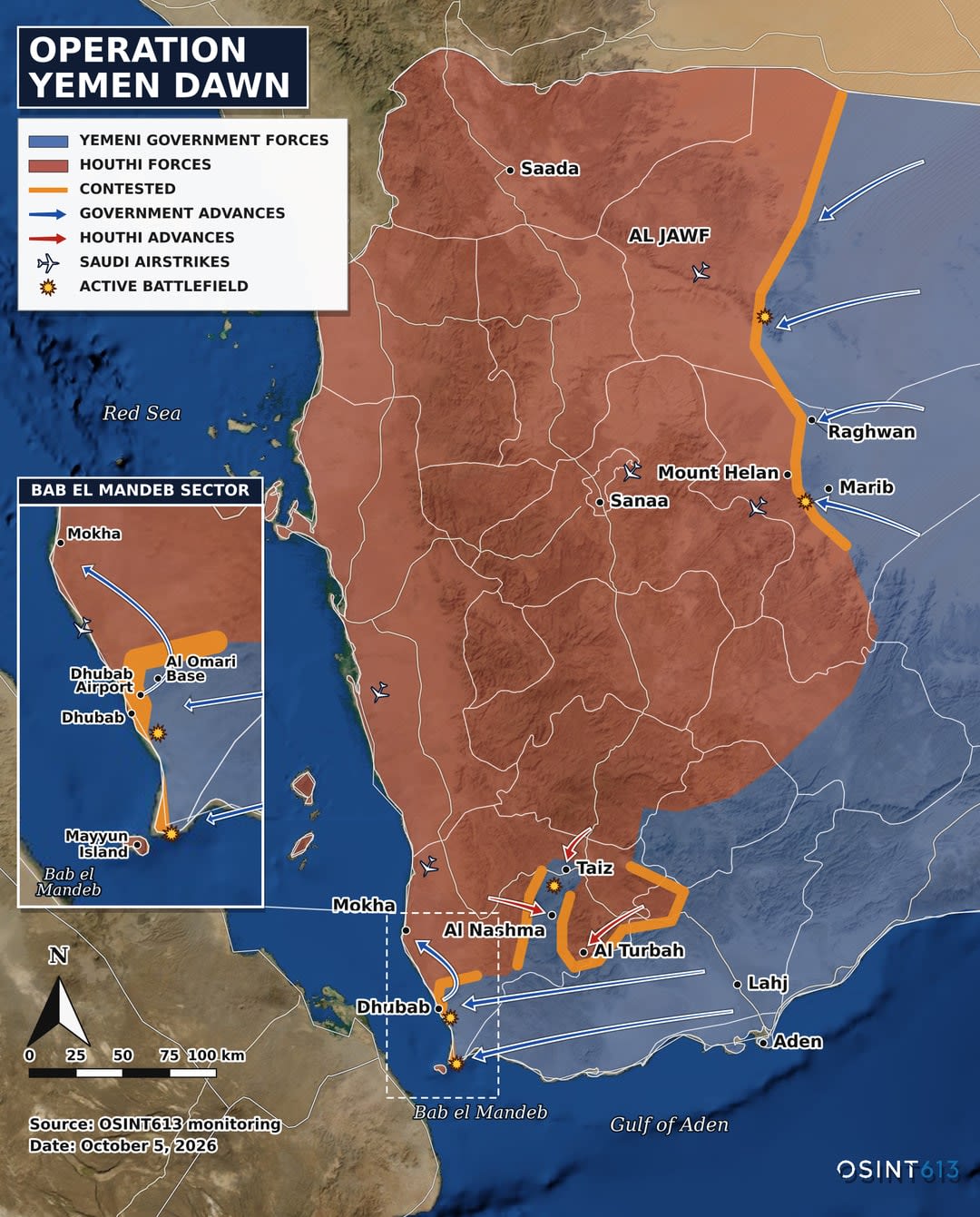
The opening phase has produced a divided battlefield. Saudi backed forces appear to have regained most of Dhubab district and key positions overlooking Bab el Mandeb, while the Houthis are pressing government forces around Taiz and threatening the city’s main connection to Aden. Both sides are claiming heavy enemy losses, but most casualty figures remain unverified.
The main government objective is to remove the Houthis from Yemen’s southern Red Sea coastline before expanding operations toward Mokha and Sanaa. The immediate test is whether government forces can consolidate their gains around Dhubab, reopen threatened supply routes around Taiz and prevent the Houthis from regrouping farther north.
Operation Yemen Dawn
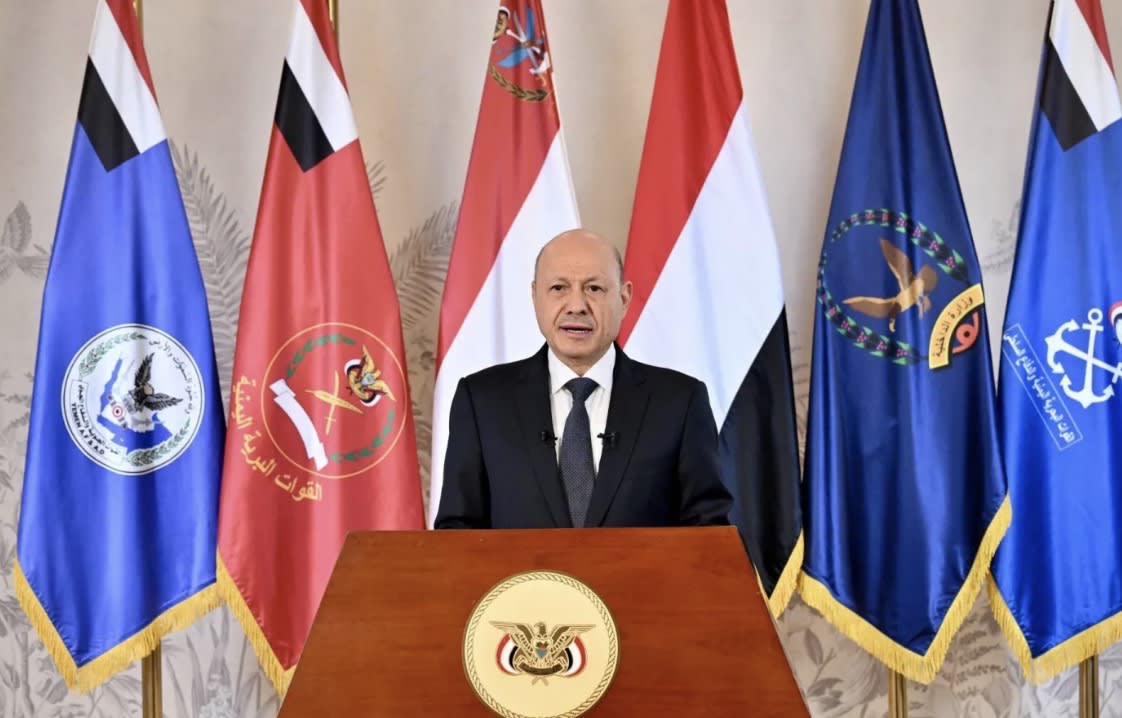
Presidential Leadership Council Chairman Rashad al Alimi announced Sunday that military operations had begun to retake all remaining Houthi controlled territory. Speaking from Saudi Arabia, Alimi said de escalation had failed and that operations would continue until Yemen was “liberated.” On Monday, Alimi formally named the campaign Operation Yemen Dawn. Its stated objectives are to restore government institutions, retake Sanaa and end Houthi control. The offensive was prepared by the Yemeni government and Saudi Arabia, with tens of thousands of fighters reportedly mobilized across several fronts.
The operation follows the Houthi seizure in September of roughly 150 kilometers of Red Sea coastline, including Mokha, Dhubab, Mayyun Island and positions overlooking Bab el Mandeb. Those gains gave the Houthis control of Yemen’s southern Red Sea coast and placed them directly beside one of the world’s most important shipping routes.
Saudi Arabia Commits 100 Fighter Jets
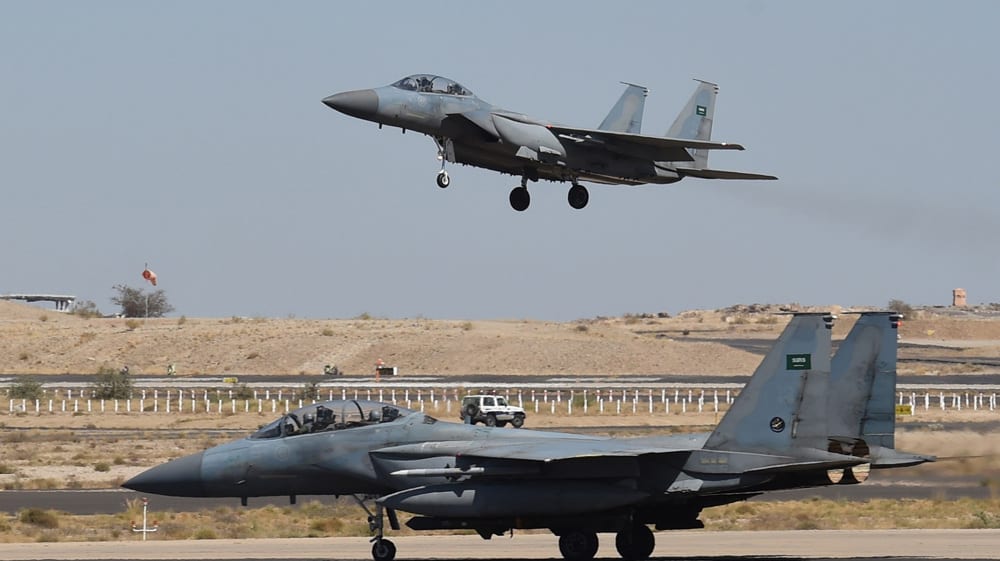
Coalition spokesman Maj. Gen. Turki al Malki said 100 fighter jets took part in the opening attacks Monday morning. He said the coalition was providing continuous air support for Yemeni ground forces and air cover over Bab el Mandeb while attacking Houthi positions, vehicles, reinforcements and supply routes.
Al Malki claimed 324 high value targets had been destroyed since the operation began. Saudi Arabia has not published a target list, satellite imagery or a detailed battle damage assessment. The Associated Press confirmed the coalition’s announcement but said the operational figures could not immediately be independently verified. (apnews.com) The coalition reported 97 attacks Sunday against Houthi reinforcements around the Tor al Baha front and the Taiz axis. It said aircraft, drones, artillery, missiles and snipers were used. Military sources also reported Saudi air cover accompanying government advances in Al Jawf, Marib and along the western coast.
In Marib, government forces attacked Houthi positions on the Raghwan front while Saudi aircraft reportedly struck Mount Helan, an arms depot and reinforcements northwest of the city. Fighting and air activity were also reported in Al Jawf, where government forces are attempting to pressure Houthi routes near the Saudi border.
The Dhubab Encirclement Operation

The main coastal attack began Monday morning with forces from the Southern Armed Forces, Giants Brigades, Nation’s Shield and National Resistance Forces advancing into Dhubab district under heavy Saudi air cover. Their objective was to encircle Houthi units around Bab el Mandeb and cut the routes connecting them with Mokha and positions farther north.
Government forces say they recaptured Dhubab airport and cut the main Dhubab to Mokha road, severing a major Houthi ground line of communication. Reuters reported that government forces had taken large parts of Dhubab district and were asserting control over the area, although fighting continued near a military base close to the strait. (investing.com) Pro government sources said advancing forces also cut the Al Saqiya to Al Omari Camp route. They reported that units were moving toward Al Omari Base, Bab el Mandeb and Dhubab city after securing the airport and surrounding Houthi positions.
Yemeni military sources claimed hundreds of Houthi fighters were trapped around Dhubab and near Mayyun Island. Other reports said dozens of Houthi fighters were captured, dozens were killed and some escaped by boat. Those claims have not been independently verified, and the Houthis denied that government forces had made significant gains.
Yemen’s information minister said government forces had regained effective control of Bab el Mandeb. Control of the strait itself remains difficult to define while fighting continues nearby and the Houthis retain missile and drone launch positions farther inland and along the northern coastline. (reuters.com) H2 What Control of Bab el Mandeb Means Holding Dhubab, Al Omari Base and the coastline facing Mayyun would remove the Houthis from the closest mainland positions overlooking the narrowest section of Bab el Mandeb. It would also reopen government access to the southern Red Sea coast and create a staging area for a possible advance north toward Mokha.
The Houthis would still be capable of attacking ships with ballistic missiles, cruise missiles, drones and explosive boats launched from farther inland or farther north. Retaking the coastline would reduce Houthi control over the waterway, but it would not immediately eliminate the maritime threat.
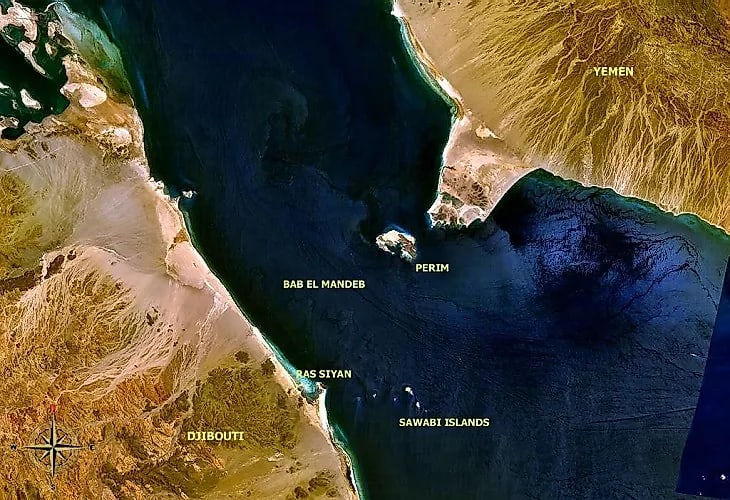
Mayyun Island (perim Island) remains especially important because it divides Bab el Mandeb into 2 channels. Pro government sources reported Houthi fighters surrounded near the island, but there has been no independently confirmed report that government forces have landed on or retaken Mayyun.
The Houthis Advance Around Taiz

While government forces advanced along the coast, the Houthis continued pressing around Taiz. Several Yemeni government military sources told Reuters that Houthi fighters damaged or cut parts of the main Taiz to Aden road and advanced into Al Turbah after government forces withdrew.
Those gains may have effectively surrounded government forces inside Taiz, although another government source denied that the road had been completely severed. Houthi media claimed government forces were expelled from Al Turbah, Al Shamaytin, Sama and Al Mawasit districts.
Liveuamap reported clashes reaching Al Nashma on October 4, placing fighting deeper along the southern Taiz axis. That report has not been independently corroborated. The Houthis have also occupied hilltop positions overlooking roads used to move government troops and supplies toward Taiz.
Taiz remains under government control, but its supply position is deteriorating. Saudi air power has not stopped Houthi ground movement through the surrounding highlands, where terrain and established defensive positions reduce the advantage of aircraft.
Houthi Strikes Inside Saudi Arabia
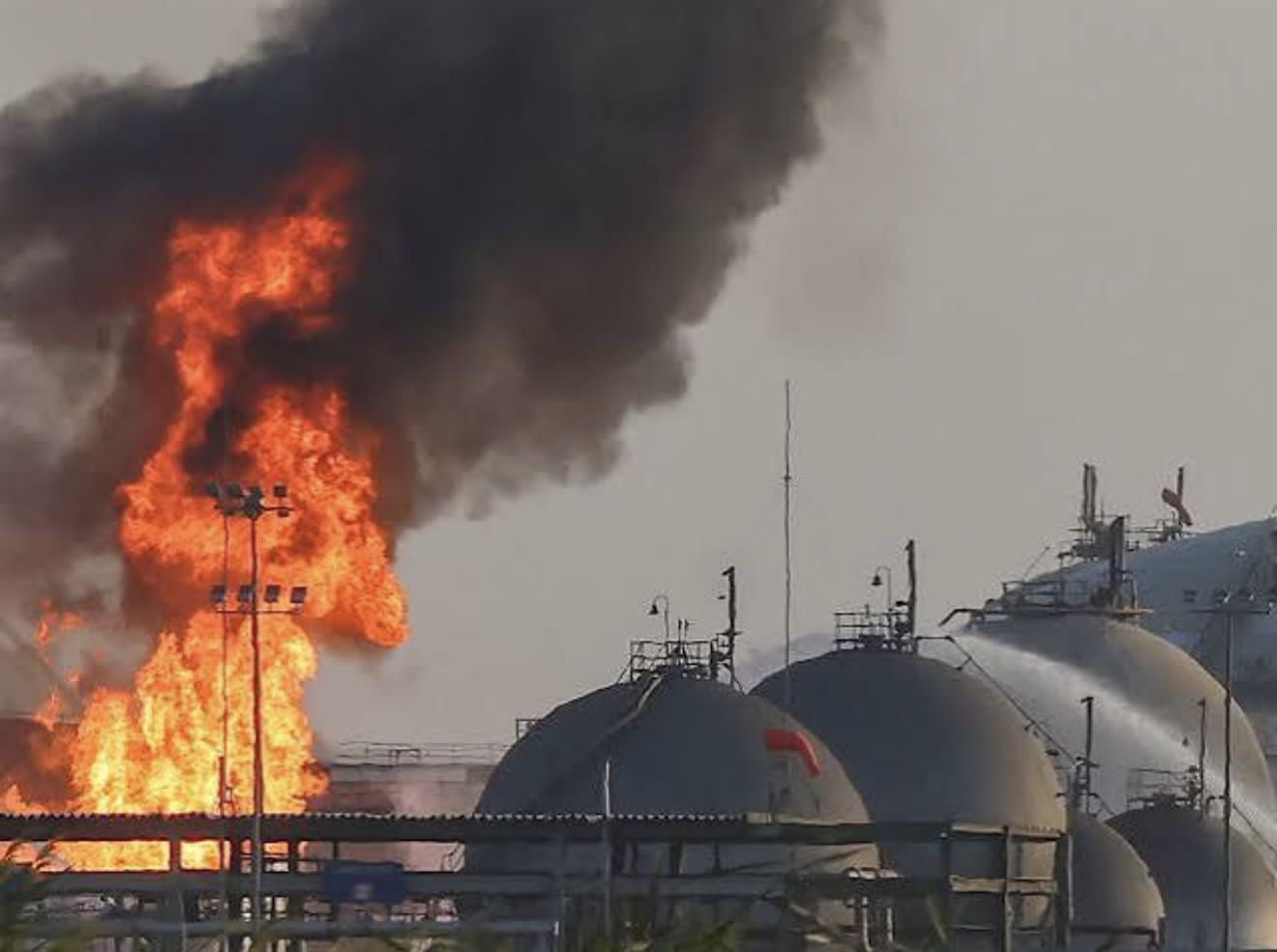
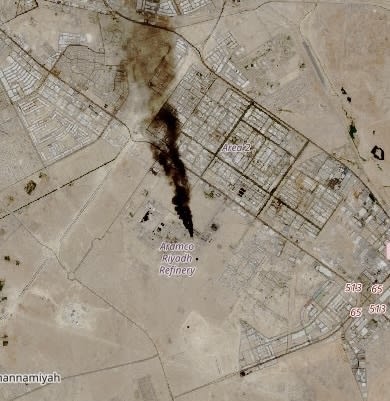
Houthi military spokesman Yahya Saree said the group attacked Aramco facilities in Riyadh and Khurais with ballistic missiles and drones. He claimed the attacks caused fires and were launched in response to 50 Saudi air and missile strikes within 12 hours.
Saudi Arabia and Aramco have not confirmed what caused the reported fire. An AFP journalist saw flames and smoke rising from an Aramco facility south of Riyadh on October 3, with firefighters, ambulances and police vehicles at the site.
The Houthis claimed Saudi Arabia conducted 106 air and missile strikes during the previous 24 hours across Sanaa, Al Jawf and Taiz. Houthi media reported about 26 attacks on Sanaa and said a strike on a sponge factory wounded 3 people. Saudi Arabia has not confirmed the Houthi strike count.
Casualty Claims
Yemeni government forces claimed Monday that they conducted 1,122 operations across Saada, Al Jawf, Taiz and the western coast, killing or wounding 1,747 Houthi fighters and destroying or disabling 364 vehicles. Another government claim said 257 attacks Saturday killed at least 700 Houthis.
Those figures remain unsupported by independent hospital records, burial data or imagery. Earlier estimates from the Taiz fighting were far lower, with Houthi sources reporting 55 fighters killed and government linked sources reporting between 26 and 34 government troops killed. Another estimate placed Houthi losses at 39.
The Next Phase

The coastal force is expected to push toward Al Omari Base, Dhubab city and the approaches to Mokha while Saudi aircraft continue targeting Houthi reinforcements. Government forces must secure the Dhubab to Mokha road and prevent Houthi units from reopening their supply routes.
The Houthis are trying to force the government to divide its attention between the coast and Taiz. If Saudi backed forces hold Bab el Mandeb but lose the roads around Taiz, the campaign will have traded one strategic problem for another. The next 24 to 48 hours will show whether the Dhubab advance becomes a sustained offensive north or remains an exposed coastal foothold.