
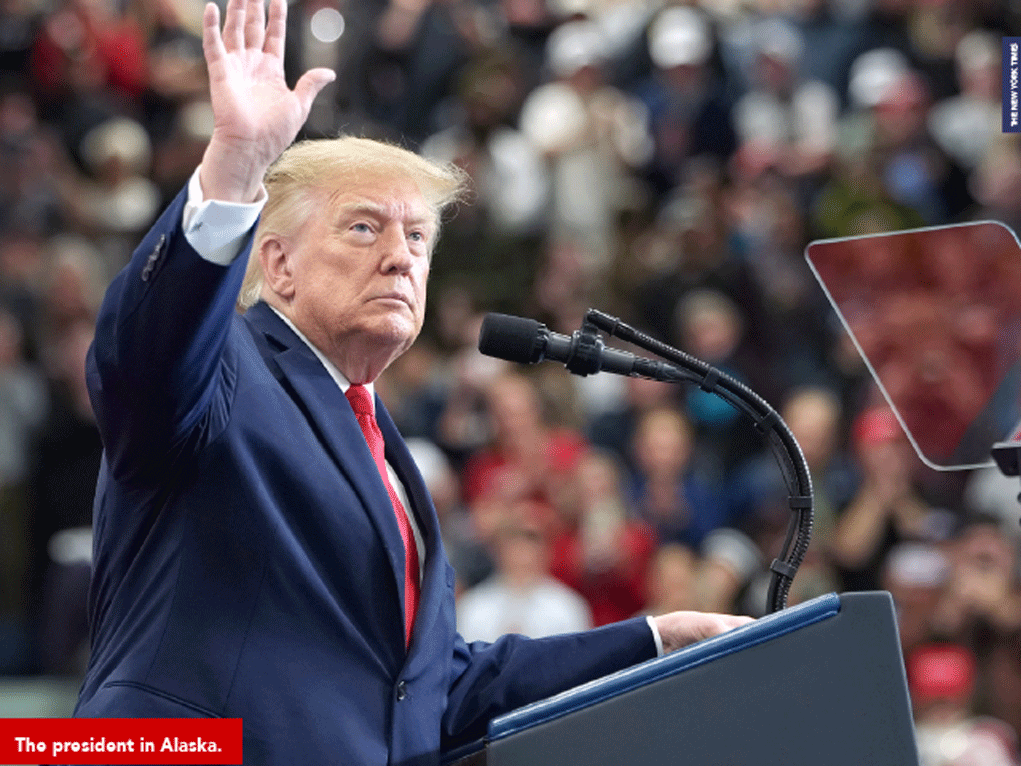

While Republican candidates clearly face an uphill battle against consumer anger at President Trump over high gas prices at the pump, and the well-established historic trend of the president’s party losing a large number of House seats in midterm elections, some Republican political analysts still hold out hope that their advantage in campaign funding and the selection by Democrats of extreme left-wing candidates gives them a fighting chance to narrowly retain their current control over the U.S. Senate during the final two years of Trump’s presidency.
Less than 2 weeks before the November 3 midterm Election Day, Democrats look increasingly likely to regain control of the House of Representatives, based upon nationwide polls showing that many working-class voters who helped to elect President Trump in 2024 now hold him responsible for $4 a gallon gasoline and $6 a gallon diesel fuel. Fairly or not, many of them blame their current economic distress on President Trump for having started a war with Iran, which he failed to win within a few weeks, as he had promised to do, enabling Iran to restrict the vital flow of crude oil from the Persian Gulf to create a global shortage and drive up energy costs.
According to the RealClearPolitics current average of polls, Democrat candidates in the midterms are expected to flip about 23 Republican seats in the House of Representatives, more than enough to wipe out the GOP’s current slim 219-214 majority in that chamber. While the non-partisan Cook Political Report predicts smaller gains for Democrats in the House, ranging from 9 to 19 seats, that would still be more than enough for the Democrats to gain majority control over the chamber and make New York Democrat Congressman Hakeem Jeffries the new Speaker of the House.
Such an outcome would be consistent with the common belief that midterm elections are referendums in which voters who are unhappy with the performance of a sitting president take their political revenge by defeating the candidates of the president’s party.
Gop Still Clinging To Hope For Retaining Control Of The Senate
That is what happened to President Trump during his first term as president, when Republicans lost their majority in the House in the 2018 midterm election. However, because the GOP was able to retain its control over the Senate in that election, Trump was still able to govern, albeit somewhat less effectively, during the last two years of his first term in office.
That is why even Republican strategists such as Doug Hey, who recently told the Wall Street Journal that he expects the Democrats to flip as many as 30 House seats in the midterm election, say that he still holds out hope that the current GOP 53-47 majority in the Senate might still survive, despite Trump’s historically low job approval ratings. They believe that Democrats made a serious mistake by choosing several Democrat senatorial candidates whose left-wing political beliefs are so extreme as to make them unelectable in competitive “battleground” states. Like New York City’s antisemitic Muslim mayor, Zohran Mandani, they have associated themselves with the anti-American, anti-Israel, and “woke” policies of the Democratic Socialists of America (DSA), which are unacceptable to all conservative and most mainstream American voters. They include Abdul El Sayed, running for an open Democrat Senate seat in Michigan; James Talarico running for an open Republican Senate seat in Texas; Peggy Flanagan running in traditionally Democrat-voting Minnesota; and Troy Jackson, who is challenging the last remaining moderate Republican in the U.S. Senate, Susan Collins of Maine, who is seeking re-election to her sixth term in that Senate seat.
The current lead of all four of these Democrat senatorial candidates is less than 3%, smaller than the margin of error in most of the polls. That makes all of them vulnerable to a late Republican surge during the remaining two weeks before Election Day, or a larger-than-expected turnout of the working-class voters who were responsible for Trump’s victory in 2024.
During the past several weeks, Trump has been traveling around the country to urge those who voted for him two years ago to make believe that his name will appear on this year’s midterm ballot, and show up to vote for the Republican candidates whom he has endorsed.
The current senatorial election map on the widely followed RealClearPolitics website identifies 8 toss-up states, including all four of those mentioned above, where the extremely liberal positions of the Democrat candidates are seen as too extreme for most mainstream voters. If all four of those vulnerable Democrats are defeated, the Republicans are virtually assured of retaining their current control over the Senate for the final two years of Trump’s presidency, with at least a 50-50 split of Senate seats, plus the tie-breaking vote of Republican Vice President JD Vance, if needed.
Republican Candidates Facing Iran War And Inflation Headwinds
The biggest political problem shared by all Republican candidates running in the midterms is their association with President Trump and the war that he started against Iran eight months ago, which he has been unable to finish. As a result, Iran’s attacks on crude oil and petroleum product shipments in the Persian Gulf have driven up gas prices at the pump in the U.S. by roughly 50 percent since the start of that war, and raised the cost of diesel fuel by about 70 percent.
The record high prices for diesel fuel have further stoked inflation by increasing the transportation costs for virtually every product that American consumers purchase. Diesel prices have also increased the cost of food by driving up expenses for American farmers planting, fertilizing, and harvesting their crops using diesel-fueled agricultural machinery.
A recent Pew survey found that only a third of American voters approve of Trump’s handling of the Iran war. The RealClearPolitics average for Trump’s presidential job approval rating currently stands at about 38 percent, a near-record low.
This suggests that the outcome of this midterm election should be comparable to 2006, when President George W. Bush’s approval was also at 38 percent. Democrats that year achieved a net gain of 31 seats in the House, gaining the majority that enabled them to name Nancy Pelosi as the first female Speaker of the House. In the Senate, Democrats in the 2006 midterm election posted a net gain of 6 seats, enabling them to take control of the chamber with a narrow 51 to 49 majority.
That outcome was not an anomaly. With the exceptions of 1998 and 2002, the president’s party has lost seats in the House in every midterm election since 1946.
Current polls of voter preferences in a generic ballot also show Democrats ahead of Republicans by roughly eight points, although the history of recent elections suggests that their actual margin of victory is likely to be somewhat smaller when the midterm votes are counted.
High Gas And Diesel Prices Hurting Trump’s Supporters The Most
The high prices of gasoline and diesel fuel have been especially harmful to Trump’s popularity among the same coalition of non-college-educated voters who enabled his election victory in 2024. They include the working-class voters who are dependent upon their cars for travel to and from work and other routine daily activities, and American farmers who have not only been hard hit by the elevated cost of diesel fuel and petroleum-based fertilizers, but also by the loss of their sales to foreign buyers due to Trump’s controversial tariff policies.
A Washington Post article revealed the current dynamics of the unexpectedly close senatorial race in Kansas, where elections have long been dominated by traditionally Republican-voting farmers. The story focused on the fourth-generation farming family of John and Nancy Bowden, both age 74, who live in the small rural town of Salina, Kansas.
John Bowden said that he has consistently voted for Republican presidential candidates since Richard Nixon more than fifty years ago. The sole exceptions were his one-time votes for Bill Clinton and Barack Obama, which John now says he regrets. He says that everyone in his family has always voted Republican ever since his maternal grandfather lost his job working for the government as a road-grader due to the fact that a Democrat candidate had won election to a local office. John’s wife Nancy said that the only time she voted for a Democrat candidate was when Kathleen Sebelius made 2 successful runs for governor of Kansas in 2002 and 2006.
Both John and Nancy say that they voted for President Trump without hesitation in 2024, but now admit to having some reservations about him.
John objects to Trump’s effort to reduce the cost of raw beef to American consumers by importing what he calls “substandard meat” from South America for fear that it will reduce the market value of the 80 cattle now living on the 900-acre Bowden family farm. John also notes that he is paying a lot more for the diesel fuel needed to run his tractors, and is concerned that Trump’s tariffs will increase the cost of the new farm equipment that he is planning to buy. But he also told the Washington Post reporter that he will probably vote to re-elect the Republican incumbent first-term Senator Roger Marshall anyway.
Nancy says she strongly supports Trump’s policies, but that she objects to “The way he talks, [because] it’s kind of demeaning.” She also described her support for the GOP’s senatorial incumbent candidate Marshall, a former Kansas congressman, based upon his record, as only “lukewarm.”
A Family Feud Over The Choice Of A Senate Candidate
Nevertheless, when their son James, age 39, who lives next door to the family farm, persuaded his mother Nancy to join him at a recent campaign event in Salina for Democrat senatorial candidate Adam Hamilton, she admitted to feeling uncomfortable “like a duck out of water,” because she remains a Republican at heart. Even though she thought that Hamilton, who is a Methodist preacher, was well-spoken and open to new ideas, Nancy said, “I have to vote my conscience,” for Marshall, primarily because of her strong Christian pro-life religious beliefs. She also said that she hadn’t been paying much attention to the campaign ads and accusations from both candidates for the Senate seat because her mind was already made up.
Nancy’s husband John also said that his mind was made up to vote for Marshall, despite his objections to the way that Trump’s policies have hurt his family farm business. “I’d rather vote for a known commodity than an unknown one, [and] I think he [Marshall] is the one,” John said.
But James Bowden, who is currently running as an independent candidate for a seat on the local county commission, did not give up. When he asked his father John, “What about Hamilton talking about wanting to build bridges, and unite people, just like I do in my own campaign?” the old man threw up his hands in disgust and replied cynically, “I’ve been here for 74 years, and that’s what every one of the [candidates] has been saying since [then].”
Switching Parties Is Hard Even For Angry Lifelong Republicans
Such long family histories of voting for Republican candidates are very common in rural Kansas, which hasn’t sent a Democrat to the Senate since the depths of the Depression in 1932, when Franklin D. Roosevelt (FDR) and his fellow Democrat candidates won by a landslide nationwide.
While President Trump carried Kansas in the 2024 presidential election, defeating Democrat Kamala Harris by a 16-point margin (57%-41%), the latest polls show the race between Marshal and Hamilton to be virtually a dead heat, with liberal voters in Kansas City and its affluent suburbs roughly counterbalancing the much more conservative rural farm vote in small cities like Salina, where Trump won in the 2024 election by a 2-to-1 margin.
But Republican activists like Randall Hardy, who formerly represented Salina and the surrounding area in the Kansas state senate, believe that enough lifelong Republican rural voters like John and Nancy Bowden will get over their current anger at Trump due to high diesel prices and his tariff policies to re-elect Republican Marshall anyway, either due to their sense of family loyalty or their principled opposition to liberal Democrat policies.
Even Cheri Koochel, who is currently running for a seat in the state House of Representatives in a district near Salina, admits that she and her fellow Democrats candidates are facing an uphill battle in Kansas, where registered Republicans outnumber Democrat voters by a 45% to 25% margin. While Koochel said that she had met a lot of frustrated lifelong Republican voters during her door-to-door campaigning in the district, she admitted that still “it’s tough convincing people to abandon their political roots.”
Political analysts agree that the key to Marshall defeating Hamilton is to motivate enough of those Kansas voters who elected Trump in 2024 to go to the polls in two weeks and cast their ballots according to their lifelong conservative Republican beliefs instead of staying home to nurse their current grudge against Trump for high gasoline and diesel fuel prices. For that purpose, Trump made a personal appearance on Monday in Wichita, Kansas, in order to rally support for all of the local and statewide Republican candidates whose names will be on the midterm ballot on November 3, including Marshall.
Trump Going All Out In His Last Political Campaign
Trump will continue to make similar campaign stops across the country during the final two weeks of the midterm election campaign, not only in battleground states where Democrat and Republican candidates are generally evenly matched, but also in traditionally Republican-voting states such as Iowa, Alaska, Texas, Ohio and Florida where the latest polls show Democrat candidates to be surprisingly competitive, largely due to voter anger with Trump over high prices for gas, food and housing.
Trump’s presence at these rallies is intended to boost the attendance of those who voted for him in 2024, where he will continue to make the argument that the Democrat candidates on the ballot support the “too extreme” liberal views of the Biden administration, which subjected Americans to open borders, race-based policies, and much higher energy costs through a forced transition to unreliable green-energy sources, as well as electric vehicles that most American consumers didn’t want. Trump and the GOP candidates will also cite the takeover of the Democrat Party by GOP candidates and rally speeches that Democrats favor. They also say Democrats have candidates pushing the radical agenda, as well as the rabidly anti-American and anti-Israel rhetoric of the Democratic Socialists of America (DSA) as espoused by New York City Mayor Zohran Mamdani and avowed socialist Senator Bernie Sanders.
Some Moderate Democrats Still Know How To Win Over Voters
It is also interesting to note that those Democrat candidates who are doing better than expected in normally Republican-dominated states have made a clear effort to dissociate themselves from the most unpopular ultra-liberal Democrat domestic policy and social issues during the four years of Joe Biden’s presidency.
For example, the Democrat gubernatorial nominee in Texas, Gina Hinojosa, who is running against the popular Republican incumbent, Greg Abbott, conceded that since Trump took office, the massive wave of illegal immigration which flooded Texas towns along the Mexican border has virtually disappeared.
Relatively moderate Democrat senatorial candidates Dr. Annie Andrews, running in South Carolina, and Roy Cooper, running in North Carolina, have both rejected the continuing calls by far-left Democrat activists, as well as the national platform of the DSA, not only to defund the police, but also to do away with prisons, allowing criminals to continue to roam free on the streets of America, shoplifting and preying on innocent civilians without fear of arrest or prosecution.
Cooper’s relatively moderate positions and his popularity as a two-term former governor have forced Republican strategists to quietly concede that he is most likely to flip the open Senate seat in North Carolina into the Democrat column. National GOP party leaders have therefore been shifting campaign funds originally earmarked for the North Carolina Senate race to other states where GOP midterm candidates have a much more realistic chance for victory.
Andrews has also run a surprisingly strong race in South Carolina against Darline Graham, who was appointed to take over the Senate seat of her late brother, Republican Senator Lindsay Graham, who passed away suddenly a few months ago. Even though she had no previous political experience, Darline Graham is now running to be elected to a new six-year term of office in her brother’s Senate seat, by promising to continue to fight for the conservative Republican issues that he stood for, including a strong national defense and American support for Israel.
More generally, Republican candidates nationwide have been emphasizing two different issues during the midterm election campaign. They condemn most Democrats for meekly supporting the anti-American, anti-Israel, anti-free market, and racially biased policies of the DSA, which would largely do away with the democrat checks and balances of the federal government as we know it under the U.S. Constitution and Bill of Rights.
Republicans Highlighting The Many Failures Of Democrat Socialism
President Trump and his fellow Republicans point out that the DSA-inspired liberal Democrats are calling for the elimination of key aspects of the American way of life, including private enterprise, private property, and the free-market capitalism which made the United States the richest country in the world. Instead, many Democrats would substitute the kind of authoritarian, centrally planned socialist economy that has failed miserably everywhere it has been tried, including the former Soviet Union, North Korea, Cuba, the Iron Curtain states of Eastern Europe during the Cold War, and communist China during the Mao era. Even in the Western European democracies, where socialist-style central planning and overly generous social welfare programs have been instituted, the results have been stagnation of the economy due to excessive taxation and state regulation, a growing inability to remain competitive in the global marketplace, a lack of sufficient private sector and individual incentives to stimulate investment and innovation, and growing public discontent with the suffocating government bureaucracy.
However, because advocates for extreme socialist ideologies have dictated which ideas may be taught on American college and university campuses for the past 60 years, three successive generations of American youth have been indoctrinated with these failed ideas. As a result, it is doubtful that the current belated efforts to expose the many failures of socialism will be able to blunt the enthusiasm for it among brainwashed young Democrats who grew up after the end of the Cold War.
The Leftist Abandonment Of Traditional American Values
Republicans are also attacking Democrat candidates for adopting the extremist policy goals of the college-educated elitist liberals which are alien to the beliefs, practical needs, and traditional religious values of most working-class and rural Americans. These include open borders, radical “woke” racial and social policies, the demonization and forced redistribution of wealth, the demand for equal outcomes as a substitute for the traditional American standard of equal opportunity, the condemnation of the American dream of achieving material success as a rewards for merit and hard work, disrespect for the institutions of law and order in society, defunding the police, emptying the jails, and decriminalizing criminal and violent behavior, the condemnation of the traditions of American democracy as expressions of white racism and oppression, denying law abiding citizens the right to self-defense, imposing limitations on parents’ rights to raise and educate their children as they see fit, growing government suppression of an individual’s right to free speech and to practice their religious beliefs, and last, but by no means least, the abandonment of Israel, America’s most loyal and only democrat ally in the Middle East, combined with an alarming tolerance for the open expression and commission of violent acts of antisemitism.
Republican candidates can also make a convincing argument that Trump’s supply-side economic policy innovations are working. They can cite the benefits to working-class Americans due to Trump’s tax cuts for tipped workers, overtime pay and Social Security recipients, along with the business-friendly tax measures and the wholesale elimination of unnecessary federal regulations, which have cut business costs, increased corporate profits, attracted new investment, accelerated the rate of economic growth and pushed stock prices to record highs. While the largest gains from these policies have been realized by higher-income households, Trump’s economic policies have also led to large wage increases and many new economic opportunities for workers and members of minorities at the lower end of the income scale.
Can The Polls Predicting A Democrat Landslide Be Believed?
Republicans’ best hope for an acceptable outcome from the upcoming midterm elections is that the predictions of the current polls are wrong. It is a fact that the national polls at the end of the last three presidential campaign cycles overestimated the level of Democrat voter support by three to five points. Minnesota Republican Congressman Tom Emmer recently told a GOP rally in Wisconsin that the polls are more often inaccurate these days because many Republican voters believe that pollsters are biased and therefore won’t talk to them, or will deliberately answer their questions incorrectly to skew the results, which is also a common phenomenon in Israel.
Polls ahead of the midterm elections in 2018 and 2022 predicting Democrat gains were more accurate, primarily because many of the less motivated voters, whose attitudes are much harder for pollsters to predict, stayed home. On the other hand, in the 2016, 2020, and 2024 presidential elections, Donald Trump succeeded in motivating a lot of less likely voters to go to the polls, throwing a monkey wrench into pollster predictions based primarily upon the surveys of what pollsters call the most likely voters.
That fact is the reason why President Trump has been making such a strong effort to bring the same less likely voters who were responsible for his victory in 2024 back to the polls in the upcoming midterm election because that would undermine the accuracy of the assumptions behind the current polls predicting a major Democrat landslide.
Furthermore, this writer is not the only one who realizes that the current polls predicting a major Democrat victory in the Senate are mostly based on races in which the size of the Democrat candidate’s lead is small enough to change by Election Day. A Washington Post campaign analysis published last Friday explaining why some leading Democrats are nervous:
“Even former president Barack Obama appears to be stressing, as he provided a reality check about Democrats’ sprawling Senate map at a private fundraiser in Virginia this month.
‘All these races that are showing we’ve got a two- or three-point lead, or it’s a toss-up, we could end up losing all of them by two points,’ he [Obama] said. ‘It’s within the margin of error.’”
Iowa’s Lesson Showing That Even The Best Pollsters Can Be Wrong
The same Washington Post analysis notes that Democrats suffered a painful disappointment by putting too much faith in a favorable poll prediction. In Iowa a few days before the 2024 election, The Des Moines Register published a Mediacom Iowa Poll by J. Ann Selzer, which, over the course of many previous elections in that state, had earned its reputation as the “gold standard” for accuracy. It predicted an upset in which Kamala Harris would defeat Donald Trump by a 3-point margin, 47%-44%, which would have been the first time in nearly a decade that a Democrat candidate had won a statewide election in Iowa.
But for Democrats, the prediction was just too good to be true. The actual vote count on Election Day revealed a landslide 13-point victory by Trump (56%-43%), a prediction miss which was so embarrassing to Selzer professionally that she announced her immediate retirement from polling.
That experience still serves as a painful reminder and warning to Democrats to be careful about accepting at face value optimistic polling predictions that go very much against recent electoral trends. That is why Democrats in Iowa are very cautious about the polls in the current senatorial race in which Republican Congressman Ashley Hinson is in a virtual tie with Democrat Congressman Josh Turek.
In addition, Iowa is a largely rural state with an agriculture-based economy, where many families have a long history of voting for Republican candidates that is not easily broken. That is why, based upon Iowa’s recent electoral history, including Trump’s 13-point 2024 victory, political oddsmakers are giving Republican Hinson a 59% chance of victory.
Maine’s Susan Collins, The Last Moderate Senate Republican
The same political conclusion applies to the senatorial campaign in Maine, where Democrats made the mistake of originally putting up a little-known extreme left-wing candidate named Graham Platner, who wore a Nazi tattoo on his chest, against five-term incumbent GOP Senator Susan Collins, who’s been winning statewide senatorial elections in Maine for the past 30 years. Platner was eventually forced to drop out of the race because of his reputation for scandalous behavior.
He was quickly replaced as the Democrats’ senatorial candidate by Troy Jackson, who at least had some political credibility as the former president of the Maine State Senate. But Jackson is another elitist liberal who supports Medicare for All (which would immediately destroy the quality of medical care for the 70 million current Medicare participants). He would protect the criminal illegal aliens living in this country by abolishing the Immigration and Customs Enforcement agency (ICE), and he would also end all U.S. funding for the IDF so that Israel would no longer be able to defend its civilians properly from another attack by Iran or one of its terrorist proxies.
Today Maine is another one of those states that former President Obama was referring to, where the Democrat candidate for the Senate is currently leading the Republican incumbent, Susan Collins, by less than 2 points. But Republican supporters are not worried, because six years ago, in 2020, when Collins was running for her fifth term as senator, she also trailed her Democrat opponent in every opinion poll taken in the month of October. But on Election Day that November, Susan Collins won by a comfortable margin of 8 points, because Maine voters realized that she was in a position to deliver valuable federal benefits to the state due to her powerful post as the chairwoman of the Senate Appropriations Committee. There is no reason to believe that she won’t be able to come from behind in the polls again this time, in light of the fact that Jackson is currently holding a scant 1.6-point lead over Collins in the latest statewide polling average.
Which Party Is Winning The Election Campaign Money Wars?
With most Democrat activists now confident of a major midterm victory, others realize that it will not be easy for them to deliver on their high expectations for denying President Trump the ability to implement his non-legislative policy goals and govern the country effectively during the last two years of his presidency.
While there is no state in the country where an incumbent Republican senator or candidate for an open Senate seat is not facing a competent Democrat opponent, the Democrats also realize they have no room for error as they try to gain control of the Senate by picking up four new seats without losing any of the ones that they currently hold.
More than a dozen high-level Democrat campaign managers, strategists, and party officials have told CNN that their main worry heading into the final two weeks of the midterm campaign is financial. Democrat candidates in most Senate races have raised more campaign money than their Republican opponents. However, due to a huge flood of new campaign donations from outside GOP-aligned Political Action Committees (PACs), supported by generous Republican contributors with deep pockets, Republican candidates nationwide now enjoy a significant campaign finance advantage over their Democrat opponents in the final weeks of the campaign. This new money has also enabled President Trump and Republican Party leaders to build an effective political-economic firewall in the “red” states that is designed to protect the current Republican majority in the Senate.
Huge Spending By Both Sides In Texas
As a result, the Senate campaigns by the candidates of both parties leading up to the November 3 midterm election are setting records for spending. In Texas, since the beginning of this year, Democrat contributors have raised a staggering $114 million for their Senate nominee, James Talarico. At the same time, Texas attorney general Ken Paxton mounted a primary challenge from the right to the re-election bid by Texas’ relatively moderate Republican Senator John Cornyn. Before their contest was over, the combined spending by the campaigns of Cornyn and Paxton had spent more than $120 million, making it the most expensive senatorial primary contest in U.S. history. But despite the fact that Cornyn’s campaign outspent Paxton’s campaign by more than a 6-to-1 ratio, because of Trump’s last-minute endorsement of the much more conservative Paxton, he defeated Cornyn in the May 26 Texas primary runoff by a 28-point margin.
Cornyn’s primary loss to Paxton was a bitter defeat for many Texas Republicans who felt that the multiple scandalous charges of illegal conduct against him, even though he ultimately survived them all, made Paxton unfit to serve as a GOP candidate for the U.S. Senate. Cornyn also never forgave him and has refused to campaign for Paxton in his general election contest against Talarico.
Instead, Cornyn has focused his recent campaign fundraising efforts on helping GOP Senate candidates running in other states. This has infuriated some of Paxton’s GOP supporters, who believe that an endorsement by Cornyn would help Paxton with the moderate Texas voters who have been put off by the allegations of illegal conduct that were filed against him. President Trump also said in a Truth Social post last week that if Paxton loses to Talarico in the November 3 election, he would blame the defeat on Cornyn’s refusal to work on Paxton’s behalf.
In Talarico’s primary race for the Democrat Party’s Texas senatorial nomination, he was harshly criticized for referring to one of his opponents, Colin Allred, as a “mediocre Black man, and for having accepted a campaign contribution from the late Sheldon Adelson’s family, long-time political supporters of Israeli prime minister Binyomin Netanyahu.
During his four terms as a Democrat member of the Texas House of Representatives, Talarico’s voting record featured opposition to legislation which would have required the display of the Ten Commandments in Texas public schools.
In his campaign for the U.S. Senate, Talarico has accused Israel of committing “war crimes” and “atrocities in Palestine.” He has also called for reforms to the U.S. Supreme Court, including the elimination of the filibuster rule, imposing term limits on the justices, and increasing the total number of justices in order to overturn the court’s current majority block of 6 conservative justices.
Before entering politics, Talarico graduated from the Austin Presbyterian Theological Seminary. During a 2021 debate in the Texas House of Representatives over gender issues related to women’s sports, Talarico made a deliberately provocative claim about his liberal Christian theological beliefs that has outraged many devout Republican and Democrat Christians.
Elon Musk Puts His Money On The Republican Candidate In Texas
In the Texas senatorial race, the fundraising bonanza of Talarico’s campaign was overshadowed by contributions from the world’s richest man, Elon Musk, who is the owner of Tesla and SpaceX, both of which have their corporate homes in Texas. Musk gave Paxton’s campaign a total of $158 million through two separate donations to the GOP’s Senate Leadership Fund.
Talarico has consistently held a narrow lead in polls over Paxton, raising Democrats’ hopes that they could finally win statewide office in Texas for the first time since 1994. Over the next 30 years, hopes for a Democrat statewide victory in Texas have repeatedly fallen short, most notably when former Congressman Beto O’Rourke narrowly lost in his bid to deny Ted Cruz another term as senator in 2018.
During the current midterm election cycle, Cruz has made a major effort to support Paxton, who was Cruz’s political protégé when he first ran to be Texas Attorney General in 2014. In the years since then, Cruz has continued to praise Paxton and has called him the “best state attorney general in the entire country,” for filing more than 100 lawsuits against the Biden administration’s liberal policies. Cruz also praised Paxton for his consistent support for Trump, which resulted in the president’s endorsement of Paxton just a few days before he defeated Cronyn in the Texas GOP state primary runoff election. Cruz also stood by Paxton as he successfully withstood a federal indictment in 2015 on security fraud charges and was acquitted by the Texas state legislature in 2023 on impeachment charges accusing Paxton of bribery and abuse of public trust. Cruz then helped Paxton mount his ultimately successful challenge from the right to Senator Cronyn’s re-election bid by introducing Paxton to Cruz’s own large network of conservative Republican campaign donors.
Ted Cruz Using The Midterms To Prepare For A 2028 Presidential Bid
Cruz has also been active in the support of other Republican candidates currently running for office in North Carolina, South Carolina, Alaska, Michigan and Kansas, in preparation for what many believe will be a bid by Cruz to win the GOP presidential nomination in 2028 against the current unofficial front-runners, Vice President JD Vance and Secretary of State Marco Rubio.
But very much like both Vance and Rubio, whenever he was asked in an interview about a potential presidential bid in 2028, his response was, “I am devoting every waking moment to fighting to hold the Senate and grow our majority in the Senate, and to hold the House and grow our majority in the House.” He then added that, “The 2028 conversation will come for everybody, but it’ll come after the midterms.”
During his appearances on the campaign trail in support of Paxton’s senatorial candidacy, Cruz has ridiculed Talarico’s controversial comments about his own liberal Christian beliefs and support for an open-border immigration policy, saying that those would be more fitting positions for an elected politician representing liberal Berkeley, California, than conservative Texas. Cruz also declared that, “We are witnessing a hostile takeover of the Democrat Party, a Marxist and Islamist takeover that is really dangerous, and Texas is a battleground [in that takeover].”
Cruz has acknowledged that the senatorial race in Texas is currently “effectively tied,” and that “the consequences of losing [that Texas seat in the U.S. Senate] would be massive.” However, Cruz also said that he is “all in” in his support for Paxton, and expressed his confidence that Republicans will be able to hold that Senate seat so long as they are able to get their political message out and get enough Republican voters to the polls.
All Eyes On The Controversial Muslim In Michigan’s Senate Race
Meanwhile, the closely watched senatorial campaign in Michigan between the still controversial far-left Democrat candidate Abdul El-Sayed, who, if elected, would become the first Muslim ever to serve in the U.S. Senate, and the Trump-backed former Republican congressman, Mike Rogers, has taken an interesting turn. Despite endorsements from far-left leaders, including Vermont’s socialist Senator Bernie Sanders and AOC, the leader of the progressive “squad” in the House, El Sayid managed to win the Democrat nomination for senator by the slimmest of margins against relatively moderate Democrat Congresswoman Haley Stevens, who was supported by the state Democrat Party’s leadership in the August primary.
Now, two of the state party’s leaders, Lon Johnson, a former Michigan Democrat Party chair, and David Kramer, a longtime Democrat strategist, have published an op-ed in the Detroit News calling upon their fellow Democrats who still feel uncomfortable with voting for El Sayed in the November 3 general election to leave that section of the ballot blank and unmarked as a silent protest against El Sayed’s candidacy, but without actually voting to help Donald Trump and Republicans maintain their current control over the U.S. Senate.
Disappointed Michigan Democrats Urging Voters To “Leave It Blank”
This “leave it blank” campaign is actually aimed primarily at liberal Jewish voters in Michigan who routinely vote for Democrat candidates, but who would feel guilty for casting their votes for a candidate like El-Sayed, who has openly expressed his hostility toward Israel and who repeatedly campaigned during the primary season with avowed antisemites and anti-Zionists such as the notorious leftist social media influencers, Linda Sasour and Hasan Piker.
“Our gravest concerns involve El-Sayed’s associations with figures who have excused or minimized terrorism, his reluctance to unequivocally condemn dangerous rhetoric and his support of extreme policies,” Johnson and Kramer wrote in their Detroit News op-ed.
In an effort to ease the conscience of lifelong Democrats who still feel an obligation to vote for even the most dubious of Democrat candidates, Johnson and Kramer argue in their op-ed that even though they agree that, “supporting a candidate after a hard-fought primary is an act of party unity, not a surrender of principle,” they still believe that “Democrats [who were] asked to set aside their differences for Abdul El-Sayed had every right to expect … a commitment [from him] to earn their trust, address their legitimate concerns and unite a party whose nomination he won with less than 50% of the vote.”
But according to Johnson and Kramer, “He [El-Sayed] has failed that test,” and therefore he no longer has any legitimate claim to their votes.
Since publishing their op-ed, the message from Johnson and Kramer seems to be breaking through to Jewish Democrat voters in Michigan. On October 12, a rally at Temple Israel, a Reform synagogue in the Detroit suburb of West Bloomfield, which was the site of the terrorist attack last spring, drew 1,000 Jews who strongly disapproved of El-Sayed infuriating reaction to the incident. Although the gathering was not explicitly labeled as a pro-Rogers political event, the intent to generate anti-El-Sayed political sentiment in the Greater Detroit Jewish community was clear.
Since that gathering, several more prominent Detroit area Jewish Democrats have come out explicitly in favor of Rogers instead of El-Sayed. They include Gary Torgow, a prominent Detroit area banker and business executive who is the president of the Jewish Federation of Metropolitan Detroit and of the Yeshiva Beth Yehudah, and who was selected to serve as the chairman of the board of directors of the Jewish Federations of North America, with nearly 150 members of local Jewish federations across the United States and Canada.
In addition, Larry Deitch, a former University of Michigan regent, has written letters published by the Detroit News denouncing El-Sayed for his opposition to Israel and urging all supporters of Israel in Michigan to vote for Rogers in the November 3 election.
Johnson and Kramer have also said that their “leave it blank campaign was designed to give voters who fear El-Sayed but loathe Donald Trump a way to punish the president while helping defeat El-Sayed, while remaining true to their liberal Democrat political ideals.”
“For many of us, there is dignity in leaving it [the senatorial part of their midterm election ballots] blank,” they wrote in their op-ed.
What Makes A Democrat Voter A True Democrat?
Even though they refuse to vote for El-Sayed and are actively working to defeat him, Johnson and Kramer still insist in their op-ed that, “We remain Democrats, committed to electing outstanding candidates up and down the ballot and protecting the party’s future. We reject the notion that declining to support one [uniquely objectionable Democrat] nominee makes anyone less of a Democrat.”
However, political strategists say that their unique “leave it blank” approach is not the perfect way to prevent El-Sayed from winning the senatorial election, because converting a Democrat voter for El-Sayed into a vote for Rogers yields an effective net gain of two votes for Rogers, while convincing that same Democrat voter not to vote for either candidate effectively yields a net gain of just one vote for Rogers. However, it also lowers El-Sayed’s vote tally and therefore lowers the number of votes that Rogers needs to actually win by one vote.
Two years ago, Rogers also ran as a Republican for a U.S. Senate seat in Michigan and lost to now-Democrat Senator Elissa Slotkin by less than a percentage point in a race in which each candidate was supported by virtually all of the voters in their respective political parties.
If the November 3 senatorial vote in Michigan remains just as evenly divided as the race two years ago, then it would only take a relatively small number of Democrat voters boycotting El-Sayed’s candidacy to give Rogers a narrow victory in the election.
Johnson and Kramer address Democrat concern that a Rogers victory could give Republicans, and Trump, a Senate majority. They say a surprising blue wave building in traditionally GOP stronghold states should mitigate that threat. And even if El-Sayed should win, they write, his extreme views would make him an outlier in the Senate and render him ineffective for Michigan.
El-Sayed’s Troubling Ties To The Muslim Brotherhood
Meanwhile, in a nationally televised NBC News “Meet the Press” interview, host reporter Kristen Welker asked El-Sayed if he would “set the record straight” about his reported family ties to the Muslim Brotherhood, which has been formally declared to be an Islamic terrorist organization by the governments of Egypt, where the Muslim Brotherhood was founded, and in the United Arab Emirates (UAE), Bahrain, and Saudi Arabia. The Egyptian branch of the Muslim Brotherhood was also the parent organization that created Hamas.
In response to the question, El-Sayed quickly replied, insisting that neither he nor his family have any ties to the Muslim Brotherhood’s international Sunni Islamist terrorist network.
But according to anti-radical leftist and anti-Islamo-fascism activist Josh Hammer, writing in the New York Post, “El-Sayed is lying.
“He’s running as the most thinly veiled Trojan horse in American political history — on behalf of the Brotherhood and the Islamism it embodies.”
To support his accusation, Hammer cites a report published by the Washington Free Beacon which reveals that El-Sayed’s half-sister, a University of Chicago professor named Eman Abdelhadi, explicitly lauded their family’s ties to the Muslim Brotherhood.
In 2012, Abdelhadi publicly claimed that Fatten Elkomy. who was the mother of both her and El-Sayed, “Had an amazing talk. . . about her activism in the Muslim Brotherhood during the early 1970s.”
That was the same year that a member of the Muslim Brotherhood, Mohamed Morsi, briefly took over as the elected president of Egypt until he was ousted in a 2014 military coup engineered by the army general who is now Egypt’s president, Abdel Fattah el-Sisi.
In addition, according to Hammer, on September 11, 2001, the day when al Qaeda terrorists hijacked 4 airliners to stage deadly mass terrorist attacks on the World Trade Center and the Pentagon, El-Sayed’s mother, Fatten Elkomy, was working for the Islamic American Relief Agency, which was designated by the Treasury Department as a terrorist organization in 2004 for providing “direct financial support” to Osama bin Laden and al Qaeda.
It has also previously been established that El-Sayed’s father-in-law, Jukaku Tayeb, a founding committee member of the Islamic Society of North America, has donated $200,000 to El-Sayed’s senatorial campaign.
El-Sayed’s campaign has also received a six-figure donation from current or former officials of the Council on American-Islamic Relations (CAIR), which was named by the U.S. government’s Justice Department in 2008 as an American front group for the international Muslim Brotherhood’s terrorist network, during the criminal investigation into the Holy Land Foundation.
Will A Senator El-Sayed Serve As A Double Agent For Terrorists?
According to Hammer, these family associations are “why these terrorist front groups are now trying to elect Abdul El-Sayed to the U.S. Senate.”
Hammer also warns that as a sitting U.S. Senator, El-Sayed would immediately gain access to a lot of highly sensitive U.S. intelligence information, which is why his election to the Senate “would pose a massive threat to American national security.”
Hammer believes that as a senator, “El-Sayed wouldn’t advance America’s interests: He would advance the interests of the Brotherhood, and of Islamism more generally,” including Hamas, al Qaeda, and ISIS.
Hammer also notes that when El-Sayed was asked for a comment on the assassination of Iran’s Supreme Leader Ayatollah Ali Khamenei at the start of the war against Iran in February, El-Sayed would only say, “There are a lot of [Muslim] people in Dearborn [Michigan] who are sad today.” That is why Hammer also questions whether El-Sayed is on the side of the United States in its ongoing war against Iran.
The outcome of the Michigan Senate race is also crucial to determining the balance of political power in Washington over the next two years because an electoral victory by Rogers over El-Sayed would mean that Republicans had flipped the seat currently held by retiring Democrat Senator Gary Peters. This would make it necessary for Democrat candidates to win a net total of 5 Senate seats instead of just 4 currently, in order to win clear 51-49 majority control over the U.S. Senate.
An Unexpected Gop Pickup Opportunity In Minnesota
Republicans also now have an opportunity to flip another open Democrat Senate seat in the state of Minnesota, whose Democrat political establishment has been rocked by a series of welfare fraud scandals involving billions of dollars of stolen government money due to the gross negligence and/or incompetence of Minnesota’s top Democrat elected officials. These include Governor Tim Walz (Kamala Harris’ 2026 vice presidential running mate), his 2-term lieutenant governor, Peggy Flanagan, and Minnesota’s attorney general, Keith Ellison, who became the first Muslim member of Congress in 2007.
They have been accused of turning a blind eye to the welfare fraud schemes, many of which were run by members of Minnesota’s large Somali refugee community. One of the schemes involved a non-profit organization called “Feeding Our Future” which stole $250 million by falsely claiming to have provided millions of free meals to children in Minnesota during the Covid pandemic. In a second set of schemes, fraudsters billed 14 different Minnesota state autism, housing, and personal care programs for hundreds of millions of dollars worth of services that were never provided, and paid kickbacks to the parents of the children who were supposed to have received services from those programs. While the federal investigations into the Minnesota fraud cases are not yet complete, total losses of up to $9 billion in government funding have been reported so far.
Because Flanagan is now the Democrat candidate running for Minnesota’s open Senate seat, those scandals are now a serious campaign liability that is being exploited by her Republican candidate, Michele Tafoya, who is already well-known in the state because of her previous career as a television sportscaster.
In the Minnesota state primary to select the Democrat senatorial candidate, Flanagan ran on endorsements from leaders of the far left, such as Senators Bernie Sanders and Elizabeth Warren, and Democrat Congresswomen Alexandria Ocasio-Cortez (AOC), Pramila Jayapal, and the notorious antisemite, Ilhan Omar. In that primary, Flanagan defeated a much more moderate Minnesota Democrat running for the senatorial nomination, Congresswoman Angie Craig.
Tafoya has turned out to be an effective candidate, with plenty of public speaking experience and formidable communications skills. In their only broadcast debate hosted by Minnesota Public Radio News, Tafoya delivered what the Washington Post described as a “feisty” performance, including several sharp one-liners, while effectively positioning herself as an independent-minded Republican candidate who is ready to stand up against President Trump when they disagree.
Minnesota Democrat Dodges Responsibility For A Notorious Scandal
Flanagan tried to distance herself from her longtime political partner, Governor Walz, because of his close association with the still unfolding welfare fraud scandal. At the same time, Flanagan accused Tafoya of being totally beholden to President Trump and his policies. But Tafoya would not stand for that, and answered quickly by saying, “Peggy, Donald Trump isn’t on the ballot. You and I are on the ballot.”
When Flanagan noted that President Trump had publicly endorsed Tafoya and had urged his followers in Minnesota to vote for her, Tafoya replied that Flanagan had to be held accountable for being part of “an historically bad, failed administration” responsible for one of the most costly government fraud scandals in American history. Flanagan was asked whether she could have done more to prevent the fraud as Minnesota’s lieutenant governor. Her response was to cite Walz’s paraphrase of a famous sign that used to sit on President Harry Truman White House desk when the Minnesota governor said that “the buck stops with me,” with regard to responsibility for the scandal.
While Minnesota has long had a political reputation for being a “blue” voting state, and has not elected a Republican senator for more than 20 years, or voted for a Republican for president since 1972, President Trump narrowly lost the state by less than two points in 2016 and 4 points in 2024. That shows that for a highly effective Republican senatorial candidate like Tafoya, overcoming Flanagan’s current less-than-3-point lead in current polls before Election Day, and flipping Minnesota’s open Senate seat that was formerly held by Democrat Amy Klobuchar, who is now running to replace Walz as governor, should not be an insurmountable political task.
Ohio, Alaska And New Hampshire
Two other states which have traditionally elected Republican candidates in recent years, but where a Democrat challenger currently holds a small polling advantage over the current Republican senatorial incumbent, are Ohio and Alaska. The Democrats do have an advantage there, but neither state is out of reach for the Republicans yet.
Then there is the race for New Hampshire’s open Senate seat, which had been held by a Democrat. The Republican senatorial candidate is the state’s popular former governor John Sununu, a member of a famous political family in the state who is also trailing his Democrat opponent by about six points, which is a significant but not insurmountable lead.
The only currently Republican open seat in the Senate the Democrats now seem to be assured of a pickup is in North Carolina, where Roy Cooper, the popular Democrat former two-term governor, seems to be holding an insurmountable lead over the much less well-known Republican candidate, Michael Whatley. But after conceding that seat to the Democrats, they would still need to flip a net total of at least three more Republican seats to take control of the Senate, which is certainly possible, but far from certain, given the current polling data and state-by-state election outlook.
Sit Back And Enjoy American Democracy’s Best Show
The outcome in several of the senatorial races in November 3 election appears likely to be very close. The final determination of which party will emerge in control of the Senate might not be known for some days, especially if it comes down to the complicated ranked voting results in the states of Alaska and Maine. As in every national election, there will be some surprises, and many predictions that will turn out to be wrong. So be prepared on Election Night to sit back and relax while watching as American democracy’s most entertaining political show slowly unfolds as the midterm vote counts come in.