
 Yeshiva World News
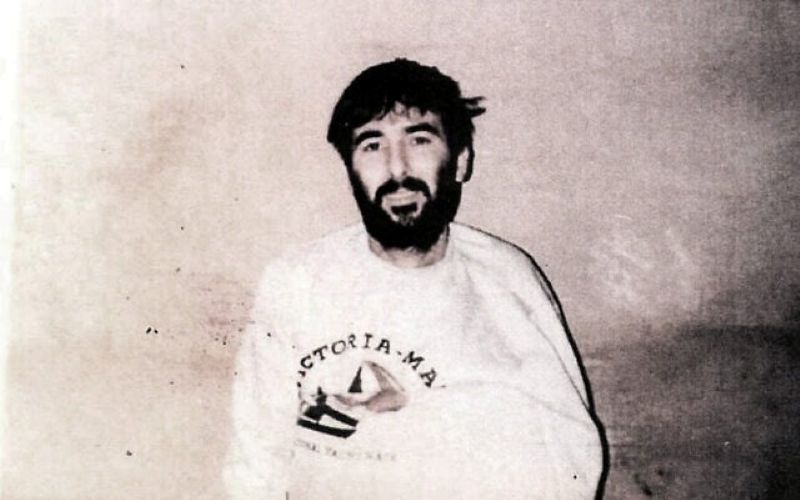
BOMBSHELL REPORT: Mossad Smuggled Iranian General Into Israel In Refrigerator Box During Hunt For Ron Arad
A sweeping investigation by The New York Times has revealed extraordinary details of Israel’s decades-long intelligence campaign to determine the fate of missing Israeli Air Force navigator Ron Arad, including the kidnapping of senior Iranian military officers, secret interrogations, and alleged assassinations — all driven by a theory that Israeli intelligence officials now believe was fundamentally mistaken.
According to the investigation, based on interviews with dozens of former Israeli, Iranian, and American officials, Israeli intelligence spent nearly four decades pursuing the belief that Iran had taken custody of Arad after his capture in Lebanon in 1986. However, evidence accumulated over the years increasingly suggested that Arad never reached Iran and likely died in Lebanon in 1988.
One of the most extraordinary operations reportedly took place in September 2021, when Israeli intelligence operatives targeted Iranian General Abdullah Saberi in an upscale diplomatic neighborhood in Syria.
Disguised as movers, the operatives reportedly passed through security checkpoints and positioned themselves near a large refrigerator box. When Saberi emerged for a jog, they overpowered him, drugged him, concealed him inside the box, and secretly transported him to Israel.
The purpose of the operation was to obtain information about Ron Arad.
Iranian officials familiar with the incident told The Times that Arad was the only subject Israeli interrogators questioned Saberi about.
The investigation also detailed the fate of Iranian General Ali Reza Asgari, who disappeared in Istanbul in 2006. According to the report, Asgari was kidnapped by the Mossad and interrogated for weeks about Arad before being killed, despite apparently possessing no useful information about the missing Israeli navigator.
The revelations shed new light on the extraordinary lengths Israel was willing to go to resolve one of the country’s most enduring military mysteries.
Arad disappeared in October 1986 after his Israeli Air Force aircraft went down over southern Lebanon. He was captured by members of the Amal militia associated with Mustafa Dirani, and his disappearance subsequently became one of Israel’s most closely watched missing-soldier cases.
For years, Israeli intelligence operated under the assumption that Arad had eventually been transferred to Iranian custody, a belief that shaped numerous covert operations and diplomatic efforts.
However, the investigation indicates that the theory was built partly on questionable intelligence, including testimony provided by an Iranian doctor in 1992 and statements obtained from Dirani during harsh interrogations following his capture by Israel in 1994.
During those interrogations, Dirani claimed that an Iranian officer had told him the Islamic Revolutionary Guard Corps had taken Arad.
That account helped reinforce the Iranian connection, despite mounting evidence pointing elsewhere.
Mohammad Ali Abtahi, who served as Iran’s vice president between 1997 and 2005, told The Times that Israeli demands for information about Arad followed Iranian officials virtually everywhere.
“The issue of Ron Arad followed us everywhere,” Abtahi said, according to the report. “At every international meeting we had, they asked us about Ron Arad, Ron Arad.”
The issue even reached the Vatican.
During a 1999 visit to Rome by then-Iranian President Mohammad Khatami, Pope John Paul II reportedly handed him a letter from Arad’s wife pleading for information about her missing husband.
Abtahi said Iran consistently maintained that it had no involvement in Arad’s disappearance and that the answers were in Lebanon.
Some Israeli intelligence officials eventually began questioning why Iran, which understood Israel would pay an enormous price for reliable information about Arad, had never attempted to exploit such information if it actually possessed it.
A major development came during negotiations in 2004, when Israel agreed to consider releasing a senior Lebanese prisoner in exchange for genetic evidence establishing Arad’s fate.
Hezbollah leader Hassan Nasrallah reportedly enlisted Iranian assistance in an effort to locate Arad’s remains.
Gerhard Conrad, a German intelligence officer who helped mediate negotiations, told The Times that he believed Hezbollah and Iranian officials made genuine efforts to locate the body.
Saberi, the same Iranian general later abducted in Syria, was reportedly assigned to coordinate the search because of his extensive experience in Lebanon.
The joint Iranian-Hezbollah investigation ultimately produced a classified report concluding that Arad had died in 1988 in Nabi Chit, a village in eastern Lebanon where he had been held captive.
The findings were considered so significant that former Iranian President Ali Akbar Hashemi Rafsanjani, who had been involved in the search, reportedly dispatched one of his children to Germany to personally deliver the information.
Nevertheless, Israeli authorities continued pursuing the possibility of Iranian involvement.
Over time, internal Israeli intelligence reviews increasingly challenged that theory.
In 2006, former Shin Bet chief Yuval Diskin submitted a report rejecting the conclusion that Iran had held Arad.
A decade later, Lt. Col. Avi Kalo, then head of the IDF Military Intelligence Directorate’s Prisoners and Missing Persons Department, reached a similar conclusion.
In a detailed report presented to Prime Minister Binyamin Netanyahu in late 2016, Kalo reportedly argued that kidnapping Iranian officials would not solve the mystery of Arad’s disappearance.
He recommended concentrating investigative efforts on Nabi Chit, where earlier intelligence had indicated Arad likely died.
By the time Kalo left his position in 2019, he believed the Iranian theory had effectively been discredited.
Yet the 2021 abduction of Saberi demonstrated that Israeli intelligence was still willing to undertake exceptionally risky operations in pursuit of information about Arad.
Saberi was eventually released in Johannesburg, South Africa.
According to the investigation, Israeli security officials have only recently begun broadly accepting that Arad was probably never held in Iran.
The shift has redirected intelligence operations toward Lebanon.
Earlier this year, Israeli soldiers reportedly conducted a covert operation at a cemetery in Nabi Chit, excavating a grave believed to potentially contain Arad’s remains.
The search produced no results.
Israeli intelligence has also reportedly targeted individuals believed to possess information about Arad’s burial location.
Among them is Ahmad Shukr, a retired Lebanese military officer suspected of knowing where Arad was buried. Shukr disappeared last year in what the investigation describes as a Mossad kidnapping operation, and his whereabouts remain unknown.
The emerging assessment among officials familiar with the case is that Arad died in Lebanon in 1988, possibly in the very village identified by early intelligence reports.
Despite the extraordinary resources devoted to finding him, his remains have never been recovered.
Israeli officials say the search continues, with efforts now concentrated on Lebanon rather than Iran.
(YWN World Headquarters – NYC)