
 Yeshiva World News
ECONOMIC CRISIS: Iran’s President Says “We Have No Money” As Food Inflation Tops 110%
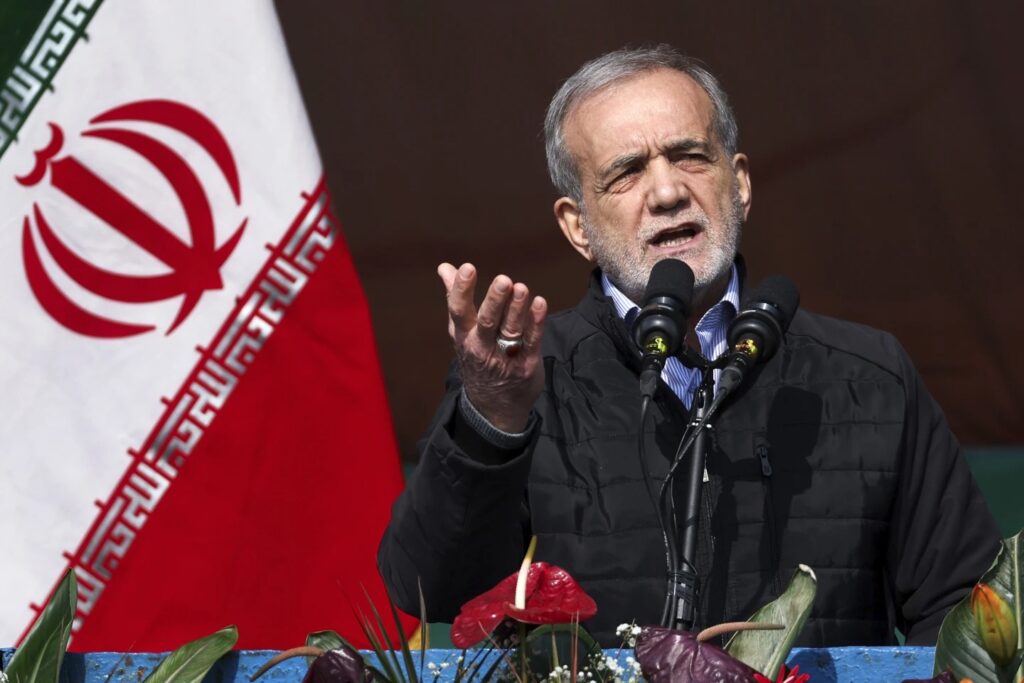
Iranian President Masoud Pezeshkian has publicly acknowledged his government’s deepening financial crisis, declaring on state television that “we have no money” as authorities cut subsidies, impose electricity outages and face protests over unpaid wages and deteriorating living conditions.
The admission comes as diplomatic efforts to end the war remain stalled and an American naval blockade squeezes Iran’s economy, according to the report. The pressure has also exposed widening divisions within the regime, with hardliners demanding confrontation while other senior officials support negotiations.
Government figures cited in the report show annual food and beverage inflation exceeding 110%. The Iranian rial has reportedly fallen to approximately 2.9 million to the dollar, further eroding household purchasing power and making basic necessities increasingly difficult to afford.
Iran’s oil exports, much of which previously went to China, have fallen sharply since the war began. The report said Washington has also increased pressure on air transportation and overland trade, adding to the impact of restrictions on maritime commerce.
In remarks on November 20 and at a Tehran conference the following day, Pezeshkian described the country’s predicament as an economic war. According to Iran’s state news agency IRNA, he said the struggle was in some respects more difficult than a conflict involving missile strikes and physical destruction.
The government has responded by reducing subsidies on fuel, electricity and food. Cuts to gasoline subsidies during the summer triggered lengthy lines at filling stations, while the state electricity company, Tavanir, has begun scheduled outages lasting up to two hours daily in some areas.
Tavanir attributed fuel shortages to wartime damage to natural gas fields. Parliamentary energy committee spokesman Reza Sepahvand warned that electricity disruptions could worsen during the winter. Power stations around Tehran are reportedly burning heavy fuel oil to maintain production.
Food subsidies are also being reduced. Hossein Zafari, a spokesman for Iran’s flour and bread council, said allocations of subsidized flour and bread had been cut in seven of the country’s 31 provinces. He told Nour News that flour shortages had prompted protests by bakers in Zanjan province and elsewhere.
The government has also more than doubled the price charged to industrial flour customers, according to statements by the pasta manufacturers’ employers association carried in state media.
The hardship is increasingly visible in household shopping. A Tehran resident in his 70s told The Wall Street Journal that he was seeing more people buy discounted potatoes and onions that had begun to rot. He described paying the equivalent of 35 cents for a traditional loaf of bread—seven times its subsidized price—while the report placed the average monthly pension at approximately $64.
Another Tehran resident alleged that bread purchased from a local bakery contained flour intended for animal feed. That account was presented as the resident’s claim, rather than an independently established finding.
Worker and pensioner protests have continued despite the security forces’ tight control. Following an accident that killed 13 petrochemical workers in Abadan, a labor demonstration included slogans against the regime and criticism linking workplace deaths to austerity and political repression. The U.S.-based Human Rights Activists News Agency reported that at least 12 protesters were subsequently arrested.
Esfandyar Batmanghelidj, head of the London-based Bourse & Bazaar Foundation, argued that the subsidy cuts amounted to partial measures that failed to address deeper economic mismanagement. He said the government lacked the political mandate for broader reform.
Meanwhile, hardline factions have intensified attacks on Pezeshkian’s administration, with some advocating pursuit of nuclear weapons or further military escalation against the United States. Nighttime demonstrations have increasingly targeted Pezeshkian, Foreign Minister Abbas Araghchi and parliamentary speaker Mohammad Bagher Ghalibaf, all of whom supported talks aimed at ending the war.
(YWN World Headquarters – NYC)