The stories gaining the most momentum right now.

 Matzav1 hour ago
Amid growing concern over the arrest of yeshiva bochurim and the possibility that they could be transferred to the military police, Rav Shalom Ber Sorotzkin, rosh yeshiva of Yeshivas Ateres Shlomo, has taken the unusual step of giving his personal cellphone number to his talmidim, instructing them to contact him immediately if they are detained by police.
Rav Sorotzkin told talmidim in the yeshiva gedolah that if they are ever stopped or arrested by police under circumstances that could lead to their being handed over to the military authorities, they should call him directly so he can become personally involved.
The new policy was recently put to the test when one of the bochurim was detained in a chareidi city following a traffic violation. During the incident, the student contacted Rav Sorotzkin to inform him that he was being held by police.
Upon receiving the call, Rav Sorotzkin personally contacted the Tzeva Shachor emergency response network, identified himself, and requested that bochurim immediately come to the scene out of concern that the talmid could be transferred to the military police.
Within minutes, the situation was resolved. The talmid was issued a traffic citation and released by police without being handed over to the military authorities.
 Matzav5 hours ago
The Skverer community is abuzz today after New York State Police allegedly stopped the Skverer Rebbe’s motorcade on Route 17 as he was returning home from the airport following a trip to Malibu, California.
According to sources withing the community, troopers pulled over the Rebbe’s entourage while it was traveling along Route 17 and issued a total of 14 traffic tickets to members of the motorcade.
The incident delayed the procession before it was allowed to continue toward New Square.
{Matzav.com}
 Matzav2 hours ago
Finance Minister Betzalel Smotrich revealed Thursday that President Donald Trump’s special envoy, Steve Witkoff, told him shortly after his appointment that he would not allow Hamas-controlled Gaza to remain a threat to Israeli communities, recounting an emotional conversation that took place immediately after Witkoff visited Gaza and viewed footage of the October 7 massacre.
Speaking at MK Ohad Tal’s “Conference of Decision,” Smotrich shared details of the conversation, which he said occurred after Witkoff was appointed as President Trump’s envoy to Israel and just one day after the envoy toured Gaza and watched the graphic footage documenting the atrocities committed during the October 7 Hamas attack.
According to Smotrich, Witkoff was deeply shaken by what he had witnessed.
“When Witkoff was appointed, I met with him together with Ron Dermer,” Smotrich said. “The day before, he had been in Gaza, where they showed him the October 7 atrocity footage. He was still under the terrible impression of that video, and he told me, ‘Betzalel, I will not let two million Nazis live next to your children along the border.’”
Smotrich also addressed Israel’s ongoing military campaign in both Gaza and Lebanon, arguing that territorial losses are the only language Israel’s enemies understand.
“There is only one thing that hurts the enemy—land,” he declared. “Anyone who attacks us will lose territory forever. We need to establish a security zone in Lebanon that will remain in place for years.”
{Matzav.com}
 Matzav2 hours ago
Israel’s Chief Rabbi, Rav Kalman Ber, has issued a strongly worded halachic letter rejecting the idea of a sweeping heter permitting chillul Shabbos to improve soldiers’ morale during wartime, stressing that such weighty questions must be decided only by the leading gedolei Torah and foremost poskim.
The letter was addressed to the rosh yeshiva of Yeshiva Shvus Yisroel, Rav Yehoshua Ben Meir, and focuses on whether Shabbos may be violated for the purpose of strengthening morale among troops during combat.
At the outset of the letter, Rav Ber explains that he generally refrains from issuing psakim on military-related halachic matters because, in his view, “the Military Rabbinate, which is on the ground and is closely familiar with the operational reality, is the appropriate body to show the way in such cases.”
Nevertheless, Rav Ber writes that this situation is different because it involves “a general halachic provision that comprehensively permits Shabbos desecration to boost morale, and it could be used as a precedent for other cases,” making it necessary for him to publicly clarify the halachah.
Expressing his support for Rav Ben Meir’s position, the Chief Rabbi writes that “The aforementioned exemption poses a significant halachic and factual challenge and is not based on halachic sources and on an accurate examination of reality. Therefore, there is no place to allow Shabbos desecration to boost morale.”
He further cautioned that expanding such heteirim could “open the door to broadening the scope of permissible Shabbos desecration beyond the limits established by the sages and the leading halachic authorities throughout the generations.”
Drawing upon his own experience in military service, Rav Ber acknowledged that time away from duty undoubtedly helps soldiers recover physically and emotionally. However, he maintained that improved morale alone does not rise to the level of pikuach nefesh necessary to justify chillul Shabbos. He also warned that seeing observant soldiers traveling home on Shabbos could undermine the public’s appreciation for the kedusha of the day.
The Chief Rabbi also stressed that before issuing a broad and unprecedented psak with significant public ramifications, “it would have been appropriate to first submit it for the consideration and ruling of the foremost Torah scholars and leading halachic authorities, and only afterward publish it as a general directive.” He added that any future rulings of this magnitude should first be presented to senior gedolei Torah for their decision before being released publicly.
At the same time, Rav Kalman Ber emphasized that his comments should not be interpreted as criticism of the IDF’s unit rabbanim, battalion rabbanim, or the leadership of the Military Rabbinate’s Halacha Department. He explained that their responsibility is to apply existing halachic rulings within the realities of military operations, while establishing broad halachic policy “is entrusted solely to the foremost Torah scholars and leading halachic arbiters, whose rulings are authoritative.”

 Yeshiva World News4 hours ago
GREENFIELD PARK, NY — New York State Police are investigating what appears to be an antisemitic attack after five Jewish women riding bicycles on Weiner Road in Greenfield Park were targeted with a water cannon filled with manure on Thursday.
According to exclusive information obtained by YWN, the suspect sprayed manure at the group from a passing vehicle, striking two of the women.
One victim was hit in the face and ear with such force that she was knocked off her bicycle and onto the ground. Another woman was struck in the back.
Sources tell YWN that the suspects shouted expletives and antisemitic remarks at the women both before and after the attack.
New York State Police responded to the scene and have launched an investigation. Police are looking at camera footage, and are looking for a white vehicle which was involved.
📲 For fast & reliable hyper-local Catskills news:
🗞️ CLICK HERE TO JOIN CATSKILLS SCOOP STATUS
📰 CLICK HERE TO JOIN CATSKILLS SCOOP GROUPS
(YWN World Headquarters – NYC)
 Matzav1 hour ago
An unexpected vort with deep Chassidic roots highlighted a visit this week by talmidim of Yeshivas Kedushas Mordechai of Nadvorna to the home of Slabodka Rosh Yeshiva Rav Dov Landau.
The bochurim visited Rav Landau to seek clarification on several complex halachic issues involving the laws of borer on Shabbos, topics they had found particularly challenging during their studies in yeshiva.
For more than an hour, the talmidim engaged in an in-depth discussion with the Rosh Yeshiva, carefully analyzing the practical applications and underlying principles of the relevant halachos.
The most memorable moment, however, came at the conclusion of the visit. After the halachic discussion had ended, Rav Landau turned to one of the roshei mesivta who had accompanied the talmidim and inquired about his family lineage.
When the rebbi explained that he was a descendant of the founder of the Baal Shem Tov, Rav Landau immediately sought more details, asking, “Through which descendant of the Baal Shem Tov are you related? Through a son or a daughter?”
The rebbe replied that his lineage traces back through the Baal Shem Tov’s renowned daughter, Rebbetzin Adel a”h, and from her son, Rav Baruch of Mezhibuzh zt”l.
Upon hearing the response, Rav Landau surprised everyone present by sharing a well-known, centuries-old Chassidic vort. Smiling, he remarked, “The Chassidic world used to say that ‘Bava Kamma‘ is an acronym for ‘Baruch Ben Adel Kadosh Mi’rechem Imo‘—’Baruch, son of Adel, holy from his mother’s womb.'”
{Matzav.com}
 Yeshiva World News6 hours ago
In an extraordinary and emotional moment, 100-year-old Holocaust survivor Kurt Marx was called to the Torah at a shul in north London and read from the very same Sefer Torah he used at his bar mitzvah in Cologne, Germany, nearly 88 years ago—just two months before Kristallnacht.
“It was beyond anything I ever imagined possible,” Marx said through tears. “When I read the same pesukim I read as a child, before my life was turned upside down, it felt as though all the years in between disappeared for a moment.”
Marx celebrated his bar mitzvah in September 1938 at the Adass Jeschurun Orthodox synagogue in Cologne. Just two months later, during Kristallnacht, he watched as the shul was set ablaze. Amid the flames, someone managed to rescue the sifrei Torah and bring them to the nearby Jewish school where Marx was a student.
Following the pogrom, school principal Erich Klibansky worked to organize the rescue of his students through the Kindertransport. In January 1939, Marx said goodbye to his parents, believing they would soon join him in England once their immigration papers were approved. The children traveled to Britain carrying one of the rescued sifrei Torah with them.
Marx rebuilt his life in Britain, later marrying Ingrid, an Auschwitz survivor. The couple eventually settled in London after spending several years in Tanzania, where Marx worked in the diamond industry.
For decades, Marx searched for information about his parents. The last letter he received from them arrived in the fall of 1942. He later learned they had been deported to Minsk and murdered in the Maly Trostenets extermination site in present-day Belarus. Marx was the sole survivor from his mother’s family.
The remarkable reunion with the Sefer Torah began when Marx discovered an old document recording its arrival at a London synagogue in 1939. Working with the Association of Jewish Refugees and the United Synagogue, researchers eventually traced the historic Sefer Torah to Brondesbury Park Synagogue in London.
Standing once again before the Sefer Torah from which he had read as a 13-year-old, Marx described the moment as far more than rediscovering a treasured object.
“It was restoring a living connection to my family, my community, and the world the Holocaust tried to destroy,” he said.
Now 100 years old, Marx continues to speak out against rising antisemitism, saying education and remembrance remain the strongest tools to combat hatred and ensure future generations never forget.
(YWN World Headquarters – NYC)
 Yeshiva World News
Related stories
Yeshiva World News6 hours agoIsrael recently passed fresh intelligence to the United States indicating Iran was considering a new plot to assassinate President Trump, placing him again at the center of Tehran’s threats as the war with Iran intensifies, according to a report in The Wall Street Journal.
The intelligence indicated that Iran was looking at targeting Trump personally, not just issuing general threats against the United States. Trump also addressed the danger directly Wednesday, saying, “They want to take out the U.S. leader — me,” and adding that he has been moving from place to place and has “been a little bit lucky.”
The threat comes years after Trump ordered the 2020 strike that killed IRGC Quds Force commander Qassem Soleimani, an attack Iran has repeatedly vowed to avenge. The latest intelligence suggested a fresh assassination threat beyond those long-running warnings.
Trump and Netanyahu also spoke again Thursday, with Netanyahu’s office saying they agreed to continue coordination between the countries and that Trump updated Netanyahu on recent U.S. activity in the Gulf.
At the funeral for slain Iranian Supreme Leader Ali Khamenei, mourners chanted for Trump’s death and displayed a banner reading, “We Will Kill Trump.”
(YWN World Headquarters – NYC)
 Matzav2 hours ago
Andy Burnham, widely viewed as the leading contender to succeed Keir Starmer as Britain’s next prime minister, signaled Thursday that he would adopt a significantly tougher stance toward Israel, apologizing for Labour’s initial response to the war in Gaza and pledging greater pressure on the Jewish state if he takes office.
Speaking in an interview with The Guardian, Burnham acknowledged that Labour’s early reaction to Israel’s military campaign in Gaza was inadequate and expressed regret over the party’s handling of the conflict.
“I know many people feel that at the start of Israel’s military action in Gaza, my party didn’t get it right, and I am sorry about that,” he said. “The response has too often not been good enough. We need to do better.”
Burnham said a government led by him would pursue additional measures aimed at increasing pressure on Israel, including weighing further sanctions against Israeli individuals and organizations and considering a ban on trade involving products from what he called illegal settlements.
“We’ve got to do more to put pressure on the Israeli government,” Burnham said. Although he acknowledged that Britain has already taken “some important steps,” he argued, “the UK was too slow to call for a ceasefire in the war launched following the Hamas-led October 7th Massacre. And we must now do more to strengthen our approach.”
While sharply criticizing Israel’s military campaign, Burnham stopped short of labeling it a genocide, saying that such a determination should be made through the legal process rather than by elected officials.
“I have been absolutely appalled by what I’ve seen and read about the destruction of Gaza,” he said. “There’s increasing evidence that war crimes appear to have been committed. There must be accountability for the depth of the suffering the people of Gaza have experienced. Ultimately, however, it must be for the international courts to determine, rather than politicians.”
The interview also touched on concerns raised by Britain’s Jewish community. Burnham reiterated his opposition to antisemitism while again condemning Hamas’ October 7 terrorist attack on Israel.
“There is no contradiction between a zero-tolerance approach to antisemitism and holding the Netanyahu government to account,” he said. “I will always take a fair and balanced approach and stand up for what is right.”
Burnham further criticized what he described as escalating violence by Jewish residents in Judea and Samaria and eastern Jerusalem, as well as continued residential construction in those areas. He said his government would examine additional steps, including “looking at further sanctions” and “looking at measures to ban trade in goods with illegal settlements.”
He also described conditions in Gaza as “a scar on our collective conscience,” pointing to ongoing civilian casualties, restrictions on humanitarian aid, and Israel’s continued military operations in the territory.
 Matzav5 hours ago
President Donald Trump reportedly flew home from Turkey aboard the older Air Force One after the Secret Service recommended the change as tensions with Iran escalated, despite officials insisting there was no specific threat targeting the president.
The recommendation was made while Trump was attending the NATO summit in Turkey after fighting between the United States and Iran flared up again, according to an initial report by The New York Times.
Although authorities stressed there was no credible intelligence indicating an imminent danger to Trump, the Secret Service advised that he return on the long-serving presidential aircraft as an added precaution.
The decision underscored the extraordinary security precautions taken whenever the president travels during periods of heightened geopolitical instability.
Rather than remaining on the recently acquired Boeing 747-8 donated by Qatar, Trump left Turkey aboard one of the veteran Boeing VC-25A aircraft that has transported American presidents for decades. He later reunited with the upgraded 747-8 at RAF Mildenhall in England before continuing the journey back to Washington, according to The New York Times and ABC News.
Additional security measures accompanied the flight. Those on board the older aircraft were instructed to keep the window shades closed during takeoff, and publicly available flight-tracking information showed the plane’s transponder remained off until after it had passed over the Black Sea—a tactic frequently used to reduce visibility during presidential travel through potentially dangerous regions.
Trump rejected the suggestion that the switch was driven by security concerns. Instead, he said the newer aircraft flew separately so American military personnel stationed in England could tour what he called the “magnificent” plane.
Even so, the president openly discussed the risks posed by Iran.
“I’m No. 1 on the kill list for Iran,” Trump told reporters, later adding that passengers were “probably on a dangerous flight” because of the threats posed by Tehran.
White House Communications Director Steven Cheung defended the Qatari-donated aircraft, saying it is “a state-of-the-art aircraft that has been fitted with high-level security protocols that ensure the safety of the president and his staff.”
Cheung also noted that because “many enemies of America have their sights” on Trump, the administration uses “every tool at our disposal — including distraction and misdirection — to address those threats.”
Nevertheless, Trump’s use of the older Air Force One has intensified questions about whether the retrofitted Qatari aircraft possesses all of the defensive capabilities found on the longstanding presidential fleet. The Air Force spent roughly a year upgrading the jet at a cost estimated to be nearly $400 million.
According to The New York Times, both current and former defense officials have expressed concern that the accelerated retrofit schedule may not have allowed enough time to install every classified protection system carried by the VC-25A fleet, including sophisticated missile defense technology and shielding against electromagnetic pulse attacks.
The Air Force has countered that the aircraft satisfies all required standards for security, communications, and safety. Officials also acknowledged that certain highly advanced modifications intended for the next-generation Air Force One fleet were deliberately omitted because the aircraft is serving only as an interim “bridge” platform.
Administration officials emphasized that the Secret Service’s recommendation was simply a precaution reflecting the elevated international security environment and was not prompted by any known or specific threat directed at the president.
{Matzav.com}

 Belaaz
Related stories
Belaaz3 hours agoNew York City Mayor Zohran Mamdani’s administration is facing criticism over a city map highlighting immigrant neighborhoods that omits longstanding Jewish, Italian, and Irish communities despite their historic role in shaping the city.
The map, titled “New York City Immigrant Enclaves,” was promoted by the administration in May and features 30 neighborhoods representing communities including Yemeni, Pakistani, Egyptian, Palestinian, Chinese, Korean, Albanian, Colombian, Dominican, Ecuadoran, Indian, Haitian, Polish, and others.
Critics argue the map overlooks some of New York’s best-known historic immigrant neighborhoods, including Little Italy and longtime Irish and Jewish communities that played a major role in the city’s growth during the late 19th and early 20th centuries.
Queens Councilwoman Joann Ariola criticized the omissions, telling the New York Post that the administration appeared to have excluded Jews, Italians, and Irish residents from its depiction of the city’s immigrant heritage.
“They were able to get a Little Bhod-Tibet in there, but what about the original ‘Little neighborhood,’ Little Italy?” Ariola asked. “And what about areas like Woodlawn, in the Bronx, which are home to plenty of Irish immigrants? Do the Irish and Italians not count for the Mayor’s office?”
State Assemblyman Kalman Yeger also criticized the map, accusing the mayor of excluding the Jewish community.
“Mr. Mamdani’s erasing Jews is an essential part of his brand. No surprise.”
Joseph Scelsa, founder of the Italian American Museum on Mulberry Street, called the omission “a terrible mistake.”
“Italian-Americans are still a major population in New York City. To not recognize where Italian-Americans came from and settled is a terrible mistake. I don’t understand why Little Italy isn’t included. I hope it’s an oversight,” Scelsa said.
Jewish author Avital Chizhik-Goldschmidt also criticized the map in a post on X, writing, “The Mayor’s Office made a map of NYC’s immigrant enclaves: Little Africa, Little Poland, Little Palestine. But they just couldn’t figure out how to represent 11% of the city. Couldn’t decipher where the Jews are from.”
Other critics, including Manhattan Institute writer Christopher Rufo and former Los Angeles mayoral candidate Spencer Pratt, also questioned the administration’s decision, with Pratt accusing City Hall of “deliberate subversion.”
Responding to the criticism, the mayor’s office said the map was designed to highlight neighborhoods with large foreign-born populations rather than religious communities.
The administration said the map “does not highlight religious groups,” adding that the project focuses on “neighborhoods in New York City that have substantial foreign-born populations from regions and countries around the world.”
City Hall also noted that the immigrant enclave initiative began under former Mayor Eric Adams and said additional neighborhoods will be added in the coming months.
 Belaaz
Related stories
 Matzav4 hours ago
 Vos Iz Neias10 hours ago
 Matzav1 day agoBelaaz3 hours ago
The fourth day of Tyler Robinson’s preliminary hearing in the assassination of Charlie Kirk brought some of the most condemning testimony yet, as prosecutors played a recorded interview with Robinson’s former roommate and introduced DNA results tying Robinson to the murder weapon, and presented text messages exchanged between the two men in the hours after the September 10, 2025 shooting at Utah Valley University.
Robinson, 23, faces several charges including aggravated murder, a capital offense, in Kirk’s killing outside a “Prove Me Wrong” event in Orem. The hearing, now in its fifth day Friday, will determine whether prosecutors have shown sufficient probable cause to send the case to trial.
Thursday’s proceedings opened with Judge Tony Graf declining a request from an attorney representing Kirk’s widow, Erika Kirk, to have every piece of evidence displayed in open court. Graf said he would continue using a tiered approach, weighing each exhibit separately for admission, in-courtroom display, and broadcast to the public. A media attorney pushed for maximum transparency, while Robinson’s defense accused the Kirk family’s legal team of dragging out proceedings with matters unrelated to the evidence itself.
Utah State Bureau of Investigation agent Brian Davis then played the long-awaited video interview with Lance Twiggs, Robinson’s former roommate, portions of which were redacted. Twiggs told investigators that roughly a month before the shooting, Robinson had asked to borrow a Dremel tool, saying he wanted to engrave bullets ahead of a family hunting trip. Twiggs said he later confronted Robinson in person, who confirmed the shooting was real and appeared visibly shaken. Twiggs also said Robinson generally discussed politics in the context of the Trump administration and current policy debates.
Text messages between the pair, recovered from Twiggs’ phone, were read into the record. In the exchange, Robinson confirmed to Twiggs that he was responsible for the shooting, telling him he could no longer tolerate Kirk’s rhetoric. He described plans to retrieve the rifle he’d left behind at the scene, expressed concern about a police vehicle stationed nearby, and worried about fingerprints on the weapon. He later informed Twiggs he intended to surrender to authorities voluntarily.
A Discord channel tied to Robinson under the username “tyler/ikum” was also entered into evidence, along with a photograph of a handwritten note Twiggs found under Robinson’s keyboard the night of the shooting — a note that was inadvertently broadcast to media during the proceedings before officials caught the error.
Sergeant Jennifer Faumina of the Utah State Bureau of Investigation, who oversaw the crime scene, testified that a bolt-action rifle wrapped in a towel was recovered from bushes near campus, along with a fired cartridge casing and three unfired rounds bearing engraved messages. Search warrants executed at Robinson’s residence turned up a Dremel tool and bits, ammunition, shoes matching surveillance footage, a cartridge marked “test shot,” and multiple shooting targets. DNA testing on the rifle, cartridges, and Dremel tool all returned results implicating Robinson as a likely contributor.
A defense witness, ATF forensic examiner Samantha Carner, testified that while she conducted toolmark and rifling analysis on the recovered bullet fragments, the quality and quantity of the markings were insufficient to either conclusively link or exclude them from the recovered firearm.
Judge Graf ultimately decided not to issue closing arguments Friday as originally scheduled, instead asking both sides to submit written briefs on whether probable cause has been established, with oral arguments now set for September 1.
Related stories
Matzav4 hours agoVos Iz Neias10 hours agoMatzav1 day ago
 JBizNews
Related stories
JBizNews3 hours agoThe current round of fighting between the United States and Iran is not expected to spill over to Israel, The Jerusalem Post learned on Thursday.
IDF officials do not expect Israel to be drawn into the US-Iran exchanges at this time, though they said that the military is ready for any eventuality.
Additionally, the officials said that the current assumption is that Iran doesn’t plan to drag Israel into the conflict, with no expected Iranian strikes in the near future.
This might change in case the US tells Israel that it needs the IDF to join in striking Iran, sources told the Post.
One of the latest Iranian attacks triggered sirens in Jordan, with Jordanian authorities saying that ten missiles were intercepted over its territory.
According to the Islamic Revolutionary Guard Corps, the attack targeted the Azraq Air Base of the US Air Force, which is located some 150 kilometers away from the Israeli border.
Iranian strikes also targeted US assets in several Gulf states, with sirens sounding in Bahrain and Kuwait, among other areas targeted by the Islamic regime.
Iran’s air force is flying fighter jets to “secure the skies over the funeral procession” of the former supreme leader Ali Khamenei in Mashhad, the regime-affiliated Fars news agency said.
The US struck several sites in Iran, with one of the main targets reportedly being a railway bridge connecting Tehran and Mashhad, state broadcaster Islamic Republic of Iran Broadcasting (IRIB) claimed.
“Following the criminal US attack early this morning on a section of the Tehran-Mashhad railway, passenger train services have been disrupted,” IRIB posted on X/Twitter on Thursday.
Passengers stranded due to the disruption reportedly began chanting, “Iranians do not accept humiliation, even at the cost of their own lives.”
A Russian-built nuclear power plant was also reportedly hit in US strikes on Iran’s Bushehr province early Thursday morning, according to Iranian state media.
The deputy governor of Bushehr Province said that a US projectile hit the perimeter area of the facility, which had already been hit several times during the current conflict prior to the April 8 ceasefire.
The US Central Command (CENTCOM) said in a statement on X/Twitter that it had struck approximately 90 sites throughout southern Iran to “further degrade Iran’s ability to attack commercial shipping and innocent civil mariners in the Strait of Hormuz.”
Shoshana Baker contributed to this report.
 JBizNews54 minutes ago
Palm Beach, Florida, officially renamed its airport after US President Donald Trump on Thursday, becoming the latest in a series of institutions, buildings, government programs, warships, and money to adopt the Republican’s identity.
The renaming of Palm Beach International Airport to President Donald J. Trump International Airport was a high-profile nod to the Republican leader’s support in his adopted state of Florida, home to his ornate Mar-a-Lago resort.
“I don’t think there’s anybody more synonymous with Palm Beach than Donald Trump in maybe all of Florida,” Trump’s son Eric Trump said in an interview with Fox News.
Since he took office for a second White House term last year, Trump’s name has been imprinted on a planned class of Navy warships, a visa program for wealthy foreigners, a government-run prescription drug website and federal savings accounts for children.
He has also pursued an ambitious remaking of Washington. While the Trump name was added to the United States Institute of Peace building, courts have rejected an attempt to affix it to the John F. Kennedy Center for the Performing Arts.
Republican Florida Governor Ron DeSantis signed legislation in March to rename the southeast Florida city’s airport after Trump.
The Federal Aviation Administration three-letter identifier code for the airport was changed from PBI to DJT on Thursday. But passengers will need to use PBI to book flights until August 18, the airport said on its website, when it will be reflected on baggage tags, tickets and airline reservation systems.
The airport said the name change cost $5.5 million.
Eric Trump and his family were aboard the first flight to land at the newly named airport in the pre-dawn hours on a private plane.
“There’s no way in hell I was letting UPS be the first plane to land,” Eric Trump said in an interview with “Fox & Friends.”
JetBlue Airways is the largest carrier in Palm Beach and, along with Delta Air Lines and American Airlines operates about two-thirds of flights.
Other US airports have been named for politicians, including Little Rock, Arkansas’s airport after former President Bill Clinton and former Secretary of State Hillary Clinton, but it retained the LIT airport code.
Other airports have been renamed after former lawmakers, including in Las Vegas and San Jose, California.
 Matzav5 hours ago
Jewish Wikipedia editors said they felt “traumatized” and emotionally exhausted after editing topics related to Jews and Israel, according to a recent study in the journal Convergence by University of Haifa researcher Shlomit Lir.
Lir conducted video interviews with 19 veteran Jewish editors between February and August 2025. Most remain active on the platform, though several have stopped editing.
There was a “great sense of fear” among the editors to even talk about the subject, Lir told JNS. Some participants kept their cameras off during Zoom interviews, and one used a pseudonym.
“Editing on Wikipedia is a great part of their identity, and the fear of being banned is great,” she said. “Some of the conversations were very alarming.”
Wikipedia editors are unpaid volunteers, and anyone can contribute to the online encyclopedia.
The editors interviewed live in the United States, Europe and Israel and have between two and 24 years of editing experience. All have contributed to articles about Israel, and some identify politically with the Left, according to Lir.
Several said their experience on Wikipedia was largely positive until they began editing articles related to Israel after the Hamas-led terrorist attacks in southern Israel on Oct. 7, 2023.
One editor cited the lead section of Wikipedia’s article on the Gaza war, saying it emphasizes devastation in Gaza, with only a brief mention that “there was an axis of resistance led by Iran and its proxies.”
Another said that after Oct. 7, “all kinds of entries related to Palestinian terror and such things were deleted.”
Other participants said efforts to correct anti-Jewish, inaccurate or “libelous” content, even in articles unrelated to Israel, were often quickly reversed by editors they described as “condescending” and “exclusionary.”
One editor said anti-Israel contributors “have more time and they are more numerous,” adding that they “know all the relevant books, so arguing with them is very difficult.”
Several participants also accused anti-Israel editors of engaging in “data attacks,” using Wikipedia’s dispute-resolution process to seek sanctions against them.
“They will contest your edit, and then they will make false reports against you,” one said. “They will go through, like, months, if not years, of your past edits, and it’s almost like being knocked—like someone’s threatening your front door, and then all of a sudden they send somebody around to the back door.”
One participant said they felt “traumatized” but believed reporting harassment would accomplish little, Lir told JNS.
“As long as you didn’t touch the sensitive topics, then things were OK,” she said. “Once you started editing Israel-related or conflict-related articles, then the problem began.”
‘Physical feeling of not being safe’
According to the study, one editor has received threatening messages warning, in effect, that others would ensure the person could no longer edit Wikipedia. “We’ll get to you,” one of the messages stated, according to the study. “You won’t be editing here much longer. We’ll make sure of it.”
The editor realized that “if someone is really interested in me, they can find me very easily.” While he has continued editing, the realization made him “stop and think,” the study stated.
“There’s an actual physical feeling of not being safe,” Lir told JNS.
Another editor quit editing after feeling “shocked and deeply hurt” as well as a “sense of personal risk and betrayal” over anti-Israel content. Lir also noted a doctoral researcher interviewed for the study who suffered a heart attack after stressful editing experiences on Wikipedia.
The latter can’t go back on the site because “she was so upset by it,” she told JNS.
Lir said some “extremely biased editors have been banned” by Wikipedia, but argued that more needs to be done to safeguard neutrality.
“Wikipedia is a place of knowledge,” Lir told JNS. “It cannot be a place of manipulation, and if the manipulation occurs, then there’s a need to examine how it happens, why it’s not diversified, what can be done.” JNS
{Matzav.com}
 JBizNews2 hours ago
Nearly two-thirds of American investors under 35 — 62% — say they believe they have to take big risks to reach their financial goals, according to a survey from the Financial Industry Regulatory Authority, the brokerage industry’s self-funded watchdog. Those numbers drew fresh scrutiny on Thursday as the behavior behind them came into sharper focus: 43% of that group has traded options, 29% has bought meme stocks, and 22% has invested with borrowed money. The takeaway is a generation treating the market less like a savings account and more like a lottery ticket.
The why is not hard to trace. For many under-35 investors, the old markers of building wealth — a house, a stable career ladder, a paid-off mortgage — feel out of reach, so the calculus on risk shifts. Wealth has grown more concentrated among older and richer households, housing remains unaffordable in much of the country, and steady jobs are harder to land. Most investors under 30 have also only ever traded through a bull market, which tends to make speculative, high-beta bets look like the normal way to make money rather than the exception.
That appetite is showing up in hard credit numbers. U.S. margin debt — what investors borrow from their brokers to buy securities — rose 54% from a year earlier to a record $1.4 trillion in May, according to FINRA data. And that figure leaves out the fastest-growing forms of borrowing entirely: leveraged exchange-traded funds, which aim to double or triple the daily move of an index, plus the embedded leverage baked into futures and options.
Citadel Securities put hard figures on the pileup. Assets in leveraged ETFs have reached a record of roughly $218 billion, up about $82 billion, or 60%, since the end of March alone. Leverage tied to technology has grown 136% over that stretch, while leverage linked to semiconductors has nearly tripled, climbing 175%. Retail traders are also loading up on short-dated contracts, trading a record $7 billion in options premium a day in June, up from $5.8 billion in May, with new participation records set almost weekly on the firm’s platform.
The line between investing and gambling is blurring in the process. A survey from Northwestern Mutual found 32% of Gen Z respondents gamble in crypto or sports betting, 35% of millennials own crypto, and 24% bet on sports. The same survey carried a wrinkle worth noting: despite a year of wild swings, more young people reported feeling financially secure than a year earlier — 39% of Gen Z, up from 36%, and 52% of millennials, up from 43%. Confidence and risk-taking are rising together.
Wall Street is building for the trend rather than fighting it. Brokerages, leveraged-ETF issuers and prediction-market operators are rolling out products aimed squarely at young, active traders, and the demand is feeding the supply. Social media is doing the marketing. A J.P. Morgan Personal Investing survey found many Gen Z and millennial investors now source ideas from financial influencers, Reddit forums and online tips rather than advisers or newspapers. Claire Exley, head of financial advice and guidance at the firm, cautioned that engaging with online sources can help build knowledge but urged young investors to verify information and seek guidance before acting.
The concern among market veterans is less about the whole market cracking than about individual traders blowing themselves up. Margin debt at record highs partly reflects a market at record highs — it is a concurrent signal, not automatically a warning. But borrowed money and triple-leveraged funds cut deep in a downturn, and the AI-driven rally powering these bets has already shown tremors in recent weeks. The risk for this cohort is simple: the tools that magnify gains in a rising market magnify losses just as fast when it turns, and a generation that has never traded through a real bear market is about to learn how that math works.
JBizNews Desk | New York © JBizNews.com All Rights Reserved. Reproduction or distribution without written permission is prohibited.
 JBizNews
Related stories
JBizNews3 hours agoof the steak chain.
After some residents expressed concern that a proposed In-N-Out might increase customers, cause health problems for pedestrians and cyclists, a California city is considering a ban on drive-throughs.
Last month, the City Council in Culver City, California, enacted a 45-day moratorium to obstruct allows for fresh drive-throughs while team was developing a possible restrictions, according to LAist. Following the city’s mobility subcommittee’s vote in May to propose staff draft the ban, this comes after.
Only new businesses may be affected if a ban was approved by the city government.
According to a report from the town workers, In-N-Out would be the first new drive-through in Culver City since 1997. A drive-thru street and 61 parking spots would be included in the proposed fast-food restaurant, which could accommodate 26 vehicles.
IN-N-OUT TO GET A BILL OF MULTIPLE RESTAURANTS EVERY YEAR: A Statement
When the town passed the embargo, the burger chain had not yet completed the proper application for a force it was developing, a city official told LAist.
In-N-Out was contacted by FOX Business for remark.
We typically don’t comment publicly on business matters because we are a secret, family-owned company, according to an In-N-Out spokesman, according to LAist.
The proposal has been criticized by In-N-Out’s critics because it has the potential to harm the city’s ability to become accessible and safe.
According to Vanessa Martin, a area resident who is organizing assistance for the drive-thru restrictions, “density is expected, and development is expected.” We want to take initiative and make wise decisions.
The In-N-Out “mega drive-thru,” according to Martin’s family Cynthia, will cause traffic congestion, increase air excellent, and pose safety risks for both pedestrians and cyclists.
Paul Hewitt, a neighbor, started distributing flyers to his companions, calling the job a “terrible idea.”
Bubba Fish, a member of Culver City Council’s flexibility subcommittee, said that “drive-throughs are the epitome of that” and that the city needs to have “more accessible, bikeable, safer streets for people of all modes.”
However, drive-throughs are significant choices for customers, including those who have disabilities and those who have children, according to the ban’s competitors.
Drive-thru restrictions are typically” shortsighted,” according to Jot Condie, leader of the California Restaurant Association.
Condie claimed that you “re largely banning quick-service eateries without particularly stating that.”
A DAD RECRETED A DAD’s FAMILY OF 5 EATS AT CHICK-FIL-A FOR MORE THAN$ 45.
Clicking HERE WILL GET FOX BUSINESS ON THE GO.
The American Planning Association estimates that drive-thru orders account for 70 % of fast-food sales.
The Golden State’s second drive-thru restrictions is not currently in place.
Drive-throughs are already prohibited in Culver City’s city, while Santa Barbara and San Luis Obispo, according to LAist, have been prohibited for years. A nationwide restrictions that began in the late 1990s was just lifted in Carlsbad to allow for case-by-case account of fresh drive-throughs.
The California Restaurant Association argued in a letter to San Diego that a limited drive-thru ban would stop some groups, including those with disabilities, from using products and services, according to the outlet.

 The Lakewood Scoop6 hours ago
Accident happened approximately 6:15 PM.
No serious injuries are being reported.
Expect extensive delays for the cleanup and repair repairs.
 Matzav4 hours ago
The Knesset House Committee on Thursday approved the proposed Basic Law: Torah Study for its second and third readings after coalition lawmakers agreed to remove its most controversial provision, transforming the legislation into what legal officials described as a largely declarative measure.
The decision followed negotiations between Likud and the chareidi parties aimed at producing a compromise that would preserve coalition unity. The revised bill passed the committee by a vote of six in favor and four opposed.
The committee, chaired by MK Ofir Katz, accepted Katz’s own amendment eliminating Section 2 of the proposal. The deleted provision had declared that the purpose of the law was to recognize Torah study as a fundamental value “to create a balance against other fundamental values in the State of Israel.”
During the discussion, Katz said that after talks with the chareidi coalition partners and other members of the coalition, it was decided to retain only the opening section of the bill, which recognizes Torah study as a foundational value and part of the heritage of the Jewish people in the State of Israel. He added that some opposition lawmakers had indicated they might have supported the legislation had the second clause been removed. Katz also emphasized that “no soldier will be harmed” by the bill’s passage.
Katz further announced that on Sunday the committee will advance separate legislation intended, he said, to address the needs of soldiers and those serving in the military. He pledged that only after that bill moves forward will the Knesset hold its final votes on both the revision and the Basic Law: Torah Study.
Opposition lawmakers continued to criticize the proposal despite the changes. MK Naor Shiri argued that even without the deleted section, Torah study remains the only value explicitly enshrined in a Basic Law, while other national values, including military service, have not been granted similar constitutional standing.
Government legal officials, however, indicated that the revised bill carries little practical legal effect. Deputy Attorney General Avital Sompolinsky said that removing the disputed clause leaves existing judicial balances intact, making the legislation primarily declarative. Knesset Legal Adviser Sagit Afik expressed a similar view, stating that once the controversial language was removed, the law could no longer be interpreted as a basis for disadvantaging soldiers or altering the allocation of government funding or other resources, leaving it as a statement recognizing the importance of Torah study.
Despite agreeing to the compromise, some chareidi lawmakers voiced disappointment over the changes. MK Yinon Azoulay said that removing Section 2 was not consistent with his party’s position but that it agreed to the coalition’s request. United Torah Judaism chairman Yitzchok Goldknopf likewise opposed deleting the provision, maintaining that it should have remained part of the legislation.
The compromise reached between Likud and the chareidi parties is expected to ease resistance to the bill within the governing coalition while preserving formal recognition of Torah study as a foundational national value, but without the provision that critics argued could have carried practical implications for military service policy and government funding.
 Matzav6 hours ago
Yerushalayim was ranked as the world’s seventh-best city in the World’s Best Awards 2026 list in a survey published this week by the highly esteemed U.S. travel magazine Travel + Leisure.
Israel’s capital also topped the rankings as the best city in the Middle East and North Africa.
Running for 31 consecutive years, this year’s survey registered more than 661,000 votes by roughly 207,000 readers, across more than 10,088 total properties that include cities, hotels, cruise lines and more, according to the magazine.
San Miguel de Allende in Mexico topped the list at number one, followed by Kyoto (Japan), Chiang Mai (Thailand), Hoi An (Vietnam), Oaxaca (Mexico) and Bangkok (Thailand).
With a possible end to hostilities in the Mideast region, Israel’s tourism industry is looking to rehabilitate from the effects of almost three years of war. JNS
{Matzav.com}
 JBizNews1 hour ago
Meta launched its first paid coding artificial intelligence model on Thursday, July 9, marking a significant shift in the company’s AI strategy as it moves beyond free, open-source models to compete directly with OpenAI, Anthropic, Google, and Microsoft in the fast-growing market for software-development tools.
Speaking with CNBC, Meta Chief AI Officer Alexandr Wang unveiled Muse Spark 1.1, calling it the company’s most capable model yet for coding and AI agents. It is also the first Meta-developed AI model that developers must pay to use.
Wang said the company deliberately priced the service well below competing products in an effort to quickly attract developers.
“We wanted pricing that is very aggressive and attractive,” Wang said.
Every new developer account receives $20 in free credits. After that, Meta charges $1.25 per million input tokens and $4.25 per million output tokens, pricing that undercuts many competing enterprise coding models.
The move represents a major strategic change for Meta. The company built much of its AI reputation by releasing its Llama family of models under open-source licenses, encouraging developers to build freely on its technology. Muse Spark takes a different approach by generating direct revenue from enterprise users.
Wang emphasized that Meta remains committed to open-source AI and said the company is developing a version of Muse Spark that it eventually plans to release openly, although he did not provide a timeline.
The launch comes as competition intensifies among the world’s largest AI companies.
Anthropic has gained significant traction with its Claude Code platform, while OpenAI continues expanding enterprise adoption through Codex. Microsoft has integrated AI coding tools into GitHub Copilot, and Google is investing heavily in similar developer platforms.
Although Meta entered the coding market later than many rivals, the company hopes lower pricing and tight integration with existing developer tools will encourage businesses to test its platform.
The financial stakes are enormous.
Chief Executive Mark Zuckerberg has committed tens of billions of dollars toward AI infrastructure, including data centers and specialized computing hardware. Investors have increasingly questioned when those investments will begin generating meaningful revenue.
Paid developer services offer one of the company’s clearest paths toward monetizing its expanding AI portfolio.
Performance also remains a competitive battleground.
On the widely followed SWE-Bench Pro software-engineering benchmark, Meta’s original Muse Spark model achieved a score of 52.5%, trailing OpenAI’s GPT-5.5, which scored 58.6%. Wang said Muse Spark 1.1 delivers significant improvements in both software development and AI-agent capabilities.
The company also designed the model to work seamlessly with popular coding frameworks already used by software engineers, reducing the friction involved in adopting a new platform.
For enterprise customers, pricing increasingly matters as much as performance.
Many software companies now test multiple AI coding models simultaneously, selecting whichever delivers the best balance of speed, accuracy and cost. Because switching between providers has become relatively easy, pricing has emerged as one of the industry’s most powerful competitive tools.
Meta appears determined to use that advantage.
Analysts say an aggressive pricing strategy could pressure competitors to lower their own prices, accelerating a broader price war across the AI industry as companies compete for developer loyalty and enterprise market share.
The implications extend well beyond technology companies.
Lower-cost AI coding tools could reduce software development expenses for businesses of all sizes, allowing startups and smaller companies to automate programming tasks that previously required larger engineering teams. Faster software development also has the potential to shorten product-launch timelines and improve productivity across industries.
Whether Meta can convert lower prices into lasting market share remains uncertain. The company entered the enterprise coding market after several competitors had already established strong positions, and developers have shown they are willing to switch platforms quickly when better models become available.
Still, Thursday’s launch marks one of Meta’s clearest attempts yet to transform its massive AI investments into a sustainable business. By combining lower prices with increasingly capable technology, the company is signaling that it intends to compete aggressively for one of artificial intelligence’s fastest-growing commercial markets.
JBizNews Desk | Menlo Park, Calif.
© JBizNews.com All Rights Reserved. Reproduction or Distribution without Written Permission is Prohibited.
 Yeshiva World News6 hours ago
State prosecutors have filed an indictment against two residents of Rahat after authorities allegedly caught them in possession of an IDF-issued M-16 rifle, eight magazines, and approximately 200 rounds of ammunition. One of the defendants is an active IDF reservist accused of removing the weapon from a military base without authorization.
According to the indictment, 21-year-old Maasari Karinawi was serving as an active reservist and had been authorized to possess the M-16 only while on base. Prosecutors allege he illegally removed the rifle from the base and later met with 20-year-old Fahad al-Karinawi and a third suspect in a vehicle in Rahat.
Investigators say officers found the rifle loaded with a magazine containing 29 rounds, along with seven additional magazines and two ammunition boxes holding roughly 170 more rounds. At one point, prosecutors allege the reservist remained inside the vehicle while Fahad and the third suspect stood outside wearing masks, with Fahad holding the loaded rifle.
Police conducting a proactive operation in the area reportedly spotted the suspects and ordered them to stop. According to the indictment, Fahad and the third suspect fled on foot, with Fahad allegedly throwing away the rifle during the pursuit. He was arrested shortly afterward, and officers recovered the weapon nearby. The reservist was arrested inside the vehicle, while the third suspect escaped.
Both defendants have been charged with illegal possession and transportation of weapons and ammunition. Prosecutors say the case underscores the ongoing effort by Israeli law enforcement to combat the theft and illegal distribution of weapons and ammunition from IDF stockpiles into criminal hands.
(YWN World Headquarters – NYC)
 JBizNews1 hour ago
The smallest jet in Boeing’s 737 MAX family is finally near the end of its certification marathon, with Federal Aviation Administration Administrator Bryan Bedford saying the agency has found nothing that would stop the MAX 7 from winning approval this summer. Speaking at an aviation forum in Washington in late May, Bedford said regulators had not identified any issue that would push certification of either the MAX 7 or the larger MAX 10 past the end of 2026 — the clearest signal yet after a program that has slipped repeatedly since 2019.
Boeing Chief Executive Kelly Ortberg backed that up at the Bernstein Strategic Decisions Conference on May 27, telling investors the company had completed roughly 80% of the certification flight-test program for both variants and had already received every Type Inspection Authorization it needed from the FAA. “There’s clearly light at the end of the tunnel here,” Ortberg said, adding that the MAX 7 would be certified first, with the MAX 10 following close behind. The MAX 10 entered the final stage of certification flight testing, known as Type Inspection Authorization Phase 2, during the first quarter.
The delays trace back to a single stubborn problem. The engine anti-ice system on the jets’ CFM International LEAP-1B engines could overheat the inlet inner barrels and, in rare cases, cause them to fail — a defect Boeing disclosed in 2023 that forced a full redesign and years of extra testing. Boeing has also built a revised crew-alerting system that Congress mandated after the two MAX crashes in 2018 and 2019 that killed 346 people, and it plans to retrofit the change across the fleet. The program has operated under intense scrutiny since a door plug blew out of an Alaska Airlines MAX 9 in January 2024, prompting the FAA to cap 737 output at 38 jets a month.
No customer has more riding on the MAX 7 than Southwest Airlines, which holds roughly 90% of all orders for the type — about 289 aircraft. Southwest CEO Bob Jordan has said he expects FAA approval by August, with the airline putting the jet into service in the first quarter of 2027. The 138-to-153-seat MAX 7 will replace Southwest’s aging 737-700s and ease capacity pressure at slot-constrained hubs such as Dallas Love Field. At 116 feet long, the MAX 7 is Boeing’s answer to the Airbus A220 in the smallest slice of the single-aisle market.
The business stakes reach well beyond one model. Boeing closed the first quarter with a record backlog of about $695 billion, including more than 6,100 commercial jets, and its 737 MAX order book alone tops 4,850 aircraft. The company delivered 143 planes in the first quarter, up 10% from a year earlier. Certifying the MAX 7 and MAX 10 lets Boeing start converting that backlog into cash, and it clears the way for a production ramp the FAA has already blessed — from 42 jets a month toward 47, then 52 in early 2027, aided by a fourth 737 line at Boeing’s Everett, Washington, plant.
The MAX 10 carries the heavier commercial load. With about 1,431 orders, it is Boeing’s closest competitor to the Airbus A321neo and long-range A321XLR in the high-capacity narrowbody segment that Airbus has dominated. United Airlines leads the book with 277 on order, followed by Alaska Airlines with about 105, along with American Airlines, Delta Air Lines, Pegasus Airlines and Ryanair, which holds 150 firm orders plus 150 options. Combined orders for the two variants exceed 1,700 aircraft, with first deliveries planned for 2027.
What remains is the flight testing itself. Ortberg framed it as running out the clock — working through the last test points rather than clearing new technical hurdles — but the FAA has shown it will take its time and could still surface issues before signing off. If the summer window holds, Boeing closes the final major certification gap in its narrowbody lineup and hands airlines the jets they ordered years ago. If it slips again, carriers that have already rebuilt fleet plans around the aircraft will be waiting a while longer.
JBizNews Desk | New York © JBizNews.com All Rights Reserved. Reproduction or distribution without written permission is prohibited.
 Matzav3 hours ago
Naftali Bennett has been in the United States since the end of last week, departing in the midst of a difficult stretch for his political campaign while declining to reveal details about the purpose of his visit, according to a report by journalist Michael Shemesh.
Bennett, who heads the Beyachad party, reportedly traveled to the U.S. to attend a professional conference while also taking a family vacation. However, despite public interest surrounding the trip, he has refused to provide any information about the conference or his itinerary.
According to the report, Bennett traveled without members of his office or his campaign staff.
People close to Bennett offered only a brief statement, saying, “At these moments Bennett is working on the great repair of the State of Israel.”
The trip comes as Bennett’s political standing has weakened in recent polling. Recent surveys indicate that he has lost his position as the leading figure in the anti-government bloc to Yashar party chairman Gadi Eisenkot, who has now overtaken him in the race to lead the bloc.
{Matzav.com}
 JBizNews
Related stories
JBizNews4 hours agoIran’s former supreme leader Ayatollah Ali Khamenei was buried in the country’s holiest shrine, state media said early on Friday, after huge crowds gathered for his funeral with his son and successor Mojtaba Khamenei still hidden from public view.
Trucks carrying the bodies of Khamenei and his family arrived on Thursday in Mashhad, where Iran’s holiest shrine is located. Black-clad mourners pressed close behind, waving Iranian flags, photographs of the late Khamenei and red placards with revolutionary slogans.
A helicopter lifted Khamenei’s coffin from the truck over the impenetrable crowd for the final short stretch to a blue-tiled arched recess at the shrine.The official IRNA news agency reported early on Friday that the burials of Khamenei and four family members killed alongside him were completed.
The burial in Mashhad in northeast Iran follows a week of mass funeral processions, rallies and mourning ceremonies that have coincided with a renewed burst of conflict with the United States following weeks of truce.
Khamenei’s body was carried by truck slowly through the crammed Mashhad streets towards the gilt dome and minarets of the Shrine of Imam Reza, flanked by white-turbaned clerics walking on either side. Black-clad mourners pressed in close behind, waving Iranian flags, photographs of the late Khamenei and red placards with revolutionary slogans.
Videos released by Iranian state media show no senior Iranian officials present in the front row of the event. Some officials, however, such as Ghalibaf, Ejei, Mokhber and Hassan Khomenei were seen attending, Iran International reported.
Videos released by Iranian state media showed that no senior Iranian official was present in the front row of funeral prayers for Ali Khamenei in Mashhad, led by his eldest son Mostafa. However, some officials including Ghalibaf, Ejei, Mokhber and Hassan Khomeini were seen… pic.twitter.com/pcalfD8a64
— Iran International English (@IranIntl_En) July 9, 2026
The burial will be the culmination of a week of funeral events in both Iran and Iraq that the Islamic Republic’s clerical leaders have been encouraging huge crowds to attend in an effort to vaunt the might and ideological fire of their theocratic state.
However, despite it having survived a months-long blitz by its strongest enemies, the United States and Israel, Iran faces huge internal challenges, and the legacy of Khamenei’s 37-year rule is bitterly disputed.
The whereabouts of Mojtaba Khamenei, proclaimed Supreme Leader by a clerical assembly a week after his father’s death, have remained a mystery to Iranians.
He has not appeared in public since the war began with the strike that killed his father on February 28, and while he has issued written statements, no image, video, or voice recording of him has been shared by the regime.
According to the regime’s officials, he suffered debilitating injuries in that same strike, his face was disfigured, and his limbs were badly wounded.
Senior sources in Tehran have said he is recovering but that he has not yet been well enough to manage public appearances and state security services are also trying to limit his exposure in case of more US attacks.
As crowds jostled in Mashhad awaiting Khamenei’s funeral cortege, the crowd chanted slogans demanding revenge on US President Donald Trump for his killing.
“I swear by the blood of the Supreme Leader, Trump, we will kill you!” they shouted, with women holding up placards reading “Kill Trump.”
The roads leading to the shrine were a sea of black-clad mourners on Thursday, some responding to shouted chants in praise of Khamenei and against Iran’s enemies, including the old revolutionary slogan of “Death to America.”
As the crowds awaited the coffins of Khamenei and his family in the sweltering July heat, hoses pumped water high into the air to spray across the mourners and keep them cool.
Khamenei’s remains, along with those of four family members killed alongside him, have already been paraded through Tehran, the Shi’ite Muslim clerical center of Qom, and the Iraqi shrine cities of Najaf and Karbala.
At each event, huge crowds have thronged the streets to the mournful accompaniment of sung Shi’ite laments and chanted revolutionary slogans.
Martyrdom holds a central place in Shi’ite theology, and Khamenei’s death at the hands of foreign enemies has played into a religious and political tradition that runs deep through the Islamic Republic.
 Yeshiva World News5 hours ago
Turkey has deployed an advanced radar system at Damascus International Airport, a move drawing close attention in Israel amid growing concerns over Ankara’s expanding military and technological footprint in Syria.
According to an analysis by the Alma Research and Education Center, the HTRS-100 radar system, manufactured by Turkish defense company ASELSAN, was recently installed at the airport. Syrian authorities and Turkish Ambassador to Syria Nuh Yilmaz have presented the system as a civilian upgrade designed to improve air traffic management and flight safety. However, analysts note that the radar also possesses capabilities with potential military applications.
The HTRS-100 is capable of providing a three-dimensional picture of aircraft within a range of approximately 80 to 100 nautical miles (150 to 185 kilometers). From its location in Damascus, the system can monitor large portions of Syrian airspace, parts of Lebanon, and areas in northern Israel.
The radar operates in the S-band frequency and includes advanced weather filtering technology, a secondary surveillance radar, and an Identification Friend or Foe (IFF) system commonly used by military forces to identify aircraft. It is also designed with redundancy features that allow it to continue operating even if portions of the system are damaged or disabled.
Israeli defense officials are reportedly monitoring the deployment closely amid concerns that the system could provide Syria and Turkey with a significantly broader picture of aerial activity throughout the region. Officials are also assessing whether the radar could eventually affect the Israeli Air Force’s operational freedom.
The deployment comes as Turkey continues to deepen its involvement in Syria through military cooperation, training, and security assistance. Israeli analysts are also examining whether Ankara is taking advantage of Iran’s reduced influence in Syria to expand its own strategic presence.
While the HTRS-100 is currently being presented as a civilian air traffic control system, Israeli officials view its installation as part of a broader Turkish effort to increase its military and technological influence in Syria and reshape the regional balance of power.
(YWN World Headquarters – NYC)
 JBizNewsJBizNews6 hours ago
With the 2026 FIFA World Cup making headlines, a recent PropertyShark market study revealed that in five of the 11 hosting cities, the cheapest available ticket for the most expensive game is now on par with – or above – a full month of rent or mortgage payments. Even at the low end, seats for many of the most anticipated matches already translate into a significant share of a typical household’s monthly housing cost.
The PropertyShark study analyzed the lowest available ticket price for each city’s most expensive group-stage match and priciest overall match (at the time of the publication). The analysis compared that against the local average rent and estimated monthly mortgage payment. Mortgage estimates were based on local median sale prices using a 30-year mortgage at 6.5% interest with 20% down payment and rental figures were provided by RentCafe.
Ticket prices remain subject to dynamic pricing and resale-market shifts and the exact figures presented in this study were applicable at the original time of the publication, June 4.
The broad takeaway is straightforward: In five of the 11 U.S. host cities, the cheapest ticket to the most expensive local match costs at least as much as one month of rent or mortgage, with New York City standing out the most. At current pricing, the least expensive ticket to the World Cup final would cover more than six weeks of average rent in the city and nearly two months of average mortgage payments.
Even before the knockout rounds, the numbers are substantial. In eight of the 11 host cities, the cheapest ticket to a top-priced group-stage match already represented at least 10 days of rent or about one week of mortgage expense. In other words, the affordability gap is not limited to the final rounds of the tournament.
New York City displays the most extreme comparison. The cheapest ticket to the July 19 final is $7,256, while average monthly mortgage and rent costs stand at $4,096 and $4,872, respectively. This is the equivalent of six weeks of rent costs or nearly two months of mortgage payments. Even a major group-stage match such as Brazil versus Morocco cost $1,465 or about one-third of a month’s housing costs.
Miami also showed one of the most striking examples. The Colombia-Portugal match is priced at $2,700, compared with an average monthly mortgage payment of $2,731 and average rent of $2,696. Even Scotland versus Brazil, a more typical group-stage match, was priced at $1,673 or more than half a month of housing costs.
In Dallas, the Argentina versus Austria match carried a $1,096 entry point, nearly three weeks of rent (at a $1,578 average rent) and close to half a mortgage payment (set against a $465,000 median sale price). The July 14 semi-final rises to $2,391, effectively matching a full month’s mortgage or six weeks of rent.
Atlanta’s group-stage prices are less severe, but its semi-final is not. The most affordable ticket to Spain versus Saudi Arabia cost $653, roughly one-third of a month’s rent or mortgage. Meanwhile, the July 15 semi-final is priced at $2,208, equivalent to around one month of mortgage or roughly five weeks of rent.
In Los Angeles, a USA versus Paraguay ticket started at a $905 minimum, equal to about 10 days of rent or one-fifth of a monthly mortgage. The July 10 quarterfinal rises to $1,564 or roughly one-third of a mortgage payment and more than two weeks of rent.
Kansas City is also a clear case where event pricing has moved into monthly-expense territory. A group-stage ticket to Argentina versus Algeria was significantly cheaper than other matches, priced at $823, but it still represents more than half a month of rent or mortgage. The July 11 quarterfinal is priced at $1,567, higher than the city’s average mortgage payment of $1,477 and its average rent of $1,342.
In Boston, the quarterfinal on July 9 is priced at $1,333 or more than one-quarter of a monthly mortgage and around 10 days of rent. This is prompted by the city’s $850,000 median sale price, which drives a $4,298 monthly mortgage cost and a $3,885 average rent.
Philadelphia remains the most affordable housing market among the host cities, but even there, ticket prices carry real weight. The cheapest seat for Match 89 on July 4 is $1,006, versus an average mortgage payment of $1,416 and monthly rent of $1,984. Brazil vs. Haiti, the city’s most in-demand group-stage match, was priced at a minimum $855, meaning that locals had to spend over 50% of a month’s mortgage or the rough equivalent of two weeks of rent.
Seattle, already an expensive housing market, also shows meaningful ticket-to-housing comparisons. Seattle’s USA versus Australia match cost $1,096 or roughly one-quarter of the average mortgage and half a month’s rent.
Houston is somewhat lower, but still notable. The Portugal versus Uzbekistan match was priced at $802, equal to more than two weeks of average rent and about half a month’s mortgage. The city’s most expensive match overall, Match 90 on July 4, is slightly higher at $854.
San Francisco is the main outlier**,** since housing costs are already high there and the city got a weaker group stage. Paraguay versus Türkiye was priced at $391 or about three days of rent and 6% of the average monthly mortgage. Meanwhile**,** the city’s most expensive scheduled match is $682, equal to roughly six days of rent and 10% of a monthly mortgage payment.
What makes the comparison notable is not just the absolute ticket price, but the fact that entry-level access to the biggest matches is now aligned with one of the most important monthly household expenses.
Once the tournament moves beyond the group stage, the cheapest available seats in several markets sit squarely in the same range as monthly rent or mortgage obligations. And because this analysis uses the lowest ticket prices available at the time of review, that means entry is effectively barred for the majority of locals.
Ticket prices were compiled from the official FIFA World Cup 2026 portal and major ticket marketplaces, including GameTime, SeatGeek, StubHub, TicketData and Vivid Seats and include both primary and resale listings.
Prices were last verified at 7 a.m. EST on June 4, 2026.
Match opponents, dates and locations were sourced from FIFA World Cup 2026.
Median sale prices reflect PropertyShark’s proprietary data and local MLS research for April-May 2026. Mortgage estimates assume a 30-year loan at 6.5% interest with 20% down.
Rental figures come from RentCafe, a Yardi company, and reflect December 2025 data.
About PropertyShark
PropertyShark is an online real estate database and property research tool that provides building details, ownership information, comparable sales, and foreclosure data. Founded in 2003, PropertyShark serves real estate professionals and consumers in New York and other major U.S. markets.
 JBizNews3 hours ago
Ukraine’s armed forces General Staff said Monday that its drones struck the Gazprom Neft–operated Omsk refinery in western Siberia, the largest fuel-processing plant in Russia and a target that had until this week sat far beyond Kyiv’s reach. The facility lies roughly 2,500 kilometers — about 1,550 miles — from Ukrainian-held territory, near the border with Kazakhstan. Vitaly Khotsenko, governor of the Omsk region, confirmed the attack, saying several drones broke through layers of air defense before igniting a fire at the plant.
The strike carried a message as much as a payload. Iryna Terekh, chief executive of the Kyiv-based defense firm Fire Point, said the company’s upgraded FP-1 drones flew the mission and called it a record for strike drones anywhere in the world. Fire Point’s chief designer, Denys Shtilierman, said the newest jet-launched version of the FP-1 can travel more than 2,100 miles, comfortably clearing the distance to Omsk. President Volodymyr Zelenskyy, in his nightly address, described the operation as an important achievement and said Siberia now sits within range of Ukrainian precision strikes.
Two days later, the campaign widened again. On the night into Wednesday, Ukrainian long-range drones hit the Rosneft-operated Saratov refinery, the TANECO and TAIF-NK complexes in Tatarstan, and a Transneft-Ural pumping station near Ufa in Bashkortostan, according to Ukrainian military statements and regional officials. Saratov’s governor confirmed one person was killed and several injured. The pattern is deliberate: Kyiv is now going after refining, petrochemicals and the pipeline logistics that move crude, not just the refineries themselves.
For Vladimir Putin, the harder problem is arithmetic. Russia spans 11 time zones, and its air defenses were built to guard cities and military sites, not thousands of miles of energy infrastructure scattered across the map. Every deep strike forces Moscow to spread limited interceptors and radar over a far larger area, and the Omsk hit proved that even Siberia — long treated as a safe rear — is no longer off the target list.
The economic damage is already visible at the pump. Gasoline production has fallen roughly 17% to about 850,000 barrels a day, according to Russian government statistics, and analysts estimate that between a fifth and a quarter of the country’s refining capacity is now offline. The International Energy Agency this week called the level of disruption unprecedented in the history of the war. The Omsk plant’s main crude-distillation unit, which accounts for a large share of its output, was reported knocked offline, and the plant processes more than 20 million tons of oil a year.
That shortfall is rippling through daily life. By late June, more than 50 of Russia’s 83 regions were reporting fuel rationing or supply disruptions, with drivers in Moscow waiting hours to fill up and some stations limiting purchases to 20 to 30 liters per car. Crimea has seen sales to ordinary motorists halted outright. The government has banned gasoline and jet-fuel exports, is weighing a diesel export ban, and has loosened fuel-quality rules to keep lower-grade product flowing. To plug the gap, Moscow has started importing gasoline from Kazakhstan and Belarus and is exploring larger purchases from India.
The strain is showing up in the broader economy. The Bank of Russia has flagged rising gasoline prices as an inflation risk, with the rate running near 6% against a 4% target, and the government has cut its 2026 growth forecast to just 0.4%. Repairs are slow and costly because many refineries need specialized imported equipment that sanctions have made hard to source; the Moscow-area Kapotnya plant is expected to stay offline into next year.
The global market has stayed surprisingly calm about the Russian damage, largely because a separate shock is dominating traders’ attention. Brent crude traded near $78 a barrel on Wednesday, up sharply on the week, though the move was driven mainly by renewed U.S.-Iran hostilities and fresh worries over the Strait of Hormuz rather than events in Siberia. Russia’s Urals grade continues to sell at a discount to Brent, and with export terminals and shadow-fleet tankers now under attack, the risk is that Russian barrels reaching market keep shrinking.
There is a cross-border wrinkle for energy buyers, too. Gazprom said Wednesday that drones struck the Krasnodarskaya pumping station, which feeds the Blue Stream pipeline carrying gas to Turkey, though it said exports were not interrupted. Blue Stream and TurkStream are the last pipeline routes moving Russian gas into Turkey and onward toward Central Europe, and repeated hits on that infrastructure keep a tail risk hanging over those supplies.
For now, the race is between Ukraine’s attackers and Russia’s repair crews. Kyiv has struck all 11 of Russia’s largest gasoline producers, and with longer-range drones and domestically built missiles entering the mix, Moscow’s ability to patch and reroute is being tested as never before. Whether that pressure bends the Kremlin toward talks, or simply deepens the pain at Russian gas stations, is the question now hanging over every barrel.
JBizNews Desk | New York © JBizNews.com All Rights Reserved. Reproduction or distribution without written permission is prohibited.
 Yeshiva World News4 hours ago
The State Attorney’s Office filed an indictment Thursday against Assaf Israel Aryeh, 28, of Be’er Sheva, accusing him of plotting violent attacks for money — including an alleged plan to assault former Meretz MK Mossi Raz and a separate effort to obtain the home address of former Shin Bet chief Ronen Bar.
According to the indictment, filed by attorney Orad Shalev of the Central District Attorney’s Office, Aryeh made contact through Instagram with a man he believed was a right-wing activist looking for recruits for missions “to save the people.” After Aryeh expressed interest, the two allegedly discussed a series of violent acts, including stabbing, setting a vehicle on fire, and attacking a person with pepper spray. Aryeh allegedly quoted prices for each act and eventually agreed to attack Raz in exchange for NIS 8,000. The indictment says it was agreed that he would beat Raz or alternatively spray him with pepper spray while filming the attack.
That same day, according to the indictment, Aryeh traveled from Be’er Sheva to Lod, bought an operational phone, equipped himself with pepper spray and a knife, and left his personal phone with a friend to make it harder to identify him. He then went to the city where Raz lives, photographed Raz’s home several times, and sent the photos and videos to the man he had been in contact with.
Days later, the indictment says, Aryeh was asked in exchange for payment to provide the address of Ronen Bar. In return for carrying out the missions, he allegedly received about $1,000 through a digital wallet. After carrying out his actions, Aryeh is accused of smashing his operational phone and deleting his Telegram conversations in an attempt to destroy evidence. He was arrested in Lod while carrying a knife.
In asking the court to keep Aryeh in custody until the end of proceedings, prosecutors pointed to what they described as his extensive criminal record. According to the filing, he has four prior convictions for offenses including violence, possession of a knife, threats, carrying a weapon and shooting, as well as multiple drug offenses, and has served three lengthy prison terms. Prosecutors also said he allegedly committed offenses while on probation from a previous sentence and that a separate drug indictment is still pending against him.
Raz said he was informed that an indictment had been filed against Aryeh, who he said “for financial gain, photographed my home and undertook to harm me.” He thanked the Shin Bet, police and prosecutors, adding: “Violence will not deter me.”
(YWN World Headquarters – NYC)
 Matzav8 hours ago
Dear [email protected],
Every summer I ask myself the same question: Is this really what we have become?
We spend ten months a year speaking about ruchniyus, shalom bayis, family values, chinuch, and living simply. Then July arrives, and suddenly an entire segment of our community embraces a lifestyle that seems to contradict everything we claim to believe in. We call it “going to the bungalow colony,” but for many people it has become something far uglier. It has become two months of prustkeit, materialism, social climbing, and endless comparison.
Let’s stop pretending otherwise. Walk around many bungalow colonies. You’ll find groups of women sitting on porches or around tables for hours upon hours every single day. The conversations are rarely about anything meaningful. It’s who bought what, who renovated, whose husband is making more money, whose daughter is dating, whose son got into a better yeshivah, who is wearing designer clothing, whose bungalow looks nicer, who hired which decorator, who is serving what for Shabbos, who has the bigger deck, the nicer swing set, the newer outdoor furniture. It’s an endless, exhausting culture of comparison. People don’t even realize they’re doing it anymore because it has become the air they breathe.
And what is perhaps even more tragic is that nobody seems embarrassed by it. We have somehow transformed idle sitting and endless fatzing into an accepted way of life. Hours disappear every day. Entire mornings. Entire afternoons. Somehow there is unlimited time to sit and talk. And let’s not kid ourselves that it’s all innocent conversation. Anyone who has spent time in these settings knows that gossip, judging, and comparing are woven into the fabric of the culture.
Meanwhile, the husbands are nowhere to be found because they’re back in the city all week. This is perhaps the craziest part of the entire arrangement. We have normalized husbands and wives living separate lives for two months every summer. The husband works, eats supper alone, sleeps alone, wakes up alone, repeats that routine all week, and then drives for hours on Friday just to spend barely a day with his family before getting back in the car on Sunday morning. (We’re not even talking about those men who may engage in unbecoming behavior. I won’t elaborate here, as Matzav is a family forum.)
We speak endlessly about strengthening marriages, about communication, about shalom bayis. Then we voluntarily choose a lifestyle that keeps husbands and wives apart for the majority of the week and somehow convince ourselves this is ideal. Since when?
And don’t tell me it’s all for the children. Children need fathers during the week, not only for forty-eight rushed hours. They need to see their parents together. They need to watch a father come home from work, eat supper with the family, help with homework, learn with them, and simply be present. Instead, for weeks on end, many children grow accustomed to a father who exists mainly on weekends. We have accepted this as normal only because many people do it. If someone proposed such an arrangement from scratch today, most people would call it unhealthy – or insanity.
Then comes Shabbos, and instead of finally reconnecting as a family after five days apart, the social circus goes into overdrive. Every meal becomes another opportunity to entertain, to visit, to be visited, to see and be seen. There are “toamehas,” Kiddushim, porch hopping, backyard gatherings, and endless social “obligations.” The comparisons continue. Who has the nicest table? Who invited the “right” guests? Who has the fanciest food? Who bought new dishes? Who has the best location? Who’s the prettiest? Even Shabbos, the one time when families should simply enjoy being together, gets swallowed up by the social scene, not to mention men talking to women, women talking to men, and more details that I’d rather not get into on a forum that is read by all ages.
What frightens me most is what our children are learning. We think they don’t notice. They notice everything. They notice what excites us. They notice how much time we spend talking about people instead of ideas, possessions instead of values, appearances instead of character. They learn that success means impressing others. They learn that happiness comes from having what someone else has. Then we wonder why so many young people struggle with contentment, why they feel pressure to spend money they don’t have, why they measure themselves against everyone around them. We spent the summer teaching them exactly that.
Before anyone writes in accusing me of painting with too broad a brush, let me say it myself. There are beautiful bungalow colonies. But let’s stop pretending the culture I’m describing doesn’t exist. It does. Everyone knows it does. People complain about it behind closed doors every summer, yet nobody seems willing to challenge it publicly because they’re afraid of offending people.
Maybe it’s time someone said it. People have built a summer culture that encourages precisely the values we spend the rest of the year fighting against. They’ve accepted a lifestyle that breeds jealousy, gossip, overspending, neglected marriages, absent fathers, and endless pressure, all while convincing ourselves it’s somehow wholesome because it happens in the Catskills instead of the city.
I don’t know exactly how to fix it. But I know one thing. If this is what you proudly call our summer, then you shouldn’t be surprised when it follows you home in September.
H. L.
A Disturbed Reader
 Vos Iz Neias7 hours ago
NEW YORK (VINnews) – A prominent New York Muslim imam is challenging Mayor Zohran Mamdani’s criticism of Israel, saying many Muslims have been misinformed about the Jewish state and calling for closer Muslim-Jewish cooperation through investment, dialogue and interfaith engagement.
Imam Sheikh Musa Drammeh, a Gambian-born Muslim cleric based in the Bronx who is known for promoting interfaith relations and speaking out against antisemitism, made the remarks during an appearance on the Rabbi for America program with Rabbi Daniel Schonbuch.
During the interview, Drammeh announced the formation of the Unbreakable Bond Coalition, an initiative aimed at encouraging Muslims and others to invest in Israel and strengthen ties between the Muslim and Jewish communities. He said the effort was launched in response to what he described as Mayor Mamdani’s anti-Israel positions and support for the Boycott, Divestment and Sanctions (BDS) movement.
“We’re not asking for charity,” Drammeh said. “We’re encouraging people to invest in Israel because Israel is a strong and vibrant economy.”
Drammeh said his organization has brought more than 60 Muslim leaders to Israel, many of whom had never visited the country before. He said those trips exposed participants to Israeli Jews, Arab Israelis and Palestinians, leading many to reconsider long-held views shaped by political rhetoric rather than firsthand experience.
He argued that support for Israel is compatible with Islamic teachings and rejected the notion that Zionism and Islam are fundamentally at odds. Instead, he said Muslims and Jews share common values and should work together to combat hatred, extremism and antisemitism.
Rabbi Schonbuch praised Drammeh for publicly advocating dialogue with Israel despite criticism from some within the Muslim community, describing him as part of a growing movement of Muslim leaders committed to peace and coexistence.
Drammeh has emerged in recent years as one of New York’s most visible Muslim advocates for Muslim-Jewish dialogue. In addition to leading interfaith initiatives, he has publicly condemned antisemitism and has organized educational visits to Israel for Muslim community leaders in an effort to foster greater understanding between the two faiths.
The interview concluded with both men expressing hope that stronger cooperation between Muslims and Jews in New York could serve as a model for broader regional peace and interfaith understanding.
 The Lakewood Scoop5 hours ago
The following is an ‘Ask The Mayor’ question submitted to TLS, and the Mayor’s response. Email your questions for the Mayor to [email protected].
Question:
Hi Mr. Mayor. Thank you for all that you do for our town. I was wondering if there is any way to fix the following issue.
Sometimes when our garbage is picked up, the full cans will be knocked over by the mechanism from the truck meant to be picking them up. When that happens, the operator of the truck will leave them as is, and they’ll stay there, necessitating someone else to pick up the fallen can, with anything else that has fallen out of it and a phone call to the department of public works that the can wasn’t picked up. Then a truck has to be sent out again to pick up the garbage. Would it be possible that if that happens, the operator should be responsible to right the can and pick it up on the spot?
Thank you
Response from Mayor Coles:
Good afternoon
I spoke with Director Roux. He indicated he will have a meeting with the drivers and let them know to pick up any cans that fall over
Thanks,
Ray
Question:
Dear Mayor,
Thank you for this forum, for giving a space for the community to bring up concerns.
There is work at the intersection of Hillside blvd and New Central ave, and a traffic light and digital crosswalks were put in place. However there were 2 sets of crosswalk lights put in front of a driveway. Is this a necessary expense?
In addition, when the roadwork started at that intersection the lines were faintly painted with no signage to alert drivers to the changes in the layout and lane placement. Some of the lines were painted over, but some remain faint and it is still a hazard for drivers and pedestrians.
Can feedback be passed to whoever is behind the construction that signage alerting drivers to changing road layout and lane placement is key to avoiding accidents and near misses and maintaining public safety?
Thank you.
A Lakewood resident
Response from Mayor Coles:
Thanks. I have forwarded your email to our engineers and asked them to look into each of these concerns.
Take care,
Ray
Question:
Dear Mayor Coles,
I am writing to inquire if there are plans to improve the publicity and clarity of the L bus routes to help residents better utilize the service.
Additionally, it would be very beneficial to implement a mobile app or a dedicated phone line to track the shuttle in real time. We often wait at stops only to realize the bus has already passed, and a tracking system would help prevent these delays.
Thank you for your time and consideration.
Best regards,
Gidon
Response from Mayor Coles:
Good morning
We are cutlery investigating partnering with a company that will implement many of the changes you suggest as well as increase the service area.
Thanks
Ray
—————–
Have a question for the Mayor? Send it to [email protected]
Have a question for the Chief? Send it to [email protected]
 Vos Iz Neias18 hours ago
JERUSALEM (VINnews) — The ongoing arrests and incarcerations of yeshiva students are continuing to generate public discussion. In an interview on the “Arrest Warrant” program on Kol Hai Radio, Rabbi Asher Abramovitz, one of the senior rabbis of Jerusalem’s yeshiva community, shared a personal account after accompanying a yeshiva student who was arrested, visiting him in military prison, and attending his military court hearings.
The rabbi said that although he generally avoids media interviews, he chose to speak publicly because, in his words, “the public simply does not realize what is happening around them.”
He explained that the detainee is an older yeshiva student whose peers have largely married and started families, while he has continued devoting himself to Torah study every day. The moment that affected him most, he said, was seeing his student seated behind a glass partition in the courtroom.
“Instead of sitting in the study hall learning Torah, he was sitting there like a criminal,” the rabbi said.
According to Rabbi Abramovitz, the greatest hardship is not the physical conditions of detention but the ongoing sense of humiliation, including restrictions on speaking with family members, degrading treatment by prison staff, and what he described as a loss of dignity for yeshiva students.
He also described the inmates’ daily routine, which he said includes early wake-up calls, lengthy roll calls, prolonged periods standing before commanding officers, extended confinement in rooms, and various other restrictions.
The rabbi recounted that his student was disciplined after remaining in the synagogue for several extra minutes to continue studying following prayers. As punishment, he said, the student lost his telephone privileges for three days.
He added that the detainees also encountered religious challenges, including issues related to kosher food and the ability to study Torah quietly.
Concluding the interview, Rabbi Abramovitz said the image that will stay with him is seeing his student devastated on the first day of his detention.
“He told me, ‘Rabbi, it’s impossible to survive here,'” he recalled.
The rabbi said that the only way to cope is to remember the spiritual value of a Torah scholar, while also urging the public to empathize with the detainees and recognize that, as he put it, “here is a young man who, instead of sitting in the study hall, was taken away in handcuffs and humiliated.”
 JBizNews5 hours ago
Europe is accelerating efforts to build its own payment network and reduce its dependence on American financial giants Visa Inc. and Mastercard Inc., turning what was once a long-term policy goal into a strategic economic priority. European Central Bank President Christine Lagarde has emerged as the initiative’s strongest advocate, arguing that Europe cannot claim true economic sovereignty while relying on foreign-controlled payment systems.
The concern is backed by significant market share. Visa and Mastercard together process an estimated $24 trillion in transactions annually, while handling roughly 61% of euro-area card payments. In 13 of the eurozone’s 21 member states, cross-border card transactions rely exclusively on international payment networks. European officials increasingly view that dependence as both an economic and geopolitical vulnerability.
At the center of Europe’s response is Wero, a digital payment platform launched in 2024 by the European Payments Initiative (EPI). The service began by offering instant person-to-person transfers before expanding into online payments. In-store tap-to-pay capability is scheduled to roll out during 2026 and 2027. The platform has already attracted more than 43 million users across Germany, France and Belgium while processing billions of euros in transactions, with additional expansion into the Netherlands, Luxembourg and Spain.
Momentum increased earlier this year when the European Payments Initiative reached an agreement with the EuroPA Alliance, connecting national payment systems including Spain’s Bizum, Italy’s Bancomat, Portugal’s MB WAY and the Nordic Vipps MobilePay platform. Together, the partnership links roughly 130 million users across 13 European countries, allowing consumers to make payments across borders without routing transactions through American card networks.
The financial incentives are substantial. Traditional card networks generally charge merchants interchange and processing fees, while Wero relies on the Single Euro Payments Area (SEPA) instant payment infrastructure to move money directly between bank accounts. For retailers processing millions of transactions each year, even modest savings can translate into significant reductions in payment costs while keeping customer payment data within Europe’s banking system.
European policymakers are advancing broader reforms alongside the new payment network. The European Parliament has backed development of a digital euro targeted for introduction later this decade, while major European banks continue developing a euro-backed stablecoin. Updated European Union payment regulations have also expanded open-banking access and tightened fee rules, increasing competition with established card providers.
The challenge remains significant. Mastercard alone has more than 900 million branded cards in circulation across Europe, far exceeding Wero’s current user base. Adoption has also been gradual in some markets. Analysts note that consumers generally choose payment methods based on convenience, speed and reliability rather than questions of economic sovereignty, meaning any new platform must match the seamless experience customers already expect.
Supporters argue that recent geopolitical events have strengthened Europe’s resolve. The suspension of Visa and Mastercard operations in Russia following the 2022 invasion of Ukraine demonstrated how globally dominant payment networks can become tools of international policy. Combined with broader trade tensions between Europe and the United States, policymakers say the experience reinforced the need for independent European payment infrastructure.
For businesses, the outcome could eventually mean lower transaction costs and greater control over payment data. For consumers, the success of Europe’s strategy will depend on whether the new payment systems prove as convenient and reliable as the global networks they are attempting to challenge.
JBizNews Desk | Brussels
© JBizNews.com All Rights Reserved. Reproduction or distribution without written permission is prohibited.
 JBizNews7 hours ago
Costco has been hit with a class action lawsuit alleging that one of the products it sells contains “dangerous” levels of heavy metals, including lead, arsenic and cadmium.
The lawsuit centers on Orgain protein powders, including the Vanilla Bean and Creamy Chocolate Fudge varieties, which are marketed in stores and online as providing “good, clean nutrition.”
Seven plaintiffs from across the U.S. allege Costco failed to properly screen the products for toxic heavy metals or disclose their presence to consumers, according to the lawsuit filed Tuesday in the U.S. District Court for the Western District of Washington state.
The plaintiffs are seeking to hold the warehouse retailer accountable for marketing the protein powders as safe and healthy despite the presence of the alleged contaminants.
“Many consumers who buy and use protein powder do so routinely as part of a continuing focus on their fitness and health,” Steve Berman, managing partner and co-founder of law firm Hagens Berman, said. “These same health-conscious consumers have unknowingly ingested alarming levels of toxic heavy metals — lead, cadmium and arsenic — again and again, trusting that Costco’s quality assurance would not allow something like this to happen.”
Orgain pushed back on the allegations, saying its products are safe to consume.
“Orgain products are safe to consume,” the company said in a July 9 statement provided to USA TODAY. “While trace amounts of substances that occur in the environment can be present in plant-based ingredients, our products comply with applicable food safety standards and guidance. We stand behind the safety and quality of our products.”
Costco currently sells at least four Orgain product lines on its website. The retailer’s protein powder listings include a disclaimer stating, “Product details have been supplied by the manufacturer and are hosted by a third party.”
According to the complaint, independent testing commissioned by the plaintiffs found that Orgain’s Vanilla Bean flavor contained lead levels exceeding California’s Proposition 65 limits by more than 600%.
The allegations also cite separate 2025 reports from nonprofit organization Clean Label Project and Consumer Reports that identified elevated levels of heavy metals in certain protein powders.
Consumer Reports flagged Orgain’s Vanilla Bean flavor for containing lead at 143% of its level of concern. The publication classified the product as “Okay to eat occasionally” but recommended limiting consumption to roughly four servings per week.
The complaint further cited findings that plant-based protein powders, particularly organic varieties, contained higher levels of heavy metals compared with nonorganic and whey or beef-based counterparts.
In response to the findings, California lawmakers introduced a bill last February requiring mandatory testing and public disclosure of heavy metals in protein products.
Texas Attorney General Ken Paxton also announced in early June that the state had launched an industry-wide investigation into the manufacturers over related concerns.
“Consumer Reports tested 23 products and found that lead levels in plant-based protein powders were, on average, nine times higher than those made with dairy proteins such as whey and twice as high as beef-based products,” Paxton’s office said in a June 8 statement.
According to the Food and Drug Administration (FDA), there is no known safe level of lead exposure.
Studies suggest that the metal can accumulate in the body faster than it can be eliminated, meaning repeated exposure may increase health risks.
Chronic lead exposure has been linked to immune suppression, reproductive problems, kidney damage and elevated blood pressure.
Children, pregnant women and older adults are particularly vulnerable to heavy metal exposure.
Orgain and Costco did not immediately respond to FOX Business’ request for comment.
 Yeshiva World News5 hours ago
The Board of Peace is advancing plans to transfer Gaza residents to areas in the southern Gaza Strip that are not under Hamas control, according to a Channel 12 report. Practical preparations are already underway on the ground.
According to the report, the plan depends on receiving internal and security approvals, while IDF forces have begun clearing unexploded ordnance, preparing the area around the Emirati neighborhood in southern Gaza, and setting up a dedicated base in the area.
The move is part of a broader effort to create a program that would allow Gaza’s population to relocate to areas outside Hamas control. While Israel and the Board of Peace continue to define the dismantling of Hamas as a main objective, the goal is not to wait for Hamas before allowing civilians to move closer to the Yellow Line, outside areas controlled by the terror group.
A source familiar with the details said the Board of Peace is preparing to begin the move, but is waiting for final approvals from Israel and additional internal work by the Board of Peace. The source added that practical steps are already being implemented on the ground.
(YWN World Headquarters – NYC)
 Matzav1 day ago
Former IDF Chief of Staff and Yashar Party chairman Gadi Eisenkot says he supports exempting a small percentage of outstanding Torah scholars from military service, opposes proposals to revoke voting rights from chareidim, and would consider bringing Shas into a future coalition if it accepts his core governing principles.
In an extensive interview with Kikar HaShabbat’s Yishai Cohen, Eisenkot discussed the draft law, relations with the chareidi community, Israel’s security challenges, coalition politics, and his campaign to become Israel’s next prime minister.
Addressing the increasingly contentious debate over military service for yeshiva students, Eisenkot rejected calls for eliminating all exemptions.
“I am a Ben-Gurionist,” he said. “Unlike some of my colleagues, I will not say ‘zero exemptions.’ During the War of Independence, Ben-Gurion insisted that 400 yeshiva students continue learning despite the existential war.”
He said he supports granting exemptions to approximately 3% of each draft-age class made up of outstanding Torah scholars.
“I have great respect for the Torah world,” Eisenkot said. “Saying there should be ‘zero learners’ is a populist and unserious statement.”
He also criticized proposals to deny voting rights to chareidim who do not serve.
“Anyone who says chareidim should lose their right to vote is undermining the basic values of democracy.”
At the same time, Eisenkot argued that Israel can no longer tolerate widespread exemptions for those who are not engaged in full-time Torah study.
“There are tens of thousands of chareidim who are not learning in yeshivos. They should have enlisted immediately. The IDF desperately needs soldiers.”
Eisenkot pledged that, if elected, his government would ensure that chareidi soldiers can serve without sacrificing their religious lifestyle.
“The responsibility belongs to the IDF,” he said. “A chareidi should enlist as a chareidi and be discharged as a chareidi.”
He pointed to the establishment of dedicated military facilities during his tenure as IDF chief of staff and voiced support for expanding frameworks such as the Hashmonaim Brigade.
“I fully support separate bases, separate units, and missions designed specifically for chareidim. Those who prefer integrated service can choose that, but it should be a personal decision.”
Asked whether he still supports the principle that those genuinely learning Torah should continue studying while those who are not should serve, Eisenkot replied, “Absolutely. We need to define who qualifies as a full-time learner and how many there should be. Those who are not learning should enlist.”
When reminded that he previously told Kikar HaShabbat that chareidim could not be drafted through force alone, Eisenkot reiterated that dialogue remains important but emphasized that Israel already has a mandatory service law.
“The basic rule is that there is a compulsory military service law for Israel’s young people,” he said. “Given the existential threats facing the country, everyone must contribute.”
He again stressed that the military must provide all necessary accommodations for religious observance.
Although often viewed as part of the political opposition to the chareidi parties, Eisenkot declined to rule out Shas as a coalition partner.
“Shas has broad Zionist components,” he said. “Many of its voters serve in the army. I see Shas as a potential partner—provided it accepts my three core principles.”
He noted that his own mother voted for Shas for 30 years.
“I’m the son of a mother who voted Shas for three decades,” he said with a smile. “I’ve finally convinced her to vote for Yashar.”
Asked about his relationship with Shas chairman Aryeh Deri, Eisenkot described him as someone who has often made meaningful contributions on security matters.
“I saw Aryeh Deri contribute significantly in many security cabinets,” he said.
However, he criticized Deri’s opposition to a stronger military response following Iran’s first direct missile attack on Israel.
“I believed we should have responded much more forcefully. Unfortunately, his position prevailed, and the response was far too weak.”
Eisenkot also said Deri should have taken a stronger stand in favor of hostage deals instead of allowing Ministers Bezalel Smotrich and Itamar Ben Gvir to dominate the debate.
Despite those disagreements, he said Deri could serve in a future war cabinet under his leadership.
“Absolutely—provided he accepts the three basic principles.”
Eisenkot sharply criticized the justice minister after recent comments urging noncompliance with a High Court ruling.
“This is unprecedented,” he said. “It’s like a defense minister telling soldiers not to obey the chief of staff.”
He argued that Prime Minister Binyomin Netanyahu should have dismissed the minister immediately.
“A serious prime minister would have fired him this afternoon.”
Although critical of the current judicial controversy, Eisenkot said he supports meaningful reforms to Israel’s legal system.
“The fact that only 42% of Israelis trust the judiciary requires deep examination and reform.”
Turning to regional security, Eisenkot argued that despite significant military successes against Iran, Israel has not yet achieved its strategic objectives.
“The enriched uranium is still in Iran. The missile program has been rebuilt. Hezbollah has recovered. Those are facts.”
He warned that Israel and the United States must continue working together to ensure Iran never acquires nuclear weapons and to sever Tehran’s ties with Hezbollah.
Asked whether Israel has won the war that began with Hamas’ October 7 attack three years ago, Eisenkot answered bluntly.
“No. Victory is measured by achieving the objectives of the war and improving Israel’s strategic position. We achieved important accomplishments, but we did not complete the political dimension in Gaza, Lebanon, or Iran.”
Responding to Likud campaign videos portraying him as weak on national security, Eisenkot dismissed the attacks as misleading.
Regarding claims that he opposed eliminating Iran’s supreme leader, he said critics had deliberately omitted the rest of his remarks.
“I said clearly that eliminating Khamenei would have been entirely justified, and I would have approved eliminating him and the entire Iranian military leadership.”
He also rejected claims that he sought to reduce the size of the IDF or opposed the Rafah operation, calling both allegations false.
Eisenkot expressed confidence that his party can emerge as the largest faction in the next election and assemble a governing majority.
If his bloc falls short of 61 seats, he said he would first seek partners from Zionist parties rather than relying on Arab parties.
When asked whether he would choose Arab parties or chareidi parties if forced to decide, Eisenkot said any party willing to accept his three foundational principles would be welcome.
Those principles, he said, are recognition of Israel as a Jewish state with a solid Jewish majority, acceptance of the Declaration of Independence, and support for national or military service.
Eisenkot concluded the interview by expressing concern over the integrity of Israel’s upcoming elections, saying recent attacks on the judiciary undermine public confidence.
“I am very concerned,” he said. “When the justice minister calls for ignoring a High Court ruling signed by the chairman of the Central Elections Committee, that raises a red flag.”
He urged Israelis to remain vigilant against intimidation or attempts to undermine the electoral process.
“Anyone who harms the integrity of the elections will find the people of Israel standing against them like a fortified wall.”
Asked whether he expects to return for another interview in six months as prime minister, Eisenkot replied, “I’m doing everything I can to make that happen. I work hard, not because I’m chasing power, but because I believe I can lead the country, and I’ll do everything possible to achieve that.”
{Matzav.com
 Yeshiva World News1 day ago
A major emergency response was launched in East Jerusalem on Wednesday after 20 women were found unconscious inside a beauty salon in the city, in what authorities suspect may have been a carbon monoxide poisoning incident.
Magen David Adom and Fire and Rescue teams were dispatched to the salon after receiving reports of multiple unconscious women at the scene. According to preliminary information, the incident took place on Sheikh Anbar Street, and some of the victims apparently lost consciousness after inhaling a toxic substance. Emergency officials said there was suspicion the incident involved carbon monoxide poisoning.
As crews rushed to the scene, nearby ambulances and first responders were instructed to monitor radio communications, while hospitals were told to clear space and prepare for incoming casualties. Firefighters said all 16 women were evacuated from the salon.
“At this stage, the initial assessment is that poisoning is suspected, but the circumstances of the incident are still being examined,” the Fire and Rescue Service said.
Your browser does not support the video tag.
(YWN World Headquarters – NYC)
 Matzav7 hours ago
Israeli authorities uncovered a large-scale smuggling attempt on Wednesday when thousands of cigarettes were found concealed inside a shipment of pineapples intended for entry into the Gaza Strip.
The discovery was made at the Lachish Crossing in southern Israel during a routine inspection conducted by the Land Crossings Authority, a unit of the Ministry of Defense. Inspectors identified irregularities in a truck carrying hundreds of pineapples and uncovered cigarettes hidden inside the fruit.
The shipment had been purchased by an Israeli company authorized to transfer goods into Gaza under the private-sector humanitarian aid mechanism. It was scheduled to continue to the Kerem Shalom Crossing for delivery as part of the approved aid supply process.
Following the discovery, Israeli authorities confiscated the truck and its cargo and transferred the materials for examination. The Coordinator of Government Activities in the Territories suspended the company’s authorization to bring goods into Gaza.
Israel and Egypt have maintained restrictions on Gaza to prevent weapons smuggling since Hamas seized control of the territory in 2007.
JNS
 Matzav6 hours ago
President Donald Trump and Israeli Prime Minister Binyomin Netanyahu spoke on the phone on Thursday, amid renewed U.S.-Iran tensions and the potential collapse of talks on a nuclear deal.
Netanyahu’s office said that the call was part of “continuous contact” between the two and that “continued coordination between the countries in various sectors was established.”
Trump updated Netanyahu “on American moves in the Gulf,” according to the Israeli prime minister’s office.
Netanyahu’s office stated that he talked with Trump about anti-Israel comments that Recep Tayyip Erdoğan, president of Turkey, made recently and about the “need for security zones along Israel’s borders.”
Trump met recently with Erdoğan in Ankara, and the White House released photos of the two shaking hands and smiling. In one photo, Erdoğan takes Trump’s arm.
Hakan Fidan, foreign minister of Turkey, told the Turkish CNN affiliate on July 2 that the Jewish state has “become a burden that humanity can no longer bear” and that Israel is representative of “humanity’s common problems.”
Erdoğan previously expressed similar sentiments but has remained a strong ally of Trump’s. The U.S. president said this week that he is considering asking Congress to approve selling F-35 fighter jets to Ankara.
That announcement has drawn concern from Netanyahu and members of Congress on both sides of the aisle. JNS has reported that experts are divided on whether Turkey is a “NATO member in name only” or a closer ally than ever.
Trump and Netanyahu could meet in Washington next week reportedly, although Washington and Tehran trading strikes might change those plans. JNS
{Matzav.com}
 Vos Iz Neias6 hours ago
JERUSALEM (VINnews) — Israel’s Knesset gave preliminary approval Wednesday to legislation establishing a national center to preserve and promote the legacy of Rabbi Nachman of Breslov, the influential 18th-century Hasidic leader.
The bill, sponsored by Likud lawmaker Eliyahu Revivo, passed its first reading by a vote of 19-0 and was referred to the Knesset Education, Culture and Sports Committee for further consideration.
Under the proposal, the center would be established as a statutory public corporation responsible for preserving Rabbi Nachman’s teachings and historical legacy. It would include a research institute, archive, scientific and educational committee, and a museum dedicated to his life and work.
The legislation also outlines the creation of a public governing council and provides for state funding of the center. Oversight would fall under Israel’s minister of culture and sports.
Supporters of the bill said Rabbi Nachman’s contributions to Jewish thought and spirituality warrant national recognition similar to memorial institutions established for Israeli prominent rabbis, including Rabbi Ovadia Yosef and Rabbi Haim Druckman.
Rabbi Nachman of Breslov (1772–1810), the founder of the Breslov Hasidic movement and great-grandson of the Baal Shem Tov, is widely regarded as one of the most influential figures in Hasidic Judaism. His teachings continue to attract followers around the world, and tens of thousands of pilgrims travel annually to his burial site in Uman, Ukraine.
 Matzav5 hours ago
IDF Chief of Staff Lt. Gen. Eyal Zamir declared Thursday that Israel remains on constant alert for threats from Iran and Lebanon, warning that any attack on the Jewish state will be met with “overwhelming force.” Speaking at the graduation ceremony for the 192nd Israeli Air Force Pilots Course, Zamir praised the Air Force’s wartime achievements, reflected on the lessons of October 7, and outlined an ambitious expansion of Israel’s aerial capabilities.
Opening his address, Zamir said that Israel’s most celebrated military operations are united by a common spirit of boldness, innovation, and courage.
“a clear line of initiative, creativity, professionalism, and heroic courage connects the chapters of exemplary operations of the IDF and the Air Force over the years.”
He pointed to landmark missions including the Entebbe hostage rescue, the Second Lebanon War, and Operations Rising Lion and Roaring Lion, describing them as proof of Israel’s technological superiority and the Air Force’s ability to adapt to evolving threats.
“are a demonstration of Israel’s unique offensive and defensive technological might, a testament to the Israel Air Force’s unique ability to reinvent itself against every threat, to turn the impossible into a sophisticated operational plan, and to execute it with remarkable precision at the moment of truth.”
Zamir emphasized that the military’s successes were made possible through close coordination among every branch of the armed forces.
“Everyone works together for a joint goal.”
Reflecting on the scope of recent combat operations, he said Israel’s Air Force has carried out an extraordinary range of missions across multiple fronts.
“It is difficult to describe in words the multi-arena missions conducted by IAF pilots in the skies of the Middle East in the past two and a half years. We struck every arena.”
Detailing those accomplishments, Zamir said Israel achieved overwhelming control of the skies, allowing the Air Force to operate wherever necessary while carrying out devastating strikes against Iran’s military leadership and strategic assets.
“We achieved air superiority that allowed us to fly over any area to our choosing. In a surprise attack, we eliminated the leaders of the ayatollah regime, the nuclear officials, the weapons industry, the surface-to-air missile batteries, and the surface-to-surface launchers. We turned the third perimeter into a first perimeter and caused the enemy in Gaza, Beirut, Sanaa, and Tehran to feel the same sense of persecution.”
He also credited the Air Force’s defensive operations with helping Israel continue fighting while preventing major threats from fully materializing.
“At the same time, the IAF also led the aerial defense effort with unprecedented success rates that allowed us to continue to fight. We distanced the existential threats a short time before they became tangible.”
Zamir highlighted the close military partnership between Israel and the United States, describing the cooperation as historic.
“in a unique collaboration between the IDF and the US Military, our ally, the biggest superpower in the world, we flew wing-to-wing… a historic joint combat procedure which led to unprecedented capabilities that proved the IAF’s purpose: to be Israel’s strategic and multi-arena wing.”
Addressing the newly commissioned pilots, Zamir urged them to carry forward the legacy established by those who came before them.
“Dear graduates, today you inherit this proud legacy-to dare, to innovate, to surprise, and to achieve victory.”
At the same time, he stressed that the military has not forgotten the devastating failures surrounding Hamas’ October 7 massacre and has undertaken an exhaustive effort to learn from those mistakes.
“We never forget our point of departure. The failure of October 7 will forever be remembered as a national disaster and a systemic failure. We looked directly at the root causes of the shortcomings throughout the IDF, and we did the same within the Air Force. Without compromise, and with the required humility, we worked to uncover the truth, internalize the lessons, and implement them. As a result, we remain constantly prepared and alert in accordance with the evolving security assessment.”
Warning that the threat environment remains volatile, Zamir revealed that the Air Force continues to maintain a high level of readiness.
“in recent weeks, hundreds of Air Force aircraft have been on immediate takeoff alert,” adding, “Even at this moment, we are closely monitoring developments in Iran and Lebanon and are prepared for immediate action. Against anyone who attempts to harm us, we will respond with overwhelming force.”
He also noted a major transformation in cooperation between the Air Force and Israel’s ground forces during the current conflict.
“A major change that has taken place within the Air Force over the past two and a half years is the deep partnership with the ground forces. Fighter jets and attack helicopters carried out thousands of strikes during the ground campaigns in Gaza and Lebanon, providing closer support than ever before to maneuvering forces. ‘Sa’ar’ helicopters transported troops to the front lines and evacuated wounded soldiers directly from the battlefield.”
Zamir paused to honor those who lost their lives or were wounded during the war, paying tribute to their sacrifice and the resilience of their families.
“‘Even a fist was once an open hand and fingers,’ wrote the poet Yehuda Amichai, and we remember that well. We remember the fallen, our finest sons and daughters, who gave their lives in fierce battles. We embrace the bereaved families and stand alongside those wounded in body and spirit, who bear the scars of war. Their memory and heroism are the compass that obligates us to continue, to fight, and to prevail.”
Looking ahead, Zamir said the Israeli Air Force is undergoing one of the most significant expansions in its history, with new aircraft, additional squadrons, and enhanced capabilities already being added to strengthen Israel’s long-term military advantage.
“Graduates of Pilots Course 192, our Air Force is in the midst of a dramatic force-building process, a broad expansion that is being accelerated even under fire. New squadrons are being established, we are acquiring new transport and attack helicopters, and our aerial refueling and intelligence capabilities are being enhanced to ensure Israel’s absolute air superiority for generations to come. These aircraft and these capabilities are now waiting for you. I have complete confidence in the skills you have acquired to join the ranks of our aircrews and take to the skies at any hour in defense of the homeland.”
As he concluded, Zamir reminded military leaders and the graduating pilots that leadership begins with honoring one’s word, quoting this week’s Torah portion.
“‘He shall not break his word; he shall do according to all that proceeds from his mouth.’ There is a connection between a military leader and the words that come from his mouth. Words create obligation, and the command to us is clear: Speak with genuine and pure intent, say little, do much. Let our actions speak for themselves.”
He closed by encouraging the new pilots to carry out their mission with courage, humility, and an unwavering commitment to protecting the people of Israel.
“New air warriors, fly with determination, fight with courage, and always remember the justice of our cause, the depth of your responsibility, and the people on the ground for whom you serve as a shield of protection. Soar high, ‘knights of the skies, brave and noble,’ and always return home safely. Today we salute you with pride and great expectations for what lies ahead.”
{Matzav.com}
 JBizNews1 day ago
Fiat is bringing its tiny electric Topolino to the U.S., offering American buyers a two-seat neighborhood EV that costs less than many used cars but tops out at just 19 mph.
The Stellantis-owned brand announced Tuesday that the Topolino is available to order through select U.S. dealers. It starts at $13,995, or $14,985 after destination fees.
The low sticker price comes as vehicles remain historically expensive. Three-year-old used vehicles averaged $31,548 in the first quarter of 2026, the second-highest first-quarter price on record behind 2022’s first-quarter peak of $32,164, according to Edmunds.
But the bargain price comes with limits. The vehicle is designed for use “beyond crowded streets,” including private neighborhoods, resorts, coastal areas and golf-cart-friendly communities, according to Fiat.
The EV is about 8 feet long, weighs 1,073 pounds and gets up to 46 miles of range from a 5.4-kilowatt-hour lithium-ion battery. Fiat said it can fully charge in about five hours using a 2.3-kilowatt AC charger.
By the end of the summer, owners will be able to add a free conversion kit that turns the Topolino into a federally regulated low-speed vehicle, or LSV.
The upgrade would raise the Topolino’s top speed to 25 mph and allow it on public roads with speed limits of 35 mph or less.
“An LSV is a federally regulated street-legal motor vehicle capable of speeds between 20 and 25 mph. Unlike standard golf carts restricted to the golf course, LSVs are legal on public roads with speed limits of 35 mph or less,” the company said in the announcement.
The vehicle will be offered in two body styles, the Topolino and the Topolino Dolcevita.
Features include a Verde Vita exterior color, 14-inch wheels with vintage covers, LED lamps, hinged opening windows, a digital cluster, phone holder, bag hook and luggage space.
The standard Topolino comes with a panoramic sunroof, while the Topolino Dolcevita adds a roll-back soft top and rope-style doors.
“Topolino represents a new chapter for the brand in the U.S. – defined not just by size, but by purpose,” Olivier Francois, brand CEO at Fiat, said in a statement. “With Topolino, we bring a feeling, a lifestyle, a reminder that mobility can be joyful, expressive and beautifully simple.”
The U.S. launch gives Fiat another electric model beyond the 500e as the brand looks to grow its American customer base, according to Reuters.
The Topolino first launched in Europe in 2023. Its name, Italian for Mickey Mouse, comes from one of Fiat’s best-known cars from the 1930s.
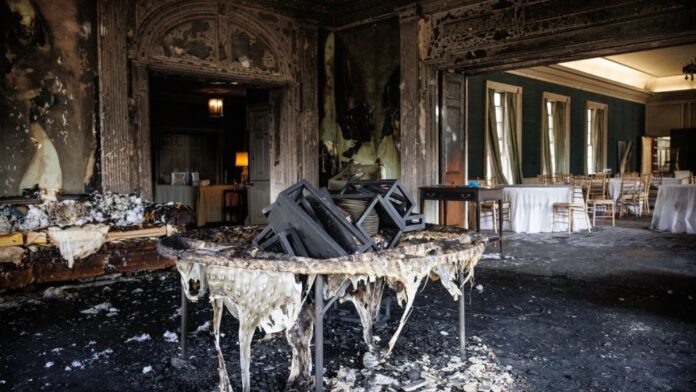 MatzavMatzav6 hours ago
More than a year after an anti-Israel arsonist attacked the governor’s mansion in Harrisburg, Pa., while Gov. Josh Shapiro and his family were there on April 13, 2025, a resident of suburban Philadelphia was arrested for threatening the state’s Jewish chief executive and using antisemitic slurs in doing so.
Richard John Franklin, 65, of Delaware County in the Philadelphia area, was arrested Wednesday and charged with making threats in a state representative’s district office.
According to Pennsylvania State Police, Franklin had gone to Leanne Krueger’s office on a tax issue on July 7 and while talking to one of her aides, used an “antisemitic ethnic slur” against Shapiro while threatening to set the governor’s mansion on fire.
“It is our duty to uphold the sanctity of the law and to protect the commonwealth,” Sgt. Logan Brouse, communications director of the state police, told JNS, responding on behalf of the governor’s office.
The state police “takes threats against the lives of public officials seriously. That’s why the department has formed a dedicated unit to address the growing amount of ideologically motivated violence against elected officials,” Brouse told JNS. “PSP will continue to ensure the safety of public officials in Pennsylvania.”
When members of the state police’s political violence threat unit went to Franklin’s house on Wednesday, the accused “provided multiple, inconsistent accounts of what occurred at the district office,” including admitting “to using the ethnic slur,” per an incident report from the police.
Franklin claimed that his statements “about the governor’s mansion were sympathetic and positive in nature, because the governor and his family survived the previous arson,” per the incident report.
He was taken into custody without incident, police said.
Franklin was charged with making terror threats, ethnic intimidation, political threats, harassment and disorderly conduct.
Marcia Bronstein, regional director for the American Jewish Committee, praised the state police for its actions.
“Words matter, especially when antisemitism has reached record levels in this nation,” she stated. “The Jewish community doesn’t have the luxury of assessing whether someone is making idle threats, especially when Gov. Shapiro and his family were forced from their residence last year when someone tried to burn it down.”
“We thank the state police for their swift and thorough investigation of this incident,” she said.
The person in the earlier arson case, Cody A. Ballmer, 38, said he was upset about Shapiro’s position in the Israel-Hamas war. The governor and his family had held a Passover seder hours before the attack.
Ballmer pleaded guilty and was sentenced, in October, to between 25 and 50 years in prison.
The attack against Shapiro was one of three violent antisemitic incidents in 2025, and was cited by the Anti-Defamation League in its annual audit.
The others were the murder of two Israeli embassy staff members in Washington, D.C., and firebombs thrown at peaceful demonstrators in Boulder, Colo., who were supporting hostages held in Gaza. The firebomber killed one of the demonstrators. JNS
{Matzav.com}
 JBizNews3 hours ago
The Jersey City Council unanimously rejected a proposed 15% municipal property tax increase on Wednesday, July 8, leaving New Jersey’s second-largest city without an adopted budget and still facing an estimated $255 million budget shortfall, according to city officials.
The vote came just one day after New Jersey lawmakers approved a $120 million state rescue package for the city, the largest municipal loan in state history. Several council members who had previously indicated support for the tax increase reversed course following strong public opposition, saying they wanted more time to review the city’s finances before asking residents to pay substantially higher property taxes.
Council members Jake Ephros, Eleana Little and Joel Brooks said homeowners deserved a complete budget before voting on such a significant increase. Ephros warned that delaying action could ultimately result in an even larger fourth-quarter tax bill, calling it a potential “death blow” for many residents.
Despite the council’s vote, city officials cautioned that the financial problems remain unresolved.
Finance Director Bill Viqueira told council members that New Jersey’s Department ofCommunity Affairs (DCA) will closely oversee the city’s finances and has the authority to reject the city’s budget and impose its own tax rate if necessary.
Mayor James Solomon said state officials have indicated Jersey City may ultimately need a tax increase of approximately 20% to stabilize its finances.
“The state has been clear—the only other solution is mass layoffs,” Solomon told the council.
The budget crisis marks a dramatic reversal for a city that spent more than two decades transforming itself into one of the nation’s fastest-growing urban centers. Luxury residential towers reshaped Jersey City’s waterfront, thousands of businesses opened and tens of thousands of new residents moved across the Hudson River from Manhattan.
According to the mayor’s administration, however, years of rising spending outpaced revenue growth. Budget gaps were filled through one-time solutions including property sales, borrowing and federal pandemic relief funding. Solomon, who took office in January, has argued those temporary measures are no longer available.
The administration originally proposed a 20% property tax increase, estimating it would add roughly $1,666 annually to the tax bill of a median-valued home. Following the approval of state financial assistance and public criticism, the proposal was reduced to 15%.
Even at the lower level, city officials estimated the increase would generate approximately $60 million in recurring annual revenue while still leaving roughly $20 million in additional budget reductions and another $10 million in restricted funding necessary to close the remaining gap.
The administration says it has already reduced spending by approximately $55 million, with additional departmental restructuring planned later this year.
The financial impact extends beyond homeowners. Property tax increases typically translate into higher rents as landlords pass along higher costs to tenants. At the same time, large-scale layoffs of city employees could reduce consumer spending and affect businesses throughout Jersey City’s local economy.
The city’s financial pressures have also drawn attention from the credit-rating industry. Moody’s Ratings downgraded Jersey City in December, citing rising labor costs, increasing healthcare expenses and years of insufficient revenue growth. Higher borrowing costs could make future infrastructure and capital projects more expensive.
Mayor Solomon has also ordered a review of more than 100 long-term tax-abatement agreements, including several involving major waterfront developments. He argues many of the agreements generate little tax revenue while providing limited affordable housing benefits.
The city’s fiscal problems have also become a political dispute between the current and former administrations. Solomon has blamed former Mayor Steven Fulop for relying on emergency borrowing, selling city assets and using approximately $100 million in federal COVID-19 relief funds to finance a one-time property tax reduction rather than addressing long-term structural deficits.
Fulop, who left office earlier this year to run for governor, has rejected those claims and maintains the budget could have been balanced without a major property tax increase.
The $120 million state aid package was included in a broader $358.8 million supplemental appropriations bill tied to Governor Mikie Sherrill’s fiscal 2027 budget. Hudson County lawmakers, including Raj Mukherji and Katie Brennan, helped assemble the legislation.
Mayor Solomon plans to present a revised budget on July 15, with final adoption expected in August. However, because the Department of Community Affairs now has significant oversight authority, the ultimate size of any property tax increase may rest with the state rather than the City Council.
JBizNews Desk | Jersey City
© JBizNews.com All Rights Reserved. Reproduction or Distribution without Written Permission is Prohibited.
 JBizNews6 hours ago
President Trump gave three brilliant speeches over July 4th weekend. First at the freedom and faith convention, then at Mount Rushmore, and then on July 4th on the National Mall at Washington D.C.
He emphasized two large-scale thoughts. First, America’s greatness both past, present and future. And second, godless communism is a mortal threat that must be extinguished without delay. And he hammered these points again and again. Essentially giving GOP officials and candidates their talking points for the midterm elections.
Meanwhile, the superb Democratic pollster, Mark Penn, writes that Democrats are unwisely choosing candidates who are completely unqualified for the Senate or House. Graham Platner is a perfect example. And Mr. Penn writes that “antisemitism is anti-Americanism and no tent of any party should be big enough to make room for it.”
Republican strategist Karl Rove writes that socialists spell trouble for Democrats. They can win in deep blue districts, but they’ll weigh down the party elsewhere. And he talks about some of the platforms of these socialist–communist Democrats “all cops are bastards” and “no more police at all ever” from Darializa Avila Chevalier at New York City or another socialist communist, Manny Rutinel in Colorado, who wants to shift money away from the military, policing, and prisons.
All this will be banner headline ads by Republicans who already hold a vast fundraising advantage over Democrats, due in large part from the recent Supreme Court decision that will allow, say, the Republican National Committee pulling money in with the Senate and House campaign committees, and thereby helping federal races state-by-state. It’s a tremendous thing.
Jim McLaughlin writes that President Trump has a 50 percent approval rating among likely voters, with 60 percent approval among Hispanics and 32 percent with blacks. Senator Chuck Schumer is a dead man walking with a 29 percent favorable rating.
For sure the Mamdani-Sanders-AOC socialist communist tail is wagging the Democratic party dog. Yet that dog is not going to hunt come November.
 Yeshiva World News
Related stories
Yeshiva World News8 hours agoDeepening divisions within Iran’s leadership have reportedly spilled into public violence, with President Masoud Pezeshkian and Foreign Minister Abbas Araghchi allegedly coming under physical attack from hardline opponents of negotiations with the United States during funeral events for Supreme Leader Ayatollah Ali Khamenei.
According to reports, the incidents occurred before the latest round of U.S. strikes on Iran and President Trump’s public comments casting doubt on the ceasefire. The attacks underscore growing tensions between Iranian officials who favor diplomacy with Washington and hardliners fiercely opposed to any agreement with the United States.
The New York Times reported that on Monday, Pezeshkian was confronted by a crowd of hardline supporters who attempted to ram into him while shouting, “Death to the compromiser.” The president appeared shaken as security personnel rushed him away and pushed back the crowd.
The newspaper also reported that Foreign Minister Abbas Araghchi was chased through an alley during the funeral procession and struck by a stone. Witnesses said his attackers waved flags, shouted insults, and called for his death.
The reported assaults took place during the weeklong funeral ceremonies for Khamenei, which were held across several cities in Iran and Iraq. The events have become a flashpoint for the country’s internal political struggle, with hardliners directing increasing anger toward officials seen as favoring renewed engagement with the United States.
Senior Iranian officials and government supporters have since called for the attackers to be arrested and prosecuted. The president’s son and adviser, Yousef Pezeshkian, condemned the attacks in a lengthy social media post, warning that turning public anger against Iranian officials only serves the country’s enemies and undermines national unity.
(YWN World Headquarters – NYC)
 Vos Iz Neias7 hours ago
NEW YORK (VINnews) — A senior official in New York City Mayor Zohran Mamdani’s administration planned to meet with Iran’s ambassador to the United Nations before the meeting was canceled following intervention by the U.S. State Department, according to a report by City Journal.
The publication reported that Ana María Archila, New York City’s commissioner for international affairs, had scheduled a July 7 meeting with Amir-Saeid Iravani, Iran’s permanent representative to the United Nations. City Journal, citing multiple sources familiar with the matter, said the State Department was not notified in advance of the planned meeting and later met with city officials to discuss appropriate diplomatic conduct.
EXCLUSIVE: top officials in the Mamdani administration made plans to meet with the Islamic Republic of Iran’s ambassador to the UN.
Commissioner Ana María Archila intended to meet in an official capacity, until the U.S. State Dept. intervened.
Full story in @CityJournal below… pic.twitter.com/qaqbcTVerc
— Adam Lehodey (@adamlehodey) July 9, 2026
According to the report, the meeting was subsequently called off. City Journal also reported that Archila allegedly did not inform Mamdani of the planned meeting and was reprimanded after the mayor learned of it. A spokesperson for the Mayor’s Office for International Affairs told the publication that “this meeting did not and will not take place.” The Iranian mission to the United Nations did not respond to City Journal’s requests for comment.
The report said the incident has raised questions about the scope of the Mayor’s Office for International Affairs, whose mission includes supporting New York City’s relationships with the diplomatic community and promoting international cooperation rather than conducting U.S. foreign policy.
According to City Journal, Archila, a former co-director of the progressive Working Families Party, has sought to expand the city’s engagement with foreign leaders aligned with the administration’s priorities. The publication also reported that the Mamdani administration has taken an active public role on international issues, including criticism of U.S. and Israeli military actions involving Iran and the Middle East.
The mayor’s office has not publicly commented beyond confirming that the meeting did not occur. Neither the State Department nor City Hall immediately issued additional public statements regarding the report.
 Vos Iz Neias1 day ago
BOCA RATON (VINnews)-Conservative commentator Ben Shapiro has intensified his criticism of conspiracy theories surrounding the 2025 assassination of Charlie Kirk, reiterating that engaging with such claims is an “actual sin” and recently blasting podcaster Candace Owens for what he called ongoing efforts to “poison brains at scale.”
Shapiro, in remarks at Turning Point USA’s AmericaFest and on his show, has denounced influencers promoting unsubstantiated narratives about Kirk’s murder at Utah Valley University. A suspect faces charges, including evidence such as confessions and DNA on the weapon.
“If you give her your brain cells to kill, you’re harming yourself and the world. Don’t pretend you’re subscribing to ideological pornography because it’s entertaining,” Shapiro said of consuming such content.
The feud with Owens has escalated in recent days. On July 7, 2026, amid preliminary hearings in the case against suspect Tyler Robinson, Shapiro condemned Owens’ commentary questioning evidence and procedures as dangerous conspiracy-mongering.
“Candace Owens isn’t interested in ‘uncovering the truth’ about Charlie’s murder. She’s generating smoke so that people will believe there’s a fire — about Erika, TPUSA, etc. This is evil. And it’s working. She’s poisoning brains at scale. Resist the conspiratorial arsenic,” Shapiro posted on X.
He dedicated an episode of The Ben Shapiro Show to “Debunking Candace Owens’ Evil Bulls***,” disputing her claims.
Owens has continued to question aspects of the investigation, including text message evidence, and has produced content like the series “Bride of Charlie,” which targets Kirk’s widow Erika Kirk and alleges broader involvement by TPUSA figures and others. Shapiro has urged Erika Kirk to sue Owens, labeling her a “vampire” and “evil, twisted human being” for profiting off the tragedy through innuendo involving foreign intelligence and other baseless elements.
Shapiro has long argued that the conservative movement must reject “charlatans” who traffic in conspiracism, vagueness and grievance instead of evidence and clarity. He has specifically highlighted claims implicating TPUSA staff, Erika Kirk, Mossad and other parties in a cover-up.
“We have an obligation to clarity and to honesty,” Shapiro said. “We should not traffic in generality” or vague references to unspecified actors in Kirk’s death.
The ongoing controversy highlights divisions in conservative media, with some theories carrying antisemitic undertones by targeting Israel or Jewish influencers. VINnews has tracked such narratives amid broader concerns over antisemitism.
Shapiro has emphasized a moral duty for public figures to prioritize truth over audience-pleasing content, warning that conspiracy thinking undermines conservatism and American principles.
 JBizNews5 hours ago
Micron CEO Sanjay Mehrotra detailed the company’s new $250 billion U.S. investment as the chip-making giant responds to surging demand for memory storage in the age of artificial intelligence.
The Boise-based technology company announced Thursday the billion-dollar investment will help Micron’s long-term objective of producing 40% of its DRAM chips in the United States.
“The demand for memory is at unprecedented levels. Memory is in deep shortage right now,” Mehrotra told “The Claman Countdown” on Thursday.
With existing semiconductor facilities in Idaho and Virginia, Micron is expanding its footprint by opening a new manufacturing site in central New York.
FOX Business’ Liz Claman joined the CEO during the first concrete pour at the new location.
🔍 Got a story tip? Email [email protected]
Mehrotra told Claman that memory is the key enabler of AI innovation and said data centers make up more than 50% of the demand.
“Memory is essential to AI,” he said. “AI is driving the demand, and that’s where the value of memory is really high because it enables the performance of AI.”
More memory allows AI to increase accuracy, speed and intelligence, Mehrotra explained.
But while data centers are driving demand for Micron, the need for memory also stems from virtually every modern technology, including smartphones, computers and cars, that rely on data storage.
“The demand is very strong for memory today,” the CEO said. “Memory is critical for AI across data center, consumer devices, automotive, industrial, defense, aerospace.”
“Your phone, your PC, your car, they all need memory,” he added. “Automobiles, fully self-driving cars are like data centers on wheels. They require a lot of memory and storage.”
📲 More stories at @newswithnora on X
Micron’s technologies, including DRAM, NAND and NOR chips, support the evolution of compute-intensive applications and artificial intelligence platforms. The company plans to invest $3 billion in the domestic semiconductor industry to strengthen America’s manufacturing footprint.
Mehrotra said demand will only grow as advanced technologies continue to evolve, noting that more sophisticated systems require greater computing power and memory capacity.
“In the future, when we look at robotics coming in, fully self-driving cars, these all need intelligence. Intelligence is about data. Where does data live? It lives in the memory,” he said.
Micron expects the initiative will create thousands of direct and indirect jobs while expanding domestic chip manufacturing.
Mehrotra said he hopes the investment will help boost domestic production, though surging demand continues to outpace supply.
“Despite our best efforts to accelerate bringing up supply here, as well as globally… The demand continues to build up and we do not see when supply catches up with demand,” the CEO said.
 JBizNews4 hours ago
Germany recorded an estimated 5,120 heat-related deaths during the first half of the year, the Robert Koch Institute said Thursday, July 9, as the country’s public health agency warned that increasingly severe heat waves are becoming both a growing health emergency and a mounting economic burden.
According to the Robert Koch Institute’s latest weekly report, about 4,270 of the deaths were among people aged 75 and older. Women accounted for more fatalities than men, largely because they make up a greater share of Germany’s oldest population. The total already exceeds Germany’s annual average of roughly 2,900 heat-related deaths recorded between 2023 and 2025.
Most of the deaths occurred during a single week of extreme temperatures between June 22 and June 28, when much of Germany experienced its most intense heat of the year. The institute estimated that approximately 4,310 heat-related deaths occurred during that week alone, compared with about 810 deaths recorded from early April through June 21.
Temperatures climbed above 40 degrees Celsius (104 degrees Fahrenheit) in several parts of the country, with a new national high of approximately 41.3 degrees Celsius recorded near Saarbrücken. Public temperature displays in Berlin also registered about 41 degrees Celsius during the heat wave.
Germany’s experience reflects a broader trend across Europe. The Copernicus Climate Change Service, the European Union’s climate monitoring agency, reported Thursday that Western Europe experienced its hottest June on record, with average temperatures reaching 20.74 degrees Celsius. France, Belgium, Spain and the Netherlands together also reported more than 4,700 excess deaths during the same late-June heat wave.
Beyond the tragic loss of life, economists warn that extreme heat is increasingly weighing on Europe’s economy. Many German homes, hospitals and care facilities were built for a cooler climate and lack widespread air conditioning, forcing governments and businesses to invest heavily in cooling systems, building upgrades and public-health protections.
Allianz Trade estimates that climate-related losses could reduce the European Union’s cumulative economic output by 5% to 7% between 2026 and 2030. Germany alone could face economic losses of approximately $131 billion during that period, according to the insurer’s projections.
Industries that rely on outdoor labor face some of the greatest risks. Construction, agriculture, transportation and delivery services all experience productivity declines as temperatures rise, while recurring drought conditions continue to pressure crop yields and food production across Europe.
The European Central Bank has previously warned that prolonged drought and extreme heat contribute to higher food prices and slower economic growth. Officials increasingly view climate-related disruptions as both an inflation risk and a long-term challenge for economic planning.
As climate events become more frequent, businesses are also confronting rising insurance costs, higher energy demand for cooling, increased workplace safety requirements and disruptions to supply chains. Many economists now view extreme heat as an ongoing business risk rather than an occasional weather event.
German officials expect the death toll to increase further as additional reports from the hottest days of the summer are finalized.
For businesses, insurers and governments alike, Thursday’s report underscores that extreme heat is no longer simply an environmental issue—it has become an increasingly important economic challenge affecting productivity, infrastructure, healthcare spending and long-term growth across Europe’s largest economy.
JBizNews Desk | Berlin
© JBizNews.com All Rights Reserved. Reproduction or Distribution without Written Permission is Prohibited.
 Matzav1 day ago
Yair Netanyahu, the son of Prime Minister Binyamin Netanyahu, has officially changed his name and is now registered with Israeli authorities as “Yonatan Han,” according to a report published Wednesday by Haaretz.
The newspaper reported that the change came to light through records maintained by the Israel Tax Authority, where the new name appears alongside Netanyahu’s identification number.
According to the report, tax withholding documents issued in December 2024 still identified him as Yair Netanyahu. However, documents issued this year list the same identification details under his new legal name instead.
Yair is not the first member of the Netanyahu family to adopt a different name. His younger brother, Avner Netanyahu, previously used a pseudonym when purchasing an apartment near London in 2022, registering the property with the British Land Registry under the name “Avi Avner Segal.”
The report noted that Yair’s new name carries significant family meaning. “Han” was the original surname of his maternal grandfather, Shmuel Ben Artzi, while “Yonatan” honors his paternal uncle, Yonatan Netanyahu, who was killed while leading the 1976 Entebbe hostage rescue mission.
{Matzav.com}
 Matzav1 day ago
Ukrainian President Volodymyr Zelensky made a striking assertion this week, claiming that Ukraine has video documentation for every Russian soldier it kills, wounds, or captures on the battlefield. Speaking at a NATO defense forum in Turkey, Zelensky said Ukrainian forces are inflicting roughly 30,000 Russian casualties each month, with drones accounting for the overwhelming majority of those losses.
Addressing the North Atlantic Treaty Organisation Defence Industry Forum in Ankara on Tuesday, Zelensky said Ukraine is currently “eliminating” approximately 30,000 Russian troops every month and has visual evidence confirming every casualty. His comments highlight how dramatically modern warfare has evolved, with tiny digital cameras now integrated into nearly every aspect of combat—from helmet-mounted and rifle-mounted cameras carried by infantry to the countless first-person-view drones dominating the battlefield. As a result, today’s conflicts generate an unprecedented volume of recorded footage, with traditional artillery among the few weapons not routinely producing visual documentation.
Zelensky’s estimate of Russian losses aligns with a recent assessment released by the Washington-based Center for Strategic and International Studies (CSIS). Earlier this month, the think tank concluded that “Russia’s monthly casualty rates of over 30,000 per month in 2026Russia’s monthly casualty rates of over 30,000 per month in 2026.” According to the report, the staggering pace of soldiers killed, wounded, or missing has driven the overall toll of Russia’s invasion to roughly two million casualties, including an estimated 1.4 million Russians and about 600,000 Ukrainians.
Seeking to emphasize that his remarks were not intended as a celebration of battlefield success, Zelensky said the figures instead reflect the grim reality of a war Russia chose to launch. He told the forum: “… in Ukraine as we defend our positions on the frontline, and do so in a fully justified war of self-defense, we are now eliminating around 30,000 Russian soldiers every month… and we have video confirmation for every single one of them. The overwhelming majority were struck by drones. And frankly we take no pride in this. We are saying it to show what modern war looks like, not a war we started, but one we are forced to fight.”
If the casualty estimates are accurate, Russia could face increasing pressure to sustain its military campaign, as battlefield losses may now be exceeding the country’s ability to replenish its forces. The CSIS report estimates that Russia is recruiting roughly 27,000 new soldiers each month—slightly fewer than the number reportedly becoming casualties. Supporting Ukraine’s broader claims about the changing nature of combat, the report added: “According to some estimates, over 90 percent of Russian casualties are from drone attacks rather than a result of human-to-human engagements. Casualty rates are extremely high for soldiers that enter the kill zone.”
 Vos Iz Neias10 hours ago
JERUSALEM (VINnews) — A proposed sale of Arkia Israel Airlines to Brooklyn-based Haredi real estate developer Ezra Unger could collapse as employee-shareholders vow to fight any attempt to end the carrier’s Shabbat and holiday flight operations.
Employees, who own a 22.1% stake in Israel’s second-largest airline, warned they are prepared to take labor action if a new owner seeks to halt flights on Shabbat, arguing the move would amount to religious coercion and inflict significant financial damage on the airline.
According to The Times of Israel, union chairman Avi Edri said workers made it “unequivocally clear” during a meeting with Unger that they would not support shutting down Shabbat operations. He said Arkia operates about 2,500 flights annually on Shabbat and Jewish holidays, representing roughly 70 working days each year.
Unger, a 36-year-old Hasidic real estate developer from Brooklyn, is in talks to purchase the controlling stake held by the Nakash family, which owns more than 70% of the airline. However, the owners are reportedly considering two other offers, and no agreement has been reached.
Edri said the workers’ corporation also holds a right of first refusal, allowing it to seek another buyer if negotiations advance. Arkia declined to comment on the reported sale talks.
Arkia serves more than 1.5 million passengers annually, operating domestic flights within Israel as well as routes to Europe, New York, Thailand and Vietnam. Unlike El Al, which has long avoided Shabbat flights, Arkia continues to operate on the Jewish day of rest, making the issue a central point in the negotiations.
 Belaaz17 hours ago
As relentless missile and drone attacks batter Ukraine’s capital, leaving dozens dead and thousands in distress, Kyiv’s Jewish community has mobilized an extensive humanitarian operation. Led by Chief Rabbi Yonatan Markovitch, volunteers are distributing food, water, clothing and essential supplies to Jews and non-Jews alike who have been affected by the bombardments
Kyiv, Ukraine’s capital, has endured one of its most devastating waves of bombardment since the outbreak of the war. In recent days, large-scale missile and drone attacks have struck residential neighborhoods and civilian infrastructure, claiming dozens of lives and leaving many more wounded.
The scale of the destruction prompted city authorities to declare an official day of mourning, while rescue teams continue searching through the rubble for survivors and victims.
In a statement to Belaaz, Rabbi Markovitch said:
“Over the past week, we’ve gone to sleep to the sound of explosions and woken up again and again to the noise of incoming missiles. It certainly hasn’t been easy. But when you’re able to help a Jewish man put on tefillin for the first time in his life, or bring a bag of food and clothing to someone whose home was destroyed and who breaks down in tears from gratitude, your entire perspective changes.”
Alongside the emergency services, JCC Beit Menachem Kyiv community has mobilized to provide assistance to those affected. Under the leadership of Kyiv’s Chief Rabbi and Chabad shaliach, Rabbi Yonatan Markovitch, community volunteers have launched a broad humanitarian relief effort to aid residents whose lives have been upended by the attacks.
Over the past several days, volunteers have been distributing food, bottled water, clothing, medications, essential supplies and other basic necessities to families whose homes were damaged, as well as to the elderly, the needy and anyone requiring immediate assistance, regardless of their religion. In addition to providing material aid, volunteers are offering practical support and guidance to families left without help in the wake of the devastation.
“At a time when the air raid sirens scarcely stop, our responsibility is to be here for every person in need,” Rabbi Markovitch said. “We are distributing food, water, and essential supplies, strengthening families and giving them hope. Our mission is to bring light precisely during these darkest moments for the people of Ukraine in general, and for the residents of Kyiv in particular.”
 JBizNews1 day ago
Costco is quietly discontinuing two Kirkland Signature craft beers, including an award-winning brew fans have called “one of the best lagers on the market.”
The move will end sales of the highly prized Kirkland Signature Helles Lager and Kirkland Signature Vintage Ale, according to Craft Business Daily (CBD).
The beers were co-branded with Oregon-based craft brewery Deschutes Brewery. CEO Peter Skrbek announced the decision in an early July note to distributors, according to the outlet.
Production is slated to scale back as soon as this month, with the beers expected to disappear from most warehouse locations by September or October, according to VinePair. The wholesale warehouse will continue selling its already-brewed inventory until supplies run out, the outlet added.
No official reason was given for the end of the two-year partnership. The two Deschutes-brewed products are the only beers in Costco’s current private-label portfolio.
According to VinePair, the beers were first launched in December 2024 and each sold in 12-packs for $13.99.
Both products quickly became fan favorites, with shoppers praising their quality and low price point.
The World Beer Cup, one of the most respected beer competitions in the world, awarded Kirkland Signature Helles Lager a silver medal in 2025 and a bronze medal in 2026.
“This is one of the best lagers on the market, especially at the price and I’m going to miss it,” one Reddit user said on Monday.
According to VinePair, the Costco-Deschutes deal helped the brewery recover from an 11% decline in sales volume in 2023. After launching the partnership, Deschutes saw a 9% increase in volume.
By 2025, Deschutes ranked as the 10th-largest craft brewery in the U.S., according to the Brewers Association.
Deschutes later fell within the top 25 grocery store vendors despite year-to-date dollar sales increasing 8.3% and volume rising 9.3% compared with last year, according to VinePair, citing Circana market data.
FOX Business reached out to Costco and Deschutes Brewery for more information.
 Matzav
Related stories
Matzav4 hours agoIsrael “did not ask anyone for permission to enter Lebanon, and we do not need permission to remain in Lebanon,” Israeli Defense Minister Yisroel Katz said on Thursday, hours after U.S. President Donald Trump said he believed Yerushalayim would withdraw from the country.
“It is our right and our duty to protect the residents of the Galilee and the citizens of Israel from the threats posed by the jihadist Hezbollah terrorist organization, which seeks to destroy the State of Israel,” Katz said in a Hebrew-language statement.
The defense minister noted that the Iranian proxy had launched two unprovoked terrorist campaigns against the Jewish state—the first a day after the Hamas-led Oct. 7, 2023, massacre, and again following the start of “Operation Roaring Lion” against the Islamic Republic of Iran on Feb. 28.
After Hezbollah’s renewed attacks on March 2, Yerushalayim launched a broad aerial campaign against terror targets in Lebanon and expanded military operations aimed at preventing cross-border attacks on Israeli communities.
The Israel Defense Forces “responded with force and, over the past two and a half years, has destroyed most of Hezbollah’s capabilities and leadership, foremost among them the arch-terrorist Hassan Nasrallah, one of the architects of the plan to destroy Israel,” Katz said on Thursday.
The IDF “established a strong security zone in Lebanon, stretching from the Mediterranean coast in the west to the Beaufort Ridge and the foothills of Mount Hermon in the east,” he continued. “The area has been cleared of residents and terror infrastructure, both above and below ground, in order to protect the residents of the Galilee from the threat of cross-border raids, anti-tank missile fire and other direct threats.
As he and Israeli Prime Minister Binyomin Netanyahu “have made clear, we will continue to remain in the security zone in Lebanon and operate from it as long as necessary until Hezbollah is disarmed throughout Lebanon and the threat to the residents of northern Israel is removed,” Katz vowed.
Trump, speaking to reporters alongside Syrian President Ahmed al-Sharaa at a press conference in Ankara on Wednesday, said he had discussed an Israeli withdrawal from Lebanon with Netanyahu.
“I talked to Bibi [Netanyahu] about that. I think they’re going to. I think they want to. I don’t think it’s a question,” the U.S. president said. “We have a deal with Israel and Lebanon, and yeah, they’ll leave.”
The June 26 framework of understandings between Yerushalayim and Beirut conditions an Israeli redeployment on Hezbollah being removed from Southern Lebanon. JNS
{Matzav.com}
 JBizNews6 hours ago
OpenAI on Thursday unveiled a new enterprise offering called ChatGPT Work, which is designed to leverage the popular chatbot to carry out and automate workplace tasks across a variety of applications and files.
ChatGPT Work is powered by OpenAI’s most advanced artificial intelligence (AI) model, GPT-5.6, and is capable of gathering context from apps, files and workflows to create finished documents, spreadsheets, presentations, reports and websites, the company said in its announcement.
The company explained that ChatGPT Work can use plugins to connect with apps like Slack, Microsoft Teams, Google Drive and Sharepoint, as well as email systems, calendars, CRM platforms, project trackers and other tools.
Once connected, ChatGPT can gather context about the task, pull in information, create documents, decks and perform analyses while refining drafts in the background of the user’s work.
In OpenAI’s announcement, the company said that ChatGPT Work can continue to work on projects when the user isn’t on their phone or computer through the use of Scheduled Tasks, which can take new messages and turn them into updated docs or slides and circulate the changes among team members, for example.
ChatGPT Work will be available as of Thursday for Pro, Enterprise, and Edu plans – and will roll out to Plus and Business plans in the coming days. It’s also available in the ChatGPT desktop app on every plan, including the Free plan.
The announcement comes as OpenAI’s latest foray into agentic AI tools following the launch of Operator and deep research, which were later consolidated into ChatGPT Agent for individual users, as well as Workspace Agents for automating enterprise workflows.
OpenAI is in the midst of an intense competition with AI rivals like Anthropic, which released Claude Cowork – an agentic tool that can plan and carry out multi-step tasks autonomously.
Anthropic added plugins to Claude Cowork that allowed it to automate tasks related to legal, sales, marketing and data analysis, which triggered a selloff in U.S. and European software and professional services stocks earlier this year amid concerns about its potential to disrupt the data analytics industry.
Microsoft, an OpenAI backer, also unveiled Copilot Cowork to expand its agentic AI offering on the heels of Anthropic’s rollout.
Reuters contributed to this report.
 Yeshiva World News19 hours ago
President Yitzchak Herzog used a speech Wednesday evening to respond to the storm surrounding Shin Bet chief David Zini, declaring that Israel’s security and law enforcement bodies “are not loyal to a person or to one camp or another, but to the sovereign — which is the people, to Israel’s body of law, and to the values of the Jewish and democratic state.”
Speaking at the graduation ceremony of the National Security College, Herzog said that “in the face of the polarization spreading through society, we must cling to statesmanship.” He added that the institutions of the state, its laws and its directives, “belong to everyone and serve everyone.” Herzog also stressed that Israel rests on the commitment, in the words of the Declaration of Independence, to “complete equality of social and political rights for all its citizens, without distinction of religion, race or sex.” He said that universal and Jewish moral values, safeguarding human dignity and human rights, adherence to the international laws of war to which Israel is committed, and preserving law and justice “are the path.”
Herzog’s remarks came a day after Zini touched off a political storm when he said he agreed to take the job because he believed he was better than others at being loyal to the elected leadership, regardless of his own political views. “On this issue I felt I was very qualified, more than many others,” Zini said. “I have an agenda. I want to advance it. That is my responsibility. That is my role.”
National Security Minister Itamar Ben Gvir quickly responded with a sharp statement attacking Herzog.
“Mr. President, the Labor Party has already closed. There is no need to continue leading it from the President’s Residence,” Ben Gvir said. “You defended Ronen Bar, yet you attack David Zini. The time has come for you to stop deepening divisions and serving as the mouthpiece of one side, and to start being the president of all the people of Israel. When it came to honoring ‘Brothers in Arms’ refusers, you acted quickly, but when it comes to justice and pardoning the prime minister, suddenly you have all the time in the world. Embarrassing and divisive.”
Also speaking at the ceremony was IDF Chief of Staff Lt. Gen. Eyal Zamir, who reflected on the lessons of the war and said that October 7 and the 1,000 days of fighting since then are not only a wound but also the army’s operational compass. He said the war must remain a source of lessons, growth and improvement, while pushing back against what he called the “background noise and manipulations” of social media and public commentary.
Despite that noise, Zamir said, there is one “truth carved in stone” — that the IDF has achieved unprecedented operational successes on every front in which it has fought, struck the enemy hard, removed existential threats, and improved Israel’s security position. He added that even if a new phase opens, the campaign is continuing in a different form, with the IDF implementing a new security concept focused on striking the enemy, removing threats in advance, and creating demilitarized zones along Israel’s borders inside enemy territory.
(YWN World Headquarters – NYC)
 Matzav13 hours ago
In one of the largest recent philanthropic gifts to Satmar educational institutions, philanthropist Mr. Avraham Yehuda (Yudi) Goldberger has pledged $10 million to secure the naming rights for a major expansion project benefiting the Satmar girls’ schools in Kiryas Yoel.
The donation will fund the naming rights for the construction of new Bais Rochel towers that are planned as part of a significant expansion of the mosdos. The new buildings are intended to accommodate the continued rapid growth of the Satmar community and provide additional space for its expanding network of girls’ educational institutions.
In honor of the landmark contribution, a special l’chaim celebration was held at Mr. Goldberger’s home, attended by the Satmar Rebbe along with prominent rabbonim, community leaders, and supporters of the project.
The expansion is expected to play a key role in meeting the increasing demand for classroom and educational facilities in Kiryas Yoel, where the Satmar community has experienced substantial growth in recent years.
The $10 million gift marks one of the largest individual contributions toward the project and reflects the continued commitment of community philanthropists to strengthening and expanding the Satmar educational system.
{Matzav.com}
 Matzav17 hours ago
A New York City Housing Authority plumbing supervisor who earned one of the largest paychecks in city government is now under investigation after claiming nearly 2,600 hours of overtime while simultaneously being connected to two private plumbing companies, the NY Post reports.
Jakub Markowski, 41, has come under official scrutiny more than a year after he was identified as the city’s biggest overtime earner. During the 2025 fiscal year, he collected an eye-popping $332,000 in overtime alone, helping boost his total city compensation to approximately $465,000.
City officials confirmed that the Department of Buildings launched an investigation into Markowski after receiving a complaint regarding his “business practices.”
Markowski, who resides in a luxury apartment building near the Rockaway Beach boardwalk, did not respond to requests for comment. His wife, Elizabeth Markwowska, 63, said there was a simple reason for his absence.
“He works seven days a week,” she told The NY Post from their home Wednesday.
State records indicate that while employed by NYCHA, Markowski was also associated with two private companies, Super Plumbers Corp. NYC and Dynamic Blue Water Mechanical.
As part of the Department of Buildings’ inquiry, inspectors reviewed plumbing jobs for which Markowski was listed as the permit holder to ensure the work met safety requirements.
According to city officials, the inspection found no violations.
Payroll records compiled by the Empire Center show Markowski ranked as the fifth-highest-paid employee in all of New York City government.
His regular salary for fiscal year 2025 totaled about $118,000 before overtime. The remaining hundreds of thousands of dollars came from an extraordinary 2,558 hours of additional work.
According to The New York Times, reaching that total would have required Markowski to average roughly seven hours of overtime every single day of the year.
When questions first arose about the enormous payout, NYCHA defended the overtime, saying it resulted from “extensive plumbing and heating demands that are mandated and monitored by law.”
The unusually large overtime payments, coupled with Markowski’s ties to two private plumbing businesses, eventually prompted the Plumbing Foundation of New York, a nonprofit trade organization, to file a formal complaint, according to The New York Times.
“Enabling one individual to run a private plumbing business while serving as a city plumbing supervisor and accruing more overtime than any other city employee is beyond wasteful, and it raises serious concerns about the integrity, safety and oversight of NYCHA’s building operations,” April McIver, the group’s executive director, told the Times.
The city’s Department of Investigation has also opened a probe involving Markowski but has not disclosed whether it is examining his overtime claims, his private business activities, or both.
“This is an ongoing matter at DOI and we decline further comment,” a spokesperson said.
A resident of the Maspeth building where both plumbing companies are registered said she knew little about the businesses. A sign displayed in the window for Super Plumbers Corp. identifies Markowski by name.
Markowski’s wife said her husband had placed someone else in charge of operating the two companies.
She also said she had no idea he was New York City’s highest-paid plumber and did not know what he did with his earnings.
“He comes home late. He works overtime. He works very hard,” she said.
“He treats me like a woman. Very nice guy.”
 Matzav1 day ago
For the first time in years, the Stoliner Rebbe will not conduct the traditional yahrtzeit tish marking the yahrtzeit of Rav Shlomo of Karlin zt”l, a longstanding annual gathering that has become a central event for Karlin-Stolin chassidim.
The yahrtzeit, observed on the eve of 22 Tammuz, commemorates Rav Shlomo of Karlin, one of the towering figures of early Chassidus, who was murdered by a Russian Cossack in 1792. In Chassidic tradition, Rav Shlomo is often associated with Moshiach ben Yosef, based on a longstanding tradition that he was killed by a non-Jew named Armilus, paralleling descriptions connected to Moshiach ben Yosef.
Each year, the Stoliner Rebbe leads a large yahrtzeit tish in Givat Ze’ev attended by hundreds of chassidim. According to the custom observed in Karlin-Stolin, the Rebbe recites a Shehecheyanu over a new fruit during the tish, even though the yahrtzeit falls during the Three Weeks, when it is customary to refrain from reciting Shehecheyanu on weekdays. In recent years, the fruit traditionally used for the brocha has been a lychee.
This year, however, Karlin-Stoliner chassidim were surprised to learn that the annual gathering would not take place. Notices posted in the chassidus’ batei medrash throughout Eretz Yisroel informed chassidim that they should hold their yahrtzeit seudos locally, rather than travel to the customary central tish.
According to sources, the Stoliner Rebbe departed for Europe on Tuesday morning. While there has been no official confirmation, it is believed that the Rebbe intends to visit the kever of Rav Shlomo in Ludmir, Ukraine, on the day of the yahrtzeit—a visit that, if it takes place, would reportedly mark the first time he has done so.
No official announcement has been made regarding the trip. The Stoliner Rebbe is known for traveling with exceptional modesty, often flying without attendants, aides, or public notice.
{Matzav.com}
 Yeshiva World News8 hours ago
Thousands of young Chareidi couples who registered for the Dira B’Hanacha subsidized housing lotteries before the High Court barred bnei yeshivos from participating have received official notices from the Housing Ministry informing them that they have been removed from the lotteries.
The move marks a significant escalation, as these couples registered before the High Court issued its ruling but are now being removed retroactively.
Kol Chai reported that the next major question is what will happen to the thousands of applicants who have already won previous lotteries but have not yet reached the stage of selecting an apartment and signing a purchase agreement. In many cases, two, three, or even four years can pass between notification of winning a lottery and the signing of a contract.
According to the report, that question is now on the desk of the virulently anti-Chareidi Deputy Attorney General Gil Limon. Sources familiar with the matter say legal officials are currently examining whether they can revoke lottery wins even for applicants who have already been selected, provided they have not yet signed a purchase agreement.
At this stage, officials acknowledge that once a contract has been signed, there is no straightforward legal mechanism to revoke the award or alter rights that have already vested. However, those who have won a lottery but have not yet signed contracts are now at the center of the legal deliberations.
The Israel Land Authority held a committee meeting yesterday attended by Limon, and consultations are continuing ahead of a decision. If legal authorities determine that lottery wins can be revoked before contracts are signed, the move could affect thousands of Chareidi families who have already received notice that they won and have planned their financial future accordingly.
(YWN Israel Desk—Jerusalem)
 JBizNews7 hours ago
.
Federal regulators believe that after an earlier remember involving the same automobiles failed to solve the issue, Kia is is issuing a new recognize for more than 460, 000 vehicles.
The National Highway Traffic Safety Administration announced on Thursday that the recall affects 462 869 Kia Telluride cars from the ages 2020 to 2024.
Due to the possibility of fire while driving or parked, users are advised to area inside and aside from other vehicles and structures.
HONDA RECALLS MORE THAN 325 000 Cars FOR POTENTIAL CASH RISK
For the same problem, the exact cars were recalled in 2024.
The change may be dislodged, misaligned, or damaged, causing the chair motor to continue operating and overheating if the front energy seat slide cover or knob is struck or unwittingly struck.
The past recall’s poor repair also could cause the motor to start overheating and catch fire.
Seat vehicles and 11 instances of desk fires have been reported.
Lincoln RECALLS MORE THAN 110, 000 MUSTANG VEHICLES OVER WINDSHIELD WIPER AND DRIVETRAIN Flaws
FOX BUSINESS ON THE GO: Press HERE.
On August 13, owners may receive letter of alert.
Owners can then get their vehicles to a Kia vendor where an electronic wire assembly may be installed to stop the seat motor from working continuously if the seat switch is damaged, misaligned, or otherwise misaligned privately.
 Matzav1 day ago
An unusual scene unfolded Wednesday in Israel’s Supreme Court when Michael Fuah, chairman of the “Choosing Family” organization, appeared before the justices wearing tefillin during a hearing on his organization’s petition concerning posthumous sperm extraction.
Justice Noam Solberg took note of Fuah’s appearance, observing that it is “not a routine occurrence” for petitioners to appear before the court wearing tefillin. Fuah explained that two months earlier he had accepted upon himself the practice of wearing tefillin throughout the day.
Justice Solberg responded that the practice was noteworthy, pointing out that wearing tefillin all day requires a person to maintain an atmosphere of holiness. Fuah replied that only engaging in frivolous or inappropriate activities would interfere with the mitzvah.
Chief Justice Yitzchok Amit also commented on the uncommon sight, calling the practice “very unusual” and adding that he was pleased Fuah regarded the Supreme Court as a holy place.
{Matzav.com}
 The Lakewood Scoop11 hours ago
In response to the recent service issues in Lakewood.
 Yeshiva World News1 day ago
A British neo-Nazi has been sentenced to 13½ years in prison after being convicted of preparing terrorist acts, including plans for a mass shooting, bombing ATMs, and targeting other locations in what prosecutors described as a dangerous extremist plot.
Alfie Coleman, now 22, was arrested by Britain’s MI5 in September 2023 after spending months communicating with undercover intelligence officers on encrypted messaging apps while attempting to purchase a Makarov semi-automatic pistol, five magazines, and 200 rounds of ammunition using savings from his part-time supermarket job.
Investigators found a cache of extremist material at Coleman’s home, including knives, a Molotov cocktail, a swastika, a Black Sun flag associated with neo-Nazism, hidden cameras, a bug detector, and far-right literature. They also uncovered detailed plans outlining potential terrorist attacks, including hijacking an aircraft, attacking the home of London’s mayor, and placing explosives inside ATMs. Counterterrorism officials said his efforts to acquire firearms suggested he intended to carry out a mass shooting, with mosques believed to be among his potential targets.
During the investigation, authorities also discovered lists of individuals Coleman referred to as “race traitors,” including former coworkers and customers who were in interracial relationships. One listed target was a cashier whose husband is African American.
Coleman admitted attempting to possess prohibited firearms and ammunition and pleaded guilty to multiple counts of possessing material useful for terrorism. Although he denied planning a terrorist attack, a jury at his retrial convicted him of preparing acts of terrorism. The court sentenced him to 13½ years in prison followed by five years of supervision, with the judge describing him as a “dangerous offender” who held deeply racist extremist views.
(YWN World Headquarters – NYC)
 JBizNews7 hours ago
More than 2.5 million bottles of a prescription steroid eye medication are being recalled nationwide after the Food and Drug Administration classified the action as a Class II recall over concerns about foreign material found in the product.
Lupin Pharmaceuticals Inc. voluntarily recalled 2,530,182 bottles of prednisolone acetate ophthalmic suspension USP, 1%, after the presence of a foreign substance was identified in certain lots, according to an FDA enforcement report.
The affected prescription eye drops were manufactured by Lupin Limited in Pithampur, India, and distributed nationwide. The recall includes 5 mL, 10 mL and 15 mL bottles sold under National Drug Codes 70748-332-02, 70748-332-03 and 70748-332-04.
The FDA classified the recall as a Class II recall on June 30. According to the agency, a Class II recall is issued when use of a product may cause temporary or medically reversible adverse health consequences or when the probability of serious adverse health consequences is considered remote. Class I recalls involve products that could cause serious injury or death, while Class III recalls involve products that are unlikely to cause adverse health consequences.
The recall covers dozens of lot numbers with expiration dates beginning in July 2026 and extending beyond October 2026. According to the FDA, the products were distributed nationwide. Consumers and healthcare providers can compare affected lot numbers with the FDA’s published enforcement report to determine whether their medication is included in the recall.
Prednisolone acetate ophthalmic suspension is a prescription corticosteroid eye drop used to treat inflammation after eye surgery, eye injuries and certain inflammatory eye conditions.
Patients who believe they have an affected bottle should contact a pharmacist or healthcare provider to determine whether the medication is included in the recall and discuss replacement medication or other treatment options. Patients should not stop using a prescribed medication without consulting a healthcare provider.
Lupin initiated the recall June 4 and notified customers by letter. The FDA said no press release has been issued for the recall, which remains ongoing.
FOX Business has reached out to Lupin for additional information, including the nature of the foreign material found in the recalled products, whether any adverse events have been reported and what guidance the company is providing to patients. The company had not responded by publication time.
 Matzav6 hours ago
Michael Sam Teekaye Jr., 22, who admitted to trying to join the Islamic State and planning to attack Jews and Zionists in the United States, was sentenced to 15 years in federal prison, followed by supervised release for life.
The resident of Hanover, Md., had faced 20 years.
He admitted that he had “multiple” conversations with an undercover officer in March and April 2023, during which he said he wanted to go to Africa and become a mujahid, a “fighter,” for ISIS, according to the U.S. Department of Justice.
Teekaye told the officer that his “plan B” was to attack Jews and Israel supporters in the United States and “said that he researched buildings close to him that support Israel and thought about how to ‘gun down key members or anyone involved,’” the Justice Department said.
“Mr. Teekaye sought to support a foreign terrorist organization that has committed unspeakable acts of violence and took real-world steps to carry out a terrorist attack in Maryland,” stated Kelly O. Hayes, U.S. attorney for the District of Maryland.
“Today’s sentence underscores that those who seek to aid terrorist organizations will be identified, prosecuted and held fully accountable,” Hayes said. JNS
{Matzav.com}
 JBizNews1 day ago
President Donald Trump said Wednesday that Iran had reached out seeking to end the war, telling reporters aboard Air Force One as he returned from a NATO summit in Ankara, Turkey, that Tehran “called a little while ago” and wanted “to make a deal so badly.” He immediately questioned whether the Iranian government was “worthy” of one, leaving the future of the month-old ceasefire in doubt after two days of renewed U.S. military strikes.
The remarks capped a combative day for the president. Earlier at the summit, Trump told reporters, “I’m not sure I want to make a deal,” calling Iran’s leaders “scum” and “liars” and saying U.S. negotiators were “wasting their time.” “We can play games, but I’m not sure I want to make a deal,” he said. “Just finish the job.” Asked why he had shifted so quickly from describing Iran’s leaders as “smart” and “rational” only weeks earlier, Trump replied, “I got to know them.”
The latest escalation began Tuesday when U.S. Central Command (CENTCOM) said Iranian forces attacked three commercial vessels near the Strait of Hormuz, one of the world’s busiest shipping lanes. Shortly afterward, the U.S. Treasury Department revoked the waiver that had allowed Iran to resume oil exports under last month’s truce, cutting off a major source of revenue for Tehran.
CENTCOM said U.S. forces struck more than 80 military targets overnight, including air-defense systems, radar installations, anti-ship missile batteries and more than 60 fast boats operated by Iran’s Islamic Revolutionary Guard Corps. On Wednesday afternoon, the command announced another round of strikes aimed at further degrading Iran’s ability to threaten commercial shipping through the strait.
Trump suggested the campaign could broaden further. He said Washington could restore the naval blockade of Iranian ports that had been lifted under the ceasefire and floated the possibility of seizing Kharg Island, Iran’s principal oil-export terminal. He also raised the prospect of targeting Iran’s electrical grid, saying, “It may be a big attack, and it’ll knock out a lot of stuff. We’ll take them out.”
Despite the tough rhetoric, Trump insisted any renewed military campaign would be brief.
“Anything that happens is going to happen very fast,” he said. “We’re not looking for long-term.”
The president also said he believes he remains a top target of the Iranian government, telling reporters in Ankara, “I’m No. 1 on the kill list for Iran,” before joking that he would rather be “No. 1 on TikTok.” He confirmed he would return to Washington aboard an older presidential aircraft instead of the recently delivered plane donated by Qatar, declining to say whether security concerns influenced the decision. The U.S. Justice Department announced in 2024 that it had disrupted an alleged Iranian plot to assassinate Trump.
Iran forcefully rejected Trump’s characterization of events.
Foreign Ministry spokesman Esmaeil Baqaei accused Washington of violating the June agreement “through its unilateral actions” and said Iran would defend its sovereignty. Deputy Foreign Minister Kazem Gharibabadi called Trump a “criminal,” while another Iranian official described the president’s comments as “disgusting.”
Foreign Minister Seyed Abbas Araghchi wrote that insults directed at the Iranian people “do not diminish” the country, adding that Iran responds to provocation “with action.” Parliament Speaker Mohammad Bagher Ghalibaf, who has played a leading role in negotiations, argued that it was the United States that violated the agreement by restoring oil sanctions, declaring, “The era of bullying and extortion is over. We don’t fold.”
Speaking in Milwaukee, Vice President JD Vance defended the administration’s military response and restated its position.
“The basic deal that we cut was we’ll lift our blockade if you stop shooting at ships — but if you shoot at ships, we are going to punch back, and we’re going to punch back harder than ever before,” Vance said. “If they shoot at ships, we’re going to knock the hell out of them, and it’s that simple.”
At the center of the dispute remains the framework signed on June 17 by Trump and Iranian President Masoud Pezeshkian. The 14-point memorandum halted military operations, reopened the Strait of Hormuz and lifted the U.S. blockade while giving both sides 60 days to negotiate a broader peace agreement. That negotiating window expires in mid-August, with Washington and Tehran now accusing each other of violating its terms.
U.S. envoy Steve Witkoff and presidential adviser Jared Kushner met with mediators in Doha in late June, but no direct talks with senior Iranian officials have been publicly confirmed since then.
For all of the heated rhetoric, Trump stopped short of closing the diplomatic door, saying negotiators “can keep talking if they want.”
Whether Tehran’s reported outreach leads to renewed negotiations or another breakdown may determine whether the ceasefire survives the weeks ahead.
JBizNews Desk | Washington
© JBizNews.com All Rights Reserved. Reproduction or distribution without written permission is prohibited.
 Matzav7 hours ago
A coalition of state financial officials is calling on President Donald Trump to take executive action that could unlock an estimated $39 billion in forgotten savings and war bonds, arguing that the money belongs to American families—not the federal government—as the nation prepares to mark its 250th anniversary, the NY Post reports.
Thirty state financial officers sent a letter to Trump on Thursday urging him to direct the Treasury Department to release billions of dollars tied to unclaimed bonds. They contend that many of the original bondholders have since died, misplaced their records, or simply forgot about the investments, leaving their heirs unaware that the assets exist.
“Americans purchased war bonds not merely as investments, but as acts of patriotism and confidence in the nation’s future,” officials from Alabama, Idaho, Missouri, North Carolina and 26 other states wrote, nodding to savings stamps purchased by children, neighborhood bond drives and payroll savings plans.
The officials pointed out that Trump sought to speed up the process of returning matured savings bonds during his first administration through a 2020 executive order. However, they said changes enacted under the Biden administration through the Secure 2.0 Act in 2022 created “a frustrating catch-22” for state treasurers.
According to the letter, the law requires states to prove ownership of abandoned bonds before the Treasury Department will provide information about the bondholders. But the officials argue that meeting that requirement is virtually impossible because they need access to the Treasury’s records in order to establish ownership in the first place.
“America’s 250th anniversary presents a unique opportunity to honor one of the most enduring expressions of civic faith in our nation’s history: the decision by millions of Americans to invest in their country through the purchase of savings bonds and, during World War II, war bonds,” the treasurers added.
Treasury Department data show that since the U.S. Savings Bond program was established in 1935 under President Franklin D. Roosevelt, more than 6.8 million paper savings bonds valued at over $731 billion have been issued.
Although the overwhelming majority of those bonds have already been redeemed, the letter notes that millions remain unclaimed because owners lost the paperwork, relocated over the years, or simply forgot about investments they made decades ago. As a result, billions of dollars remain dormant.
“When Americans were asked to step up and contribute to the fight for freedom, the individuals and families who purchased US savings bonds did not hesitate,” OJ Oleka, chief executive of the State Financial Officers Foundation, told The Post.
Returning the bonds “is the proper way to honor their legacy and the important role these citizens played in allowing our nation to celebrate 250 years of freedom. After all, this is not the government’s money. These were loans, made in patriotic good faith, and it’s time this debt is repaid,” he said.
The state officials maintain that Trump could address the issue through a new executive order that would eliminate regulatory obstacles put in place during the Biden administration. They argue the matter is fundamentally a “property-rights issue” and can be resolved without Congress passing additional legislation.
While the letter does not spell out the exact process by which eligible families would receive the money, the treasurers said such an executive order would cap years of work to modernize Treasury records, improve bondholder search capabilities, expand outreach efforts, and digitize historical debt records with funding approved by Congress.
 Matzav1 day ago
A construction worker was killed Wednesday after falling through an opening in the roof of a Sanzer yeshiva building in Netanya that is undergoing extensive renovations.
The victim, believed to be about 40 years old, was performing maintenance work on the roof of the mesivta building on Rechov Harav Saadia Gaon when, for reasons that remain under investigation, he apparently lost his footing and plunged through an opening intended for the building’s air-conditioning system.
The worker fell from a significant height into the floor below, suffering catastrophic injuries and immediately losing consciousness. Witnesses at the yeshiva campus quickly called emergency responders.
United Hatzalah medics Avrumi Yaakov, Elimelech Philip, and Ephraim Friedman, who were among the first to arrive, found the man unconscious and without a pulse or breathing. They immediately began advanced resuscitation efforts, including chest compressions and assisted ventilation.
Magen David Adom paramedic Omer Faker and EMT Yonatan Yankelevitz described the scene.
“We found the worker lying on the ground inside the construction site, unconscious, without a pulse and not breathing after falling from a significant height,” they said. “We provided advanced medical treatment, including prolonged resuscitation efforts, and transported him to the hospital in critical condition, where he was pronounced dead.”
The victim was evacuated by intensive care ambulance to Laniado Hospital while CPR continued throughout the transport. Despite prolonged efforts by medical teams both at the scene and at the hospital, doctors were unable to save his life.
Authorities are investigating the circumstances surrounding the fatal accident.
The Sanzer yeshiva building has been undergoing renovations for an extended period, with students temporarily relocated to an alternate facility while construction is completed.
Earlier this week, noted mekubal Rav Yaakov Ades visited the yeshiva to offer words of encouragement after traveling to Netanya to pay a shivah call to the family of the late mekubal Rav Amos Guetta.
{Matzav.com}
 Vos Iz Neias1 day ago
NEW YORK (AP) — Nearly 1,000 people in Michigan have been diagnosed with a parasitic infection that can cause weeks of watery diarrhea, making it the largest such outbreak in state history and one of the nation’s largest in years.
No deaths have been reported and the source of the cyclospora infections hasn’t been identified. Meanwhile, investigations into similar illnesses have been going on in 28 other states, including in Ohio, where people just across the Michigan border are also becoming sick.
Michigan officials first announced the outbreak last week, when they were aware of more than 170 cases — all in the southeastern corner of the state — since June 22. Michigan usually identifies only about 50 cases each year.
On Wednesday, the state reported the number had grown to 992, including about 40 hospitalizations. Just across the state line, Lucas County, Ohio, reported 306 cases as of Wednesday. Northwest Ohio has seen more than 500 cases.
Cyclospora surges can be tricky to investigate, and food poisoning sources can be hard to establish. But “there is clearly a linked outbreak happening right now,” Dr. Natasha Bagdasarian, Michigan’s chief medical executive, told The Associated Press on Wednesday.
Here’s what to know about the current situation:
What is cyclospora?
Cyclospora is a microscopic, spherical parasite that commonly causes watery diarrhea “with frequent and sometimes explosive bowel movements,” according to the U.S. Centers for Disease Control and Prevention. The illness, called cyclosporiasis, is not usually life threatening and is typically treated with antibiotics. Outbreaks tend to occur most often in the late spring and summer.
The heat-loving parasite infects the bowels and spreads through feces. In the past, people have been infected by consuming fruits or vegetables that were exposed to feces-contaminated irrigation water.
It’s less common than a number of other kinds of foodborne illnesses, including salmonella and E. coli. For years, few U.S. cyclospora outbreaks were reported each year. But the number started rising about a decade ago, with a particularly notable spike in 2018 and 2019. Experts attribute the increases to climate change and better detection.
How does this outbreak compare to previous ones in the US?
Comprehensive data on cyclospora outbreaks is lacking. But available information shows only a small number of documented outbreaks in the last 20 years have surpassed 1,000 cases. That short list includes a 1997 outbreak tied to Guatemalan raspberries that sickened more than 1,000 in the U.S. and Canada, and a 2019 outbreak linked to Mexican basil that sickened more than 2,400.
There are several reasons it’s challenging to know the exact toll, said Melanie Firestone, a University of Minnesota foodborne illness researcher. Some tests used to check for types of food poisoning are not geared to detect cyclospora, “so there is a lot of underreporting when it comes to this,” she said.
Other challenges: Technicians aren’t able to grow the parasite in labs, making it hard to draw evidence from contaminated produce. And it can be hard to figure out what food sick people had in common, because sometimes it’s a single ingredient that might be common in multiple recipes — like basil or cilantro.
Also, it’s possible that food distributors may channel contaminated foods to both grocery stores and restaurants, making it hard to discern where tainted food came from. Investigations can take months and sometimes never find a clear source.
What’s the current situation?
Cases seem to be surging in and around southeastern Michigan. But it’s not considered a national health emergency.
There’s no evidence that the parasite has evolved to become more infectious, said Dianna Blau, the CDC’s acting parasitic diseases branch chief.
Thousands of cyclospora illnesses are reported in the U.S. each year and it’s not yet clear how unusual this year will be, she added. That said, the case total so far is four times higher than at the same point last year, according to current CDC national data, which lags dramatically from what’s being reported by the states.
Michigan appears to be suffering the worst of it, but the state’s aggressiveness in investigating and reporting cases may be “part of the reason why this looks like a Michigan problem,” Bagdasarian said.
How can you protect yourself from cyclospora?
People who have diarrhea that hasn’t gone away on its own within a few days should see a health provider and discuss the possibility of cyclospora, officials say.
The best way to prevent infection with a parasite is to avoid food or water that may have been contaminated.
Fresh produce should be thoroughly washed before being eaten. But be aware that cyclospora can really stick to some foods, so washing may not eliminate the risk of infection.
As Michigan officials investigate the potential source, they recommend consumers purchase whole heads of lettuce rather than prewashed, bagged lettuce or salad mixes, and to remove the outer two to three leaves before washing the remaining leaves under running water.
They also say to cook vegetables when possible.
 Vos Iz Neias17 hours ago
NEW YORK (VINnews) — Turkish President Recep Tayyip Erdoğan presented NATO leaders with an unusual gift at the conclusion of the alliance’s summit in Ankara: a personalized handgun engraved with each leader’s name, along with a box of ammunition, British Prime Minister Keir Starmer revealed on Wednesday while speaking to reporters aboard his flight back to the United Kingdom.
According to Starmer, each pistol was engraved with the recipient’s name and came with a box of ammunition. He added that Erdoğan also included a personal note intended to facilitate the export process for the firearm from Turkey.
In Britain’s case, however, domestic law prevented Starmer from taking the handgun home. According to the prime minister, the firearm will remain at the British Embassy in Ankara until it is decommissioned, as U.K. regulations do not permit its import into the country.
Erdoğan described the NATO summit as “historic” and “successful.” He said the conference had laid the foundation for a stronger alliance and a more balanced sharing of responsibilities among member states. He also offered special thanks to U.S. President Donald Trump, whom he referred to as “a dear friend.”
The Turkish president also commented on the welcoming ceremony for the visiting leaders, which featured soldiers dressed in the uniforms of the Janissaries, the elite military corps of the Ottoman Empire. According to Erdoğan, several leaders praised the gesture, saying they were impressed by it and were familiar with the history of the Janissaries.
Trump also praised Ankara’s hospitality. At a press conference, he said the dinner hosted by Erdoğan was “10 out of 10, maybe even a 12,” and complimented Turkey’s infrastructure.
“You get off the plane, the roads are beautiful. It’s an amazing thing,” Trump said, adding that Erdoğan “has made the country much better, much stronger.”
 Matzav9 hours ago
An extraordinary incident unfolded during the shivah period near the kever of the mekubal Rav Amos Guetta zt”l in Netanya, where a remarkable chain of events ended without injuries despite the sudden collapse of a wall at an active construction site.
The incident occurred as workers were preparing a new entrance to the tzaddik’s grave. According to eyewitnesses, a vehicle belonging to a Chevra Kadisha employee arrived at the site to oversee the cutting of a wall that would provide direct access to the grave. The vehicle had reportedly been experiencing a mechanical problem for about a week that caused it to emit thick black smoke. As part of the wall-cutting operation, workers were using a continuous flow of water, as is standard for this type of work.
At one point, one of Rav Amos’s talmidim noticed smoke pouring from the vehicle. He immediately grabbed the water hose being used by the construction crew and rushed toward the vehicle in an attempt to cool it down and prevent the problem from worsening. However, the combination of the vehicle’s mechanical malfunction, the intense heat, and the water apparently caused the vehicle to catch fire.
According to those at the scene, the four workers cutting the wall did not understand why their water hose had suddenly been taken away. Initially believing someone was interfering with their work, they left their positions and walked toward the vehicle to see what had happened.
Just moments later, the very wall they had been cutting suddenly collapsed.
The collapse occurred precisely where the workers had been standing only seconds earlier. Because they had stepped away immediately before the wall gave way, none of them was injured.
Those present described the sequence of events as nothing short of miraculous, saying they believed the zechus of the tzaddik, who was buried only days earlier, protected those at the site. They remarked that even after his passing, he continues to intercede on behalf of his followers.
{Matzav.com}
 Matzav
Related stories
Matzav1 day agoIsrael Prime Minister Binyamin Netanyahu hinted Wednesday evening that significant developments may be unfolding behind the scenes after revealing that U.S. Defense Secretary Pete Hegseth had been called back to the White House, forcing the cancellation of his planned visit to Israel. While Netanyahu declined to explain the reason, he suggested the sudden change could signal something far more consequential.
During an interview on Sharon Gal’s podcast, Basalon Shel Sharon, Netanyahu was asked about his anticipated meeting with Hegseth. “Apparently, apparently it’s not going to happen,” he replied calmly. Asked whether the defense secretary was no longer coming to Israel, Netanyahu confirmed, “He was called back home, to the White House.”
Gal noted that the canceled visit seemed disappointing, especially since the agenda was expected to include discussions on a possible sale of F-35 fighter jets to Turkey, Iran, and other key security issues. Netanyahu smiled and responded, “Why do you think it’s disappointing? Maybe it means something else?”
After a brief pause, Gal pressed the prime minister to elaborate. Netanyahu refused, saying only, “No, I can’t tell you. There are several possibilities.”
Netanyahu said he learned of Hegseth’s sudden return to Washington only shortly before the interview while he was in the makeup room. When Gal sought confirmation that the defense secretary was indeed heading back to the U.S. capital, Netanyahu replied, “Yes, yes. That’s correct.”
Later in the interview, Netanyahu was asked whether Israelis should “refresh” their home bomb shelters in light of the latest developments. The prime minister answered bluntly, “Why do you need to refresh it? It should always be ready.”
According to Reuters, Hegseth had been scheduled to meet with both Netanyahu and Defense Minister Yisroel Katz during what would have been his first official visit to Israel since taking office. Among the issues expected to be discussed were the possible sale of F-35 fighter jets to Turkey and the rapidly evolving situation with Iran.
Although Netanyahu stopped short of issuing any specific warning or suggesting that Israeli military action was imminent, his decision to publicly disclose Hegseth’s abrupt recall, coupled with his smile and remark that the cancellation “maybe it means something else,” fueled speculation that the development carries greater significance than a routine scheduling change.
The comments came amid rapidly escalating tensions between the United States and Iran. Following overnight exchanges of military strikes, President Donald Trump declared that the memorandum of understanding with Tehran was effectively dead and warned that American forces could launch another powerful round of attacks against Iran as soon as tonight.
At this point, it remains unclear whether Hegseth’s return to the White House is directly connected to possible military action against Iran, high-level security consultations in Washington, or another major development. Netanyahu chose not to reveal what he knows, but he also made no effort to dispel the impression that something significant is taking place behind closed doors.
{Matzav.com}

 Boropark241 day ago
YS GOLD
It is with broken hearts that we report on the sad passing of Reb Medechai Hammer, z"l, a beloved and devoted melamed of children for many years. He was around 35 years of age, and suffered terribly with an illness for the last seven years.
The niftar was the son of Reb Simcha Hammer, an admired chossid of Bobov-45, and the Hammer family are among the pillars of the chassidus. He was the son-in-law of Reb Bezalel Steinberg, z"l, a longtime member of Hatzolah and a beloved ba'al chessed.
He taught for a number of years as a beloved and devoted mechanech of young children in the Stoliner Yeshiva in Boro Park.
There, he stood out for his understanding of young children and their development, and as a loving and compassionate educator.
He was forced to step away from his avodas hakodesh due to his illness, and he struggled and suffered for the next seven years with the ravages of the disease until his returned his purified neshamah to its Maker on Wednesday afternoon.
The levaya will take place later today at the Bobov-45 Beis Medrash in Boro Park where the niftar will be mourned and escorted to his final resting place by so many admirers.
Yehi zichro baruch.
 Yeshiva World News1 day ago
Hundreds of Gaza residents who have remained in Israel and Yehuda and Shomron since the October 7, 2023 Hamas massacre are voluntarily turning themselves in to the IDF and requesting to be returned to the Gaza Strip, according to a report by Army Radio.
More than 200 Gazans have surrendered to Israeli security forces in recent weeks alone. The individuals had legally entered Israel before the war using official permits for work or medical treatment and remained in Israel and Yehuda and Shomron after the fighting began. This week, a group of 46 Gazans arrived together at a security crossing in Shomron and asked soldiers to detain them. They were subsequently transferred back into Gaza in coordination with security authorities.
Israeli defense officials believe the growing trend is largely driven by the collapse of financial and social support they had been receiving from Palestinians in Yehuda and Shomron. During the war, many found temporary jobs and assistance, but officials say that support has now largely disappeared, leaving many without a source of income and prompting them to return to Gaza despite the ongoing conflict.
Defense officials estimate that the more than 200 who have voluntarily surrendered represent only a fraction of the total number of Gazans who remain in Israel and Yehuda and Shomron. Current estimates range from several hundred to several thousand, though the exact figure is unknown. While Israel initially conducted organized operations to locate and deport Gazan workers after the war began, those efforts largely ended some time ago, with authorities now primarily handling those who voluntarily surrender.
(YWN World Headquarters – NYC)
 JBizNews10 hours ago
United Airlines must face a lawsuit filed by passengers who say they paid extra for window seats that had no actual windows.
On Monday, U.S. District Judge James Donato in San Francisco rejected the airline’s attempt to have the lawsuit dismissed.
The airline offered a defense that “window” referred to the location of a seat relative to the cabin wall and aisle, and that the carrier never contractually promised that seats in the window position would have views outside, Reuters reported.
Donato rejected United’s argument that federal law blocked the passengers’ claims, saying the airline’s own ticketing terms, boarding passes and reservation screens promised window seats to customers who paid for them.
“No more is needed at this stage for the breach claims to go forward,” the judge said.
United and Delta Air Lines both face class-action lawsuits after passengers said they found themselves seated next to walls on Boeing 737, Boeing 757 and Airbus A321 planes.
In a statement to FOX Business, United declined to comment on the lawsuit itself but noted that in 2025 it “added more detail to our seat selection process, so customers can have more information about what to expect when they choose a seat.”
Delta, which is seeking to dismiss its lawsuit in the Brooklyn, New York, federal court, said it does not comment on pending litigation.
Passengers typically buy window seats to address a fear of flying and motion sickness, keep children occupied, get more light or take in the view, according to the lawsuit. Both lawsuits seek millions of dollars in damages for more than 1 million passengers per carrier.
 Vos Iz Neias12 hours ago
NEW YORK (VINnews) — NYPD Commissioner Jessica Tisch on Thursday released dramatic video showing officers rescuing a woman who on Wednesday, was threatening to jump from the Brooklyn Bridge.
The footage shows members of the NYPD’s Emergency Service Unit climbing onto the bridge high above the East River and spending nearly an hour speaking with the woman before safely pulling her back from the edge.
“This video of a rescue last night on the Brooklyn Bridge will take your breath away,” Tisch wrote on X. “For nearly an hour, they stayed with her, spoke with her, and waited for the moment they could safely pull her back from the edge.”
“The care, courage, and compassion these officers showed was just extraordinary,” she added. “May God bless them.”
The NYPD did not immediately release additional details about the woman or the circumstances leading up to the incident.
This video of a rescue last night on the Brooklyn Bridge will take your breath away.
High above the East River, NYPD ESU officers climbed onto the Brooklyn Bridge to reach a woman in crisis who was threatening to jump.
For nearly an hour, they stayed with her, spoke with her,… pic.twitter.com/wP9JWBD1rd
— Jessica S. Tisch (@NYPDPC) July 9, 2026
 Belaaz13 hours ago
The Gerrer Chasidus world was shocked Thursday evening after Reb Yidel Toib, 77, one of the chassidus’s veteran and well-known baalei kriah, collapsed during a shiur held in the main Beis Medrash of the Gerrer shul on Yirmiyahu Street in Yerushalayim. He was niftar a short time later.
MDA responders, together with United Hatzalah, were rushed to the scene and immediately began CPR, in front of the many people present in the beus medrash at the time. Sadly, despite their efforts, Reb Yidel passed away.
Reb Yidel was related by marriage to the family of the Pnei Menachem of Gur zy”a, and several of his sons today serve as marbitzei Torah and askanim within the Gerrer community.
For close to a quarter of a century, he delivered the daf yomi shiur in Gur’s main beis medrash, earning a reputation as a serious talmid chacham. Beyond that, he headed Kollel Polin for over thirty years, a position the Pnei Menachem personally asked him to assume.
 Matzav1 day ago
A heartbreaking tragedy struck the Monsey, New York, community this morning when 7-year-old Baila Weber was killed after being struck by a school bus on Blauvelt Road.
The accident occurred at approximately 9:00 a.m. Hatzalah of Rockland County paramedics and EMTs, officers from the Ramapo Police Department, Rockland Chaverim volunteers, and additional emergency personnel rushed to the scene.
First responders performed extensive life-saving measures and fought to save the young girl’s life. Despite their efforts, she succumbed to her injuries and was pronounced dead at the scene.
Baila was a daughter of Reb Yisroel Efraim and Esti Weber.
Following the tragedy, volunteers from Chesed Shel Emes, Misaskim, and Rockland Chaverim also responded to the scene to ensure proper kavod hameis and to assist the grieving family during their time of immense loss.
Levayah details have not yet been announced.
 The Lakewood Scoop1 day ago
Thousands of JCP&L customers are without power across large swaths of Jackson Township tonight.
The outage, which is currently affecting nearly 4,000 customers, comes just hours after some had their power restored following last weekend’s storms.
No cause was provided and early estimates from the power company indicate power will be restored by 2am.
 JBizNews1 day ago
The first Freedom Fuel gas station has opened in Philadelphia as part of a broader initiative to offer drivers discounted gasoline, the White House announced.
Motorists at the station can purchase gas for $3.47 per gallon, about 50 cents below Pennsylvania’s statewide average.
“The FIRST Freedom Fuel Network gas station has LANDED in Philadelphia, lowering the price at the pump to $3.47 for our 47th President,” the White House said in a post on X.
“President Trump is leading the charge to lower gas prices this summer — putting more money in your pocket.”
The White House also shared a video featuring customers praising the lower prices.
“Right now, we’re in a difficult time in this world, but it’s nice to see some stability that we can enjoy,” one person said in the video.
The launch comes after President Donald Trump pledged to lower gas prices through the Freedom Fuel Network, which includes 25 stations across the greater Philadelphia area, with most located in Pennsylvania and several in New Jersey.
The White House indicated that the network is operated by a retailer that branded its stations as Freedom Fuel to align with Trump’s push for lower energy costs.
“This Retailer is taking the lead, and others should follow,” Trump previously said.
A White House spokesperson said the company that owns the 25 stations is not affiliated with the Trump administration and is not receiving federal subsidies, according to CBS News. Instead, the stations are reportedly lowering prices by accepting smaller profit margins.
FOX Business reached out to the White House for more information.
According to the Freedom Fuel Network’s website, the 25 stations are located in the following areas:
New Jersey:
Pennsylvania:
The rollout follows Trump’s call for gas retailers to immediately lower prices at the pump, arguing consumers should be paying less as crude oil futures retreated to levels seen before the recent U.S.-Israel conflict with Iran.
Although the national average hovered around $3 per gallon, Trump urged retailers to target prices closer to $2.50 per gallon.
He also accused some companies of price gouging and warned that the federal government could investigate if prices remained elevated.
 The Lakewood Scoop8 hours ago
There is heavy flooding once again in Monmouth County this afternoon.
Heavy flooding is being reported between mile marker 120 northbound and Keyport.
Several roadways are shut due to the flooding. Expect heavy delays.
As earlier reported, Lakewood could get significant rainfall this afternoon into this evening as well.
[
View this post on Instagram
](https://www.instagram.com/reel/Dalc2dVpyJr/?utm_source=ig_embed&utm_campaign=loading)
[
View this post on Instagram
](https://www.instagram.com/reel/DaleslXJ-De/?utm_source=ig_embed&utm_campaign=loading)
 Belaaz8 hours ago
Around 200 Jewish communal leaders, advocates and local officials gathered Wednesday night in Brooklyn for an Agudath Israel of America legislative reception, held amid growing concern over antisemitism in New York City.
Rabbi A.D. Motzen, Agudah’s new Washington office director, said the event underscored the value of relationship-building in advocacy work, noting that lawmakers need to know their communities in order to properly represent them.
The program honored elected officials who have taken a firm stance against Jew-hatred, with New York City Council Speaker Julie Menin and City Comptroller Mark Levine each receiving “mezuzah” awards for their work on behalf of the Jewish community.
Levine, who is Jewish and previously chaired the City Council’s Jewish Caucus, said the gathering came at a difficult moment for the city’s Jewish community and offered a chance to show unity. He has been a vocal defender of Israel against calls, including from within City Hall, for New York City to boycott the Jewish state, and called Wednesday for stronger education initiatives and better tracking and prosecution of hate crimes. He affirmed that the community is “not going anywhere.”
Menin, another Jewish elected official, whose relatives survived the Holocaust, called the current rise in antisemitism “shameful and unconscionable,” pointing to recent vandalism incidents in Brooklyn and Queens, and highlighted Council efforts including buffer-zone legislation around houses of worship and schools. A companion bill establishing buffer zones around schools was vetoed by Mayor Mamdani after passing without a veto-proof majority.
Rabbi Yeruchim Silber, Agudah’s director of New York government relations, detailed recent legislative wins during the program at Brooklyn Square Rooftop, including $243 million in state mandated services funding for non-public schools, more than $150 million for school and institutional security, statewide 50-foot buffer zones around houses of worship and schools, and the Mezuzah Protection Act. He also praised Governor Kathy Hochul’s plan to opt New York into the federal scholarship tax credit program once regulations are finalized.
“With antisemitism on the rise amidst increasing demonization of the Jewish community, it is gratifying to know we still have good friends in elected office standing up for us,” Silber told Belaaz.
Assemblyman Lester Chang, a Republican whose district includes parts of Brooklyn’s Orthodox community, attended to show solidarity, citing longstanding ties between the Chinese and Jewish communities. Chang recalled that his January 2025 resolution calling for the state to recognize an “Oct. 7 Remembrance Day” was blocked in committee by non-Jewish Democrats, failing by a single vote after what he described as last-minute committee reshuffling.
 Matzav1 day ago
Israeli Finance Minister Bezalel Smotrich on Wednesday strongly condemned the attack on Israel Tax Authority inspectors during an enforcement operation in Bnei Brak, pledging his full support for the officials and calling for those responsible to be prosecuted to the fullest extent of the law.
The confrontation erupted after a team of Israel Tax Authority inspectors arrived in the Vizhnitzer neighborhood of Bnei Brak to conduct a planned surprise audit of local businesses. During the inspections, the officials reportedly demonstrated an unusual command of Yiddish as they carefully examined business records, including bank accounts, appointment books, and transactions made through the Bit payment app.
As the inspections continued, hundreds of bochurim and children gathered around the inspectors, surrounding them, shouting insults, and throwing eggs at the government officials.
In a statement posted on X, Smotrich denounced the incident, writing: “I strongly condemn the violence carried out today against Israel Tax Authority personnel by lawless thugs in Bnei Brak.”
He expressed full support for the inspectors, adding, “Such violence against law enforcement officials who carry out their duties faithfully and professionally is completely unacceptable.”
Smotrich concluded by urging law enforcement authorities to act swiftly against those involved.
“I stand behind the employees and all members of the Israel Tax Authority, and I call on the Israel Police and the relevant enforcement agencies to act decisively and without delay to bring the rioters to justice with the full force of the law,” he said.
According to reports, the inspectors had been conducting a routine audit as they moved from one business to another throughout the Vizhnitzer neighborhood. Witnesses said the officials appeared highly familiar with the local community and even seemed to understand conversations conducted in Yiddish.
“It looked like they understood the Yiddish spoken in the neighborhood,” one resident said. “They knew exactly where to look.”
Local business owners were reportedly surprised by the thoroughness of the inspections. One shopkeeper said the auditors went far beyond reviewing cash registers, requesting access to bank accounts, examining transfers made through the Bit payment platform, reviewing computerized bookkeeping systems, and even cross-checking information with appointment calendars and mobile phone schedules in an effort to identify projects and income that had not been reported.
 Vos Iz Neias12 hours ago
ROTTERDAM, Netherlands (AP) — More than 800 pounds of peanut butter — enough for around 15,000 sandwiches — has been spread across the floor of a museum in the Netherlands in tribute to Dutch artist Wim T. Schippers, who died last month.
The conceptual artist, who died at the age of 83, first created the Pindakaasvloer, or peanut butter floor, in 1969. The work was unveiled on Thursday at the Depot offshoot of Museum Boijmans Van Beuningen in the Dutch port city of Rotterdam for a two-month show.
Schippers was a beloved non-conformist character in the Netherlands, where he also voiced Ernie and Kermit the Frog in the Dutch version of “Sesame Street,” and created absurdist and silly works that challenged conventional ideas about the meaning of art.
“Isn’t it fantastic that we are all standing here looking at peanut butter?” Schippers told journalists gathered at the Central Museum in Utrecht in 1997 where Pindakaasvloer was on display for the second time.
Schippers created the work as part of a Floor Covering Series, which also included floors covered with glass shards and salt.
The aroma, redolent of breakfasts and lunch boxes, is what lingers with many who experience the work first hand. Museum staff directed visitors for the opening to “follow the smell” which was wafting by the ticket counter, three floors below where the artwork is laid out.
“The thing I remember is the smell,” Mieke Weismann told The Associated Press. The food photographer and writer saw the 1997 exhibition as a teenager.
Workers spread peanut butter on a floor to recreate the “Peanut Butter Floor” artwork in tribute to Dutch artist Wim T. Schippers at the Museum Boijmans Van Beuningen in Rotterdam, Netherlands, Friday, July 3, 2026. (AP Photo/Mouneb Taim)
The art installation may not be for everybody. A sign at the museum’s entrance warns visitors with peanut allergies that they might not want to enter the space.
It took two employees of the Museum Boijmans Van Beuningen several days to spread 40 buckets of peanut butter across a 25-square-meter (270-square-foot) hexagon last week.
“It was a lot of work,” Leon Duenk, one of the two men who installed the artwork, told AP.
The pair used drywall trowels to smear the peanut butter to a thickness of 2 centimeters (0.8 inch).
Prior to his death the museum and Schippers discussed how to recreate the work in the future, producing a 20-point plan that included the requirement to apply the peanut butter “as smoothly and boringly as possible” and that “no one is supposed to stand in, or lie down on the peanut butter.”
Workers spread peanut butter on a floor to recreate the “Peanut Butter Floor” artwork in tribute to Dutch artist Wim T. Schippers at the Museum Boijmans Van Beuningen in Rotterdam, Netherlands, Friday, July 3, 2026. (AP Photo/Mouneb Taim)
Schippers did not specify the size or shape of the work, but he did say it needed to be smooth peanut butter and that he preferred the Dutch peanut butter brand Calvé. The company donated 40 tubs of peanut butter for the work.
Multiple visitors stepped into the sticky artwork when it was on display in 2011. In 1997, the work was “vandalized” when a group of people placed 12 slices of bread and several bags of hagelslag — chocolate sprinkles commonly eaten on bread at breakfast in the Netherlands — on the floor.
“It doesn’t look bad,” Schippers told Dutch newspaper Volkskrant at the time. “The sprinkles have been applied with a sense of proportion and a skillful hand.”
Workers spread peanut butter on a floor to recreate the “Peanut Butter Floor” artwork in tribute to Dutch artist Wim T. Schippers at the Museum Boijmans Van Beuningen in Rotterdam, Netherlands, Friday, July 3, 2026. (AP Photo/Mouneb Taim)
 Yeshiva World News1 day ago
A senior IDF officer said the military is in desperate need of extending mandatory service to 36 months, warning that the manpower crisis has reached a breaking point, according to Kan News.
“We are on the edge of a cliff — it’s to be or to cease,” the senior officer said. “We do not know how to function on 30 months of service. The IDF needs 36 months of service, which would save the service of 8,000 reservists a day. Thirty-two months is the minimum required in order not to worsen the situation.”
The Knesset Foreign Affairs and Defense Committee is set to discuss extending mandatory service on Thursday. In the IDF, officials are planning that if service is extended to 36 months, soldiers would receive pay of about 11,000 shekels during the additional four months. However, the report said that such a move is unlikely under the current government.
In the military, officials believe the Knesset is more likely to approve an extension to 32 months. In that case, the plan is to compensate soldiers at a rate of 200% pay during the additional two months.
Earlier Wednesday, IDF Chief of Staff Lt. Gen. Eyal Zamir addressed the manpower crisis and said that already during his time as deputy chief of staff, he had warned that the IDF was nearing its minimum size relative to the threats it faces.
“We must significantly expand the ranks of the IDF so that it can meet all of the missions placed upon it,” Zamir said. “The responsibility is on all of us. The IDF needs all of us. We must not exempt ourselves from the burden of the mitzvah of defending the state. It is an operational necessity and a Zionist and moral obligation.”
(YWN World Headquarters – NYC)
 Vos Iz Neias7 hours ago
WASHINGTON (AP) — President Donald Trump’s plans to build a skyline-altering arch in the nation’s capital won initial approval Thursday from a key federal commission.
The National Capital Planning Commission voted to approve preliminary site and building plans for the 250-foot (76-meter) arch the Republican president wants to build on a traffic circle at the Virginia end of Memorial Bridge from Washington.
Agency staff had recommended preliminary approval along with a series of revisions to the project to comply with a federal law that limits building heights in Washington, but the commission voted to continue deliberating the height issue.
“This is a complex project,” Chairman Will Scharf said before the vote. A final vote could come at the commission’s next meeting, in September.
Commissioners heard a summary of the staff report and its recommendations and heard from several dozen people who had signed up to testify about the project, one of a handful being pursued by Trump to reshape the nation’s capital to his liking.
Some of those who testified against the project said they opposed building a celebratory arch so close to the solemn burial ground of Arlington National Cemetery.
The U.S. Commission of Fine Arts, a separate federal agency, approved the design for the arch in May. The National Capital Planning Commission oversees construction on federal land in the city and began reviewing the arch plan in June.
Opponents of the project argue that the arch is too big for the skyline and would disrupt carefully designed views between the Lincoln Memorial and Arlington National Cemetery that were meant to symbolize the reunification of the North and the South after the Civil War.
But the opposition has done little to influence the members of either commission, both of which include some of Trump’s closest allies. Trump appointed Scharf, a top White House aide, to lead the planning commission.
A group of veterans and a historian have sued the Trump administration in federal court to block the arch construction over concerns about disruptions to the sightline.
The arch would be more than twice as tall as the Lincoln Memorial, which is 99 feet (30 meters) tall, and close to half the height of the Washington Monument, at about 555 feet (169 meters) tall.
Trump had said last year that the arch could be paid for with unused funds from the hundreds of millions of dollars he said he has raised from corporations, donors and other wealthy people to pay to build a new $400 million ballroom at the White House.
But, as it turns out, some public money will be used for the ballroom project, as well as the arch. The White House has not released a cost estimate for the arch.
 Yeshiva World News1 day ago
Prime Minister Benjamin Netanyahu and Defense Minister Israel Katz canceled their participation in a military ceremony Wednesday and were set to hold a security discussion as Israel is closely monitoring the renewed confrontation between the United States and Iran.
The move came after a night of strikes in the Persian Gulf and sharper rhetoric from President Donald Trump, who said he views the ceasefire with Iran as effectively over. The security discussion had been scheduled to focus on Israel’s memorandum of understanding with Lebanon, with U.S. involvement, and was also expected to address Iran.
President Isaac Herzog and IDF Chief of Staff Lt. Gen. Eyal Zamir were expected to attend the National Security College graduation ceremony.
In Jerusalem, officials said Israel is on high alert and preparing for the possibility that fighting could quickly resume. Still, the prevailing assessment is that the current U.S.-Iran clash will not escalate into a full-scale war for now, at least not before the U.S. midterm elections.
Israeli officials have long assessed that Washington would struggle to reach a permanent agreement with Tehran and that the American strategy would be to buy time until the midterms, while keeping oil prices low and avoiding disruption to the World Cup.
A senior Israeli official said anyone who claimed Trump had turned his back on Israel and lost the war “was premature,” adding that Trump is now driven mainly by economic pressure on Iran. The official said Iran’s economic pressure intensified greatly during Operation Lion’s Roar and that Israel believes the Iranian economy must continue eroding.
The official added that Israel did not like the U.S. fuel exemption but does not view it as dramatic. On the possibility of renewed fighting, the official said a return to war could serve Israel’s goals but is not the only option.
(YWN World Headquarters – NYC)
 Matzav15 hours ago
A heated confrontation erupted during a meeting of the Knesset Foreign Affairs and Defense Committee as lawmakers debated legislation that would freeze the arrests of yeshiva bochurim. The exchange was triggered by remarks from Yesh Atid MK Elazar Stern, who questioned how anyone could avoid resenting the chareidi community while reservists continue serving in the military.
During the discussion, Stern addressed one of those present and said, “How can you not hate the chareidim when you see them celebrating during Bein Hazemanim in the Galilee while everyone else is in reserve duty?”
His comments immediately sparked outrage among the chareidi members of the committee.
Shas MK Yinon Azoulay fired back sharply, declaring, “I don’t know any Jew who hates another Jew. If you hate Jews, then your Jewishness should be examined.”
MK Moshe Solomon also entered the exchange, telling Stern, “It is forbidden to hate a Jew. Elazar, my friend, I believe it is forbidden to hate a Jew, no matter what.”
Later in the discussion, Stern sought to clarify his remarks, saying, “I don’t hate people at all—not just Jews.”
The tense exchange took place against the backdrop of the ongoing national debate over the military draft of yeshiva bochurim and proposed legislation to suspend the arrests of those who have declined to report to military induction centers in accordance with the directives of Gedolei Yisroel.
{Matzav.com}
 Matzav8 hours ago
New York City Mayor Zohran Mamdani and Gov. Kathy Hochul have unveiled an $800 million initiative aimed at speeding up bus service across the city, but critics argue the proposal is less about improving transportation and more about expanding traffic camera enforcement and increasing penalties for drivers.
The Democratic leaders announced the plan Wednesday during a press conference in Flatbush, saying the project will create additional rapid bus corridors while installing 200 new automated traffic enforcement cameras along 50 more routes by next year. They claim the upgrades will reduce travel times by approximately six minutes per bus trip.
“In New York City, time is money. And we are going to give New Yorkers some of that time back,” Mamdani said. “Six minutes precisely.”
To emphasize the promised time savings, Mamdani started a stopwatch before speaking and pledged to finish his remarks within six minutes. Instead, his speech ran longer than planned, prompting comparisons to the city’s frequently delayed buses.
Not everyone is convinced the projected time savings are realistic. Allan Rosen, vice chairman of the rider advocacy group Passengers United, argued the numbers are misleading because they assume riders travel an entire bus route.
“They are saying that bus lanes will save you up to six minutes,” said, who spent three decades at the MTA, including a stint running bus planning.
“That means if you travel the entire bus route, say 8 miles, you save six minutes,” he added. “The average local bus trip is 2.3 miles. So the average passenger would save only an insignificant two or three minutes from their 45 or 60 minute trip.”
The proposal, developed jointly by the city Department of Transportation and the Metropolitan Transportation Authority, also calls for new traffic signals that give buses dedicated green turn arrows, along with expanded tap-and-go fare payment to reduce boarding delays. Even so, Rosen believes the overall impact on commute times will be modest.
Under the proposal, City Hall plans to invest $254 million, while another $628 million in capital funding will be spent over the next five years. Officials also intend to increase the distance between bus stops to better match national and international transit guidelines as part of the MTA’s continuing redesign of the city’s bus network.
That change would eliminate some existing bus stops. According to the MTA, most urban transit systems place local bus stops roughly every quarter mile, while many New York City routes currently have stops about every 800 feet apart.
Rosen warned that removing stops could actually leave many riders with longer commutes despite slightly faster buses.
“If you miss a bus because your bus stop was removed, you can easily add another 10 minutes to your trip. So your trip can take 20 minutes longer under the MTA’s planning,” Rosen said.
He argued that the real weakness in the city’s bus system is unreliable scheduling rather than slow travel speeds.
According to Rosen, only about 20 supervisors oversee scheduling for approximately 6,000 buses operating throughout the city, and he said the new initiative does nothing to address that staffing shortage. The MTA did not respond to requests for updated figures regarding the number of bus schedule supervisors it currently employs.
Rosen also sharply criticized the plan’s significant expansion of automated traffic enforcement.
“The real reason bus lanes are implemented is to raise fines from violators and to discourage automobiles by clogging up traffic by removal of lanes. It’s not to help bus passengers,” Rosen said.
The proposal has also drawn scrutiny because it closely mirrors recommendations made by Transportation Alternatives, an advocacy organization that supports reducing automobile traffic. In its November 2025 policy agenda for the incoming Mamdani administration, the group called for broader camera enforcement and additional rapid bus routes—both central features of the mayor’s newly announced plan.
Mamdani’s proposal identifies Transportation Alternatives as one of the stakeholders involved in the initiative, and his administration also appointed a former executive from the organization to oversee city bus operations.
Financial disclosures previously released by Transportation Alternatives show that Verra Mobility—the company operating New York City’s automated traffic enforcement camera network—contributed more than $100,000 annually to the organization from 2020 through 2023, the most recent year donor information was publicly available.
Earlier this year, the New York City Department of Transportation awarded Verra a new five-year contract worth $998 million, representing roughly a 34% increase over the company’s previous agreement with the city.
In announcing the expanded contract, Verra stated that the anticipated growth in bus lane camera enforcement was one of the primary reasons for the larger agreement.
According to the city’s annual Local Law 6 report, bus lane enforcement cameras generated $152.9 million in fines during fiscal year 2025, with the city collecting approximately $126 million from drivers. Revenue from cameras mounted on buses surged by 551% compared to the previous year.
That dramatic increase followed the state’s decision to expand the MTA’s authority to issue camera-generated tickets not only for driving in bus lanes, but also for blocking bus stops and double-parking along designated bus routes.
{Matzav.com}
 JBizNews1 day ago
TAMPA, Fla., July 8 — A federal judge dismissed Trump Media & Technology Group’s $3.8 billion defamation lawsuit against The Washington Post on Wednesday, ruling that the company failed to produce sufficient evidence that the newspaper acted with the “actual malice” required under U.S. defamation law. The decision came from U.S. District Judge Thomas Barber of the U.S. District Court for the Middle District of Florida, who granted summary judgment in favor of The Washington Post and said a detailed written opinion will follow.
The lawsuit stemmed from a May 13, 2023, Washington Post article titled “Trust linked to porn-friendly bank could gain a stake in Trump’s Truth Social.” The report examined financing arrangements surrounding Trump Media & Technology Group, the parent company of Truth Social, as it sought funding before completing its merger that took the company public.
The article reported that Trump Media had received an $8 million loan from ES Family Trust and stated that the company had paid a $240,000 referral fee to Entoro Securities, a brokerage associated with the transaction. As the litigation progressed, the dispute narrowed to two statements concerning whether that referral fee had in fact been paid.
Judge Barber ruled that Trump Media failed to meet the demanding legal standard established by the U.S. Supreme Court in New York Times Co. v. Sullivan (1964). Under that precedent, public figures must prove by clear and convincing evidence that allegedly defamatory statements were published with actual malice—meaning the publisher either knew the statements were false or acted with reckless disregard for whether they were true.
According to the court, the evidence presented during discovery did not support such a finding. Judge Barber concluded that The Washington Post had conducted a legitimate reporting process before publication, including interviews conducted by reporter Drew Harwell, review of available documents and information provided by former Trump Media co-founder Will Wilkerson. The court found no evidence that the newspaper knowingly published false information or recklessly ignored the truth.
Trump Media argued that a correction added to the article in May 2026 demonstrated the original reporting was inaccurate. The correction acknowledged that discovery had established Trump Media did not pay the $240,000 referral fee referenced in the article while also stating that the original reporting reflected the information available to the newspaper at the time of publication.
Judge Barber rejected the company’s argument, finding that a correction issued years later does not establish actual malice when the article was originally published. The ruling emphasized that mistakes alone are not enough to satisfy the constitutional standard governing defamation claims brought by public figures.
A spokeswoman for The Washington Post welcomed the decision, saying the newspaper was pleased with the court’s ruling and looked forward to reviewing the judge’s full written opinion once it is released. The court also canceled a pretrial conference that had been scheduled for July 13, effectively bringing the case to a close unless an appeal is filed.
The decision comes as Trump Media continues to navigate financial and operational challenges. The company, which trades on the Nasdaq under the ticker DJT, has experienced significant share-price volatility since completing its merger with Digital World Acquisition Corp. in March 2024. Although the company has reported a substantial cash position, investors have continued to focus on its ability to grow advertising revenue, expand subscriptions and develop sustainable long-term earnings.
The ruling also fits into a broader pattern of litigation involving President Donald Trump and media organizations. In recent years, multiple lawsuits filed against national news outlets have been dismissed after courts concluded the plaintiffs failed to satisfy the constitutional actual-malice standard required for public figures seeking defamation damages.
For investors, the immediate financial impact of Wednesday’s ruling is limited. The lawsuit did not represent a core operating asset, nor was any recovery reflected in analysts’ financial models. However, the dismissal closes another lengthy legal battle as management remains under pressure to demonstrate that Truth Social can translate its sizable user base and capital resources into consistent revenue growth and long-term profitability.
The judge’s forthcoming written opinion may offer additional guidance on the court’s reasoning, but for now the ruling underscores the high legal hurdle public companies and public figures face when pursuing defamation claims against major news organizations. From a business perspective, investors are likely to remain far more focused on Trump Media’s operating performance, user growth and monetization strategy than on litigation against the press.
JBizNews Desk | Tampa
© JBizNews.com All Rights Reserved. Reproduction or distribution without written permission is prohibited.
 Matzav10 hours ago
Political strategist Moshe Glesner is warning that the greatest challenge facing the chareidi parties ahead of Israel’s next election may not come from political opponents, but from their own voters, as a growing number of yungeleit reportedly say they are considering staying home rather than casting ballots.
Speaking Wednesday on Kol Chai Radio’s “Central Edition” with Avi Blum, Glesner discussed the escalating confrontation between the coalition and Israel’s judicial system surrounding compliance with a High Court ruling involving the State Comptroller. He argued that what was once viewed on the political right as a warning about a constitutional crisis has now evolved into open discussion about defying the court.
“If once the right warned about a constitutional crisis, then warned through a constitutional crisis, now the pressure within the right is already talking about non-compliance, about the reality of a constitutional crisis,” Glesner said.
He maintained that comments by Justice Minister Yariv Levin, Knesset Speaker Amir Ohana, and other senior officials reflect more than political positioning ahead of party primaries.
“The number one issue today among the right is the judicial system. What once was the war, victory in Gaza, Lebanon and Iran, has moved aside. Today, the judicial system is the issue that unites the right,” he said.
According to Glesner, fears that a clash with Israel’s High Court would alienate centrist voters have proven unfounded. Instead, he argued that support for judicial reform has broadened significantly.
“Today, even groups that once said the judicial system must be protected agree that there is a serious problem with the judicial system. Even Benny Gantz says reform is needed,” he said.
He added, “The radical extremism of the High Court and Gali Baharav-Miara has caused the story of judicial reform to no longer be whether, but how.”
Turning to the political outlook for the chareidi parties, Glesner said their primary concern should be motivating their own supporters to vote, particularly amid ongoing disputes over the proposed Basic Law protecting Torah study and legislation aimed at preventing the arrest of yeshiva bochurim.
“The first challenge facing the chareidi parties is how they bring their own voters back to the polls,” he said. “I’m seeing surveys in which chareidi voters say they are not planning to vote this time. This isn’t something that appears in only one poll.”
Asked how widespread the phenomenon is, Glesner said it extends well beyond a small protest vote.
“It isn’t 2%; it’s a double-digit number,” he said, warning, “Anyone who says that in the end the chareidim will vote because it’s embedded in their DNA—that’s not a work plan. That’s a belief that may come true, and it may not.”
 Vos Iz Neias21 hours ago
By Rabbi Yair Hoffman
Every so often you run into unique individuals who you take an instant liking to because they are so genuine. Reb Kalman Mendlowitz was just such a man. He was a person with an extraordinary sense of ahavah and achrayus to Klal Yisroel – something we can all learn from.
Kohanim serve Klal Yisroel, once with the avodah in the Beis HaMikdash and now with Birkas Kohanim. Reb Kalman served Klal Yisroel by ensuring that they would be able to have simchas without breaking the bank. Whether it was in his takana simcha hall, or the restaurant he ran that one could hold a sheva brachos or a Shabbos Aufruf or a pidyon haBen – he made it possible to be done affordably and without having to stress over it.
He was a partner of mine, so to speak, where he had supplied much of the food for many a yesomah, a giores, the daughter of a single mom or a single dad, and so much more. We would plan together and things would work or just fall into place. Together we did close to 200 weddings and simchas. His food was wholesome and delicious too.
Reb Kalman was a remarkable anav as well. His family did not fully realize the breadth and scope of the chessed that he had accomplished throughout his life career of Chessed, ahavas Yisroel, and achrayus. He was a ba’al achrayus and they are always the quietest; they redeem, they rescue and then they step back and let the simcha shine.
He had a special ko’ach and energy and a sense of yashrus wherein he always did what was right. He also had a special “can-do” attitude where if things didn’t work one way, they would work another way – and it always did. He was both an out-of-towner in his b’saiver panim yafos and an in-towner – where he knew how to get things done.
I last spoke to Reb Kalman some three weeks ago. We had planned a simcha together for a struggling couple that faced extraordinary difficulties. He embraced the opportunity to help and suggested innovative ways in doing so.
Reb Kalman also demonstrated remarkable mentschlechkeit. He treated everyone with kavod and respect – the wealthy and the not-so wealthy and the very-not-so-wealthy all alike. It is hard to train kitchen staff and waiters, and yet he did it. He also did it with a mentchlichkeit.
He had the Ateres Shlomo Hall on New Utrecht Avenue and 77th Street, pioneering the ffordably priced simcha hall. Together with his family, he also operated Sasson V’Simcha, halls that hosted everything. Everyone remembers that remarkable story some 17 years ago, where authorities had shut down a wedding on the day it was scheduled to happen. Un-flustered he made the arrangements to have it held elsewhere. Waiters, food and all.
The levayah was held on Friday morning at Shomrei Hadas Chapels in Boro Park, just a few hours before Shabbos.
Previously he was in a different career – dealing in diamonds. But when you think about it – it was not a career shift at all. He dealth in diamonds in what he did with his food. The thousands of acts of chessed he did were diamonds as well.
His late brother, Reb Shea Mendlowitz was renowned around the world for his beautiful musical compositions. But Reb Kalman also made his own different type of music – a music that gave nachas to the families of Klal Yisroel and Avinu sh’bashamayim in his unique sense of achrayus for Hashem’s children.
The family gets up from shiva tomorrow morning. R’ Kalman is survived by his wife, Mrs. Mollie Mendlowitz; his siblings, Mrs. Frimi Frankel, Mr. Chaim Kopel, Mrs. Chaim Mendlowitz, and Mr. Shmuel Mendlowitz; his children, Ms. Shifra Mendlowitz, Mrs. Beila Steiner, Mrs. Miriam Reich, Mrs. Bracha Ickovitz, Mrs. Shaindy Hassan, and Mr. Yitzy Mendlowitz; and grandchildren.
Yehei zichro Boruch.
The author can be reached at [email protected]
 Yeshiva World News1 day ago
Israeli travelers will soon once again be able to fly directly to Morocco, after Arkia announced Wednesday that it will resume flights from Israel to Marrakesh later this month, restoring a route that had been suspended for the past three years.
According to the airline, service to Marrakesh will restart on August 24, with flights operating twice a week, on Mondays and Wednesdays, using Airbus A320 aircraft. Arkia said the route’s return comes after a prolonged period of work with aviation and security officials.
One-way fares will begin at $329. The airline also stressed that Israeli passport holders must obtain a visa before entering Morocco and urged travelers to prepare in advance.
The renewed service returns Morocco to the list of destinations accessible to Israeli tourists by direct flight after years in which the route was suspended.
(YWN World Headquarters – NYC)
 Yeshiva World News10 hours ago
Saudi Arabia is examining a significant change to the route of the India-Middle East-Europe Economic Corridor, or IMEC, with the aim of removing Israel from the project and routing it through Syria instead, according to two sources familiar with the discussions who spoke to i24NEWS.
The corridor, unveiled at the 2023 G20 summit in New Delhi, was designed to connect India and Europe through a network of ports, rail lines and shipping routes running through the Gulf states, Jordan and Israel. Under the original plan, goods were supposed to move from Saudi Arabia through Jordan into Israel, and from there continue to Europe through the Port of Haifa.
According to the sources, the war in Gaza and the freeze in normalization talks between Israel and Saudi Arabia have led Riyadh to examine alternatives. One of the main options under consideration is rerouting the corridor through Syria, creating a land connection between the Gulf and the Mediterranean without passing through Israeli territory.
“They are examining different options, and one of them is Syria,” one of the sources told i24NEWS.
If the route is ultimately changed, it could deal a significant blow to Israel, which viewed the economic corridor as a strategic and economic asset and as part of the broader regional vision that was meant to accompany a future normalization agreement with Saudi Arabia.
(YWN World Headquarters – NYC)
 MatzavMatzav1 day ago
A matzeivah has been erected at the kever of the mekubal, Rav Amos Guetta zt”l, following the conclusion of the shivah after his tragic murder. Hundreds of talmidim, admirers, and community members gathered at the cemetery in Netanya for the dedication ceremony, while preparations are already underway for an ambitious project that will transform the site into a major center of tefillah and Torah.
As Netanya continues to mourn the loss of Rav Amos Guetta zt”l—a figure renowned for his extraordinary avodas Hashem and known for not sleeping in a bed for nearly 40 years—hundreds visited his kever at the Veterans Cemetery immediately after the shivah concluded. The gathering included the formal unveiling of the matzeivah, accompanied by heartfelt tefillos, Selichos, and the sounding of shofaros.
The inscription on the matzeivah reads: “Here rests Rabban Shel Kol Bnei HaGolah, the father and savior of Yisroel, who endured great suffering, Rosh Yeshiva of ‘Rav Chai Taieb Lo Mes,’ the holy mekubal Rabbeinu Amos Kamos Guetta ztz”l, son of Rabbi Avraham and Fortuna a”h. A lover of Hashem, a lover of Torah, a lover of Yisroel, who drew hearts close to our Father in Heaven with self-sacrifice. He was taken from this world on the 16th of Tammuz 5786. May his soul be bound in the bond of eternal life. His soul shall dwell in goodness, and his descendants shall inherit the land.”
Images from the site show that the kever has already become a major destination, with crowds arriving throughout the day and night to daven. To accommodate the growing number of visitors, organizers have installed lighting, tents, and refreshment stations, providing food and drinks around the clock.
Throughout the shivah, Rav Guetta’s yeshivah in Netanya hosted continuous hespeidim and inspirational gatherings attended by many rabbanim. Those who participated included the Sephardic Chief Rabbi, Rav Dovid Yosef; the Yenuka; Rav Benyahu Shmueli; the mekubal Rav Yaakov Ades; Rav Chaim Yosef Abergel; as well as Rav Yaakov Cohen, Rav Yosef Delouya, Rav Avraham Amrami, and many other rabbanim and marbitzei Torah.
A source at the yeshivah said the gatherings of chizuk and spiritual inspiration will continue long after the shivah. In the coming weeks, the institution plans to host a full schedule of shiurim delivered by prominent rabbanim from morning until night, modeled after the renowned Musayoff bais medrash in Yerushalayim.
Matzav.com has also learned that plans are in their final stages for a major expansion of the site. According to the proposal, a large bais tefillah will be constructed above the kever, alongside a spacious bais medrash, a public mikveh, and a kollel for avreichim, creating a permanent center for Torah, tefillah, and spiritual growth.
{Matzav.com}
 Vos Iz Neias16 hours ago
ANTWERP, Belgium (VINnews) — A rare chalitzah ceremony was held this week in Antwerp, marking the first time in nearly 40 years that the city’s Orthodox Jewish community has conducted the ritual, according to Israel’s Kol Chai Radio.
The ceremony was organized by the rabbinical court of the Machzikei Hadas community and drew hundreds of attendees, including rabbis, rabbinical judges, Torah scholars and local residents. Organizers selected a large hall to accommodate the unusually large turnout for what is considered one of Judaism’s least frequently performed legal ceremonies.
The proceeding was led by Rabbi Aharon Schiff, the city’s senior rabbinic authority, together with members of the local beit din, including Rabbis Amram Hennig, Yechezkel Pollak and Eliezer Shimon Eckstein. Serving as witnesses were Rabbis Asher Sternbuch and Shalom Grinfeld.
At Rabbi Schiff’s request, Rabbi Aharon David Dunner, head of a London rabbinical court who has previously presided over several chalitzah ceremonies, traveled to Antwerp to oversee the proceedings. He also brought with him the specially prepared leather shoe required for the ritual.
Ahead of the ceremony, the rabbinical judges inspected the venue to ensure it complied with halachic requirements. Printed copies of the traditional Seder Chalitzah text, based on the ruling of the Maharam, a disciple of the Rema, were distributed to those in attendance so they could follow the proceedings.
During the ceremony, the widow removed the special leather shoe from her late husband’s brother, recited the prescribed declaration and spat on the ground before him, in accordance with Jewish law. The assembled crowd then proclaimed three times, “Chalutz Hana’al” (“The one whose shoe has been removed”), formally completing the ritual.
Under Jewish law, when a married man dies without children, his widow and his brother may either enter into yibbum, or levirate marriage, or perform a chalitzah ceremony. Today, virtually all Orthodox rabbinical courts require chalitzah rather than yibbum, with the ceremony formally releasing both parties from the biblical obligation and permitting the widow to remarry.
The ceremony concluded with a traditional prayer asking that Jewish women no longer be required to undergo either chalitzah or yibbum, reflecting the community’s hope that such circumstances will become increasingly rare.