
 MatzavMatzav
LISTEN:
For more info, email bitachon4life@gmail.com.
 MatzavMatzav
A disturbing investigative report has revealed that a Jewish infant from Israel is currently living among ISIS terrorists in Syria after his mother was allegedly drawn into radical Islamist circles, converted to Islam, and left Israel with her husband, who later became involved with the terror organization.
According to the investigation, the woman—an Israeli Jew whose identity has not been released due to privacy concerns—underwent a conversion to Islam in 2013. The process reportedly took place at an office connected to radical Islamic figures on the Har Habayis and was facilitated by Sheikh Rassan Atamneh, one of the founders of the Dar al-Salam Islamic Center in Kafr Qara, who has since passed away.
Following her conversion, the woman married Salah al-Din Mahamid, a young schoolteacher from Kafr Qara. In 2014, shortly after their wedding and while his wife was nearing childbirth, Mahamid was arrested by Israeli authorities on suspicion of involvement with ISIS. At the time, his attorney claimed he was a normative individual from a respected family who had only recently begun working in education. After several days in detention, he was released.
 MatzavMatzav
Following a recent phone conversation with Colombia’s president, President Trump said preparations are underway for an in-person meeting at the White House, signaling a possible reset in talks after a period of sharp public criticism.
Trump disclosed the call on Wednesday, saying Colombian President Gustavo Petro reached out to discuss ongoing tensions, including disputes related to narcotics trafficking. According to Trump, the exchange struck a constructive tone and opened the door to further dialogue in Washington.
“It was a Great Honor to speak with the President of Colombia, Gustavo Petro, who called to explain the situation of drugs and other disagreements that we have had,” Trump wrote on Truth Social.
 MatzavMatzav
A tense incident unfolded Wednesday afternoon at a shopping mall in Beit Shemesh, when a three-year-old girl’s leg became trapped in an escalator at the Kenyon Hashedra.
Emergency crews from the Beit Shemesh fire and rescue station were dispatched after reports that the child’s leg had been caught in the escalator’s mechanical system. Firefighters worked carefully using specialized tools, carrying out a delicate and complex rescue operation.
Within a short time, the teams succeeded in freeing the child safely. Medical personnel examined her at the scene, and authorities confirmed that she was not in any danger.
Fire and rescue officials noted that this was the second such incident at the same mall and on the same escalator within the past month. In light of the recurring accidents, they again emphasized safety guidelines, urging parents not to allow children to use escalators without close adult supervision.
 MatzavMatzav
A new analysis of airline water systems is raising concerns about what passengers may be drinking in the air, with researchers advising travelers to avoid tap water on planes and opt instead for sealed bottled beverages.
The review, conducted by the nonprofit Center for Food as Medicine & Longevity, examined more than 35,000 water samples collected over a three-year period from 10 major airlines and 11 regional carriers. Based on its findings, the group also recommends skipping coffee and tea made onboard and avoiding washing hands with aircraft sink water, suggesting the use of hand sanitizer containing at least 60% alcohol instead.
While water quality is not typically top of mind for most travelers, the organization said it remains an “important public health consideration.” The group warned that consuming contaminated aircraft water can expose passengers to pathogens and lead to gastrointestinal illness.
 MatzavMatzav
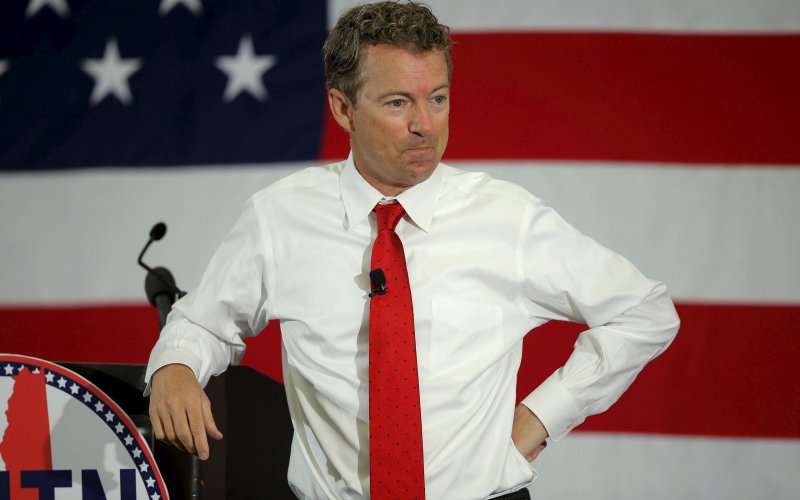
[Video below.] Sen. Rand Paul of Kentucky made clear Wednesday that he intends to oppose any effort by the Trump administration to use force in connection with Greenland, saying such a step would not be acceptable under any circumstances. Speaking on CBS Mornings, Paul said he would actively work to prevent a military scenario involving the territory.
During the interview, CBS Mornings co-host Vladimir Duthiers pressed Paul on comments coming from the White House. Duthiers said, “Senator, the president of the United States has said that the United States needs to acquire Greenland for national security reasons.The president’s press secretary says that the president and his team are discussing a range of options. And I’m quoting her here. Caroline Leavitt to CBS news. Utilizing the U.S. military is always an option at the commander in chief’s disposal. That is a close quote from Caroline Leavitt. My question to you, sir, is do you imagine a scenario where young American soldiers, airmen, Guardsmen, Marines are actually training a weapon on a NATO ally of the United States?”
 MatzavMatzav
A federal inquiry is now underway into the movement of hundreds of millions of dollars in U.S. currency that for years passed through Minneapolis–Saint Paul International Airport packed inside passenger luggage on outbound international flights.
According to accounts from airport personnel, travelers departing Minnesota legally transported enormous sums of cash—often totaling $1 million or more per bag—to Somalia and other destinations in Africa and the Middle East. Transportation Security Administration agents reportedly documented the discoveries and escalated them internally after encountering the money during routine screening.
Despite repeated alerts by TSA staff, officials during Joe Biden’s administration took no action to examine or halt the transfers, witnesses say, even as the scale of the cash shipments continued to grow.
 MatzavMatzav
A new push from President Donald Trump aims to curb the growing role of large corporate investors in the U.S. housing market, with the stated goal of preserving homeownership opportunities for American families.
In a post on Truth Social on Wednesday, Trump said he is taking steps to stop corporations and large institutional investors from purchasing additional single-family homes, a practice that has expanded rapidly in recent years and has been blamed by many analysts for worsening affordability and straining neighborhoods.
Trump also urged lawmakers to turn the policy into permanent law, arguing that congressional action is needed to ensure future administrations cannot reverse the restriction and reopen the market to large-scale investors.
“For a very long time, buying and owning a home was considered the pinnacle of the American Dream. It was the reward for working hard, and doing the right thing,” Trump wrote in the post, “but now, because of the Record High Inflation caused by Joe Biden and the Democrats in Congress, that American Dream is increasingly out of reach for far too many people, especially younger Americans.”
 MatzavMatzav
Following the deadly incident at yesterday’s anti-conscription protest, Israeli authorities reported that the bus driver involved continued traveling roughly 500 meters after the impact, with 14-year-old Yosef Eisenthal trapped beneath the vehicle.
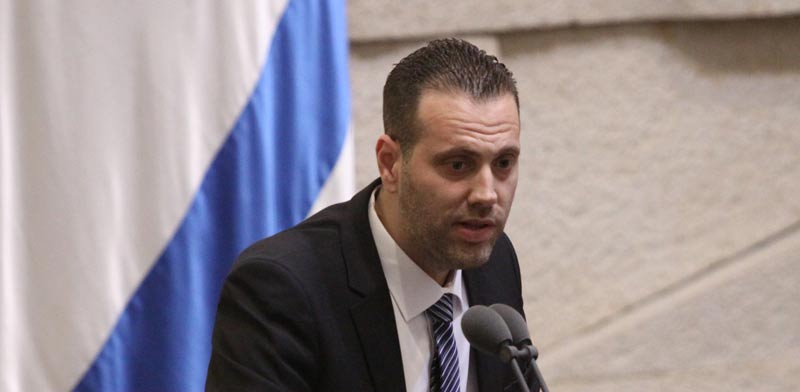
During a heated Knesset plenary session on Wednesday, Culture and Sport Minister Miki Zohar of the Likud turned his fire on opposition lawmakers, arguing that persistent hostility toward the chareidi public had real-world consequences and culminated in the killing of the teenager at the rally.
“Your incitement against the chareidi public is what led to this tragedy. You have permitted the blood of the haredi public. Shame on you,” Zohar charged from the podium of the Knesset.
He continued by accusing critics of portraying the chareidi community as a national threat. “Daily, you present them as the enemy of the nation. Calm down. They are valuable, important, and beneficial to Israeli society. Stop attacking them from morning to night until you turn them into an enemy.”
 MatzavMatzav
The BBC has acknowledged errors in a recent broadcast after criticism erupted over the way it portrayed the Kindertransport, following a December 26 episode of its program The Repair Shop that failed to mention the Jewish identity of the children rescued in the operation or of the episode’s central figure.
The controversy stems from a segment focused on a damaged 19th-century cello once owned by theater producer Martin Landau, who escaped Nazi Germany for Britain at the age of 14 aboard a Kindertransport train. Nazi guards had smashed the instrument shortly before his departure, leaving it broken for decades until it was brought to the show for restoration.
Although the program devoted a substantial portion of the episode to the cello’s backstory and the wider historical setting of the Kindertransport, it never stated that Landau was Jewish or that the rescue effort was primarily designed to save Jewish children from Nazi persecution. The Kindertransport historically facilitated the evacuation of roughly 10,000 Jewish children from Germany, Austria, and Czechoslovakia between 1938 and 1939, with assistance from Jewish and humanitarian groups.
 MatzavMatzav
A woman was shot this evening in the West Gate apartment complex, Lakewood, NJ’s largest housing development, prompting a major emergency response from police and local volunteer organizations.
The woman was declared dead.
The shooting occurred at an apartment located on Hillside Boulevard in the West Gate neighborhood.
Details regarding the circumstances of the incident are being withheld as police conduct their investigation. Matzav was asked to withhold details out of respect for the family.
Askanim are working to ensure kavod hameis.
Lakewood police responded in force, with at least a dozen patrol cars converging on the scene within minutes.
Members of Hatzolah provided assistance as well, while Shomrim volunteers were also present.
Authorities cordoned off the immediate area as officers began an investigation, interviewing witnesses and collecting evidence. Hundreds of concerned residents gathered in and around Hillside Blvd.
 MatzavMatzav
Rabbi Uri Lupolianski z”l, the renowned baal chessed, founder and longtime chairman of Yad Sarah, and former mayor of Yerushalayim, passed away late Wednesday night at Hadassah Ein Kerem Medical Center after a serious illness. He was 74.
The levayah will take place Thursday at 11:00 a.m., departing from his home in the Sanhedria HaMurchevet neighborhood of Yerushalayim, and proceeding to Har HaMenuchos for kevurah.
Rabbi Lupolianski was born in Haifa to his father, Rav Yaakov who immigrated from Poland on the eve of World War II, and to his mother, Mrs. Malka, of the Rosenblum family. In his youth, he learned at Yeshivas Torah Ore in Yerushalayim under Rav Chaim Pinchas Scheinberg , and later at Yeshivas HaNegev in Netivot.
 MatzavMatzav
In a surprising development, Israel’s Attorney General Gali Baharav-Miara informed the Israeli High Court of Justice on Wednesday that it should cancel the interim order freezing nearly NIS 1 billion earmarked for chareidi educational institutions.
In a letter submitted to the court, the attorney general wrote that “the interim order freezing the transfer of additional funds to chareidi education should be canceled,” explaining that the issue can be examined within the framework of earlier petitions that are still pending before the court.
The move comes a week after the High Court temporarily accepted a petition opposing the transfer of the funds. At that time, Justice Yael Wilner issued an interim injunction halting the disbursement, effectively freezing state funding for chareidi education.
 MatzavMatzav
A chilling emergency call made in the immediate aftermath of the deadly bus-ramming incident in Yerushalayim has come to light, capturing the chaos and fear at the scene just moments after the tragedy unfolded.
The recording, obtained by Matzav.com, documents the first contact between a civilian eyewitness and the emergency dispatch center of Magen David Adom, in the minutes following the incident in which 14-year-old Yosef Eisensthal z”l was killed during the protest against the draft law in Yerushalayim.
LISTEN:
https://matzav.com/wp-content/uploads/2026/01/dbe16150-ebee-11f0-94e1-97bff286a07d__d38.mpeg.wav
 MatzavMatzav
Rav Avrohom Schindler zt”l was niftar on Tuesday in Lakewood, NJ, just shy of his 98th birthday, bringing to a close a life devoted entirely to Torah, talmidim, and unwavering avodas hakodesh.
For decades, Rav Schindler was known as a beloved and deeply respected rebbi, first at Yeshiva of Eastern Parkway and later at Yeshiva Ohr Hameir of New Rochelle (Peekskill). Generations of talmidim remember his warmth, clarity, and steady dedication, as well as the personal care he invested in each bochur who passed through his shiur.
An early talmid of Rav Yitzchok Hutner zt”l, Rav Schindler carried the mesorah of his rebbi throughout his life.
Rav Schindler resided in Crown Heights for much of his life, where he was a central pillar of the well-known Minyan HaKollel of Yeshivas Rabbeinu Chaim Berlin. That , sustained by a small group of dedicated , continued functioning faithfully for many years, up until around the time Rav Schindler moved to Lakewood some 20 years ago.
 MatzavMatzav
A new survey suggests the public leans in favor of President Donald Trump’s decision to seize Venezuelan leader Nicolas Maduro, while revealing deep divisions along party lines.
The Daily Mail poll, released Tuesday, indicates that the military action is broadly viewed as effective. A majority of respondents said the operation went well, while only a small minority labeled it a failure; a sizable share remained undecided.
Support and opposition varied dramatically by political affiliation. Republicans were overwhelmingly supportive of the move, while most Democrats rejected it. Independents were closely split, with backing and opposition nearly even.
The survey also probed reactions to Trump’s remark that the United States would be “running” Venezuela for the immediate future. That comment drew strong concern from Democrats, whereas Republicans were more divided, with just over half expressing little to no worry and a significant minority voicing unease about U.S. involvement in “running” the country.
 MatzavMatzav
President Trump said an ICE agent who fatally shot a woman in Minneapolis narrowly escaped death and remains hospitalized after being struck by her vehicle during a confrontation that unfolded amid rising tensions over immigration enforcement.
In a post on Truth Social, the president described what he said led to the shooting and shared video footage of the encounter. “The woman driving the car was very disorderly, obstructing and resisting, who then violently, willfully, and viciously ran over the ICE officer, who seems to have shot her in self defense,” he wrote.
Trump emphasized the severity of the agent’s injuries, noting how close the incident came to ending differently. “It is hard to believe he is still alive, but is not recovering in the hospital,” he said, before turning his criticism toward what he described as an increasingly hostile climate toward immigration officers.
 MatzavMatzav
The Chassidishe Moetzes Gedolei HaTorah of Agudas Yisroel convened Wednesday evening in Yerushalayim to deliberate its position on the proposed draft law, amid heightened tension within the governing coalition and intense anticipation over whether a formal decision will emerge.
One by one, senior chassidic rebbes arrived at Beis Malka Hall, the Belzer venue on Brandeis Street, for the high-level meeting.
Among those present were the rebbes of Gur, Belz, Vizhnitz, Sanz, Boyan, Seret-Vizhnitz, and Modzitz.
The Slonimer Rebbe was absent, while the Biala Rebbe is currently abroad.
At the instruction of the Belzer Rebbe, Rav Pinchas Friedman also arrived and appeared before the Moetzes to present and clarify the Belzer Rebbe’s position regarding the draft law.
 MatzavMatzav
Federal civil rights officials are closely monitoring New York City following a warning from the Justice Department that City Hall may be veering into unlawful discrimination.
The caution from Washington centers on Mayor Zohran Mamdani’s decision to appoint Cea Weaver, a far-left housing activist, as the city’s new tenant advocate, a role that influences housing policy and tenant protections across the city.
Assistant Attorney General for Civil Rights Harmeet Dhillon publicly raised alarms after an old video of Weaver resurfaced online, reviving concerns about the ideological direction of the administration’s housing agenda and whether it aligns with equal protection under the law.
In that video, Weaver argued that the United States should abandon the idea of property as an individual right and instead reframe it as a “collective good,” promoting what she described as “shared equity.”
 MatzavMatzav
Drivers inching along Route 9 may not be surprised, but new federal estimates now make it official: Lakewood, NJ contains the most heavily populated ZIP code in the United States.
Fresh rankings drawn from U.S. Census Bureau American Community Survey estimates place ZIP code 08701 at the very top nationwide, with a population exceeding 140,000 residents, cementing Lakewood’s position ahead of every other ZIP code in the country.
The margin is not close. The second-place ZIP code, 92336 in Fontana, is home to 103,393 people.
The top 5 most populated ZIP codes in the U.S. are:
• 08701 (Lakewood, NJ): 136,784
• 92336 (Fontana, CA): 103,393
• 90650 (Norwalk, CA): 100,808
• 94565 (Pittsburg, CA): 99,933
• 77573 (League City, TX): 97,871
 MatzavMatzav
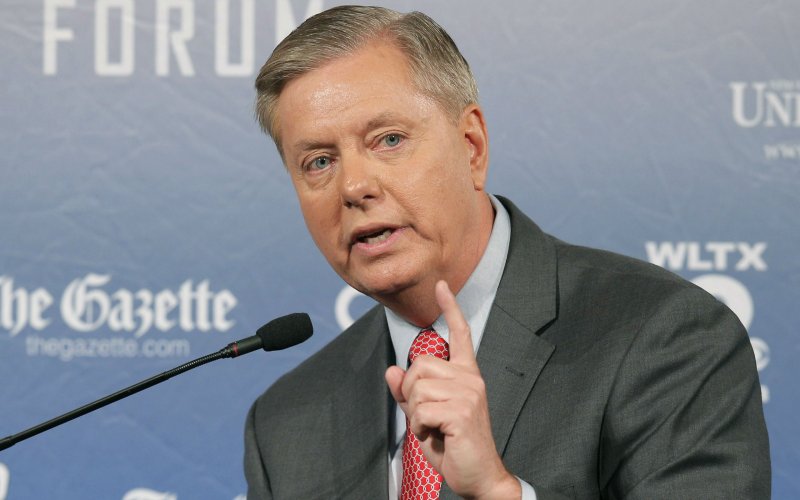
As demonstrations across Iran stretched into an eleventh consecutive day, Senator Lindsey Graham issued a blunt message to the country’s leadership, suggesting that continued bloodshed against protesters could trigger the most severe response imaginable from Donald Trump.
Speaking during an interview on Fox News, Graham addressed Iran’s clerical rulers directly, urging them to halt the violent suppression of demonstrations that have spread nationwide. He framed the moment as a critical test of resolve, emphasizing that the current administration should not be underestimated.
Graham argued that Tehran’s leadership must “take Trump seriously,” warning that the use of lethal force against civilians demanding improved living conditions would provoke retaliation aimed at the very top of the regime.
 MatzavMatzav
[Videos below.] Federal immigration agents shot and killed a woman in Minneapolis after authorities say she tried to ram officers with her car during a confrontation tied to immigration enforcement activity, an incident ICE labeled an act of domestic terrorism.
According to officials, the shooting occurred Wednesday morning at the intersection of East 34th Street and Portland Avenue. The City of Minneapolis confirmed the location and timing in a post on X, noting reports of gunfire in the area.
The Department of Homeland Security described a rapidly escalating situation that unfolded while ICE officers were carrying out what it called targeted operations in the city. DHS assistant secretary for public affairs Tricia McLaughlin said the encounter turned violent when protesters interfered with officers on the scene.
 MatzavMatzav
U.S. Coast Guard teams carried out near-simultaneous predawn boardings of two suspected “ghost fleet” tankers in international waters, a move the Department of Homeland Security says sends a warning to criminal networks worldwide.
In a social media post Wednesday, Homeland Security Secretary Kristi Noem said the actions underscore heightened enforcement at sea. “are on notice,” she wrote, referring to criminals globally, after the operations targeted “two ‘ghost fleet’ tanker ships.”
The vessels identified were the Motor Tanker Bella I and the Motor Tanker Sophia. Noem said both ships had ties to Venezuela, noting that they “were either last docked in Venezuela or en route to it,” and that one was intercepted “in the North Atlantic Sea and one in international waters near the Caribbean.”
The two seizures occurred just hours apart and followed extensive coordination across the federal government. Noem credited the outcome to leadership at the top, calling the actions the product of “President [Donald] Trump’s bold and visionary leadership,” with Coast Guard units working alongside the Justice Department and State Department during the back-to-back interdictions.
 MatzavMatzav
A sweeping overhaul of federal nutrition advice was announced Wednesday as the Trump administration rolled out updated Dietary Guidelines for Americans that dramatically reorient the government’s approach to food, elevating protein and saturated fats while urging Americans to cut back on sugar and ultra-processed products.
At a White House briefing, Health and Human Services Secretary Robert F. Kennedy Jr. said the new framework is designed to reverse soaring rates of chronic disease and reduce long-term medical spending by steering Americans toward whole, nutrient-dense foods.
“Today our government declares war on added sugar. Highly processed food loaded with additives — added sugar and excess salt — damage health and should be avoided,” Kennedy said.
“Diets rich in vegetables and fruits reduce disease risk more effectively than many drugs. Whole grains outperform refined carbohydrates,” he added.
 MatzavMatzav
Thousands gathered today at the levayah of Yosef Eisental z”l, 14, after he was tragically killed during a protest against Israel’s draft law in Yerushalayim, when he was struck by a bus.
The levayah departed from the courtyard of Ohel Torah Yeshiva in the Ramot neighborhood, where Yosef learned. Among those who delivered hespeidim were roshei yeshiva and family members, who spoke of a boy whose brief life left a deep imprint on all who knew him.
But it was the words of Yosef’s father, Rabbi Shmuel Eisenthal, that pierced the hearts of the crowd and left scarcely a dry eye.
“Hashem gave and Hashem has taken, may the Name of Hashem be blessed from now and forever,” the grieving father began. “Yossi—our Yossi—was a precious son to me, a child of delight. A delight in Torah, a delight in his character, a delight in his warm countenance, in a smile that never faded.”
 MatzavMatzav
The Yerushalayim Magistrate’s Court on Wednesday extended by nine days the detention of the bus driver suspected of running over and killing yeshiva bochur Yosef Eisental z”l, during last night’s protest in the capital.
During the remand hearing, Judge Sharon Lary-Babli reviewed police video footage documenting the moments leading up to the fatal incident. When the driver’s attorney argued that his client did not notice the protesters ahead of him or felt endangered and fled the scene out of fear, the judge sharply rejected the claim.
 MatzavMatzav
Disturbing images of clothing ripped to shreds, left behind after last night’s bus-ramming incident at the draft protest in Yerushalayim, are highlighting just how close the event came to becoming a far deadlier catastrophe. The photos, showing garments completely torn from the body of one of the injured bochurim who was dragged beneath the bus, illustrate how narrowly a mass-casualty disaster was averted.
The young man, who had been participating in the protest, became caught on the bus and was dragged along the roadway. He survived by what eyewitnesses are describing as a clear miracle. Tragically, the incident claimed the life of Yosef Eisenthal z”l, whose death has shaken the chareidi public.
 MatzavMatzav
Iranian authorities reported that an individual they described as an agent of Israel’s Mossad was executed after being convicted of espionage, as Tehran continues an intensified campaign of death sentences against those accused of ties to Israeli intelligence.
According to Iran’s judiciary-affiliated Mizan news agency, Ali Ardestani was put to death after being found guilty of spying for Israel. Iranian officials claimed Ardestani was recruited through cyber channels and carried out assignments for the Mossad in exchange for financial compensation and promises made by his handlers. The report alleged that he transferred sensitive information to Israeli intelligence.
Iranian authorities said Ardestani confessed to receiving digital currency payments at the completion of each task. He was also accused of meeting with a Mossad contact inside Iran, handing over information he had gathered, including photographs and video footage, and then receiving additional assignments.
 MatzavMatzav
In a major development for the English-speaking community in Israel, Chaim V’Chessed, the leading organization supporting Olim with guidance, resources, and advocacy across all areas of life, has appointed former Knesset member Rabbi Yitzchak Pindrus as Senior Governmental Liaison. This appointment represents a significant milestone in Chaim V’Chessed’s history.
Rabbi Pindrus brings extensive experience in public service, having served as Mayor of Beitar Illit, Assistant Mayor of Jerusalem, and a Member of Knesset. His considerable connections with municipalities, government ministries, and senior officials across Israel position him to dramatically enhance Chaim V’Chessed’s reach and influence.
As the son of American immigrants, Pindrus understands firsthand the challenges facing English-speaking Olim. In his new role, he will spearhead Chaim V’Chessed’s engagement with government offices and municipalities, strengthening the organization’s ability to advocate for and support Anglos in Israel at every level.
 MatzavMatzav
Fourteen-year-old Chaim Yosef Eisenthal z”l was killed last night during a protest in Yerushalayim, an event that has left the city—and far beyond it—reeling in shock and grief.
[Pictured above is the invitation to Yosef’s bar mitzvah, held a year and a half ago.]
The morning after the tragedy did not begin with routine headlines or updates, but with a heavy sense of anguish. The loss of a child, many said, eclipses politics, sectors, and arguments, forcing a painful national reckoning.
At the opening of the Kikar FM broadcast in Israel, host Eli Gothelf said that the very fact that a 14-year-old boy lost his life in the street should shake the entire country. “Not a sector, not a camp, not a political debate,” he said. “In a democracy, protest is a right. But in a democracy, a 14-year-old child is not supposed to die in the street. He is not supposed to be killed.”
 MatzavMatzav
Dear Matzav Inbox,
There is something deeply disingenuous about the way many of our communal media platforms — including Matzav, by the way — operate today, whether in print, online, or across WhatsApp and social media.
On the one hand, these very same outlets regularly publish articles, op-eds, and impassioned posts lamenting the “culture of excess” that has crept into our lives. They bemoan the outrageous costs of weddings, the pressure to keep up, the corrosive effect of luxury spending on families, and the unhealthy expectations being imposed on young couples and parents just trying to breathe.
And then, without skipping a beat, the next page, post, or story is an advertisement for a five-star Pesach program in Europe, a luxury summer rental with “full staff,” a high-end restaurant opening, concierge services, boutique interior designers, or upscale apartments in Eretz Yisroel marketed as “must-have opportunities.” One minute we’re being warned about runaway materialism. The next minute we’re being sold $25,000 watches, gourmet tasting menus, and prestige real estate, all wrapped in glossy graphics and slick copy.
 MatzavMatzav
It is with great sadness that Matzav.com reports the petirah of Rav Moshe Aryeh Sheinert zt”l, who was niftar at the age of 90.
Rav Sheinert was among the senior and most respected members of the Belzer community and served for many years as the mashgiach ruchani at Talmud Torah Machzikei Hadass of Belz in Boro Park. He also served as a mashpia at Yeshivas Torah Ve’Emunah of Belz, where he influenced generations of talmidim with warmth, depth, and unwavering devotion to Torah.
Born in Sivan 5695 (1935) to his father, Reb Shlomo Sheinert, he studied in his youth at Bais Medrash Govoha in Lakewood under Rav Aharon Kotler.
Following his marriage, Rav Sheinert was among the founders and early members of the Belzer on Manhattan’s East Side, together with Rav Yosef Meir Weiss, the of Narol. He maintained a close relationship with the Naroler Rebbe, the Rav’s son, and together they were instrumental in establishing Belzer institutions in the United States.
 MatzavMatzav
After arriving in New York following a nonstop 22-hour journey from Sydney, Ahmed al-Ahmed and Rabbi Yehoram Ulman began their time in the United States Tuesday at the resting place of the Lubavitcher Rebbe, Rabbi Menachem Mendel Schneerson, in Queens.
The visit marked the start of a joint tour that will take the two men through New York and Washington, D.C., where they are scheduled to meet with a range of public figures and dignitaries. For Rabbi Ulman, the trip is deeply personal: a chance to publicly and privately express gratitude to a man who risked his own life to save members of his community.
Al-Ahmed became known worldwide following the Dec. 14, 2025, terror attack at Chabad-Lubavitch of Bondi’s Chanukah celebration in Sydney. During that attack, two terrorists opened fire on the crowd, murdering 15 people. Al-Ahmed, a local shopkeeper, charged one of the gunmen, wrestled away his weapon, and was shot twice in the process. Rabbi Ulman serves as the rabbi and spiritual leader of Chabad-Lubavitch of Bondi, where most of the victims were congregants or colleagues, including his son-in-law, Rabbi Eli Schlanger.
 MatzavMatzav
The U.S. Supreme Court is preparing for a consequential stretch, with decisions expected as early as Friday in cases that carry far-reaching political, economic, and social consequences in the United States and beyond.
According to the court’s public schedule, the justices signaled on Tuesday that opinions in argued cases may be issued when they take the bench for a scheduled session on Friday. As is customary, the court has not disclosed which specific rulings will be released.
Among the most closely watched matters is the challenge to President Donald Trump’s global tariff regime, a case that could reshape international trade policy and redefine the limits of presidential authority. The dispute stems from Trump’s decision to impose broad tariffs by invoking a 1977 statute designed for national emergencies.
During oral arguments held on Nov. 5, justices from across the ideological spectrum raised pointed questions about whether the law justified the administration’s actions. The case reached the high court after lower courts ruled that the administration’s use of the statute went beyond what Congress authorized.
 MatzavMatzav
Israel has taken a decisive step toward launching construction of the long-disputed E1 settlement project east of Yerushalayim, clearing the final procedural barrier with the release of a government tender inviting developers to submit bids.
The tender, posted on the website of the Israel Land Authority, calls for proposals to build 3,401 housing units, a move that would allow work on the project to proceed once contracts are awarded. According to critics, the publication of the tender signals a sharp acceleration toward actual construction.
Peace Now, the anti-settlement monitoring organization, was the first to report the tender’s release. Yoni Mizrahi, who heads the group’s settlement watch division, said that preliminary construction activity could begin as soon as within the next month.
“In an alarming display of political recklessness, the Israeli government continues to undermine any prospect for a political solution and a better future for both Israelis and Palestinians,” Peace Now said in a Monday statement. “Construction in E1 is intended to create irreversible facts on the ground leading to a one-state reality.”
 MatzavMatzav
Secretary of State Marco Rubio informed members of Congress this week that President Donald Trump is pursuing the idea of acquiring Greenland through a financial deal rather than by force, reviving a proposal that has drawn strong objections from European governments and reignited discussion about American priorities in the Arctic.
According to U.S. officials, Rubio shared those views during a private briefing with lawmakers from the armed services and foreign affairs panels in both the House and Senate.
Although the session was largely devoted to developments in Venezuela, questions turned to Greenland following recent public remarks by Trump and comments from senior adviser Stephen Miller that renewed attention on the issue.
Officials said that on the same day as the Capitol Hill briefing, Trump directed his aides to prepare an updated proposal outlining potential avenues for obtaining Greenland. The president has spoken about Greenland since his first term, presenting the matter as a strategic concern linked to intensifying competition in the Arctic region.
 MatzavMatzav
Diplomatic channels indicate that understandings are taking shape over a future role for Palestinian Authority security forces at the Rafah crossing, with plans focusing on restoring traffic between the Gaza Strip and Egypt once the crossing reopens.
In preparation for post-conflict arrangements, Egypt has over the past year trained hundreds of officers from the Palestinian Authority’s security services. Cairo is seeking to position these forces as part of a future security deployment inside Gaza.
Addressing internal governance issues, Palestinian Authority cabinet head Mohammad Mustafa said punitive financial steps taken by Israel, including the withholding of tax revenues, would not derail the government’s ability to continue supplying basic services to Gaza’s population.
 MatzavMatzav
The levayah of habochur Yosef Eisenthal z”l, the 14-year-old boy who was killed Tuesday night after being struck by a bus during a protest against the draft law in Yerushalayim, is scheduled to take place Wednesday morning at 10:30 a.m.
The levayah will depart from the Ohel Torah Beis Medrash in the Ramot Daled neighborhood of Yerushalayim, where the bochur learned. Kevurah will be held on Har Hamenuchos.
Yosef was a son of Rav Shmuel Eisenthal, R”M at Yeshiva L’tzeirim Ohel Torah-Ponevezh in Ramot and a grandson of Rav Uriel Eisenthal, rov of Ramot Gimmel.
 MatzavMatzav
President Trump said Tuesday that the United States will receive a massive shipment of Venezuelan oil, announcing an agreement under which the South American country will sell tens of millions of barrels at prevailing market rates, with Washington retaining authority over how the revenue is used.
According to Trump, the deal involves a transfer of between 30 million and 50 million barrels of oil, which he said will be delivered directly to the United States. He made clear that the proceeds from the sale will not be freely handled by Venezuelan authorities.
“I am pleased to announce that the Interim Authorities in Venezuela will be turning over between 30 and 50 MILLION Barrels of High Quality, Sanctioned Oil, to the United States of America,” Trump wrote in a post on Truth Social.
He added that the oil will be sold without discounts or premiums and that the resulting funds will be placed under his supervision.
 MatzavMatzav
In the wake of the fatal ramming during a chareidi draft protest in Yerushalayim, Shas spokesman Asher Medina delivered a forceful and unequivocal response in an interview on Kikar FM, describing the incident as a defining moment in relations between the chareidi public and the state.
Appearing on the program amid the unfolding shock, Medina said the evening marked an unprecedented rupture. “This is an extremely difficult night,” he said. “It can be marked as a red line, perhaps even a watershed moment in relations between the chareidi public and the state. We’ve been through countless difficult demonstrations in recent years — judicial reform, war, hostages — but a line like this has never been crossed. A young man goes out to a protest and doesn’t come home.”
 MatzavMatzav
A wave of relief and anticipation swept through the campus of Chevron Yeshiva on Tuesday following confirmation that a yeshiva bochur who had been held in a military prison is scheduled to be released Wednesday morning and return directly to the yeshiva.
The talmid, Yehuda ben Amram, is expected to regain his freedom in the early hours of the day after an early release was secured through sustained efforts by the yeshiva’s senior leadership.
Those involved said the matter was pursued intensively through official channels until the detention was brought to an end.
News of the impending release was met with visible excitement across the Givat Mordechai campus, where preparations are already underway for a large and celebratory reception to welcome the back. of the yeshiva, alumni, and hundreds of current are expected to take part.
 MatzavMatzav
New details have emerged from the initial police investigation into the fatal incident during the anti-draft protest in Yerushalayim on Tuesday in which 14-year-old Yosef Eisenthal was tragically killed and three others were injured after being struck by a bus.
According to early findings and eyewitness accounts, the sequence of events began on Shamgar, where a bus hit three pedestrians — ages 14 and 17 — causing light injuries. Despite the impact, the bus continued driving at speed toward Ohel Yehoshua.
Footage from the scene shows the bus accelerating toward a group of protesters standing on the roadway. One 14-year-old was trapped beneath the bus and dragged for a considerable distance. Emergency responders rushed to the scene and carried out complex rescue efforts, but were ultimately forced to pronounce the boy dead.
 MatzavMatzav
New York City police say antisemitism continued to dominate the city’s hate crime landscape last year, with Jews accounting for a clear majority of reported bias incidents across all categories.
According to statistics released Tuesday by the NYPD, there were 330 suspected antisemitic incidents recorded in 2025, out of a total of 576 hate crimes citywide. That means more than half of all reported hate crimes—57 percent—were directed at Jews, translating to an alleged anti-Jewish incident roughly once every 26 hours.
The scale of the disparity is especially stark given that Jews make up about 10 percent of New York City’s population.
By comparison, police logged 52 suspected hate crimes motivated by sexual orientation, the next highest category, making antisemitic incidents more than six times as frequent. Other reported cases included 45 incidents targeting Black individuals, 25 targeting Asians, eight directed at Hispanic people, 30 Islamophobic incidents, 11 targeting white individuals, 28 based on gender, 16 involving unspecified ethnicities, and 31 directed at unspecified religious groups.
 MatzavMatzav
Discussion inside the White House about Greenland has intensified again, with officials acknowledging that even the use of American military power has been considered as President Trump renews his focus on the Danish-controlled territory.
Addressing reporters on Sunday, Trump signaled that while Greenland is not his immediate priority, it remains firmly on the administration’s agenda. “We’ll worry about Greenland in about two months. Let’s talk about Greenland in 20 days,” he said.
During remarks aboard Air Force One, Trump framed the issue as a matter of strategic defense, pointing to increased foreign activity near the Arctic island. “Right now, Greenland is covered with Russian and Chinese ships all over the place,” he said. “We need Greenland from the standpoint of national security. And Denmark is not gonna be able to do it, I can tell you. You know what Denmark did recently to boost up security in Greenland? They added one more dog sled.”
 MatzavMatzav
Dear Matzav Inbox,
I was there tonight at the draft protest in Yerushalayim. I am not repeating rumors, headlines, or social media hysteria. I watched it unfold with my own eyes. I am a chareidi grandmother, and what I saw was shameful, reckless, and utterly leaderless.
Hundreds of boys — children — were running wild in the streets. They were jumping on buses and cars, blocking traffic, and preventing drivers from moving.
There were no parents in sight. No rabbonim. No roshei yeshiva. No adults taking responsibility. No one stopping this disgraceful chaos.
Garbage bins were dragged into the road and set on fire. Plastic sheets were slapped across bus windshields, blinding drivers until they struggled to rip them off. Buses full of passengers were stuck for twenty minutes or more, held hostage by unsupervised, out-of-control boys who clearly had no idea what they were doing or the danger they were creating.
 MatzavMatzav
New York City Mayor Zohran Mamdani moved to steady his administration Tuesday by publicly reaffirming his support for his newly appointed tenant protection chief, even as her past social media statements ignited backlash and drew pointed attention from federal officials.
At the center of the controversy is housing activist Cea Weaver, recently named to lead the Mayor’s Office to Protect Tenants. Old posts and writings attributed to Weaver resurfaced this week, including statements describing homeownership as “a weapon of white supremacy” and urging followers to “Seize private property,” triggering criticism from housing advocates, property owners, and Washington alike.
Mamdani brushed aside the uproar while speaking to reporters after an unrelated appearance, arguing that Weaver’s record justified her appointment and that her work was already producing results.
 MatzavMatzav
Michael Reagan, a conservative author and radio host who devoted decades to advancing the principles associated with the Reagan presidency, has died. He passed away Sunday at his home in Los Angeles at the age of 80, according to an announcement from the Ronald Reagan Presidential Foundation and Institute.
Throughout his public life, Reagan was known for his steadfast defense of his father’s record in office and for promoting a vision of limited government and strong American leadership that defined the Reagan era and coincided with the end of the Cold War.
“Michael Reagan lived a life shaped by conviction, purpose, and an abiding devotion to President Reagan’s ideals,” the Ronald Reagan Presidential Foundation and Institute said in a statement.
Born in 1945, Reagan was adopted by Ronald Reagan and Jane Wyman just hours after his birth. He later explored the complexities of his upbringing and family history in his book “Twice Adopted,” offering a personal account of growing up as the son of two famous parents.
 MatzavMatzav
Facing intensifying pressure over sweeping fraud revelations tied to state programs, Minnesota Gov. Tim Walz lashed out at critics and rejected demands that he step aside, directing his anger squarely at Republicans and the White House.
“You can make all your requests for me to resign – over my dead body will that happen,” he ranted.
Walz then pivoted to an attack on President Trump, framing the controversy as a political fight rather than a reckoning over oversight failures.
“I will fight this thing ‘til the very end to make this state better. And the question I think they need to decide is when is the guy in the White House going to resign? When does he take accountability for what he did? Because it isn’t going to happen here in terms of us shying away from making the state better,” he said.
 MatzavMatzav
New York City Mayor Zohran Mamdani acknowledged Monday that he does not yet hold federal security clearance, clarifying remarks he made a day earlier that implied he had been formally briefed on the U.S. operation that led to the capture of Venezuelan President Nicolás Maduro.
The clarification came during a press conference, where reporters questioned the mayor about how he obtained information related to the high-profile military action. Mamdani confirmed that, despite being recently sworn in, he has not received federal clearance and has not completed the vetting process required to access classified briefings.
“You don’t have federal security clearance yet, and has anyone from a federal agency reached out to you or members of your team to begin the vetting to get federal security clearance?” a reporter asked.
 MatzavMatzav
Great joy swept through Yeshiva Nesiv HaDaas (Kaplan) following the receipt of encouraging medical news regarding the health of its Rosh Yeshiva, Rav Yisrael Bunim Schreiber.
Approximately six months after a serious illness was first discovered, comprehensive test results received this week revealed a dramatic improvement in his condition.
Over the past half year, since the illness was diagnosed during the month of Sivan, the Rosh Yeshiva’s health fluctuated, as he faced difficult and painful treatments with remarkable faith and strength. This week, he underwent an extensive series of medical examinations, while the yeshiva talmidim waited anxiously for the results. Yesterday, talmidim and staff gathered for a special asifas tefillah in the yeshiva, pouring out heartfelt prayers for his recovery.
 MatzavMatzav
Medications many people reach for without a second thought can still pose health concerns, even when they’re sold without a prescription. Researchers and physicians caution that certain over-the-counter pain relievers are associated with elevated risks to the heart and blood vessels in some patients.
Doctors say the greatest concern centers on non-steroidal anti-inflammatory drugs, or NSAIDs, which are widely used to treat pain, fever, and inflammation. Studies have linked these medications to higher rates of high blood pressure, heart attacks, and strokes.
“This is because they reduce the production of certain chemicals called prostaglandins,” Maryam Jowza, M.D., an anesthesiologist at UNC Health in North Carolina, told Fox News Digital. “These chemicals are involved in inflammation, but they are also involved in other body functions, such as influencing the tone of blood vessels.”
 MatzavMatzav
The name of the victim killed in the fatal bus-ramming incident during a protest against the draft law in Yerushalayim has been cleared for publication. He has been identified as Yosef Eisental z”l, a 14-year-old yeshiva bochurim from the Ramot neighborhood of Yerushalayim.
Yosef was a talmid in Shiur Beis at the Yeshiva L’tzeirim Ohel Torah–Ponevezh.
According to eyewitness accounts, shortly before the demonstration concluded, a group of bochurim became caught in a chaotic confrontation around a bus that had entered the protest area. Questions were raised at the scene as to how buses were permitted access to the vicinity during the demonstration.
 MatzavMatzav
Disturbing eyewitness accounts have emerged from the draft protest in Yerushalayim on Tuesday evening that ended in a deadly ramming attack, when a bus drove into a crowd of demonstrators, injuring several people and killing a teenage boy.
According to witnesses at the scene, the incident unfolded after protesters blocked the bus during the demonstration. One demonstrator said that the driver appeared to act deliberately after realizing he could not continue driving.
“We stopped the bus during the protest. The driver saw that he had nowhere to go — and then he simply decided to drive into us,” the witness said. “I was thrown to the side, and he ran over three more people. After that, he drove down to a lower street and ran over another boy, who was trapped under the wheels.”
 MatzavMatzav
A Republican lawmaker is moving forward with legislation aimed at sharply restricting immigration protections, tying the effort to growing federal investigations into alleged large-scale fraud within Minnesota’s social services network.
Rep. Wesley Hunt of Texas introduced a bill this week that would eliminate Temporary Protected Status for nationals of Sudan, Syria, Yemen, Lebanon, and Somalia. Under the proposal, individuals from those countries currently living in the United States under refugee-related protections would be required to leave the country within 180 days once the measure takes effect.
Hunt said the legislation is designed to speed up President Donald Trump’s efforts to revoke TPS for Somali immigrants living in Minnesota, arguing that the current system has failed to adequately screen those entering the country.
 MatzavMatzav
[Video below.] President Donald Trump delivered a blunt assessment of power in Venezuela when asked who was currently in charge, responding with a single word: “Me.”
In an interview with NBC News conducted two days after U.S. forces carried out a swift operation in Caracas that resulted in the capture of Nicolas Maduro, Trump indicated that American involvement in Venezuela was likely to extend well beyond the initial raid.
Trump rejected the idea that the country could move quickly toward elections, saying Venezuela was too damaged after years of socialist governance and criminal corruption. “We have to fix the country first. You can’t have an election,” Trump told NBC News’ Kristen Welker. “There’s no way the people could even vote. … No, it’s going to take a period of time.” He added, “We have — we have to nurse the country back to health.”
Despite the scale of the operation, Trump insisted the United States was not at war with Venezuela, describing the mission instead as a campaign against narcotics trafficking and illegal migration. “We’re at war with people that sell drugs,” he said, accusing the Maduro regime of deliberately releasing prisoners and patients from mental institutions as part of the migration surge into the United States.
MatzavMatzavA horrifying and deeply disturbing incident unfolded this evening on the streets of Yerushalayim during a large protest against the draft law, leaving one young man dead and multiple others injured.
According to eyewitness accounts and video footage circulating from the scene, a public bus sped toward a group of demonstrators who were standing along the traffic artery on Rechov Yirmiyahu, near Shamgar Junction. The bus plowed into the protesters, striking several of them and continuing through the intersection without stopping to render assistance.
Emergency forces from Magen David Adom and the Tzvet Hatzalah were rushed to the scene in large numbers. Paramedics and EMTs provided urgent medical care to several victims suffering from varying degrees of injury, with some reported to be in serious condition. One young man was pronounced dead after becoming trapped beneath the wheels of the bus.
 MatzavMatzav
President Donald Trump argued that Republicans were positioned to buck the historical pattern of midterm losses, telling GOP lawmakers that his administration’s performance put the party on track for a sweeping victory in 2026.
Speaking Tuesday at the GOP House retreat at the Trump-Kennedy Center, Trump pointed to what he described as sustained momentum since his return to office, citing his 2024 election results as proof that Republicans were expanding their reach. “We won every swing state; we won the popular vote by millions; we won everything,” Trump said. “But they say that when you win the presidency, you lose the midterm.”
Trump told lawmakers that his first year back in office marked a turning point. “So together, we had 12 months of unprecedented success in 2025. And now we’re going to make history and break records with the epic midterm victory that we’re going to pull off,” he said in remarks aired on Newsmax.
 MatzavMatzav
Tehran indicated that it did not view its security posture as purely reactive, stressing that it “does not consider itself limited to reacting after the fact, and considers objective signs of threat as part of the security equation.”
The warning followed growing concern inside Iran over what officials described as hostile rhetoric and pressure from adversaries. The council said, “The long-standing enemies of this land… are pursuing a targeted approach by repeating and intensifying threatening language and interventionist statements in clear conflict with the accepted principles of international law, which is aimed at dismembering our beloved Iran and harming the country’s identity.”
In a broader statement addressing national defense, the body underscored the seriousness with which it viewed potential attacks, declaring that “Iran’s security, independence and territorial integrity are an uncrossable red line, and any aggression or continuation of hostile behavior will be met with a proportionate, decisive and decisive response.”
 MatzavMatzav
A rare and unusually sharp unsigned editorial published Tuesday in the Israeli Hebrew Yated Ne’eman, the flagship newspaper of the Degel HaTorah faction of UTJ, has laid bare a profound internal fracture within the chareidi public over the proposed IDF draft law. The article, attributed only to “one of the rabbonim,” launches a fierce attack on opponents of the legislation and places significant blame on the Chassidishe Agudas Yisroel faction of UTJ for what it describes as a worsening crisis, all against the backdrop of hundreds of chareidi young men enlisting in the IDF in recent days.
The editorial, described by observers as unprecedented in tone for Yated Ne’eman, targets critics of the draft bill being advanced by Knesset Foreign Affairs and Defense Committee chairman Boaz Bismuth. The paper argues that “in the face of a campaign of propaganda and falsehoods, there is a need to present the unvarnished truth.” Beneath that claim, however, the article reflects deep frustration within the camp over what it sees as the erosion of its long-standing leadership role in shaping policy and public discourse.
 MatzavMatzav
Israeli Foreign Minister Gideon Sa’ar carried out a first-ever official diplomatic visit to Hargeisa on Tuesday, marking a major step toward full diplomatic relations between Israel and Somaliland. The visit was conducted discreetly at the request of security officials and was cleared for publication only afterward.
Sa’ar traveled to Somaliland at the invitation of President Abdirahman Mohamed Abdillahi, following the signing of a historic mutual recognition agreement between the two sides on December 26. During the visit, the foreign minister held meetings with senior Somaliland officials, including the president, Foreign Minister Abdirahman Dahir Adam, Minister of the Presidency Khadar Hussein Abdi, Chief of Staff Nimsan Yusuf Osman, Speaker of Parliament Yasin Haji Mohamoud, and Senate Speaker Suleiman Mahmoud Aden. The meetings took place at the official presidential palace in Hargeisa. Sa’ar was welcomed upon arrival by Somaliland’s foreign minister.
 MatzavMatzav
Rav Dov Landau, Rosh Yeshivas Slabodka, delivered a forceful address Monday night to hundreds of bnei yeshiva, declaring that despite mounting pressure, arrests, and legislative efforts surrounding the draft law, the Torah world will remain unshaken and inseparable from Torah learning.
Speaking at Yeshiva Nesivos Aviezer, Rav Landau addressed the escalating controversy over the proposed conscription law and the status of yeshiva students, against the backdrop of recent detentions of Torah learners by the military police, political attacks, and growing difficulties in advancing legislation in the Knesset.
 MatzavMatzav
Food For Thought: When Out-Of-Town
When traveling to small towns that have local hechsherim, how does one go about finding out if they can rely on that hechsher? Rabbi Yaakov Eisenbach, Rabbinic Coordinator at the cRc, gives us some guidance on this topic.
WATCH:
View it in its entirety at https://www.kashrusawareness.com/post/food-for-thought
Listen wherever you get your podcasts!
 MatzavMatzav
Former Israeli prime minister Naftali Bennett on Monday night delivered a televised statement laying out what he described as a comprehensive solution to Israel’s draft crisis, once again focusing his political message squarely on the chareidi sector while declaring his intention to form the next government.
Speaking at a press conference broadcast live, Bennett — who is seeking a return to politics under the banner of a new framework dubbed “Bennett 2026” — said that his first move upon returning to the Prime Minister’s Office would be to repeal what he called the current government’s “draft evasion law.”
Bennett said he intends to replace it with legislation he is calling the “Law of Those Who Serve,” presenting it as the cornerstone of his next coalition. “From today, those who serve will be at the top of the pyramid and those who evade will be at the bottom,” Bennett said, adding that support for the bill would be a prerequisite for joining a government under his leadership. “Support for the Law of Those Who Serve is the first condition for entering a government I head. This is the flagship law of the next government.”
 MatzavMatzav
President Donald Trump shifted his attention westward on Tuesday, training his fire on California and Gov. Gavin Newsom just a day after Minnesota Gov. Tim Walz announced he would abandon his reelection campaign amid a growing fraud scandal in his state.
Reacting to Walz’s sudden decision to step aside, Trump used Truth Social to argue that Minnesota’s problems are not isolated, contending that corruption is even more deeply rooted in California. In one post, he declared that scrutiny has now expanded beyond the Midwest.
“California, under Governor Gavin Newscum, is more corrupt than Minnesota, if that’s possible??? The Fraud Investigation of California has begun,” Trump wrote.
Walz, a Democrat who served as his party’s vice presidential nominee in 2024, said the political climate surrounding Minnesota’s child care fraud investigation had become untenable. He explained that the constant pressure made it impossible to balance governing the state with mounting a reelection campaign.
 MatzavMatzav
Dear Matzav Inbox,
I would like to share an observation regarding shidduchim that I believe many in the community have noticed. This is not meant for everyone, and certainly not for those who put real thought into the shidduchim they suggest.
At the same time, there are cases where shidduchim are suggested without enough thought, or without really knowing the boy or the girl. Often, the person suggesting the idea does not actually know either side at all. For example, they may know the boy’s mother and the girl’s grandmother, and based on that limited connection, the shidduch is suggested. While well-intentioned, this often does not lead anywhere.
Many of us see that some ideas are clearly way out of the ballpark. I have also heard people say they took on a kabbalah to suggest one shidduch a day. While the desire to help is admirable, shidduchim are not daf yomi, and not everything works with a daily quota.
 MatzavMatzav
Israel’s United Torah Judaism has taken a dramatic step in support of Israeli Prime Minister Bibi Netanyahu, announcing that it is removing all previous limitations and reservations it had placed on judicial and legal legislation.
The decision came shortly after a forceful speech by Netanyahu in the Knesset in which he reiterated his determination to advance the draft law. Following the address, UTJ faction chairman Uri Maklev formally informed Coalition Chairman Ofir Katz that, effective immediately and until further notice, the party will support all coalition-backed legal and judicial bills.
Maklev conveyed that the move stems from deep and growing frustration within the chareidi parties over what they view as persistent legal targeting of the Torah world and the chareidi public. According to party officials, recent developments — ranging from the handling of the draft law to delays in funding for daycare centers and yeshivos — have convinced UTJ that the legal establishment and the courts have marked the chareidi community as a central target.
 MatzavMatzav
Israeli Prime Minister Bibi Netanyahu delivered an impassioned speech Monday night in the Knesset, forcefully defending the centrality of the Torah world to Jewish survival while trading sharp barbs with opposition leader Yair Lapid during a heated 40-signature debate.
Speaking after Lapid renewed his attacks, Netanyahu chose to respond directly, combining pointed political criticism with an emotional defense of Torah study. Addressing the draft law, Netanyahu accused the opposition of taking what he called a “narrow, extreme, and divisive” stance, while his government, he said, is pursuing broad national consensus.
“We are advancing a historic framework that will lead to the enlistment of 23,000 over the next three and a half years,” Netanyahu said. “This is a real revolution, with an enormous number of recruits. The law we formulated includes personal and institutional sanctions, but I believe they won’t be needed, because the chareidi public will meet the enlistment targets we set.”
 MatzavMatzav
Israeli opposition leader Yair Lapid sharply escalated his rhetoric on Monday against the chareidi public and its rabbinic leadership, accusing them of delegitimizing the Israel Defense Forces and demanding what he described as unequal treatment in the wake of the October 7 attacks.
Speaking at the opening of a faction meeting of his Yesh Atid party, Lapid addressed the ongoing controversy surrounding remarks made by Yitzchok Goldknopf, chairman of United Torah Judaism, as well as statements by chareidi rabbinic figures opposing military conscription. Lapid claimed that chareidi leaders are “not asking for an exemption from army service, but for an exemption from bereavement.”
 MatzavMatzav
Israeli officials are increasingly wary that Tehran could misread Israel’s intentions and act first, even if Israel has no plans to strike. In recent days, Israel’s political and security leadership has convened a series of consultations focused on regional threats, with particular attention to Iran, Kan 11 News reported.
As part of efforts to lower the temperature, Israeli Prime Minister Bibi Netanyahu has turned to Russian President Vladimir Putin to pass messages to Iran stressing that Israel is not seeking an attack, according to the report, which cited diplomatic sources. The messages were said to have reached Tehran recently, including through direct phone conversations between Netanyahu and Putin, amid heightened tensions between the two countries.
Speaking Monday during a session of the Knesset, Netanyahu said Israel had already made its position clear to Tehran, warning that any aggression would be met forcefully. “If we are attacked, the consequences will be severe,” he said.
 MatzavMatzav
Democratic Sen. John Fetterman of Pennsylvania said that he sees the U.S. mission that led to the capture of Venezuelan leader Nicolás Maduro as a success, openly criticizing fellow Democrats for attacking President Donald Trump over the operation.
Appearing on Fox News’ Fox & Friends, Fetterman expressed frustration that Democrats who long demanded Maduro’s removal are now condemning the Trump administration after the goal was achieved.
“I don’t know why we can’t just acknowledge it’s been a good thing what’s happened. I’ve seen the speeches from, whether it’s Leader Schumer or kinds of past tweets from President Biden,” he said, referencing recent remarks by Senate Democratic Leader Chuck Schumer and earlier statements from Joe Biden when he was out of office.
“We all wanted this man gone, and now he is gone. I think we should really appreciate exactly what happened here,” Fetterman added.
 MatzavMatzav
Sen. Rand Paul of Kentucky is accusing fellow Republican Sen. Lindsey Graham of South Carolina of nudging President Donald Trump into a foreign policy move that Paul says contradicts the president’s long-held views, following the U.S. operation that resulted in the capture of Venezuela’s Nicolás Maduro.
Speaking with reporters on Monday, Paul said Graham was a driving force behind the decision to deploy U.S. special operations forces to Caracas, arguing that Graham successfully pushed the president toward an action Trump had historically resisted.
According to Paul, the mission clashes with Trump’s repeated opposition to regime-change efforts and overseas nation-building, positions the president has emphasized throughout his political career.
“This is Lindsey Graham,” Paul said. “Lindsey Graham has gotten to the president.”
Paul said Trump has consistently warned that removing foreign governments rarely ends well, pointing to numerous public statements in which the president criticized such interventions.
 MatzavMatzav
President Trump said Monday that American energy companies could be active in Venezuela far sooner than many expect, predicting that operations could begin within a year and a half — and possibly even earlier.
“I think we can do it in less time than that, but it’ll be a lot of money,” Trump said in an interview with NBC News.
According to the president, the financial burden would initially fall on the private sector. “A tremendous amount of money will have to be spent, and the oil companies will spend it, and then they’ll get reimbursed by us or through revenue,” he said.
Trump’s comments came in the wake of a U.S. military operation that resulted in the capture of Venezuelan dictator Nicolás Maduro. Following that development, the president said the United States would maintain a role in the country “as it pertains to oil.”
 MatzavMatzav
All are asked to be mispallel for Rav Dovid Magid, formerly rosh yeshiva of Yeshiva of Bayonne, NJ, who is in need of rachamei Shomayim after suffering a medical episode on Motzoei Shabbos.
Rav Magid was transported for medical care following the incident, and family members have since asked that his condition be kept in mind during tefillah.
The rosh yeshiva‘s name for Tehillim is Elchonon Dovid Aryeh Leib ben Itta Faiga.
{Matzav.com}
 MatzavMatzav
NYC Mayor Zohran Mamdani moved Monday to tamp down speculation at City Hall after an executive order he signed prompted talk that New York City’s police commissioner had been sidelined.
The rumors began circulating after Mamdani’s first-day order granted his first deputy mayor, Dean Fuleihan, oversight authority over the New York City Police Department. Some observers read the move as a demotion of Police Commissioner Jessica Tisch, leading to widespread chatter that her standing in the administration had been reduced.
Mamdani addressed the issue publicly, insisting that the reporting structure at the top of the department remains unchanged.
“My police commissioner will continue to report directly to me,” he said while speaking to reporters at an unrelated event.
 MatzavMatzav
Federal officials moved Monday to halt more than $10 billion in social services and child care funding to several Democrat-led states, citing concerns that taxpayer dollars were improperly diverted to non-citizens, according to administration sources, the NY Post reports.
The funding freeze affects California, Colorado, Illinois, Minnesota, and New York, with the Department of Health and Human Services set to pause distributions from three major federal programs: the Child Care Development Fund, Temporary Assistance for Needy Families, and the Social Services Block Grant.
The largest portion of the freeze involves TANF, with approximately $7.35 billion slated to be withheld from the five states. An additional $2.4 billion in CCDF funding will also be blocked, along with roughly $869 million from the Social Services Block Grant program.
 MatzavMatzav
Knesset Constitution, Law and Justice Committee Chairman Simcha Rothman said his party would oppose a proposed military draft law if it proves to be a political façade, warning that the High Court of Justice should not interfere in legislative matters.
Speaking in a wide-ranging interview with journalist Yishai Cohen on the Kikar HaShabbat studio program, Rothman addressed his ongoing confrontation with Israel’s judicial system, the judicial overhaul he sought to advance, the so-called “Qatargate” affair, remarks made by former Supreme Court president Aharon Barak, the controversy surrounding the draft law and the status of yeshiva students, and the possibility that the High Court could order the dismissal of National Security Minister Itamar Ben-Gvir.
 MatzavMatzav
Emotional scenes were recorded this week in Afula, when a special delegation from Hatzalah and the Gilboa regional unit visited the home of a local resident who was seriously injured in last Friday’s deadly terror attack and survived against the odds.
The visit was intended both to strengthen the survivor and to complete a powerful “closing of the circle” with the volunteers who were among the first to arrive at the scene and administer the initial, life-saving medical care.
Among those attending were Afula Mayor Avi Elkabetz, Rav Ben Tzion Kook, Gilboa regional coordinator for Hatzalah Mendy Itzkovitz, and paramedics Moshe Dachs and Yossi Farber. The two medics were among the earliest responders to reach the scene of the attack and, with exceptional presence of mind, provided rapid and professional treatment during the most critical minutes—actions credited with saving the victim’s life.
 MatzavMatzav
An online entry edited within hours of the Trump administration’s dramatic operation against Venezuela took aim not at the mission’s outcome, but at its framing. A Wikipedia page devoted to Cilia Flores, the wife of Venezuelan leader Nicolás Maduro, was quickly updated to characterize the event as an “abduction,” drawing attention for its wording almost as soon as the news broke.
President Trump publicly confirmed that U.S. forces, working alongside American law enforcement agencies, had carried out the operation that removed Maduro from power. “The United States of America has successfully carried out a large scale strike against Venezuela and its leader, President Nicolas Maduro, who has been, along with his wife, captured and flown out of the Country. This operation was done in conjunction with U.S. Law Enforcement,” Trump wrote on Truth Social.
 MatzavMatzav
Federal health authorities announced a sweeping change Monday to the nation’s childhood immunization guidance, cutting back the list of vaccines routinely recommended for children and leaving some shots, including those for influenza, to parental discretion without explicit federal direction.
According to the New York Times, “Federal health officials on Monday announced dramatic revisions to the slate of vaccines recommended for American children, reducing the number of diseases prevented by routine shots to 11 from 17.”
Officials involved in the revision stressed that the updated schedule does not eliminate access to any vaccines and will not affect insurance coverage, emphasizing that families can still obtain all recommended immunizations if they choose.
Despite those assurances, medical professionals reacted with alarm, warning that scaling back official recommendations could discourage vaccination, lower immunization rates, and lead to the return of preventable diseases.
 MatzavMatzav
A four-year-old jab from Joe Biden aimed at President Donald Trump suddenly returned to center stage this weekend, after Trump authorized the arrest of Venezuelan strongman Nicolás Maduro on drug-trafficking and terrorism charges — a move that set off sharp reactions across the political spectrum.
The remark, originally posted in June 2020 in response to an Axios report, resurfaced rapidly as critics and supporters alike revisited Biden’s earlier assessment of Trump’s Venezuela policy.
“Trump talks tough on Venezuela, but admires thugs and dictators like Nicolás Maduro,” Biden wrote at the time.
“As President, I will stand with the Venezuelan people and for democracy,” Biden added.
Following the dramatic weekend operation at Miraflores, Maduro’s official residence, conservatives — joined by at least one left-leaning activist — circulated the comment as an example of what several users described as rhetoric that “aged like milk.”
 MatzavMatzav
Secretary of State Marco Rubio pushed back sharply at CBS News host Margaret Brennan after she challenged the Trump administration’s decision to limit its Venezuela operation to the arrest of Nicolás Maduro and his wife, rather than dismantling the entire regime in one sweep.
The exchange unfolded Sunday on “Face the Nation,” where Brennan questioned why other indicted figures tied to the Venezuelan government were not taken into custody during the mission. “I’m curious because you just described the regime as still in place, essentially. I’m curious why the Trump administration decided to leave it intact and only arrest Nicolás Maduro and his wife,” she said.
As Brennan ticked off names of alleged regime associates who remain in the country, she underscored her skepticism. “I’m confused. Are they still wanted by the United States? Why didn’t you arrest them if you are taking out the narco-terrorist regime?”
 MatzavMatzav
New York City Mayor Zohran Mamdani moved swiftly after taking office to nullify a broad set of executive orders signed by his predecessor, Eric Adams, a decision that had the effect of canceling directives tied to antisemitism and Israel, according to a report by the New York Times.
The mayor framed the move as a matter of administrative principle rather than policy substance. By wiping out all Adams-issued executive orders dating back to September 2024, Mamdani was able to characterize the action as routine “good governance,” the report said.
Behind the scenes, however, advisers acknowledged that the elimination of two specific orders was always the objective. Those directives had formally adopted the International Holocaust Remembrance Alliance definition of antisemitism and barred mayoral appointees and agency staff from participating in boycotts or divestment campaigns targeting Israel. Advisors cautioned Mamdani that openly revoking those measures could provoke backlash from Jewish organizations, particularly after he had publicly pledged to take antisemitism seriously.
 MatzavMatzav
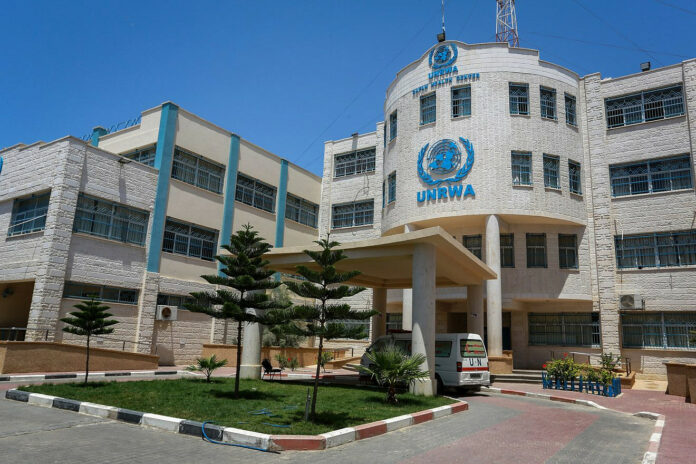
Israel’s energy minister has ordered preparations to sever utility services to facilities operated by the United Nations Relief and Works Agency, invoking newly passed legislation to advance the move. The directive follows Knesset approval last week of a law sponsored by MKs Yulia Malinovsky of Yisrael Beytenu and Limor Son-Har-Melech of Otzma Yehudit that authorizes the disconnection of UNRWA public buildings from infrastructure services.
Under the instruction issued Monday, the Israel Electric Corporation and Yerushalayim’s water provider, “Hagihon,” were told to initiate the disconnection process and to dispatch advance warning notices ahead of any cutoffs. The notices are to be sent to UNRWA public buildings located in the Yerushalayim neighborhoods of Ma’alot Dafna and Kafr Aqab.
Energy Minister Eli Cohen described the step as part of a broader campaign to halt UNRWA operations, which he labeled a “terror supporter.” He also directed officials to identify additional UNRWA facilities and to proceed with full implementation of the new law as further locations are confirmed.
 MatzavMatzav
A fire broke out today at a Bais Medrash Govoah residential development site off of 14th Street in Lakewood, NJ drawing a response from local fire crews.
The incident took place inside one of the apartment buildings currently going up as part of a housing initiative intended for yungeleit.
Authorities confirmed that no one was hurt in the blaze.
Officials did not immediately disclose what sparked the fire.
The structure involved is part of a major construction effort launched by Bais Medrash Govoah on land it acquired several years ago from Georgian Court University.
The overall plan calls for six residential buildings that will together provide roughly 600 apartments for yungeleit once the project is finished.
{}
 MatzavMatzav
A year after New York City rolled out congestion pricing in Manhattan, new data indicates that traffic is moving more efficiently, with buses and taxis seeing noticeable improvements in travel times.
The pricing program, which marked its first anniversary on Monday, requires most private vehicles to pay a $9 fee during peak hours to enter Manhattan below 60th Street, with higher charges imposed on trucks based on size. Since its introduction, traffic in the congestion zone has declined by roughly 11%, according to figures from the Metropolitan Transportation Authority, which oversees the city’s transit system and put the tolling plan into effect.
That reduction in vehicle volume has translated into faster trips for professional drivers. Taxis operating south of 60th Street averaged 7.3 miles per hour between January and October of last year, representing a 1.4% increase compared with the same months in 2024, before the toll went live. The increase reverses a multiyear trend in which average taxi speeds had been slipping steadily since 2021, according to the new analysis.
 MatzavMatzav
Elon Musk posted a new image that quickly drew attention, showing him seated at a table with President Donald Trump and first lady Melania Trump. Alongside the photo, Musk struck an upbeat tone about the year ahead, writing, “Had a lovely dinner last night with @POTUS and @FLOTUS. 2026 is going to be amazing!”
The image, which Musk shared on X, shows the tech billionaire dining with the president and the first lady, a public display that contrasts sharply with the tensions that have marked his relationship with Trump in recent months.
The post follows a long-running dispute that erupted after Musk exited the Trump administration, where he had led the Department of Government Efficiency. After leaving that role, Musk launched sharp criticisms of Trump, a rupture that played out openly and fueled speculation that the two had permanently fallen out.
 MatzavMatzav
Colombia’s president escalated tensions with Washington on Monday, warning that he would personally resist any American military action against his country after President Trump publicly hinted that Bogotá could be next in a broader anti-drug campaign.
The sharp exchange followed a dramatic U.S. operation over the weekend that led to the arrest of Venezuelan strongman Nicolas Maduro, an event that Trump cited while suggesting Colombia and its leader could face similar pressure.
In a message posted online, President Gustavo Petro invoked Colombia’s history of conflict and peace, saying he would abandon a long-held personal pledge if the nation were attacked. “I swore not to touch a weapon again since the 1989 Peace Pact, but for the homeland, I will take up arms again,” Petro wrote on X.
 MatzavMatzav
Large numbers of Americans are increasingly using ChatGPT as a substitute source for medical guidance, with roughly 40 million people saying they turn to the tool for health-related information, according to new findings cited by OpenAI and reported by Axios. The report indicates that health questions now account for more than 5 percent of all messages sent to the AI system worldwide, even though medical decisions are often highly personal and depend on individual circumstances.
The data suggests that many users rely on ChatGPT when traditional medical care is harder to access. Underserved rural areas alone generate “an average of nearly 600,000 health care-related messages every week,” and seven out of ten health-related questions are submitted outside standard office hours, Axios reports.
Beyond symptom-related concerns, users are increasingly employing the technology to navigate the financial side of health care. The report estimates that between 1.6 million and 1.9 million insurance-related searches are conducted weekly, with people seeking help to understand coverage, compare prices, identify possible overcharges, and even challenge denied claims.
 MatzavMatzav
An urgent meeting of leading roshei yeshiva and rabbonim from across the tri-state area was convened last night in Lakewood, NJ to address what participants described as the growing spiritual dangers posed by artificial intelligence (AI) and the need to safeguard yeshivos from its influence.
The gathering was held at Ateres Chana Hall at Bais Faiga and drew senior Torah leadership. The meeting was called amid rising concern that rapid advances in AI technology present unprecedented challenges to kedusha, focus, and the integrity of the Olam HaTorah.
Those in attendance included Rav Yosef Mermelstein, rosh yeshiva of Yeshivas Novominsk; Rav Shlomo Feivel Schustal, of Yeshivas Tiferes Yerachmiel; Rav Yitzchok Sorotzkin, of Mesivta of Lakewood; Rav Elya Ber Wachtfogel, of Yeshiva Gedolah Zichron Moshe of South Fallsburg; Rav Elya Kanarek, of Yeshivas Ohr Hameir of Peekskill; the of Bais Medrash Govoah, Rav Malkiel Kotler, Rav Dovid Schustal, Rav Yeruchem Olshin, and Rav Yisroel Neuman; Rav Yisroel Ehrlich, of Yeshivas Mishkan Hatorah; Rav Eliyahu Yagid, of Yeshivas Keren Hatorah; Rav Avrohom Bromberg, of Yeshivas Shaar Hatalmud; Rav Yaakov Horowitz, of Yeshivas Bais Meir; Rav Dovid Breslauer, of Yeshiva Gedolah Zichron Moshe of South Fallsburg; Rav Shmuel Abba Olshin, of Yeshiva Gedolah of Hillside; Rav Yitzchok Lichtenstein, of Yeshiva Torah Vodaas; Rav Simcha Bunim Paler, of Yeshivas Mekor Chaim; Rav Uri Meir Kanarek, of Yeshivas Noam Hatalmud; Rav Yaakov Dovid Wasserman, of Yeshiva Gedolah of Monmouth County; Rav Moshe Pruzansky, of Yeshivas Chemdas Hatorah; and other
 MatzavMatzav
At a public gathering marking the return home of a yeshiva bochur who had been released from Israeli military prison after refusing to report to the Draft Office, Rav Tzemach Mazuz delivered pointed remarks urging reconciliation and mutual respect across Israeli society.
The rosh yeshiva of Yeshiva Kisei Rachamim focused his comments on tensions between the chareidi community and the Israel Defense Forces, warning that internal strife only weakens the nation.
Calling for a shift in mindset, Rav Mazuz stressed that the relationship between Torah learners and soldiers should not be viewed as adversarial. “It’s a shame that we have baseless hatred, as if we and the army are against each other. No, we complement each other!”
He went on to invoke the historical consequences of division, urging the public to replace animosity with genuine care and unity. “Enough with baseless hatred, it caused the destruction of the Second . Let’s increase ‘baseless love.’ I love every soldier. I love the army. They are doing their job, and we are doing our job. Together, with G-d’s help, .”
 MatzavMatzav
A defamation lawsuit seeking half a million shekels has been filed by Rabbi Dr. Eliyahu Zini against Haaretz, alleging that the paper carried out a coordinated effort to damage his reputation and that of his family. The suit was submitted through his legal team, Dr. Yehiel Weinrot, Tal Shachaf, and Yehuda Schwartz.
According to the filing, the campaign began on September 4, 2025, when a prominent article appeared on the front page of a Haaretz weekend supplement. Written by Hilo Glazer, the piece carried the headline “There Have Been Extremists in Israel’s Leadership, But a Shin Bet Head Like David Zini Has Never Been Seen.”
The lawsuit claims the presentation of the article was designed to cultivate what it describes as a “dramatic and dark atmosphere,” featuring oversized text and a black background. The article allegedly cast suspicion on Major General David Zini, the incoming head of the Shin Bet, and focused particular attention on his uncle, Rabbi Eliyahu Zini.
 MatzavMatzav
Israeli Prime Minister Bibi Netanyahu delivered a forceful response this evening to opposition criticism during a 40-signature debate in the Knesset, rejecting claims about the government’s conduct and laying out what he described as the strategic consequences of its decisions.
Turning to the opposition benches, Netanyahu addressed Yesh Atid chairman Yair Lapid directly, saying, “Keep shouting.” He followed with a pointed jab at the party’s political standing: “You should carefully measure the level of shouting in your faction because there are only four realistic seats.”
Netanyahu then launched a broader attack on the opposition’s approach, accusing it of reflexive resistance to critical government actions. “You are an extremist opposition that automatically opposes the fateful decisions we make, and thanks to which we guarantee the eternity of Israel. It’s lucky we didn’t listen to you, because otherwise there would have been hostages alive in Gaza, Sinwar would have been alive, Nasrallah would have been alive, and Iran would have rushed towards nuclear weapons. Reality clearly proves that we are not the extremists. We are very balanced, determined, and powerful.”
 MatzavMatzav
Ousted Venezuelan strongman Nicolás Maduro erupted in Manhattan federal court Monday, denouncing his arrest as an abduction before being swiftly halted by the presiding judge as the proceedings began.
“I’m the president of the republic of Venezuela … I am here kidnapped … I was captured at my home in Caracas, Venezuela,” Maduro declared at the outset of the hearing, prompting an immediate interruption from Alvin Hellerstein, who moved to rein in the outburst.
“Let me interfere — there will be a time and a place to go into all of this. Your counsel will be able to make motions … at this time, I just want to know one thing: Are you Nicolás Maduro Moros?” the judge asked from the bench.
 MatzavMatzav
During his weekly shiur, Rav Yitzchak Yosef, the former Rishon LeTzion, addressed the recent arrests of yeshiva students and what he described as their mistreatment in military detention. Speaking at Beis Knesset HaYazdim in Yerushalayim, Rav Yosef wove the issue into his ongoing halachic discussion of Maariv, including whether one who davens an early Maariv has already accepted nighttime.
Rav Yosef shared a personal account involving a family member. “I have a grandson, a yeshiva bochur, who received a draft order,” he said. “He tore it up and put it in the toilet, as I told him to, and I told him not to come home to visit. Why? They’ll come at two in the morning, knock on the door, and take him to arrest. They don’t enter the . Stay in the lock yourself in.” He added pointedly, “Maybe something good will come from this — that they’ll stay locked inside the .”
 MatzavMatzav
Dear Matzav Inbox,
A troubling tone has crept into our communal conversation, one that treats roshei mosdos not as devoted servants of the tzibbur, but as convenient targets for frustration, suspicion, and public scorn.
At a time when our mosdos are under unprecedented financial and societal pressure, the people standing at the helm are being second-guessed, attacked, and blamed for problems they did not create and cannot magically solve. It is long past time to pause, step back, and speak honestly about what roshei mosdos actually carry on their shoulders, and why they deserve our understanding, support, and gratitude rather than our anger.
Do you know what it’s like to be constantly harassed?
Not criticized in good faith. Not asked sincere questions. Harassed. Day in and day out. Anonymous emails. Public WhatsApp groups. Snide comments whispered at Armchair experts who have never balanced a budget, never signed a paycheck, never sat across from a whose rent is overdue, yet somehow feel fully qualified to pass judgment.
 MatzavMatzav
Authorities arrested an Ohio man early Monday after an apparent break-in attempt and vandalism at the Cincinnati residence of Vice President JD Vance, an incident that unfolded just after midnight.
According to Hamilton County jail records, 26-year-old William DeFoor faces multiple charges, including obstructing official business, criminal damaging or endangering, criminal trespass, and vandalism. Court records indicate that his initial appearance before a judge is set for Tuesday.
The Associated Press reported, citing two law enforcement officials, that U.S. Secret Service agents stationed at the property heard a loud crash during the night. When they investigated, they allegedly found DeFoor using a hammer to smash a window and attempting to gain entry into the house.
One of the officials told the AP that the suspect also damaged a Secret Service vehicle while moving up the driveway toward the home.
MatzavMatzavFollowing Nicolás Maduro’s arrest, President Trump openly suggested the United States could take military action against Colombia.
Speaking with reporters aboard Air Force One, Trump lashed out at Colombian President Gustavo Petro, portraying him as deeply entangled in the cocaine trade and hinting that his time in power may be short. “Colombia is very sick, too, run by a sick man, who likes making cocaine and selling it to the United States, and he’s not going to be doing it very long,” Trump said.
When pressed directly on whether the United States might launch military operations against Colombia, Trump did not rule it out, replying, “it sounds good to me.”
The comments sparked immediate outrage in Bogotá, where Colombia’s government accused Trump of crossing a dangerous line. In a sharply worded statement released late Sunday, the country’s Foreign Ministry said the remarks were unacceptable, declaring that “It represents an undue interference in the internal affairs of the country, against the norms of international law.”
Sometime later, the couple left Israel, traveling through Turkey and eventually entering Syria. According to materials uncovered in the investigation, Mahamid joined ISIS after arriving in Syria. Documents and communications sent from the region reportedly indicated his active involvement with the terror group, along with chilling references to the fate of his family—including the child born to the couple, who is considered fully Jewish according to halacha.
Investigators also located the woman’s certificate of conversion to Islam. Rumors circulating in the Wadi Ara area suggest that Mahamid was killed during fighting in Syria, but repeated efforts to verify these claims and to determine the current status of the woman and her child have so far yielded no definitive information.
“This is one of the most extreme and painful cases we have encountered,” said Elchanan Groner, an activist and reporter for Hakol Hayehudi. “It demonstrates how an ideological process that may begin on the margins can end with joining a murderous terror organization and the complete disappearance of a family.”
The affair was exposed in an investigative report recently broadcast on Channel 14. Additional details are expected to be published regarding the activities of the Islamic center involved and other individuals connected to the case.
The revelations raise serious questions about oversight, responsibility, and the devastating human cost of religious and ideological radicalization—particularly when it places Jewish lives, including that of an innocent child, in grave danger within ISIS-controlled territory in Syria.
{Matzav.com}
Trump said the discussion left him optimistic about next steps and confirmed that diplomatic channels are already coordinating the visit. “I appreciated his call and tone, and look forward to meeting him in the near future,” the president added. “Arrangements are being made between Secretary of State Marco Rubio and the Foreign Minister of Colombia.
“The meeting will take place in the White House in Washington, D.C.”
The planned meeting comes against the backdrop of Trump’s longstanding and blunt accusations against Petro. Trump has previously claimed that the Colombian leader is tied to cocaine production and export operations that funnel drugs into the United States.
Those allegations were reiterated earlier this month following a Jan. 3 military operation aimed at capturing and removing Venezuelan strongman Nicolas Maduro, after which Trump warned that Petro could face scrutiny as well.
“He has cocaine mills, he has factories where he makes cocaine. And yeah, I think I stick by my first statement: He’s making cocaine,” Trump said of Petro, during a press conference at Mar-a-Lago.
Trump went on to claim that drugs originating in Colombia are being trafficked northward. “They’re sending it to the United States. So he does have to watch [him]…,” the president added.
Despite the sharp rhetoric, Trump’s latest remarks suggest that both sides are now moving toward direct engagement, with the White House meeting expected to address the disputes that have fueled tensions between Washington and Bogotá.
{Matzav.com}
{Matzav.com}
Among the largest U.S. airlines reviewed, Delta and Frontier received the highest marks, each earning an “A” grade. At the other end of the spectrum, American Airlines, JetBlue, and Spirit were all assigned “D” ratings based on the study’s scoring system.
The findings showed that 2.7% of the samples tested positive for total coliform bacteria, a category of microorganisms commonly found in the digestive systems of humans and animals, as well as in soil and vegetation. According to the researchers, such results are used as an indicator of broader contamination risks.
“Testing for coliform bacteria is important because their presence in drinking water indicates that disease-causing organisms (pathogens) could be in the water system,” the Center for Food as Medicine & Longevity said in its report.
The study also detected E. coli on 32 occasions across the 21 airlines evaluated.
U.S. carriers with onboard drinking water systems are subject to the Environmental Protection Agency’s Aircraft Drinking Water Rule, known as the ADWR, which has been in place since 2011. The regulation requires airlines to routinely test for coliform bacteria and potential E. coli contamination, as well as to disinfect and flush each aircraft’s water tanks four times annually. The researchers noted, however, that the EPA rarely issues civil penalties to airlines found to be out of compliance.
Several airlines responded to the report. American Airlines said it is reviewing the findings and emphasized that its water program meets federal standards.
“American’s potable water program is fully in compliance with the Environmental Protection Agency’s (EPA) Aircraft Drinking Water Rule (ADWR),” the airline told CBS News. “A recent EPA audit showed there were no significant findings with our program, and we have not received any violations for any potable water cabinets or trucks that we use.”
JetBlue said it follows guidance from multiple federal agencies, including the EPA, the Food and Drug Administration, and the Federal Aviation Administration, and noted that it provides bottled water to passengers. Spirit said it maintains a testing and maintenance program that complies with EPA requirements.
“The well-being and comfort of our guests is very important to us,” the company told CBS News in a statement. “Our data shows we have made progress in this area in recent years, and we continue to evaluate and refine our procedures as necessary.”
Southwest Airlines, which received a “C” grade, said it regularly inspects onboard water quality, adheres to EPA standards, and sources water from local municipal systems that already meet public health requirements.
On its website, the Center for Food as Medicine & Longevity describes its mission as “creating a more equitable food system that will improve health outcomes.”
The study ranked airlines using a five-point scale, with deductions for violations such as contaminated water samples.
Major airlines, ranked best to worst:
Delta Air Lines Incorporated (5.00, Grade A)
Frontier Airlines Incorporated (4.80, Grade A)
Alaska Airlines Incorporated (3.85, Grade B)
Allegiant Air Limited Liability Company (3.65, Grade B)
Southwest Airlines Company (3.30, Grade C)
Hawaiian Airlines Incorporated (3.15, Grade C)
United Airlines Incorporated (2.70, Grade C)
Spirit Airlines Incorporated (2.05, Grade D)
JetBlue Airways Corporation (1.80, Grade D)
American Airlines Incorporated (1.75, Grade D)
Regional airlines, ranked best to worst:
GoJet Airlines Limited Liability Company (3.85, Grade B)
Piedmont Airlines Incorporated (3.05, Grade C)
Sun Country Airlines (3.00, Grade C)
Endeavor Air Incorporated (2.95, Grade C)
SkyWest Airlines Incorporated (2.40, Grade D)
Envoy Air Incorporated (2.30, Grade D)
PSA Airlines Incorporated (2.25, Grade D)
Air Wisconsin Airlines Corporation (2.15, Grade D)
Republic Airways Incorporated (2.05, Grade D)
CommuteAir Limited Liability Company (1.60, Grade D)
Mesa Airlines Incorporated (1.35, Grade F)
Airlines for America, the industry trade group, said U.S. carriers comply with federal requirements governing onboard water systems.
“The top priority of the airline industry is the safety of all passengers and crew members,” the group said in a statement to CBS News. “U.S. airlines follow the guidelines of several government agencies — the Environmental Protection Agency (EPA) protocols for testing drinking water, the Federal Aviation Administration (FAA) requirements to routinely check water systems and the Food and Drug Administration (FDA) requirements applicable to water systems — to ensure the water onboard an aircraft is safe and reliable for consumption.”
{Matzav.com}
Paul responded by saying that such a situation would be unprecedented and unacceptable. “We’ve never been in a position, to my recollection, or to my knowledge of something like that. What would you say to the president’s team, when they talk about acquiring Greenland, even though Marco Rubio has told, other members of the Gang of Eight that, the president wants to buy Greenland. But using military forces, Caroline Leavitt says, is clearly an option on the table and won’t happen under my watch.”
The senator went on to argue that if the United States were to pursue Greenland at all, it would have to be done through diplomacy and consent, not force. “I will do everything to stop any kind of military takeover of Greenland. What I can tell you, though, is if you want to purchase Greenland, the best way would be to try to have goodwill with the people. So first, it would probably require a vote of the people to be independent of Denmark, which I think the people of Greenland are inclined to do. And then it would have to be some sort of offer of something that makes it better to be part of the United States. We have acquired territory. I mean, half the United States came to us through the Louisiana Purchase. Alaska came to us through a purchase. But you didn’t get to those purchases. Like any deal or diplomacy, by insulting your opponent, you get there by actually, trying to please and get your opponent to agree to this because it would have to be done voluntarily. So I see no scenario in which militarily I or really for that matter, any of my colleagues in the Senate would support a military takeover of Greenland.”
WATCH:
A former TSA agent, now acting as a whistleblower, said she personally observed numerous suitcases crammed with U.S. currency moving through the Minneapolis airport without obstruction. “I saw suitcases filled with millions of dollars of cash and the couriers were always Somali men traveling in pairs and they got through the checkpoint. And it just — it just really absolutely blew my mind,” she said.
Concern over the reports has drawn congressional attention. Arizona Republican Rep. Eli Crane reacted sharply after TSA warnings about cash-filled bags were highlighted in a social media post by Libs of TikTok. Crane said Congress must scrutinize how such vast sums were able to leave the country unchecked.
Crane has also pressed Minnesota officials in recent hearings, questioning them about money flows from Somali migrant communities in the state to the Africa-based terrorist organization Al Shabab.
Reporting by Just the News indicates that the appearance of these cash-laden bags at U.S. airports began after Democrat Tim Walz took office as Minnesota’s governor in 2018. The outlet detailed the scale of the transfers, noting, “Minneapolis travelers alone had $342.37 million in their luggage in 2024 and $349.4 million in 2025, and the totals nationwide are likely to be much higher,” Just the News reported.
Sources familiar with the matter say TSA agents consistently flagged the unusual cash loads, but no investigation was opened at the time, allowing the shipments to continue uninterrupted until federal officials recently moved to examine the long-standing practice.
He expanded on that position in the same post, writing:
“It is for that reason, and much more, that I am immediately taking steps to ban large institutional investors from buying more single-family homes, and I will be calling on Congress to codify it. People live in homes, not corporations. I will discuss this topic, including further Housing and Affordability proposals, and more, at my speech in Davos in two weeks.”
Recent data highlight the scale of investor activity in the housing market. In one quarter last year alone, investors bought more than 345,000 homes nationwide, accounting for roughly one-third of all residential purchases during that period.
In certain regions, the concentration is even higher. Following last year’s wildfires in parts of Los Angeles County, California, real estate figures show that investors are purchasing close to 40 percent of available properties, as many homeowners struggle to afford rebuilding costs.
Academic research has also pointed to long-term community effects. A study by researchers at the University of Colorado Boulder’s Leeds School of Business examined property and neighborhood records in Mecklenburg County, North Carolina, and found that institutional investors acquired nearly seven percent of all single-family homes sold there between 2011 and 2021.
According to the researchers, the trend carries broad negative consequences for neighborhoods, from stability to overall quality of life.
“When institutional investors start purchasing at this scale, the effects really start to compound, leading to broader declines in these neighborhoods. As these areas grow and become more concentrated with investor-owned properties, the overall decline becomes even more noticeable,” said Stephen Billings, the study’s lead author.
He added that frequent turnover and absentee ownership alter the fabric of communities. “It’s not surprising that the character of the community changes,” Billings said. “When people are constantly moving in and out, it’s hard to expect anyone to truly invest in the long-term well-being of the neighborhood.”
{Matzav.com}
Zohar pressed the point further, warning that language carries weight and can incite violence. “You authorized their deaths so that a driver allows himself to drive at a crazy speed into a protester and to kill a boy. So think what you’re saying. Every word has meaning. Be responsible for what you say.”
{Matzav.com}
During the episode, British actress Helen Mirren introduced the cello to the restoration team. Luthier Becky Houghton carried out the repair, and the restored instrument was later played on screen by Jewish cellist Raphael Wallfisch. Despite these elements, viewers noted the absence of any explicit reference to the Jewish nature of the rescue operation.
According to The Jewish Chronicle, the word “Jew” was allegedly cut during editing from a line spoken by Mirren, which aired as, “…children were sent by the Kindertransport,” without further clarification.
After public criticism, the BBC added a correction to the episode’s iPlayer page, stating that “the Kindertransport was the organized evacuation of approximately 10,000 children, the majority of whom were Jewish.” Even so, as of early this week, the episode’s description on the broadcaster’s official website still did not mention Landau’s Jewish background or the Jewish focus of the Kindertransport.
This episode is the latest in a series of controversies involving the BBC. The broadcaster has drawn repeated criticism in recent years over what critics describe as anti-Israel bias, a charge that intensified following Hamas’s October 7, 2023 attack on Israel.
In November 2023, the BBC issued an apology after incorrectly reporting that Israeli forces were deliberately targeting medical teams near the Shifa Hospital in Gaza. Earlier, the network wrongly suggested Israel was responsible for a deadly explosion at a Gaza hospital, later conceding that “it was false to speculate” after evidence showed the blast was caused by an Islamic Jihad rocket.
The corporation also faced scrutiny last year for featuring the son of a senior Hamas official as the narrator of its documentary Gaza: How to Survive a Warzone. In response to the backlash, the BBC admitted there were “serious flaws” in the program.
Most recently, the broadcaster announced that all staff will be required to undergo mandatory anti-discrimination training, starting with modules addressing antisemitism and Islamophobia.
{Matzav.com}
{Matzav.com}
The idea that would ultimately grow into Yad Sarah was born out of personal necessity. When Rabbi Lupolianski once needed to borrow medical equipment for his young son, he encountered the significant logistical difficulties involved. What began as a single small humidifier loaned to neighbors eventually developed into one of Israel’s largest volunteer-based chessed organizations, providing medical equipment and vital services to countless families across the country.
He was a close confidant of Rav Yosef Shalom Elyashiv zt”l and, in the later years of Rav Elazar Menachem Man Shach zt”l, played a central role for an extended period in coordinating and hosting meetings between Rav Shach and Rav Elyashiv at the offices of Yad Sarah.
Rabbi Lupolianski was among the leaders of Degel HaTorah and holds the distinction of being the only chareidi to have served as mayor of Yerushalayim. His tenure was marked by quiet dedication, humility, and an unwavering commitment to the city’s residents.
He is survived by his wife and their 12 children.
Yehi zichro boruch.
{Matzav.com}
In her decision, Wilner wrote: “After reviewing the request for an interim order, the responses, and the petitioners’ reply, an interim order is hereby issued according to which no financial transfers shall be carried out pursuant to the decisions of the Finance Committee that are the subject of the petition, until a further decision is made.”
Despite the freeze, the opposition party Yesh Atid said it intends to seek additional relief, including a demand that chareidi teachers return funds that were already transferred before the interim order took effect.
The court’s original decision sparked sharp reactions across the chareidi political spectrum. Knesset Finance Committee Chairman Moshe Gafni, head of Degel HaTorah, accused the judiciary of waging “war on the chareidi public and Torah institutions,” claiming the court acted with unprecedented speed to disqualify funds that had been approved according to law.
The Shas party issued a blistering statement, calling the ruling “antisemitic harassment” and accusing the court of “cruelly running over the chareidi public,” from harming young children to undermining Torah education for tens of thousands of students.
Knesset member Moshe Arbel said the ruling exemplifies a system in which “a party that lost a parliamentary vote manages, within a single day, to overturn a Knesset decision through a judicial ruling that harms teachers’ salaries,” adding that such disputes should be settled at the ballot box.
United Torah Judaism chairman Yitzhak Goldknopf warned that the decision fuels societal division and deepens public mistrust in the legal system, describing the funding freeze as a direct blow to chareidi children and an extension of what he called longstanding budgetary discrimination.
MK Meir Porush also condemned the court, saying the judiciary is “at war against anything sacred” and vowed that no legal process would prevent the transmission of Torah education from one generation to the next.
The High Court has not yet ruled on the attorney general’s request to lift the interim injunction.
{Matzav.com}
In the call, the shaken caller can be heard telling the dispatcher, “There are several injured here, the bus ran over several children… I don’t know what this is — I fled.” His voice reflects panic and confusion as he struggles to provide clear details.
The MDA dispatcher attempts to assess the situation and dispatch ambulances to the scene, repeatedly asking about the condition of the injured. However, the caller explains that he is unable to get closer. “I can’t see. I’m not approaching,” he says, underscoring the fear and disorder in the immediate aftermath of the ramming.
Additional voices heard on the recording confirm that multiple teenagers were struck by the bus, though at that stage the precise number of victims and the severity of their injuries remained unclear.
{Matzav.com}
In Lakewood, Rav Schindler continued to live a life of Torah and dignity, serving as a model of lifelong learning and yiras Shamayim. Even in advanced age, he remained deeply connected to Torah.
His levayah took place on Tuesday in Lakewood.
Rav Schindler is survived by his children and grandchildren, who continue his legacy of Torah and avodas Hashem.
The family is sitting shivah until Monday morning at 1187 Idalia Avenue in Lakewood, NJ>
Yehi zichro baruch.
{Matzav.com}
Overall toplines showed that more registered voters supported the action than opposed it, with a notable portion still unsure. Specifically, 43% favored the decision to capture Maduro, compared with 36% who opposed it.
The poll was conducted by J.L. Partners among 999 registered voters on January 5–6, and carries a margin of error of plus or minus 3.1 percentage points.
{Matzav.com}
Blaming political rhetoric for fueling violence, Trump argued that law enforcement personnel are being placed in danger nationwide. “The situation is being studied, in its entirety, but the reason these incidents are happening is because the Radical Left is threatening, assaulting, and targeting our Law Enforcement Officers and ICE Agents on a daily basis,” he wrote.
He added a call for public support of officers carrying out immigration enforcement.
“They are just trying to do the job of MAKING AMERICA SAFE. We need to stand by and protect our Law Enforcement Officers from this Radical Left Movement of Violence and Hate!”
The shooting set off demonstrations across Minneapolis, with crowds gathering near the scene. The location is less than a mile from where George Floyd was killed in 2020 by former Minneapolis police officer Derek Chauvin, who was later sentenced to 21 years in prison for murder.
{Matzav.com}
Behind the scenes, sources told Matzav.com that in the 24 hours preceding the meeting, messages were conveyed from Degel HaTorah to Agudas Yisroel in an effort to prevent the adoption of a decision opposing the draft law.
On Tuesday, a conversation reportedly took place between Rav Aharon Hirsch, son of Rav Moshe Hillel Hirsch, and Yaakov Veltz, secretary of Agudas Yisroel’s Moetzes. The message conveyed was a request that no decision be taken at this stage against the draft legislation.
Following that discussion, Veltz met with the Gerer Rebbe and relayed Degel HaTorah’s position. The Gerer Rebbe did not dismiss the argument and even raised a far-reaching proposal: to cancel Wednesday’s Moetzes meeting and instead convene a joint council of chassidishe and Litvishe gedolim in the coming days to reach a unified stance on the law.
The Moetzes meeting proceeded as scheduled, but it remains unclear whether a clear ruling against the law will be issued or whether the pressure from Degel HaTorah will ultimately shape the outcome. Coalition leaders are watching developments closely.
Present at the Moetzes meeting are Knesset members Yitzchak Goldknopf, Meir Porush, and Yisrael Eichler, as well as Bnei Brak Mayor Chanoch Zeibert. MK Yaakov Tessler is not attending, as he is currently abroad for a family simcha.
{Matzav.com}
During the same remarks, Weaver said such a shift would require families — “especially white families” — to have a “different relationship to property” than the one they currently have.
Those comments quickly drew backlash on social media and from legal observers, who said the language raises red flags about racial bias being baked into policy discussions.
Dhillon responded directly on X, making clear that the Justice Department views discrimination as illegal regardless of who it targets.
“New York: Consider this your official notice from @TheJusticeDept,” Dhillon wrote, adding, “We will NOT tolerate discrimination based on skin color. It is ILLEGAL.” She also said the Civil Rights Division is “paying very close attention.”
The warning was reinforced in a subsequent interview on OANN’s “Fine Point with Chanel Rion,” where Dhillon said civil rights protections apply equally to all Americans and that federal intervention is possible if New York City crosses legal lines, according to the Washington Examiner.
“Just because you’re white doesn’t mean you have fewer rights in this country,” she said, adding that the administration is “on high scrutiny.”
Additional scrutiny intensified after the New York Post published a report highlighting Weaver’s past online activity, including posts that were later deleted. In those posts, Weaver urged supporters to “seize private property” and labeled homeownership “a weapon of white supremacy.”
The Post also reported that Weaver called on voters to “elect more communists” and sharply criticized law enforcement during the unrest that followed the 2020 death of George Floyd.
Weaver has been affiliated with the Democratic Socialists of America and previously worked with Housing Justice for All, according to the report.
The Post further noted that she served as an adviser to Mamdani’s 2025 campaign and was heavily involved in pushing for stricter rent stabilization measures in 2019.
Opponents of the mayor warn that the appointment reflects a broader housing strategy they say could harm landlords and property owners, including Mamdani’s proposal to freeze rents on approximately one million rent-regulated apartments across the city.
Humberto Lopes, founder and CEO of the Gotham Housing Alliance, told the Post that such policies repeat the mistakes of government-run housing, which he described as a long-term failure.
For critics on the right, the controversy reaches beyond housing policy. They argue it raises fundamental questions about whether the nation’s largest city is moving toward race-based decision-making and anti-property ideology — and whether federal authorities will step in before those ideas are translated into law.
{Matzav.com}
For decades, Newark and Jersey City have alternated as the state’s most populous cities, each hovering between roughly 300,000 and 317,000 residents. Lakewood’s total township population is about half that size, yet its concentration of residents is closing the gap with major cities at a rapid pace.
Current estimates place Lakewood’s population density at approximately 9,500 to 9,800 people per square mile. Although that remains below the “hyper-density” of Jersey City, which exceeds 17,000 residents per square mile, and Newark, which tops 12,000 per square mile, it dwarfs New Jersey’s statewide average of 1,263 people per square mile.
{Matzav.com}
The senator sharpened his remarks by issuing a direct threat toward the country’s highest authority, declaring, “If you keep killing your people who are demanding a better life, Donald J. Trump is going to kill you.”
Turning to recent events elsewhere, Graham cited Venezuela as a lesson for Iran, describing the U.S. capture of Nicolás Maduro as “a prime example of America at her best.” He said decisive American action abroad should serve as a clear signal to Tehran that Washington will not look the other way when governments open fire on their own citizens.
He further cautioned that allowing Maduro to stay in power after such a dramatic U.S. operation would be a “fatal mistake to our standing in the world,” portraying the Venezuela episode as a model for reestablishing global deterrence.
On the ground in Iran, unrest continued to widen. In the western city of Abdanan, video footage showed massive crowds filling the streets and chanting “Death to Khamenei,” a slogan aimed at Supreme Leader Ali Khamenei. Online reports also suggested that some local police officers may have broken ranks and aligned themselves with demonstrators.
International observers highlighted the momentum building in the streets. The U.S. House Foreign Affairs Committee pointed to what it described as protesters “claiming entire cities,” sharing footage of the Abdanan marches and the escalating anti-regime chants as evidence of the growing challenge to Iranian authorities.
According to circulating reports, the crackdown has already taken a heavy toll, with at least 34 protesters killed and 2,076 people detained across the country. The unrest has reportedly reached 92 cities spanning 27 provinces.
“Today, ICE officers in Minneapolis were conducting targeted operations when rioters began blocking ICE officers and one of these violent rioters weaponized her vehicle, attempting to run over our law enforcement officers in an attempt to kill them — an act of domestic terrorism,” McLaughlin said in a statement.
She added that officers responded after perceiving an immediate threat.
“An ICE officer, fearing for his life, the lives of his fellow law enforcement and the safety of the public, fired defensive shots. He used his training and saved his own life and that of his fellow officers.”
Video footage from the scene captured a heavy law enforcement presence and a large crowd gathered behind yellow police tape. Protesters could be heard chanting anti-ICE slogans, with some throwing snowballs toward officers stationed in the street.
Additional video livestreamed by Fox 9 showed federal agents standing shoulder to shoulder as demonstrators filmed them at close range, occasionally shouting insults. The footage also appeared to show the aftermath of a collision involving three vehicles — a plum-colored SUV, a white sedan, and a dark-red sports-style car.
Images from the scene showed extensive damage to the front end of the white sedan as police officers and FBI agents surrounded the vehicle. Other photographs taken by journalists depicted protesters winding up to hurl snowballs at officers, while another image showed a police officer deploying pepper spray against a small group of demonstrators who had linked arms to block the roadway.
The confrontation took place amid what authorities describe as the largest deployment of federal immigration enforcement personnel to Minneapolis since the start of the second Trump administration.
Minneapolis City Council Member Jason Chavez wrote on the social media platform Bluesky that U.S. Border Patrol Chief Gregory Bovino responded to the scene following the shooting.
Noem emphasized that the operation was intended to send a clear message. “You can run, but you can’t hide,” she wrote. “We will never relent in our mission to protect the American people and disrupt the funding of narco terrorism wherever we find it, period.”
According to Noem, one of the tankers — the Bella I — had actively tried to evade U.S. authorities over several weeks. She said the ship switched its flag and even repainted its name on the hull while under pursuit, describing the effort as “in a desperate and failed attempt to escape justice.”
The pursuit was carried out by the crew of the USCGC Munro, which tracked the vessel across vast stretches of ocean and through severe weather before executing the boarding. “The heroic crew … pursued this vessel across the high seas and through treacherous storms,” Noem wrote, citing their “determination and patriotism.”
She added that the service members involved merited public appreciation. “These brave men and women deserve our nation’s thanks for their selfless devotion to duty,” she said.
U.S. European Command later confirmed that the Munro followed the Bella I — which had been renamed the Marinera — prior to the seizure, saying the boarding was conducted “pursuant to a warrant issued by a U.S. federal court.”
Noem said the takedown of the two tankers was meant to go beyond routine maritime enforcement, framing it as a direct blow to international networks that finance narco-terrorism and corruption.
The Department of Homeland Security did not disclose what cargo, if any, was discovered on the ships, nor did it say whether arrests resulted from the boardings.
The maritime actions followed closely on the heels of another high-profile operation, coming just days after U.S. military forces captured Venezuelan dictator Nicolas Maduro and his wife during a nighttime raid in Caracas.
Summing up the significance of the interdictions, Noem wrote, “This is our country’s greatest fighting force at their best.” She added, “This is America first at sea.”
{Matzav.com}
Under the revised guidance, meals built around high-quality protein and healthy fats take center stage. Poultry, red meat, beans, eggs, dairy, fruits, vegetables, and fiber-rich whole grains are encouraged, while white bread, crackers, sugar-sweetened beverages, packaged snacks, cookies, and fast food are discouraged.
Kennedy said the updated recommendations reflect a fundamental shift away from decades of advice shaped by outside interests. “The hard truth is our government has been lying to us to protect corporate profit-taking, telling us that these food-like substances were beneficial to public health,” he said.
“Today the lies stop. The new guidelines recognize that whole, nutrient-dense food is the most effective path to better health and lower healthcare costs. Protein and healthy fats are essential and were wrongfully discouraged in prior dietary guidelines.”
The new approach, which Kennedy said will “revolutionize our nation’s food culture,” directly affects meals served across a wide range of federally supported institutions, including public schools, military bases, prisons, and other government facilities that together serve millions of people each day.
“These guidelines replace corporate-driven assumptions [and] will revolutionize our nation’s food culture and make America healthy again,” Kennedy said.
A central objective of what officials described as a “whole food framework” is lowering national healthcare expenditures. According to a White House fact sheet, obesity, type 2 diabetes, and related chronic illnesses are costing taxpayers an estimated $600 billion annually.
Administration officials noted that at least 78% of participants in the Supplemental Nutrition Assistance Program are also enrolled in Medicaid. While the new guidelines do not directly change SNAP — which is governed by Congress and serves more than 40 million Americans — officials said the standards will serve as the benchmark for more than 100 government feeding programs across over 10 federal agencies.
“We have five times higher obesity rates than any other country in the developed world,” one official said. “This is because of our diet.”
Kennedy’s “Make America Healthy Again” movement, which gained momentum during his 2024 presidential campaign before he joined the Trump administration, has emphasized protein-heavy eating patterns. He has frequently highlighted the role of diet in preventing disease since taking office.
During a March 2025 trip to West Virginia, Kennedy publicly leaned into that message while standing alongside Gov. Patrick Morrisey. “The first time I saw him, I said, ‘You look like you ate Governor Morrisey,’” Kennedy joked. “I am going to put him on a really rigorous regimen, and we’re gonna put him on a carnivore diet.”
Medical leaders welcomed the shift. Dr. Bobby Mukkamala, president of the American Medical Association, praised the administration’s move, saying the organization is “focused on helping physicians translate this science into everyday care and helping patients improve their overall health.”
“The American Medical Association applauds the Administration’s new Dietary Guidelines for spotlighting the highly processed foods, sugar-sweetened beverages, and excess sodium that fuel heart disease, diabetes, obesity, and other chronic illnesses,” Mukkamala said. “The Guidelines affirm that food is medicine and offer clear direction patients and physicians can use to improve health.”
Mukkamala added that the AMA will “work with Congress to enact meaningful, lasting nutrition change that can improve lives,” while expanding education for doctors and medical students and convening discussions to “make it easier for physicians to talk to patients about the role of food in preventing, and even treating, chronic disease.”
The latest guidelines also mark a symbolic departure from earlier federal nutrition models. In 2011, the Department of Agriculture replaced the traditional food pyramid with the MyPlate system under then-first lady Michelle Obama and then-Agriculture Secretary Tom Vilsack, a change that began reducing the emphasis on carbohydrates.
In its fact sheet, the Trump White House criticized the Biden administration for what it described as a retreat from science-based nutrition policy, arguing that efforts to address chronic disease were diluted by placing equity considerations at the center of dietary guidance.
“We reject this logic: a common-sense, science-driven document is essential to begin a conversation about how our culture and food procurement programs must change to enable Americans to access affordable, healthy, real food,” the document stated.
“The Trump administration welcomes all stakeholders to be part of this conversation in the coming year.”
{Matzav.com}
אביו של יוסף אייזנטל ז"ל: כמה כאב לך והפריע לך שזורקים בחורי ישראל לתוך הכלא. pic.twitter.com/Ai0R71Sf8F
— זירת החדשות (@ZiratNews) January 7, 2026
הפרגוד: הלווית הנער יוסי אייזנטל ז"ל שנדרס אמש למוות. pic.twitter.com/MBtbvIXyii
— הפרגוד (@moshepargod) January 7, 2026
Rabbi Eisenthal shared moments from Yosef’s childhood that revealed his son’s extraordinary sensitivity and generosity. At just six years old, he recalled, Yosef once went out with his mother holding 20 shekels meant for treats. On the way, he noticed a poor man asking for charity. “He couldn’t bear it,” his father said. “He told his mother, ‘I want to give all the money to tzedakah.’”
He described how Yosef would return from special learning programs and distribute every candy he received to his family without keeping any for himself. When he began learning Gemara, his father said, Yosef’s joy in understanding was unmistakable. “What a pleasure it was to learn with you,” he said. “You wouldn’t give up until everything was clear.”
Rabbi Eisenthal spoke of winter Friday nights when Yosef, still new to the demanding schedule of yeshiva learning, would insist on cutting the family meal short so he could return to the beis medrash. “If the meal wasn’t finished, you would bentch and get up to learn,” he said.
In recent months, Yosef had entered yeshiva as a full-fledged bochur and was filled with happiness at the progress he was making. He would come home, his father recounted, and if a sugya was unclear, he would ask, “Abba, do you want to learn?” relishing the moment when everything finally made sense.
During Chanukah, Yosef shared that he had taken upon himself to complete Maseches Bava Basra ten times. When his father asked how that was possible, Yosef replied simply, “It’s not a problem,” and asked for a Gemara he could take with him on the road. “You didn’t yet merit to finish Bava Basra in this world,” Rabbi Eisenthal said softly, “but in the World of Truth you will have great rabbanim. How you worked, how you yearned to know and to learn.”
He spoke of how beloved Yosef was—by his sisters, his mother, his family, and his friends—how they all waited eagerly for the “free Shabbos” when he was meant to come home this week. “It’s so hard to speak of you in the past tense,” he said. “In truth, we can speak of you in the present. Your body is no longer here, but your neshamah will be with us every day, every hour, showing us what it means to love Torah and to love another Jew.”
Rabbi Eisenthal said, “The Ribbono Shel Olam decreed this decree. Everyone feels this was a communal korban. So many tears have been shed by Klal Yisrael. But we must be careful not to ask ‘why.’ We do not ask why. It is forbidden to ask why. We say thank You. Thank You for the 14 years You entrusted us with such a neshamah. We return to You a pure neshamah, one who left this world in the midst of a mitzvah.”
He told the crowd that while no words can truly comfort bereaved parents, his consolation would be if each person present—family members, yeshiva students, neighbors—would take upon themselves a small, realistic commitment. “Not something big,” he emphasized, “but something small that can endure. Then we will know this was truly a perfect offering.”
In the most wrenching moments of the hesped, Rabbi Eisenthal turned directly to his son. “Yossi, our Yossi, you are ascending before the Kisei Hakavod. You are closer than anyone. Tear open the gates of Heaven. Be a melitz yosher for me, that Hashem give me the strength to withstand this test. Pray for your mother, who invested everything in you, physically and spiritually, from the day you were born. Be an advocate for your sisters, who loved and cherished you so deeply.”
He continued, “Be an advocate for little Dovid, whom you were so happy was born, and whom we hoped you would be a model for. I promise you—we will teach him who you were and what you were. Tear open the gates of Heaven for the entire family, for your grandparents, for all the בני הישיבה, for all of Klal Yisrael.”
His voice broke as he concluded with a plea that echoed through the crowd: “Be a meilitz yosher for the world of yeshivos, that no one disturb it in its Torah learning. How much this pained you in recent months—how it hurt you to see Jewish bochurim thrown into prison. May Hashem help that ‘death be swallowed forever, and Hashem wipe away tears from every face.’ Yossi—we will merit to see you again soon, at the resurrection of the dead.”
{Matzav.com}
“Tell me he didn’t see them. He didn’t see them? Twenty children are standing right in front of him,” the judge said from the bench.
Describing what is visible in the footage, Judge Lary-Babli said that several youths climbed onto the bus, kicked the protective barrier, and that one of them spat at the driver. In response, she said, the driver accelerated sharply. “At that stage, the driver begins driving at a very high speed as the youth falls from the bus, while dozens of young people standing in front of the bus are pushed aside by it,” she stated.
“I do not believe that driving rapidly into a crowd is the correct option,” the judge added. “The victim is the deceased, not the driver.”
A police representative at the hearing highlighted the severity of the incident, noting that investigators are carrying out approximately 39 additional investigative actions. “The very high level of dangerousness posed by the suspect is evident given the offense and the brazenness of charging toward a crowd of teenagers,” she told the court. While police have, at this stage, removed the suspicion of murder, they emphasized that suspicion of another serious offense has been strengthened.
Yerushalayim District Police Commander Superintendent Avshalom Peled also commented on the incident, saying the intersection where the tragedy occurred remained open to traffic as a designated “fabric-of-life” route. He noted that the driver’s claim of distress is being examined, but stressed that it “does not diminish the severity of the incident.”
{Matzav.com}
The shredded clothing—torn apart by contact with the underside of the bus and the asphalt—points to the sheer force of the impact and the extreme danger faced by others at the scene. “When you see the clothes, you understand that this was an open miracle,” an eyewitness said. “A few centimeters, a few seconds—and we would be speaking about additional fatalities.”
According to accounts from the scene, several bochurim were in immediate peril, with some clinging to the bus and others falling dangerously close to its wheels as it continued moving. “This is tangible proof that the number of victims could easily have been far higher,” the witness added. “It is a miracle within a tragedy.”
{Matzav.com}
The judiciary stated that the death sentence was carried out only after approval by Iran’s Supreme Court and following what it described as full legal proceedings. “The death sentence of Ali Ardestani for the crime of espionage in favor of the Mossad intelligence service, through the transfer of sensitive state information, was implemented after confirmation by the Supreme Court and completion of judicial procedures,” the judiciary said.
Iran has significantly increased executions in recent months of individuals accused of cooperating with Israeli intelligence services. Iranian media outlets have reported a sharp rise this year in the number of people sentenced to death on espionage charges linked to Israel.
In a separate case cited by Iranian state television, authorities announced that on December 20, 2025, Iran executed Aqil Kashavarz, who was also convicted of spying for Israeli intelligence and the Israeli military. According to Iranian claims, Kashavarz maintained what officials described as “close intelligence cooperation” with the Mossad and photographed sensitive military and security sites.
Kashavarz was arrested in May while allegedly photographing a military headquarters in the northwestern city of Urmia, approximately 600 kilometers northwest of Tehran. Iranian officials accused him of carrying out more than 200 similar missions for Israeli intelligence across multiple cities throughout Iran, including in the capital.
{Matzav.com}
Paysach Freedman, CEO of Chaim V’Chessed, said: “The addition of Rabbi Pindrus is a pivotal moment for Chaim V’Chessed. His experience, national recognition, and deep understanding of our community will take our work to an entirely new level and significantly benefit English-speakers across Israel.”
This landmark appointment underscores Chaim V’Chessed’s ongoing commitment to expanding its impact and ensuring that English-speaking Olim have the resources, guidance, and support they need to thrive in Israel.
{Matzav.com}
Gothelf stressed that when a child is killed, questions of affiliation or ideology become irrelevant. “When a child goes out to a protest and does not come home, this is no longer an internal dispute. This is a flashing red warning light,” he said.
Also interviewed on the program was Motti Bukchin, spokesman for ZAKA, who spoke with visible pain as he described what the organization’s volunteers encountered at the scene.
“This is a horrifying event,” Bukchin said. “I don’t know whether to call it an accident, a killing, or an attack. In the end, there is a child in his early teens who was killed for nothing. Entire families are destroyed.”
According to Bukchin, ZAKA volunteers arrived shortly after the incident, while rescue forces were still working to extricate the victim. “The bus dragged him,” he said. “People ran after the driver and shouted for him to stop—and he kept going.”
He described long, agonizing minutes as teams waited for firefighters to arrive with hydraulic equipment. “Only after they lifted the bus were they able to extricate the victim. Sadly, he was already without signs of life, with multi-system injuries, no pulse and no breathing.”
Bukchin emphasized that, from his perspective, the central issue is not only the sequence of events but their tragic result. “It doesn’t matter what came before what,” he said. “The outcome is a 14-year-old child who lost his life in a tragic way.”
He noted that the scene was especially difficult, requiring extended and painstaking work by volunteers to collect findings and care for the deceased with dignity. “This work is done in front of the public, in front of a family that understands that their child has been killed. It is true kindness,” he said.
Despite decades of experience with ZAKA, Bukchin said the pain never dulls. “Every time it is new. No two events are the same. Every family, every person who dies, is an entire world.”
{Matzav.com}
The uncomfortable truth is that the very platforms that wring their hands over the spending culture are, in fact, major engines driving it. Advertising does not merely reflect reality; it shapes it. When luxury is constantly normalized, glamorized, and pushed into every communal space, it inevitably seeps into expectations and behavior.
You cannot pour gasoline on a fire all week long and then publish a sermon on fire safety and expect to be taken seriously.
To then posture as critics of the problem they actively profit from is, quite frankly, hypocrisy. Sorry for saying the raw emes.
At the very least, there should be some honesty. These outlets are not neutral observers. They are nogeya b’dovor. They are making substantial money off the very excesses they publicly decry. Stop pretending to occupy some lofty moral high ground while cashing the checks that keep the cycle spinning.
If communal media truly wants to be part of the solution, it starts with self-awareness and integrity. Until then, the lectures about “crazy spending” ring hollow, drowned out by the posts and ads screaming the exact opposite message.
Sincerely,
Yehoshua Boruch Jacobs
To submit a letter to appear on Matzav.com, email MatzavInbox@gmail.com
DON’T MISS OUT! Join the Matzav Status by . Join the Matzav WhatsApp Groups by .
The opinions expressed in letters on Matzav.com do not necessarily reflect the stance of the Matzav Media Network.
{Matzav.com}
Rav Sheinert later settled in Boro Park, where he served for many years as a spiritual guide and mechanech, shaping hundreds of talmidim in the mesorah handed down through generations. He was renowned for sharing stories and teachings he had personally heard from Rav Aharon of Belz and other Torah giants.
Approximately twenty years ago, Rav Sheinert moved to Kiryat Belz in Yerushalayim. At the directive of the Belzer Rebbe, he assumed the role of mashpia at Yeshivas Torah Ve’Emunah, an institution dedicated to baalei teshuvah. There, he devoted himself to drawing Jewish hearts closer to their Father in Heaven, leaving an indelible impact on countless lives.
In recent years, his health declined and he was confined to his home.
The levayah took place Tuesday, departing from the Sanhedria Funeral Home in Yerushalayim and passing the Belzer Bais Medrash, before continuing to the Machzikei Hadass section at Har HaMenuchos for kevurah.
Yehi zichro baruch.
{Matzav.com}
For Rabbi Ulman, traveling together to the United States symbolizes the Jewish community’s appreciation to a Syrian-born Muslim who acted without hesitation to save others. “Ahmed did what he did that day because he believed that G d placed him at the scene for a reason, and that’s what gave him the strength to save lives,” Ulman told Chabad.org. “This is something people from all walks of life can and must learn from.”
Al-Ahmed recalled how the events of that night unfolded almost by chance. On the early evening of Sunday, Dec. 14, he was walking along Bondi Beach looking for a cup of coffee. Finding none, he noticed a large gathering across the street at Archer’s Park. “I thought there might be coffee there, so I approached the security guard, who told me it was the Chanukah by the Sea celebration,” al-Ahmed told Chabad.org. “I saw the Menorah standing tall. I knew these were our Jewish brothers, and I felt happy to see it.”
Moments later, the celebration turned into a scene of terror. Gunfire erupted as two attackers positioned above the crowd began shooting. “If G d had willed to take my life, it would have ended there,” al-Ahmed said, describing how bullets flew past him. He dropped to the ground and crawled behind parked cars for cover, where he realized he was in a position to act as one of the terrorists advanced, continuing to fire at men, women, and children.
Al-Ahmed said he could not remain hidden. “To hear children screaming and women crying, I couldn’t stand it,” he said. “I had a duty; there was nothing to think about. Here was a man taking innocent lives. Nobody can take a human life—that’s in G d’s hands alone.”
Another bystander, 30-year-old Israeli Gefen Bitton, joined him and relayed information about the gunman’s movements. Despite still recovering from painful surgery on his left arm, al-Ahmed edged closer, moving from car to car before making his move. “It was as if I saw myself from above, going around the car toward him, and, I swear: I felt G d helping me,” he recalled.
He lunged at the terrorist, tackled him, and managed to wrench the gun away, halting the attack for crucial moments. Almost immediately, the second terrorist opened fire, striking al-Ahmed in the shoulder and arm. Bitton, who followed him in, was also shot and badly wounded.
At 6:46 p.m., six minutes and ten seconds after the first shots were fired, police finally neutralized the attackers. By then, Rabbi Ulman’s community had been devastated.
The victims included Rabbi Ulman’s son-in-law, Rabbi Eli Schlanger, with whom he had worked side by side on community initiatives for more than 18 years; Rabbi Yaakov Levitan, a quiet but central force in the community; Reuven Morrison, a close friend and pillar of Chabad of Bondi; Alex Kleytman, another longtime friend; and eleven others. Those lost included cherished community members, a Holocaust survivor, and a 10-year-old girl, Matilda.
That night, Rabbi Ulman rushed to the hospital to be with his daughter, Chayale Schlanger, whose back had been grazed by a bullet, and her two-month-old son Shimshy, injured by shrapnel. He was the one who had to call Eli’s parents and deliver the devastating news.
Despite his own grief, Rabbi Ulman felt a responsibility to his shattered community. “I didn’t have the luxury to wait a week before speaking to my community,” he said, “We all desperately needed to hear some perspective.” Over the course of that week, he officiated at ten funerals, each eulogy heavier than the last.
Three weeks later, still immersed in mourning, Rabbi Ulman reflected on the balance between grief and gratitude. “You have to allow yourself to be broken at a time like this,” he said. “At the same time, amidst the brokenness, we have to be grateful.”
He credits al-Ahmed’s bravery, along with others such as Morrison who also tried to stop the attack, with saving countless lives. Thinking of his daughter, his five grandchildren, and the many others who survived, Rabbi Ulman said, “In the greatest tragedies, there are always miracles. It could have been much, much worse.”
Standing beside al-Ahmed at the Ohel, Rabbi Ulman said he was grateful for the opportunity to personally express thanks on behalf of the Jewish people. “He’s a hero,” Ulman said. “It may be tempting to think, ‘someone else is being attacked, that’s not my business.’ But Ahmed didn’t think that way. His actions announce that this is not a Jewish issue; it is a human issue. We don’t only take care of our own. We look after each other. We are all G d’s children, and He gave each of us the ability to choose good over evil.”
Ulman added that al-Ahmed’s actions exemplify true kindness. “In the Torah, among the non-kosher birds, there is listed one bird called a ‘chasidah’—which means ‘kindness.’ Why is it called that? ‘Because,’ the Talmud says, ‘it shows kindness to its friends.’ But if it’s kind, why isn’t it kosher? It’s not kosher because it is kind exclusively to its own friends. That’s not true kindness. True kindness extends beyond our circle—if innocent people are being hurt, and G d puts us in a position to help, we must act. Ahmed did exactly that. He shows us what true kindness looks like.”
Al-Ahmed, for his part, has downplayed the attention he has received since the attack. “I just did my duty as a human being,” he told Chabad.org. “Afterward, in the hospital, my phone started ringing and ringing. I was told the whole world knows me. For what? I did my duty as a human being.”’
{Matzav.com}
Trump has publicly voiced alarm over the possibility of an adverse ruling. In a social media post last Friday, he warned that striking down the tariffs would be a “terrible blow” to the United States. In another message posted on Monday, Trump defended the policy, writing, “Because of Tariffs, our Country is financially, AND FROM A NATIONAL SECURITY STANDPOINT, FAR STRONGER AND MORE RESPECTED THAN EVER BEFORE.”
The tariffs were imposed under the International Emergency Economic Powers Act on imports from multiple countries. The administration argued that persistent trade deficits constituted a national emergency and also used tariffs targeting China, Canada, and Mexico as leverage to combat the flow of fentanyl and other illegal drugs into the United States.
Beyond the tariff dispute, the court — which has a 6–3 conservative majority — is weighing several other high-profile cases. In October, justices heard arguments over a challenge to Section 2 of the Voting Rights Act of 1965, a cornerstone provision that prohibits election maps that weaken minority voting power even without explicit proof of discriminatory intent.
During that hearing, the conservative bloc appeared inclined to narrow the reach of the provision, potentially making it harder to challenge redistricting plans alleged to dilute minority influence.
Also argued in October was a First Amendment challenge to a Colorado law barring licensed psychotherapists from performing “conversion therapy” on minors. The law targets practices aimed at changing a minor’s sexual orientation or gender identity.
In that case, a majority of justices signaled sympathy toward a Christian counselor who contends the law violates constitutional protections for free speech, suggesting the statute may not survive scrutiny.
The court’s docket remains packed in the weeks ahead. On Jan. 13, the justices are scheduled to hear arguments over Republican-backed state laws that prohibit transgender athletes from competing on female sports teams at public schools.
Later in the month, on Jan. 21, the court will take up another case with sweeping economic implications: Trump’s effort to remove Federal Reserve Governor Lisa Cook. The challenge, which raises questions about the independence of the central bank, involves an action without historical precedent. Cook continues to serve in her role while the case is pending.
{Matzav.com}
The E1 area, an open stretch of land east of Yerushalayim near the Ma’ale Adumim settlement, has been the subject of planning discussions for more than 20 years. Despite repeated consideration, development was repeatedly frozen in the past under pressure from the United States during earlier administrations.
The project has drawn particularly intense opposition because of its geographic significance. The planned construction would extend from the outskirts of Yerushalayim into the heart of the West Bank, a configuration critics argue would sever the territory into northern and southern sections and block the formation of a contiguous Palestinian state.
Palestinians and much of the international community regard Israeli settlements as illegal under international law and maintain that continued expansion undermines the prospects for establishing a viable Palestinian state in the West Bank.
Plans for a new neighborhood linked to Ma’ale Adumim in the E1 zone have long alarmed foreign governments and international bodies. Opponents say such development would prevent the emergence of a Palestinian urban corridor connecting East Yerushalayim with Bethlehem and Ramallah, an area Palestinians envision as central to a future state.
Finance Minister Bezalel Smotrich, who oversees settlement policy and is a leading proponent of expansion, has for years pressed for E1 to move from planning to reality.
“The Palestinian state is being erased from the table not with slogans but with actions,” he said in August, when Israel granted final approval to the plan. “Every settlement, every neighborhood, every housing unit is another nail in the coffin of this dangerous idea.”
Peace Now said the tender’s release “reflects an accelerated effort to advance construction in E1,” warning that once the bidding process is complete, stopping the project would require direct political intervention.
In his role as a minister in the Defense Ministry responsible for civilian affairs in the West Bank, Smotrich has pushed through extensive settlement planning, large-scale land appropriations for new construction and infrastructure, and the retroactive legalization of outposts that were previously considered illegal under Israeli law.
Smotrich has openly stated that these policies, including the E1 project, are intended to effectively annex the territory and block the establishment of a Palestinian state.
Tenders are typically issued only after all planning and regulatory approvals have been secured. As a result, unless there is a political decision to halt the process, construction is expected to proceed once contracts are awarded, a process that generally takes between one and two years.
{Matzav.com}
Greenland, while under the sovereignty of Denmark—a NATO ally—has significant autonomy over its internal affairs and is known for its sparse population and vast natural resources. Rubio did not provide details on what a purchase might involve or confirm whether any official discussions with Denmark have taken place.
On Tuesday, Danish Prime Minister Mette Frederiksen joined the leaders of Britain, France, Germany, Italy, Spain, and Poland in issuing a coordinated statement dismissing Trump’s claims that the United States should assume control over Greenland.
The joint declaration stressed the importance of NATO cooperation and the protection of national borders and sovereignty.
“Security in the Arctic must therefore be achieved collectively, in conjunction with NATO allies including the United States, by upholding the principles of the U.N. Charter, including sovereignty, territorial integrity and the inviolability of borders,” the leaders said. “These are universal principles, and we will not stop defending them.”
“Greenland belongs to its people,” the statement added. “It is for Denmark and Greenland, and them only, to decide on matters concerning Denmark and Greenland.”
Later that same day, the White House indicated that military action had not been taken off the table.
“President Trump has made it well known that acquiring Greenland is a national security priority of the United States, and it’s vital to deter our adversaries in the Arctic region,” the statement said. “The president and his team are discussing a range of options to pursue this important foreign policy goal, and of course, utilizing the U.S. military is always an option at the commander in chief’s disposal.”
Speaking to reporters aboard Air Force One on Sunday, Trump said that “Greenland is covered with Russian and Chinese ships all over the place.” While both Russia and China have increased their activity in the Arctic, the United States already has a longstanding military footprint on the island, including Pituffik Space Base, formerly known as Thule Air Base, which Vice President JD Vance and his wife, Usha, visited last year.
U.S. officials have also highlighted Greenland’s possible deposits of critical minerals as a key factor in the administration’s interest.
The administration’s National Security Strategy places dominance in the Western Hemisphere at the forefront of U.S. priorities, a theme reflected in recent American military actions in Venezuela and earlier comments by Trump suggesting that Canada could become the 51st state.
{Matzav.com}
Mustafa, speaking at the weekly PA cabinet session in Ramallah, underscored the administration’s broader political goals, declaring, “The government will take all necessary steps to establish a sovereign Palestinian state.”
At the same meeting, he framed the current reform drive as an effort to consolidate Palestinian governance structures across territories, saying, “The government is determined to unify Palestinian institutions in Judea and Samaria and in the Gaza Strip, and to address the economic and security challenges despite the constraints imposed by the occupation.”
Officials say the reform agenda is being advanced in line with directives from PA chairman Mahmoud Abbas and is closely tied to U.S. expectations, as Washington presses for changes that would enable the Palestinian Authority to be incorporated into any future governing framework for Gaza following the conflict.
{Matzav.com}
The fatal incident occurred during demonstrations against the proposed draft legislation, when a bus driver ran over Yosef, leading to his death at the scene.
Images and video from the scene circulated widely overnight, documenting the unfolding tragedy.
National Security Minister Itamar Ben Gvir issued a statement shortly after midnight, expressing deep sorrow over the boy’s death. “My heart bleeds following the killing of the boy Yosef Eisenthal z”l, age 14, this evening, as a result of a bus ramming in Yerushalayim. I share in the family’s profound grief at this extremely difficult time,” he said.
Ben Gvir added that the investigation would be thorough. “This is a serious incident that must be investigated in a deep and comprehensive manner. The police have updated me that all investigative directions regarding the event are being examined, and that the matter is being treated with the utmost severity.”
Shas party chairman Aryeh Deri spoke Tuesday night with Police Commissioner Danny Levy, demanding decisive action. Deri called on the police “to act with full determination in order to reach the truth and to bring the bus driver to justice.”
Police Commissioner Levy told Deri during their conversation that “the driver was immediately arrested and transferred for interrogation, and the police are treating the incident with the full severity of the law.”
Strong reactions were also voiced within United Torah Judaism. Degel HaTorah chairman Moshe Gafni said the incident was “shocking to the depths of the soul,” adding, “We demand that the driver be put on trial and punished to the fullest extent of the law. It is impossible to move on from such a horrific act of killing.”
United Torah Judaism chairman Yitzchak Goldknopf said he received the reports with shock. “My heart is with the family of the boy at this difficult time, and I send wishes for a speedy recovery and complete healing to the other injured victims,” he said. Goldknopf called on police and law-enforcement authorities “to exhaust the full severity of the law against the driver and to examine all investigative avenues to ensure justice is done.”
Condemnations also came from the opposition. Yisrael Beiteinu chairman Avigdor Lieberman said, “There is no normal scenario in which a 13-year-old child does not return home healthy and alive. This is simply unimaginable.” He added that the incident reflected “a failure by the police,” and urged authorities to restore order and swiftly complete the investigation.
Former prime minister Naftali Bennett described the footage from Yerushalayim as heartbreaking. “The tragic documentation shakes you to the core. This reality is deeply unsettling. This is not how our country should look. We are one people,” Bennett said, calling on police to fully exhaust the investigation and ensure such incidents do not recur.
Meanwhile, police continue to examine the circumstances surrounding the fatal ramming, with investigators reviewing video evidence, eyewitness accounts, and the driver’s version of events.
{Matzav.com}
“This Oil will be sold at its Market Price, and that money will be controlled by me, as President of the United States of America, to ensure it is used to benefit the people of Venezuela and the United States!” Trump wrote.
Trump said he has already instructed his administration to move forward with the arrangement without delay.
“I have asked Energy Secretary Chris Wright to execute this plan, immediately.”
The president also explained that the oil will be transported straight to American ports using storage vessels, streamlining the delivery process.
Trump’s announcement comes in the aftermath of the January 3 military operation that removed and captured Venezuelan dictator Nicolas Maduro. Since that operation, the president has repeatedly said he wants to see a broader American energy presence in Venezuela, including increased involvement by U.S. oil companies and expanded production in the country’s vast oil fields.
{Matzav.com}
Medina pointed to disturbing footage from the scene, saying it raises fundamental questions about how such an event could occur. “You see a bus driving wildly into a crowd. You ask yourself, who can allow himself to do such a thing? Who feels that this is permitted?”
According to Medina, the prevailing feeling within the chareidi community is one of abandonment and exposure. “There is a very harsh sense that our blood has been made ownerless. The chareidi public has become a punching bag. Every politician who wants to score points allows himself to impose another sanction, another decree, another blow — and then a situation is created where everything is allowed.”
While stressing that he was not drawing investigative conclusions, Medina made clear that Shas is demanding a comprehensive and uncompromising probe. “Shas chairman Aryeh Deri spoke just minutes ago with the police commissioner and demanded that the incident be investigated to the end, without a cover-up and without shortcuts. The driver was arrested, and the police committed to treating the event with the full severity of the law.”
At the same time, Medina said focusing solely on the driver misses the broader issue. “There is something here beyond technical details. It’s the atmosphere. It’s the incitement. If this had happened at another demonstration, in another place, the country would have been shaking. We would be hearing shocking condemnations from every direction. Here, somehow everything passes under the radar.”
Medina rejected claims that Shas or the wider chareidi leadership have remained silent. “The statement issued by Shas was on behalf of the entire faction, and it was not generic. It stated clearly — chareidi blood is not ownerless. Shas was the first to issue a sharp statement, and it was the one that set the condemnation in motion.”
He argued that criticism directed at chareidi leadership fails to address the real source of the problem. “This is not a spirit coming from within the chareidi public. The toxic wind is blowing from above — from politicians who incite, who talk about stripping rights, who portray the chareidi public as an enemy. In the end, it seeps into the street, and then you see scenes like this.”
Medina added that the immediate focus should not be internal recriminations. “There is a family that lost a son. Parents who were never meant to bury a child. This is a night of mourning and shock. Later, we will need to conduct a national reckoning — but first of all, to understand that a red line has been crossed.”
He concluded the interview with a call for unity across the chareidi spectrum in the face of what he described as a broad assault. “When chareidim are attacked — all of us are attacked. Not Shas, not Degel, not chassidim and not Litvaks. This is one front, and that must be the response.”
{Matzav.com}
Organizers say the homecoming will be marked by singing and dancing as Yehuda ben Amram returns to the bais medrash and resumes his place among his fellow talmidim.
{Matzav.com}
The bus driver, who was detained immediately after the incident and questioned by police, maintains that he had no intention of harming anyone. In his statement, he said he entered an intersection that was open to traffic when it was suddenly blocked by large crowds.
He told investigators that protesters began attacking the bus, leaving him in what he described as immediate fear for his life. According to the driver, he even called the police emergency line to report the danger he was facing.
Police confirmed that the intersection was not part of a planned road closure and remained officially open to traffic. Investigators said the bus was blocked by individuals involved in disorderly conduct, creating a dangerous situation. Police also stated that the driver reported being attacked prior to the fatal incident.
At the same time, authorities stressed that all angles of the case remain under review, including why the driver continued driving after the initial collision on Shamgar.
While police have referred to “violent disturbances,” protest organizers have pushed back strongly, offering a different account of events. They say that the demonstration, which drew thousands, proceeded calmly and in accordance with instructions from leading rabbinic authorities.
In a statement, organizers said, “There were no clashes or riots at the protest itself. The tragedy occurred at a police roadblock more than a kilometer away from the main rally site. Our hearts are broken over this terrible loss, and we pray that we will no longer know sorrow and devastation within our borders.”
Following reports of the fatality, organizers said the protest dispersed quietly and in an orderly manner, while emphasizing that opposition to the draft law would continue.
{Matzav.com}
The NYPD emphasized that the figures reflect suspected hate crimes, not convictions. Investigators must establish a clear discriminatory motive for an incident to be classified as a hate crime, a legal standard that is often difficult to meet. As cases are reviewed, some incidents may later be reclassified as non-bias offenses if that threshold cannot be satisfied.
Because hate crime charges require proof of bias, convictions remain relatively uncommon. When secured, however, they carry enhanced penalties, reflecting the view that such crimes are intended to intimidate or harm an entire group rather than a single individual.
Police data shows that antisemitic incidents in 2025 dipped slightly—by about three percent—from the previous year, when 339 anti-Jewish incidents were reported. Overall, hate crimes across all categories declined by 12 percent compared to 2024.
Even with that decrease, antisemitic incidents remained far higher than any other type of bias crime. The NYPD noted that while reports surged following Hamas’s October 2023 invasion of Israel, Jews were already being targeted at disproportionately high levels well before that point.
The reported incidents span a wide range of offenses, including assaults, vandalism, and harassment.
“These numbers remain far too high and antisemitism continues to be the most persistent hate threat that we face,” NYPD Commissioner Jessica Tisch said at a Tuesday press briefing alongside New York City Mayor Zohran Mamdani and New York Governor Kathy Hochul.
{Matzav.com}
Those comments followed a statement from White House press secretary Karoline Leavitt, who made clear that all possibilities remain under consideration. “The President and his team are discussing a range of options to pursue this important foreign policy goal, and of course, utilizing the U.S. Military is always an option at the Commander in Chief’s disposal,” Leavitt said in a statement first reported by Reuters.
Leavitt emphasized that Trump’s interest in Greenland is longstanding and tied directly to security concerns in the Arctic. “President Trump has made it well known that acquiring Greenland is a national security priority of the United States, and it’s vital to deter our adversaries in the Arctic region,” she said.
The renewed attention to Greenland emerged just days after a dramatic U.S. military operation in Venezuela that resulted in the capture of President Nicolas Maduro, an event that appeared to bring Trump’s earlier ambitions regarding the world’s largest island back into focus.
Fueling controversy, former Trump administration official Katie Miller, who is married to Deputy White House Chief of Staff Stephen Miller, posted an image of Greenland overlaid with an American flag shortly after the Venezuela operation. The post triggered sharp backlash from officials in Copenhagen and leaders in Greenland’s semi-autonomous government.
Greenland’s premier, Jens Frederik Nielsen, responded bluntly to the image, calling it “disrespectful” and stressing that “our country is not for sale.”
In Denmark, the reaction was even more severe. Prime Minister Mette Frederiksen warned that a U.S. military move against Greenland would shatter the Western alliance. “If the United States chooses to attack another NATO country militarily, then everything stops,” she said. “That is, including our NATO and thus the security that has been provided since the end of the Second World War.”
Amid the heated rhetoric, Secretary of State Marco Rubio sought to tamp down fears of an imminent conflict. According to the Wall Street Journal, Rubio told lawmakers that there are no immediate plans to invade Greenland and that Washington’s objective remains a negotiated purchase rather than a takeover.
Supporters of that approach point to historical precedent. In 1917, Denmark sold the Danish West Indies to the United States for $25 million in gold, a transaction that resulted in what are now the U.S. Virgin Islands.
Beyond outright acquisition, officials have also explored quieter strategies. Since Trump’s first term, administration figures have examined proposals that would encourage Greenlandic independence from Denmark, followed by a compact of free association that would give the United States a formal role in the island’s foreign policy and defense in exchange for economic support.
{Matzav.com}
The bus drivers tried — desperately — to maneuver through the madness without hurting anyone. They were surrounded, harassed, blocked, and endangered. This was not a “peaceful protest.” It was anarchy.
And then the unthinkable happened.
People put themselves in front of a vehicle in a lawless situation that should never have been allowed to develop.
And what happened afterward was perhaps the most horrifying part of all.
After the incident, boys were singing and dancing in the middle of the road. Singing. Dancing. As if nothing had happened. As if a life had not just been lost. It is now past midnight as I write this to you at Matzav News and they are still there. Still no parents. Still no rabbonim. Still no melamdim. Still no adults willing to step in and say: Enough.
If this is what protest looks like, then someone must finally ask the obvious question: Where was the leadership? Who allowed children to be sent into the streets with no supervision, no guidance, and no boundaries? Who thought this was acceptable, let alone justified?
This was not mesirus nefesh. It was abandonment.
Tragedies do not happen in a vacuum. They happen when responsibility is shrugged off, when adults disappear, and when children are left to play with fire — sometimes literally.
If we do not have the courage to tell the truth about what went down tonight, then we will see this again. And next time, the price may be even higher.
Enough with the slogans. Enough with the posturing.
It is time for accountability.
Bella Abraham
A Bubby in Yerushalayim
To submit a letter to appear on Matzav.com, email MatzavInbox@gmail.com
DON’T MISS OUT! Join the Matzav Status by . Join the Matzav WhatsApp Groups by .
The opinions expressed in letters on Matzav.com do not necessarily reflect the stance of the Matzav Media Network.
{Matzav.com}
“We made the decision to have Cea Weaver serve as our executive director for the mayor’s office to protect tenants, to build on the work that she has done to protect tenants across the city, and we were already seeing the results of that work,” Mamdani told reporters following an unrelated news conference.
As City Hall defended the hire, Harmeet Dhillon, the assistant attorney general for civil rights at the U.S. Department of Justice, issued a sharp warning, saying federal authorities were prepared to intervene if necessary. Speaking on One America News Network, Dhillon said Washington was watching developments in New York closely and would act to safeguard residents’ rights.
“They should be on notice, they’re on high scrutiny,” Dhillon of city government.
She reinforced that message in a social media post later Tuesday, emphasizing that discrimination would not be tolerated under federal law.
“We will NOT tolerate discrimination based on skin color,” she also said in a Tuesday social media post. “It is ILLEGAL. [DOJ Civil Rights is paying very close attention.”
Dhillon had already weighed in a day earlier, posting on X in response to a March 2021 video featuring Weaver. In that clip, Weaver discussed reshaping property ownership through a “shared equity” framework, arguing it would fundamentally alter how families relate to housing.
In the video, she said property should be transitioned toward a model of “shared equity” that would mean “families, especially white families, but some POC families who are homeowners as well, are gonna have a different relationship to property than the one that we currently have.”
Weaver’s critics note that such remarks are consistent with positions she has taken publicly for years. In a 2019 statement, she forcefully rejected the concept of private ownership, particularly in housing.
“Private property including any kind of ESPECIALLY homeownership is a weapon of white supremacy,” she spouted in 2019.
Her views were further laid out in a 2021 opinion piece, where she argued that government action could radically reshape the housing market by intervening directly in landlord-tenant relationships.
“And, as landlords exit the market, using state action to acquire properties and leverage disinvestment to convert thousands of homes into publicly and democratically controlled land/housing,” she wrote in the New Labor Forum.
Despite the growing criticism and federal scrutiny, Mamdani has shown no indication that he plans to reverse course on Weaver’s appointment, setting the stage for a broader confrontation over housing policy, ideology, and the limits of city authority.
{Matzav.com}
Despite early efforts to pursue acting after studying at Arizona State University and Los Angeles Valley College, Reagan ultimately found his voice in broadcasting and writing. He became a familiar figure on conservative radio and authored several books while also dedicating time to philanthropic causes. Among them was the John Douglas French Alzheimer’s Foundation, which he led as chairman for three years.
Ronald Reagan died in 2004 following a prolonged battle with Alzheimer’s disease, a cause that remained personally significant to his son. The foundation noted that the elder Reagan expressed pride in Michael’s life and accomplishments in his 1990 autobiography, “An American Life.”
“When I read his book, I had even more of a fatherly pride in Mike than I had had before…he was happy and at peace with himself,” President Reagan wrote.
In reflecting on Michael Reagan’s passing, the foundation described it as “a profound loss,” saying that his “presence, warmth, and unwavering commitment will be deeply missed at the Reagan Library and far beyond its walls.”
Tributes also poured in from conservative leaders who credited Reagan with carrying his father’s message to younger generations and encouraging civic engagement grounded in core American principles.
“He did so much more than share stories about his father. He challenged the next generation to share the values he stood for throughout his public life. He called on them to be happy warriors in the battle to uphold the founding principles of our republic,” former Wisconsin Gov. Scott Walker said in a statement.
Michael Reagan is survived by his wife, Colleen Stearns, their children Cameron and Ashley, his grandchildren, and his half-siblings Patti Davis and Ron Reagan Jr.
{Matzav.com}
The governor’s outburst followed his announcement that he will not run for another term in 2026, a surprising decision given his comfortable reelection victory in 2022 and his standing as a favorite to win again.
In a separate appearance earlier this week, Walz argued that remaining in office would better serve Minnesotans than engaging in political self-defense, ending the event without fielding any questions.
“Every minute I spend defending my own political interests would be a minute I can’t spend defending the people of Minnesota against the criminals who prey on our generosity and the cynics who prey on our differences,” he said in a press conference Monday that ended without taking a single question from the media.
As scrutiny intensified, Walz suggested that Republicans were weaponizing the issue to stoke fear and division, portraying their criticism as racially charged and destructive.
“Republicans want to tell you it’s too dangerous to walk down the street. Republicans want to tell you there’s nothing good that comes out of Minneapolis-St. Paul. Republicans want to tell you everybody with brown skin is stealing money, or that they’re not welcome here,” he said.
“They want to do nothing to improve this state. Their idea of improving this state is being a parrot for Donald Trump agreeing to everything he agreed with,” he seethed, frantically waving his arms as he spoke.
The controversy centers on alleged fraud across housing, nutrition assistance, and child care programs during Walz’s tenure. First Assistant U.S. Attorney Joe Thompson has said the losses could reach $18 billion or more.
Adding to the pressure, the GOP-controlled House Oversight Committee disclosed last month that it is examining Walz’s potential involvement in what it described as “massive fraud,” including allegations that Somali immigrants siphoned more than $1 billion from taxpayers. Lawmakers indicated that criminal referrals remain on the table.
In the days leading up to Walz’s withdrawal from the 2026 race, a coalition of Minnesota House and Senate Republicans publicly urged him to resign. The statement was signed by State Sens. Bill Lieske and Nathan Wesenberg, along with State Reps. Marj Fogelman, Drew Roach, and Mike Weiner.
“Minnesotans have been watching the fraud crisis get worse and worse for years. It has gone on long enough. This is not about politics or stunts, and we do not make a call like this lightly. The office of the governor deserves respect, and we have tried to give Gov. Walz time to act,” the lawmakers wrote.
“But leadership means doing the right thing even when it is difficult, which is why we are calling on Gov. Walz to resign. We are talking about billions of dollars in fraud that should have gone to vulnerable Minnesotans. The red flags were everywhere. Yet, year after year the fraud kept growing, and year after year, nothing changed.”
WATCH:
{Matzav.com}
“That briefing, yes, was conducted by my team,” Mamdani responded. “And the question of federal security clearance is one that’s on and on.”
When pressed further, the mayor conceded the point.
“So you do have it?” the reporter asked.
“No, not as yet,” the mayor admitted.
The exchange followed criticism of a social media post Mamdani published shortly after news broke of Maduro’s capture. In that message, he suggested he had received direct information about the operation, prompting skepticism and mockery online.
“I was briefed this morning on the U.S. military capture of Venezuelan President Nicolás Maduro and his wife, as well as their planned imprisonment in federal custody here in New York City,” Mamdani wrote on X after news of Maduro’s capture broke.
Although Mamdani went on in that post to criticize the decision by President Donald Trump, users on social media quickly questioned whether a newly inaugurated mayor would have been included in any classified federal briefings tied to a foreign military operation.
“Called it,” wrote one user whose post on the topic received over 140,000 “likes.”
{Matzav.com}
The long-awaited results arrived iovernight and brought exceptionally positive news. Doctors determined that the tumor in the lungs has completely disappeared, while the tumor in the pancreas has become benign. At this stage, the Rosh Yeshiva will need to undergo a complex surgical procedure to remove it.
Upon receiving the good news, the Rosh Yeshiva arrived for Maariv at the yeshiva, visibly uplifted, and personally shared the besurah tovah with talmidim.
All are asked to continue davening for Rav Yisroel Bunim ben Chaya Roiza.
{Matzav.com}
Dr. Marc Siegel, Fox News senior medical analyst, said NSAIDs can affect the cardiovascular system in multiple ways.
“They can lead to high blood pressure, heart attack and stroke via fluid retention and salt retention,” he told Fox News Digital. “This increases volume, puts a strain on the heart and raises blood pressure.”
Widely used NSAIDs include ibuprofen, naproxen, aspirin, diclofenac, indomethacin, and celecoxib. Clinical trials have shown differences among these drugs, with ibuprofen linked to the largest increases in blood pressure, followed by naproxen and then celecoxib.
“In general, the increase in blood pressure is more likely with higher doses and longer duration of treatment,” said Jowza, who is also an associate professor in the Department of Anesthesiology at the UNC School of Medicine.
Stroke risk can also rise with NSAID use, particularly at higher doses and with prolonged treatment, she added. Among the drugs studied, diclofenac has been associated with the greatest cardiovascular danger. Ibuprofen has also been tied to higher rates of heart attack and stroke, though not to the same extent. Naproxen appears to carry a comparatively lower risk, but doctors stress it is not risk-free.
“The practical takeaway is that diclofenac is generally the least favorable choice in patients with elevated cardiovascular risk, and all NSAIDs should be used at the lowest effective dose for the shortest duration,” Dr. Nayan Patel, pharmacist and founder of Auro Wellness in Southern California, told Fox News Digital.
Aspirin stands apart from other NSAIDs. When taken in low doses under medical supervision, it can lower the risk of blood clots. At higher doses, however, it can raise blood pressure and increase bleeding risk.
Doctors also addressed non-NSAID pain relievers, which are commonly used for headaches, fever, and minor aches but do not treat inflammation. These medications primarily affect pain signals in the brain.
Acetaminophen, the most widely used drug in this category, has also been linked to increases in blood pressure, though typically to a lesser degree than NSAIDs.
“Acetaminophen was once thought to have little to no cardiovascular effects, but more recent evidence suggests it can increase blood pressure, especially with higher doses used in the long term,” she said, emphasizing the importance of blood pressure monitoring. “Its effect on stroke risk is less clear.”
Certain groups face greater danger from these medications, according to physicians, including people with high blood pressure, heart disease, a history of stroke, diabetes, or kidney disease.
“These groups are also more likely to experience NSAID-related fluid retention and destabilization of blood pressure control,” Patel said.
Age also plays a role. People 75 and older generally face higher cardiovascular risk when taking these drugs.
“Age amplifies risk largely because baseline cardiovascular risk increases with age, and kidney function reserve tends to decline,” Patel said. “Older adults are also more likely to be on antihypertensives, diuretics, antiplatelets or anticoagulants, so NSAIDs can destabilize blood pressure control and add safety complexity.”
Jowza urged patients to seek immediate medical care if they experience warning signs such as chest pain, shortness of breath, sudden weakness, confusion, slurred speech, vision changes, or a severe headache.
“These symptoms can point to a heart attack or stroke,” she warned. “Other symptoms of concern that may not develop as rapidly, like new swelling in the legs, should also prompt medical attention.”
Patel added that signs of fluid retention or kidney strain also warrant prompt evaluation.
“Patients should also seek medical advice if they notice signs of fluid retention or kidney stress, such as rapidly rising blood pressure, swelling in the legs, sudden weight gain over a few days, reduced urine output or worsening shortness of breath,” Patel added.
For people at elevated risk, Patel recommends avoiding NSAIDs when possible and considering alternatives.
“For many patients, this means starting with non-drug strategies such as heat or ice, physical therapy and activity modification,” he told Fox News Digital. “If medication is needed, acetaminophen is generally preferred over oral NSAIDs from a cardiovascular standpoint, although regular use should still be monitored in people with hypertension.”
He also noted that topical NSAIDs applied directly to joints or muscles can provide relief with significantly less systemic risk.
“Overall, pain management in high-risk patients should emphasize targeted therapy, conservative dosing and close blood pressure monitoring.”
Both doctors stressed that short-term, occasional use of OTC pain relievers is unlikely to cause harm in otherwise healthy individuals, but risks increase with frequent or high-dose use.
“I would not hesitate to use an occasional dose if it were a low-risk individual with no prior history of heart attack or stroke,” Jowza said. “I also think short-term use in diabetics and hypertensives who are well-controlled is acceptable.”
She advised patients who need NSAIDs to set clear limits, monitor blood pressure and kidney function, and avoid prolonged use whenever possible.
Patel agreed that most healthy people face minimal danger from infrequent use.
“The concern is primarily with repeated or chronic use, higher doses, and use in people with underlying cardiovascular, kidney or blood pressure conditions,” he confirmed to Fox News Digital.
“That said, large population studies show that cardiovascular events can occur early after starting NSAIDs, particularly at higher doses, which is why even short-term use should be approached cautiously in higher-risk patients.”
{Matzav.com}
The bus driver reportedly drove recklessly through the area, striking Yosef and causing fatal injuries.
Another bochur who had been clinging to the bus miraculously escaped without serious harm.
Levayah arrangements are being finalized.
Yosef was a son of Rav Shmuel Eisental, a R”M at Ohel Torah–Ponevezh, and a grandson of Rav Uriel Eisental, the rov of Yerushalayim’s Ramot Gimmel neighborhood.
{Matzav.com}
When asked about the condition of the injured, the witness said that two of the victims had suffered severe hand injuries, while he was unable to see the condition of the others.
The incident is currently under investigation by police.
Magen David Adom reported that following rescue efforts to free a victim who was trapped beneath the bus, medics pronounced an 18-year-old bochur dead at the scene. The victim was found without signs of life and had sustained severe multi-system trauma.
{Matzav.com}
“It’s important that we ensure that those entering our country are properly vetted, and they clearly have not been properly vetted. So what we are trying to do is ensure that we address this, we stop this,” Hunt told Fox News Digital.
The congressman pointed to intensified scrutiny surrounding Minnesota’s Somali community, as federal prosecutors continue investigating what they believe may amount to billions of dollars in fraud involving taxpayer-funded assistance programs.
Authorities have already charged multiple defendants in connection with the theft of more than $240 million from the Federal Child Nutrition Program, allegedly siphoned through the Minnesota-based nonprofit Feeding Our Future. Since then, investigators have expanded their focus to include additional state-administered programs suspected of similar abuses.
Among the areas under review are state-funded childcare providers, many of which operate within the Somali community, according to officials familiar with the investigation.
The widening scandal has also carried political consequences. Minnesota Gov. Tim Walz announced this week that he would not seek a third term, saying he did not want his campaign to divert attention from protecting Minnesotans or allow the issue to become a political weapon.
“Every minute that I spend defending my own political interests would be a minute I can’t spend defending the people of Minnesota against the criminals who prey on our generosity, and the cynics who want to prey on our differences,” Walz said.
Walz has previously maintained that his administration took steps to combat fraud but pushed back against what he described as exaggerated claims by federal authorities about the scale of the wrongdoing.
Hunt rejected that explanation, arguing that Walz’s decision to step aside signals deeper problems yet to be uncovered.
“I mean, looking at Tim Walz’s decision not to seek re-election — where there’s smoke, there’s fire. There certainly is more to come out of this situation,” Hunt said. “He was clearly complicit in what was going on. That’s why he’s not seeking reelection, and so there’s a lot of ‘there’ that’s there, and it needs to be exposed, needs to be investigated.”
He added, “Making sure that we revoke these TPS designations is the beginning of cleaning up this mess.”
Beyond fraud concerns, Hunt said the legislation also addresses broader national security and cultural issues, including preventing the spread of Sharia law in the United States, something he said he witnessed firsthand during military deployments overseas.
“As somebody that has lived under Sharia law, somebody that has deployed to the Middle East, this is also a broader conversation about keeping people that hate our country out of here,” Hunt said. “And so what we’re going to do is try to pass legislation that codifies what President Trump is trying to do.”
Hunt is currently campaigning for a U.S. Senate seat in Texas.
{Matzav.com}
Maduro was arraigned in New York on charges that included narco-terrorism conspiracy and conspiracy to import cocaine. He pleaded not guilty and claimed he was still Venezuela’s rightful leader, even as Vice President Delcy Rodriguez was sworn in on Monday as his successor.
Trump said Rodriguez had been working with U.S. officials and noted that Secretary of State Marco Rubio maintained a strong relationship with her. He denied, however, that there was any advance coordination surrounding Maduro’s removal, while suggesting that outreach had taken place. Trump said “a lot of people wanted to make a deal,” but that the United States opted to proceed “this way” without relying on Maduro’s inner circle.
Trump identified the senior officials overseeing the Venezuela effort, naming Rubio, War Secretary Pete Hegseth, deputy White House chief of staff Stephen Miller, and Vice President JD Vance.
The president’s comments reflected a broader readiness to deploy American power against what he described as narco-states that export drugs, instability, and mass migration, while also opening the door to securing strategic energy interests.
Trump told NBC News that the United States might help subsidize the rebuilding of Venezuela’s oil infrastructure, a plan he said could allow expanded production to get “up and running” in fewer than 18 months. “A tremendous amount of money will have to be spent,” he said, explaining that oil companies would invest and later be reimbursed “by us or through revenue,” according to NBC’s related oil report.
He argued that bringing Venezuela’s vast oil reserves back online would help lower global oil prices, benefiting American consumers by keeping energy costs down. Gas prices were already near multiyear lows, with AAA reporting Monday’s national average at $2.81 a gallon, the lowest since March 2021.
NBC reported that major energy companies remained cautious, citing Venezuela’s history of nationalization, ongoing sanctions, and political instability as factors that made rapid investment risky.
Trump said oil companies were not briefed in advance of the raid, though discussions had previously taken place about the concept of intervention. He added that it was “too soon” to say whether he personally had spoken with top executives at Exxon Mobil, Chevron, and ConocoPhillips.
According to reports, Energy Secretary Chris Wright was expected to meet this week with executives from Exxon and ConocoPhillips to discuss Venezuela’s oil sector.
WATCH:
{Matzav.com}
According to Magen David Adom, the incident appears to have unfolded in two stages. A bus first struck three pedestrians on Shamgar, leaving them with minor injuries, then continued driving and hit another pedestrian on Ohel Yehoshua, causing critical injuries.
At the scene on Shamgar, MDA medics and paramedics treated three lightly injured victims—boys aged approximately 14 and 17—who were transported to Shaarei Tzedek Medical Center for further care.
On Ohel Yehoshua, responders found a critically injured young man, about 18 years old, trapped beneath the bus. Despite extensive rescue efforts, he was pronounced dead.
What moments earlier had been chants and calls of protest quickly turned into scenes of chaos, shock, and anguish. The sounds of the demonstration were replaced by screams and cries as onlookers struggled to comprehend the horrific images before them.
Police said in a statement that the bus struck protesters amid disturbances during the demonstration and that the incident is under thorough investigation.
The driver of the bus was detained and taken in for questioning, as authorities work to determine whether the incident resulted from a loss of control or a more serious and deliberate act.
{Matzav.com}
He described the current administration as unusually effective, saying the White House had delivered results rarely seen in modern politics. Trump called it “an amazing phenomenon” that presidents often see their parties lose seats during midterms even when things are going well. “It just doesn’t seem to happen for people that win the presidency,” he said. “We sure as hell are having a successful presidency.” He added, “But even if it’s a successful presidency, there’s been nothing like what we’re doing.”
Trump warned Republicans that losing control of the House would almost certainly trigger impeachment efforts by Democrats. “They’ll find a reason to impeach me,” he said. “I’ll get impeached.” He contrasted that with Republican restraint, adding, “We don’t impeach them. You know why? Because they’re meaner than we are.” He continued, “We should have impeached Joe Biden for 100 different things.”
Describing Democratic tactics, Trump said, “They are mean and smart,” before adding, “But fortunately for you, they have horrible policy.”
Trump also addressed internal party dynamics, criticizing lawmakers he said reflexively opposed his agenda regardless of substance. He suggested that even proposals he viewed as widely beneficial routinely faced resistance from political opponents unmoved by policy merits.
Turning to foreign affairs, Trump praised the U.S. military operation in Venezuela over the weekend that led to the capture and arrest of former Venezuelan President Nicolas Maduro, calling it “an amazing military feat” and “brilliant tactically.” He said the mission involved “152 airplanes” and “a lot of boots on the ground,” and asserted that no Americans were killed.
“On the other side, a lot of people were killed,” Trump said. “Unfortunately, I say that soldiers, Cubans, mostly Cubans, but many, many killed.”
Trump said the element of surprise was achieved in part by cutting power across large parts of the country during the operation.
He also criticized Senate Minority Leader Chuck Schumer of New York, arguing that Democrats should acknowledge military success even when it occurred under an administration they opposed politically.
{Matzav.com}
The Defense Council, established to lead strategic planning in the aftermath of the 2025 war with Israel, warned that Iran could launch a preemptive strike if it determined that an imminent threat to the country’s security was taking shape.
{Matzav.com}
For decades, Yated Ne’eman and the Litvishe rabbinic leadership it represents were widely viewed as setting the tone on the most sensitive communal issues, with other chareidi factions often deferring to their guidance. According to the report, senior Chassidic rebbes once waited to hear the Litvishe position before taking public stances on controversial matters.
That dynamic, the article suggests, has changed dramatically. In recent years, those from other chareidi communities have shown diminishing interest in Litvishe positions. Large anti-draft rallies have been held in defiance of leading Litvishe rabbanim, and Yated Ne’eman now openly laments that Chassidic newspapers and leaders feel free to attack the draft law publicly.
The split is increasingly visible across the chareidi media landscape. In recent weeks, Chassidic newspapers have waged an aggressive campaign against the proposed law, while the Litvishe public has largely remained quieter. Shas, which often aligns with the Litvishe camp, has also been drawn into the divide. A major anti-draft rally scheduled for Yerushalayim today highlights how fractured the chareidi street has become.
The tension is compounded by hard numbers. According to the report, between 600 and 700 chareidi young men are expected to enlist in the IDF this week alone — a figure far higher than what chareidi political operatives had anticipated. The army is seen as the primary beneficiary of the disunity.
The rift extends beyond Yated Ne’eman. Also this morning, Hamodia, identified with the Gerer Chassidus and Housing Minister Yitzchok Goldknopf, devoted a full page to opposing the draft law. HaMevaser, aligned with the Shlomei Emunim faction led by the Porush family, published similarly scathing criticism. In contrast, Yated Ne’eman devoted its editorial space to explaining why, in its view, the law must be passed.
In its arguments, Yated Ne’eman reiterates a core position: the Toraso umnaso arrangement is intended solely for genuine full-time lomdei Torah and must not be exploited by young men who are not learning seriously. This is a position that was famously held by Rav Elazar Menachem Man Shach. At the same time, it insists that military service itself remains absolutely forbidden. The paper stresses that the struggle over conscription must not be conflated with the broader mission of preserving the Torah world, warning that such conflation is “entirely destructive.”
For years, tens of thousands of chareidi young men who were not learning were nevertheless covered by the exemption framework, until the law expired. From a chareidi ideological perspective, the paper argues, even an idle young man is preferable on the street than in uniform, out of fear that the visible presence of chareidi soldiers would normalize enlistment and eventually unravel the fabric of chareidi society.
Yated Ne’eman places responsibility for the current vacuum squarely on “other factions within United Torah Judaism,” accusing them of blocking earlier, more favorable legislation while insisting on waiting for a better political opportunity, a fact that has been highlighted many times in the past.
The paper further claims that chareidi opponents of the bill are “preventing any form of rescue, even a minimal one,” and dismisses reports suggesting that leading Litvishe gedolim have agreed to compromises on the severity of the draft issue as “an outrageous falsehood.”
Warning of dire consequences, the editorial argues that arrests and imprisonment of chareidi youth place them under “bitter and severe trials,” increasing the risk that some will ultimately enlist. For that reason, it says, legislation eliminating arrests is essential. In particularly harsh language, the Yated accuses Agudas Yisroel of exacerbating the crisis and of having the audacity to blame “the leading sages of the generation who are working to save the entire Torah world.”
The paper concludes by demanding that opponents support any law that removes arrests from the equation. Once such legislation is passed, it argues, each community’s leadership would be free to instruct its followers to continue resisting the army, reject deferments, sever all contact with military authorities, and publicly declare that they do not fear arrest.
The Israeli Yated has no connection to the American newspaper that goes by the same name.
{Matzav.com}
Speaking during the visit, Sa’ar said, “On December 26, Israel and Somaliland signed a historic agreement for mutual recognition and the establishment of full diplomatic relations. We agreed on the mutual appointment of ambassadors and the opening of embassies, and we will do so soon. We agreed to work together to advance relations between our countries, for the prosperity of both.”
He added that Israel seeks to build ties not only at the governmental level, but also between the two peoples. “We want to build a warm friendship not only between governments, but also between peoples — the people of Israel and the people of Somaliland. Since December 26, we have seen authentic joy in Somaliland, and also in Israel. We are excited to take part in the brave journey of the people of Somaliland from independence to recognition.”
Sa’ar said Israel’s Foreign Ministry is already working, under his direction, to expand cooperation in multiple fields. “The Foreign Ministry is working to build relations in many areas: economy, water, agriculture, and more. We will carry out cooperation on security issues and develop a strategic partnership between us.”
In unusually blunt remarks, Sa’ar contrasted Somaliland with the Palestinian cause. “Unlike ‘Palestine,’ Somaliland is not a virtual state. Somaliland is a functioning state in every sense, according to the principles of international law. Somaliland has been a stable democracy for nearly 35 years, with democratic elections and orderly transfers of power. It is pro-Western and friendly toward Israel. It is an honor for us to be the first UN member state to recognize Somaliland as an independent and sovereign country.”
Addressing international criticism, he continued, “We hear the attacks, criticism, and condemnations against Israel. No one will decide for Israel whom to recognize or with whom to maintain diplomatic relations. We recognize the simple truth and the existing reality, and we hope to see additional countries do the same soon. Somaliland deserves, justly, a place among the nations. This is a natural relationship between two democratic states, both located in challenging regions.”
Sa’ar concluded by relaying an invitation from Prime Minister Binyomin Netanyahu to the Somaliland president. “In our meeting, I reiterated the prime minister’s invitation for you to make an official visit to Israel. We hope to host you in Yerushalayim very soon. We are full of hope that these historic days and moments will mark the beginning of a deep friendship between our peoples for many years to come.”
President Abdirahman Mohamed Abdillahi confirmed that he plans to visit Israel in the near future and announced that Somaliland will open an embassy there.
In his remarks, the president described Sa’ar’s visit as a landmark event. “Your visit has historic importance and represents a significant milestone in the evolving relationship between Somaliland and the State of Israel. It reflects not only political relations, but also a shared commitment to transform this relationship into a productive, forward-looking, and strategic partnership.”
He emphasized Somaliland’s long-term vision for the relationship. “We are committed to building a strategic relationship with Israel that will be beneficial to both sides and based on cooperation in policy, security, economy, and development. We see this partnership not merely as a political matter, but as a move of historic significance.”
The president added that the visit sends a clear message of resolve. “We want our countries to promote stability, prosperity, and shared interests. Your presence here today demonstrates leadership and confidence in the future of our relations. It sends a strong message that Somaliland and Israel are ready to deepen engagement and act decisively to establish diplomatic infrastructure, including the opening of embassies.”
He concluded by formally accepting Netanyahu’s invitation. “For our part, I wish to assure our full readiness and political will to open an embassy in Israel and to support a permanent and effective Israeli diplomatic presence in Somaliland. I hereby announce that I accept Prime Minister Netanyahu’s invitation to visit Israel.”
{Matzav.com}
“We are engaged in the Torah of Hashem,” Rav Landau said. “We rejoice in it as on the day it was given. The Torah fills the entire being of one who learns it. It provides an exalted spiritual fulfillment, without pause and without interruption. Even in old age, it never departs from him. Bnei Torah are the loftiest people on earth. Beyond its inherent sanctity, the Torah refines a person’s character, instills proper middos, clear thinking, and builds a purified personality in a way that cannot be understood by those outside.”
Rav Landau spoke directly about the pressures facing the chareidi community. “They are persecuting us, restricting our steps, and placing before us all kinds of strange and difficult obstacles,” he said. “But we all know and believe: We will never abandon the Torah. The Torah is our spiritual acquisition, and no one in the world will ever be able to sever us from the holy Torah. Throughout all eras and in every place, the Torah has stood firm against raging winds and against countless harsh decrees.”
He emphasized that this endurance is rooted in Divine promise. “The Ribbono Shel Olam promised us that the Torah would never depart from our mouths or from the mouths of our descendants. And always, Hashem has safeguarded those who learn Torah, ensuring that the Torah is never torn away from them.”
Turning sharply critical of secular faith in state institutions, Rav Landau said that many Jews had been misled by false beliefs. “There were Jews who followed various ideological forms of foreign worship,” he said. “Many placed their faith in the institutions of the state, believing in false doctrines. Some thought that the judges of the courts were guided by truth, and believed fabricated stories about their integrity and reliability.”
“Now,” he continued, “even the last of those who believed in them have seen that there is nothing separating them from the greatest deceivers. Falsehood, jealousy, desire, and honor are their daily bread. Their mouths speak falsehood, and their right hands are hands of deceit.”
Rav Landau said that bnei Torah are not surprised by these developments. “It has always been this way,” he said. “All false beliefs and lies vanish like a dissipating cloud and like a fleeting dream. One thing, however, is incumbent upon us: to strengthen ourselves and to strengthen others. We will fortify the truth, and falsehood will fade and disappear.”
He concluded with a call for renewed dedication to Torah learning. “The Torah is truth. The judgments of Hashem are true, righteous altogether. He gave us a Torah of truth. Our task is to strengthen ourselves in the Torah of truth — in its study and in-depth analysis — as we received it from our rabbeim. We must cleave to the Torah of our teachers. ‘The lip of truth shall be established forever, and the mouth of falsehood will be silenced.’”
“Strengthen yourselves and we will be strengthened in Torah study,” Rav Landau said in closing. “This is our existence; this is our faith. ‘The king is not saved by a mighty army… a horse is a false hope for salvation.’ In Him our hearts rejoice, for in His holy Name we trust.”
{Matzav.com}
CLICK HERE to watch more episodes of Let’s Talk Kashrus
______
We invite your questions, comments, or feedback. If there’s a specific kashrus topic you’d like to bring to public attention, feel free to contact us by email: info@kashrusawareness.com
Message or call: 678-8-Kosher
You can also visit our website www.kashrusawareness.com for a growing list of resources, timely conversations, and to watch episodes of the Let’s Talk Kashrus audio-visual series.
Join a Let’s Talk Kashrus WhatsApp Group for educational content and kashrus updates
Below is a transcript of the entire episode:
R’ Yitzchok Hisiger: Hello everyone and welcome back to Let’s Talk Kashrus presented by the Kashrus Awareness Project. Today I am privileged to be joined by Rabbi Yaakov Eisenbach, rabbinic coordinator for food service at the Chicago Rabbinical Council. Thank you Rabbi Eisenbach for being here once again. So nice to see you.
R’ Yaakov Eisenbach: Always such an honor to be here and coming back. Thank you.
R’ Yitzchok Hisiger: So I want to talk to you about consumers who go out of town. I get this a lot.
First of all, people travel much more than they used to, many people travel on business, people go out of town, they come to a restaurant, the restaurant may have a hashgacha but they don’t recognize what it is, they don’t know what they could eat. Give us a little guideline as a mashgiach who’s been doing this for over two decades, you’ve been there, you’ve seen it, you see what goes on in these places. Give that traveling consumer a few tips for what he or she should know when they’re on the road.
R’ Yaakov Eisenbach: The number one thing I would tell a consumer or someone who travels a lot or even if you don’t travel, you go once a year, twice a year, and we’re going there and call our office and call the cRc or call someone you know in kashrus and say do you know anything about this place, can I eat there.
R’ Yitzchok Hisiger: Very often, I’ll just mention, very often they don’t have the ability to do so because they don’t even know this restaurant exists until they get to the city and then they’re there and they’re in the local shul and they or something or they meet someone and they say to someone, do you know if there’s any place to eat over here and they say yeah, there’s this restaurant down the block and they go there and now they’re literally sitting in the restaurant. They didn’t have a chance to call the cRc to prep them. They might have a few cans of sardines and tuna in their hotel room, they brought a little preparation, a few crackers, but now they’re on the spur of the moment, what could they do.
R’ Yaakov Eisenbach: So again in these small towns we acknowledge that there are different levels based on the town and availability.
So in a big city we expect the hashgacha to be of a higher level. Certain small towns the rav wants to bring kashrus and have some place for people to eat out in order to raise up population, people can be able to. One of the things people look at is there a shul, is there a mikvah, is there other things that a day school, a high school, Jewish infrastructure. One of the Jewish infrastructure is to have food service, place to go out for breakfast.
Even if it’s not but there’s somewhere we can go get a coffee and not deal with Starbucks and look at the list, oh I can get this latte that’s made with I don’t even know how to pronounce it. So we understand so let’s say we go to a bigger city where there’s more mashgichim available, where the consumer there also is of a higher level where they want and there’s a small city where you can’t find anybody to help and they’re not doing anything big. We’re not talking about _fleishig_restaurants like a small bagel place, maybe milchig, so there’s guidelines of what would be the minimum hashgacha, what is the maximum hashgacha. So you go to a town again you could be out in Oklahoma, I don’t know and then they have a small shul there and the local rav gives a hechsher to a bagel place.
So will you have a mashgiach temidi there, no you probably won’t. But if it’s under hashgacha, you got to get a hold of the rav and speak to him just say what are the standards that you have here. Is there any cholov yisroel of again, depends on your standard. The bagels, where are they coming from.
If you’re makpid on pas yisroel. Pas yisroel sure. So he’ll tell you a lot of the places they do turn it on depending on the hashgacha of who’s giving it in that local town. That _rav_might be makpid on pas yisroel or I’ve seen it where it’s not pas yisroel but they bake challahs for them so on Fridays or Thursdays the rabbi goes in and turns it on.
Oh is that right. I’ve seen it. I’ve seen it. But for somebody traveling and there’s a town usually it’s the local rav who’s the rav hamachshir.
So that is the number one person to call. So some places if it’s a fleishig restaurant now do you have a _mashgiach temidi_there. We’re talking more issues. I mean in a regular _milchig_restaurant you have issues too.
Is there bishul yisroel, just the actual cooking. _Bedikas tolaim_right. Bedikas tolaim and some people say the rav will tell you don’t eat the tolaim. I’m relying on this for the hamon am but for you it’s not.
Don’t eat vegetables. Right.
R’ Yitzchok Hisiger: There are people by the way who travel who do ask these there are people I could think of who reach out to me and I’m just kind of the middle person here because they know I have a connection to many kashrus agencies through Let’s Talk Kashrus and the people who travel and they’re constantly asking I’m going to Bermuda, I’m going to Panama, I’m going talking about outside the United States or I’m traveling to the Midwest so on and so forth and they want to know what. Where they could eat.
So beyond speaking to the local rov or if you’re doing it in advance you’re speaking to the cRc is there anything else that someone should know?
R’ Yaakov Eisenbach: Sure. Let’s say you go and there is a mashgiach there. But you don’t know let’s say the _hashgacha_it’s a big city but you’ve never heard of this hashgacha. So the first thing you should ask is is there a mashgiach here present? They say yeah so and I’ve taught this to my kids too you know the first thing just throw questions meaning is the tuna bishul yisrael? Is the bread pas yisrael? What’s yoshon? Which meat are you using? And if the mashgiach just boom boom boom boom you know you’re doing good.
You know again is he there all the time? I don’t know but at least you know there’s somebody overseeing what’s going on in the place.
R’ Yitzchok Hisiger: You’re saying the way someone answers a question tells you a lot about their knowledge their efficiency their accountability.
R’ Yaakov Eisenbach: Some places I’ve been was very nice they have a list and the daily list of because certain people want this meat hashgacha this hashgacha and they write on each day what the meat is this chicken cutlets is this hashgacha the meat ground beef is this. So that’s you know that’s knowledgeable you know we have at the CRC and we’re upgrading it you know as we have these screens you ever been in Chicago at a restaurant in Chicago? R’ Yitzchok Hisiger: I’ve been in one restaurant I think in Chicago.
R’ Yaakov Eisenbach: Okay I’ll call Rabbi Fishbane we’ll invite you come in there we’ll take you around a little bit you’ll see what we do. We have these screens some have broken down we’re getting we’re updating it where it’s going to be able because everything’s online by us of all our restaurants of what they have what’s the the status of the yoshon pas yisrael and bishul yisrael tuna and all that but we’re going to be updating it that automatically any changes they’re going to be wifi into this screen that we’re going to have in every restaurant and just update whenever it has to update. You can literally look it up on the spot. It’s there it’s sitting on we have them in our places some and then also because we’re open they have my cellphone number on it you have any questions call me or my yotzei v’nichnas.
And I’ve gotten over the years I’ve got some phone calls. We’re here to help the consumer out and we’re not trying to cover anything.
R’ Yitzchok Hisiger: You know before we wrap up I’m sure as a mashgiach and I’m sure other your fellow _mashgichim_encounter this issue of kashrus out of town because precisely because you’re traveling so much right so you end up in many places in a durf somewhere some village some town where there aren’t many Jewish establishments if any right and I’m sure you so the mashgichim themselves are dealing with this challenge.
R’ Yaakov Eisenbach: Yeah so they usually brown bag it.
R’ Yitzchok Hisiger: Yeah is that right?
R’ Yaakov Eisenbach: Oh yeah yeah I go to a Walmart bring along your rice cakes I always whenever I travel rice cakes and cheese you know.
R’ Yitzchok Hisiger: Rice cakes and cheese that’s the go to?
R’ Yaakov Eisenbach: Oh that’s my go to from Wisconsin you got to take the cheese but
R’ Yitzchok Hisiger: and how do you keep that how do you maybe you have an ice pack or
R’ Yaakov Eisenbach: No they bring when you get to the hotel you pour ice over everything. But I have the luxury I deal with food service so I have all the headaches but I get to be home every night so I don’t have to travel so much get to be in yeshiva I get to do you know but it’s I can be up this week mashgiach got sick 5:00 a.m. in the morning he says he’s going to go open up but I got to find a replacement for him. So that’s a different type of you know the dedication of the mashgichim.
R’ Yitzchok Hisiger: Sure sure sure.
R’ Yaakov Eisenbach: And food service is I always talk about is I mean we could talk about this something else to discuss is just the day to day what a mashgiach does compared to somebody who goes to a company you know a company you go there forty five minutes half hour check the items you get paid certain amount but a food service in normal cases they’re getting paid by the hour and they’re.
R’ Yitzchok Hisiger: You know I’m happy that you mentioned the dedication of mashgiach we’ll end with this because just this week I met the rebbitzen of a certain mashgiach wife very dedicated mashgiach someone who’s worked in the field of kashrus for many years and what emerged from my conversation is that most people don’t appreciate the dedication of kashrus mashgichim besides that they don’t get paid enough which is a conversation for a separate episode but just their mere dedication most of which goes unnoticed and flies under the radar it really is a tremendous service to klalyisrael all of the products we have and the plethora of items that we have in kosher supermarkets and so on and so forth is thanks to people like yourself who may be you know on the higher level and then the on the field mashgichim who really enable us to enjoy the many items that are available.
R’ Yaakov Eisenbach: When I was in yeshiva I mean as a kid bein hazmanim I used to work for extra money so we used to do the cholov yisrael runs in those days it’s not the same now where you have three four farms with thousands of animals. And the hours and the you get paid. I’m not saying they don’t pay, but the dedication like you’ve said here where they’ll travel and they’re away from home all week. Sure, I understand they got to make a parnassah and they’re doing that, but it’s you know, or they sit on a farm for a whole week so they get to learn, they get to this. But the mesiras nefesh, they go away for Shabbos.
You know, and I think about in food service too. A _mashgiach_there’s Shabbos parties, they got to take care of the mashgiach, you know, but they’re not home for Shabbos. They’re not home, right? Right. Right.
You ever go see a thank you to the mashgiach and say, I know it’s not easy for you to get away from home and thank you and your wife that you’re able to enhance our Shabbos by being here. You know, you go all these big, big dinners that theyhave, right? The amount of time that goes planning it and spend behind the times and working with it, you know when it’s a three, four-day convention, right? Yeah, sure. What goes behind it and the hours and the walking. I had to get three pairs of shoes at times, you know, once at Pesach one time besides the cruises, okay, that I could tell you stories about that too.
But you’re 16, 17, 18 hours on your feet.
R’ Yitzchok Hisiger: Wow. You know? Listen, it’s unbelievable what the mashgichim do and Rabbi Eisenbach, you as well, thank you for your immense contributions to the world of kashrus as you’ve been doing for a good over 20 years. So thank you for that and thank you once again for joining us. We appreciate it.
R’ Yaakov Eisenbach: Thank you. Appreciate it.
In his remarks, Bennett accused the current leadership of creating a moral and social injustice. “The people of Israel are witnessing a terrible injustice,” he said. “With one hand, the government issues 280,000 reserve duty call-up orders, shattering families and careers, and with the other hand it transfers tens of billions of shekels to healthy young men who choose to evade service in the IDF.”
“There is no greater chillul Hashem than this,” Bennett continued. “They talk about a yellow badge?! We enlist so that we have a strong IDF, in a strong Jewish state, so that no Jew will ever again wear a yellow badge.”
Bennett said his proposed law would fundamentally reverse Israel’s social and economic priorities. “Tonight I announce: the Israeli pyramid is being turned upside down,” he said. “I present to you the law that will shape the State of Israel for decades to come: the Law of Those Who Serve. The answer to this government’s disgraceful draft evasion law is the Law of Those Who Serve. From today — those who serve at the top, and those who choose to evade — at the bottom.”
Detailing the plan, Bennett said his proposal would divert 25 billion shekels currently allocated to what he described as draft evaders and coalition funds and transfer the entire sum to those who serve. He outlined a three-tier system.
At the top, Bennett placed active reserve soldiers. “Every active reservist will receive a grant of one million shekels toward a first home,” he said. He added that reservists would receive free daycare from birth to age three for all children, as well as a permanent 50 percent discount on electricity, water, and municipal taxes as long as they continue reserve service. “These aren’t perks,” Bennett said. “It’s a game-changer that changes your life. You fight for the home — you’ll get a home.”
The second tier, according to Bennett, would include those who completed full mandatory service. He said they would be entitled to “a massive boost at the start of life,” including a free undergraduate degree for all veterans, not only combat soldiers, a free master’s degree for combat troops, five years of free public transportation after discharge, and a monthly subsidy of 1,000 shekels per child for daycare from birth to age three.
“At the third, bottom level,” Bennett said, “those who choose not to serve simply do not receive.” He argued that this structure would “turn the pyramid in Israel.”
Bennett insisted the funding already exists. “This money exists,” he said. “I built the Law of Those Who Serve with people who were in the Budget Division and the Housing Ministry, and they know exactly where these billions are right now. The Law of Those Who Serve moves those billions to the right place — to you.”
He claimed the move would unlock major economic growth. “Our move will free up more than 100 billion shekels in economic output that is currently being burned because of the draft evasion mechanism,” Bennett said. “We are reshaping the state.”
Responding to comparisons between current policies and frameworks proposed during his own previous tenure, Bennett said critics were ignoring the impact of the October 7 massacre. “Anyone who compares the draft evasion law to the framework under a government I led ‘forgets’ one thing: the massacre of October 7,” he said. “But the people of Israel do not forget, and will not forget.”
Bennett concluded by arguing that his plan would transform Israeli society and even draw chareidi youth into military service. “The Law of Those Who Serve will change the structure of the Israeli economy for generations, and will save the economy and the serving public from inevitable collapse,” he said. “And you’ll see how this law brings masses of young chareidim to join us in the IDF. We have one home — we will defend it together.”
{Matzav.com}
The outgoing governor dismissed the controversy as politically motivated, accusing Trump and Republican allies of exploiting the issue to turn Minnesota into what he described as “a colder, meaner place.” Republicans, however, have rejected that characterization, saying the allegations point to serious and systemic failures in oversight and governance.
Trump, in a separate Truth Social message responding to Walz’s withdrawal, escalated his accusations, charging that the Minnesota governor was “caught, redhanded” in what he described as a massive scheme involving “tens of billions of taxpayer dollars.” He added that Walz’s situation was emblematic of a broader pattern among Democratic leaders.
Trump extended that argument to California, asserting that Newsom and other Democratic governors have done “an even more dishonest and incompetent job,” while stressing, “No one is above the law!”
The president’s focus on California echoes long-standing conservative criticism that the state operates under lax oversight, spiraling costs, and entrenched bureaucratic waste, even as Sacramento seeks additional funding from taxpayers. Those claims were reinforced by a recent report from California’s nonpartisan state auditor, which placed Newsom’s administration and several major agencies under elevated “high-risk” scrutiny.
According to the auditor, chronic deficiencies span a wide range of systems, including public benefit programs, unemployment insurance, financial reporting, cybersecurity protections, and water infrastructure. The report warned that continued failures could saddle the state with billions of dollars in additional costs and pose serious public safety threats.
Among the most notable findings were a nearly 11% payment error rate in California’s CalFresh program, which the auditor said could expose the state to as much as $2.5 billion in losses by 2028 if left uncorrected. The review also identified roughly $1.5 billion in improper unemployment payments during 2023 and 2024, well after pandemic-era fraud had already shaken confidence in the system.
The assessment further cited weak financial controls that undermine transparency, cybersecurity vulnerabilities across multiple agencies, and concerns about dam infrastructure that could endanger lives and property if failures occur. Whistleblower probes detailed wasteful practices as well, including millions of dollars spent on state-issued mobile devices that were never used.
Trump has repeatedly argued that prolonged one-party Democratic control leads to expansive government with minimal accountability. Speaking recently aboard Air Force One, he pledged to tighten oversight, reestablish law-and-order standards within federal agencies, and protect taxpayers from what he described as being treated like an “endless ATM” for states that mismanage public funds.
{Matzav.com}
Beyond that, when too many unrealistic ideas are suggested, it can take away from the value of more serious shidduchim. It also takes up time and energy that could be better spent checking into good, solid ideas that actually have potential.
Before presenting a shidduch to an already overwhelmed parent, perhaps it would help to make two or three phone calls to people who actually know both the boy and the girl. A little checking can save a lot of unnecessary information, phone calls, and follow-ups.
This is not meant to discourage good shidduchim. If someone truly has a solid, well-thought-out idea, they should not hesitate to suggest it. Even if a person is not completely sure, but has done some basic checking and others who know the situation also feel it is a reasonable idea, it is certainly appropriate to suggest the shidduch. The point is simply not to suggest shidduchim as a way of checking off an item on a to-do list.
Shidduchim involve real people and real lives. A bit more seichel and a bit less pressure to “have an idea” can only help everyone involved.
Thank you for providing a platform for this discussion.
Sincerely,
A concerned member of the community
To submit a letter to appear on Matzav.com, email MatzavInbox@gmail.com
DON’T MISS OUT! Join the Matzav Status by . Join the Matzav WhatsApp Groups by .
The opinions expressed in letters on Matzav.com do not necessarily reflect the stance of the Matzav Media Network.
{Matzav.com}
Under the new directive, United Torah Judaism will provide blanket and unconditional backing to every coalition-sponsored judicial bill, legislative initiative, or procedural motion dealing with legal matters. The party stressed that all prior constraints it had imposed in this area have been fully lifted.
Coalition sources say the decision effectively gives the government a green light to revive and advance controversial legal legislation that had been frozen for months, potentially setting the stage for a significant wave of lawmaking during the current Knesset session.
The immediate political impact is a substantial strengthening of the right-wing bloc within the government and a renewed consolidation of the chareidi parties within the coalition framework.
Senior coalition officials welcomed Maklev’s announcement, signaling that any further attempts by the legal system — including High Court of Justice involvement — to intervene in chareidi religious life will now be met with swift and coordinated legislative responses.
“This is a genuine strategic shift in the relationship between the chareidi parties and the legal system,” coalition insiders said. “It is a move that is expected to influence the government’s stability and shape the political battles of the coming weeks.”
{Matzav.com}
The prime minister went on to contrast the government’s proposal with what he described as Lapid’s previous legislation. “We quadrupled the number of recruits. Which law is better, your draft-evasion law or our enlistment law? Our law serves the state; your law serves you politically. You’re not interested in chareidi enlistment. You want to throw obstacles in the way of the historic law we are bringing. Your fear is that we will succeed — that the draft law will pass and tens of thousands of chareidim will enlist in the IDF.”
Lapid responded by citing the pain of bereaved families, describing testimony given in the Knesset’s Foreign Affairs and Defense Committee by the widow of fallen IDF officer Emanuel Moreno. “Bereaved families are falling apart when they see attempts to give chareidim exemption from sacrifice,” Lapid said, accusing the government of moral failure. He further claimed that a senior chareidi minister compared calls for chareidi enlistment to forcing Jews to wear a yellow badge.
After Lapid’s remarks, Netanyahu returned to the podium for a second speech, rejecting the opposition’s claims and reaffirming his support for both national security and Torah learning. “We are now passing a real draft law, as opposed to your evasion law,” he said. “I stand behind everything I said about what is in our law and what was not in yours. I understand that there are people who are unhappy about this. You certainly are, because you want it to fail.”
Netanyahu strongly condemned the comparison to the yellow badge. “I denounce with complete force the talk about the yellow patch,” he said. “Enlisting in the Israel Defense Forces is not a yellow patch. It is good that hundreds of young chareidim came yesterday. But at the same time, we will preserve the Torah world, because without the Torah world we would not have survived here and we would not have reached where we are today.”
In one of the most emotional moments of the debate, Netanyahu linked Jewish continuity throughout history to Torah study. “We would not have endured, we would not have reached this time, and we would have no future without it,” he said. “If you follow Jewish history — exile after exile, slaughter, plunder, horrific acts — throughout all of that, Torah learning and the preservation of Jewish heritage remained. Without it, we would not be here. I respect this. I do not scorn it, and I am not trying to eliminate it. I want coexistence: there will be Torah scholars, and there will also be those who enlist. Thank God this is beginning to happen, and soon it will happen on a much larger scale. If you care about the future of the state, this is something you should encourage.”
Netanyahu concluded with a sharp personal jab at Lapid, tying the opposition leader’s political standing to his priorities. “You know why you’re polling at four seats today,” Netanyahu said. “A year and a half ago you told me there wouldn’t be a fountain named after me, there wouldn’t be a square named after me. Do you really think that’s what interests me? I’m here to ensure the existence of the Jewish people. That’s what interests me, not you. And that’s why the polls give you four mandates.”
{Matzav.com}
Lapid said Goldknopf appeared before the Knesset Foreign Affairs and Defense Committee a day earlier and compared sanctions on draft evaders and deserters to the yellow badge imposed on Jews during the Holocaust. “My father wore a yellow badge,” Lapid said. “A 13-year-old Jewish boy sitting in the Budapest ghetto while the Nazis wanted to kill him. My grandfather was murdered in the cold and snow in a concentration camp. My grandfather never harmed a single person in his life. He was a small, overweight man, not important at all. They put a yellow badge on him and murdered him because he was a Jew.”
He went on to cite a gathering of roshei yeshiva that took place the same day, where Rav Menachem Tzvi Berlin reportedly said that the Israel Defense Forces and those who support enlistment were “no better than Hitler.” Lapid said no senior rabbinic figures present objected to the comparison. “Hitler murdered a million and a half Jewish children,” Lapid said. “And he stood there and compared him to the IDF, and no one stood up and said, ‘Sir, Jews do not speak this way.’”
Lapid delivered some of his harshest words directly at the chareidi leadership. “How dare you?” he said. “How dare you compare the Israel Defense Forces to the Nazis? If there were no IDF, we would all have been dead long ago like my grandfather. What kind of Judaism is this? What happened to ‘Its ways are ways of pleasantness’? Since when do Jews speak to one another like this?”
Addressing the broader national burden of military service, Lapid said, “At some point you’ll have to understand: we’re not trying to fight with you, we’re trying to live with you. But it’s impossible to continue when our children are dying and yours are not.” He added, “You’re not asking for an exemption from enlistment. You’re asking for an exemption from bereavement. You’re asking for an exemption from the knock on the door at four in the morning. We can’t give you that anymore. Not after October 7.”
Lapid also focused on the economic dimension of the dispute, claiming that draft evasion imposes a massive financial burden on the public. “We also can’t continue with a situation where we fund draft evasion to the tune of 60 billion shekels every year,” he said. “Every working family transfers 1,700 shekels a month to draft evaders.”
Concluding his remarks, Lapid said his party was offering an alternative vision. “What we’re proposing instead is shared lives and a shared Israeli story,” he said. “We have no problem with you being chareidi. That is your full right. But it does not exempt you from the obligations that apply to every Israeli citizen — to serve, to study, and to work. It does not exempt you from sharing the fate of this people. And stop talking about the Holocaust. It does you no honor, it does not honor the Torah, it cheapens the Holocaust, and it gives ammunition to antisemites against the Jewish people.”
{Matzav.com}
During the same session, Netanyahu also addressed Iran’s strategic capabilities, declaring, “[US President Donald] Trump and I will not allow Iran to restore its ballistic missile industry and nuclear program.”
He went on to add, “We identify with the struggle of the Iranian people. We may be standing at a crucial moment. If we are attacked, the consequences for Iran will be very serious.”
Meanwhile, Iranian state television reported Sunday that the Islamic Revolutionary Guards Corps had begun a wide-ranging military drill that included missile launches and air defense system tests. The exercise was said to be taking place in multiple locations across the country, including Tehran and Shiraz.
Concerns about the drills were echoed earlier this month in Western and Israeli reporting. Two weeks ago, Axios correspondent Barak Ravid reported that Israeli officials had cautioned the Trump administration that an IRGC missile exercise could be a precursor to an attack on Israel.
One day before that, Iran International cited Western intelligence sources who said they had detected “unusual aerial activity” by the IRGC’s Aerospace Force, adding to regional unease over Iran’s military posture.
{Matzav.com}
Schumer, however, warned over the weekend that “launching military action without congressional authorization and without a credible plan for what comes next is reckless.”
The criticism echoed earlier attacks from Biden, who in 2020 accused Trump of posturing on Venezuela while praising strongmen abroad. In a social media post that year, Biden charged that Trump talked “tough” on the country but admired “thugs and dictators like Nicolas Maduro.”
Those past remarks, Fetterman said, only highlight the inconsistency in the current Democratic response. He questioned why the party refuses to acknowledge what he views as a clear achievement.
“I salute our military, what they’ve done,” he said on Fox News. “That was really surgical and precise and very efficient — so why we can’t celebrate these kinds of things?
Fetterman also said Maduro’s removal could mark a turning point for Venezuela itself.
“And now I’m open to the good opportunities, a better future for Venezuela after this happened,” he said.
Secretary of State Marco Rubio reinforced that argument during a Sunday appearance on NBC’s Meet the Press, noting that the U.S. government itself had previously placed a multimillion-dollar bounty on Maduro’s capture.
“In the Biden administration, they had a $25 million reward for [Maduro’s] capture,” Rubio told NBC host Kristen Welker.
“So, we have a reward for his capture, but we’re not going to enforce it?” he asked.
Rubio also responded to complaints that Congress was not notified ahead of the mission. He said secrecy was essential because the operation depended on specific conditions and any leak could have put it at risk.
“We called members of Congress immediately after. This was not the kind of mission that you can do congressional notification on,” Rubio told reporters during a press conference in Palm Beach, Florida.
“It was a trigger-based mission in which conditions had to be met. Night after night, we watched and monitored that for a number of days. So it’s just simply not the kind of mission you can call people and say, ‘Hey, we may do this at some point in the next 15 days,’” he said.
WATCH:
{Matzav.com}
“I saw a clip — there’s like 20 clips — of [Trump] saying he’s not for regime change, and how regime change has always gone wrong,” Paul said.
“Somehow, they’ve convinced him it’s different if it’s in our hemisphere.”
Paul warned that the episode reflects the rising sway of more interventionist Republicans within the party, singling out Graham as a leading voice shaping Trump’s approach to Venezuela and foreign policy more broadly.
Graham, meanwhile, has been open for years about his desire to see Maduro ousted from power. His frustration surfaced publicly last month after War Secretary Pete Hegseth and Secretary of State Marco Rubio told lawmakers during a classified briefing that removing Maduro was not being actively pursued at that time.
“I want to know what’s going to happen next,” Graham said after that briefing.
“Is it the policy to take Maduro down? It should be, if it’s not.
“If he goes, what’s going to happen next?” Graham asked. “I’d like a better answer as to what happens when Maduro goes.”
After Maduro was taken into custody over the weekend, Graham applauded the outcome and framed it as a potential turning point for leftist governments across the region.
“As I have often said, it is in America’s national security interest to deal with the drug caliphate in our backyard, the centerpiece of which is Venezuela. With Maduro’s capture, the drug caliphate is moving toward collapse,” Graham wrote in a post on X.
“Free Cuba,” Graham added.
{Matzav.com}
He explained that before any large-scale drilling can resume, American firms would first need to overhaul Venezuela’s deteriorated oil infrastructure, which has suffered years of neglect and mismanagement.
At present, Chevron is the only major U.S. oil company still operating in Venezuela.
Other major players exited long ago. ConocoPhillips and Exxon Mobil pulled out nearly two decades ago after then-president Hugo Chávez nationalized foreign-owned energy assets.
Trump said the scale of investment required would be massive. “It’ll be a very substantial amount of money,” he said. “But they’ll do very well.”
“And the country will do well,” the president added.
He also argued that restoring Venezuela as a major oil producer would have broader economic benefits for the United States. “Having a Venezuela that’s an oil producer is good for the United States because it keeps the price of oil down,” Trump said, adding that expanded drilling would “reduce oil prices.”
Trump said that while his administration did not notify U.S. oil companies in advance of the military operation, discussions had been taking place in more general terms. Officials had been “talking to the concept of, ‘what if we did it?’” he said.
“The oil companies were absolutely aware that we were thinking about doing something,” Trump said. “But we didn’t tell them we were going to do it.”
Looking ahead, Energy Secretary Chris Wright is expected to meet later this week with executives from Exxon and ConocoPhillips to discuss Venezuelan oil, according to Bloomberg News.
NBC News, citing a White House official, reported that Wright has been assigned to lead the administration’s efforts to restore and rebuild Venezuela’s oil infrastructure.
{Matzav.com}
The order signed on New Year’s Day placed the New York City Police Department within the first deputy mayor’s portfolio for day-to-day administrative matters, a framework that had been common under earlier city leaders.
That structure was altered under Mayor Eric Adams, who instead created a first deputy mayor for public safety role and had the police commissioner report through that office — a position that had not existed since the 1990s.
Phil Banks, who served in that public safety role under Adams, later came under scrutiny for allegedly interfering in police operations and ultimately stepped down amid a wide-ranging federal corruption investigation.
Although Mamdani’s order largely reverted the NYPD to a previous bureaucratic arrangement, it was interpreted by some as a dramatic shakeup that could weaken the department’s independence. Additional speculation spread that Mamdani had stopped receiving daily intelligence briefings from the police commissioner.
Those concerns led the National Jewish Advocacy Center to send a sharply worded letter to the mayor, particularly in light of its earlier objections to Mamdani rescinding executive orders related to antisemitism.
Tisch has been viewed by many inside and outside City Hall as a stabilizing influence within Mamdani’s democratic socialist administration. Both she and the mayor have acknowledged disagreements on certain policy issues, including matters connected to Israel.
Pressed again about the order, Mamdani emphasized the distinction between administrative supervision and ultimate accountability.
“My police commissioner, just like my schools chancellor, will report directly to me,” he said.
“The executive order is in terms of the question of coordination. This is about the daily minutiae of coordination.”
{Matzav.com}
Administration officials said the decision would be formally communicated through letters sent Monday to each state, outlining concerns that benefits were fraudulently provided to non–U.S. citizens.
The action follows earlier scrutiny of state-administered programs. More than six years ago, the HHS Office of Inspector General determined that New York City improperly charged the federal government over $24.7 million for child care subsidies.
Minnesota has been a particular focus of federal investigations. In December, HHS sent letters to Gov. Tim Walz and Minneapolis Mayor Jacob Frey questioning whether billions in taxpayer funding had unlawfully helped “fuel illegal and mass migration,” a development first reported by The Post. Those inquiries were followed by investigations launched by the Treasury Department and the House Oversight Committee into a growing fraud scandal involving nonprofits tied to the Somali community in the Twin Cities.
According to the Pew Research Center, Minnesota was home to about 130,000 illegal migrants as of 2023, up roughly 40,000 from 2019 and accounting for about 2% of the state’s population. The state’s Somali diaspora exceeds 100,000 people, most concentrated in the Minneapolis–St. Paul area.
Federal prosecutors have already obtained dozens of convictions connected to a $250 million fraud scheme involving Feeding Our Future, a Somali-linked organization accused of using stolen funds to buy luxury vehicles and real estate. First Assistant Minnesota U.S. Attorney Joe Thompson has alleged the scope of the fraud is far larger, claiming as much as $9 billion may have been skimmed.
“What we see in Minnesota is not a handful of bad actors committing crimes. It’s staggering, industrial-scale fraud,” Thompson told reporters in a Dec. 18 news conference.
Public attention intensified after YouTuber Nick Shirley visited about 10 child care centers that collectively received $111 million in taxpayer funds. Subsequent reporting by the Minnesota Star Tribune found that fewer than half of those facilities appeared to be operating.
Gov. Walz addressed the issue Monday during a press conference in which he also announced he was ending his bid for a third term.
“We cannot effectively deliver programs and services if we can’t earn the public’s trust,” the Minnesota Democrat said, before criticizing President Trump and his “allies in Washington.”
“We’ll win the fight against the fraudsters, but the political gamesmanship we’re seeing from Republicans is only making that fight harder,” he added.
President Trump responded with a Truth Social post later Monday, accusing Walz and others of massive corruption.
“Minnesota’s Corrupt Governor will possibly leave office before his Term is up but, in any event, will not be running again because he was caught, REDHANDED, along with Ilhan Omar, and others of his Somali friends, stealing Tens of Billions of Taxpayer Dollars,” Trump wrote.
“I feel certain the facts will come out, and they will reveal a seriously unscrupulous, and rich, group of ‘SLIMEBALLS,’” the president added.
“Governor Walz has destroyed the State of Minnesota, but others, like Governor Gavin Newscum, JB Pritzker, and Kathy Hochul, have done, in my opinion, an even more dishonest and incompetent job. NO ONE IS ABOVE THE LAW!”
Democratic lawmakers sharply criticized the funding freeze. Sen. Kirsten Gillibrand of New York denounced the move as politically motivated.
“To use the power of the government to harm the neediest Americans is immoral and indefensible,” Gillibrand said in a statement. “This has nothing to do with fraud and everything to do with political retribution that punishes poor children in need of assistance. I demand that President Trump unfreeze this funding and stop this brazen attack on our children.”
Officials in several affected states said they had not yet received formal notification. A spokesperson for Colorado Gov. Jared Polis said “the state has not been officially notified of any changes to these funding sources,” adding that if accurate, “it would be awful to see the federal government targeting the most needy families and children this way.”
A representative for California Gov. Gavin Newsom’s administration likewise said the state had not been given guidance on funding changes, but emphasized that California is “committed to safeguarding the integrity of all child care subsidy payments and takes any potential misuse of funds seriously.”
{Matzav.com}
Rothman sharply rejected Barak’s recent claim that Israel is no longer a liberal democracy and is instead ruled by a single individual. According to Rothman, “The system really is being run by one person — and that person is Yitzchak Amit, who involves himself in every issue even when he has no authority to do so. But this is coming to an end. I think Yitzchak Amit knows it’s ending, and so does Aharon Barak. Their one-man rule is over, and that’s why we’re hearing these cries of alarm.”
Rothman also said he does not recognize Amit as president of the Supreme Court, stressing that Amit currently serves only as acting president under the law. “He’s sitting there as an acting president, and that’s fine — that’s what the law provides,” Rothman said. “The committee that selected him — who convened it? Was it convened by a lawfully elected chair? These are basic questions.”
Turning to the possibility that the High Court of Justice could order Ben-Gvir removed from office, Rothman urged Prime Minister Bibi Netanyahu to ignore such a ruling if it is issued. “Under no circumstances,” Rothman said. “If Netanyahu makes it clear from day one that he will not comply with such a delusional, exhausting, and unlawful ruling, that is what matters here. If a court says it doesn’t care about the law and the government obeys it anyway, then the responsibility lies with the government. You must not listen to an illegal ruling like that — it’s a blow to democracy.”
Rothman also launched an attack on Supreme Court justices often described as conservatives, arguing that no such category truly exists on the court. He singled out Justice Noam Sohlberg, saying that while some have labeled him conservative, Rothman always viewed him as merely “less activist.” Rothman criticized Sohlberg’s silence amid recent judicial developments, calling it “shocking” and accusing him of a lack of leadership. “With the level of leadership he is showing today,” Rothman said, “I don’t think he’s suitable to serve as president of the Supreme Court at all.”
Addressing the contentious draft legislation, Rothman emphasized that he would abide by the decision of his party faction. “I was very clear,” he said. “Support or opposition to the law — I will accept whatever decision my faction makes. As Simcha Rothman, I am not demanding anything personally. The same body that made life-and-death decisions, such as hostage releases — I said I will stand with my faction.”
He added that, on a personal level, he would favor a return to the Tal Law framework or treating chareidi yeshiva students similarly to religious women who are exempt from military service on religious grounds. Rothman concluded with a warning that if the draft law turns out to be an “Isra-bluff” — a hollow compromise — his party will not support it.
{Matzav.com}
The survivor, visibly moved as he welcomed the delegation into his home, shared his reflections on the ordeal. “Only afterward did I truly understand how critical every single second was,” he said. “I thank you for being there not only at the scene, but also at the hospital and in supporting my family. I was given my life as a gift.”
Gilboa regional coordinator Mendy Itzkovitz emphasized the mission that drives the organization. “Saving lives is our calling,” he said. “I thank the mayor and the city leadership for the ongoing cooperation and assistance that allow our volunteers to drop everything and respond immediately when lives are on the line.”
Hatzalah Director-General Yaakov Yuzef added that the meeting encapsulated the essence of the organization’s work. “This encounter illustrates the ‘why’ behind everything we do,” he said. “All the logistical investment, the equipment, emergency vehicles, and wide deployment converge into moments like this. It’s not a slogan—it’s the daily reality of saving lives. The direct bond between volunteers and those they rescue is part of our DNA and reflects, in practice, the supreme value of preserving life as a daily mission.”
Mayor Avi Elkabetz concluded the moving gathering by praising the close cooperation between the city and emergency responders. “This event is living proof of how vital rapid response times are,” he said. “The combination of advanced equipment and devoted Hatzalah volunteers is what saved a life here.”
{Matzav.com}
According to reporting by Breitbart News, the mission came against the backdrop of years of U.S. efforts to bring Maduro to justice. American authorities had placed a $50 million reward on information leading to his arrest or conviction, reflecting the seriousness of the charges leveled against him.
Those charges date back to a 2020 U.S. indictment accusing Maduro of playing a central role in the Cartel of the Suns, an alleged cocaine trafficking network tied to senior Venezuelan officials. Prosecutors said the organization sought to “flood” the United States with cocaine as part of a campaign to harm the country, according to Breitbart News correspondent Christian K. Caruzo.
Breitbart has also reported that Maduro retained control in Venezuela through what it described as a series of sham presidential elections, while remaining a fugitive from U.S. justice on multiple narco-terrorism counts.
The operation itself unfolded dramatically late Saturday, when explosions rocked Caracas. In the aftermath, Maduro and Flores were “captured and flown out of the country,” marking a decisive end to his rule and setting off a fresh political dispute — not only over the strike itself, but over how the episode is being described online.
{Matzav.com}
“The announcement is a seismic shift in federal vaccine policy, and perhaps the most significant change yet in public health practice by Robert F. Kennedy Jr., the health secretary, who has long sought to reduce the number of shots American children receive.”
The move follows a directive issued in December by President Donald Trump, who asked the U.S. Department of Health and Human Services to study how other countries structure their vaccine recommendations and to explore whether the U.S. schedule should be revised to more closely mirror international approaches.
{Matzav.com}
“A tweet that did not age well,” Fox News host and former Trump press secretary Kayleigh McEnany commented.
Republican Sen. Tommy Tuberville of Alabama, now running for governor, reacted bluntly.
“Whoops,” Tuberville wrote.
“And now, every Democrat is denouncing an operation to execute a federal warrant while we slept,” he added.
Tuberville went further, arguing that the backlash revealed a deeper problem.
“Democrats have no principles [and] it’s about whatever way the left wind is blowing to gain power,” he said.
“Yesterday’s margaritas with Kilmar Abrego Garcia is today’s Maduro,” Tuberville continued. “They’ll support a drug-trafficking dictator because this was another Trump win. Guaranteed.”
The Trump campaign’s “Rapid Response 47” account also amplified the moment, reposting Biden’s old message alongside an image of Maduro blindfolded aboard a U.S. government aircraft after his arrest.
Pennsylvania state Rep. Aaron Bernstine, whose Butler County district includes the site of Trump’s near-assassination in 2024, added a jab of his own.
“Has anyone called to see if Joe is still sleeping?” Bernstine asked.
One user replied by posting a clip of Earl Sinclair from the 1990s ABC sitcom Dinosaurs, showing the character dropping a glass in shock.
“This aged well,” Rep. Dan Crenshaw, R-Texas, remarked of Biden’s earlier post.
Sen. Marsha Blackburn of Tennessee echoed that sentiment in a separate social media post, praising Trump’s approach.
“Doesn’t just talk tough, he is tough,” Blackburn said.
“Does Joe Biden have anything to say now?” she asked, as others noted that Biden himself had previously labeled Maduro a dictator and condemned his “human rights violations and extrajudicial killings.”
Former NYPD inspector and Fox News contributor Paul Mauro drew a broader comparison.
“Wait. You mean ‘Don’t’ diplomacy didn’t get it done?” Mauro wrote.
He was referring to Biden’s widely replayed response when asked what message he would send Iran to deter interference in Israel.
“Don’t,” Biden said before exiting the stage at an event hosted by Al Sharpton’s National Action Network.
Critics also revisited moments from the Biden administration that appeared to soften its posture toward Caracas. In 2022, climate envoy John Kerry was filmed smiling and shaking hands with Maduro at the UN climate summit in Sharm el-Sheikh, Egypt.
When questioned about the interaction, Kerry spokesman Ned Price said the Venezuelan leader had “interrupted what was an ongoing meeting at COP27,” describing the encounter as “very much an unplanned interaction.”
Others pointed out that the initial bounty on Maduro was established in 2015 under Barack Obama and later increased by the Biden administration, before being doubled to $50 million under Trump.
Ja’Mal Green, a former Chicago mayoral candidate and community activist who once aligned with Sen. Bernie Sanders but now identifies as “politically independent,” argued that Biden’s posture lacked follow-through.
“Joe Biden hated Maduro just as much. He just wasn’t bold enough to get him,” Green said.
“All [Biden] did was impose sanctions and never get the money owed. Democrats have to stop.”
Green accused the Biden administration of standing by while Maduro tightened his grip on Venezuela.
“Under Biden, he watched as Maduro slaughtered and oppressed the people of Venezuela. He watched as Maduro lost the election but still declared himself the winner. He then just allowed millions of Venezuelans to come to America to claim refuge, costing us hundreds of billions of dollars,” Green said, adding that he has also criticized Chicago Mayor Brandon Johnson over the city’s handling of illegal immigration.
“Under Trump, Maduro FAFO. He swooped in and took him out of the country altogether,” Green said.
He concluded by framing the arrest as a necessary break from failed engagement.
“Regardless of our disagreements, sometimes diplomacy doesn’t work, and we must use aggression to free a nation. Trump freed Venezuelans today and I hope one day they can go home to a stable country.”
Green also mocked protests against Trump, saying the most bizarre reaction was from “socialist[s] crying about Trump taking Maduro” while accusing the president of seeking regime change.
“Maduro didn’t win the election. He’s only there because he took over the country,” Green said. “I thought y’all didn’t want kings.”
{Matzav.com}
Rubio immediately rejected the premise of her questions. “You’re confused? I don’t know why that’s confusing to you,” he replied, after Brennan insisted that regime figures were still holding power.
He went on to argue that expanding the operation would have dramatically increased risks and international backlash. “Yeah, but you’re going to go in and suck up five people? They are already complaining about this one operation. Imagine the howls we would have from everybody else if we actually had to go and stay there four days to capture four other people,” Rubio said.
The secretary of state stressed that the mission focused on the highest-value target. “We got the top priority. The number one person on the list was the guy who claimed to be the president of the country that he was not, and he was arrested, along with his wife, who is also indicted. And that was a pretty sophisticated and, frankly, complicated operation.”
“It was,” Brennan acknowledged.
Rubio then described the scope and danger involved in the raid itself, citing helicopter landings at Venezuela’s largest military base, the breach of Maduro’s residence, his arrest and removal from the country, all without American casualties or lost equipment. “That’s not an easy mission, and you’re asking me why didn’t we do that at five other places at the same time? I mean, that’s absurd,” he said.
Brennan later returned to her original concern, noting that other regime members remain inside Venezuela. “I’m asking why you chose that this was the limit of the military operation,” she said, prompting Rubio to again emphasize that Maduro had falsely claimed the presidency and was the primary objective.
According to U.S. officials, the Trump administration carried out a targeted nighttime operation on Jan. 3 that resulted in the capture of Maduro and his wife, Cilia Flores. Both were transported to the United States, where federal prosecutors have filed criminal charges against them.
WATCH:
{Matzav.com}
Mamdani’s legal team laid out two possible approaches. One option was to individually review each Adams-era order and rescind them selectively. The other was to cancel all of the orders issued during Adams’ final period in office. Mamdani opted for a hybrid approach, rescinding every executive order Adams signed after his corruption indictment in September 2024, effectively sweeping away the antisemitism- and Israel-related directives along with the rest.
The decision drew sharp condemnation from Jewish leaders in the United States. William Daroff, CEO of the Conference of Presidents of Major American Jewish organizations, said: “Mayor Mamdani’s decision to cancel New York’s adoption of the IHRA definition of antisemitism, along with related presidential orders aimed at addressing antisemitic discrimination, is a troubling indicator of the direction he is leading the city, just one day after taking office.”
Daroff warned that undoing the orders would weaken the city’s ability to confront a growing problem. “Its cancellation reduces New York’s ability to identify and respond to antisemitism at a time when the number of incidents continues to rise. New York City should clearly lead in moral integrity and determination in confronting antisemitism. This decision signals the opposite direction,” he said.
Criticism also came from Israel. Minister of Diaspora Affairs and Combating Antisemitism Amichai Chikli accused Mamdani of acting out of self-interest rather than principle. “It is no coincidence that one of Mayor Mamdani’s first actions was an attempt to cancel the IHRA definition of antisemitism. He knows very well that, according to that definition, he himself falls under the category of antisemitic,” Chikli said. “Instead of confronting reality, he is trying to change the rules.”
Chikli argued that the rollback went well beyond a single definition. “It does not stop there. At the same time, he is working to lift the ban on boycotts of Israel and to erase official statements made by his predecessor, a friend of Israel, Eric Adams, regarding antisemitism in New York. This is a systematic attempt to erase the fight against antisemitism and to legitimize extremist positions under the guise of social justice. The fact that such moves are taking place in New York City, the city with the largest Jewish population in the world outside of Israel, is a serious warning sign,” he added.
{Matzav.com}
{Matzav.com}
Bus riders are also seeing gains. Local, limited, select, and express bus services collectively moved about 3% faster within the tolled area as of November, benefiting commuters who rely on surface transit through some of the city’s most congested corridors.
Traffic counts reinforce the trend. Vehicle volumes through tunnels leading into the congestion pricing zone dropped by 3.1%, while bridge and tunnel crossings into the area during the first ten months of 2025 matched 100% of 2019 levels. That marks a decline from 2024, when crossings reached 103.6% of pre-pandemic volumes.
The findings come from a joint report by the Regional Plan Association, a nonprofit focused on regional economic health and quality of life, and the Sam Schwartz Transportation Research Program at the Roosevelt House Public Policy Institute at Hunter College.
Beyond easing congestion, the tolling system is generating significant funding. The MTA projects that congestion pricing will produce $548.3 million in net revenue in 2025, money slated for upgrades and modernization across the city’s aging transit infrastructure.
{Matzav.com}
That strain was particularly evident when Musk attacked Trump’s One Big, Beautiful Bill. During the dispute, Musk labeled the legislation “pork-filled” and “a disgusting abomination.” In the midst of the feud, he also claimed that the reason files connected to convicted child sex predator Jeffrey Epstein’s client list had “not been made public” was because Trump was “in the Epstein files.”
Republicans pushed back at the time, arguing that Musk’s criticism of the legislation stemmed from the bill’s removal of green energy tax credits rather than from any broader policy concerns.
Signs of a possible thaw began to surface months earlier. In September, Breitbart News reporter Nick Gilbertson noted that Trump and Musk were seen together at a tribute service for Turning Point USA Founder Charlie Kirk, who was assassinated. During the event, the two men were observed sitting near one another and exchanging a handshake.
That appearance marked the first public reunion between Trump and Musk since Musk’s departure from the administration and his subsequent attacks, which had sparked a very visible rift. The interaction prompted talk that relations might be easing.
At the tribute, Trump and Musk were seen conversing as Defense Secretary Pete Hegseth took the stage to honor Kirk. When Hegseth concluded his remarks, Trump and Musk shook hands, after which Musk left his seat — a moment that hinted at at least a partial reconciliation.
{Matzav.com}
He went on to frame the confrontation as a popular struggle rather than a personal one. “Know that you are facing a commander of the people. Free Colombian forever,” he added.
Petro said the Colombian military and security services had been instructed to protect the country’s leadership and population from any foreign incursion, stating that forces had orders to fire on “the invader.”
Responding to Trump’s rhetoric, the left-wing president insisted that his administration has been actively battling narcotics trafficking and warned that an attack on Colombia’s government would only strengthen criminal organizations. He argued that destabilizing the state would hand an advantage to the very cartels the U.S. claims to be fighting.
Petro also cautioned that airstrikes against drug groups would have devastating civilian consequences, accusing cartels of operating among noncombatants. “If you bomb even one of these groups without sufficient intelligence, you will kill many children,” Petro said. “If you bomb peasants, thousands of guerrillas will return in the mountains.
“And if you arrest the president whom a good part of my people want and respect, you will unleash the popular jaguar,” he added, using a metaphor for mass unrest among Colombians.
The Colombian leader’s remarks came after Trump warned that Petro should “watch” himself in the aftermath of the U.S. raid in Caracas that captured Maduro and his wife.
Petro had publicly denounced that operation and urged the United Nations Security Council to convene an emergency session to address Maduro’s detention.
Trump, for his part, intensified the feud by branding Petro “a sick man who likes making cocaine and selling it to the United States,” a claim the Colombian president flatly rejected.
Petro dismissed any suggestion of ties to drug cartels and said his finances are fully transparent, insisting he has no involvement with criminal networks.
In a final warning, Petro turned his attention inward, cautioning members of Colombia’s security establishment against siding with Washington. “Every soldier of Colombia has an order from now on: every commander of the public force who prefers the flag of the US to the flag of Colombia must immediately withdraw from the institution by order of the bases and the troops and mine,” Petro said.
{Matzav.com}
Survey responses included in the report show that a majority of U.S. users have turned to ChatGPT for direct medical exploration. Among respondents, 55 percent said they had used the tool to “check or explore symptoms,” 48 percent reported using it to “understand medical terms or instructions,” and 44 percent said they relied on it to “learn about treatment options.”
The report notes that its findings focus solely on ChatGPT usage and do not account for other artificial intelligence tools, including AI-generated responses that appear at the top of Google search results.
{Matzav.com}
Speakers emphasized that while technology in general — and AI in particular — is advancing at a pace never before seen, the Torah world must respond with clarity and firm boundaries. The discussion focused on how AI tools can quietly penetrate yeshiva environments, affect purity of thought, undermine discipline, and introduce influences that can be damaging to a ben Torah.
Speakers stressed that what makes AI especially threatening is not only what it can do, but how subtly it can enter a person’s life, reshape thinking, and erode sensitivity without immediate awareness.
The assembled rabbonim spoke about the responsibility of roshei yeshiva and mechanchim to act proactively and establish clear policies.
{Matzav.com / Photo: Yissochar Dunoff}
{Matzav.com}
At the center of the complaint is Glazer’s assertion that Rabbi Zini authored an article in the book Baruch HaGever. In that piece, Glazer allegedly wrote, Rabbi Zini praised the massacre at the Cave of the Patriarchs and claimed that “the prohibition of ‘Do not kill’ does not apply to a Jew who kills a non-Jew.”
Rabbi Zini flatly denies those claims, calling them entirely fabricated. The lawsuit states that “the plaintiff never wrote or contributed an article to this book; his name does not appear in the list of authors; there is no reference to him regarding the massacre at the Cave of the Patriarchs; and he has never made the claims attributed to him on any platform.”
The suit further alleges that the accusations were repeated weeks later. On September 22, 2025, another Haaretz article, this time by Doron Koren, again attributed the same statements to Rabbi Zini, adding what the lawsuit describes as heightened “sensationalism,” including the claim that “His nephew (Rabbi Dr. Zini) praised the massacre at the Cave of the Patriarchs in an article in the book Baruch HaGever and claimed that ‘Do not kill’ does not apply to a Jew who kills a non-Jew.”
According to the filing, additional Haaretz writers echoed the allegations after the initial publication, including in an editorial titled “Zini’s Test” and in a separate article by Yossi Klein.
Rabbi Zini contends that the cumulative effect of these publications amounted to a “coordinated and timed campaign of intimidation designed to tarnish the reputation of the family and relatives of the new head of the Shin Bet, Major General David Zini, with the goal of thwarting his appointment.” He argues that readers could reasonably come away believing he praised the massacre, an assertion he insists is completely untrue.
{Matzav.com}
Addressing Iran, Netanyahu warned that Israel and the United States remain aligned on preventing Tehran from rebuilding its military capabilities. “Trump and I will not allow Iran to restore its ballistic missile industry and nuclear program,” he said. He added that Israel stands with the Iranian public while underscoring the gravity of the moment: “We identify with the struggle of the Iranian people. We may be standing at a crucial moment. If we are attacked, the consequences for Iran will be very serious.”
Referencing his meeting with President Trump in Florida last week, Netanyahu said the two leaders reaffirmed shared objectives regarding Gaza. “The President emphasized our shared commitment to disarm Hamas and demilitarize Gaza,” he told the Knesset.
In closing remarks aimed again at his critics, Netanyahu accused the opposition of undermining national strength while claiming to promote unity. “You, with your defeatism and bowing your heads, in opposing every decision the government has made for Israel, are the extremists who are harming our national cohesion and resilience. This is expressed in many areas. You talk about unity and at the same time, you are dividing.”
{Matzav.com}
“I am Nicholas Maduro Moros,” the defendant responded.
The confrontation set the tone for a contentious arraignment in which Maduro repeatedly proclaimed his innocence and insisted he remains the legitimate leader of Venezuela. After Hellerstein advised him of his right to legal counsel, Maduro pushed back.
“I am innocent. I am not guilty. I am a decent man. I am still president of my country,” he said.
When informed of his constitutional rights, Maduro claimed he was learning of them in real time. “I did not know of these rights. Your honor is informing me of them now,” Marudo said, adding that he was seeing the indictment for the first time and formally entering a plea of not guilty.
“I am innocent. I am not guilty of anything that is mentioned here,” he said.
The exchange followed brief pleasantries between judge and defendant, with Hellerstein opening the session by saying, “Good morning, Mr. Maduro,” before launching into a sweeping recitation of the charges. The 92-year-old jurist read aloud allegations spanning more than a quarter century.
“Mr. Maduro … is charged in one count of narco-terrorism conspiracy, specifically from 1999 to 2025, he knowingly conspired with others … and intentionally provided something of pecuniary value to a person or organization engaged in terrorism and terrorist activity,” Hellerstein said.
As the charges were read, Maduro scribbled furiously on a white sheet of paper at the defense table.
Monday marked the first appearance in a U.S. federal courtroom for Maduro and his wife, Cilia Flores. The 66-year-old former leader and his 69-year-old spouse were indicted Saturday in the Southern District of New York on charges including narco-terrorism conspiracy, cocaine importation conspiracy, possession of machine guns and destructive devices, and conspiracy to possess machine guns and destructive devices against the United States.
Federal prosecutors say the couple was taken into custody at their heavily fortified compound in Caracas during a high-risk operation carried out by U.S. forces, dubbed “Operation Absolute Resolve,” after Donald Trump authorized the mission earlier that day.
The Trump administration has long labeled Maduro’s rule illegitimate, asserting that he clung to power through rigged elections, including the 2024 vote. Under Venezuela’s constitution, Executive Vice President Delcy Rodríguez would be next in line to assume the presidency.
Maduro and Flores are currently being held in separate, solitary cells at Metropolitan Detention Center, the high-security Brooklyn facility guarded by heavily armed law enforcement. The jail has previously housed some of the most notorious defendants in recent history, including Mexican drug lord Joaquin “El Chapo” Guzman, music mogul Sean “Diddy” Combs, and accused UnitedHealthcare CEO killer Luigi Mangione.
{Matzav.com}
The Rishon LeTzion then related the story of a yeshiva student arrested for what authorities term “draft evasion” and taken to a military prison, using the account to frame a halachic question raised during the shiur. “There was someone who didn’t stay in the yeshiva,” Rav Yosef said. “He wasn’t feeling well and went to his home in Ofakim. They came in the middle of the night and arrested him. He was taken to detention. In the morning he asked for tefillin — they took him quickly and he didn’t have a chance to bring tefillin — but they refused under any circumstances, especially if there are female guards there.”
Rav Yosef continued with a description relayed to him by one of the detainees. “One of the prisoners told me that a guard said to him, ‘Do you believe in Hakadosh Boruch Hu?’ He answered, ‘Of course, what do you mean?’ The guard said, ‘Hakadosh Boruch Hu will bring you [the tefillin].’ That’s how they mock. Evening came and they had to eat quickly. What did he do? At ten past four he davened Maariv. What else could he do there?”
At that point, Rav Yosef explained, the story took an unexpected turn that raised a practical halachic issue. “After he finished Maariv, at four-ten, suddenly they brought him tefillin,” the Rishon LeTzion said. “Can I put on tefillin now? He already davened Maariv — he already made it night.”
{Matzav.com}
Do you know what it’s like to fundraise just to survive?
To wake up every morning knowing that if the checks don’t come in, the lights don’t stay on. That tuition — even when painfully high — still doesn’t cover expenses. That every month is a cliffhanger. That one donor pulling back can mean cutting a program, a rebbi, a therapist, a lifeline for a child who needs it most.
Do you know what it’s like to make payroll?
To stare at numbers late at night, calculating and recalculating, wondering how to stretch what you don’t have into what you must have. To sign checks knowing full well that your own salary — if you even take one — is the last priority. To absorb the stress so that rabbeim can teach, educators can inspire, and children can walk into a building that feels safe and stable.
Most roshei mosdos didn’t sign up for this.
They didn’t open yeshivos and schools because they wanted power, prestige, or a title. They opened mosdos to serve the community. To answer a need. To give children chinuch. To build something that would outlive them.
And instead, they are crushed under an impossible load.
They deal with parents who are hurting financially, but who sometimes turn that pain into anger directed at the very people trying to keep the doors open. They hear, “Why is tuition so high?” from both sides of their office door: parents who can’t afford it, and staff who can’t live without raises.
They deal with staff shortages, burnout, emotional crises, special needs cases that require infinite patience and resources, and children who come to school carrying burdens far heavier than backpacks. They are expected to be educators, administrators, fundraisers, social workers, compliance officers, and miracle workers — all at once.
They deal with ציבור pressure.
Everyone has an opinion. Everyone knows better. Everyone is sure there’s a simpler solution — until it’s their turn to sit in the chair.
And yet, despite all of this, they keep going.
They answer calls late at night. They sit with parents who are crying. They advocate for students who have no one else. They take the hits so others don’t have to. They absorb the stress, the blame, the venom — because if they don’t, the system collapses.
We owe them far more than criticism.
We owe them gratitude. Respect. Basic mentchlichkeit.
You don’t have to agree with every decision. You don’t have to think every policy is perfect. But the casual, relentless bashing of roshei mosdos has crossed a line. It is cruel. It is ignorant. And it is deeply unfair.
Before firing off that message. Before joining that pile-on. Before declaring, with great confidence, what “they should do,” ask yourself one question:
Could you do this?
Carry the financial burden. The emotional toll. The responsibility for hundreds or thousands of lives. The sleepless nights. The endless pressure. The public judgment.
Most people couldn’t last a week.
Roshei mosdos carry an impossible load so that our children can have a future. The least we can do is stop making it heavier.
L. K.
To submit a letter to appear on Matzav.com, email MatzavInbox@gmail.com
DON’T MISS OUT! Join the Matzav Status by . Join the Matzav WhatsApp Groups by .
The opinions expressed in letters on Matzav.com do not necessarily reflect the stance of the Matzav Media Network.
{Matzav.com}
Vance later addressed the incident in a post on X, writing: “I appreciate everyone’s well wishes about the attack at our home. As far as I can tell, a crazy person tried to break in by hammering the windows. I’m grateful to the secret service [sic] and the Cincinnati police for responding quickly.
“We weren’t even home as we had returned already to DC,” Vance added. “One request to the media: we try to protect our kids as much as possible from the realities of this life of public service. In that light, I am skeptical of the news value of plastering images of our home with holes in the windows.”
Local station WLWT-TV reported that Vance, 41, had spent much of the previous week in Cincinnati before heading back to Washington, D.C., on Sunday afternoon. The vice president purchased the Walnut Hills property in 2018 for $1.4 million.
Court documents cited by WXIX-TV show that DeFoor has a recent criminal history involving vandalism. In April, he pleaded guilty to two counts after causing more than $2,000 in damage to a local interior design business.
As part of that case, DeFoor was ordered to undergo two years of treatment at a mental health facility and to pay $5,550 in restitution.
{Matzav.com}
Trump’s escalation comes in the wake of Maduro’s capture and impending court appearance in New York City on federal drug-trafficking and related charges. The arrest followed months of U.S. airstrikes targeting suspected drug-smuggling vessels in the Caribbean, an operation that later widened to include ships in the eastern Pacific believed to have originated from Colombia.
The administration has already taken punitive steps against Petro. In October, the Trump administration imposed sanctions on the Colombian president, members of his family, and one senior official, citing allegations that Colombia was complicit in the global cocaine trade.
Trump doubled down on his rhetoric Sunday, again accusing Petro of overseeing cocaine production facilities. “He’s not going to be doing it for very long,” Trump said of the Colombian leader. “He has cocaine mills and cocaine factories. He’s not going to be doing it.”
At the same time, an unexpected diplomatic opening emerged from Caracas. Venezuela’s acting President Delcy Rodriguez struck a markedly different tone from her earlier denunciations of the raid, which she had described as an illegal attempt to seize national resources.
“We invite the US government to collaborate with us on an agenda of cooperation oriented towards shared development within the framework of international law to strengthen lasting community coexistence,” Rodriguez said.
She followed with a direct appeal to Trump, adding, “President Donald Trump, our peoples and our region deserve peace and dialogue, not war.”
Rodriguez, who also serves as Venezuela’s oil minister, is widely viewed as the most pragmatic figure within Maduro’s inner circle, and Trump has previously indicated that she was open to engagement with Washington.
Despite her conciliatory remarks, Rodriguez has continued to insist publicly that the arrests of Maduro and his wife, Cilia Flores, amounted to a “kidnapping,” and she maintains that Maduro remains Venezuela’s president.
{Matzav.com}