
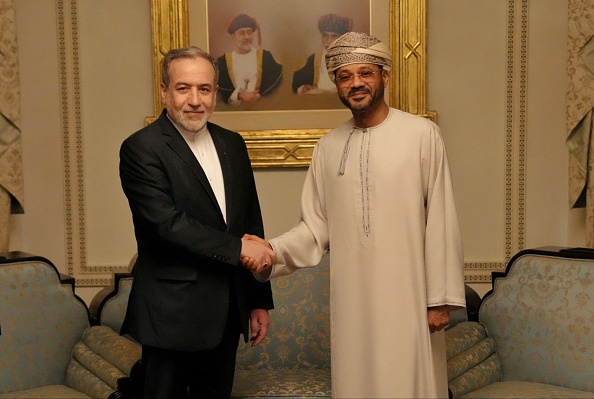

Despite the praise of the U.S.-Iran negotiations in Geneva on Thursday by both sides, Iranian Foreign Minister Abbas Araghchi said on Friday that the United States must forego its “excessive demands.”
On Thursday, Omani Foreign Minister Badr Albusaidi posted, “We have finished the day after significant progress in the negotiation between the United States and Iran … Discussions on a technical level will take place next week in Vienna. I am grateful to all concerned for their efforts: the negotiators, the IAEA, and our hosts the Swiss government.”
In addition, Araghchi issued a statement in which he seemed to indicate the talks were moving toward a framework for an agreement between the two countries.
“This round of talks was the most intense so far,” he wrote. “It concluded with the mutual understanding that we will continue to engage in a more detailed manner on matters that are essential to any deal — including sanctions termination and nuclear-related steps.”
“In parallel with the political track, technical teams will convene in Vienna in the coming days,” he wrote.
However, the U.S. has put forward the following demands: Iran must destroy its nuclear sites at Fordow, Esfahan and Natanz; turn over its stock of enriched uranium to the U.S.; and agree to permanent restrictions on its nuclear program.
Iran has rejected all of those demands.
“Success in [the diplomatic] path requires seriousness and realism from the other side and avoidance of any miscalculation and excessive demands,” Araghchi said.
Meanwhile, U.S. Vice President J.D. Vance attempted to lay to rest fears of getting embroiled in a prolonged conflict with Iran.
“The idea that we’re going to be in a Middle Eastern war for years with no end in sight — there is no chance that will happen,” he said in an interview.
“I think we all prefer the diplomatic option,” he said. “But it really depends on what the Iranians do and what they say.”
Regarding fears of a repeat of the Iraq war that led to years of fighting, he said that “life has all kinds of crazy twists and turns … I do think we have to avoid repeating the mistakes of the past. I also think that we have to avoid overlearning the lessons of the past.”
“Just because one president screwed up a military conflict doesn’t mean we can never engage in military conflict again. We’ve got to be careful about it, but I think the president is being careful,” he added.
Iran dismissed the idea that the U.S. would defeat the authoritarian regime.
“If Washington understood the real capabilities of Iran’s armed forces, it would never speak of war,” Iranian Brig. Gen. Abolfazl Shekarchi reportedly said. “In the event of any conflict, American soldiers and their equipment would be destroyed … The presence of the United States military in the region is part of psychological warfare and bullying.”