
 Jewish Breaking News
Iran War Reshapes Israel’s Housing Market As Safe Rooms Become Critical Factor Driving Apartment Prices & Demand In Tel Aviv, Jerusalem And Beyond
A mamad (safe room) used to show up halfway through an apartment listing, somewhere after the renovated kitchen, the balcony and the parking spot. Now it is often the first thing families ask about. Since the war with Iran burst into the open, Israelis in central cities have been spending long stretches of the day moving between apartments, shared shelters, public shelters, parking garages and even underground transit stations. What used to be a minor security detail is turning into a basic housing category of its own.

That helps explain why the shelter question is suddenly pulling so much weight in the market. An analysis based on Central Bureau of Statistics data found that by the end of 2025, roughly 1.63 million of Israel’s 3.016 million homes did not include a private mamad. In the Tel Aviv district, about 70% of apartments lacked one. In Jerusalem and Haifa, the share was about 65%. Jerusalem alone had roughly 180,000 apartments without a mamad, followed by Tel Aviv-Jaffa with around 160,000. In other words, the shortage is not hiding in the periphery and sits deep inside the country’s most expensive and densely built urban centers.
The State Comptroller said nearly three million Israelis do not have access to a mamad, a public shelter or another form of standard protective infrastructure. The same report found that around 12% of public shelters are unfit for use and that nearly half a million children were studying in schools without standard protection, while the Education Ministry lacked full protection data for more than half of kindergartens.

That explains why the mamad has stopped behaving like a lifestyle feature and has started directly affecting real estate value. Research shows that in Tel Aviv agents were already estimating a roughly 7% to 10% premium for otherwise comparable apartments with a private safe room, with some saying the gap can be higher. Newer reporting suggests the split has sharpened further since the Iranian threat returned to the center of the market. According to Ynet, citing appraisers and transaction data, in Tel Aviv the number of deals for apartments with a mamad in the last quarter of 2025 was more than five times the number for apartments without one, 133 versus 22, and that the price-per-square-meter gap there had widened sharply over recent months. That is not a perfect apples-to-apples national index, because apartments without mamads also tend to be older in other ways. But it is a clean read on what buyers are rewarding and what they are starting to punish.
The same split is showing up in rentals, which is where the story becomes a true cost-of-living issue. While purchase decisions can be delayed, renting is immediate. Newer rental units with private protected rooms can command up to 20% more than older apartments without them. At the same time, Globes cited Tel Aviv agents saying rents for apartments with no safe room and no shelter have fallen by between 5% and 10% since 2023. One set of tenants pays more to stay inside when the siren sounds, while another gets a discount for living in a place that still requires a sprint to a shelter.

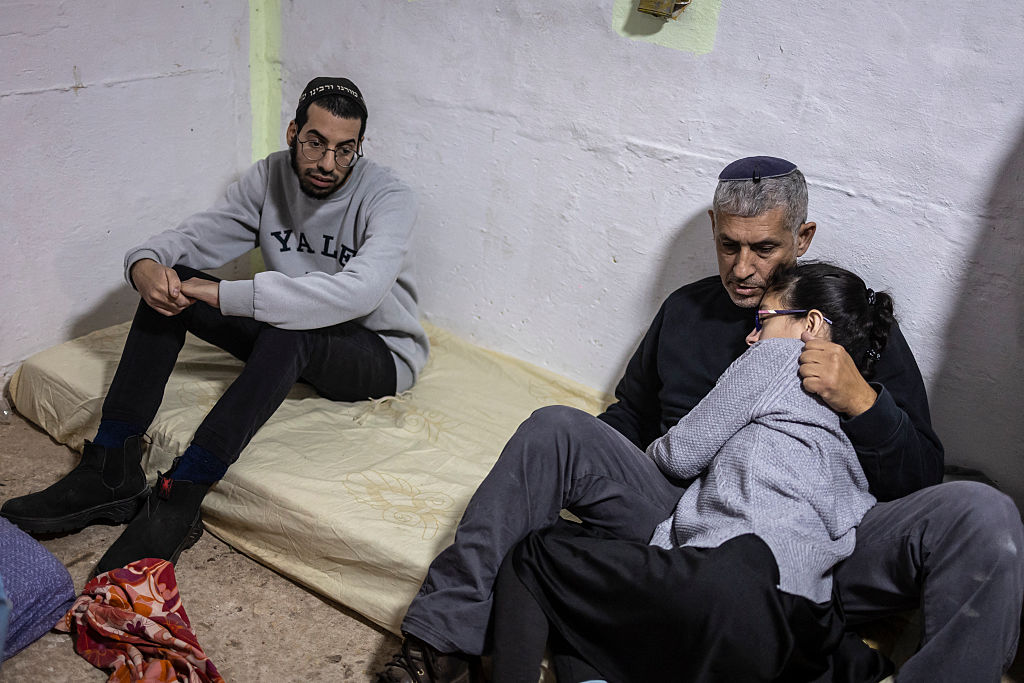
This last week of war has made that pricing logic brutally concrete. Residents across the country racing in and out of shelters under repeated Iranian salvos, with more than 100 people packed into one public shelter in Tel Aviv. By Sunday morning, the Israel Tax Authority had received 7,454 property-damage claims since the start of the campaign, about 5,600 of them for structural damage to buildings. At the same time, the Finance Ministry warned that under current Home Front restrictions, the war is costing the economy about NIS 9.4 billion a week. That matters for housing in two ways at once as it raises the premium on protected homes, and it deepens the pain for households already struggling with rent, mortgage payments and disrupted work.
Even where protection exists, not all protection works the same way. The IDF’s Home Front guidance ranks a mamad or communal floor shelter as the preferred option, followed by a building shelter or public shelter, then an internal stairwell, and only after that an inner room. In newer towers, residents can usually stay on their floor. In older blocks, they still move. In neighborhoods with weak private protection, the public shelter has become a critical aspect of infrastructure.
The Jewish state has been trying to close the gap, but with little success. A law change last year allows Israelis to enlarge a mamad from the old standard size to 12 square meters and add a bathroom, for a total of up to 15 square meters, without betterment tax. The Planning Administration says the reform is meant to make protected rooms viable for longer stays in both new and existing buildings. On the northern front with Hezbollah, the Defense Ministry said last summer that about 1,900 mamads were being built simultaneously in communities near the border. But residents interviewed by Ynet this week said some long-promised northern projects remain unfinished even as Hezbollah fire resumed, leaving elderly residents once again relying on stairs, luck and distance to the nearest shelter.
