
 Jewish Breaking News
“We Stand Together”: Bedouin Community Rallies Around Wounded Jews in Iran Strike
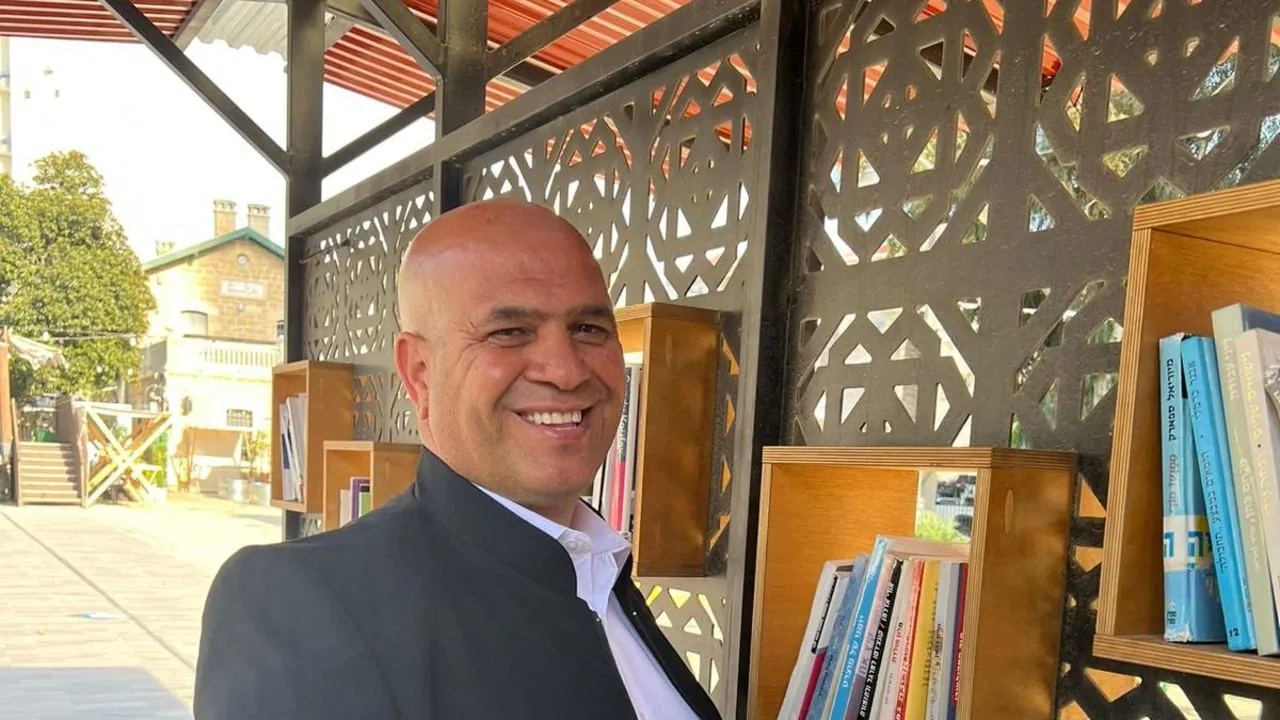
Following the devastating Iranian strike on Dimona and Arad Saturday, the small neighboring Bedouin community of Tel Sheva rushed to Facebook to offer the over 100 wounded messages of solidarity along with offers to help. Chief among these was Sager Abu Srehan, a father of six and vice principal at the Amal Reut School.
In an interview with the Jerusalem Post, Srehan explained why he felt the need to help, first highlighting his pride in belonging to Israeli society. His six children now serve as doctors, physical therapists, nurses and chefs, and he is pursuing a master’s degree in Management and Conflict Resolution at Ben-Gurion University. He explained that the two societies, Arab and Jewish, are intertwined, and both face the same danger.
“We live together with the Jewish society as brothers,” he explained. “I think the real reality is what matters. We live together with the Jewish society as brothers, on the same land and under the same sky. We study together, work together, and this country belongs to all of us. We are people who belong here and who love our country. The partnership between us as a society, with many examples of cooperation, is what creates the beautiful colors in the mosaic of Israeli society.”

“The same missile does not distinguish between Bedouin and Jew, and therefore we must always stand together, make use of every moment, and continue educating for the love of the land,” he asserted. “We must always stand together, make use of every moment, and continue educating for the love of the land.”
Srehan added that the values of his community shape how he approaches situations like these.
“Helping in difficult times is not something special we do once; it is part of our DNA as a Bedouin society,” he said. “That is why, whenever there is a need, you will always find the Bedouin community among the first to come and help. We believe that in times like these we must stand together, support one another, and show that we are one society living in one country, sharing the same fate and the same future.”
“In my opinion, people are measured in situations like these, and I believe the Bedouin community has never hesitated to help and contribute,” he added. “We saw this clearly during the events of October, when the Bedouin community mobilized and gave a lot. Joint aid centers were established for both Bedouin and Jews.”
The father, principal, and student also discussed the difficulties the Bedouin community faces amid the war, living in unrecognized villages, which means these areas are unprotected without adequate shelters.
“A large part of our community lives in unrecognized villages, where there are no protected shelters, and this creates a very big challenge and puts people in a difficult situation,” he said.
“I truly hope the state will be able to provide proper protection solutions, because it is not easy, especially when people live in very limited conditions, sometimes even in tin structures or tents,” he explained. “I am not saying this in order to blame anyone, but rather with the hope that the state will find a professional and fair solution to this problem.”
Srehan concluded the interview by reaffirming his community’s offer to help. “Our homes are always open to all residents of Dimona and Arad,” he said. “I hope the war will end soon and that we can return to normal life.”