
 Jewish Breaking News
Report: Russia Gave Iran List of 55 Israeli Energy Targets, Including Orot Rabin Power Station
A new Jerusalem Post report, citing a source close to Ukrainian intelligence, says Russian intelligence provided Iran with a list of 55 critical Israeli energy sites and assessed how Tehran could cripple Israel’s electricity system. According to that report, the targets were grouped by strategic value, with the Orot Rabin power station identified as a top-tier site whose destruction could severely damage national supply. The specific list has not been independently verified, but the broader charge is consistent with Volodymyr Zelensky’s recent public claim that Ukraine has “irrefutable” evidence Russia continues to feed intelligence to Iran.

What makes the allegation especially serious is that Israel is, in energy terms, an island. Its electricity grid is not connected to neighboring states, meaning a concentrated strike on a relatively small number of major nodes could cause cascading disruption that would be far harder to offset than in a country with cross-border backup. An INSS analysis describes Israel’s grid as a closed system and notes its dependence on key switching stations and substations. Orot Rabin is not just symbolic infrastructure either, GE Vernova says the plant’s new combined-cycle units are expected to deliver 1,260 megawatts, more than 8% of Israel’s current total power generation capacity.

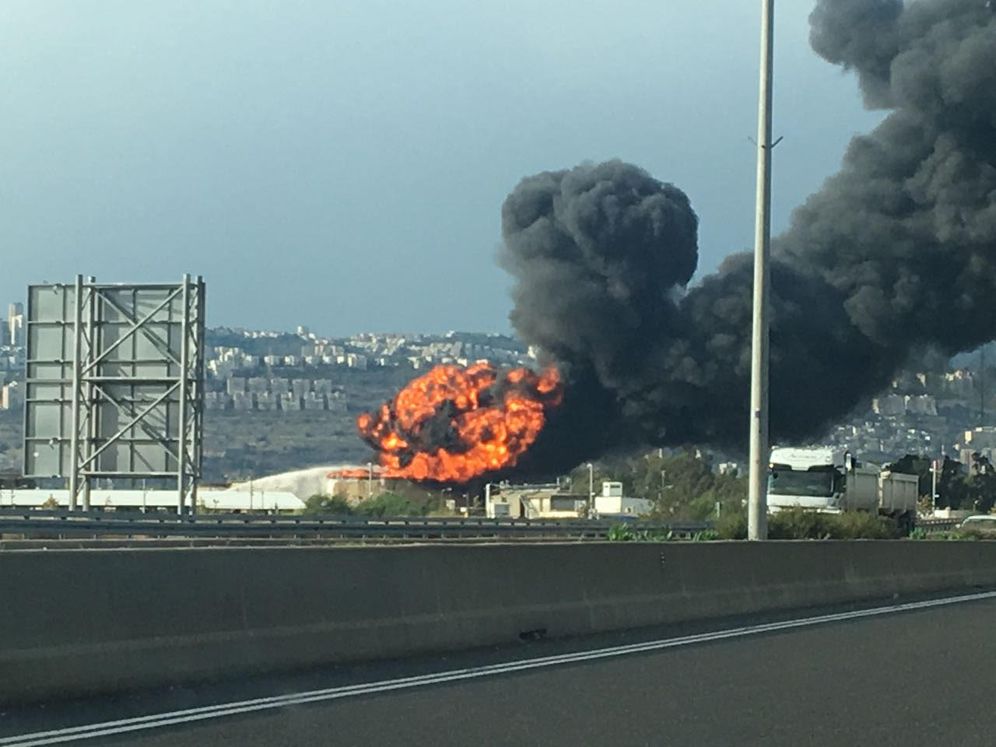
Iranian attacks have already hit energy-linked infrastructure in Israel, including a missile strike on a fuel tanker and industrial building at the Bazan refinery complex in Haifa. At the same time, Israel has intensified its own pressure on Iran’s energy backbone, Reuters reported Monday that Israeli strikes hit the Asaluyeh petrochemical complex after earlier attacks on South Pars, as Jerusalem tries to hammer the regime’s export revenue, industrial capacity, and strategic endurance.
Russia benefited from Iranian Shahed drones in Ukraine, and Kyiv now argues that the relationship is cycling back in the other direction, with battlefield lessons and intelligence flowing toward the Islamic Republic. That matters for Israel because the country’s energy sector is already operating under wartime stress: Reuters reported only days ago that Leviathan, Israel’s largest gas field, was resuming operations after a month-long shutdown tied to the war.