

 Jewish Breaking News
Iran Is Rearming in Plain Sight: Tehran Retains 40% of Its Drones and 60% of Its Launchers After the Ceasefire
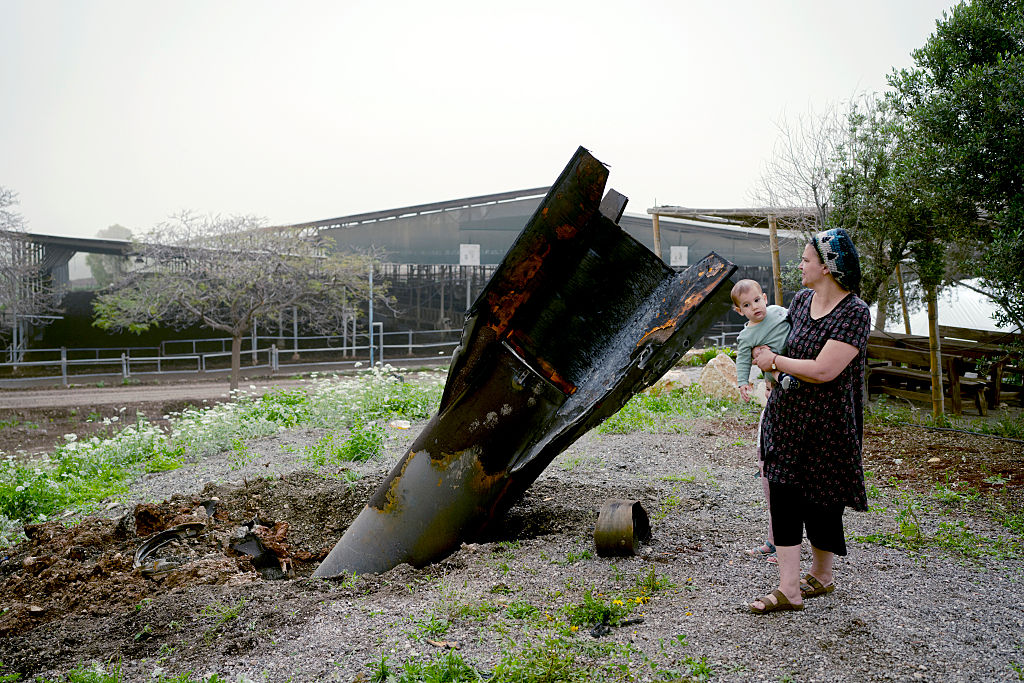
Iran is coming back. A New York Times assessment backed by U.S. intelligence finds that even after a brutal joint campaign by Israeli and American forces, the Islamic Republic still has roughly 40 percent of its prewar drone stockpile intact and more than 60 percent of its ballistic missile launchers operational. That is enough firepower, officials say, to threaten Gulf shipping for the foreseeable future and to keep every capital between Tel Aviv and Riyadh on edge.
During the U.S.-brokered ceasefire, Iranian engineering teams moved fast. Commercial satellite imagery of the Khomein underground missile base in Markazi Province shows excavators, front-end loaders and dump trucks clearing debris from tunnel entrances that American and Israeli airstrikes had sealed but never penetrated. The strikes collapsed access points; they did not reach the mountainous, hardened facilities where the bulk of Iran’s missiles are stored. Given a pause, the regime used it to bring its “missile cities” back to life.

Washington, through the Pentagon and the White House, has claimed Iran’s arsenal was “dramatically curtailed” and its navy “wiped out.” Secretary of War Pete Hegseth spoke of a “decisive military victory.” Yet intelligence reporting, first in CNN, then the Wall Street Journal, tells a steadier story as there are still thousands of one-way attack drones still in Iranian warehouses, thousands of short- and medium-range ballistic missiles still in underground storage, coastal cruise missiles largely untouched, and an IRGC Navy that retains about half its small boats and unmanned surface vessels. Israeli assessments have been more sober throughout. Jerusalem counts buried launchers as lost assets, not operational ones, which is why its public figures have consistently run lower than America’s.
Iran is not hiding what it intends to do with all of this. IRGC gunboats reportedly opened fire on two Indian-flagged merchant vessels in the Strait of Hormuz, forcing them to turn back. Tehran reversed its decision to reopen the strait, then shut it again, vowing to strike any ship that dares transit. India summoned Iran’s ambassador in New Delhi. And U.S. intelligence is tracking the possibility, which the Trump administration publicly disputes, that China is preparing to ship new air-defense systems to Iran in the coming weeks, a lifeline that would harden the regime against any future strike.
The diplomatic track is not working. Vice President JD Vance led a U.S. delegation to Islamabad for talks with Iranian officials and came away without a permanent deal. Trump has threatened to “start dropping bombs again” if no agreement is reached. Iranian parliamentary speaker Mohammad Bagher Ghalibaf is simultaneously telling Lebanese counterparts that Tehran is pursuing a “permanent ceasefire in all areas of conflict,” the same line the regime uses whenever it needs breathing room to regroup.