
 Jewish Breaking News
Iran’s IRGC Killed a 19-Year-Old Kurdish Fighter, Denied Her Care, Then Struck the Cemetery at Her Burial
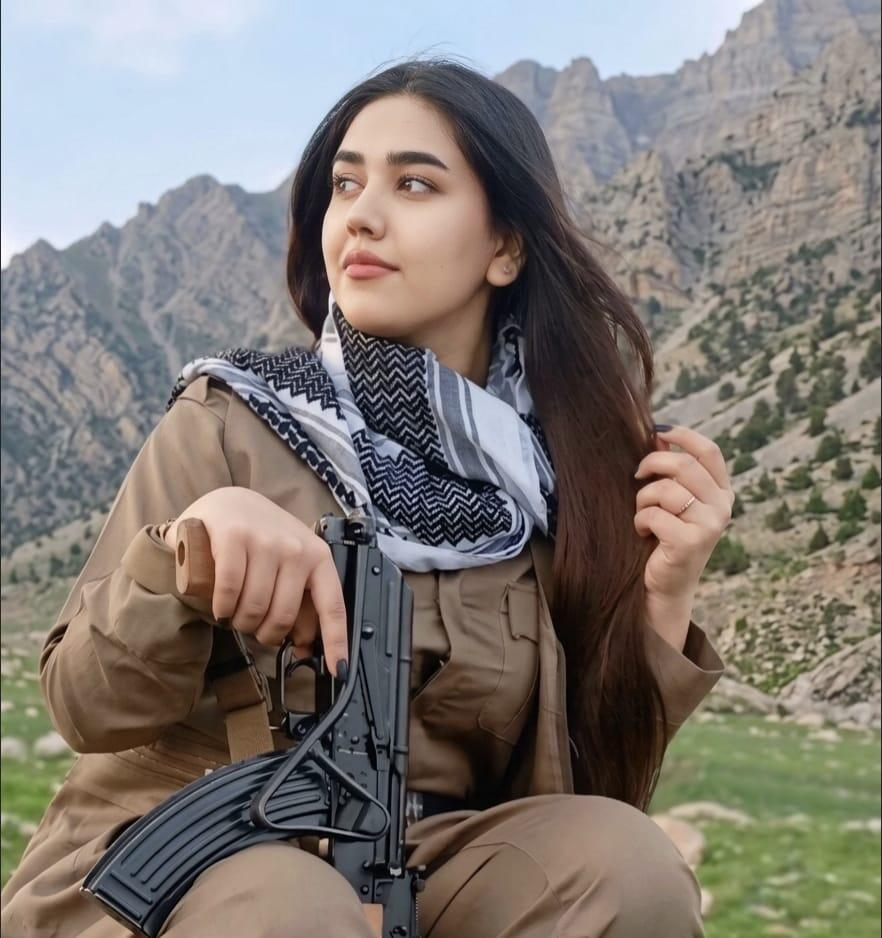
Ghazal Molan was nineteen, newly married, and the youngest woman ever to take up arms with the Komala Peshmerga against the Islamic Republic. A native of Mahabad, she had fled Iran at eighteen after coming under IRGC surveillance for her role in the “Woman, Life, Freedom” uprising, slipping across the border to join the Kurdish armed opposition in northern Iraq. She did not last a year. This week, an IRGC suicide drone struck the Komala camp in Surdash, in the Kurdistan Region of Iraq, tearing through a residential compound that housed fighters and their families. Ghazal was critically wounded and bleeding out by the time her comrades loaded her into a car.

Her comrades rushed her first to Shorsh Hospital, which lacked the equipment to save her, then to Bakhshin Hospital, where staff kept the door shut for forty-five minutes. The official reason, according to activists who accompanied her, was that admitting a “leftist Peshmerga” might bring IRGC retribution on the hospital. By the time she reached Faruk Medical Center, doctors told her husband there was nothing left to do. The ordeal did not end in the emergency room. Morgue workers allegedly refused her bloodied body. Her friends prepared her themselves, on the floor of a Sulaymaniyah library, and held a farewell for her husband there. The following morning, as her coffin was being carried to the Peshmerga cemetery, the IRGC launched another missile strike on the burial ground itself, forcing a hurried, half-secret funeral in a smaller plot in Sulaymaniyah.

Ghazal’s death is not an isolated tragedy. Since the war broke out at the end of February, when U.S. and Israeli forces struck Iran’s nuclear and leadership infrastructure, the Islamic Republic has launched roughly 650 drone and missile attacks into the Kurdistan Region, the majority aimed at Iranian-Kurdish opposition groups sheltering there. Many strikes have come from IRGC suicide drones fired directly from Iranian soil; others have been outsourced to Iran-backed Iraqi militias like Kataib Hezbollah, the regime’s preferred fig leaf. The attacks have continued through a fragile, Pakistan-brokered ceasefire between Washington and Tehran, and even targeted the residence of Kurdistan Region President Nechirvan Barzani. Kurdish officials have called them war crimes. Iraq’s new president, Nizar Amidi, insists his country will not become a battlefield for Iran and America, yet Baghdad continues to accommodate the militias that treat Iraqi territory as an extension of the Islamic Republic.
The reason the regime reaches so hard into Iraqi Kurdistan is that it fears the Kurdish card above all. During the Woman, Life, Freedom protests, Iranian Kurdistan was the country’s beating heart of resistance, and Tehran has spent years trying to crush the political movements that could galvanize a cross-ethnic uprising of Kurds, Baloch, Arabs, Azeris and others along its periphery. Komala leaders openly describe Israel’s military operations against Iran and its proxies as defensive, and view the collapse of the Islamic Republic as the precondition for any regional peace. Ghazal Molan is now their youngest symbol of that fight. A regime that had to kill a teenage girl, bar her from a hospital, and shell her funeral to feel safe is not a regime that feels secure. And that is precisely what her comrades want the world to see.

