
 Jewish Breaking News
Israel’s Biggest Housing Lottery of 2026 Is Now Open: Nearly 8,000 Discounted Apartments Across 19 Cities, With Priority for Reservists
For tens of thousands of Israelis who’ve watched apartment prices climb out of reach, the next two weeks are going to feel like playing for the jackpot of their lives. The Ministry of Construction and Housing and the Israel Land Authority have officially opened registration for the 11th round of Dira B’Hanacha, the country’s flagship discounted housing program, offering a staggering 7,922 subsidized apartments in 19 cities and towns across the country. It’s the largest lottery of the year, and the discounts on offer can shave hundreds of thousands of shekels off the price of a brand-new apartment.
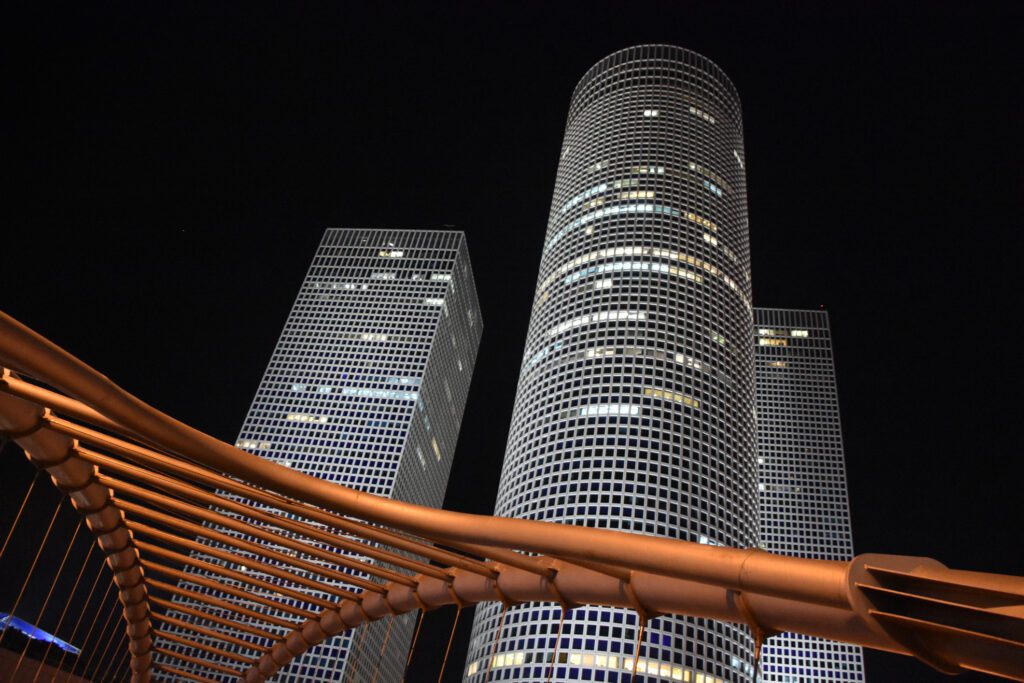
For anyone new to the program, Dira B’Hanacha, literally “Apartment at a Discount,” is Israel’s main vehicle for making homeownership accessible to first-time buyers in a market where the dream feels further away every year. It’s the successor to the well-known Mechir Lamishtaken program launched roughly a decade ago, and it works on a simple premise: the state allocates land to developers at reduced rates, and in exchange, the developers agree to sell a large share of the apartments they build, usually 50 to 60 percent, at prices that are typically 20 to 30 percent below market value. The apartments are then distributed through a lottery system. Winners don’t get a cash prize. They get the right to buy a new apartment at a price that can feel almost surreal compared to what their neighbors paid a year earlier.
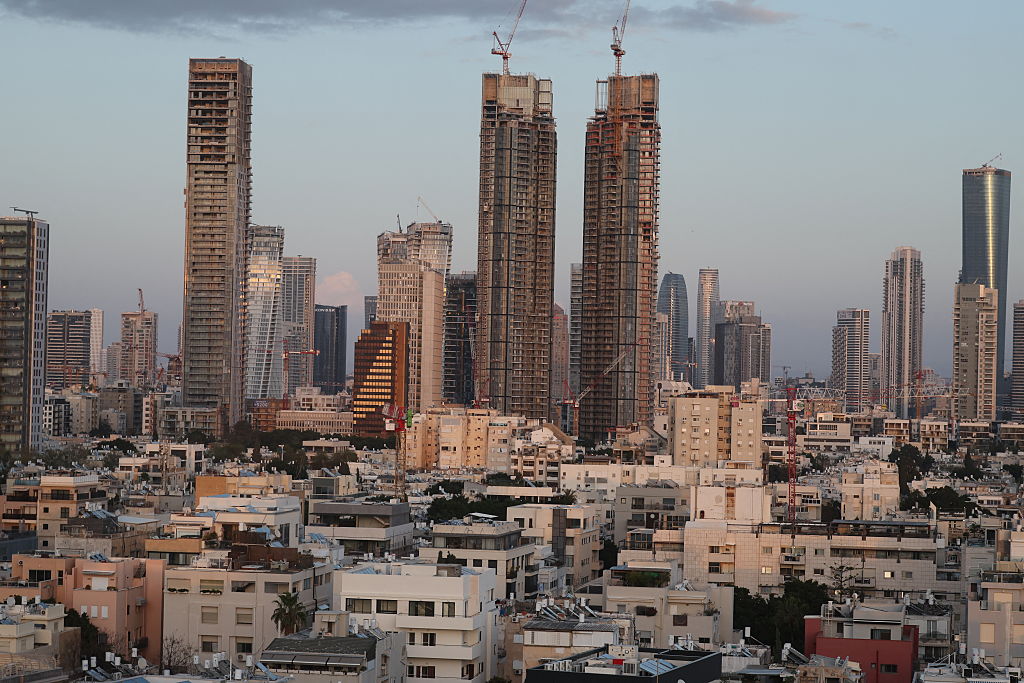
This round is being described by industry insiders as one of the most interesting in years, because of where the inventory is concentrated. Maale Adumim, just east of Jerusalem in Judea and Samaria, leads the list with 1,663 units, its 16th local lottery and a reflection of how popular the city has become with young Anglo and Israeli families priced out of the capital. Kiryat Gat follows with 1,433 units, and Kfar Saba rounds out the top three with 1,045 apartments, a rare opportunity for discounted housing in the high-demand center of the country. The remaining 16 localities span the full geography of the state, from Nahariya in the north to Eilat in the south: Mazkeret Batya (427), Beit Shemesh (425), Rekhasim (405), Beit Dagan (399), Kadima-Tzoran (315), Bat Hefer (271), Hadera (268), Ashdod (256), Nahariya (218), Bnei Ayish (179), Rishon LeZion (148), Kfar Manda (131), Yehud (121), Eilat (99), Yokneam Illit (89), and Rehovot (30).
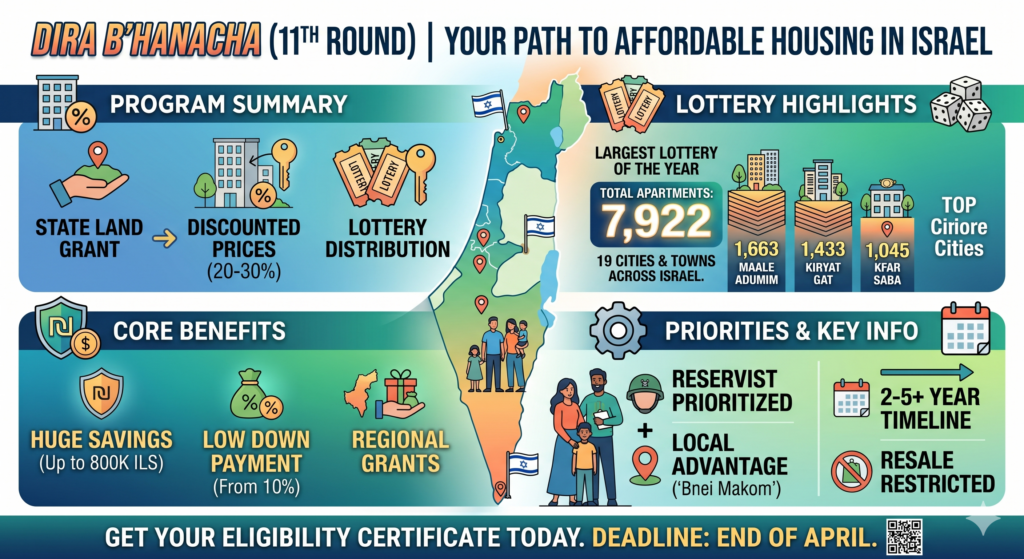
The math, for those lucky enough to win, is genuinely life-changing. In Kfar Saba’s newer neighborhoods, a four-room apartment currently goes for between 2.3 and 2.7 million shekels on the open market. A 20 to 25 percent discount through the lottery translates into savings of 600,000 to 800,000 shekels per apartment. In Maale Adumim, where prices already run 30 to 50 percent below comparable Jerusalem properties, the layered discount can turn a new apartment into one of the best deals in the country. And the savings don’t end at the sticker price. Winners whose apartments are valued under 1.5 million shekels can put down as little as 10 percent, instead of the usual 25 to 30 percent required of mortgage applicants on the open market. In peripheral regions, additional grants of up to 60,000 shekels are available.
Under the directive of Housing Minister Chaim Katz, up to 50 percent of the apartments in this round are being reserved for active reservists, with about a quarter of those allocated specifically to combat reservists, a continuation of the wartime policy prioritizing those bearing the security burden. Katz framed the move bluntly, saying the enemy wants to destroy while Israel keeps building. Local residents, known as bnei makom, also receive preferential scoring for lotteries held in their home city, which meaningfully improves their odds.
The program isn’t without its complications, and anyone registering needs to understand what they’re signing up for. Winners are locked into a purchase agreement, construction timelines on many projects stretch two to five years (and sometimes longer if building permits are still pending), and resale restrictions prevent winners from selling the apartment for five years from the occupancy certificate or seven years from the lottery date, whichever comes first. Prices are also linked to Israel’s construction cost index, meaning the final price can creep upward before the keys are handed over. For investors chasing liquidity, this isn’t the vehicle. But for a young couple, a family of reservists, or a first-time buyer who plans to live in the apartment for the long haul, the upside is hard to match anywhere else in the Israeli market.

Registration is open to Israelis without an apartment who hold a valid eligibility certificate, which can still be issued online through the three authorized companies, Milgam, Alonim, and Me’of, until the end of April. Applicants can register in up to three different cities to maximize their odds, and demand is already overwhelming the portal, with site operators reporting heavy traffic since the lottery opened. With housing prices in Israel rising for a second straight month after the ceasefire and supply finally starting to catch up to years of pent-up demand, this round of Dira B’Hanacha may be one of the most consequential opportunities the market has produced in a long time.