
 Jewish Breaking News
ANALYSIS: Iran’s IRGC Is Sabotaging Its Own Ceasefire and the Generals Holding the Phones Have No Incentive to Stop
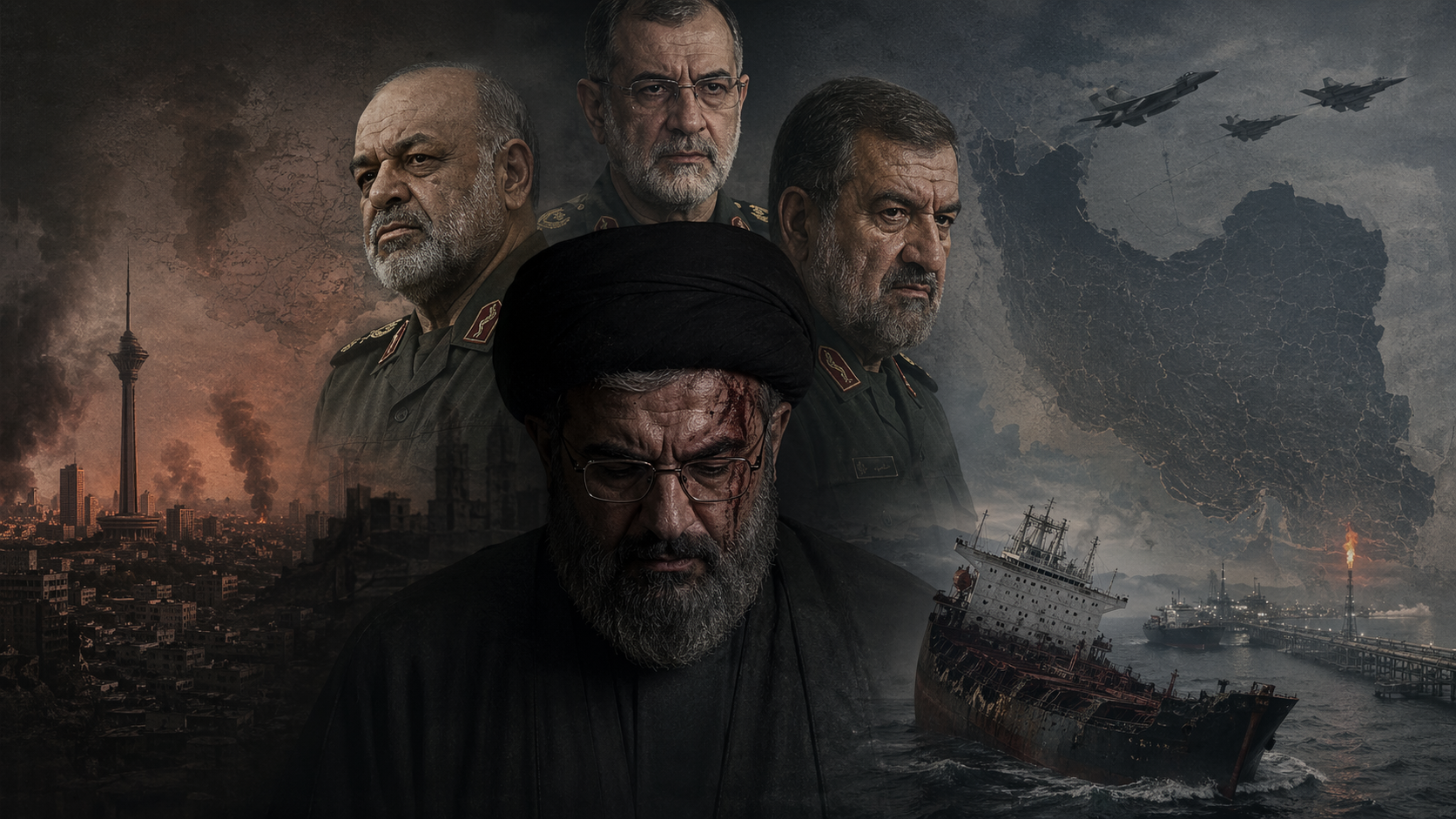
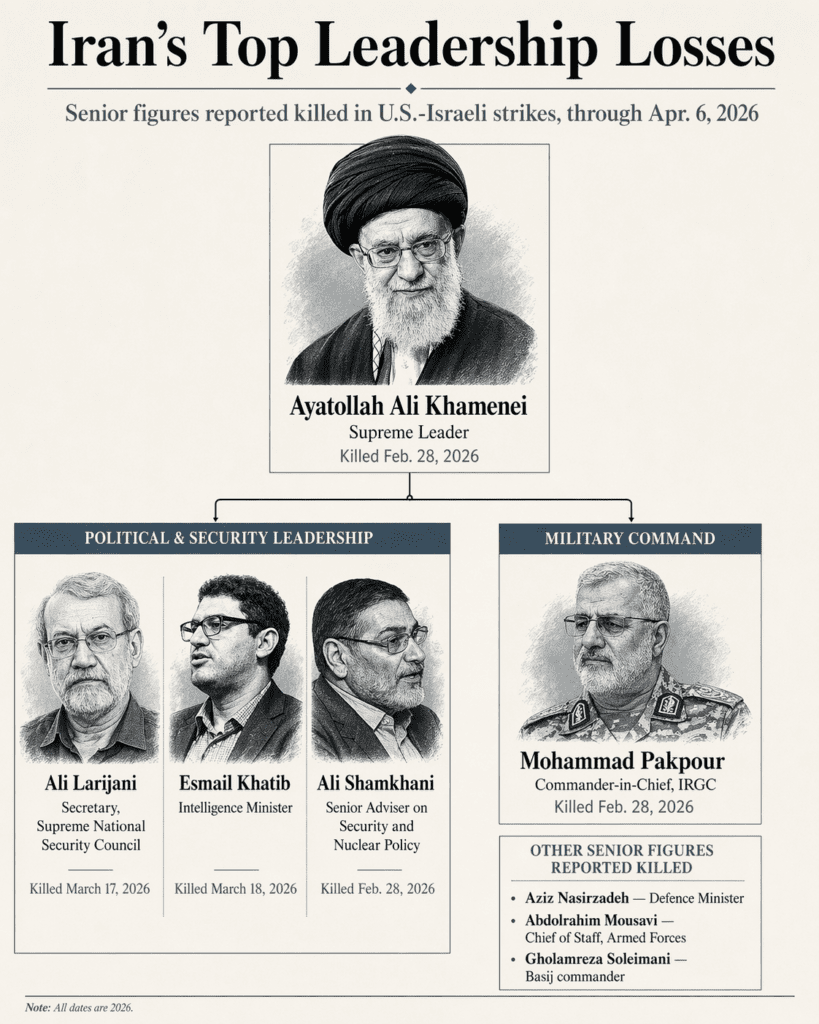
The Islamic Republic walked out of its war with the United States and Israel still breathing, but barely recognizable. The man who had run Iran for nearly four decades is dead. The generals who built the Axis of Resistance are dead. The foreign policy apparatus that could once speak with a single, menacing voice has been replaced by a politburo-style Supreme National Security Council that argues with itself. And now, as Pakistani mediators try to haul Tehran back to the table in Islamabad, the regime is discovering that surviving a war and ending one are not the same problem.
The new supreme leader, Mojtaba Khamenei, has not appeared in public since inheriting the title from his assassinated father. Reports place him wounded and in hiding. How he transmits orders, and whether those orders are actually obeyed, is a mystery even to Iran watchers who have spent careers decoding the Islamic republic. In the vacuum, a group of Islamic Revolutionary Guard Corps hardliners has taken over day-to-day decisions, a shift that analysts at multiple Western institutes say show that the Islamic Republic is no longer a theocracy in any meaningful sense. It is a military-security state wearing clerical robes.
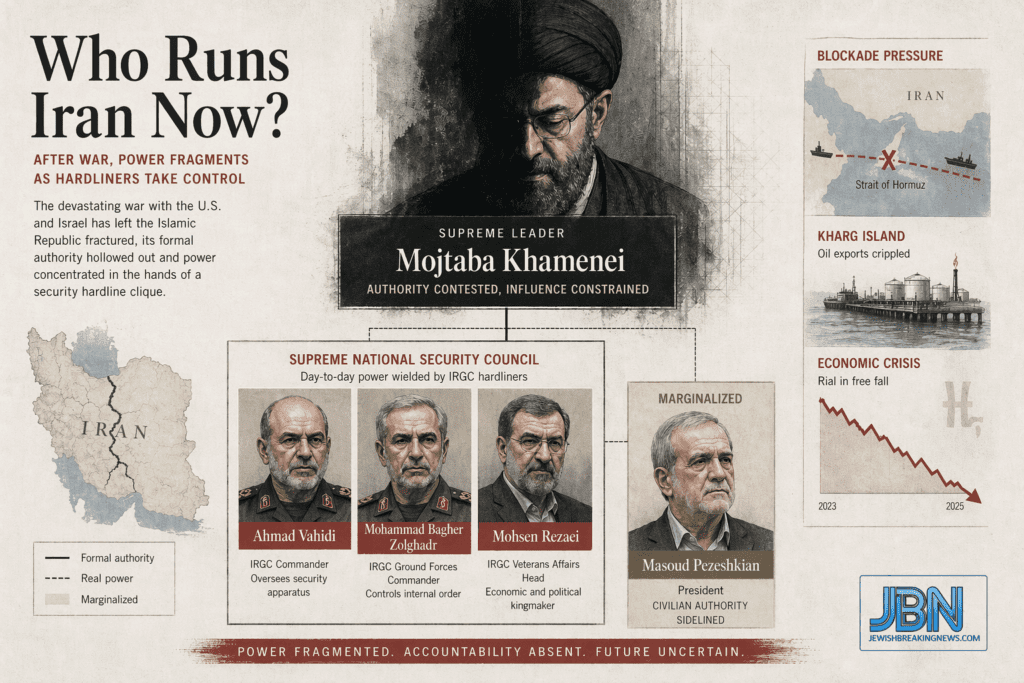
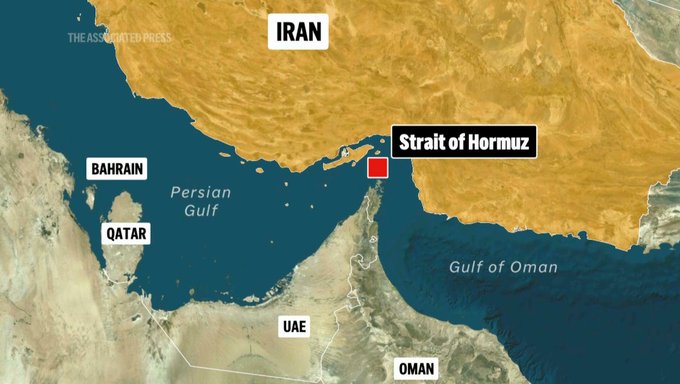
IRGC commander Ahmad Vahidi, Supreme National Security Council secretary Mohammad Bagher Zolghadr, and longtime regime fixer Mohsen Rezaei form the core of the war camp. They watched moderate voices get systematically removed from the board during Israel’s opening strikes. Former president Hassan Rouhani and Ali Larijani, the kind of figures who historically built bridges between the generals and the diplomats, are gone, literally or politically. President Masoud Pezeshkian, the one official publicly asking for a ceasefire, has been contradicted in public by the IRGC within hours of every concession he has floated. When he quietly signaled that the Strait of Hormuz could be reopened to commercial shipping, the armed forces slammed it shut again within days.

This is the regime Washington is negotiating with, and it explains almost everything strange about the current moment. Iran has not formally rejected a deal. It has simply failed to produce one. The Vice President’s delegation was ready to fly to Islamabad. Tehran did not send its own. A senior Iranian official dismissed President Trump’s last-minute ceasefire extension as meaning “nothing.” Then, hours after that extension, the IRGC attacked three commercial ships in the Strait of Hormuz, a container vessel taking heavy damage to its bridge from gunboat fire. It is not the behavior of a government that has agency. It is the behavior of a government that cannot agree with itself and so defaults to the action that requires no internal consensus: shooting at things.
The US Navy is enforcing a physical blockade along Iran’s coast, not just the Strait. Kharg Island, the terminal that handles nine out of every ten barrels of Iranian crude, is reportedly full, with nowhere to send the oil. Treasury is unwinding the shadow fleet of tankers and shell companies that used to laundered Iranian exports through Chinese refiners. Press secretary Karoline Leavitt said the blockade is costing Tehran half a billion dollars a day. The rial has slumped past 700,000 to the dollar. Food inflation is stacking on top of currency collapse. Independent analysts now openly discuss the possibility that the government could run out of money before it runs out of options.
For Israel, this is the fight it has wanted to close out since the first bunker-busters fell on the Khamenei compound. The strategic logic Jerusalem laid out to the Americans was always that Iran’s nuclear ambition could not be stopped by a deal, only by removing either the capability or the regime. Half of that job is done and the Institute for Science and International Security estimates the centrifuge losses set Iranian enrichment back meaningfully. What remains is the stockpile of highly enriched uranium that Iran has refused to physically surrender, offering instead to down-blend it on Iranian soil, an offer that has not persuaded anyone in Washington. The Prime Minister’s Office is openly skeptical that talks will produce anything, and Israeli officials have told Hebrew media that CENTCOM and the IDF have approved a joint target bank for national and energy infrastructure if the clock runs out.
Every American assassination of a moderate bridge-builder made the regime more defiant, not less. Every IRGC victory in the internal succession war made Tehran less capable of delivering on the kind of concessions that could actually end the siege. The hardliners now holding the phones are, by temperament and by political survival, the people least equipped to make a deal the Americans will accept. And Khamenei the younger is too weak, too hidden, and too dependent on those same hardliners to overrule them.
President Pezeshkian has reportedly told confidants that the economy faces total collapse within weeks. The most likely outcome of the next round in Islamabad, if there is a next round, is not a deal and not yet a resumption of open war. It is more of what the Islamic Republic is doing right now, stalling, splintering, shooting at a tanker here and there, and hoping that Donald Trump blinks on oil prices before Iran’s own treasury does.
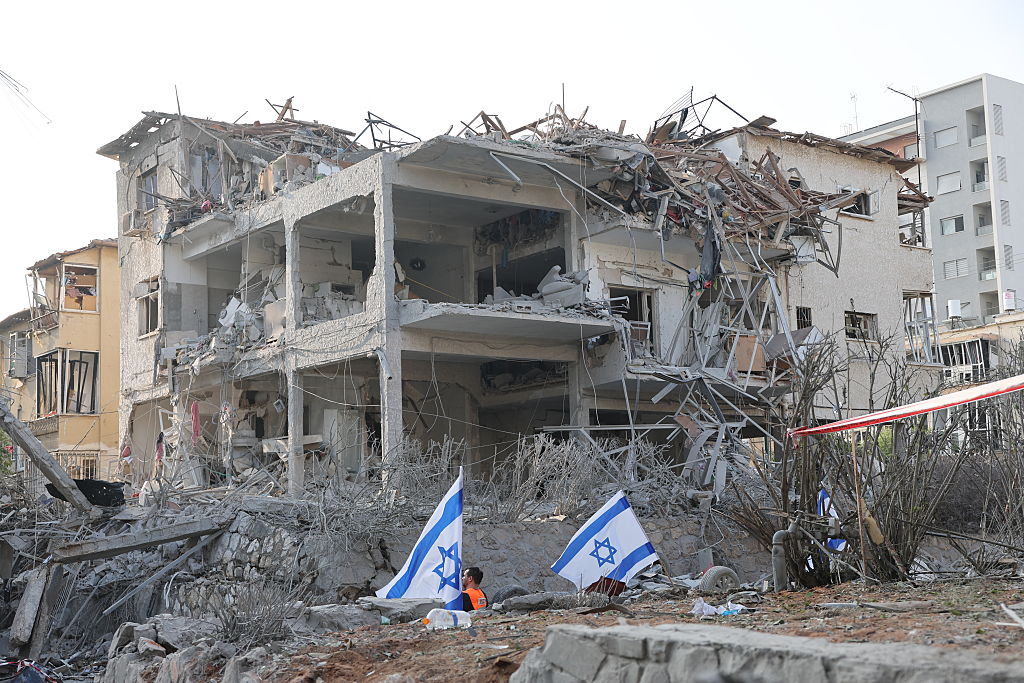
Israel, having learned what it learned over the last year about the half-life of Iranian promises, is not counting on any of that. The jets are already running exercises. The target bank is already approved. If Tehran cannot find a voice inside itself that speaks for the state as a whole, someone else will speak for it, loudly, from the air.