
 Jewish Breaking News
IAF Technicians at Tel Nof Indicted for Spying for Iran, Accused of Passing Fighter Jet Systems Data and Base Intelligence for Money
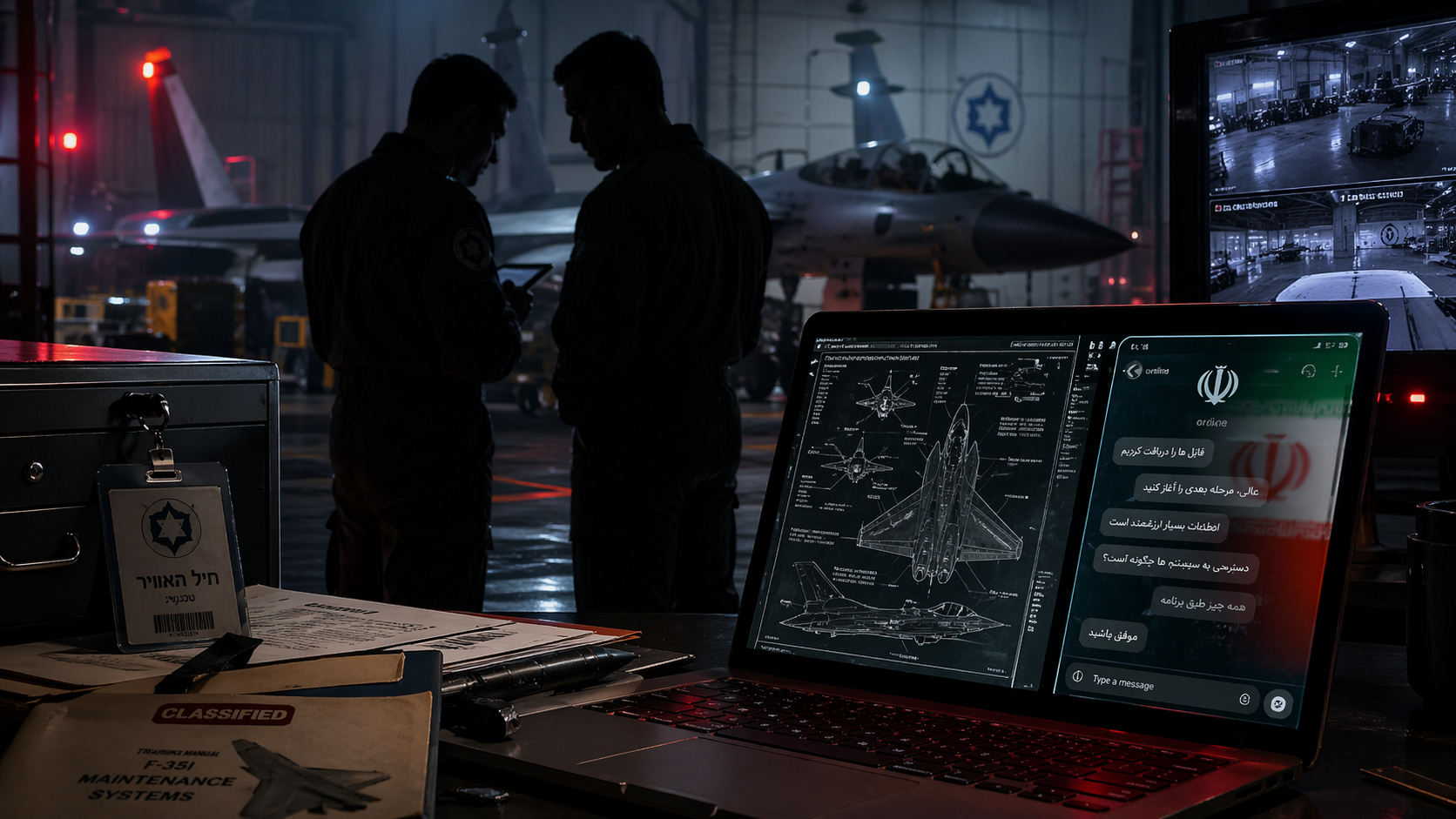
Two Israeli Air Force technicians have now been indicted in what is shaping up as one of the most serious internal espionage cases tied to Iran’s ongoing recruitment drive inside Israel. Military prosecutors accuse the two soldiers, who served as F-15 mechanics at Tel Nof Airbase, of maintaining contact with Iranian intelligence operatives for months, carrying out missions in exchange for money, and passing along military-related material while in uniform. One was charged with aiding an enemy in wartime, providing information to the enemy, and facilitating contact with a foreign agent; the second was charged with contact with a foreign agent and providing information to the enemy. Israeli authorities say the case was investigated jointly by the Shin Bet, Military Police, and Israel Police.

The indictment, together with Hebrew reporting, suggests this did not begin with high-level secrets. It allegedly started in February 2025, when an Iranian handler contacted one of the soldiers and offered $500 in exchange for proof of military service. That soldier allegedly photographed the front section of a restricted aircraft while at instruction in the base’s aircraft hangar area, including open cockpit doors, and sent the images over. When payment did not arrive immediately, he reportedly pressed the handler for more money. The exchange escalated from there. According to Ynet, the handler asked what monthly salary would satisfy him; the soldier allegedly answered $1,300. The handler then sent $47 to verify the account was active, after which the first soldier brought in the second, pitching the operation as “easy money.”

From there, the contact reportedly moved into Telegram “secret chat” channels with disappearing messages and a growing list of assignments. The two soldiers, who had enlisted in July 2024 and were exposed in their roles to sensitive aircraft and radar-related information, were asked at one stage to film supermarket prices and even a palm for a small payment, before the tasks became more serious. Prosecutors say one of the soldiers later transferred training material related to fighter-aircraft systems, that included documentation connected to an engine diagram from an Israeli aircraft and images showing the face of an aviation instructor. One suspect independently pulled material from a technician training binder covering a two-seat IAF aircraft system classified at the “restricted” level, allegedly in an attempt to prove he could deliver more valuable material and secure payment.

The soldiers were first sent to photograph streets, an Ashdod beach, and later asked to film themselves burning an image of Prime Minister Benjamin Netanyahu and tossing away a paper reading “fuck bibi.” When the suspect pushed back on that as “too extreme,” the handlers allegedly pivoted again, requesting photographs of a specific weapon, then offering NIS 3,000 to burn a vehicle. The indictment also reportedly shows one soldier sending intelligence from inside the base itself, including videos and photos of facilities such as the dairy room, dining hall, auditorium, club area, and even fellow soldiers’ living quarters, exposing names and unit insignia. He also allegedly photographed a control tower near the technical wing in daylight, with remotely piloted aircraft visible in the background, and sent images of a fighter jet and runways to prove he was really serving at an airbase.

By that stage, the Iranian handlers were allegedly no longer fishing for random content. The two soldiers were asked to gather information on former IDF chief Herzi Halevi and National Security Minister Itamar Ben Gvir. The requests expanded further to include intelligence tied to Prime Minister Netanyahu, former prime minister Naftali Bennett, Finance Minister Bezalel Smotrich, senior pilots, the coordinates of Iron Dome batteries and other air-defense systems, and even the streets or residences linked to senior Israeli figures and pilots. One soldier searched openly available material online for some of those addresses, but the handler dismissed it as obvious and not useful enough.

Authorities said the two suspects told investigators that contact was severed only after they refused assignments involving weapons. But the joint statement says that even after the Iranian side cut contact, the suspects did not stop trying to renew it for financial gain. One soldier was allegedly asked to delay the launch of an aircraft assigned to operational activity in exchange for hundreds of dollars, to carry out a shooting attack, and at one point even to harm IAF chief Maj. Gen. Tomer Bar. The suspect replied that he would “check it and try,” while conditioning any action on advance payment. When one Iranian handler finally broke off contact, the soldier allegedly kept searching online for more Iranian agents under terms like “Iran spies” and tried to re-open the channel anyway.
Eight additional soldiers at Tel Nof are suspected of knowing about the affair and not reporting it. After the case surfaced, Tel Nof’s commander reportedly convened his troops for an information-security briefing and told them he had himself been summoned by the Shin Bet for clarification. This is also not an isolated incident. Israeli reporting has tied the case to the broader Iranian recruitment surge that has seen Israelis approached online with cash offers, small “test” tasks, and then progressively more dangerous missions. In that sense, the Tel Nof affair is not just a story about two mechanics. It is a warning that Iran’s intelligence apparatus kept probing until it found people inside one of the IAF’s most sensitive operational environments willing to play for money.