
 Jewish Breaking News
Inside Israel’s Most Expensive Street: Galei Tchelet’s Cliffside Herzliya Homes Hit NIS 170M, $70K Rents, and Defy National Housing Trends
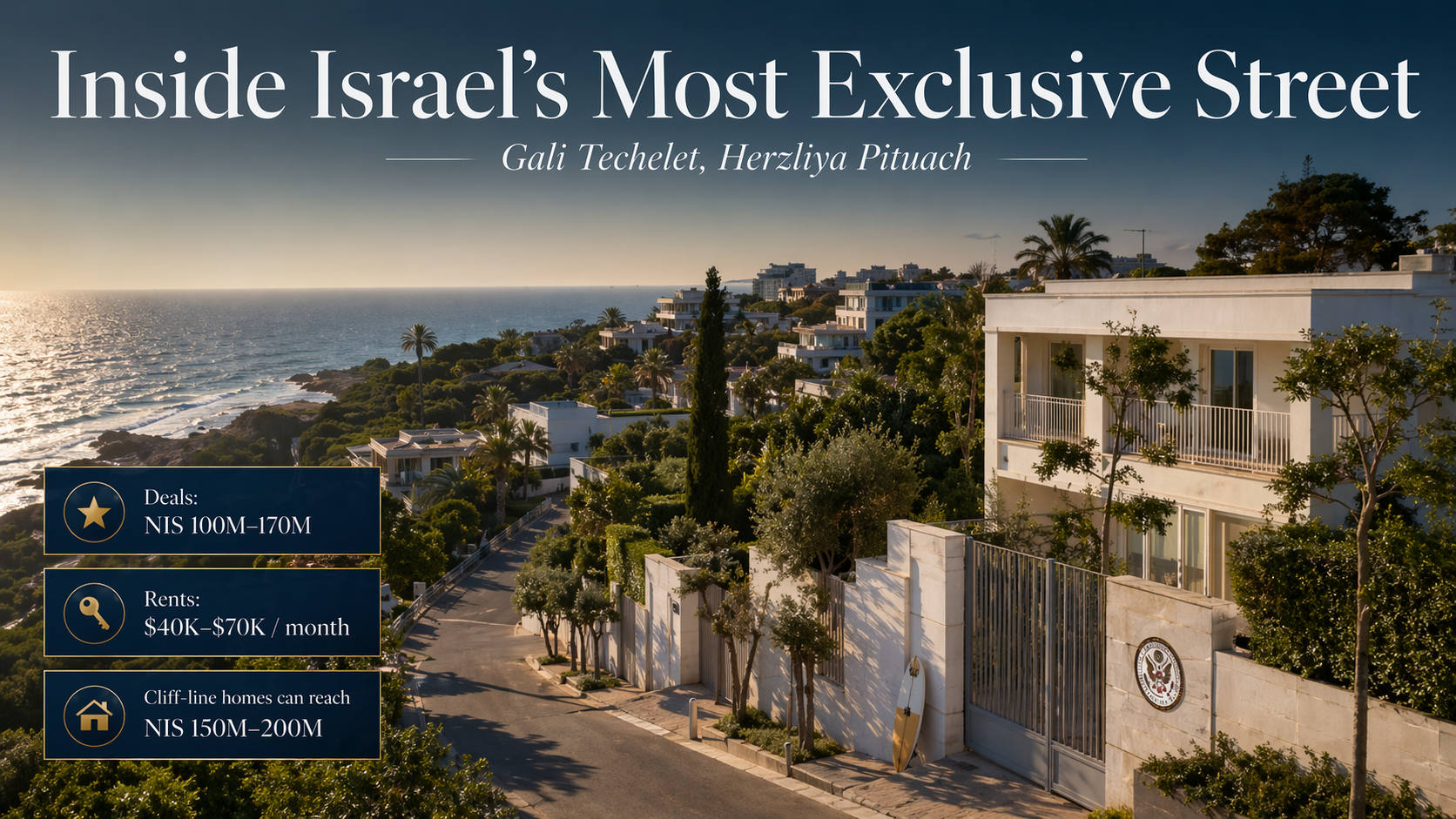
Welcome to the most expensive street in Israel. A narrow, curving stretch of cliffside real estate in Herzliya Pituach where mansions change hands for sums that dwarf anything else in the country and where a single plot can represent the wealth of a small town.

Galei Tchelet has held this title since the early 2000s, when the luxury market in Herzliya Pituach began firing on all cylinders. The status has barely wobbled since. According to Tal Kopel, whose brokerage specializes in the ultra-high-end segment, recent deals on the street have closed in a range of 100 to 170 million shekels, with rentals running between 40,000 and 70,000 dollars a month. The priciest trade in Israeli residential history still belongs to this address, Sheldon Adelson’s purchase of the former U.S. ambassador’s residence at number 40 for roughly 230 million shekels, a 1,000-square-meter house on a 5,000-square-meter lot that had served American envoys since the 1960s. The compound now belongs to his widow, Miriam Adelson, the Republican mega-donor and publisher who took over after his passing.

Western, sea-facing homes routinely fetch double what eastern-side homes command, a function of sightlines, scarcity, and a strict coastal protection law that bars new residential construction within three hundred meters of the shoreline. The street sits inside that protected strip by grandfather clause, which is why the land value is essentially irreplaceable. Galei Tchelet combines several parameters that are nearly impossible to recreate togethe, direct proximity to the sea, exclusively private villas, a severe land shortage, and an international ultra-wealthy clientele. That mix is what drives deals in the tens and hundreds of millions.
The street runs in a half-loop, odd numbers on one side and evens on the other, from one through the mid-eighties, with a single public access path cutting through to the beach. On the corner lawn, foreign workers gather on Shabbat for cricket matches, a lingering inheritance of British colonial rule in the region. A stone bench facing the water doubles as a memorial to Staff Sergeant Omer Balva, a local son who fell in the Swords of Iron war. Adjacent to the old Nof Yam transit camp, the lower end of the street carries slightly less value, but prices climb steeply as you move up the ridge.
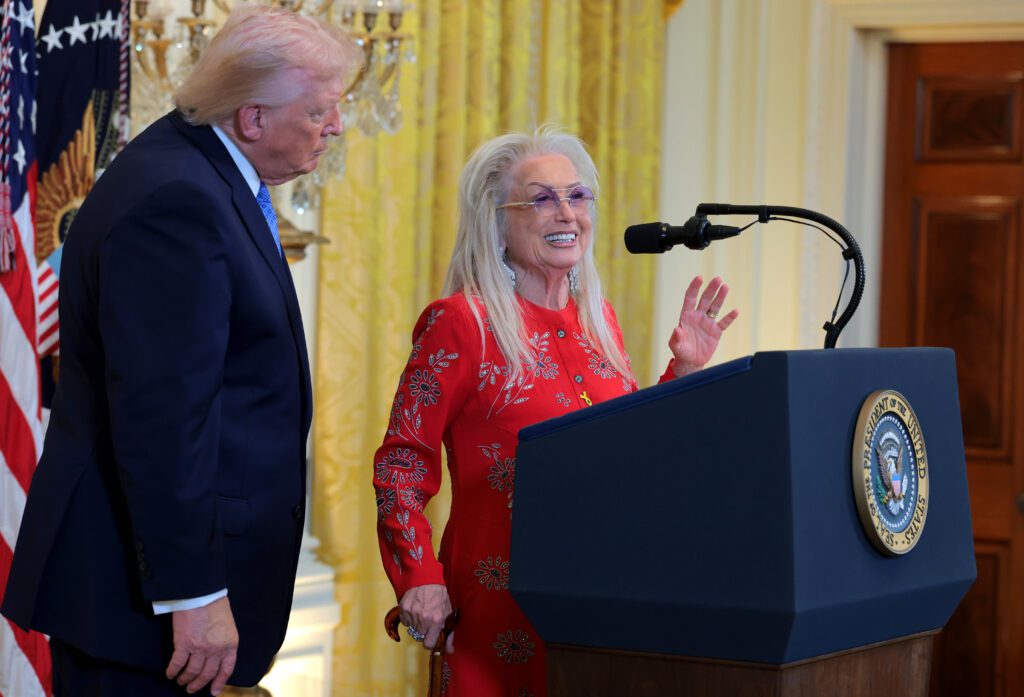
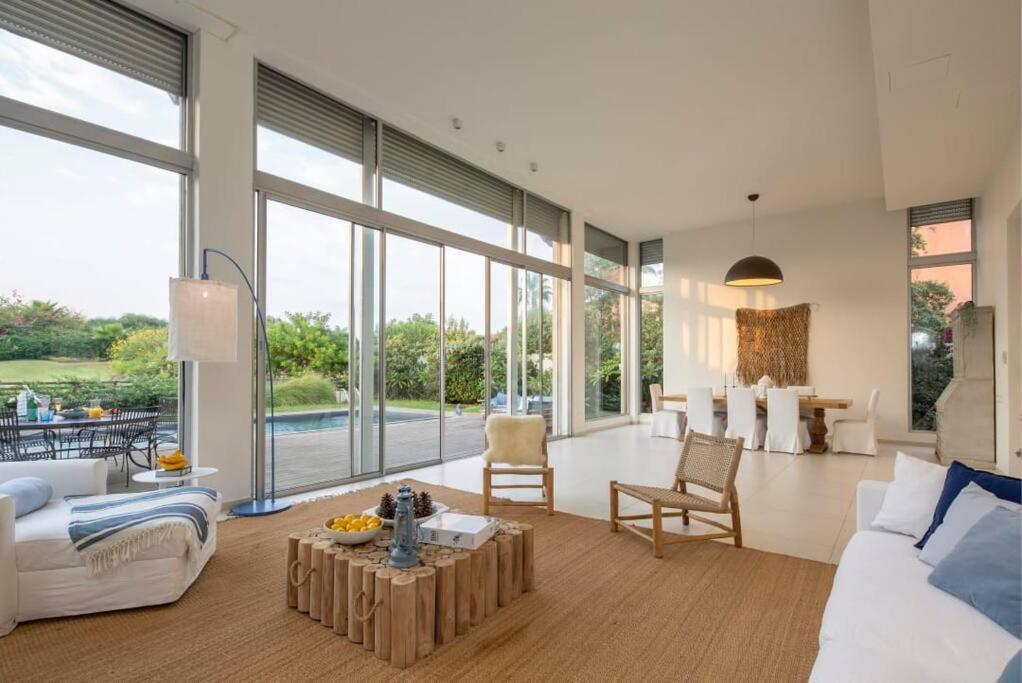
The residents’ list reads like a directory of Israeli and international wealth. The Indian ambassador. The ambassador of the United Arab Emirates. Businessman Teddy Sagi, who has assembled multiple properties here, including number 46 and number 56, stitching together one of the largest single-owner footprints on the street. Miriam Adelson in the old U.S. residence at number 40. Businesswoman Irit Strauss. French beauty entrepreneur Terry de Gunzburg and her husband Jean de Gunzburg, a scientist and former president of World ORT, whose private art collection reportedly spills into the garden. Shipping magnate and philanthropist Eyal Ofer. Real estate developer Doron Aviv of the Aviv Group. Capital markets prodigy Roi Hayon. The homes behind those gates were designed by architects including Orly Sheram, Ilan Pivko, and Tehila Shelef. The residents themselves tend to be discreet, quality, pleasant people.

Not everyone believes Galei Tchelet earns its crown on beauty alone. On its own merits, Galei Tchelet isn’t considered one of the most aesthetically beautiful streets. Streets like Ha’Eshel or HaMa’apilim nearby are prettier, and more affordable. What made Galei Tchelet was the fact that wealthy people bought here and created the demand. Nearby Kfar Shmaryahu offers a direct comparison, a home on a dunam and a half there can cost what a home on a single dunam on Galei Tchelet commands.
Penthouses on Tel Aviv’s HaYarkon Street are priced at 65 million shekels and a unit at the Kempinski tower asking 160 million, while prices on Galei Tchelet now run between 90,000 and 170,000 shekels per square meter, the same range as Rothschild Boulevard and Neve Tzedek. The premium the street commands isn’t a mystery so much as a formula, unimpeded sea views, maximum privacy, and 24/7 security.
At the northern end of the ridge, at the entrance to Herzliya’s Arches Beach, a new chapter is being poured in concrete. The site is the long-contested plot once known as “Pat Yam,” where developer Rami Shviro acquired the land from the Israel Land Development Corporation for 211.5 million shekels to build a luxury hotel. Residents fought the project for decades, petitioning to have the land rezoned as public open space. The courts disagreed. Excavation for the hotel’s parking is now underway, with completion expected in roughly four years.
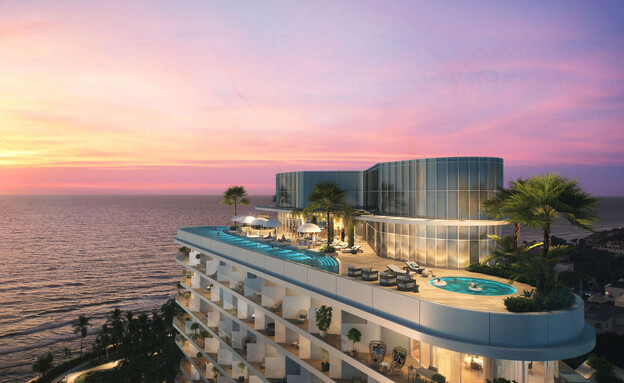
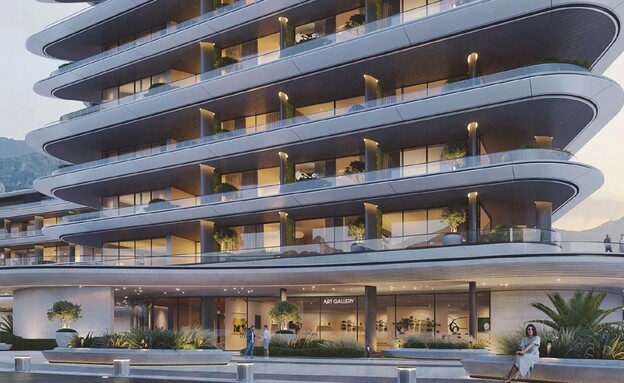

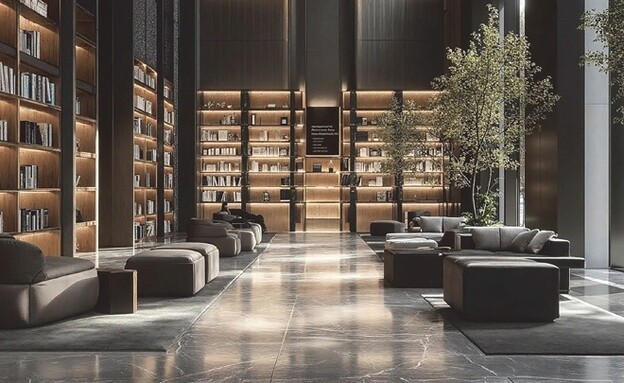

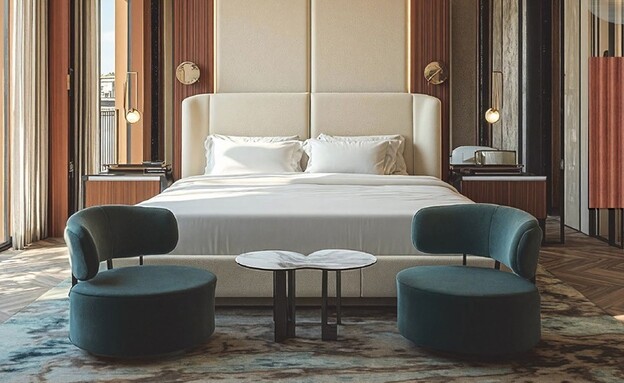
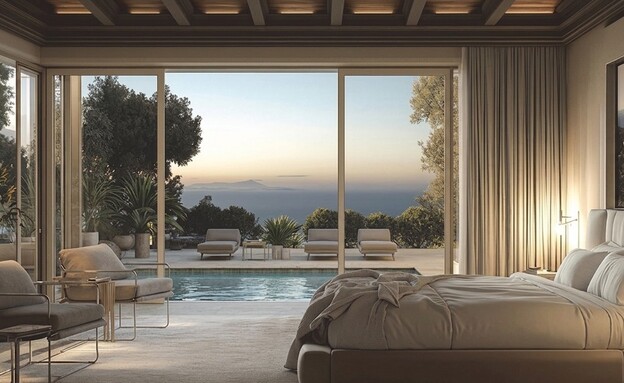
The hotel, still awaiting the international operator that will lend its final name, is being designed by architect Rani Zis with Italian interior design by Luca Dini. Plans call for 14 floors, likely topped with four additional residential floors, and will include 144 rooms, conference and event halls, a spa, a rooftop infinity pool, luxury retail, open-to-public restaurants, and a beach club with sunbeds, music, and dining. The silhouette is meant to evoke a yacht. “The hotel aspires to become a local icon, with a look that resembles a yacht and innovative classical interior design, creating differentiation through luxury and the winning location on the most expensive street in the country,” said Ronit Shviro, owner and chief legal counsel of the Shviro Group, which is developing the project alongside her husband Rami. “Since it sits on a street of luxury villas, it’s only natural that the upper section will include residential floors, similar to most hotels in the area.”
Shviro framed the project as a partnership with the city. The developers committed to preserving the site’s natural character, protecting the green spaces and open views. The hotel will offer direct beach access, and the beach club is intended to serve the general public. Economically, she said, the project will generate jobs, draw tourism, lift local spending, and strengthen the municipality’s tax base, “bringing a contemporary international standard to Israel and creating a growth engine that will support many families and local businesses.” Room rates, she noted, will reflect the address, higher than anything else in the area.
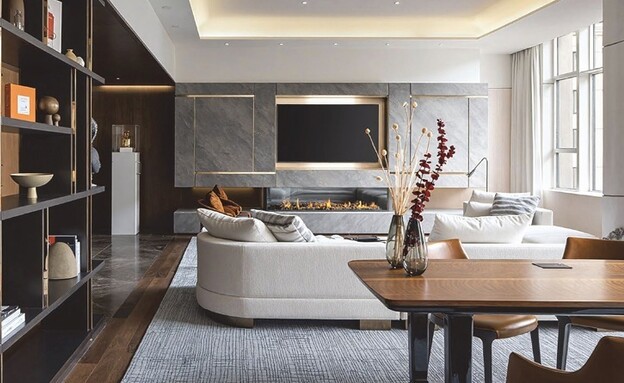
Which circles back to the deeper truth about Galei Tchelet. The street is not the prettiest. It’s narrow, it’s one-way, and the parked cars are surprisingly ordinary. What it offers is non-reproducible, a specific strip of cliffside meters from the Mediterranean, insulated by coastal law, locked behind private gates, and inhabited by a community that has spent two decades turning its land into Israel’s ultimate status symbol. The sea view is the same whether you’re worth ten million or ten billion. The zip code is what costs extra.