
 Jewish Breaking News
Hezbollah Adopts Ukraine-Style Fiber-Optic Drones to Strike IDF in Lebanon, Killing Soldier and Challenging Israel’s Buffer Zone
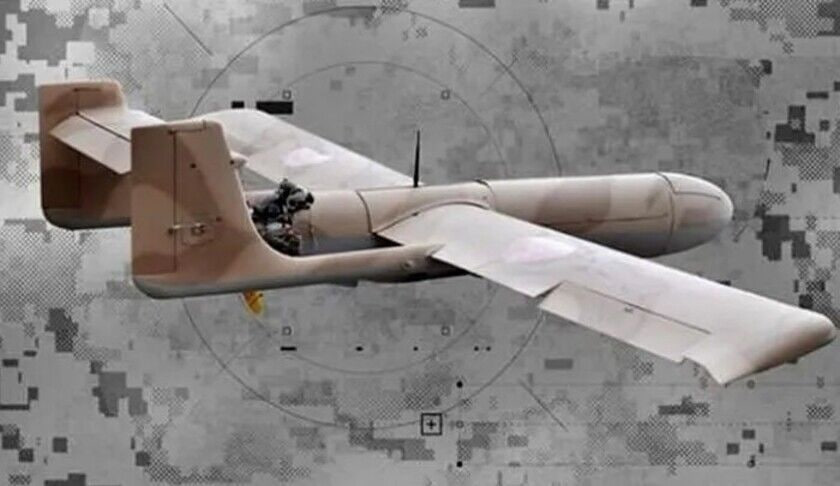
Israel’s new security zone in southern Lebanon was meant to push Hezbollah terrorists away from northern Israeli communities. Hezbollah’s answer is not only rockets or anti-tank fire. It is a cheaper, smaller and harder-to-stop weapon, Ukraine-style FPV explosive drones, including models guided by fiber-optic cable that can cut through Israel’s electronic warfare defenses.
The threat became painfully clear when Sgt. Idan Fooks, 19, from Petah Tikva, a fighter in the 77th Battalion of the 7th Armored Brigade, was killed in southern Lebanon. The IDF said he fell in battle, and Israeli reporting said six other soldiers were wounded in the Hezbollah drone strike. The incident took place near Taybeh, where a 77th Battalion tank was stuck and troops were working to repair it when an explosive drone hit nearby. During the evacuation, Hezbollah launched two more drones toward the force; one was intercepted, while another exploded near the soldiers and the rescue helicopter without causing additional injuries.

Hezbollah is moving from broader, less accurate fire to small drones that can be flown manually into weak points, vehicles, buildings and exposed troops. N12 reported that Hezbollah has increasingly turned explosive drones into a central weapon, in part because some are controlled by fiber optics, making them immune to standard electronic warfare. According to the report, certain models can be controlled from up to 15 kilometers away and carry up to 6 kilograms of explosives.
The technology is simple in concept and dangerous in practice. Instead of relying on radio signals or GPS links that can be jammed, the drone trails a thin fiber-optic cable back to the operator. That physical connection allows a real-time video feed and manual control almost until impact. In Ukraine, these drones have been used to fly low, weave through trees and reach areas once considered safer from FPV attacks. The same battlefield lesson is now appearing on Israel’s northern front.

That matters because Israel’s problem is no longer just interception. It is detection, timing and terrain. A small drone flying low and controlled through a cable can appear with little warning, especially around hills, villages, orchards and destroyed built-up areas in southern Lebanon. Ynet reported that similar Hezbollah fiber-optic drones can quietly slip toward IDF positions carrying charges of up to 10 kilograms, and that their guidance makes them resistant to electronic warfare, jamming and satellite-navigation disruption.
Hezbollah is also adapting out of pressure. Israel has spent months targeting its launchers, Radwan infrastructure, drone sites, weapons depots and smuggling routes. The old model of stockpiling large rocket arsenals through Iran and Syria is harder to sustain, especially as the Syrian route is no longer the same open highway it once was. Small FPV systems are cheaper, easier to modify locally and more expendable. That makes them attractive for a terrorist army trying to harass Israeli armor and troops without exposing large launch teams.

The U.S.-brokered ceasefire has reduced the pace of full-scale fighting, but it has not stopped the war. President Trump said Israel and Lebanon agreed to extend the ceasefire by three weeks after White House talks, while Reuters reported that Israel has continued striking Hezbollah infrastructure and Hezbollah has kept firing rockets and drones at Israeli troops and northern Israel.
On the Lebanese side, the drone war is colliding with politics. President Joseph Aoun is pushing talks with Israel while Hezbollah’s Naim Qassem rejects direct negotiations and says any outcome “does not concern” the terror group. Aoun’s response was unusually blunt: taking Lebanon to war for “external interests,” he said, is the real treason. That is the internal Lebanese fight behind the military one: a state trying to negotiate while Hezbollah keeps dragging the country into Iran’s war.

For Israel, the drone threat does not make the security zone irrelevant. It makes it more complicated. Distance still matters. Clearing Hezbollah positions, launch teams and weapons caches still matters. But fiber-optic FPV drones are designed to compress distance, slip past jamming and punish routine movement. A disabled tank, a rescue helicopter, an evacuation team or soldiers repairing equipment can become a target within minutes.
The likely Israeli response will be layered, better short-range detection, more kinetic interception, vehicle-mounted counter-drone systems, tighter movement discipline, camouflage, netting, rapid fire procedures and more aggressive strikes on Hezbollah operators before launch. Israel is already experimenting with systems that do not rely only on electronic warfare. But there is no clean solution yet as this is a clear live arms race.