
 Jewish Breaking News
Israel Prepares to Intercept 100-Boat, 1,000-Activist Gaza Flotilla Near Crete as It Sanctions Hamas-Linked Funding Network and Puts Navy on High Alert
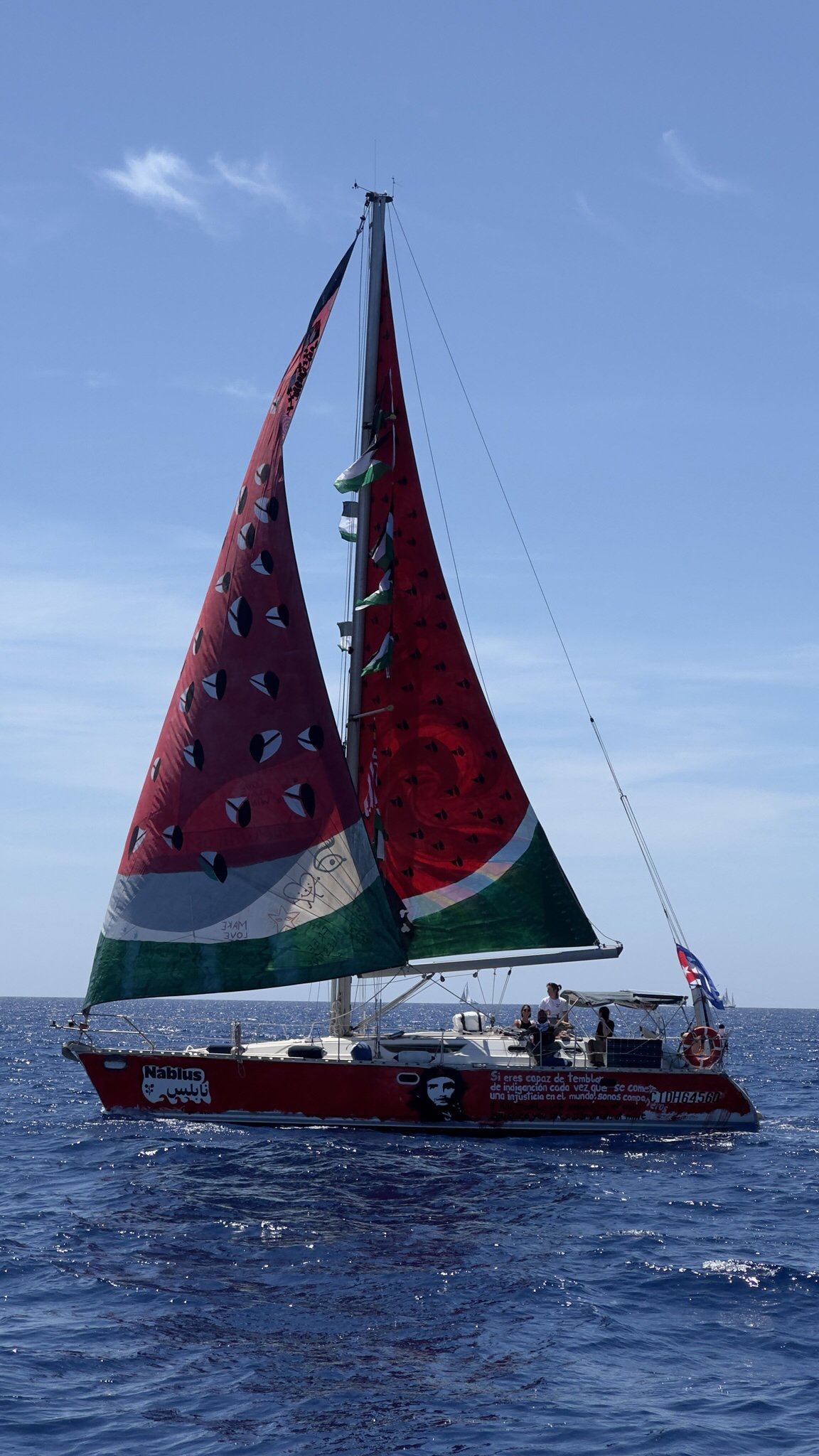
Israel is preparing for a high-stakes confrontation in the eastern Mediterranean as the Global Sumud Flotilla sails toward Gaza with an estimated 100 vessels and about 1,000 activists. Most of the boats are near Crete, roughly 1,000 kilometers from Gaza, while Israeli officials expect the fleet will be stopped before it reaches the coast. Organizers now claim military speedboats that identified themselves as “Israel” approached the boats, pointed lasers and weapons, ordered participants forward and onto their hands and knees, and jammed communications. There has not yet been an Israeli confirmation of a full interception.

This is not just a naval story. In Israel, it is being handled as a military, legal, diplomatic and financial fight. Netanyahu cut short his court testimony for a security consultation at the Kirya over the flotilla, while the Navy is weighing options that include boarding from the sea or deploying forces from the air. Jerusalem is also working diplomatic channels with Turkey, Spain and Italy to limit fallout before the ships are stopped. That is the lesson of the Mavi Marmara, Israel can win the operational moment and still pay a diplomatic price if the media war is mishandled.
Defense Minister Israel Katz has opened a second front: money. Israel’s National Bureau for Counter Terror Financing says Katz imposed sanctions on the flotilla’s fundraising campaign, calling it a Hamas-organized effort run with other international groups under humanitarian cover. The Defense Ministry says the campaign raises funds for vessels and participants, lacks public transparency, has drawn money laundering and corruption suspicions in Tunisia, and is being targeted as part of Israel’s economic campaign against Hamas, with U.S. involvement. Katz is also citing Section 56(b) of Israel’s Counterterrorism Law, which allows the seizure of property, including vessels, intended for serious terrorist offenses.
The organizers present the mission as nonviolent aid, but their own public material makes clear the project is broader than aid delivery. GSF describes its Spring mission as more than 70 boats, over 1,000 participants and overland convoys, with an intent to “disembark” specialized teams in Gaza. The group says the campaign is designed to challenge the blockade, open a permanent humanitarian corridor and pressure governments and corporations. It also claimed credit for obstructing the MSC Maya, a cargo vessel en route to Ashdod and Haifa, calling it an effort to disrupt Israel’s military supply chain. That matters because Israel’s argument is that this is not a neutral aid shipment, but a coordinated pressure operation meant to pierce security controls, create a spectacle at sea and hand Hamas a victory.

The legal backdrop favors Israel more than activists usually admit. A UN Secretary-General’s panel after the Mavi Marmara found Israel’s naval blockade legal as a measure to prevent weapons reaching Gaza by sea, and said humanitarian missions must respect Israeli security arrangements, seek prior approval and allow searches. Israel’s position is that ships cannot decide for themselves to breach a naval blockade, especially while Gaza remains a Hamas theater and aid can be transferred through monitored channels.
Last year’s Sumud confrontation sharpened that position. After Israel intercepted the previous fleet, prosecutors sought permanent confiscation of 50 foreign-flagged vessels and argued that a significant number were owned or financed by Hamas or affiliates, including a front company linked to the Palestinian Conference for Palestinians Abroad. The same filing said the flotilla carried less than five tons of aid across all vessels, about a quarter of what a single truck entering Gaza would normally bring. That figure is central to Israel’s case: the cargo was symbolic; the provocation was the point.
Now Israel is preparing to make sure the fleet never becomes a beachhead. The operational goal is straightforward, stop the vessels, avoid casualties, move activists to an Israeli port or another controlled channel, and keep the confrontation from being driven by activist livestreams. The political goal is broader, expose the flotilla as a Hamas-serving pressure campaign, dry up its funding, and reinforce the principle that aid to Gaza goes through official channels, not through a self-declared naval breach.