

 Jewish Breaking News
BREAKING: White House Gives Iran 48 Hours To Respond To Sweeping War-Ending Deal That Could Freeze Uranium Enrichment for 15 Years and Unlock Billions in Sanctions Relief
The White House believes it is closing in on a preliminary agreement with Iran that would end the war, open the door to nuclear negotiations and begin easing the standoff in the Strait of Hormuz, according to Axios. The reported deal is not final, but U.S. officials expect Iran’s formal response on several core issues within 48 hours, making this the closest Washington and Tehran have come to an agreement since the war began. Axios says the draft is a one-page, 14-point memorandum of understanding being negotiated by Trump envoys Steve Witkoff and Jared Kushner with Iranian officials, both directly and through mediators.

For the first time, UK F-35 Lightning jets have been conducting integration flying training with the B-2 Spirit stealth bombers of the United States Air Force as part of their deployment to RAF Fairford in Gloucestershire, UK.
The USAF deployment of the B-2s from the Bomber Task Force Europe is long-planned. Whilst deployed to the UK the aircraft will conduct a series of training activities in Europe. During this deployment, RAF F-35B Lightning fighters are conducting sorties with the USAF B-2 bombers. Both are 5th generation aircraft and this is the first time that USAF B-2s have trained with non-US F-35s.
RAF Fairford routinely hosts deployments and exercises by US strategic aircraft. These regular deployments reinforce the US Air Force Europe and the Royal Air Forces unique and complementary partnership and our collective contribution to NATO.
Imagery captured by a USAF Exchange Pilot.
Reuters reported that a Pakistani source involved in the peace effort confirmed the talks are moving toward a one-page memo, saying: “We will close this very soon.” Reuters separately noted that the White House and State Department had not immediately commented on the Axios report.
Under the proposal, the U.S. and Iran would enter a 30-day negotiation period aimed at reopening the Strait of Hormuz, restricting Iran’s nuclear program and lifting U.S. sanctions. During that window, Iran’s restrictions on shipping and the U.S. naval blockade would reportedly be rolled back in phases. If talks collapse, a U.S. official told Axios that American forces could restore the blockade or resume military action.
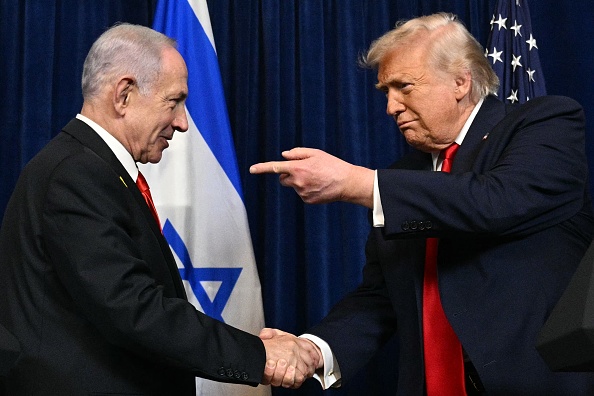
The two leaders also discussed Iran, with Trump saying that if Tehran rebuilt its nuclear facilities the United States would “knock them down.” (Photo by Jim WATSON / AFP via Getty Images)
The nuclear terms are the explosive part. Axios reports that Iran could accept a long-term freeze on uranium enrichment, with the current landing zone discussed between 12 and 15 years after Iran offered five and the U.S. demanded 20. The U.S. also wants any Iranian violation to automatically extend the enrichment ban. Iran would reportedly commit not to seek a nuclear weapon, accept enhanced inspections including snap inspections, and may agree to remove its highly enriched uranium stockpile from the country.
In exchange, Washington would gradually lift sanctions and release frozen Iranian funds. Earlier Axios reporting said one idea under discussion involved releasing $20 billion in frozen Iranian funds in exchange for Iran giving up its enriched uranium stockpile, while Iran had pushed for $27 billion and the U.S. had previously discussed $6 billion for humanitarian purchases.

That is why the question now is not only whether a deal exists. It is whether this is diplomacy, or another Iranian deception campaign dressed up as de-escalation. The IAEA said Iran had accumulated 440.9 kilograms of uranium enriched up to 60% before the military attacks and warned that the agency’s lack of access to verify previously declared nuclear material for more than eight months was a proliferation concern.
For Israel, the danger is obvious, a memo could stop the shooting before it actually neutralizes the threat. A real deal would have to remove the enriched uranium, lock down inspections, block underground nuclear activity and leave the U.S. with credible military leverage if Tehran cheats. Anything less risks giving the Iranian regime time, money and room to rebuild.
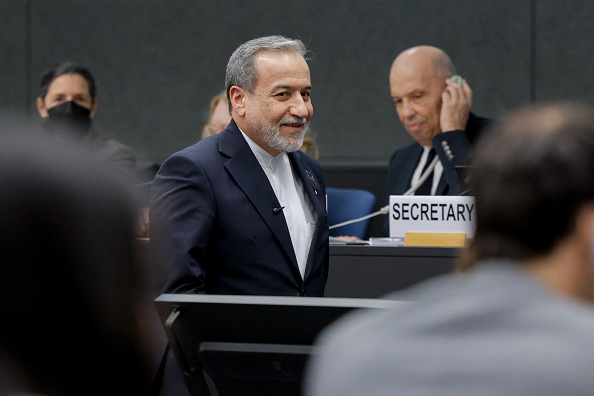
Foreign Minister Abbas Araghchi said in Beijing that Tehran would accept only “a fair and comprehensive agreement,” while China urged a complete halt to hostilities and safe passage through Hormuz.