
 Jewish Breaking News
Israeli Cyber Keeps Winning as Akamai Buys LayerX Security for $205 Million To Fight the New AI Browser Threat
The browser used to be a window into work. Now it is becoming the workplace itself, and in the AI era, it may also be the most exposed point in the enterprise. That is the bet behind Akamai Technologies’ decision to acquire Israeli cybersecurity startup LayerX Security for roughly $205 million in cash, a deal aimed at giving one of the world’s largest cloud and cybersecurity companies a stronger position in browser-based AI usage control. Akamai said the transaction is expected to close in the third quarter of 2026, subject to customary conditions.

LayerX is not being bought because it is already huge. It is being bought because the problem it targets is quickly becoming impossible for major companies to ignore. Employees are no longer just browsing websites. They are pasting corporate data into generative AI tools, uploading files to SaaS platforms, testing copilots, using AI coding assistants, and beginning to hand tasks over to autonomous agents. Akamai says LayerX extends its protection directly into that browser layer, where much of modern enterprise work now takes place.
That is the key to the deal. LayerX does not force workers into a completely new enterprise browser. Its technology is designed to sit on top of the browsers employees already use, including the new generation of AI-driven browsers such as Atlas and Comet. Akamai says this gives security teams visibility and control over prompts, file uploads, web content and SaaS activity without changing infrastructure or disrupting the way employees work.

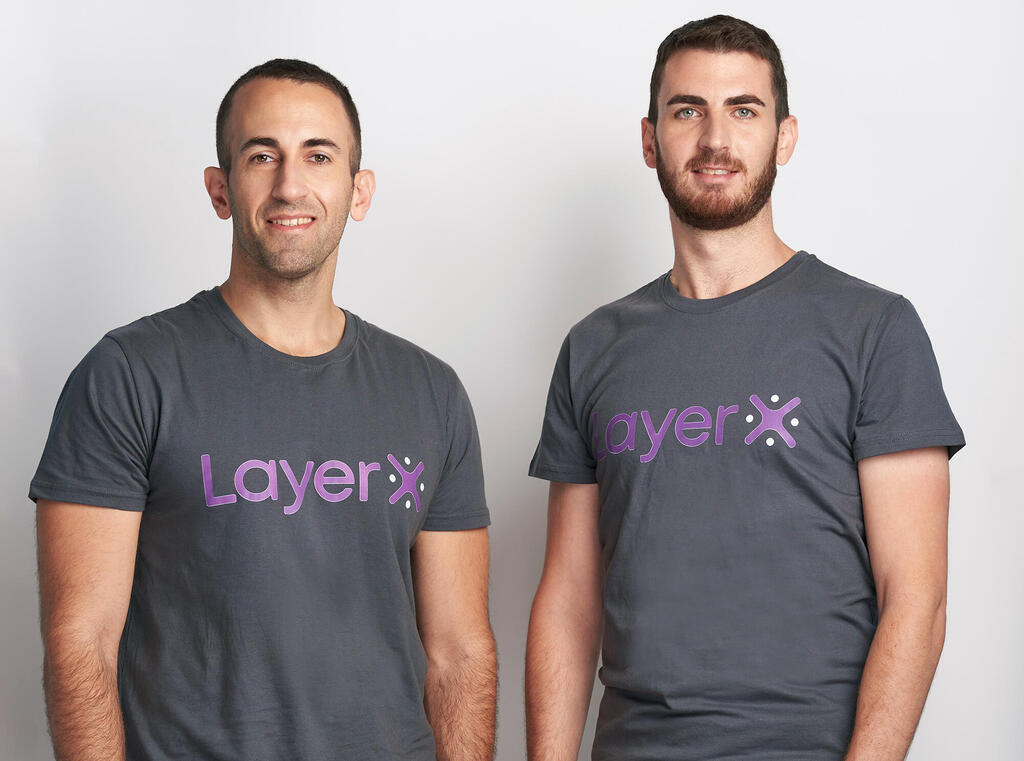
Founded in 2022 by Or Eshed and David Vaisbrud, LayerX raised $45 million from investors including Glilot Capital Partners, Dell Technologies Capital and Jump Capital. Calcalist had reported earlier that Akamai was in advanced talks to buy the company at a valuation of around $250 million, before the final announced cash price landed at about $205 million after purchase price adjustments.
The financials show what Akamai is really buying. Akamai expects LayerX to reach only about $10 million in annual recurring revenue by year-end and said the acquisition should reduce non-GAAP earnings per share by roughly $0.12 in fiscal 2026. In other words, this is not a pure revenue grab. It is a strategic purchase of a category, a team and a control point Akamai clearly believes will matter as enterprise AI moves from experimentation into daily operations.
LayerX’s pitch is simple, the old security stack was built around networks, endpoints and access gates, but the action has moved into the interaction itself. A worker pastes sensitive data into an AI tool. A browser extension sees something it should not. A contractor logs into a SaaS app from an unmanaged device. An AI agent starts moving between files, repositories and accounts. LayerX tries to give security teams policy control at that exact moment, before the data leaves and before the damage is done. Its own platform messaging focuses on AI discovery, GenAI data loss prevention, access control, prompt-injection protection, browser-extension security and protection for AI browsers.
Gartner estimates that fewer than 10% of organizations currently use secure enterprise browser technology, but predicts that 25% will deploy it by 2028 to fill gaps in remote access and endpoint security. Gartner also says browsers have become a primary access method for modern corporate applications and a useful control point for enterprise security. That is exactly the market Akamai is moving into with LayerX.

Akamai already has the scale. The company reported $1.074 billion in first-quarter revenue, including $590 million from security, up 11% year over year. It also reported a 40% jump in cloud infrastructure services revenue and disclosed a $1.8 billion, seven-year commitment from a U.S.-based frontier AI model provider. That gives the LayerX acquisition a wider frame: Akamai is trying to position itself not just as an internet infrastructure company, but as a security and cloud platform for the AI economy.
For Israel, the deal lands as another reminder that local cybersecurity is not just surviving a brutal period of war, pressure and uncertainty. It is still producing technology global buyers want. LayerX joins a growing Akamai-Israel acquisition chain that includes Guardicore, acquired for about $600 million, and Noname Security, acquired for about $450 million. Akamai said LayerX is its fourth Tel Aviv-based cybersecurity acquisition in five years and that the founders and employees will join its Zero Trust organization.
There is also a deeper Israeli thread inside Akamai itself. The company still honors co-founder Danny Lewin, who was raised in Jerusalem, served as an IDF officer, studied at the Technion and MIT, and helped build the algorithms at the core of Akamai’s early services. Akamai says Lewin was killed aboard American Airlines Flight 11 on September 11, 2001.