
 Jewish Breaking News
Iran Quietly Restarts Ballistic Missile Production as Israeli Intelligence Warns Recovery Is Moving Faster Than Expected
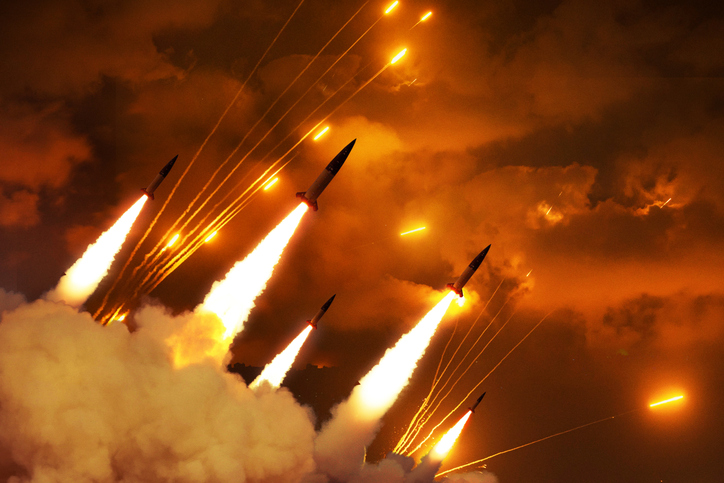
Iran has already resumed limited production of ballistic missiles, launchers and air-defense weapons, according to a new Mako report citing updated Israeli and U.S. intelligence assessments. The key warning is not that Tehran has fully restored its arsenal. It is that the Iranian regime is rebuilding faster than early post-strike estimates suggested, using surviving components, restored production lines and improvised facilities while the ceasefire holds.
Mako reports that the renewed production goes beyond recovering missiles and launchers trapped in tunnels during the war. Israeli officials now assess that Iran has begun producing new ballistic missiles, new launchers and anti-aircraft missiles, while also working to rebuild its UAV attack force. The IDF believes the pace of recovery is “significantly” ahead of earlier intelligence expectations.

The report points to a more complicated picture than the one publicly described during the war. At the height of the U.S.-Israeli campaign, IDF and American officials said Iran’s missile industry, launchers and weapons-production infrastructure had suffered massive damage. The IDF said it struck missile-production sites across Tehran, launchers and storage facilities in western Iran, and additional sites tied to ballistic missiles, anti-aircraft missiles and warhead components.
But the new assessment suggests Iran preserved more of its launch capability than initially understood. Mako reports that while early estimates said roughly half of Iran’s missile launchers had been destroyed, updated intelligence now indicates that about two-thirds remained usable, with many removed from tunnels whose entrances had been blocked during the fighting. U.S. intelligence also reportedly shows that Iran has begun producing new launchers.

For the first time, UK F-35 Lightning jets have been conducting integration flying training with the B-2 Spirit stealth bombers of the United States Air Force as part of their deployment to RAF Fairford in Gloucestershire, UK.
The USAF deployment of the B-2s from the Bomber Task Force Europe is long-planned. Whilst deployed to the UK the aircraft will conduct a series of training activities in Europe. During this deployment, RAF F-35B Lightning fighters are conducting sorties with the USAF B-2 bombers. Both are 5th generation aircraft and this is the first time that USAF B-2s have trained with non-US F-35s.
RAF Fairford routinely hosts deployments and exercises by US strategic aircraft. These regular deployments reinforce the US Air Force Europe and the Royal Air Forces unique and complementary partnership and our collective contribution to NATO.
Imagery captured by a USAF Exchange Pilot.
That matters because launchers are the bridge between Iran’s stockpile and an actual attack. A missile sitting underground is a threat. A working launcher turns it into incoming fire on Israel, U.S. forces and regional allies. Israeli intelligence previously assessed Iran still held around 2,500 ballistic missiles and had been trying to sharply expand production before the war.
Iran’s rebuild is also being helped from abroad. Mako says Russia and China are providing key components for missile production, while the scale of smuggling is being constrained by the U.S. naval blockade. Separate reporting has pointed to deeper Chinese and Russian involvement, including alleged Chinese dual-use material support and reported weapons talks involving air-defense systems, anti-ship missiles and other advanced platforms. China has denied supplying arms to Iran.
The dispute now is over time. CENTCOM commander Adm. Brad Cooper recently told U.S. lawmakers that the operation had destroyed the vast majority of Iran’s defense-industrial base and would delay Tehran’s recovery for years. But U.S. intelligence assessments reported by CNN and cited by Ynet suggest Iran is restoring parts of its drone and missile capabilities much faster than expected, with one assessment saying its attack-drone capability could be rebuilt within months.

For Israel, the lesson is blunt: the strikes badly damaged Iran’s war machine, but they did not erase it. Tehran is treating the ceasefire as a race to regenerate the weapons most useful for the next round: ballistic missiles, drones, launchers and air-defense systems that can complicate future Israeli or American action. The Iranian regime is wounded, but it is not standing still.