
 Jewish Breaking News
Captured Hamas Files Reveal Sinwar Expected Hezbollah to Join October 7 With a Full Northern Invasion
Newly revealed Hamas documents are shedding light on one of the biggest unanswered questions of the October 7 massacre, why Hezbollah did not launch a full northern invasion while Hamas terrorists were storming southern Israel.
The files, published by Army Radio, show years of coordination between Hamas, Hezbollah and Iran’s Islamic Revolutionary Guards Corps. They also reveal something even more explosive, Yahya Sinwar appears to have believed Hezbollah would join the assault in a major way, potentially turning the massacre into a multi-front invasion from Gaza, Lebanon and beyond.

The documents show that Hamas was pushing Hezbollah long before the attack. Ismail Haniyeh, then Hamas’s political chief, wrote to Hassan Nasrallah that Palestinians were confident Hezbollah would “not disappoint them” in the campaign against Israel. A similar message was reportedly sent to Iran’s supreme leader.
During Operation Guardian of the Walls, according to the documents, Hamas, Hezbollah and the IRGC operated a joint intelligence war room in Beirut. From there, Hezbollah allegedly passed Hamas information on IDF deployments, air activity and fighter-jet movements. One Israeli security source told Army Radio that Hezbollah had a meaningful role in disrupting Israel’s deception operation against Hamas’s “Metro” tunnel system in Gaza.

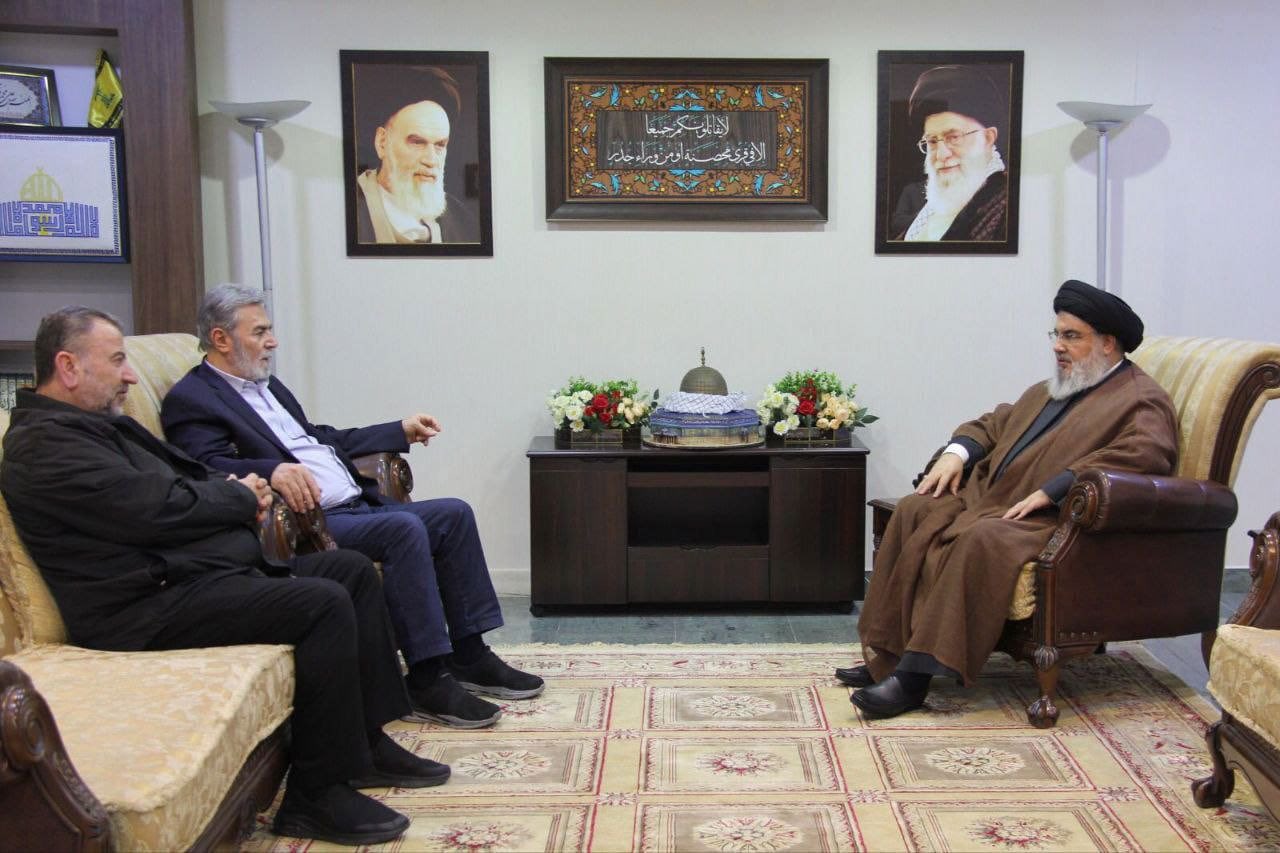
The documents also point to a key Beirut meeting between senior Hamas figures, Nasrallah and senior Iranian officials. Hamas pushed for a wider regional war, arguing that Israel was politically divided, facing terrorism in Judea & Samaria and under pressure from regional normalization. Nasrallah, according to the files, did not reject the idea outright, but pressed Hamas to define what the war was supposed to achieve.
Sinwar then reportedly sent Nasrallah several possible attack scenarios. The most ambitious envisioned a surprise assault “from all fronts,” with Hamas expecting not only Hezbollah’s Radwan forces in the north, but also possible attacks from the direction of Jordan and Syria. The preferred timing, according to the documents, was originally tied to a Jewish holiday, with Passover discussed as an option before the plan shifted.

By the time the massacre began, however, Hezbollah had not launched the synchronized ground assault Sinwar expected. The documents say Sinwar sent Nasrallah an urgent message as the attack was already underway, asking Hezbollah to join with mass rocket fire and a large ground offensive.
That full northern assault never came. Hezbollah opened fire from Lebanon later, turning the border into an active front, but Nasrallah held back from sending Radwan terrorists into the Galilee in the opening hours. The difference was enormous, October 7 was already a national catastrophe. A simultaneous Hezbollah invasion from the north could have multiplied the slaughter and dragged Israel into an even wider war from the first morning.

The files do not make Hezbollah look restrained. They make it look involved, informed and deeply tied into Hamas’s war planning, but unwilling to pay the full price of joining Sinwar’s suicidal gamble at the decisive moment. For Israel, the documents are another warning about the Iranian axis, Hamas did not imagine October 7 as a Gaza-only attack. It wanted a regional war designed to break Israel on multiple fronts.
Israel stopped that scenario from fully materializing. The next war plan must assume Iran’s terror proxies will try again.