
Community news site covering Crown Heights and the Chabad-Lubavitch community.
Community news site covering Crown Heights and the Chabad-Lubavitch community.
CrownHeights.info41 minutes agoLevi Smith (N. Miami Beach, FL) to Chana Singer (Manchester, UK) L’Chaim: Tonight, Sunday, 8:00pm at 1349 President Street
 CrownHeights.info1 hour ago
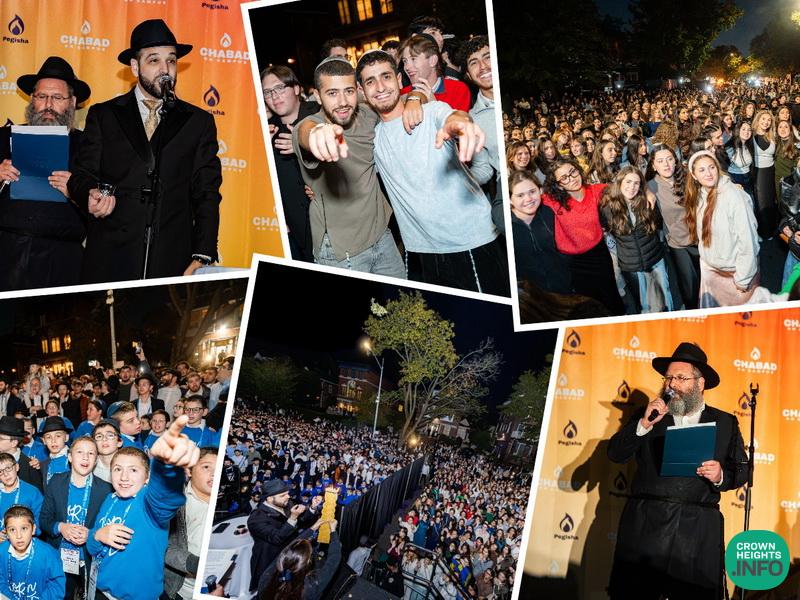
A huge outdoor Havdalah ceremony took place outside the Rebbe’s house at 1304 President Street, at the Chabad on Campus International Pegisha.
After an amazing Shabbos packed with sessions, crossfires, panels, food, and social programming, 2,000 Pegisha participants poured onto President Street for an outdoor musical Havdalah led by Yoni Z. It was the emotional high point of the weekend. Rabbi Yossy Gordon, CEO of Chabad on Campus International, addressed the crowd.
In addition to the mega Pegisha crowd, the Junior Shluchim and Shluchos Shabbaton program, which ran its own special weekend in Crown Heights, joined Pegisha for the Havdalah ceremony.
A special thank you to those who made it possible. Yaacov Behrman. The NYPD 71st Precinct, led by Sergeant Mike Baratta and Detective Connors. Crown Heights Shomrim. And Rabbi Mendy Krinsky.
 CrownHeights.info2 hours ago
by CrownHeights.info
Two teenagers were arrested in Crown Heights after allegedly stealing a moped, following a coordinated response by Crown Heights Shomrim and the NYPD’s 71st Precinct.
According to Crown Heights Shomrim, the incident led to what is being described as a textbook arrest, with Shomrim volunteers quickly responding and tracking the suspects as they moved through the neighborhood.
After spotting the teens, Shomrim members followed them and alerted police as the suspects entered an alleyway in Crown Heights. Thanks to the efforts of the Crown Heights Shomrim’s Operations team, the teens remained under constant surveillance while officers moved into position.
Police subsequently swooped in and arrested both teenagers.
Shomrim credited the close collaboration between its volunteers and the NYPD’s 71st Precinct for the arrests, highlighting the importance of rapid response, coordinated communication and continued surveillance in helping police apprehend suspects.
Crown Heights Shomrim urged residents to remain alert and report suspicious activity, reminding the community that its hotline is available at 718-774-3333.
“If you see something, say something.”
View this post on Instagram A post shared by CrownHeights.info (@chinfo.official)
 CrownHeights.info15 hours ago
by CrownHeights.info
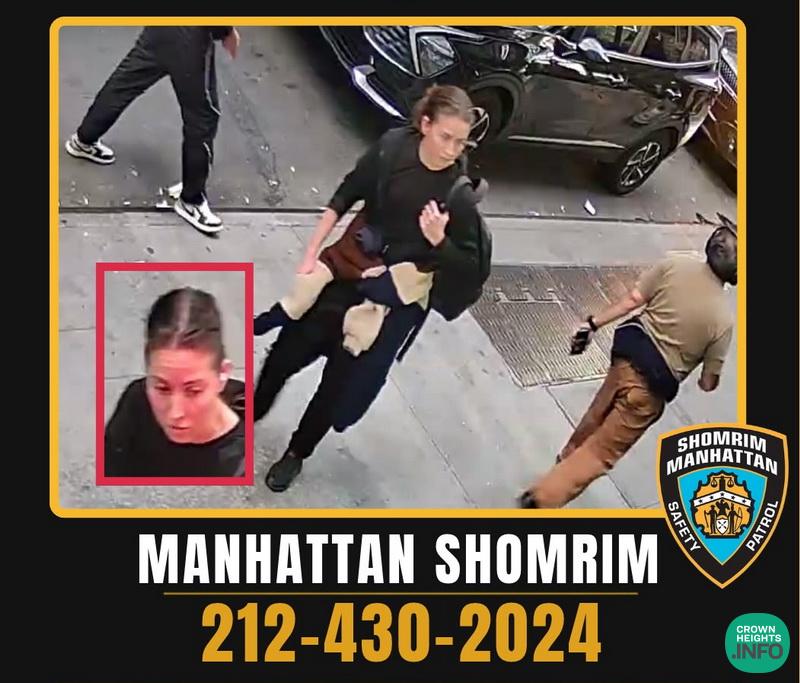
The woman wanted in connection with the stabbing of a Chabad bochur in Midtown Manhattan earlier this week has been arrested, Manhattan Shomrim announced Saturday evening. The suspect is accused of carrying out two separate assaults being investigated as hate crimes on the same day.
The arrest follows an extensive search involving the NYPD Hate Crimes Task Force, Manhattan Shomrim, Crown Heights Shomrim and Queens Shomrim, along with members of the public who provided crucial tips to investigators.
“Thanks to the tireless dedication of our members working alongside the NYPD Hate Crimes Task Force, our partners at Crown Heights Shomrim and Queens Shomrim, and the crucial tips called in to our hotline by the public, the suspect wanted for Wednesday’s two hate crime assaults in Midtown Manhattan is now in custody,” Manhattan Shomrim said in an announcement.
The organization thanked everyone who assisted in locating the suspect and helping bring her into custody.
As previously reported by CrownHeights.info, the initial attack took place Wednesday evening in Manhattan’s Diamond District, near Fifth Avenue and West 47th Street. The victim, a 26-year-old Chabad rabbinical student from Crown Heights identified as Yosef, was walking through the area when a woman allegedly followed him and stabbed him from behind with a sharp object believed to have been a needle or syringe.
Hatzalah responded to the scene and transported the bochur to Bellevue Hospital, where he was treated and reported to be in stable condition.
Surveillance footage released following the attack showed the woman approaching the visibly Jewish victim from behind before striking him and fleeing. Witness accounts also indicated that the suspect had approached another visibly Jewish pedestrian before the stabbing, raising concerns that Jewish individuals were being deliberately targeted.
View this post on Instagram A post shared by The Jewish Link Expanded (@jewishlinknews)
Despite the frightening experience, Yosef returned to the Diamond District the following day to continue his daily work helping Jewish merchants and workers put on tefillin and encouraging them to perform additional mitzvos.
The arrest marks a significant development in the investigation. Authorities have been investigating the incidents as potential hate crimes, although further details regarding the second assault, the suspect’s identity and any formal charges had not yet been publicly confirmed in the information available at the time of publication.
The investigation remains ongoing.
 CrownHeights.info17 hours ago
by Dovid Zaklikowski for Hasidic Archives
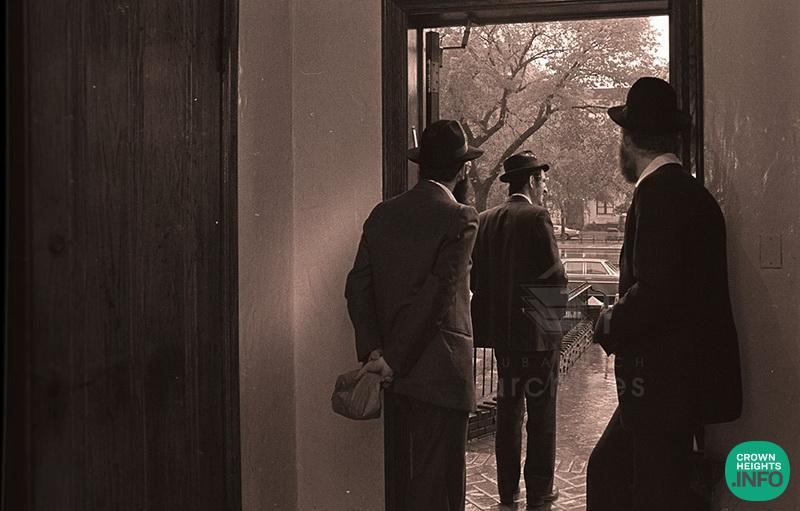
For many years, a person’s birthday was often the one occasion when they would have a private audience with the Rebbe. Students were instructed by their mentors to raise questions concerning their service of G-d and to avoid wasting the Rebbe’s time.
The older students would write to seek guidance on how to concentrate during their prayers or how to balance their spiritual endeavors with the Rebbe’s constant encouragement to assist others in their spiritual growth.
Young Reuven, despite his mentors disagreeing with his self-assessment, wrote in his note that he was successful in his Torah studies, was doing well in controlling negative thoughts, and was keeping to the yeshivah’s schedule. However, when it came to his prayers, it was a different story.
Reading the note, the Rebbe took issue with Reuven’s self-absorption and his total preoccupation with himself, which seemed to leave him oblivious to the world around him. The Rebbe asked: “Don’t you have anything else to think about besides Reuven?”
Find Hasidic Archive’s, latest book Yards of Kindness here.
 CrownHeights.info17 hours ago
by Chaim Hershkop
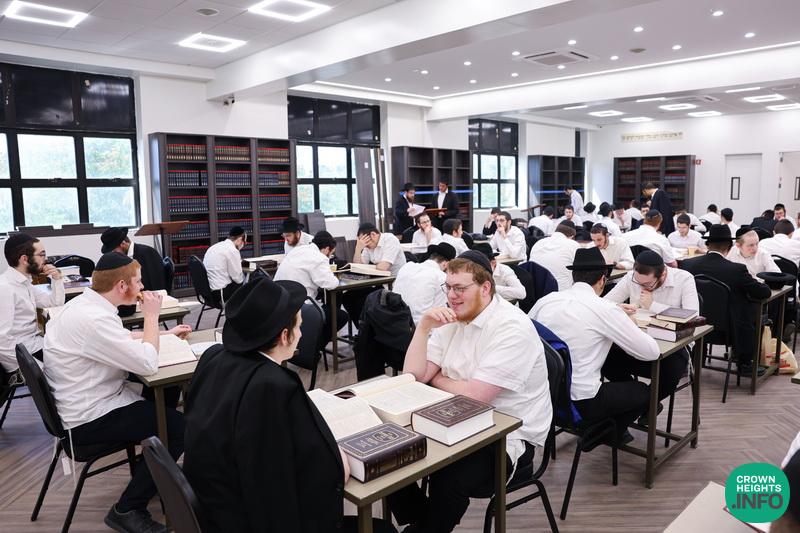
It’s high time that Roshei Yeshiva, mashpi’im, and mechanchim come together with a practical plan to preserve the incredible spirit of Chodesh Kislev while maintaining the structure and seder of Yeshiva.
Chodesh Kislev is a special time in Lubavitch, filled with Chassidishe Yomim Tovim, farbrengens, inspiration, and hiskashrus. These experiences are an essential part of a bochur’s chinuch and should absolutely be encouraged.
But why must they come at the expense of the regular seder of Yeshiva?
There’s a running joke that in Lubavitch, Yeshiva only functions properly from Cheshvan until Kislev. It’s funny, but unfortunately, there’s enough truth to it that we should be concerned.
It’s time to make that joke a thing of the past.
Nobody is suggesting fewer farbrengens or less Chassidishe chayus. Quite the opposite! The goal should be to channel that inspiration into stronger learning, greater discipline, and more meaningful growth.
With proper planning, coordinated schedules, clear expectations, and a commitment to getting back on track after every celebration, there’s no reason we can’t have both.
Of course, some farbrengens will run late, and certain occasions deserve exceptions. But the exception shouldn’t become the norm, and the entire seder shouldn’t fall apart as a result.
A successful farbrengen isn’t measured only by how inspired a bochur feels that night, but by how that inspiration translates into his learning and avodas Hashem the next day.
Because inspiration without implementation eventually fades.
Chassidishe chayus and a strong seder are not competing priorities. They should strengthen one another.
Our bochurim deserve a Yeshiva that offers both.
Let’s make Chodesh Kislev a month that strengthens the momentum of Yeshiva, rather than disrupts it.
Because the true impact of a farbrengen should be felt not only around the farbrengen table, but in the Beis Medrash the following morning.
 CrownHeights.info17 hours ago
by CrownHeights.info
In a unique initiative aimed at strengthening Jewish communal life and expanding assistance to those in need, Chabad of Monticello is set to benefit from a donation of equity in a technology startup, helping support plans for a new Shul and community kitchen in Sullivan County.
The initiative brings together Dialogica founder Austin Worrell and Silicon Valley business development expert Dylan Gittleman, who announced plans to donate a portion of Dialogica’s equity to support the Chabad center led by Rabbi and Rebbetzin Benzion Chanowitz.
The proposed donation of 0.01% of the company’s equity is intended to help fund a new synagogue and commercial kitchen, providing Chabad with additional resources to serve the local Jewish community and assist residents facing difficult circumstances.
The initiative was inspired in part by the personal experience of Gittleman, whose mother battled pancreatic cancer. During her final months, Rabbi Chanowitz and his wife regularly visited her in a nursing home, bringing food, prayers, music and companionship.
Their dedication left a lasting impression on Gittleman, who said he was moved by the couple’s commitment to caring for people during some of the most difficult moments of their lives.
“The compassion they showed my mother was extraordinary,” Gittleman said. “Their tireless dedication to people in need inspired me to help build something lasting for our community.”
For Chabad of Monticello, the planned Shul and community kitchen would provide an expanded foundation for its communal and charitable work. The kitchen is intended to support food assistance and other outreach efforts, while the new synagogue would provide additional space for Jewish communal life and religious services.
Rather than making a conventional cash donation, the initiative uses company equity, giving the contribution the potential to grow in value if Dialogica succeeds. The company has expressed ambitions of reaching a billion-dollar valuation, though its future value remains uncertain.
Worrell said the project reflects a desire to support the work of Rabbi Chanowitz and his wife while encouraging other entrepreneurs to consider innovative ways of giving back to their communities.
The partnership highlights the role Chabad emissaries play in communities beyond major Jewish population centers, providing not only religious services but also personal care and support to individuals and families in times of need.
For Chabad of Monticello, the initiative offers the prospect of turning that commitment into a lasting communal resource, serving Jewish residents and others in need throughout the region.
 CrownHeights.info17 hours ago
A new free website, LikuteiTorah.com, opens the Chassidishe Parsha to every learner: all 412 maamarim of the Alter Rebbe’s Torah Ohr and Likkutei Torah, in the original Hebrew with an English translation and an explanation of every section.
Each week’s maamarim are divided into seven daily portions, so the week’s Chassidishe Parsha can be learned a little each day. The sources the Alter Rebbe draws on, from the Gemara and Midrash to the Zohar and the Arizal, are shown in place, each one checked against the source itself before it appears, with a link to read it in full. Every maamar also has an overview, questions for review, and a printable booklet for Shabbos.
The whole edition is also open data. The Hebrew, the English and the explanations of every maamar are published as JSON files at likuteitorah.com/sefaria, free for anyone to build on for non-commercial use, and they update as the text improves. Developers, teachers and other projects are invited to build on it and add to it: apps, classes, audio, translations.
“The whole point is hafatzas hamaayanos,” said Shabsi Kabacznik, a Chabad chassid and an attorney, who learns the maamarim himself and oversees the work. “The Alter Rebbe’s maamarim are the foundation of Chassidus, but for many people the Hebrew, the Kabbalistic terms and the sources in the margins keep them closed. The goal is that anyone can open this week’s maamar and understand it.”
The site carries no credit for the people who made it. Its only dedication is in honor of the Rebbe’s father, the Gaon and Mekubal Reb Levi Yitzchok Schneerson, zt”l.
The translation and explanations were prepared with AI and then reviewed maamar by maamar against the Hebrew, and readers who learn the original can send a correction from any page. The site is free and non-commercial. It uses Kehot’s Hebrew text as published on Sefaria, credited on every page. Version 1 of the complete English edition is being prepared for Yud-Tes Kislev. The maamarim are also available in a dozen other languages, still being reviewed.
 CrownHeights.info17 hours ago
Rabbi Chaim Dalfin, author and Chasidic historian shares interesting facts, many revealed for the first time. The purpose of his program is to inspire all but especially the youth. Watch another installment here on CrownHeights.info.
Visit Rabbi Dalfin’s website: Click Here
 CrownHeights.info1 day ago
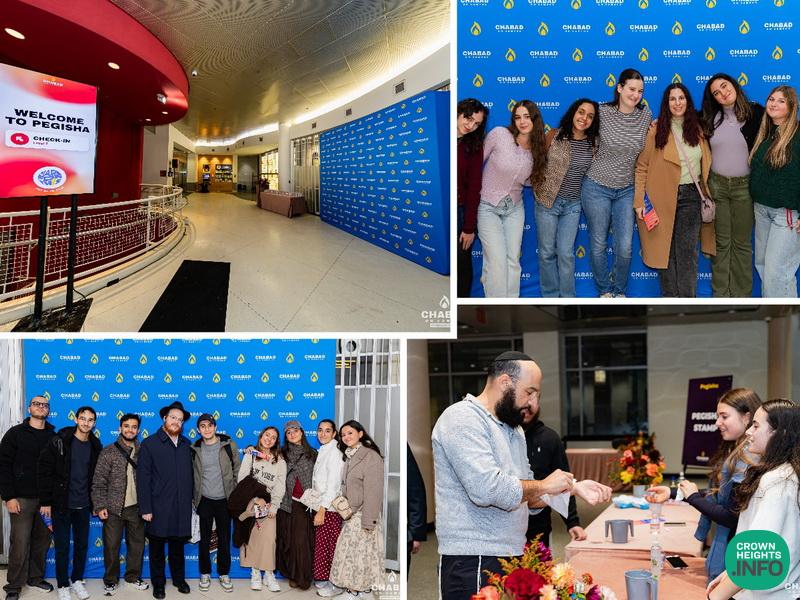
Pegisha is underway. Almost 2,000 participants from more than 160 universities across six countries are in Crown Heights this weekend for Pegisha, hosted by Chabad on Campus International.
 CrownHeights.info1 day ago
The IDF Spokesperson’s Unit cleared for publication that Staff Sergeant Ron Yonatan Roytman, aged 23, from Ashkelon, a squad commander in the Ari Battalion (775), Search and Rescue Brigade, and Sergeant Yuval Shai Svilem, aged 20, from Hod Hasharon, a combat soldier in the battalion, fell in combat during the shooting attack on Friday morning at the Judea Junction.
Three additional soldiers from the battalion were lightly injured. The soldiers were evacuated to receive medical treatment at a hospital, and their families have been notified.
IDF forces engaged the two terrorists in a 20-minute gun battle before eliminating them. Magen David Adom (MDA) reported that the remaining victims of the deadly terrorist attack sustained light injuries and are receiving treatment at hospitals.
Read More at israelnationalnews
CrownHeights.info1 day agoShui and Sheva (nee Tennenhaus) Kastel from Hollywood, FL had a baby girl!
 CrownHeights.info1 day ago
by Rabbi Sholom DovBer Avtzon
This weeks’ post is L’zechus our newly born granddaughter Shterna Sarah bas Devorah Leah shetichye, L’arichis Yomim V’shonim tovim. May our children raise her, together with their other children, L’Torah, Chuppa U’maasim tovim, in good health, tranquility, and may we all merit to inform each other with good tidings and the coming of Moshiach Tzidkeinu.
The response to last week’s article about our custom of saying Tehillim, and when it should be said, was much more than I anticipated. Many people emailed me or spoke to me personally asking me for details and when should they say their personal Tehillim.
I searched and found a quote in the name of Rabbi Dovid Raskin a”h, of some fifty years ago. Being that I am not a Rov and don’t pasken for others, after discussing it with a Rov I will add the following, that if one said korbonos, and is waiting for the minyan to begin, they can say their and their family members kapital, before איזהו מקומן. At that point, it is not considered as part of Tikkun Chatzos.
So this week, I am following up with an article about the history of learning the daily portion of the Parsha.
As always, your feedback and comments are most welcome.
Chitas stands for Chumash, Tehillim and Tanya.
The Alter Rebbe stated that מיר דארפן לעבן מיט די צייט – one should live with the times. Being that the chassidim didn’t understand what the Rebbe was asking of them, they asked the Rebbe’s brother, HaRav Yehudah Leib, (known as the Maharil) to explain it. He asked the Rebbe who explained that one should live with the daily parsha.
Seemingly it means, as many have said to me that the Alter Rebbe was instructing the chassidim to learn the daily portion of the parsha, and from then on Chassidei Chabad began learning the daily portion of Chumash.
However, I don’t believe that the Alter Rebbe was then informing his chassidim to learn Chumash and Rashi (and other commentaries on the chumash), as there is a strong possibility that Jews and especially chassidim were by then already learning the daily Chumash.
The basis for this statement is, for centuries many Jews learned the Chok L’Yisrol daily. Not only does it contain the daily chumash portion, but it also divides the 19 volumes of the Neviim and Kesuvim, as well as Mishna.
This concept of learning every day from the full spectrum of the Torah was initiated by the Arizal. His intent was that every Jew should learn a part of both Torah She’bichsav (the written Torah) and Torah shel Baal Peh (the Oral Torah) every day. This concept was publicized by his great student Rabbi Chaim Vital.
At that time there was just the concept, but nothing was printed or even handwritten, The first printed edition was arranged by Rabbi Chaim Alouzi, commonly known as the Chida and it was printed in 5500 (1740) in Cairo (where the Chida lived). So this was 168 years after the Arizal’s histalkus.
The Arizal lived from 5294 – 5332 (1534 – 1572). In other words the Arizal was nistalek 126 years before the Baal Shem Tov was born, and 162 years before he publicized himself. However, we do know that the Baal Shem Tov praised to his students the commentary of the Ohr HaChaim, written by Rabbi Chaim ben Atar, which was first published in 5502 (1742). This was eighteen years before the Baal Shem Tov’s histalkus.
The stidents of the Baal Shem Tov immediately began learning it, as we see that his student Rav Pinchos Koritzer instructed his two grandsons, the printers of Slavita, to reprint a Chumash with the Ohr HaChaim’s commentary every year.
Therefore, I confidently state that learning Chumash on a weekly and even daily schedule was done before the Alter Rebbe’s era, and in fact before the Baal shem Tov’s era.
So then what did the Alter Rebbe mean when he said, מיר דארפן לעבן מיט די צייט – one should live with the times?
In my opinion, the meaning is, it is not enough that we all learn Chumash and its commentaries every day, rather you should live with it, meaning take a lesson from it that it affects your conduct. In essence this is exactly what the Rebbe writes in Hayom Yom, entry for the 2nd day of Cheshvan.
Bezras Hashem in a follow up article we will discuss the aspect of daily Tanya.
A Taste of Chassidus
ולא יקרא שמך אברם Torah Ohr (Bereishis p. 12A)
Towards the end of this week’s parsha, the possuk informs us that after Avrum circumcised himself, Hashem said to him, “Your name will no longer be Avrum, but rather from now on it is Avrohom. So we have to understand what is the difference between these two names, and why specifically was the name changed after Avram circumcised himself, or in other words what is the connection between the name change and being circumcised?
To explain this, the Alter Rebbes focuses on a midrash where it states that the Gentiles asked our Sages, if the Creator truly wanted every male to be circumcised, then why didn’t He create them without the foreskin? The fact that we were all created (born) with a foreskin, that proves that that is the way the Creator desires man to be. So why do the Jews alter the human body from the way the Creator and wants it to be?!
The sages replied, “There is the Lupin bean which is extremely bitter [and in fact toxic] when it is growing. The only way to make it edible is by cooking and rinsing it in water and then it becomes sweet [and full of flavor].” So you see that Hashem who is the creator desires that man himself improves the creation. As the Lupin bean was created for man to eat and enjoy it, but until man alters it, it cannot be eaten. Similarly, although He created us with a foreskin we are to remove the foreskin and bring man to completion.
In essence this is why the Targum Yonason Ben Uziel, explains the words, אשר ברא אלקים לעשות – that G-d created to do, and translates לעשות – that it really means לתקן to correct, fix or improve.
In other words, our mission is to improve the physical world and change its appearance from the way it seemed at Creation. As Chassidus teaches us, that our mission is to transform this world that not only doesn’t it oppose G-dliness, but that it becomes the dwelling place for the Shechina to rest. This concept that Hashem wants his Shechina to rest in each one of us is expressed by the building of the Mishkan – Tabernacle. Where the possuk states, And you should make a Mishkan for me, and I will rest/dwell in them.
The question then becomes, being that the Mishkan was a single structure, shouldn’t the wording have been and I will rest in it [and not in them]?
But by saying the words I would rest in them, the Torah is informing us that Hashem wants to rest in each one of us. In other words, each individual through their actions transforms their body into becoming a sanctuary for Hashem.
So by analyzing and learning from the way the Mishkan and Beis Hamikdash were built, that will not only give us guidance that Hashem wants us to bring His Shechina into this world, but furthermore, it shows us how we can accomplish this tremendous feat.
We know that there are various stages in holiness; the Beis Hamikdash was holier than the city of Yerushalayim, and Yerushalayim is holier than Eretz Yisroel, and that Eretz Yisroel is Holier than the diaspora. That is in general, but even in the Mishkan and the Beis Hamikdash there are different levels of holiness. The holiest place is the Kodesh HaKodoshim (the holy of holies). Then comes the heichal followed by the western part of the courtyard where only priests could be. Then the eastern part of the courtyard were even a Yisroel could be, and then there’s the place for the woman etc etc. So you see there are different levels of holiness.
To have a clearer understanding of these different levels we will use light as a metaphor for holiness and explain different levels of light. We all know that there are places and times where the light of the sun is more intense and places where it is less intense. However, the reason why in one place is less intense than the other could be for one of two reasons.
One reason for this difference can be, that the second place is further distant from the source of the light than the first place is. Therefore, for example, in the summer we feel the heat of the Sun much stronger than we feel it in the winter, as the Earth is further away from the Sun in the winter than it is in the summer. But then there can be another reason for the disparity in the suns intensity. And that is for example the intensity of the light inside the house is much less than the intensity that is outside of the house. T
here too, that can be for one of two reasons. The first reason is that a house has walls which naturally block out sunlight. And the sun can enter only through the open spaces of the windows. This reason is similar to being it further away, and the intensity diminishes.
However, there is a second reason why the room has less sunlight, and that is that the owner of the house placed a curtain over the window which serves to block out the sunlight from entering. Although some light does penetrate through the curtain, it is not the same quality of light that would have entered had there not been a curtain there, and the rays would have just entered through the opening or window.
This difference can be compared to the sunlight that we see in the late afternoon and the light we see at night time.
During the day, the intensity of the sunlight varies, but nevertheless, we are speaking about the light which is emanating from the sun. However, at night it changes completely. Because at night the sunlight is not what we actually see, as at that time, its rays cannot shine on the earth. Rather it is being reflected off the moon onto the earth.
Subsequently, while there is light it is still called night and darkness. As the light is not from the sun, but rather from the moon which adapted the light of the sun.
So now we can explain how Hashem created the world that we humans are given the task to transform it, into becoming His Dwelling Place. Hashem wanted that the Creations themselves make this world into a Dwelling Place, not letting it be His accomplishment that it is a Dwelling Place, rather He wants the humans accomplish this.
Therefore, Hashem created the world in such a manner that the world should consider itself an entity on its own. Then it becomes the person’s responsibility to draw G-dliness into that space.
So the way the Mishkan and Beis Hamikdash was built, is that the holiest place is in the kodesh hakadushim. Now, if the Holiness would spread from there into the Heichal and onwards, even if the holiness would be in a diminished state of power and intensity, but nevertheless it is the same light. Therefore, between the kodesh HaKodoshim and the Heichal, there was the curtain. The curtain serves to stop the Holiness of the Kodesh HaKodoshim from extending itself further. Yet, at the same time, it itself took the light and after transforming it, allowed the new light to enter into the Heichal. [Just like the light that is absorbed by the moon and then reflected back onto the Earth. We don’t call that sunlight, even though the source of that light is the Sun. Rather it is called the light of the Moon because it is not the same quality has light from the sun would be.]
We see the same thing when it comes to work (on regular weekdays) and rest on Shabbos.
The possuk instructs us ששת ימים תעשה מלאכתךץ – six days you should do work, and then the Torah says וברכך ה בכל אשר תעשה – Hashem will bless you in all that you do. So on one hand Hashem wants us to put effort into whatever we are doing, as if it is our work that is accomplishing its success, [and therefore, the person would put themselves into making it a success, because it is their effort which would make it or break it], but then the Torah instructs us to realize that it is Hashem’s blessings that made us successful.
Because the purpose of creation is to bring holiness into the mundane and transforming it into holiness.
Now we can explain the connection of the two names to Avrum circumcising himself.
The name Avrum ad it is spelled in Hebrew is אברם, which is a compound of two words אב and רם, which means that whatever level אב is referring to, it is רם exalted and separated from the person and the masses.
Circumcision removes the foreskin or covering of the member and then it is revealed. At that point his name became Avrohom, which the possuk explains that Hashem told Avrohom, I have made/appointed you to be a אב above the nations.
Chassidus explains this to mean that before he circumcised himself, his level was not able to influence the levels below him, as he was too exalted above them. [It was like the curtain which is blocking the light to enter.] But by removing the foreskin, (just as we explained by the curtain, that the curtain allows the light to come through, so too) the lower levels are now expressing their willingness to draw the higher levels down into them.
And this is the lesson to each and every Jew, every day of our lives; Yes Hashem placed us in a physical world, but through our actions we have the ability to accomplish that the world becomes elevated and accepts to be guided and utilized to accomplish Hashem’s true desire of dwelling in this physical and material world.
Rabbi Avtzon is a veteran mechanech and the author of numerous books on the Rebbeiim and their chassidim. He is available to farbreng in your community and can be contacted at [email protected].
 CrownHeights.info2 days ago
Last week we read about Noach. This week we meet Avraham. And what a difference!
The Mishnah tells us that ten generations from Adam to Noach angered Hashem until He brought the Flood. Another ten generations, from Noach to Avraham, also angered Him—yet Avraham received the reward of them all.
Why?
Noach was righteous. He spent 120 years building the Ark, giving people an opportunity to ask questions and hear his warning. But he did not actively go out to transform his generation.
Chassidus calls this a Tzaddik in a fur coat (=Peltz). When it’s cold, you can put on a fur coat and warm yourself, or light a fire and warm everyone.
Noach wore the fur coat. Avraham lit the fire.
Avraham discovered Hashem in a world of idol worship. Together with Sarah, he went out to teach humanity about the one G-d. He stood against an entire civilization, earning the name Avraham HaIvri—the man on the other side.
He wasn’t satisfied with being righteous himself. He wanted to change the world. And whatever good his generation achieved through his influence earned him their reward.
Interestingly, the Torah presents us with a striking contrast.
Noach is introduced as righteous, someone who found favor in Hashem’s eyes. But when the Torah introduces Avraham, it says nothing about his extraordinary earlier accomplishments! We know those stories from the Midrash, yet the Torah begins with Hashem’s command: “Lech Lecha!”—Go to yourself!
Why?
Because Hashem’s choice of Avraham and his descendants was not payment for services rendered. It was Hashem’s own unconditional choice. And with that choice came infinite G-dly power, beyond anything human achievement alone could earn.
Now Hashem gives Avraham the roadmap:
“Go from your land, your birthplace, and your father’s house, to the land that I will show you.”
Chassidus explains that this is much more than geography.
Artzecha—your land—is related to Ratzon, your personal wants and desires.
Moladetecha—your birthplace—represents your inborn instincts.
Beis Avicha—your father’s house—is your familiar environment, your comfort zone.
Leave behind whatever limits you, and go to yourself!
Isn’t that a contradiction? You leave yourself in order to find yourself?
Exactly! Because the real you isn’t your habits, desires, or surroundings. The real you is your Neshama, a spark of Hashem, beyond those limitations.
And where are you going?
El Ha’aretz Asher Areka—“To the land that I will show you.” Just as Artzecha represents your own will, Ha’aretz Asher Areka represents Hashem’s will: the purpose and destiny for which He created you.
Leave your will to discover His will—and in doing so, discover your true self.
But Avraham’s journey hardly unfolds as expected.
He arrives in the Promised Land—and finds famine! He must descend to Egypt, where Sarah is taken to Pharaoh’s palace. What happened to Hashem’s promises?
Yet Sarah emerges unharmed, and Avraham leaves with tremendous wealth. What looked like a descent became an ascent.
Think of a miner descending into a dark, filthy shaft. He goes down because precious diamonds lie below. Without the descent, he could never bring them to the surface.
Our Sages teach, Maaseh Avos Siman LaBanim: what happened to our forefathers points the way for their children.
Our people, too, have endured a long, dark exile. Yet even this difficult journey has a destination: the revelation of Hashem throughout the world with Moshiach. The darkness is not the destination; it is where we uncover treasures that will be revealed in the light.
The goal is more than reaching a better place. It is discovering who we really are and fulfilling the mission Hashem entrusted to us.
Noach built an Ark to survive the world. Avraham embarked on a journey to transform it.
And Hashem tells every one of us:
Lech Lecha! Go to yourself—and take the world along with you!
Have a transformational Shabbos!
Gut Shabbos,
Rabbi Yosef Katzman
To support our activities, please Zelle or PayPal to: [email protected]
 CrownHeights.info2 days ago
by Yisrael Eliashiv – chabad.org
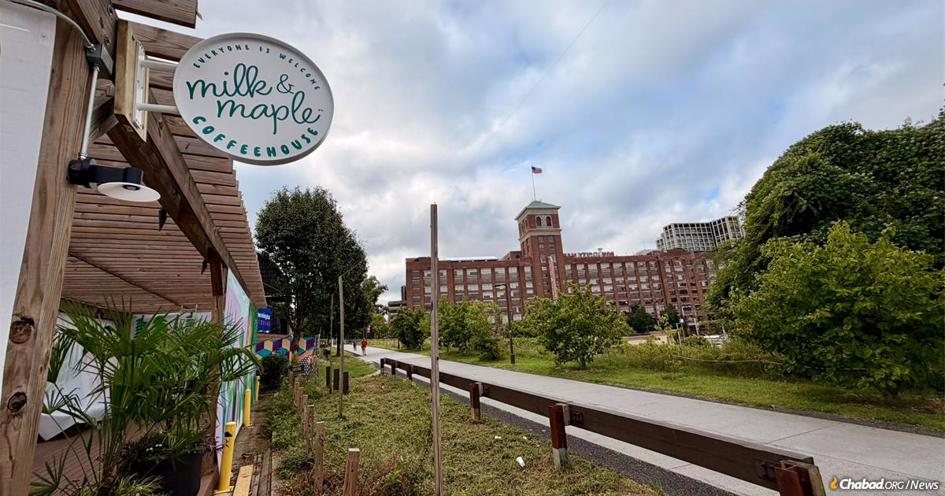
On a busy weekend afternoon, thousands of people pour through the Eastside Trail of Atlanta’s BeltLine, a decommissioned railway line that now serves as a wide pedestrian corridor for three miles through the city. They go past the former rail line, murals, breweries and rooftop bars, on their way between Piedmont Park and the crowds at Ponce City Market.
Just across from the market, they also pass a Chabad-Lubavitch center with an outdoor ordering window and a deck four feet from the path. From the trail, says Rabbi Eliyahu Schusterman, director of Chabad Intown, it’s 20 steps to the door of the new Milk & Maple Coffeehouse.
The cafe on the center’s ground floor looks like any other stop along the trail. Everything on the menu, however, is kosher, down to the chalav Yisrael dairy and pat Yisrael baked goods.
Operating under the supervision of the Atlanta Kashruth Commission, Milk & Maple soft-opened in mid-October, ahead of a grand opening set for Sunday, Nov. 1.
Jewish visitors have wandered in looking for coffee or a place to work, Schusterman says, with no idea the space was kosher. Some left with more than they came for.
“We’ve already had people who’ve signed up for our programs because they’ve seen them advertised on the walls or the doors of the café,” he says.
The Eastside Trail was the first completed stretch of what will eventually be a 22-mile loop around the city, linking 45 neighborhoods. It drew more than 2 million visitors in 2023 alone. Schusterman, who founded Chabad Intown with his wife, Dena, in 1997, saw its potential early, and in 2018 the center moved into a 21,000-square-foot building directly on the trail.
“People scooter and bike, run and they walk, so there’s all kinds of energy that goes on on the BeltLine,” he says. “There’s always people coming in and out.”
Rabbi Eliyahu Schusterman
In the summer of 1975, the Rebbe, Rabbi Menachem M. Schneerson, of righteous memory, launched a campaign encouraging Jews to keep kosher homes and eat kosher food. Citing the teaching in Tanya that what a person eats affects them physically and spiritually, the Rebbe explained that nonkosher food can cloud the natural purity a person is born with.
Milk & Maple pairs kosher food of the highest standard with a relaxed setting built to appeal to anyone walking by.
“The primary objective was to engage people,” Schusterman says. “We simply wanted to get people through the door.”
Chabad Intown went under contract on its BeltLine property in 2017, and plans for a food business took shape soon afterward. Early proposals involved Israeli-style restaurants run by outside operators, but the pandemic struck and plans went on hold for two years.
A later prospective operator wanted to open a coffeehouse but backed out, unwilling to close on Shabbat and lose a large share of weekend business.
“So at that point, we said, ‘You know, let’s just do it ourselves.’”
From the busy trail, it’s 20 steps to the door of the new Milk & Maple Coffeehouse.
The Schustermans’ daughter, Mira Levy, drew up the initial menu, sales projections and design. The Schustermans and their son-in-law, Berri Dworcan, carried the project forward.
Coffee was a deliberate choice. Restaurant customers tend to eat and leave, Schusterman explains, while coffee drinkers linger. Creating products meeting the café’s chalav Yisrael and pat Yisrael standards were harder to arrange.
“The biggest obstacle was getting kosher food here in Atlanta,” says Dworcan, Milk & Maple’s launch manager. “There’s not a big kosher scene here, so we had to source a lot from outside Georgia.”
Even so, Dworcan didn’t want customers to feel they were sacrificing quality or paying more to eat kosher.
“I wanted a cup of coffee that could compete with any other coffee shop in the area,” he says, “and pricing that’s the same as non-kosher places.”

“people are choosing to eat kosher, people are choosing to make blessings. It’s amazing,” says Berri Dworcan.
For Dworcan, a Montreal native, the café began as a business challenge. A conversation this summer changed that.
While visiting family in Montreal, he stopped at a newly launched kosher coffeehouse connected to Chabad of Westmount and spoke with the emissary behind it. The rabbi told him he had many initial expectations for the establishment. Over time, he came to see that serving kosher food was an accomplishment in its own right, even when it didn’t necessarily lead to more Jewish practice right away.
Dworcan began to see Milk & Maple the same way.
“Even if people don’t come in and put on tefillin or sign up for classes, there’s still something happening every day: people are choosing to eat kosher, people are choosing to make blessings. It’s amazing,” he says.
Not to say the cafe’s tefillin stand isn’t seeing activity. Dworcan says a few customers have already spotted it, mentioned they hadn’t put on tefillin yet that day, and done so without anyone asking.
Schusterman is planning ways to encourage Jewish women and girls to light Shabbat candles, and to share the Seven Noahide Laws with non-Jewish visitors. Flyers for courses and other Chabad programs line the space.
Some customers will put on tefillin, begin lighting Shabbat candles or sign up for a class. Others will order their coffee and leave. Either way, the mitzvah has already happened.
A Chabad Intown event at the building.
 CrownHeights.info2 days ago
by David Safdie – LinkedIn
You never know where a workday will take you.
I went out to price an asbestos testing job.
While we were talking, my client told me he had a few other problems he needed help with. So we left and walked over to his office around the corner.
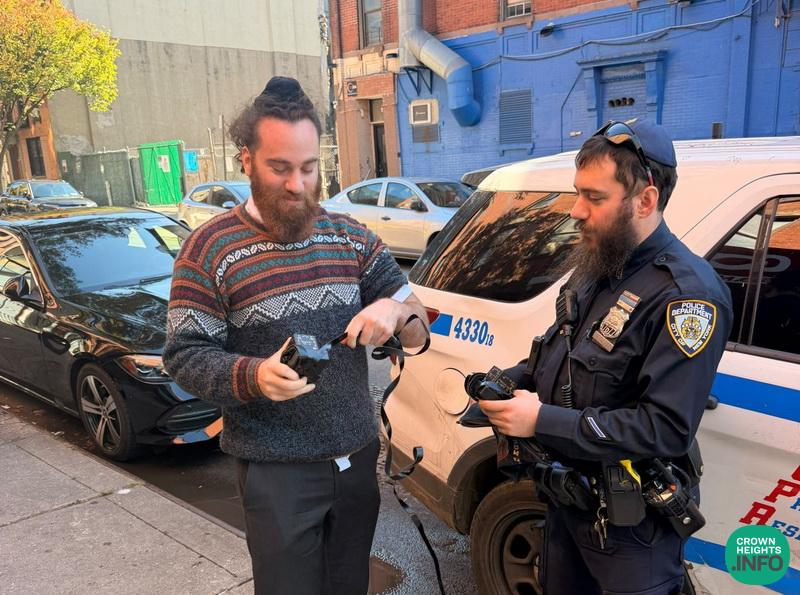
That’s when I saw him – a Jewish police officer, standing on the corner.
I waved. Introduced myself. We started talking about how he became a cop.
Then, out of nowhere, he turned to the two guys we were with and asked one question:
“Did you put on tefillin?”
One said yes.
The other said no. You could see the hesitation.
The officer kept encouraging him. And right there on the sidewalk, in the middle of an ordinary day, he put on tefillin.
I came to talk about asbestos. I ended up watching something much bigger.
It’s crazy how the world works. Glad I stopped to say hello.
CrownHeights.info2 days agoMenahem Mendel Bredoire (Paris, France) to Haya Mouchka Sebag (Paris,France)
 CrownHeights.info2 days ago
The IDF reported on Friday morning that five Israelis were injured, two critically, in a shooting attack near Judea Junction near Hebron.
The victims received medical treatment from Magen David Adom (MDA) teams, with two of them in critical condition and two in moderate condition.
The injured were evacuated to Hadassah Ein Kerem and Shaare Zedek hospitals in Jerusalem. The two moderately injured were treated at Shaare Zedek Medical Center, which said: “The condition of the injured is moderate; they are conscious and stable. After an initial assessment, they were transferred for imaging tests and further treatment.”
Read More at israelnationalnews
CrownHeights.info2 days agoMenachem and Rivka (nee Kamnitzer) Rotenberg from East Flatbush had a baby boy! Sholom Zachor: 663 Lenox Rd
 CrownHeights.info2 days ago
by Tzali Reicher – chabad.org
Less than 24 hours after a woman followed him along a Manhattan sidewalk and stabbed him in the back, Chabad rabbinical student Yosef was back in Midtown dropping in on Jewish merchants and craftsmen in the Diamond District to help them don tefillin.
The attack, in which the unknown assailant plunged what is believed to be a large syringe into his back, left him bloody but not afraid.
The 26-year-old Brooklyn resident, who recently received his rabbinic ordination, makes the trip from Crown Heights to Midtown every day, helping Jewish men put on tefillin and encouraging those he meets to take on other mitzvahs and shares Torah teachings.
Yosef was walking on West 47th Street in Manhattan’s heavily-Jewish Diamond District shortly before 6 p.m. on Wednesday when he noticed a woman stalking him. Surveillance video later posted online shows the woman ignoring other pedestrians and keeping close behind him as he tried to put a parked car between them.
As Yosef stepped out into the street, he felt a sharp pain in his lower right back. He was taken to Bellevue Hospital, while police are investigating the incident as a hate crime and are still searching for the woman.
The woman was seen pursuing another visibly Jewish man prior to following Yosef.
By Thursday he had returned to the same blocks and resumed the work of uplifting Jewish people at the businesses he regularly visits.
“I’m still shaken,” Yosef told Chabad.org from 47th Street. “I never imagined I’d be stabbed simply for being Jewish, right here in New York City. But as I try to make sense of what happened, I keep thinking about my grandparents. They survived the Holocaust, experienced the worst of hatred, and still went on to build a proud Jewish family. I know what they’d tell me now: Don’t back down. Go back out there and help another Jew put on tefillin. Do another mitzvah. Stand taller and prouder than ever. That’s why I came back today. Their answer to hatred was more Jewish life. Mine will be too. We’ll never back down. We’ll just keep spreading more light.”
 CrownHeights.info2 days ago
As we learn now about Avraham, father of the Jewish people, who began to teach and spread the idea of monotheism, we are sharing an essential letter of the Rebbe where he explains to a scientist the essence of Jewish monotheism, with a clarification of the concept of unity.
By the Grace of G-d
19th of Tammuz, 5720
Brooklyn, N. Y.
Dr.
Philadelphia, Pa.
Greeting and Blessing:
After the very long interval I received your letter as also its predecessor.
First of all, I want to thank you for your thoughtfulness in letting me know the good news about your son’s position, especially as it is such that will not interfere with his convictions and world outlook. May G-d grant that your son, as well as you and all yours, go from strength to strength in your efforts to live up to the Torah, which is called Toras Chaim, the Law of Life, and the mitzvoth whereby Jews live, with joy and inspiration.
With regard to the question which you raised in your previous letter of June 21st, relating to my statement that the essence of Jewish monotheism is that there is unity everywhere, etc., which you question, in the light of neurology, which seems to indicate that there is a duality in the human nature between the physical and spiritual aspects of a human being.
Let me further elaborate that when I spoke of unity, it was not meant to imply that there is one substance. For there can be unity in multiplicity where the various component parts are united by one idea or force which unifying factor transcends the components and constitutes their true essence. Similarly, in the case of the human being. While it is true that a human being consists of a body and a soul, and they are clearly distinct, as is seen from the fact that when the body dies the soul survives and, moreover, the body itself consists of various parts, and when one limb is amputated G-d forbid, the rest of the body remains intact; yet this does not mean that the body is not a unity, for “unity” exists where the various parts are united and complement each other, although some organs are more vital than others.
A similar situation exists in the body-soul composition and their mutual attachment.
You are of course quite right that when the body is in a state of death, the soul is not affected, for it would be nonsense to say that a bullet could affect the existence of the soul. However, this does not deny the superiority of the soul, which is on an entirely higher level than that of the body, and the living body itself is proof of the fact that the soul animates and dominates it. This could not, under any circumstances, be considered as a duality, for the two elements, the body and the soul, are not equal, but the former is the vehicle for the other.
Similarly, in the case of creation, which is like a pyramid of a multitude of things, one above the other, rising to a point of highest level, and the higher one rises in the scale of creation, the greater is the degree of unity which is perceptible.
Here again, the microcosm can serve as an illustration of the macrocosm. For, on the lower level in the human being, one finds a variety of functions, such as eating, digestion, motion, etc., which apparently are separate functions, unrelated to each other. However, on a higher level there is the nervous system which brings all these various functions into motion, and where there is not such a degree of separateness. On a higher level still there is the very center of the nervous system in the brain, which Is still more unified, and so on.
By the way, this question is directly related with the principle of ‘There is no place devoid of Him,” as is fully explained in the teachings of Chassidus, this year marking the 200th anniversary of its founder, the Baal Shem Tov.
Incidentally, since your field is chiropractic therapy, you must have applied the principle that through reaching to a higher level in the organism, it Is possible to bring about changes in various subordinate organs which bears out the point that I made in this letter.
With all good wishes, and hoping to hear good news from you always,
With blessing,
 CrownHeights.info2 days ago
With great sadness we report the untimely passing of Chaya Menucha Borenstein OBM, the young daughter of Reb Yakov Dovid and Esther Ahuva Borenstein. She passed away suddenly on Thursday, the 11th of Cheshvan, 5787.
She is survived by her parents and siblings.
The Levaya took place today in New Haven, CT. Kevurah will take place Friday, the 12th of Cheshvan, passing by 770 Eastern Parkway at approximately 10:30am, followed by the Bais HaChaim Old Montefiore at 11:30am.
Shiva information to be announced.
Boruch Dayan Hoemes
CrownHeights.info2 days agoMendel Kamman (Toronto, Canada) Miriam Prus (Doylestown, PA) L’Chaim: Tonight, Thursday, 8:00pm at Lubavitcher Yeshiva Crown Street
 CrownHeights.info2 days ago
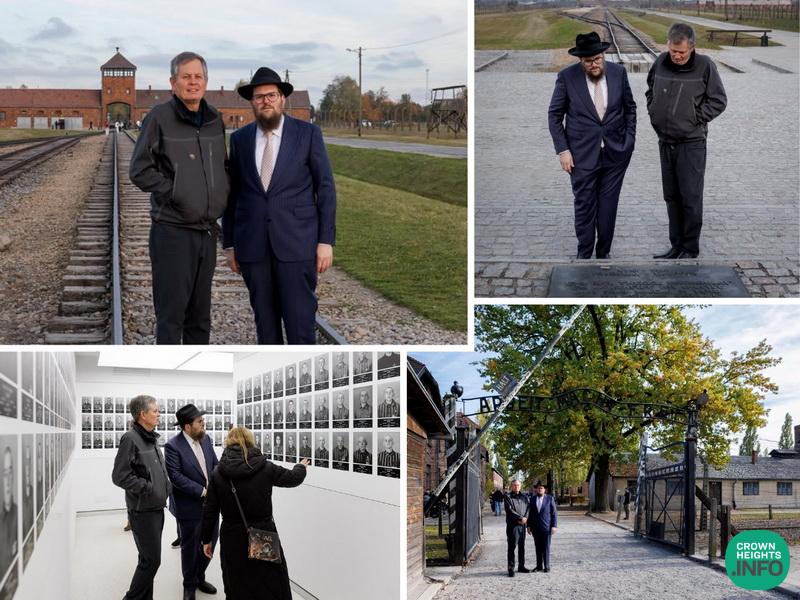
US Senator Steve Daines and Montana’s Lubavitch Shliach Rabbi Chaim Bruk traveled to Poland together to visit the The Auschwitz-Birkenau Memorial in Oświęcim, where 1.1 million people, mostly Jews, were murdered.
This was the first visit to Auschwitz for both Senator Daines and Rabbi Bruk, as well as Senator Daines’ staff who joined the trip. The visit to Auschwitz is numbing, incomprehensible, and a reminder of what happens when evil and dehumanization infects a society. This trip was almost three years in the making and was extremely educational for both the rabbi and Senator.
“Reading about it, watching documentaries, isn’t the same as walking on the blood drenched grounds, gazing at the barracks in which my relatives died of starvation and illness, and experiencing the soul crushing gas chambers”, Rabbi Bruk said, “the visit will remain etched in my heart forever and serve a catalyst to teach about love and humanity”.
Senator Daines shared that “It was very meaningful to visit Poland with my friend Rabbi Bruk as chairman of the Senate Subcommittee on Europe and Regional Security Cooperation. Seeing Auschwitz firsthand was a profound and sobering experience. It was a stark reminder of the evil genocide committed by the Nazis against the Jewish people. 1.1 million innocent men, women, and children were murdered at Auschwitz alone. I thank Rabbi Bruk for his many years of friendship and for accompanying me on this visit.”
For Rabbi Bruk the trip was especially emotional as his maternal grandfather Rabbi Shimon Goldman was born in Poland and was the sole survivor of his family. His six siblings, parents, nieces and nephews were all murdered by the nazis when he was only 15 years old. Rabbi Bruk had an opportunity to visit some of the places connected to his grandfather in Northeast Poland.
 CrownHeights.info2 days ago
Mrs. Sarah Mindel Shemtov
Click here for a PDF version of this edition of Here’s My Story, or visit the My Encounter Blog.
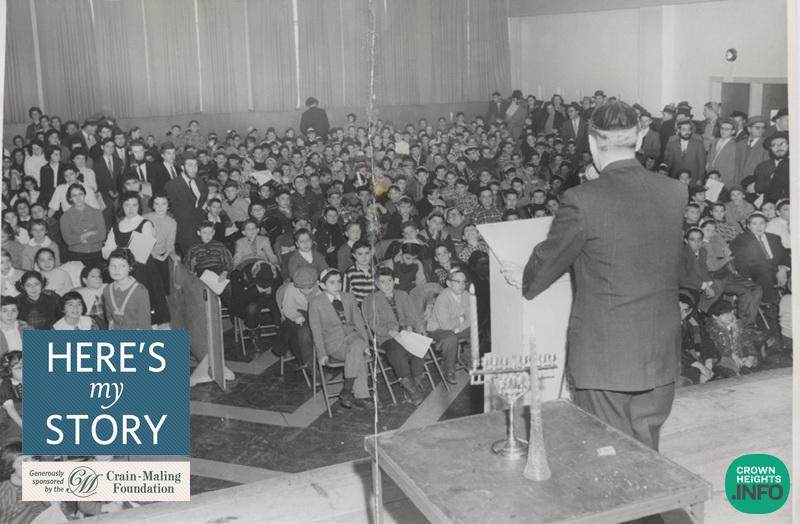
When I was growing up in downtown Montreal in the decade after World War Two, we were the only religious family on the block. This meant that we had to be role models — representing not only Lubavitcher chasidim but all Torah observant Jews.
We started at a young age. In 1954, when I was only ten and my sister Rivka even younger, we became counselors at Mesibos Shabbos, lively weekly gatherings for young girls, where we served refreshments, sang, danced and told inspirational stories.
Mesibos Shabbos — for both girls and boys — was an initiative of the Previous Rebbe, who urged his chasidim to use these gatherings as a way to excite children about Yiddishkeit. Subsequent youth activities introduced by the Rebbe — such as the large Lag B’Omer parades — were outgrowths of Mesibos Shabbos.
In Montreal, these Shabbat parties were held at the Tomchei Temimim yeshivah which was then located on Park Avenue. Both my sister and I spent much time preparing. We took this responsibility very seriously. We would look up stories in the Talks and Tales children’s magazine to tell the other girls, we popped the popcorn and prepared the candy gift bags. And we would collect all the girls from the block, who were eager to participate.
After about a year, our supervisor, Mrs. Sara Feigelstock, asked me to write a letter to the Rebbe about our activities and to include all the girls’ names. I did this with my father’s help. The Rebbe sent a beautiful response, written in Yiddish, stating how happy he was with our activities and giving us his blessing to continue spreading Yiddishkeit. He mentioned my name in the first line, which thrilled me beyond words. He wrote:
[To] the Mesibos Shabbos of Montreal, run by Sarah Mindel:
I was pleased to receive your letter, a report about the Shabbat parties and the manner in which they are conducted. Certainly, in connection with the upcoming holiday of Shavuot, the day of the Giving of Our Torah, special attention was paid to the Shabbat parties held on the weeks preceding Shavuot, to prepare the children for the holiday. Our Sages, of blessed memory, relate that when G-d Almighty gave the Torah to all Jews, as the very first condition He required that Jewish children be raised in the path of Torah. It was this assurance that made possible the giving of the Torah to all Jews.
Likewise, in every generation, when Jewish children are raised in accordance with the guidance of the holy Torah, they strengthen all Jews wherever they are, and it evokes G-d’s blessings wherever they are needed.
This idea should bring out additional drive from each one of you — amongst all Jewish children — to proceed in the path of Torah and mitzvot with strengthened energy, and to attract to yourselves all Jewish children whom it is possible to reach, so they, too, should know that they are children of Abraham, Isaac, and Jacob, and that they, too, accept the Torah from G-d, the Giver of the Torah, who protects them and blesses them materially and spiritually.
I read that letter to the other girls and I was so proud. Although I was very young — only eleven when I received that letter — it was important to me to have my efforts acknowledged.
When I became a teenager, I saw these efforts bear fruit as the young girls, whom I had recruited on my block for Mesibos Shabbos, moved on to the youth group, Bnos Chabad. This group for older girls also included many immigrants from Russia. While I was involved with it, I wrote to the Rebbe about our activities and received another beautiful letter from him:
I was pleased to learn that you are undertaking the important work of bringing Jewish girls closer to Judaism, imbued with the warmth of Chasidut. Certainly, the women of Chabad … in Montreal will help you in this, whenever you will need their assistance … The main objectives are to increase the number of members and those influenced by the organization, and also to improve the quality of the work. It is well-known that “nothing can stand in the way of determination.”
In particular, suitable ways should be found to make use of the summertime, when the children are free from their secular studies in school, and have more free time.
The Rebbe mentioned “those influenced by the organization” and I certainly saw it with my own eyes — then and in later years. There was significant impact on the families of the girls who participated in Mesibos Shabbos and Bnos Chabad. Some of the mothers began lighting Shabbat candles and keeping kosher. And quite a few of the girls themselves became religious and went on to establish Torahobservant homes.
For me, receiving these letters from the Rebbe was completely extraordinary. I and all the girls involved felt so proud that the Rebbe was pleased with our activities, and for the rest of my life I continued to devote myself to the work he was encouraging.
When I left Montreal at thirteen and came to study in New York, I continued my involvement with the Mesibos Shabbos program. I did it in New York and, whenever I returned to Montreal for holidays, I continued to do it there. I was also a counselor in the Mesibos Shabbos summer day camp in Montreal.
I didn’t stop even after I got married. I organized Mesibos Shabbos parties until the ninth month of my pregnancy with my oldest son, though I had to take a short break after the baby was born. Then, when I had my special needs daughter, Mushky, I made sure that she too experienced Mesibos Shabbos in a unique way.
I also spoke a few times in different schools about strengthening Mesibos Shabbos, because this program has been a part of me all my life.
Mrs. Sarah Mindel Shemtov, a former Bais Yaakov and Bais Rivka teacher, has been involved in various Chabad girls’ and women’s programs for over seventy years. She was interviewed in Crown Heights, Brooklyn, in August 2026.
 CrownHeights.info2 days ago
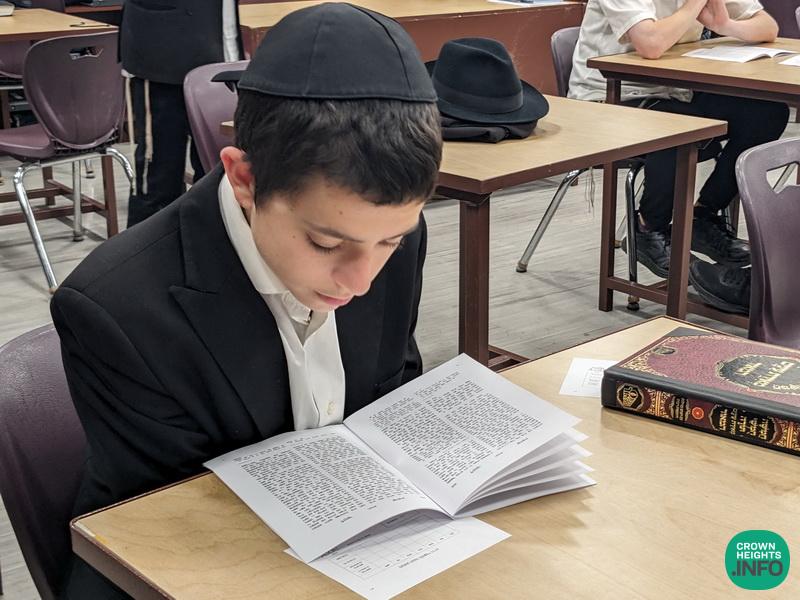
Every Shabbos, the Bochurim of Lubavitcher Yeshiva Mesivta on Ocean Parkway fan out to shuls throughout the neighborhood, Chassidish and Litvish alike, bringing the Rebbe’s Torah with them. Sometimes, though, it isn’t the D’var Torah that leaves the deepest impression.
Learning on Ocean Parkway, away from Crown Heights, the Talmidim are surrounded by a wide range of Frum Kehillos, and the Bochurim have turned that into a Shlichus.
Each Shabbos, between Mincha and Maariv, the Bochurim go out to many different Shuls and share a D’var Torah from the Rebbe.
Rabbi Scharf, Menahel of the Mesivta, shared one encounter that captures what these visits are really about.
At one Chassidishe shul, the Rav, an Einikel of a prominent Chassidic dynasty, received the Bochurim politely but with some reserve. Young Shiur Alef Bochurim from Lubavitcher Yeshiva getting up to speak before his Kehilla was not something he was quite ready for.
At some point he asked them what D’var Torah they had prepared. It was about the Alter Rebbe and his son, they told him.
“Which son?” the Rav asked.
The Mitteler Rebbe, one of the Bochurim answered, to which the Rav excitedly shared that he himself was an Einekel of the Mitteler Rebbe.
“So we’re cousins!” the Bochur exclaimed, he too was a descendent of the Mitteler Rebbe.
The ice had begun to thaw. But he still wasn’t ready to let them address his shul.
Then came Maariv. No D’var Torah, no speech, just the Bochurim davening. And the Rav quietly watched.
When Davening ended, the Rav walked over and told the Bochurim he had been so moved by the way they Davened Maariv that from now on, he wanted them to come every week, and speak.
They have been there every week since. The Rav even invited them back for Yom Tov, and the Bochurim went on Tahalucha to his Shul on Shemini Atzeres and Simchas Torah.
What won the Rav over was seeing Lubavitcher Bochurim Davening and learning like true Chassidim of the Rebbe, real Temimim of Tomchei Temimim. It was a true Kiddush Lubavitch.
It is an Achrayus the Bochurim carry with them wherever they go. In a neighborhood surrounded by so many Chassidishe Kehillos, it is never lost on them that every word they say, the way they walk and the way they act, represents the Rebbe. When people see them, they should be able to say: “Es geit a Chossid, there goes a Chossid.”
 CrownHeights.info2 days ago
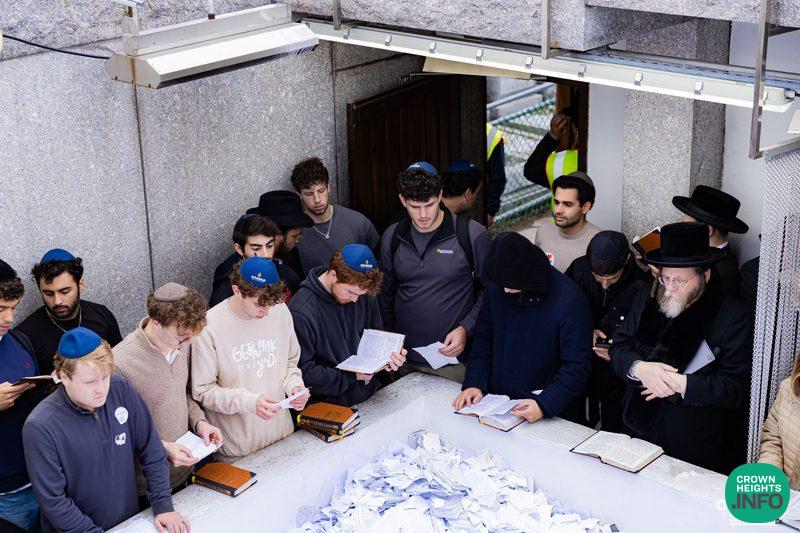
The Chabad on Campus International student Pegisha will begin shortly, with students from over 160 Universities and 6 countries arriving in Crown Heights.
Throughout the weekend, attendees will visit the Rebbe’s Ohel for prayers and reflection. For many participants, this represents the highlight of the trip and inspires them to return to campus as stronger, empowered Jews.
Organizers issued an advance notice for visitors: If you plan on visiting the Ohel this Sunday, you may experience long lines between 9:00 am -12:00 pm and 3:30 pm – 6:00 pm.
 CrownHeights.info3 days ago
by CrownHeights.info
New York City has officially reached 600 intersections equipped with red light cameras, Mayor Zohran Mamdani announced Wednesday, declaring another milestone in the city’s ongoing effort to make its streets safer.
The city insists the cameras are saving lives. According to the Department of Transportation, red-light running has dropped by more than 80% at intersections with cameras, while injuries from T-bone crashes have declined by 70%.
The administration says the expansion fulfills its commitment to public safety, with the cameras installed at intersections selected partly because of histories of crashes and injuries. City data also indicates that 95% of vehicles caught running red lights in 2025 received no more than one or two violations, while fewer than 0.7% received five or more.
That is the city’s defense. The skeptics’ concern is that a program capable of issuing tickets around the clock can become a reliable source of revenue, even when its stated purpose is deterrence. The mayor’s announcement did not provide a breakdown of how much revenue the expanded program is expected to generate, leaving residents to wonder whether success will ultimately be measured by fewer dangerous drivers or by a growing stack of violations.
For Crown Heights residents, the debate is especially familiar. Between parking enforcement, alternate-side regulations, speed cameras and the daily challenge of navigating Brooklyn traffic, many motorists already feel that driving in New York City comes with a financial penalty attached to nearly every wrong turn or moment of inattention.
With all 600 permitted intersections now equipped with cameras, Mayor Mamdani has reached the current limit under state law. Transportation safety advocates are already looking toward the 2027 legislative session to seek authorization for further expansion.
 CrownHeights.info3 days ago
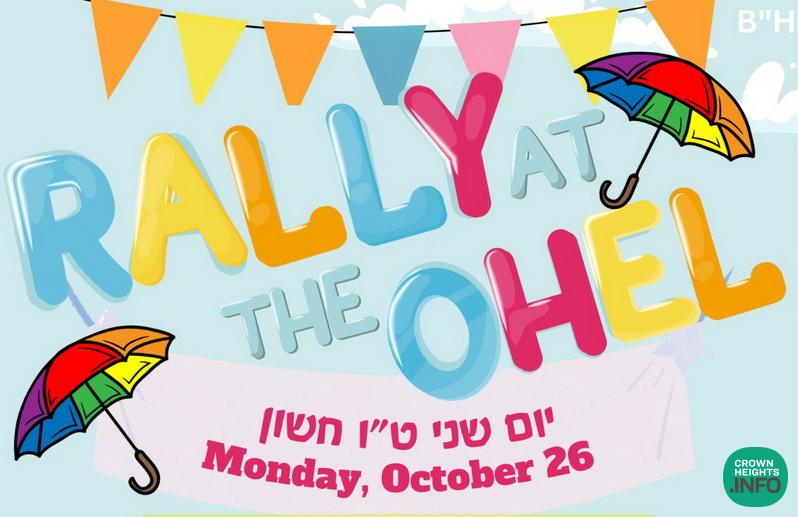
Children heading to the Ohel will have an additional opportunity to join the monthly Ohel Rally this coming Monday, October 26, with organizers announcing an added stop in Rutland and Albany for the trip.
The rally, held monthly on the second day of Rosh Chodesh, brings children together to visit the Ohel of the Rebbe, daven, recite the 12 Pesukim, sing songs, and learn about the Chassidishe Yomim Tovim in a program designed to strengthen their connection to the Rebbe.
Buses will leave from JCM at 5:00 p.m., with the newly added Rutland and Albany stop scheduled for 5:10 p.m. The return schedule lists a 7:45 p.m. stop in Rutland, with arrival back at JCM at 7:55 p.m.
The cost is $3 per child, and each child will receive their own umbrella. The evening will also include crafts and games, sandwiches, and a LEGO raffle.
Organizers encourage families to join the monthly gathering, which offers children an opportunity to connect with other young participants while taking part in a meaningful program at the Ohel.
For more information or to join the email list, contact (917) 865-2486 or [email protected].
 CrownHeights.info3 days ago
by CrownHeights.info
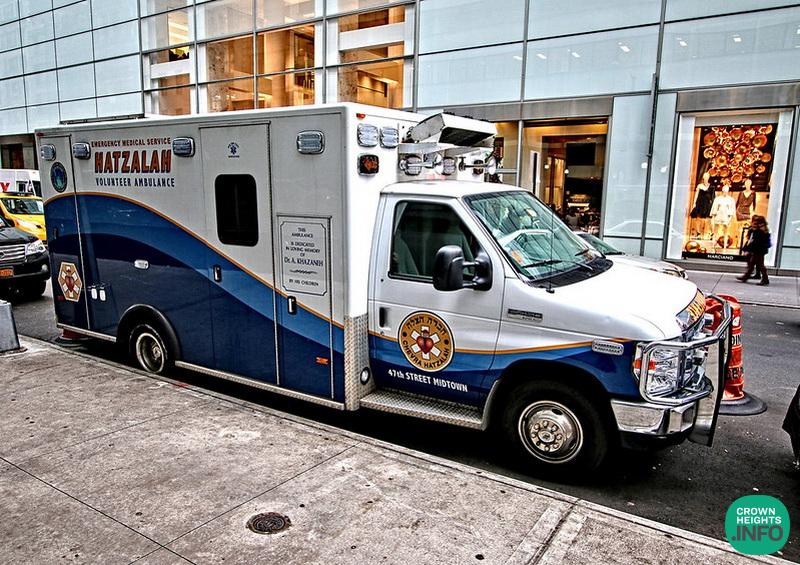
Newly released surveillance footage captures the moment a Lubavitcher man from Crown Heights was stabbed from behind in Midtown Manhattan on Wednesday evening, in an attack being investigated as a suspected hate crime.
View this post on Instagram A post shared by Manhattan Shomrim Safety Patrol (@mssp.shomrim)
As previously reported on CrownHeights.info, the incident occurred at approximately 5:30 p.m. near Fifth Avenue and West 47th Street, in Manhattan’s Diamond District. The footage shows a woman approaching the visibly Jewish man from behind and striking him with a sharp object before fleeing the scene.
Additional witness accounts have raised concerns that the victim may have been deliberately targeted because of his Jewish appearance. The woman was reportedly seen approaching another Jewish person and going after them as well, while passing multiple non-Jewish pedestrians without attacking them. These accounts have intensified suspicions of an antisemitic motive, though the circumstances and motive remain under investigation.
Hatzalah responded to the scene and transported the victim to Bellevue Hospital, where he was reported to be in stable condition.
The suspect was described as a woman in her 30s, approximately 5 feet 9 inches tall, wearing blue jeans and white sneakers, with a dark sweater tied around her waist. She reportedly fled west toward Sixth Avenue.
The NYPD’s Hate Crimes Task Force is investigating the incident. Anyone with information that could help identify the suspect is urged to contact the authorities.
 CrownHeights.info3 days ago
by CrownHeights.info
A Lubavitcher man from Crown Heights was stabbed from behind in Manhattan tonight, Wednesday, near Fifth Avenue and West 47th Street, in what is being reported as a suspected hate crime.
The stabbing occurred at approximately 15 W. 47th Street, according to preliminary emergency communications. The victim was treated at the scene by Hatzalah and transported to Bellevue Hospital in stable condition.
Initial reports indicate that the suspect is a woman in her 30s who allegedly approached the victim from behind and stabbed him. She is described as a white female, approximately 5 feet 9 inches tall, wearing a shirt, blue jeans and white sneakers, with a dark sweater tied around her waist.
The suspect reportedly fled westbound toward Sixth Avenue following the stabbing.
Authorities have reportedly classified the incident as a suspected hate crime. Further details, including the victim’s identity, the circumstances leading up to the attack and whether the NYPD has made any arrests, were not immediately available.
This is a developing story and CrownHeights.info will provide updates as more information becomes available.
 CrownHeights.info3 days ago
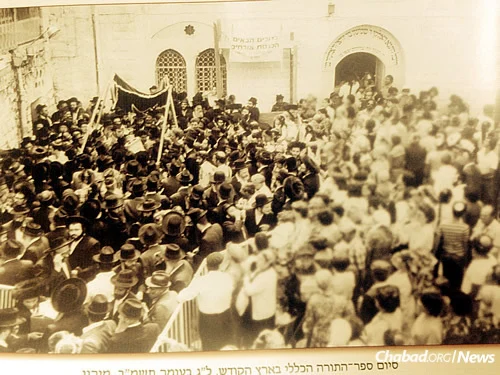
On Sunday evening, thousands will fill La Rural, the sprawling exhibition center in Buenos Aires, Argentina, to watch and celebrate as the final letters are inked into the 12th Unity Torah Scroll, the Torah that belongs, quite literally, to hundreds of thousands of Jews around the world.
The event takes place on Oct. 25 (14 Cheshvan) at 5:30 p.m. local time (4:30 p.m. Eastern). It will be broadcast live on Chabad.org, so Jews everywhere can share in the celebration as it happens. Distinguished guests include Rabbi Kalman Ber, Chief Rabbi of Israel and President of the Chief Rabbinate Council; and Rabbi Tzvi Grunblatt, regional director and chairman of Chabad-Lubavitch institutions in Argentina.
The completion will be followed immediately by begining the writing of the first letters of the 13th Unity Torah.
The first Unity Torah scroll had been initiated in 1981 by the Rebbe—Rabbi Menachem M. Schneerson, of righteous memory—and overseen by Rabbi Moshe Shmuel Oirechman of Chabad of the Krayot, a cluster of towns north of Haifa, Israel.
Speaking on the eve of Rosh Hashanah, called for a Torah to be written to unite all of Israel, in which every Jew could acquire a letter, and urged that it be done as soon as possible. Jews differ from one another, the Rebbe explained, each with a unique mission in life. What unites them all is the one eternal Torah, shared equally by every Jew.
The Rebbe specified that there be no set price per letter, and letters could be acquired on behalf of both the living and the departed.
Quickly, the first scroll was begun in Jerusalem by the venerable scribe Rabbi Shlomo Aharon Henig. By the time it was finished the following spring, 304,805 people had been included—one for each letter in the Torah.
Since then, scroll after scroll has been written for the Jewish people.
In 2015, the seventh scroll became the first to leave the Holy Land. It was completed amid thousands of emissaries at the International Conference of Chabad-Lubavitch Emissaries in Brooklyn, N.Y., and placed in the synagogue adjacent to the Ohel, the Rebbe’s resting place in Queens, N.Y. The eighth Torah, completed in 2021 in Toronto, was dedicated in memory of Avremele Lieberman, the young son of Chabad emissaries Rabbi Mendy and Itty Lieberman.
With the 12th scroll’s completion, the Unity Torah project will span more than 3.6 million letters. Each one stands for a Jewish soul, bound together in a single scroll.
Watch the completion live on Chabad.org, Sunday, Oct. 25, at 4:30 p.m. ET. and click here get your letter in The 12th Unity Torah.
 CrownHeights.info3 days ago
In shloshim yom, on 10 Kislev, we will be commemorating the 200th anniversary of the Mitteler Rebbe’s chag hage’ulah.
The Mitteler Rebbe embodied Chassidus to the point that his very life force and energy was defined as Chassidus.
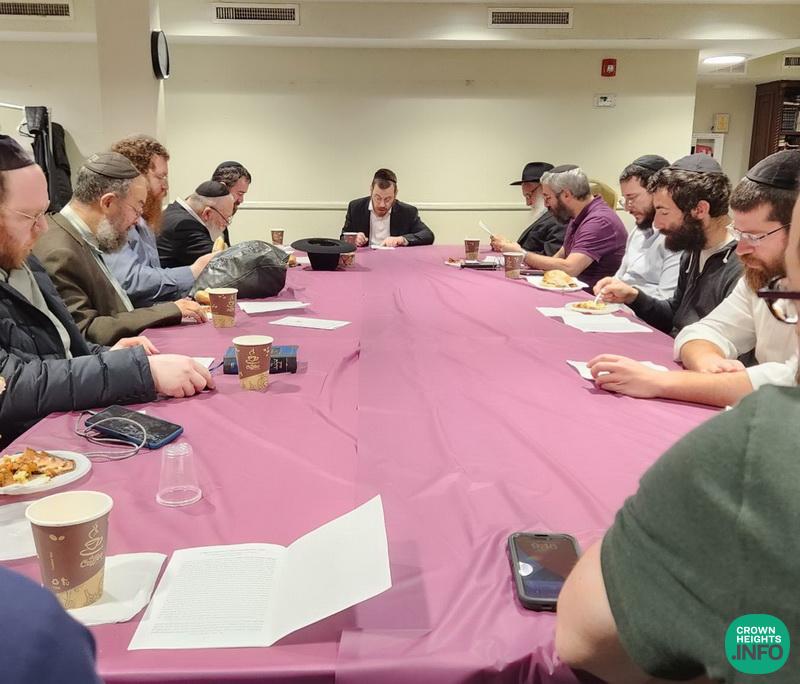
In honor of this momentous anniversary, join Rabbi Shmuel Wagner, as he teaches the Mitteler Rebbe’s fundamental ma’amar of Padah Beshalom.
Found in the Mitteler Rebbe’s sefer Sha’arei Teshuva (the first sefer of his own ma’amarim that he sent to print!), this landmark ma’amar lays the groundwork for all the subsequent Padah Beshalom ma’amarim – arguably the most common dibbur hamaschil throughout Chassidus!
Beginning with a brief history of the Mitteler Rebbe’s arrest and liberation, and the context of this sefer and this ma’amar, Part 1 launches into Perek Alef, where the Mitteler Rebbe analyzes the physical imagery of two enemies wrestling, highlighting the ironic paradox of two polar opposites uniting in the strongest bond possible. This provides a crucial insight into the war of the two souls during Davening, emerging with a fascinating conclusion that specifically when one has machshavos zaros during Davening does one know that he is optimally utilizing the opportunity of this special experience!
The shiurim can be found on Spotify, Apple Podcasts, Amazon Music, and 24Six, under “Chassidus Explained”, where hundreds of listeners enjoy, as one listener describes it, “A ma’amar with Rabbi Wagner is simply different than any other method”.
Currently in its 5th year, with over 130 shiurim on close to 50 ma’amarim, Chassidus Explained is set out to be “Chassidus that Speaks Your Language!” With an emphasis on clarity and relevance, each shiur spends time explaining the pesukim, topics, and concepts discussed in the maamar, in a thorough, yet concise manner. Using the historical context of when it was said, each ma’amar is introduced with a comprehensive backdrop, infusing an extra dose of excitement and insight to the chidush and toichen of the ma’amar itself.
As we enter 30 days before this historic Yud Kislev, fulfill the Mitteler Rebbe’s wish by rekindling your passion for Chassidus with an enjoyable weekly shiur!
Sha’arei Teshuva Dibbur Hamaschil Padah Beshalom Part 1: Praying To Win
CrownHeights.info3 days agoShmuel Rosenblatt (Brooklyn, NY) to Devora Twersky (Chicago, IL) L’Chaim: Tonight, Wednesday, 8:00pm at Lubavitcher Yeshiva Crown Street
 CrownHeights.info3 days ago
by CrownHeights.info
One individual has been arrested in connection with a package theft following a swift response by Crown Heights Shomrim and officers from the NYPD’s 67th Precinct.
According to a notice released by Crown Heights Shomrim, the coordinated response led to the arrest, highlighting the importance of community vigilance and cooperation with law enforcement in addressing theft and other neighborhood concerns.
Shomrim encourages residents to remain alert and report suspicious activity promptly.
Residents who witness suspicious activity or need assistance can contact Crown Heights Shomrim at 718-774-3333.
If you see something, say something.
 CrownHeights.info3 days ago
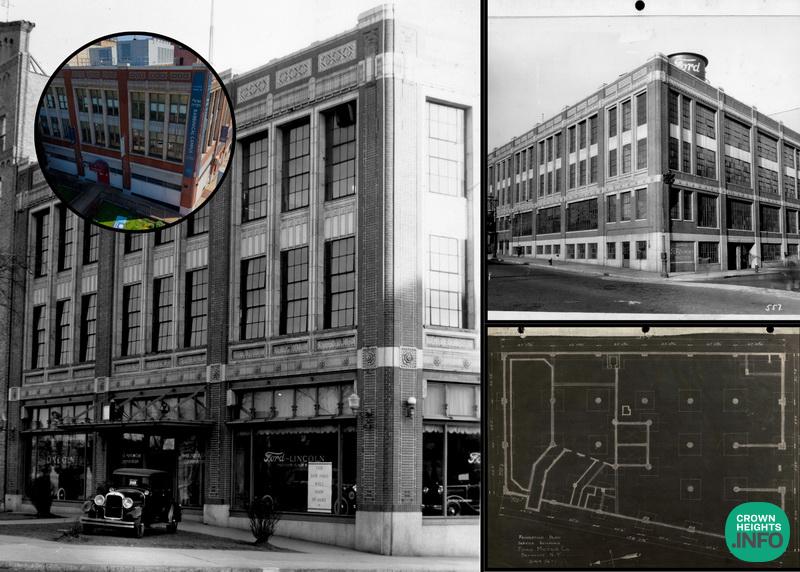
A call to an Oholei Torah alumnus led to a discovery in Ford Motor Company’s archives that is saving the Yeshiva approximately $200,000 and six to eight weeks of work.
At 402 Eastern Parkway, Oholei Torah is moving forward with plans for the new Oholei Torah Rabbinical Campus, with the goal of opening for the 5789 shnas halimudim.
This past summer, Oholei Torah retained New York Major as the owner’s representative and contractor, and a leading architectural firm, FMA, which has extensive experience designing Yeshivos. NYM assembled a team of engineers, interior designers, and other specialists to bring the vision for the campus to life. Planning and design are expected to continue for approximately four more months.
As the team assessed the existing building, locating its original structural drawings became a crucial part of the planning process. Oholei Torah hired a company to search for the records through the New York City Department of Buildings. To the team’s surprise, the search yielded some documents, but not the original plans.
Since the Department of Education had rented the building for approximately 40 years for use as a public school, Oholei Torah then contacted the School Construction Authority, which manages construction and renovations for city schools. The SCA shared additional records, including plans from past renovations, but the original structural drawings the team needed most remained missing.
Without the original plans, the team faced the prospect of spending weeks piecing together information that had once existed on paper. Engineers would need to conduct extensive measurements, scans, structural probes, and testing before key design work could move forward.
Then, during a meeting, a familiar name came up. Rabbi Mendel Blau, Roish Moissed, mentioned to Rabbi Yehoshua Lustig, Menahel K’lali, that their former Beis Medrash classmate, Shlomo Kleinman, works at Ford Motor Company in Dearborn, Michigan. Since Ford had originally built 402 Eastern Parkway in 1916 as a showroom, perhaps its archives still held the original plans.
Rabbi Lustig reached out to Shlomo, who was more than happy to help.
“I have such great memories of my years in Oholei Torah Beis Medrash,” Shlomo said. “It means a lot to me to play a part in preparing a new Zal for the next generation of Oholei Torah bochurim.”
Shlomo contacted his colleague, Leslie Armbruster of the Ford Motor Company Archives department. She searched Ford’s extensive archives and found what the team had been seeking: the building’s original plans. More than a century later, those drawings are proving invaluable to the team preparing the building for its new use.
“I was delighted to find the drawings of your building, and am happy to have been able to save your organization both time and money. It’s a lovely reminder of the importance of the work that my team and I do in the Ford Motor Company Archives,” said Leslie.
The impact was substantial. According to Yiddi Nussensweig of New York Major, the drawings are saving approximately $200,000 and six to eight weeks of investigative work. While scanning, physical probes, and testing will still be needed, the original plans significantly reduce the extent of that work by giving engineers a clearer understanding of the building’s structure.
The campus is planned to span more than 100,000 square feet, with three large Zals, a state of the art mikvah, classrooms, dedicated rooms for mashpiim, a student lounge, and additional spaces to support the daily learning and needs of the bochurim.
The project comes as enrollment continues to reach record levels. This year, Oholei Torah welcomed 540 Beis Medrash talmidim, an increase of 75 over the previous year. Despite considerable efforts to expand capacity, more than 100 applicants still had to be turned away. The new campus is being planned to meet that growing demand and provide room for the years ahead.
“We are deeply grateful to Ford Motor Company for generously responding to our request and making these historic plans available to us,” said Rabbi Lustig. “We especially appreciate the support of Ford Archives and Leslie Armbruster, along with Shlomo Kleinman for helping connect us with the right team. Ford’s generosity has saved the Yeshiva valuable time and resources and helped move us closer to opening the new campus.”
The plans once used to build a showroom are now helping prepare a home for Torah, making room for Oholei Torah’s future.
 CrownHeights.info3 days ago
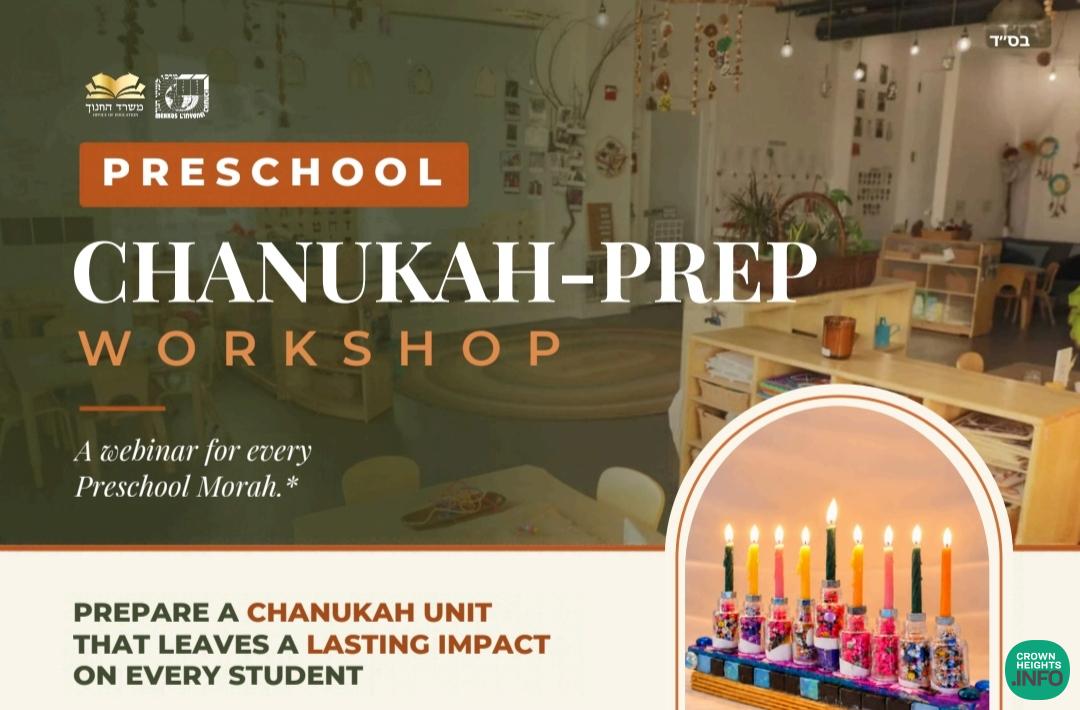
The Merkos Chinuch Office is launching a new four-part pre-Yom Tov professional development series for Preschool Morahs. The series will be led by Mrs. Shterna Rappaport, Educational Director of the Merkos Chinuch Office and an Early Childhood Professional.
The series opens with the Preschool Chanukah-Prep Workshop, a webinar to be held on Wednesday, October 28, י”ז חשון, at 8:30 PM via Zoom. The workshop is designed to give Preschool Morahs a clear direction, outline, and set of practical ideas for teaching Chanukah in a way that leaves a lasting impression on young students, along with tools they can bring into the classroom immediately.
Workshop will include the Chanukah story through the lens of Chassidus, a suggested teaching storyline for young learners, Chanukah-themed ideas for centers and activities, Torah values and Yiddishkeit lessons drawn from the storyline, and social-emotional growth rooted in the Chanukah story. Participants will also receive ready-to-use classroom resources.
Mrs. Rappaport brings many years of experience teaching in and directing preschools. Most recently, she has mentored Preschool Morahs on best practices and strategies for actively engaging young learners.
The workshop is free of charge. Registration is required to receive the Zoom link, and all registrants will receive access to the recording.
Registration is available at chinuchoffice.org/preschoolwebinar.
About the Merkos Chinuch OfficeThe Merkos Chinuch Office, a division of Merkos 302, serves mechanchim, mechanchos, principals, and schools across the Global Chabad network, coordinating initiatives in curriculum development, professional development, educational technology, events and more.
**Contact info:**Merkos Chinuch Office
[email protected]
Oplus_16908288
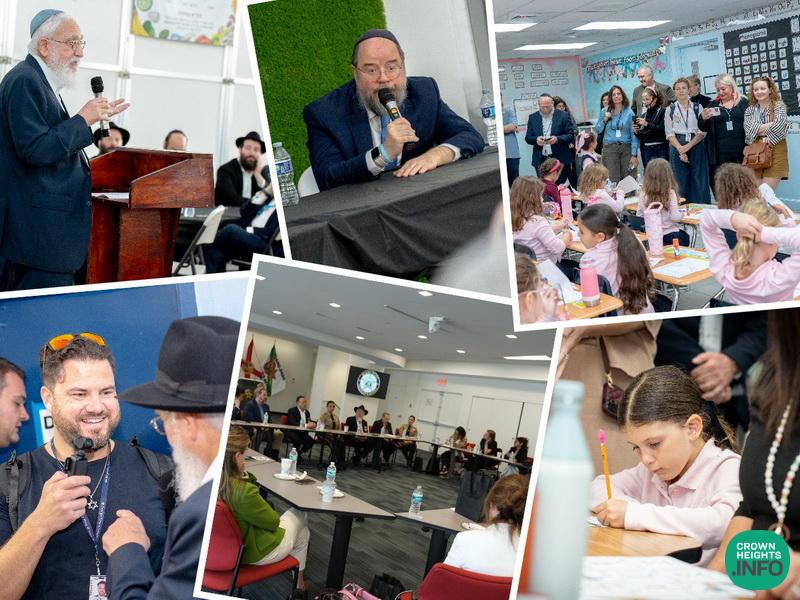 CrownHeights.info3 days ago
A delegation of international journalists from twenty countries visited Miami’s Lubavitch Educational Center last week as part of a U.S. Department of State-sponsored reporting tour focused on efforts to combat antisemitism.
Hailing from countries like Argentina, Ireland, Romania, Norway, and Malaysia, the journalists took the opportunity to interact with local shluchim, discuss the role media plays in antisemitism and see how Jewish life is thriving in Florida.
The journalists participated in a panel discussion featuring local Chabad rabbis and community leaders, exploring Jewish life in America, the challenges of antisemitism, and the role of education and community engagement in addressing it. The program was moderated by Rabbi Yakov Garfinkel, Principal of LEC’s Boys Middle School, who served as master of ceremonies, introduced the speakers, and facilitated the exchange between the journalists and community leaders.
The delegation heard from Rabbi Yaakov Fellig of Chabad of Coconut Grove, Rabbi Yosef Vogel, Director of the Center for Universal Values at the Jewish Learning Institute, Rabbi Yossie Denburg, dean of Lubavitch Hebrew Academy, Mr. Danny Aqua, Director of Special Projects at Teach FL, and Mr. Zalman Myer-Smith, director of Chabad Security Center of Florida.
“When your government gives you the power to write, you have the obligation and honor to write the truth,” Rabbi Yossie Denburg told the journalists in his remarks. “G-d did not send you here by accident. You are here because you have been given a job to change the narrative, the trajectory of what your readers hear, see, and think.”
Led by Rabbi Yossi Zavdi, LEC’s associate Head of School, the group toured LEC, the largest Jewish school in the Southern US. They interacted with teachers and students in Judaic and general studies classes, heard about their curricula and extracurricular activities, and got to see what an authentic Jewish education looks like for American Jewish children. “They left very impressed with our curricula and education model, and specifically our student-teacher engagement,” said Rabbi Zavdi.
Prior to the event at LEC, the group met with Rabbi Benjy Korf, LEC’s head of school and regional director of Chabad of Florida, and Miami-Dade Sheriff Rosie Cordero-Stutz, for a conversation about how cultural awareness and community partnerships support law enforcement efforts to combat antisemitism and protect the safety and dignity of every community.
“Judaism taught the world the idea of ethics and morals,” Rabbi Korf told the journalists. “It stems from freedom from slavery, teaching the world that each human being was made in the image of G-d. G-d gave the Jews the Ten Commandments at Sinai, which was the basis of morality. We don’t need to be lectured by those who have persecuted, expelled, and murdered Jewish communities en masse throughout history. We continue to spread the light of positivity one good deed at a time to make this world a better place.”
Participating shluchim also included Rabbis Shloimy Denburg of Lubavitch Hebrew Academy, Yisroel Frankforter of French Chabad, Alex Kaller of Chabad of Chabad Russian Center, Menachem Mendel Korf of LEC, Moishy Korf of Chabad of Florida, Sholom Ber Korf of Chabad of Lakeview, Mendy Levy of Chabad Chaplaincy Network, Shmuli Lezak of Chabad of Bayshore, Chaim Lipsker of Chabad of Downtown Miami, Chaim Stern of Chabad of Mid Miami Beach, and Mendel Sossonko of Chabad of South Beach.
Photos by Dovid Davidsohn
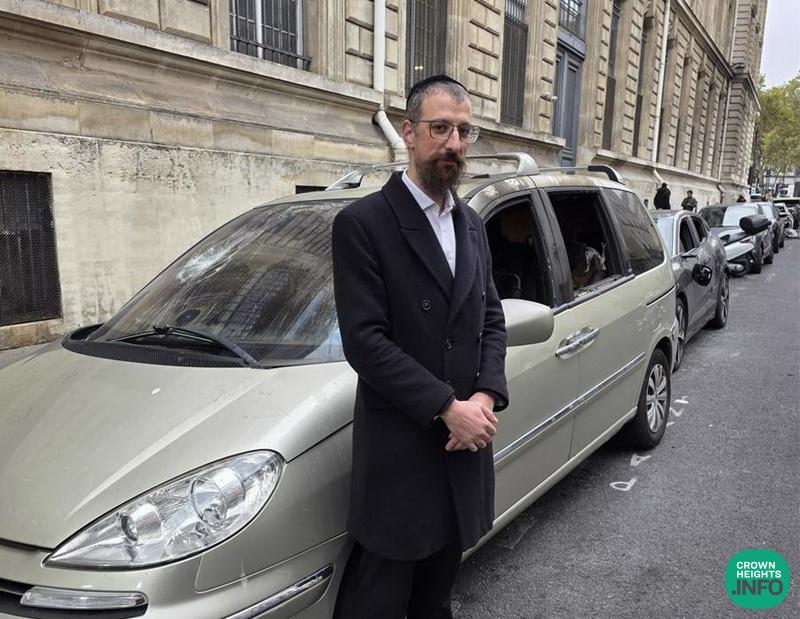 CrownHeights.info4 days ago
by Tzali Reicher – chabad.org
When Rabbi Meir Shlomo Lubecki walked out of his Chabad center, Beth Loubavitch Paris 3, on Saturday night, the streets of central Paris looked like a war zone.
“You’ve never seen anything like this,” said Lubecki, who directs Chabad of the 3rd Arrondissement, a short walk from Place de la République. “Everything on the ground was torched: cars, shops, bicycles.”
France is still reeling after a weekend of anti-government demonstrations devolved into some of the country’s most destructive riots in decades. More than half a million people joined some 110 marches across the country on Saturday, according to the Interior Ministry.
Protests that began weeks ago with high school students swelled to include unions and others angry over the cost of living, before opportunistic rioters vandalized roughly 1,500 shops. The government estimates that at least 3,000 businesses nationwide were pillaged.
Nearly 2,400 people were arrested, and localized curfews are being extended into Tuesday night.
In Paris, much of the violence converged on Place de la République, near which several Chabad emissaries live, pray and serve the local Jewish community.
FreCha / WikiCommons
The Saturday demonstration had been planned for two weeks, and as Shabbat approached, warnings circulated through the Jewish community. Lubecki checked with his contacts, was told things would likely be fine, and kept his schedule, including a women’s class set for 6 p.m.
Shabbat morning began quietly, and the minyan gathered as usual. Then, around noon, during Kiddush, members of the Jewish community’s volunteer security service arrived with news. The march wasn’t scheduled to begin until 2 p.m., but by 12:30, things were already heating up at République.
“He told everyone to leave,” Lubecki recalled. “Everyone had to go straight home immediately.”
Lubecki, his wife Chaya and their children remained and ate their Shabbat meal at the Chabad House. When they stepped outside around 3 p.m., they quickly turned back and locked the doors.
No women came for the class that evening. But eight men made their way in for Minchah services.
The Cohen’s car had its windown broken and burnt from the inside, totally destroying it.
Rabbi Moyche (or Moshe) Cohen, who has directed Beth Loubavitch Paris 11 – Republique in the area with his wife Tzipora since 2010, has grown used to demonstrations on his doorstep.
Since Oct. 7, he said, nearly every protest in Paris gathers at République, often with flags of Hamas and other terror groups. But they typically stay away from harassing or confronting Jews overtly.
This Shabbat, though, the energy was different.
The morning at shul was calm. By the time the Cohens came home at 2 p.m., protesters were everywhere, even their own street. That crowd, Cohen said, was loud but not especially violent. When he headed back to shul at 6, the scene had changed. The afternoon marchers had gone home, and new groups from outside the area had replaced them.
“They organized themselves in groups of 10, with Molotov cocktails,” he said. “Baruch Hashem, they were busy with the police and nothing happened to us.”
Around them, there were fires and smashed storefronts; stolen bicycles were piled up and set ablaze. After Havdalah, Cohen found that the windows of his car had been smashed, and the vehicle had been burned on the inside, totally destroying it. Security footage showed that it had been torched during Shabbat, along with every other car on the street.
Rabbi Cohen has been visiting community members, checking mezuzot and showing support.
As soon as Shabbat ended, the Lubecki family got in and drove toward their home, in a calmer part of the city. Phone calls poured in—“Don’t go out, it’s dangerous!”—but they were already on the road.
“We ran every single red light. Everyone was running red lights because stopping the car was too dangerous,” he said. Masked young men and women surrounded the streets. Once they reached their own neighborhood, “it was like a whole different world. People were walking around, shopping. It was as if we had moved to another country.”
The next morning, Lubecki returned to the Chabad House through streets of charred wreckage. Inside, the minyan met, and children arrived for Talmud Torah.
“A regular Sunday morning,” he said, “as if there had been a war the night before, and we just resumed.”
On Sunday, Cohen began calling Jewish-owned stores in the area. One owner told him the rioters had broken in and taken everything. Lubecki, too, has been fielding calls from shop owners whose businesses were burned; one sent him photos of the damage, noting that his store had held precious letters and telegrams he had received from the Rebbe.
Both rabbis have been visiting affected business owners, and Cohen is organizing help to cover losses that insurance will not.
Cohen is careful not to overstate the danger to Jews specifically. Some in his community, he said, are frightened by reports that Jews were singled out—something he did not see.
“It wasn’t about the Jews,” he said. “They were chasing what they wanted: shoes, phones, glasses. Jewish and non-Jewish businesses alike were hit.”
Instead, he has been distributing mezuzahs and encouraging community members to have their mezuzahs checked.
“That’s how we have to think,” Cohen said. “Not to be afraid of the protestors or wait for the government to do something. Our mission is to teach people to believe, and to show them G‑d’s hand, even when it’s painful.”
As France braces for possible further demonstrations this coming weekend, the Chabad emissaries of central Paris say they aren’t going anywhere.
“Whatever our people need, we are here,” said Cohen. “It’s hashgachah pratit that we’re here, and we will continue to proudly do the Rebbe’s work.”
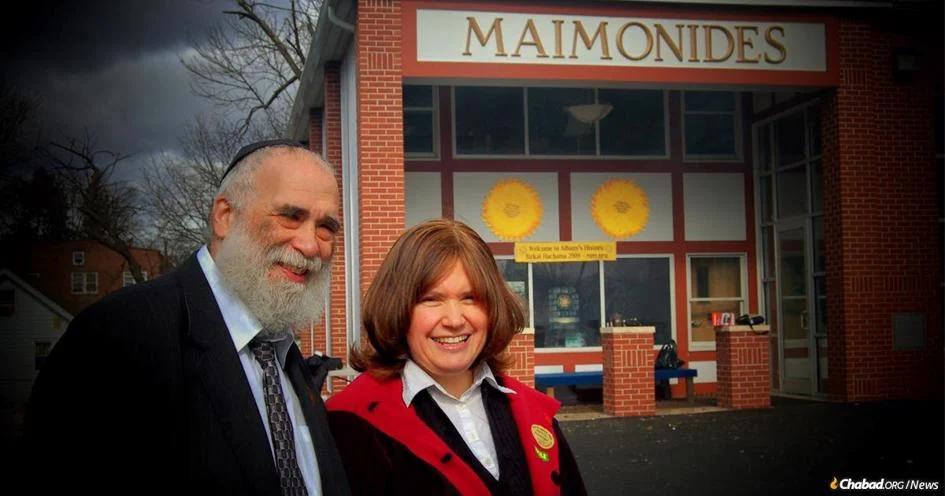 CrownHeights.info4 days ago
by Motti Wilhelm – chabad.org
“My Name is Yisroel Rubin,” the flyer blared in large, stylized letters.
The year was 1975, and Chaim Potok’s My Name is Asher Lev, about a boy from a fictional Chassidic group in Brooklyn, had recently appeared in a mass-market paperback edition. The book was everywhere, and anyone seeing the flyer would have known exactly what the young Chabad-Lubavitch emissary was referring to.
“But unlike the fictitious Asher Lev of the bestseller book,” his flyer continued, “I feel Chassidism is relevant and can offer much to the contemporary scene.” This was followed by details of Rubin’s weekly discussion group on campus at the University of Albany (then known as SUNY Albany), and how to reach him directly.
Rubin and his wife, Rochel, had arrived in Albany, N.Y., just a year earlier, in 1974. The capital of the state home to the largest and most prominent Jewish community in the world, Albany in fact had a Jewish history stretching back to the 1830s. But when the Rebbe, Rabbi Menachem M. Schneerson, of righteous memory, sent the couple to establish Chabad in the city, they found little by way of vibrant Jewish life. The new generation of Albany’s Jews was largely unaffiliated, and the classic Jewish communal institutions were not being very successful drawing them in.
So Rubin got creative. In fact, he didn’t even begin with a synagogue or a community center. He went with matchbooks and a hot dog cart.
The flyer for Rubin’s weekly Torah and dicussion class at the University of Albany in 1974.
The matchbooks, a popular promotional item in the 1970s, carried messages encouraging Jewish women and girls to light Shabbat candles. The hot dog cart, serving strictly kosher hot dogs, gave Jewish legislators at the State Capitol, university students and local residents an opportunity to enjoy a kosher meal. Above the cart was a “mitzvah umbrella,” emblazoned with the words “For Heaven’s Sake, Do Something!” alongside messages encouraging students to perform a mitzvah.
This was an era when Chabad’s outreach model was still taking shape. There was no extensive network of centralized programming to draw upon, no established playbook to guide his mission of bringing fellow Jews closer to Judaism. So Rubin helped write the playbook, developing new ideas, putting them into practice, learning what worked and building on each success.
The matchbooks and hot dog cart were only the beginning. Over the years, Rubin launched dozens of major initiatives and countless smaller projects that would leave a lasting impact on generations of Jews in Albany and beyond.
In time Rubin spearheaded the establishment of more than a dozen Chabad centers and institutions serving New York’s Capital District, along with numerous additional Chabad centers across northeastern New York. He also authored and published Torah works that reflected his distinctive approach to learning, offering fresh perspectives on familiar texts.
Encouraging Jewish women and girls to light Shabbat candles every Friday night before sundown.
Rubin passed away on the evening of Shemini Atzeret, Oct.2, at the age of 78, shortly after participating in the traditional hakafot celebration at Congregation Shomray Torah, the Albany synagogue he led. His passing came almost exactly 52 years after he first arrived in Albany, a half-century during which he built dozens of community institutions, touching thousands of lives in the Capital Region and far beyond.
“Rabbi Rubin leaves behind a tremendous legacy, serving as a Chabad emissary for the Capital Region for 52 years and playing an instrumental role in shaping the region’s Jewish community,” New York Gov. Kathy Hochul told JNS. She recalled his visits to the governor’s residence to celebrate Chanukah and to her office to mark the Rebbe’s birthday. “May his memory forever be a blessing.”
“Rabbi Rubin was truly an original,” said Rivkah Goldstein, who worked with him for over a decade and now serves as development director of TheYeshiva.net. “He combined the depth of a serious Torah scholar with the imagination of an innovator, the energy of a pioneer, and the humility of someone whose ambitions were never about himself.
“He leaves behind institutions, publications, programs, and generations of people touched by his work,” she said. “But perhaps one of his greatest legacies is the example he set: that being deeply rooted in Torah need never limit one’s creativity; that the Rebbe’s vision of reaching every Jew invites endless possibilities; and that true leadership is not only about what one accomplishes, but about what one inspires others to accomplish. Rabbi Rubin showed us what was possible. And, just as importantly, he helped us discover what was possible within ourselves.”
Rabbi Yisroel and Rochel Rubin
Yisroel Eliezer Rubin was born in Brooklyn, N.Y., in 1948 (he often rendered his name Israel in English.) His parents, Rabbi Moshe and Yocheved Rubin, had married the previous year, after his father, a native of Poland, escaped war-torn Europe, found refuge in Shanghai alongside thousands of other Jewish refugees and eventually immigrated to Montreal.
Shortly after Yisroel’s birth, the family returned to Montreal, where Rabbi Moshe Rubin worked as a shochet, a ritual slaughterer. But his true passion was the study of Chassidut, to which he devoted every spare moment, along with hours of prayer marked by intense fervor and devotion.
It was that devotion to prayer that brought young Yisroel into his first encounter with Albany, long before he could have imagined that the city would one day become his life’s work.
At the age of eight, he accompanied his father on a train journey from Montreal to New York to attend the Rebbe’s farbrengen marking 19 Kislev, the anniversary of the first Chabad Rebbe’s release from a Czarist prison. On the return trip, as evening approached, Rabbi Moshe Rubin stood up to daven mincha, the afternoon prayer. Just then, the train pulled into Albany station, where an unexpected announcement informed passengers that their car was being detached. Everyone aboard had just two minutes to move to another car.
But Rabbi Moshe, deeply engrossed in his prayers, did not budge. His young son stayed beside him, anxiously watching as the other passengers hurried off, fearing they would be left stranded in Albany. Yet the train did not depart. For another 15 minutes, Rabbi Moshe continued praying, oblivious to the commotion around him. Only when he had finished and the two had made their way to another car did the train finally begin to move.
A young Rabbi Rubin
As a child and young teenager, Yisroel studied at the Chabad yeshivah in Montreal, which had been founded and was led by his father’s fellow refugees who had also escaped Poland and found refuge in Shanghai.
Throughout those years, he also traveled regularly to New York to spend time in the Rebbe’s presence and attend farbrengens marking significant dates on the Chassidic calendar. It was at one such farbrengen that he experienced a revelation that would help shape his distinctive approach to Torah study and, ultimately, much of his life’s work.
“I remember standing at the Rebbe’s farbrengen, a fifteen-year-old on a visit to New York,” Rubin recalled in a 2018 interview with Jewish Educational Media’s (JEM) Here’s My Story oral history project. “During that winter night of 1965, I found myself holding onto the chain-link fence overlooking the back of the main synagogue at 770 Eastern Parkway, straining to hear, hanging on to every word.”
At that farbrengen, the Rebbe discussed a passage at the conclusion of the Talmudic tractate Makkot, which recounts how Rabbi Akiva laughed upon seeing the site of the Holy Temple in ruins. The Rebbe explored Rabbi Akiva’s personality, background and life experiences, drawing on them to illuminate the deeper meaning of the episode and its lessons about exile and redemption.
“The Rebbe’s voice was filled with emotion, and as he spoke, I couldn’t believe my ears. I had never before heard Torah presented with such a multidimensional perspective,” Rubin recalled. “With a deep understanding of the biographies of the people in these stories, the Rebbe analyzed who they were as individuals, their interpersonal dynamics, and how this related to their teachings. This unique method of Talmudic study led the Rebbe to ask questions that no one else asked and to give answers that no one else answered.
“For me, it was a game changer. Bringing the whole Torah to life — making it vivid, colorful, and relevant — became the focal point of my studies, and of so much else in the years since I heard that talk.”
“The Rebbe’s voice was filled with emotion, and as he spoke, I couldn’t believe my ears. I had never before heard Torah presented with such a multidimensional perspective,” Rubin recalled.
The first of Rubin’s “official” projects, which he traced directly to that formative experience came five years later.
In the summer of 1970, he served as learning director at Camp Gan Israel near Montreal. Looking for a way to make Torah study more engaging for the campers, he produced a daily newspaper presenting the stories and teachings of the day’s Torah portion as breaking news.
He wrote the articles in the style of newspaper reports, deploying attention-grabbing headlines and modeling the nameplate’s typography on The New York Times. One edition, covering Moses’ defeat of the biblical kings Sichon and Og, carried the headline “Giants Clobbered,” a playful reference to the Giants baseball team.
The newspaper proved so popular that, by the end of the summer, there was talk of continuing its publication during the school year for distribution to Jewish day schools.
Before proceeding, Rubin wrote to the Rebbe seeking his approval and guidance. The Rebbe endorsed the initiative but suggested changing its name. The original title, Daily Chitas, referred to the daily study cycle of Chumash, Tehillim and Tanya, a practice that was not yet widely familiar outside Chabad circles.
Rubin then proposed calling it Torah Times, a name the Rebbe approved. The Rebbe then contributed $600 to cover the publication’s printing costs for its first six months.
Rabbi Rubin with a collage of headlines from the Torah Times.
In the summer of 1971, Rubin married Rochel Piekarski. He continued his studies, while his wife taught at the Beth Rivkah girls’ school in Crown Heights. At the same time, the young couple began exploring opportunities to join the growing ranks of emissaries the Rebbe was sending around the world.
That;’s when Albany came onto their map. Until shortly before then, a Chabad Chassid named Rabbi Isser Brickman had lived in Albany, where he worked as a shochet. During his time there he had exerted a profound influence on Jewish students in the city, inspiring a personal revival of their Jewish identity and observance. After he left the city, the students turned to the Rebbe, asking him to send someone to continue Chabad’s work there.
In 1974, the Rebbe dispatched the Rubins to Albany.
One of the rabbi’s early initiatives was a series of stickers modeled on Coca-Cola’s instantly recognizable logo and typography. But instead of promoting a soft drink, they carried the message: “Enjoy Torah: It’s the real thing.”
Then of course there were his matchboxes, which particularly caught the Rebbe’s attention. The Rebbe even requested several matchboxes for himself, which he later distributed to individuals involved in promoting the Shabbat candle-lighting campaign.
Rubin organized Jewish cultural fairs that drew more than 5,000 people in New York’s Capital Region, brought New York City-style kosher food to the streets of downtown Albany, and arranged holiday celebrations involving legislators and government representatives.
With Governor of New York Hugh Carey in Albany.
In the summer of 1975 the Rebbe launched the Kosher Campaign, explaining that its laws have an acute impact on a Jew’s spiritual health and calling upon Jews to place a special emphasis on kosher. At the time, the Rebbe formed a special fund to offset the costs incurred by an individual going kosher, and Chabad activists set about creating a mechanism to help people kosher their homes. The groundbreaking Lubavitch Women’s Cookbook, known since the 1990s as the Purple Cookbook, was likewise an outcome of the Kosher Campaign.
Up in Albany, Rubin was ready to think big. Having already operated a hotdog cart, he took the idea one step farther: he opened a full-on kosher pizza and falafel joint.
“These are photos of the restaurant this past motzei Shabbat kodesh parshat Vayeitzei—it should be a good beginning,” Rubin wrote to the Rebbe in a short note accompanying a few black and white images showing the pizza shop in action. “Hundreds of people came, although in truth the grand opening isn’t scheduled” until a week later. “It has made a very positive impression upon the city.” Sensing this was no silly undertaking, the date Rubin chose for the formal opening was 19 Kislev, the New Year of Chassidism.
In its profile of the place a few years later, The New York Times noted that aside from the four kosher-observant state law makers, it was popular with non-Jewish representatives as well. “I ate like a—I hate to say the word—pig there,” Assemblyman Angelo Del Toro told the Times.
The paper describes the kosher restaurant’s managers “fastidiously preparing vegetarian, strictly kosher dishes” and stopping to explain to customers what exactly falafel is “(a Middle Eastern concoction of shredded salad fixing and crunchy balls made of chick peas, fava beans and assorted herbs and spices served on pita bread).”
But the food was only a part of the story. Sitting beneath signs bearing slogans like “Do a mitzvah today,” the Times observed many patrons lingering long after they’d consumed their meals, taking a moment “to read the restaurant’s small lending library, explore its bulletin board, laden with tidbits of information about Jewish holidays, or browse for Jewish gifts … at the store.”
“We figured that, rather than build another synagogue,” Rubin told the paper of record, “this would be the best medium to get the Jewish spirit across in a comfortable, easy way. It’s more like a cultural center than a commercial establishment.”
A commemorative journal published by Capital Region Chabad to mark the 50th anniversary of its founding includes a timeline offering a glimpse of the remarkable range of initiatives Rubin launched over the decades.
There were mobile sukkahs, exhibitions featuring the work of Chassidic artists, “Noah’s Ark Coffeehouse” evenings, an anti-missionary bumper sticker campaign, a hospital visitation program and a Sunday morning radio show called “Shema Yisroel.” There were concerts, a “Yeshiva for a Week” program, and dozens of other initiatives, each reflecting his determination to find new ways to reach Jews wherever they were.
“These were more than clever ventures. They reflected his conviction that Jewish life should be accessible, visible, and woven into everyday experience,” Goldstein says. “Rabbi Rubin relished meeting Jews on the street, greeting them with a cheerful countenance, sharing one of his trademark outreach materials…. He understood the power of a simple, tangible reminder of Yiddishkeit, and his extraordinary energy and ingenuity brought a Jewish message to the most unexpected places.”
What made these initiatives all the more remarkable was that Rubin was not operating with the resources of a large, well-funded organization. He had a talent for stretching every dollar, accomplishing with limited means what others might have required far greater budgets to achieve. His resourcefulness even prompted Rabbi Chaim Mordechai Aizik Hodakov, the Rebbe’s chief of staff, to remark to a colleague, “What it takes you $10, Rubin does with $1.”
In 1975, Rabbi Rubin established Shabbos House, a dedicated Chabad Jewish student center at the University at Albany. And when the idea arose to produce Jewish calendars that could be distributed by Chabad emissaries in communities across the country, Albany was the first to step forward.
Today, these, and many other similar projects, are familiar features of Chabad activities around the world, supported by established networks and shared resources. But when Rubin was pioneering these efforts, there were few precedents to follow and no guarantee of success. Each new initiative required imagination, initiative and a willingness to take risks.
Even as he continued to lead and expand Chabad’s activities in Albany, overseeing the establishment of Chabad centers in more than a dozen surrounding communities, Rabbi Rubin remained deeply devoted to Torah study and teaching. He authored several Torah works, including a 700-page manuscript that was being prepared for publication at the time of his passing.
“Rabbi Rubin had a fertile mind, constantly finding ways in his writings to connect Torah’s ancient wisdom with contemporary life and make Chassidus’ timeless messages relevant to Jews of every background. Harry Potter and Purim. American Gothic and Chanukah. His ideas were endless,” Goldstein says.
“Yet beneath the clever titles and imaginative presentations was a man deeply immersed in Torah learning. His creativity was never a substitute for substance. Instead, it opened doors, making profound ideas accessible to people who might otherwise never have encountered them. He understood that the eternal truths of Torah could be presented in fresh and unexpected ways without sacrificing an iota of their depth.”
In 1980, Rabbi and Mrs. Rubin founded Maimonides Hebrew Day School, which would go on to educate generations of Jewish children.
“One time a reporter asked my father what the most important word in education is,” recalls his son Rabbi Mendel Rubin, who co-directs the Shabbos House with his wife, Raizy. “He said: ‘Relevance.’ It had to be relevant. That was his guiding light.”
“I had the merit to learn Torah from Rabbi Rubin for over 45 years, most often during his weekly Shabbos talks at Congregation Shomray Torah. His vast Torah knowledge was evident as he shared his new and original insights in all areas of Torah,” says Ruvain Kudan, a longtime Albany resident. “What I will remember most, however, was his enthusiasm and joy when learning and teaching Torah. I recall smiling broadly and feeling genuinely happy many times as Rabbi Rubin would resolve the many questions he had raised.”
For his son, it was precisely the combination of intellectual depth and practical action that made Rubin such an unusual figure.
“My father wasn’t a bold, brazen type of leader. But he did make big moves with very little resources. He launched centers, he opened yeshivahs, he did things fast,” Rabbi Mendel Rubin says.
“And what makes this more remarkable is that he was a person who loved learning, a person who was intellectual and an author of Torah works. And at the same time, he was deeply devoted to the practical, to getting another Jew to do one more mitvzah. It was this mix that made him so distinctive.”
In addition to his wife, Rabbi Rubin is survived by his children, Rabbi Mendel Rubin, Rabbi Abba Rubin, Rabbi Yossi Rubin, Rabbi Shmuly Rubin, Devorah Leah Mathless, Rivky Cohen, Rabbi Efraim Rubin, Rabbi Simmy Rubin, Mushky Rubin and Rabbi Mordechai Rubin, as well as grandchildren and great-grandchildren. Several of his children continue his work, serving in leadership roles at Chabad centers throughout the Capital Region.
He was predeceased by his daughter, Esther Aidel Cohen, in 2010.
 CrownHeights.info4 days ago
by CrownHeights.info
The first officers’ course of the Israel Defense Forces’ Hashmonaim Brigade, established to enable Chareidi men to serve in the military while maintaining their religious way of life, has concluded, with two Chabad Chassidim among the graduates.
The graduation ceremony, attended by IDF Chief of Staff Lt. Gen. Eyal Zamir, took place in Jerusalem on Tuesday, October 20th, 2026 and marks a significant milestone in the development of the brigade’s command structure. A total of 15 cadets completed the eight-month training course and are receiving their officer ranks.
The Hashmonaim Brigade was established to provide an infantry combat framework for Chareidi soldiers, with accommodations intended to preserve their religious observance. These include strictly kosher food, designated times for Torah study and prayer, and an environment structured to meet the soldiers’ religious requirements.
The officer-training program maintained the IDF’s professional standards, including the instruction normally provided at the military’s officers’ school, Bahad 1. At the same time, the course was adapted to accommodate the cadets’ Chareidi lifestyle.
The newly qualified officers are expected to take on command positions within the brigade, helping build a leadership cadre capable of directing its growing ranks of Chareidi combat soldiers.
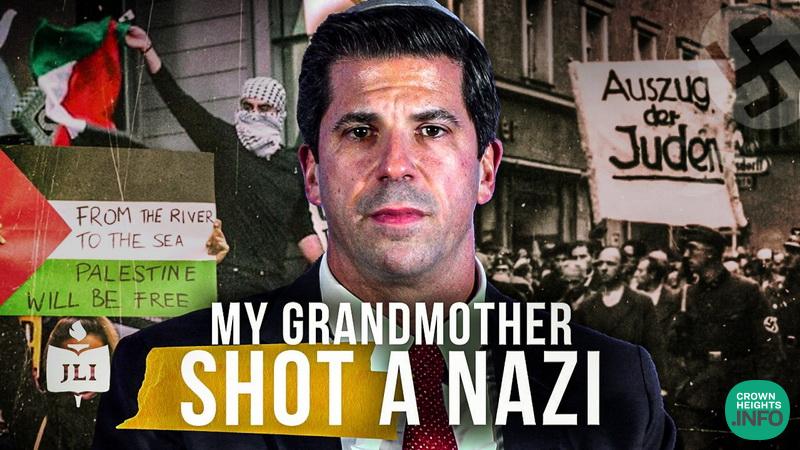 CrownHeights.info4 days ago
What happens when a federal judge speaks out about Israel in a world increasingly divided over the Jewish state?
In this powerful and thought-provoking conversation, Judge Roy K. Altman shares why he refuses to stay silent about Israel, the rise of antisemitism, and the growing controversy surrounding Zionism.
Drawing on his experience as a federal judge and his own family’s history, Judge Altman offers a deeply personal perspective on the challenges facing the Jewish people today. His family’s story includes Holocaust survivors, the loss of relatives in Auschwitz, and the search for a new life in America. That history has shaped his understanding of what can happen when hatred goes unchallenged, and good people remain silent.
Following the October 7 attacks, Judge Altman felt compelled to speak out. Since then, he has traveled across America, addressing audiences on college campuses, in law schools, churches, and communities, while working to help federal judges see Israel firsthand.
In his book, Israel on Trial, he examines six major accusations against Israel through the lens of law, history, evidence, and logic.
At a time when the conversation about Israel is more heated than ever, Judge Altman challenges viewers to look beyond slogans, examine the evidence, and ask difficult questions.
Watch the full conversation and decide for yourself.
CrownHeights.info4 days agoDovid Lifchitz (Boise, Idaho) to Mussie Moscowitz (Bucktown, IL)
 CrownHeights.info4 days ago
by CrownHeights.info
Dozens of Chabad bochurim who were detained by Israeli military police at Ben Gurion Airport Tuesday morning after returning from a year of learning at 770 Eastern Parkway in Crown Heights have been released from military custody, while others remain imprisoned, according to Israeli media reports.
The developments follow the detention of dozens of students from the 5786 Kvutza, who arrived in Israel on a flight from New York. The bochurim were detained over unresolved military-service status, amid ongoing uncertainty surrounding the arrangements for yeshiva students in Israel.
According to a report by JFeed, citing Kikar Hashabbat, many of the detained bochurim expressed willingness to enlist in the IDF and were consequently released and referred to the military’s recruitment and induction center, known as Bakum, to begin the enlistment process.
In a statement, the IDF Spokesperson’s Office said that 42 individuals classified as draft evaders were arrested Tuesday as part of its ongoing enforcement of the Defense Service Law. Of those, 27 expressed willingness to enlist and were found fit for military service. They received suspended sentences and were released to begin the enlistment process.
Another 13 individuals who expressed unwillingness to cooperate with the enlistment process were sentenced to military prison. Two additional individuals, who had allegedly evaded military service for more than 540 days, were sent directly to military detention.
The figures released by the IDF account for 42 individuals classified as draft evaders, though reports about the total number of Chabad bochurim initially detained at the airport have varied.
The detentions have sparked criticism among Chareidi political figures, with representatives calling for the students’ release and a resolution to the broader dispute over military-service arrangements for yeshiva students. Chabad’s Beis Din has also been working with relevant authorities through a designated representative to address the situation and ensure the bochurim receive appropriate treatment.
The incident highlights the uncertainty facing young Chabad students returning to Israel after the traditional year of study at 770. The outcome for those still in custody remains dependent on their individual military status and the proceedings against them.
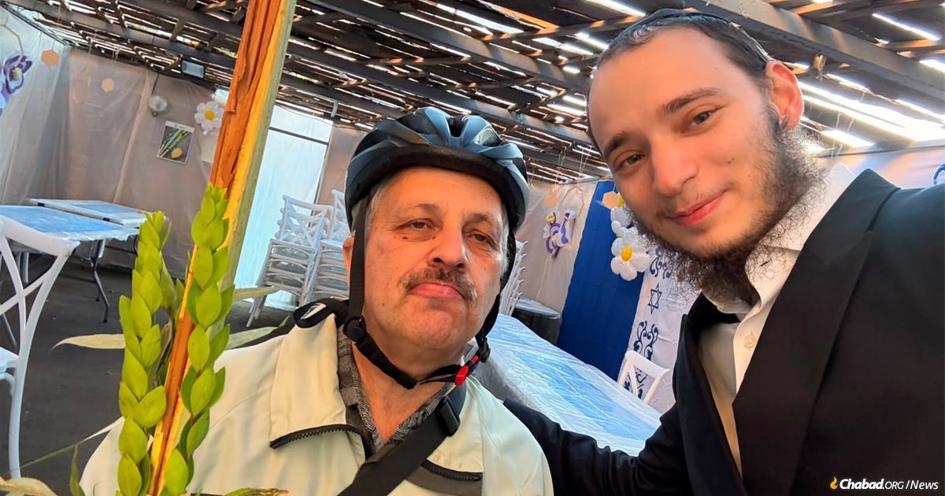 CrownHeights.info5 days ago
by Shloimy Galperin – chabad.org
On the night of Shemini Atzeret, Rabbi Menachem Mendel Kot got ready to dance with the Torah, expecting to dance alone.
Among most Chassidic groups, including Chabad-Lubavitch, the joyous dancing with the Torah known as hakafot takes place on Shemini Atzeret as well as Simchat Torah. But this was not the practice at the synagogue in Gomel, Belarus, where Kot and his wife, Rochel, had arrived as Chabad emissaries only weeks earlier.
The Jewish community president Yosef Zholdov noticed him preparing. When Kot explained the Chassidic custom, Zholdov was intrigued.
“If the rabbi will do hakafot, I will too,” he declared.
Zholdov stayed. Another Jewish man soon joined, and the three danced together like brothers. Kot says it confirmed what he had sensed in Gomel from the start.
“From the rosh kehila, the head of the community, and on, this town has a Chassidic spirit,” he says.
This spirit has deep roots in Gomel, pronounced Homel in the Belarussian accent, as it has always been known in Yiddish as well. “Homel was one of the first towns after Liozna to become a town of Chabad Chassidut,” explained the Sixth Rebbe, Rabbi Yosef Yitzchak Schneersohn, of righteous memory, in a 1940 talk. “From the greatest scholars to the unlettered craftsmen and peddlers who frequented the surrounding villages, all were Chabad Chassidim.”
In Chabad historiography the town is most famously associated with its longtime rabbi, Rabbi Yitzchak Aizik Epstein (c. 1770–1857), who led its community for 58 years.
Rochel Kot helps a woman shake the Four Kinds during Sukkot in Gomel, Belarus.
Jewish life in Gomel dates back to the 16th century. Located in southeastern Belarus, the city grew into a major Jewish center along with its trade and industry. By 1897, its 20,000 Jews made up more than half the population, served by some 30 synagogues. The 20th century brought a pogrom in 1903, Soviet suppression of Jewish religious life and, during the Holocaust, the murder of much of its Jewish population.
Reb Ytzchak Aizik Epstein was among the city’s most celebrated figures. A disciple of Rabbi Schneur Zalman of Liadi, founder of the Chabad movement, known as the Alter Rebbe, he became rabbi of Homel in 1805. He was among the foremost Chassidim of the first three Chabad Rebbes, renowned for his mastery of Talmud and Chassidic philosophy, and the author of influential works of Chassidic thought. His name became so bound up with the city that he is known as Reb Aizik of Homel, or simply Reb Aizik Homiler.
Many are the stories about Reb Aizik, and his sayings and teachings are quoted to this day. Indeed, the Rebbe, Rabbi Menachem M. Schneerson, of righteous memory, quotes him in the Hayom Yom for the 27th of the Jewish month of Cheshvan:
R’ Aizik HaLevi of Homel related: “When I came to Liozna [to study with the Alter Rebbe], I met elder Chassidim who had been disciples of the Maggid of Mezritch and R’ Menachem Mendel of Horodok. They would frequently repeat the adage: ‘Love a fellow Jew, and G‑d will love you. Do a favor for a fellow Jew, and G‑d will do a favor for you. Befriend a fellow Jew, and G‑d will befriend you.’”
Simchat Torah has also figured in the city’s Chabad story before. At a Simchat Torah gathering in 1921, local Chassidim, worried that it was becoming more difficult to send their children to existing Chabad yeshivahs, resolved to open their own branch of Tomchei Temimim. With the blessing of the Sixth Rebbe, the yeshivah opened that Chanukah under Rabbi Yechezkel Feigin, who would later serve as the Sixth Rebbe’s secretary. Feigin and his family were murdered by the Nazis in Latvia in 1941.
After the fall of the Soviet Union, the Jewish community began to rebuild. In 1995, a synagogue building dating to 1895 was returned to it. Today, the community has a synagogue, children’s education programs and a group of local men who gather daily for prayer and study.
Much of the work sustaining those activities has fallen to Zholdov and to roving rabbis who came to Gomel on internships. Convinced that a permanent Chabad presence would strengthen the community and secure its future, Zholdov contacted Russia’s Chief Rabbi Berel Lazar, who helped arrange the Kots’ move.
Putting a mezuzah on the door of a Jewish home.
For Kot, the move drew on a childhood spent watching his parents, Rabbi Shmuel and Chana Kot, serve as chief rabbi of Estonia and Chabad emissaries there. Rochel Kot also grew up in a family of emissaries; her father, Rabbi Moshe and Chanie Marinovsky, serve as Chabad representatives in Kfar Daniel, Israel. Having grown up speaking Russian, Kot can speak directly with the people he meets in Gomel.
“It’s an honor to be a shliach and see how our parents do their work, and that we get to follow in their ways, how they care for each Jew,” he says.
The Kots arrived in Gomel shortly before Rosh Hashanah, and are now working to expand Jewish education in Reb Aizik’s city, reach more families and introduce programs for teenagers and young adults.
As Rosh Hashanah approached, they wondered how to reach residents who didn’t take part in the community’s regular activities. They invited residents to tashlich by the river, to recite the traditional prayers beside the water and hear the shofar. About 50 people showed up, most of whom, says Kot, would not otherwise have attended synagogue. It was the couple’s first event in the city.
On the second day of Sukkot, a festive meal in the community’s large sukkah and a children’s program drew 60 people, including children from SmartJ, an after-school program that pairs Jewish learning with science, English and coding. SmartJ and the community’s Sunday school use educational resources from Ohr Avner, part of the Federation of Jewish Communities framework, which since 1993 has expanded Jewish education across the former Soviet Union.
Throughout Chol Hamoed, the intermediate days of the festival, the Kots hosted daily gatherings in their own sukkah, where visitors recited the blessing on the sukkah, shook the lulav and etrog and met the new emissaries.
After the High Holiday season concluded, they began regular activities. A Hebrew school is already running, and on Sunday, Oct. 18, the Kots launched EnerJew, an Ohr Avner program for young teens, along with Yahad, a program for young adults.
His new hometown of Gomel, the young rabbi says, feels different from anything he’s ever experienced before.
“Here, you get a taste of what it was like in the old times.”
 CrownHeights.info5 days ago
Note From The Editor: Following the publication of this article, an updated endorsement has been circulated in which three names have been undersigned: Rabbis Chanina Sperlin, Yaacov Behrman, and Avi Lesches.
by CrownHeights.info
Crown Heights United has announced its endorsements for New York’s upcoming election, backing Gov. Kathy Hochul, Assemblymember Brian Cunningham, State Sen. Zellnor Myrie, Attorney General Letitia James and State Comptroller Thomas DiNapoli for reelection. The announcement offers a look at the political priorities of one group of Crown Heights community activists, even as the community continues to trend in another direction over recent election cycles.
The endorsements, announced Sunday, October 19th, come as Republican gubernatorial nominee Bruce Blakeman seeks to unseat Hochul, setting up a statewide contest that also highlights differing political perspectives within Crown Heights’ Jewish community.
Crown Heights United said Hochul earned its support in part because New York opted into the federal scholarship tax credit program, which the organization hopes will help ease yeshiva tuition costs. It also praised the governor for her support of Israel since the October 7, 2023, Hamas attacks and her early visit to Israel following the massacre.
Assemblymember Cunningham was endorsed for his accessibility and responsiveness to community needs, while Myrie received the group’s backing for reelection to the State Senate. Crown Heights United described James, a Crown Heights native, as a longtime ally of the Jewish community and a leader in combating antisemitism.
DiNapoli’s endorsement was tied to his position on investments in Israel. The group cited reporting that the comptroller intends to continue investing in Israel Bonds and is considering additional investments.
Crown Heights United claims in its endorsement that it brings together several community askonim, including veteran advocates, and has issued political endorsements since 2013. Previous endorsements by Crown Heights United included signatories including Rabbi Yaacov Behrman, Zalman Friedman, Jacob Goldstein, Devorah Halberstam, Shea Hecht, Shlomie Hecht, Avi Lesches, Menachem Light, Shmuel Rosenstein, and Chanina Sperlin as well as others.
The present endorsement was made anonymously, with no signatures published.
On the Republican side, the Crown Heights Republican Committee has been publicly involved in efforts to elect Bruce Blakeman governor. In July, the committee announced plans to host Blakeman, the Republican nominee, for a Crown Heights tour and discussion with community leaders about antisemitism, neighborhood safety and concerns affecting Jewish communities. The event was presented as an opportunity to build support for his campaign.
Crown Heights’ Jewish voting patterns have also shifted significantly in recent elections, with the neighborhood emerging as a notable Republican voting bloc despite Brooklyn’s broader Democratic lean and local activists endorsements.
In 2024, Donald Trump received approximately 65% of the vote in a Crown Heights area identified as a major Orthodox Jewish voting bloc, according to an analysis published by Shtetl. By comparison, Kamala Harris won approximately 70% of the vote across Brooklyn, according to Brooklyn Paper.
The shift was also evident in precincts around Kingston Avenue. According to Tablet, Trump’s share of the vote across three election districts between Eastern Parkway and Crown Street rose from approximately 52% in 2020 to 62% in 2024. Meanwhile, local activists have demonstrated the community’s ability to influence Democratic primaries through organized voter participation. Crown Heights United estimated that approximately 4,000 Anash voters participated in the 2021 New York City mayoral primary, helping Eric Adams secure the Democratic nomination.
The figures highlight the complexity of Crown Heights politics: while an increasing share of the neighborhood’s Jewish vote has gone Republican, local and state races have continued to feature endorsements for Democratic candidates. This split makes the endorsements issued by community organizations particularly significant, raising questions about whether their choices reflect the voting preferences of the broader community.
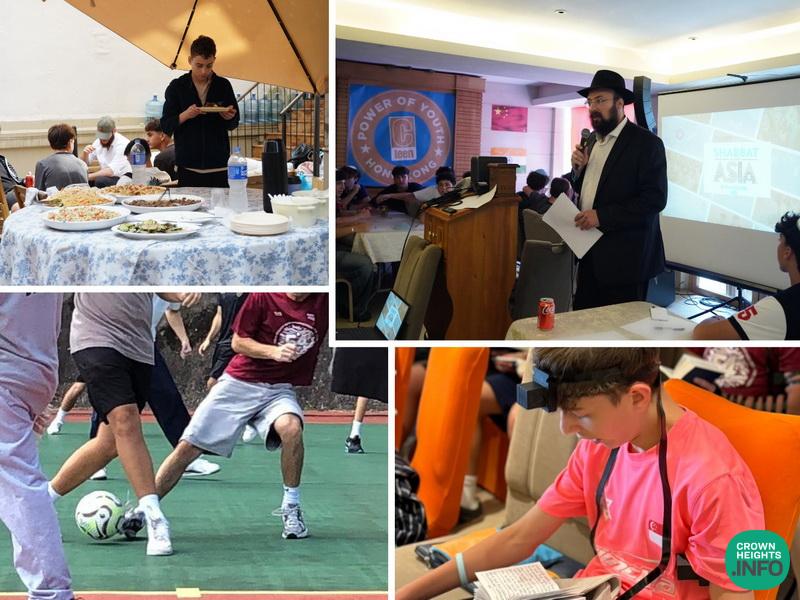 CrownHeights.info5 days ago
“I met a lot of new people, and I’m definitely going to hold on to these connections,” said Ori, a teen from Hong Kong. He was one of 100 teen leaders from across Asia at the first-ever CTeen Asia Shabbaton in Hong Kong. After four days together, they’re heading home with new friends and new goals.
“My favorite part was definitely Shabbat,” Ori said. “The atmosphere was great, and I got to connect with so many Jewish teens. It means a lot that they all came here to Hong Kong for Shabbat.” Nathaniel, who came from Mumbai, India, pointed to something else. “My favorite part was reconnecting with my Jewish roots,” he said. “And the praying.”
The final day, Sunday, started with davening and a farewell breakfast. The boys played soccer, and the girls went to a trampoline park and arcade. Everyone met back at Chabad of Hong Kong for an outdoor lunch. At the closing ceremony that followed, Shluchim and organizers thanked everyone and celebrated what the teens had accomplished over the weekend.
The most serious moment came at the end of the ceremony. Each teen took a few quiet minutes to write down a hachlata to take home with them. For some of the girls, it was lighting Shabbos candles every Erev Shabbos. Some of the boys took on putting on tefillin more often. These hachlatos have already been brought to the Rebbe’s Ohel in New York.
“For many of these teens, being Jewish means being the only one in their class,” said Rabbi Mendy Kotlarsky, Chairman of CTeen International. “They’re going home with more knowledge and a deeper pride in who they are, and they’ll share that with their families and communities. The new ideas and initiatives they’ve resolved to bring home will reverborate across the region “”
As groups began leaving for their flights, those who remained gathered for one last goodbye. There were slow songs, hugs and a few tears. One final dance brought the Shabbaton to a close, with everyone singing together until it was time to say goodbye.
The Shabbaton was organized by the CTeen International Team at Merkos 302. It was hosted by CTeen Hong Kong, led by Rabbi Mendy and Mushka Rabinowitz, together with Rabbi Mordechai and Goldie Avtzon, the first Shluchim to South-East Asia. The weekend also marked 40 years of Chabad in Asia.
 CrownHeights.info5 days ago
While every second counts, NYC ambulance response times are getting longer.
A report from New York City Comptroller Mark Levine’s office found that FDNY ambulance-handled emergency medical responses increased by 11% between fiscal years 2015 and 2026, rising from 1.03 million to 1.14 million.
Response times also got longer at nearly every step. Responses to life-threatening emergencies increased by 3 minutes, 50 seconds, or 41.2%. For non-life-threatening emergencies, response times rose by 14 minutes, 49 seconds, more than doubling over the same period.
Read More at Pix11
CrownHeights.info5 days agoby CrownHeights.info
Dozens of Chabad bochurim returning to Israel Tuesday morning after spending a year learning in 770 Eastern Parkway in Crown Heights were detained by Israeli military police over unresolved military-service status, in a major enforcement operation at Ben Gurion Airport.
Approximately 80 bochurim from the 5786 Kvutza arrived on a flight from New York. The students, most around 19 years old, had spent the year in 770 and were returning to Israel.
According to a statement from Chabad quoted by Israel National News, 25 of the approximately 80 students on the flight were detained. Other Israeli media outlets, including Ynet and The Jerusalem Post, reported that more than 40 students were detained, with some reports putting the figure at approximately 50. Passports were reportedly confiscated from some of the bochurim as military police carried out the operation.
The detentions come amid changes to the arrangements governing military-service deferments for yeshiva students. Chabad has historically operated a framework under which bochurim travel to New York for a year of study at 770 before returning to Israel to continue their religious and communal work. The current dispute over military-service status has placed returning students at risk of detention if their individual circumstances are not recognized by the military authorities.
The IDF had advance notice of the group’s arrival and deployed military police to the airport. According to Ynet, the bochurim were subsequently transferred to the IDF induction center at Tel Hashomer, where they face proceedings over their military-service status.
In an official response, the IDF Spokesperson’s Unit said: “The Military Police Corps routinely enforces the Security Service Law, including at all border crossings, in coordination with the relevant authorities, including the Population and Immigration Authority.”
The military added that the individuals involved were legally obligated to enlist and would be dealt with according to the law, reiterating its position that it would continue enforcing military-service requirements equally.
A senior military official told Ynet that those who are not classified as draft evaders by the military prosecution would face disciplinary proceedings. Those who demonstrate a genuine willingness to enlist could receive suspended sentences and be inducted into the military. Students who refuse to enlist could face military prison, according to the report. The outcome for each bochur depends on his individual status and the proceedings against him.
Chabad’s Rabbinical Court has been working to address the situation. In a statement quoted by Israel National News, the court said its members had been in direct contact with relevant authorities through a specially appointed representative and had prepared for the flight’s arrival in coordination with families and other parties. The court said it was continuing its efforts to ensure humane treatment for the students and secure their release once their status with the military authorities was resolved.
The arrests have also drawn political attention amid the wider dispute over the enlistment of yeshiva students. Prime Minister Benjamin Netanyahu criticized the arrests of Haredi draft evaders in remarks reported by Israeli media, describing the move as unacceptable and arguing that it undermined efforts to reach an agreement on Haredi enlistment.
CrownHeights.info5 days agoYossi Kalman (Riverdale, NY) to Roizy Krausz (Lakewood, NJ) L’Chaim: Tuesday, Oct. 20th, 7:30pm at Rubashkin’s 1349 President Street
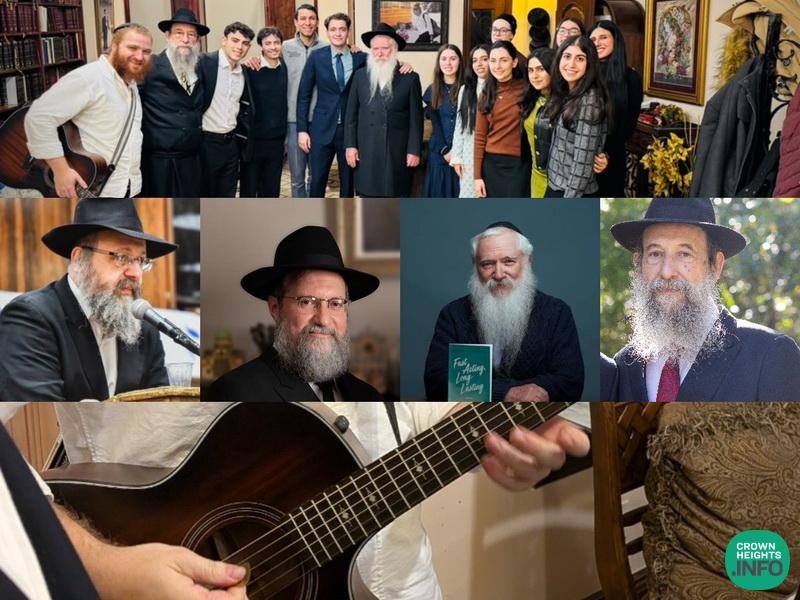 CrownHeights.info5 days ago
Over 40 Jewish students from SUNY Downstate Health Sciences University gathered in Crown Heights for an inspiring Shabbaton filled with warmth, Chassidus, and Jewish pride.
The Shabbaton, held over Shabbos Parshas Noach, was organized by Chabad of SUNY Downstate under the leadership of its Shluchim, Rabbi Yosef Yitzchok and Rebbetzin Tamar Holzman.
The gathering brought together students from a wide range of Jewish backgrounds, many of whom do not ordinarily observe Shabbos, for a weekend of inspiration, friendship, and the warmth of a traditional Chassidic Shabbos.
The weekend began with a beautiful Friday night Seudas Shabbos at the home of Rabbi and Rebbetzin Holzman. Over a lavish Shabbos meal, the students enjoyed a warm and welcoming atmosphere.
The featured speaker was Rabbi Efraim Mintz, Executive Director of the Rohr Jewish Learning Institute (JLI), whose inspiring and engaging words deeply resonated with the students. The meaningful discussions and genuine warmth kept many of the participants at the table until 1:30 AM.
On Shabbos morning, a number of students joined the davening at the Sephardic shul led by Rabbi Lazer Avtzon, experiencing the familiar Sephardic nusach and atmosphere.
Shabbos lunch was graciously hosted by Rabbi Dovy and Naomi Andrusier at their Crown Heights home. The Andrusier family, known for their generosity and chesed, prepared an exceptionally elegant and beautiful Seudas Shabbos for the large gathering.
The family shares a special connection with SUNY Downstate through their daughter, Dr. Miriam Andrusier, a graduate of Downstate’s College of Medicine who was actively involved in Rabbi Holzman’s Jewish campus activities during her medical school years.
The featured speaker at the afternoon meal was renowned lecturer and author Rabbi Manis Friedman, whose insightful and captivating presentation inspired the students and generated tremendous enthusiasm. The uplifting atmosphere continued throughout the afternoon, with the meal concluding at approximately 4:00 PM.
Following Mincha, the students reconvened at the Holzman home for Seudah Shlishis, where Rabbi Michoel Golomb, a respected Mashpia at 770 and author of Maamorim Explanatory, shared inspiring Chassidic stories and insights into the deeper meaning of Shabbos and Mitzvos.
The Shabbaton concluded with Maariv and a spirited musical Havdalah featuring Aviro (Avrohom Rosenfeld). The music and joyous dancing brought the memorable Shabbos to an especially uplifting conclusion.
For many students, the experience was particularly meaningful. Several participants had never before attended a traditional Shabbos meal, while others committed to observing the entire Shabbos, including refraining from using their phones.
The warmth, inspiration, and sense of belonging left a deep impression, with several students describing the Shabbaton as an experience they would never forget.
The Shabbaton was dedicated L’ilui Nishmas Rabbi Shmuel Menachem Mendel Butman OB”M, who pioneered Shabbatons in Crown Heights beginning in 1963, together with Rabbi Manis Friedman. Rabbi Friedman’s participation in this Shabbaton added a particularly meaningful connection to that longstanding tradition of inspiring Jewish souls through the warmth of a Chassidic Shabbos.
The event was made possible through the efforts of Rabbi and Rebbetzin Holzman, with the dedicated assistance of second-year medical student Talia Soleymani, who was instrumental in initiating and coordinating the Shabbaton, together with fellow medical student Mordecai Lis.
More than simply a weekend away from the demanding schedules of medical school, the Shabbaton offered these future physicians an opportunity to connect with their Jewish heritage, experience the beauty of Shabbos, and form lasting friendships within a warm and welcoming Jewish community.
To learn more about or support the ongoing activities of Chabad of SUNY Downstate, visit ChabadSUNY.org, and follow @chabadsunydownstate on Instagram for updates and highlights.
 CrownHeights.info5 days ago
by CrownHeights.info
Two minors were arrested in Crown Heights on Monday after allegedly attempting to steal a moped, following a quick response by Crown Heights Shomrim and the NYPD’s 71st Precinct.
Shomrim received a hotline call reporting the attempted theft and immediately dispatched volunteers to the scene. The volunteers responded quickly and were able to identify the two suspects to responding NYPD officers, who took both minors into custody.
The arrests followed a coordinated response between Crown Heights Shomrim and the NYPD’s 71st Precinct, highlighting the importance of community vigilance and cooperation with local law enforcement in addressing neighborhood crime.
Crown Heights Shomrim reminds residents to report suspicious activity promptly by calling its hotline at 718-774-3333.
CrownHeights.info5 days agoShlomo Zeilig Kupfer (Boro Park, Brooklyn) to Moussia Cooper (Melbourne, Australia) L’Chaim: Tonight, Monday, 8:30pm at Lubavitcher Yeshiva Crown Street
 CrownHeights.info5 days ago
One Crown Heights is encouraging children, teens, families, and educators across Crown Heights to participate in HeARTwork Against Hate, an annual citywide youth art contest launched by the NYC Office for the Prevention of Hate Crimes.
The contest gives young people a creative way to express themselves while opening the door to important conversations about discrimination, bullying, antisemitism, and inclusion.
The opportunity has already made an impact close to home. Shneori Zik, a young woman from the Crown Heights community who attended Chabad Girls Academy, received an honorable mention in a previous year’s contest. Her achievement shows how young people can use their creativity to make their voices heard to a wider audience.
“One of the most important things we can do is give young people the space to express themselves and talk about what they experience,” said Simcha Baez, Director of One Crown Heights. “Art can help start conversations about bullying, discrimination, antisemitism, and how we treat one another.”
One Crown Heights encourages parents, teachers, and youth leaders to share this opportunity with the young people in their lives and help spark meaningful conversations about respect, fairness, and standing up against hate.
As a coalition of local organizations, residents, and elected officials working to promote understanding and reduce bias across Crown Heights, One Crown Heights believes that building a safer, more connected community starts with listening to one another and creating opportunities for people of all backgrounds to be heard. Please email them if your group or class participates – feedback is always appreciated!
Learn more about the contest and how to participate, the Due date is Nov. 1st: https://www.nyc.gov/site/stophate/initiatives/heartwork.page
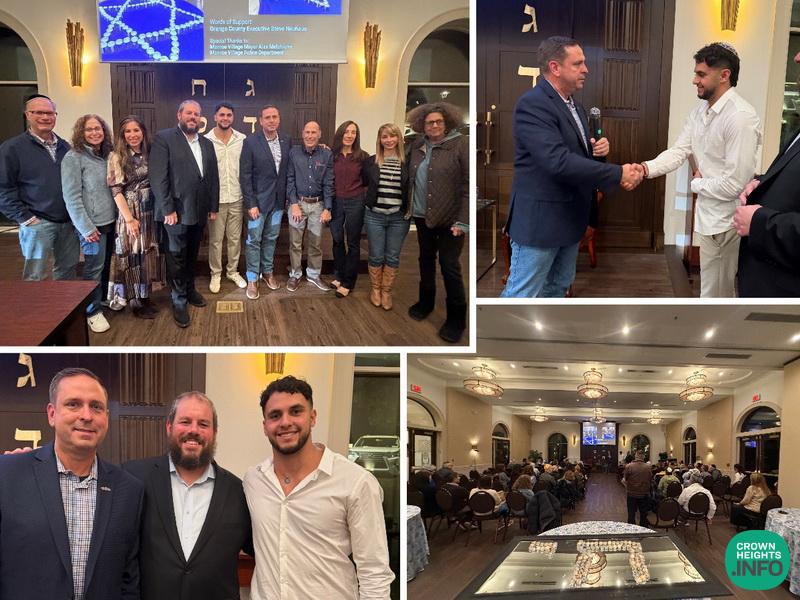 CrownHeights.info5 days ago
An extraordinary turnout of community members from throughout Orange County gathered on Wednesday evening, October 7, for a moving Evening of Remembrance & Resilience, co- hosted by The Jewish Federation of Orange County and Chabad of Orange County, led by Rabbi Pesach and Chana Burston. The day marked three years since the tragic massacre of October 7, 2023.
The evening featured special guest Yaron Bar Moshe, an Israeli soldier who served in the elite Nahal Reconnaissance Unit. Yaron shared his powerful firsthand account of October 7, when he and his fellow soldiers were called to defend Israeli communities under attack. Yaron’s unit defended Kibbutz Kfar for over 50 hours, and were subsequently deployed to Kibbutz Kerem Shalom, where they succeeded in preventing the terrorists from entering. Yaron also described his experiences during 14 months of military service in Gaza, continuing to fight against terrorism. His deeply personal story of courage, sacrifice, family, loss, and resilience touched the hearts of all in attendance.
The program also featured soulful and moving music by Israeli-born musician Natan Zabari, of Monroe, along with heartfelt words of comfort, strength, and unity from Rabbi Pesach Burston, director of Chabad of Orange County. Orange County Executive Steve Neuhaus offered words of encouragement to the large crowd.
In a particularly meaningful moment, Yaron was presented with a personalized Book of Psalms, inscribed with his name and dedicated in honor of his beloved father, who recently passed away. The gift was presented on behalf of the Orange County community as an expression of love, gratitude, and solidarity.
The gathering brought together people from across the county, united in remembrance, compassion, and a shared commitment to stand against hatred and prejudice.
The evening served as a powerful reminder that even in the face of unimaginable darkness, the Jewish spirit continues to shine with courage, faith, unity, and hope.
For more information about Chabad of Orange County and upcoming programs, visit ChabadOrange.com.
 CrownHeights.info5 days ago
Tired of the power struggles, the homework battles, and the “why won’t they just listen” moments? Parents are invited to join Connection in Parenting: Because Every Behavior Tells a Story, a free six-week virtual series led by Chana Kaiman, LCSW-RPT, a Registered Play Therapist who specializes in working with children and families.
The series explores the why behind children’s toughest behaviors and gives parents practical tools they can use that same night, including decoding meltdowns and shutdowns, navigating screens and homework, setting limits that stick without the fight, supporting academic skills, and building a calmer, more connected home.
Sessions take place on six Wednesday evenings, October 21 through November 25, from 8:00 to 9:30 PM, on Microsoft Teams. The program is sponsored by Yeled V’Yalda and funded by ONPS Title 1 PECC, and is free of charge for parents.
To register, contact [email protected] or call 347-424-4691. The Teams link will be sent upon registration.
CrownHeights.info5 days agoAlon Nussbaum (Johannesburg, South Africa) to Devorah Leah Edelkopf (Podgorico, Montenegro) L’Chaim: Tonight, Monday, 7:30pm at The Shul 481 Albany Ave
 CrownHeights.info6 days ago
Elon Musk promised early Monday to give one of his SpaceX shares to every child in America next year – teasing that the unprecedented giveaway “will be the first of many.”
“Next year, I will give one of my SpaceX shares to every kid in America,” the Space X and Tesla tycoon wrote on X – a post that was seen nearly 6 million times in just hours.
“This will be the first of many,”
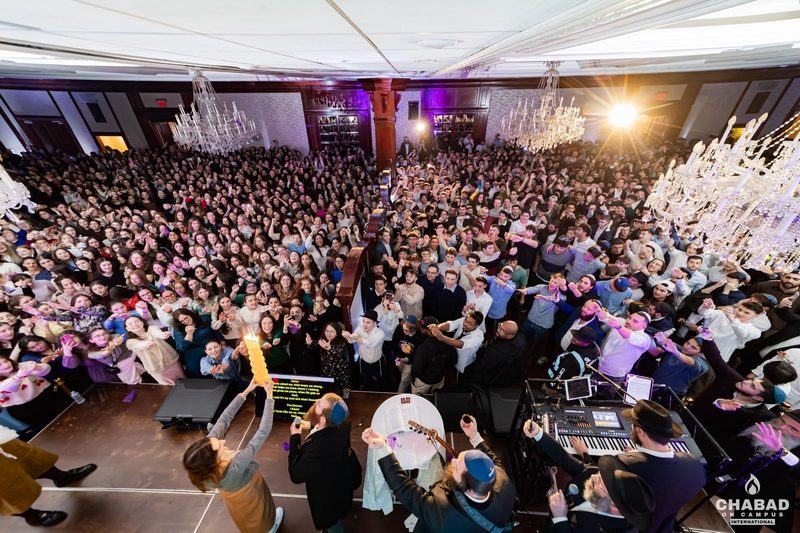 CrownHeights.info6 days ago
It’s that time of year again. Pegisha is back, and Crown Heights is about to fill up.
This weekend, Chabad on Campus International is hosting the Pegisha, bringing Jewish college students to Crown Heights for one of the most anticipated weekends on the Chabad on Campus calendar. They are coming from over 160 universities across six countries.
In a sicha about Pegisha, delivered at a farbrengen connected to the program on Shabbos Parshas Bamidbar 5741, the Rebbe spoke about the weekend’s real purpose. He said the point of such an encounter is to bring together Jews of every kind and make them one. At the start there is a host and a guest. That holds for only a moment, because they quickly become one. He tied it to Shabbos itself, the day that draws unity out of a week of otherwise separate days.
In Crown Heights, this is not abstract. Organizers, on behalf of the many Shluchim and Shluchos attending, thank the Crown Heights community for stepping up again, right after a packed Tishrei, with its signature Ahavas Yisroel. Homes and hearts are opening. Shabbos tables are filling up with guests. Families are making room for students they have never met. The host-and-guest line the Rebbe spoke about is gone by the first meal.
Pegisha began in the winter of 5721 with one yeshiva student, Dr. Yaakov Hanoka, and a simple idea. Rabbi Hodakov asked him to arrange something for students over winter break. Hanoka figured a full vacation was too much to ask, so he proposed a weekend instead. They needed a name, and since “encounter” was the popular word of the era, they called it “An Encounter with Chabad,” which became “Pegisha” in Hebrew. The budget for the whole thing was $25 for flyers, and seventeen students showed up. That first small weekend has since become one of the most iconic programs in Chabad. (A Chassidisher Derher, “Shlichus on Campus”)
From seventeen students, the encounter keeps growing. And this week, carried by its signature Hachnasas Orchim, Crown Heights hosts it again.
 CrownHeights.info6 days ago
The Laine Family will be sitting Shiva in Crown Heights following the passing of Mrs. Rivkah Laine OBM.
Shiva will take place at 1566 Carroll St.
Shachris: 8:00 AM & 9:00 AM
Mincha: 5:45 PM & 6:00 PM
Maariv: 6:45 PM
Men’s Visiting Hours: 8:00 AM–12:00 PM & 3:00 PM–9:00 PM
Women’s Visiting Hours: 12:00 PM–4:00 PM & 7:00 PM–8:00 PM
 CrownHeights.info6 days ago
Cantor Aryeh Leib Hurwitz brings the beloved melody of the Kaliver Rebbe, Rabbi Menachem Mendel Taub, to life in a powerful performance of “Atah Chonen,” recorded at Yuval’s 2024 “Chassidic Treasury” concert in Israel.
Blending Chassidic soul, expressive chazanut, and orchestral grandeur, the performance features Cantor Moshe Stern’s cantorial interpretation, arranged by legendary pianist Dr. Chanan Winternitz and expanded for symphony orchestra by conductor Ofir Sobol.
This week also marks the 31st yahrzeit of Dr. Winternitz, honoring his lasting contribution to Jewish music.
 CrownHeights.info6 days ago
by Anonymous
For years, Crown Heights activists and community organizations have delivered a consistent message to residents: register to vote, turn out on Election Day and demonstrate that the Jewish community is a constituency elected officials cannot afford to ignore.
Voter-registration drives, community-wide appeals, social media campaigns and coordinated outreach to local shuls and schools have sought to transform Crown Heights’ political potential into tangible influence in Albany and City Hall. Yet with New York’s gubernatorial election approaching on November 3rd, a question is emerging among residents: Where is that same sense of urgency now?
This election is a showdown between incumbent Democratic Gov. Kathy Hochul and Republican Nassau County Executive Bruce Blakeman in a race that could have significant consequences for issues ranging from public safety and education to taxation, housing and the state’s relationship with its Jewish communities.
For a community that has repeatedly been told its political strength depends on turnout, they are asking: Whats going on?
The case for increased voter participation in Crown Heights has been made forcefully in recent years.
In November 2024, the New York Jewish Week, in a report published by the Jewish Telegraphic Agency, documented a coordinated campaign by the Jewish Future Alliance to increase voter turnout among Chabad-Lubavitch residents. The initiative included postcards, advertisements, testimonials and direct appeals encouraging residents to vote, even in an election in which New York was widely expected to favor the Democratic presidential candidate.
The argument was straightforward: Voting was about more than determining who would win a particular contest. It was about demonstrating to elected officials that Crown Heights had a politically engaged constituency whose concerns warranted attention.
Rabbi Yaacov Behrman, founder of the Jewish Future Alliance, told the publication that elected officials pay attention to community turnout when making policy decisions. The campaign emphasized issues including antisemitism, public safety, Jewish education and the ability of the community to influence government decisions.
The effort built on years of work to increase registration and participation. In September 2025, CrownHeights.info reported that more than 60 Crown Heights shuls, schools and organizations were joining a weeklong voter-registration drive led by the Jewish Future Alliance, alongside the Crown Heights Shuls Association, Vaad Hakohol, Crown Heights N’tzigim and other community leaders.
The message was emphatic: Registration and participation were essential to the community’s future.
The effort continued in 2026. In May, the Vaad Hakohol announced another voter-registration initiative ahead of the Democratic primary, with the stated goal of reaching every eligible adult in the neighborhood. The campaign was described as apolitical, encouraging residents to vote for whichever candidate they believed would best represent the community.
The argument, as voiced in neighborhood discussions, is that the Crown Heights Jewish community has demonstrated strong Republican leanings in recent national elections, while many of the elected officials and political figures with whom local activists maintain relationships are Democrats.
Publicly promoting a Republican gubernatorial candidate, or organizing an especially visible campaign that could help him, might complicate those relationships at a time when Democratic candidates remain well positioned in statewide politics.
The issue is not whether a nonprofit should endorse a candidate. Organizations with nonprofit status may face legal restrictions on political campaign intervention, depending on their tax classification. A nonpartisan voter-registration initiative need not—and generally should not—tell residents which candidate to support.
The issue is whether encouraging eligible residents to participate remains a priority even when the likely beneficiaries of greater turnout may not be the politicians with whom community leaders have the closest relationships.
There is a meaningful distinction between neutrality and silence. A community organization can refrain from endorsing either candidate while still reminding residents of registration deadlines, explaining early-voting options and encouraging participation regardless of party preference.
Crown Heights occupies an unusual position in New York politics.
New York State is a Democratic stronghold in statewide and federal elections, and Brooklyn is a particularly difficult political environment for Republican candidates. Yet the Orthodox Jewish electorate, including the Chabad-Lubavitch community in Crown Heights, has often leaned Republican, particularly in national elections.
The 2024 New York Jewish Week report highlighted this contrast, noting that Orthodox Jewish voters nationally have historically been substantially more Republican than American Jews overall. It also described Crown Heights as a Republican-leaning pocket within a heavily Democratic city.
That political orientation was visible in the 2022 gubernatorial election, when Republican Lee Zeldin attracted significant support from Orthodox Jewish communities. In October of that year, the Crown Heights Republican Committee publicly endorsed Zeldin, citing his positions on antisemitic violence and issues affecting the community.
The present race brings that tension into focus. Blakeman has sought to position himself as an alternative to Hochul, criticizing her administration and emphasizing affordability and public safety. Hochul, meanwhile, has emphasized her record and portrayed Blakeman as aligned with President Donald Trump.
The debate over voter mobilization comes amid a broader discussion in Crown Heights about how the community should exercise political influence.
In June 2026, CrownHeights.info published an opinion article by former City Council candidates Benny Rosenberger and Yehuda Shaffer arguing that community activists and voters sometimes approach politics differently. The authors contended that activists tend to value established relationships with incumbent politicians, while many residents increasingly judge those relationships by whether they produce tangible results.
Maintaining relationships with elected officials can be valuable. Access to government agencies and decision-makers can help communities address individual cases, secure resources and raise concerns that might otherwise be overlooked.
At the same time, political access should not become an end in itself. A community that is told repeatedly to build its voting strength is entitled to ask whether that strength is being used to advance its interests, and whether its leaders are willing to maintain an independent voice when their political allies disagree with the electorate.
The practical stakes are immediate.
According to the New York State Board of Elections, applications to register for the November 3rd general election must be received by October 24th. Early voting is scheduled for October 24th through November 1st.
With those dates approaching, there is still time for community organizations, shuls, schools and local leaders to remind eligible residents to verify their registration, understand their voting options and make a plan to cast a ballot.
Such an effort would not require endorsing Hochul, Blakeman or any other candidate. It would simply put into practice the principle that community leaders have invoked for years: participation matters.
The governor’s race may ultimately be decided by voters far beyond Crown Heights. But the question facing the neighborhood is more local and more enduring: Will the community continue to be urged to exercise its political power regardless of which party stands to benefit?
If voting is essential to the future of Crown Heights, as activists have repeatedly argued, then the call to vote should not depend on whether the outcome is politically convenient.
CrownHeights.info6 days agoWith great sadness we report the passing of Mrs. Rivkah Laine OBM, wife of Rabbi Yosef Yitzchak Laine, former co-owner of The Print House. She passed away on Sunday, the 7th of Cheshvan, 5787.
She is survived by her husband, Rabbi Yossi Laine, and their children; Chana, Sholom, Yaakov and Zev.
The levayah will pass by 770 – Beis Chayeinu today at 3:00 p.m., before proceeding to Montefiore Cemetery for burial.
Shiva information to be announced.
Boruch Dayan Hoemes
 CrownHeights.info6 days ago
With Israel’s Knesset elections approaching on October 27, Chaim V’Chessed has been swamped with related questions. Do you need to receive a voter notification card in the mail? Can permanent residents vote? What if you recently made aliyah? And what identification do you need to bring to the polling station?
Chaim V’Chessed is pleased to share some important information to help clarify these questions.
The easiest way is to check your eligibility online, in English, at the following link:
Check Your Voter Eligibility and Find Your Polling Station
You can also call Degel HaTorah’s English language hotline for check your availability and for other voting assistance at 03-313-5280.
You should have received a postcard in the mail with information about your assigned polling station. If you didn’t receive one, don’t worry! Not receiving a postcard does not mean you are ineligible to vote. You can check your eligibility and find out where you are assigned to vote through the online service linked above or by calling the Degel HaTorah hotline listed above.
No. Permanent residents (toshvei keva), temporary residents (toshvei arai) are not Israeli citizens, and therefore cannot vote in Knesset elections, even if they hold a Teudat Zehut (Israeli identity card). The right to vote is reserved for eligible Israeli citizens who are registered in the voter registry.
Generally, Israeli citizens must be physically present in Israel to vote in Knesset elections. The only exceptions are diplomats who are stationed abroad.
Almost all Israeli citizens are eligible to vote, provided they meet the registration requirements. However, anyone who was not registered in the Pinkas HaBochrim (פנקס הבוחרים) by September 3, 2026, is not be eligible to vote in these elections. This means that someone who made aliyah after that date will not be able to vote.
You must bring an accepted form of identification to the polling station. The following documents can be used:
Your voter notification postcard is not a substitute for an accepted identification document. Be sure to bring your original identification document.
Your assigned polling station is determined by your registered address with the Ministry of Interior (Misrad HaPnim).
If you have moved but have not updated your address with the Ministry of Interior, you will generally need to vote at the polling station assigned to your previous address.
The same applies if you updated your address after the voter registry (Pinkas HaBochrim) closed on September 3, 2026. In that case, your polling station will still be based on your previously registered address.
If you have moved, it is a good idea to check your assigned polling station in advance so you know exactly where to go on Election Day.
Bnei Mehagrim are Israeli citizens born or raised abroad to Israeli parents who emigrated from Israel and who generally reside outside Israel. Some Bnei Mehagrim who do not have an address registered in the Population Registry may encounter difficulties with voter registration and should check their eligibility.
As Election Day approaches, we hope this information will help clarify some of the most common questions. If you are unsure whether you are eligible, Chaim V’Chessed encourages you to check your status online rather than assume you cannot vote.
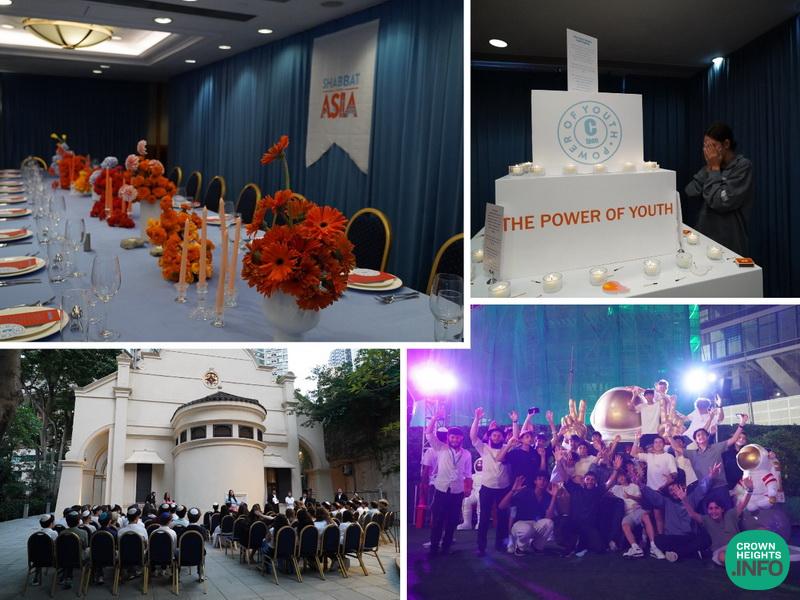 CrownHeights.info7 days ago
The CTeen Asia Shabbaton reached its high point this Shabbos, as 100 teen leaders from 17 chapters across Asia came together in Hong Kong for a Shabbos full of singing, learning and new friendships.
Friday night, the teens welcomed Shabbos together with a meal in a beautifully set hall, filled with singing and dancing. The evening continued with icebreakers that brought teens from different countries together, an “Ask Me Anything” session and a farbrengen that went deep into the night. “The teens were so welcoming and warm,” said Yehudah, a volunteer on the trip. “They instantly bonded.”
Shabbos morning opened with breakfast and a morning program, followed by davening at Chabad, where the aliyos were auctioned off for mitzvah commitments. After lunch, the teens took the floor for Teen Talks, with several sharing their own stories. Yehudah described one such story as “very moving, I think it really uplifted everyone who listened.” In the afternoon, the group set out on a 90-minute hike up to Victoria Peak, with beautiful views of the city the whole way up.
“The Rebbe taught us to recognize the power of young people’s idealism to change the world,” said Rabbi Mendy Kotlarsky, chairman of CTeen International. “This Shabbos, we put the teens center stage to lead and inspire their peers. It’s one thing to hear a message from a rabbi. But when someone your own age, facing the same challenges you face, shares their story, it empowers you so much more.”
At the summit, as Shabbos ended and night settled over the city, the teens gathered for Havdalah. When asked about his favorite part of the Shabbaton so far, Jacob, a teen from Singapore, pointed to that moment. “It was really beautiful,” he said. “There was a guitar, everyone was singing and dancing, and the atmosphere was amazing.”
For many of these teens, moments like this meant something more. Most come from communities where they may be one of only a handful of Jewish kids in their city. On the peak, they stood among 100 Jewish peers from across the continent. “My favorite part of the Shabbaton so far was meeting so many other Jewish teens my age,” said Aidan, an Israeli teen whose family now lives in Shanghai. “Our Jewish community in Shanghai is small, so it meant a lot to be with so many others who share my experiences.”
The celebration continued after Havdalah. The group rode the Hong Kong Observation Wheel, then crossed Victoria Harbour on the Star Ferry to the Tsim Sha Tsui waterfront, where they gathered for a group photo with the skyline behind them. “It was really an incredible sight,” said Yehudah. “Jewish teens from all across Asia, standing together as one.” The evening culminated at Chabad of Kowloon with a festive Melave Malka, filled with music and dancing late into the night.
The Shabbaton, organized by the CTeen International Team at Merkos 302, was hosted by the CTeen Hong Kong chapter led by Rabbi Mendy and Mushka Rabinowitz, together with Rabbi Mordechai and Goldie Avtzon, the first Shluchim to South-East Asia, and marks 40 years of Chabad in Asia and the incredible growth of CTeen Asia. It wraps up Sunday, as the teens head home to Mumbai, Shanghai, Bangkok, Singapore and beyond, ready to bring what they gained back to their families and fellow teens.
 CrownHeights.info7 days ago
More than one in four Americans cannot pay all of their monthly bills, according to a concerning new survey.
A troubling 27% of adults surveyed by Pew Research Center admitted they can only pay some of their monthly dues or make partial payments — a slight uptick from the share who said the same during COVID in 2020.
Twenty-four percent of Americans surveyed in April 2020 said they couldn’t make all their monthly bills, according to the pollsters.
CrownHeights.info7 days agoMenachem Junik (Crown Heights) to Faigy Lieberow (London, UK) L’Chaim: Tonight, Motzei Shabbos, 9:15pm at The Simcha Hall 571 Albany Ave
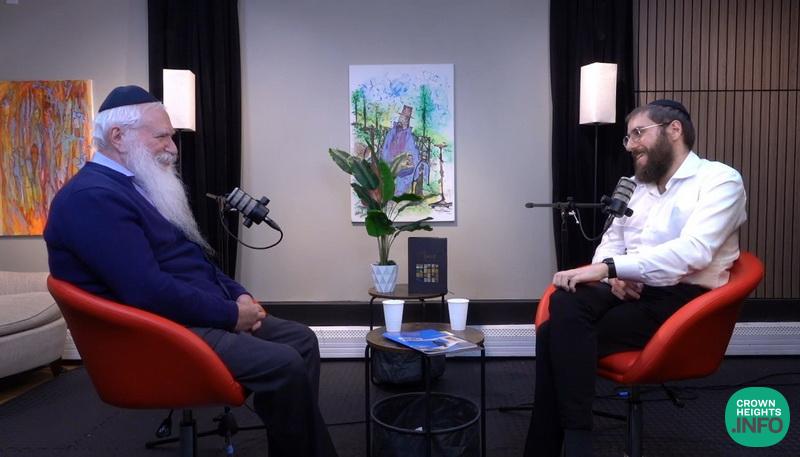 CrownHeights.info7 days ago
In this episode, world-renowned lecturer and teacher of Chassidus Rabbi Manis Friedman joins us for a deep and thought-provoking conversation about his personal journey and the fundamental questions at the heart of a Chossid’s life.
Rabbi Friedman traces his family’s connection to Lubavitch in Tashkent and their eventual move to America. He shares memories of growing up in Crown Heights, attending the United Lubavitcher Yeshivos at Bedford and Dean, and living in the same apartment building as Rebbetzin Chana, the Rebbe’s mother. He reflects on how his friends and educators helped draw him closer to the Rebbe, his decision to become a Lubavitcher Chossid, and how his siblings followed suit.
He recalls a pivotal moment he witnessed with the Rebbe, his experiences in yechidus, and his move to Minnesota on shlichus after his marriage. He also takes us back to the founding of Bais Chana, the pioneering institution for baalos teshuvah, sharing how it began and what those early days were like.
Rabbi Friedman offers a fascinating look at his unique role translating the Rebbe’s farbrengens live for satellite television broadcasts—how it began, what it required, and the experience of conveying the Rebbe’s words as he spoke. Throughout the conversation, he explores what it means to understand and articulate Chassidus, and how expressing it clearly in English is an indicator to how much we have understood and internalized.
In the second part of the interview, the conversation turns to some of the biggest questions: Why do we need a Rebbe? What is the chiddush of our Rebbe and the mission of Dor Hashvi’i? What does it mean to bring Moshiach, and how do we understand Gimmel Tammuz within that mission? Rabbi Friedman addresses these questions and more with the clarity and depth that have made his teaching meaningful to so many.
 CrownHeights.infoCrownHeights.info7 days ago
by CrownHeights.info
A 51-year-old Los Angeles man has been arrested on federal charges after allegedly threatening to firebomb a Jewish preschool operated by Chabad-Lubavitch, according to a report published Saturday by the New York Post.
Steven Duenas, of the Los Feliz neighborhood, is accused of planning an attack on JEMS Preschool, a Chabad-affiliated early childhood education program serving young children in the Los Angeles area. Federal investigators allege that Duenas posted antisemitic messages online and threatened to carry out an attack using Molotov cocktails, raising serious concerns about the safety of the children and staff at the preschool.
According to the New York Post’s account of the federal criminal complaint, Duenas published a series of disturbing posts on social media on September 19th, including images and references to incendiary devices. In one post, he allegedly threatened to bomb JEMS Preschool, while other posts contained explicitly antisemitic statements.
The FBI subsequently searched the home Duenas shared with his mother, reportedly in the early morning hours of October 2. Investigators allegedly discovered components they believed were intended for the construction of a Molotov cocktail.
Duenas was arrested and faces federal charges related to threatening communications and the alleged possession of an illegal destructive device. The allegations have not been proven in court.
JEMS Preschool is part of the Chabad of Greater Los Feliz community and provides early childhood education to children as young as 18 months. The alleged plot therefore targeted an institution serving some of the youngest members of the Jewish community.
The New York Post also reported that Duenas’s mother expressed disbelief over the allegations, saying that the situation did not fit her understanding of her son and describing difficulties he had experienced in recent years.
The arrest comes amid continued concerns over antisemitic threats and attacks targeting Jewish institutions across the United States. For Jewish schools and preschools, such threats are particularly alarming because they involve facilities where young children gather daily for education and care.
Federal authorities are pursuing the case as the allegations move through the legal system. Duenas is presumed innocent unless and until proven guilty in court.
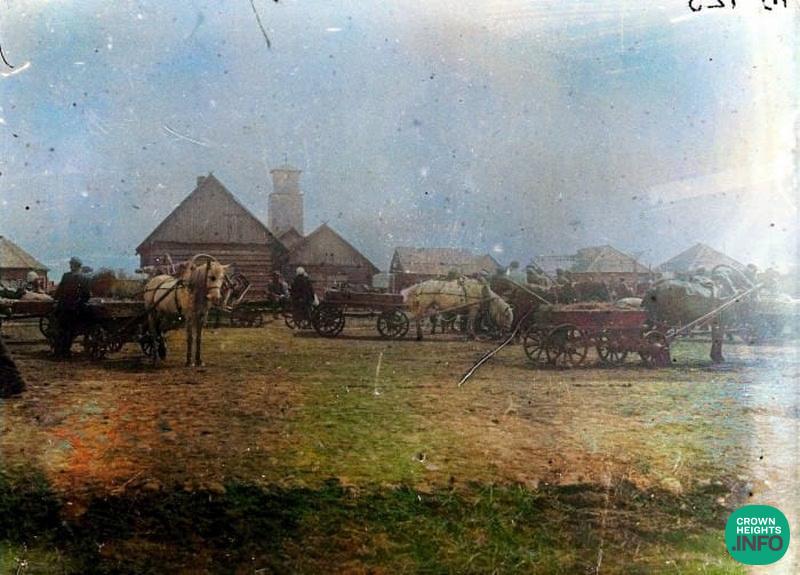 CrownHeights.info7 days ago
by Dovid Zaklikowski for Hasidic Archives
One of the supporters of the newly founded Tomchei Tmimim in the town of Lubavitch had a fiery Chassidic soul. But when he arrived in the small town, he expected the townspeople and guests to show him respect.
The seat he chose in the study hall was his. He expected the leading Chassidic figures to treat him with respect and to meet his demands for accommodations. He would even enter the office of Rabbi Yosef Yitzchok Schneersohn, the yeshivah’s administrator and future Lubavitcher Rebbe, without knocking, whether or not a meeting was taking place.
The man was tolerated, but in many ways, he was pitied. The unstable economy meant his wealth could be wiped away at any moment. Would he be able to survive a serious financial challenge?
When his son reached the age to enroll in the yeshivah, the intelligent teenager easily passed the entrance exam. Like his father, he felt superior to his fellow students. He believed that his wealth deserved everyone’s respect and that his intelligence entitled him to have his opinions accepted as though they had come directly from Sinai.
One day, Rabbi Yosef Yitzchok told him to return his study volume, effectively expelling him from the yeshivah. The young man believed that if he left, he would never be allowed to return to his studies. Although he could no longer attend the study sessions, he decided he could still stand at the entrance and listen.
Ashamed to ask his father for money to buy food, and unable to eat with the other students, he rationed what he had, buying just enough to survive and continue studying.
It was difficult and embarrassing for the young man, but over the months, he came to understand what mattered in life. The students at the yeshivah soon noticed a great change in his personality. They found him pleasant to talk with and to debate Talmudic topics.
When his father arrived some three months later, he was shocked to see how much weight his son had lost. He barged into Rabbi Yosef Yitzchok’s office and demanded to know why there was not enough food for all the students. Rabbi Yosef Yitzchok chose not to respond to the father. Instead, he called in the student and gave him a note allowing him to return to his regular studies at the yeshivah.
A few days later, Rabbi Yosef Yitzchok explained to the father what had happened: his son had withstood the challenge through personal self-sacrifice and had become a different person. “He is now not only enrolled in the yeshivah,” he said, “but has also become integrated into the life of a Lubavitch chassid. He will lead a productive life that will give you much pleasure.”
Find Hasidic Archive’s, latest book Yards of Kindness here.
CrownHeights.info7 days agoRabbi Chaim Dalfin, author and Chasidic historian shares interesting facts, many revealed for the first time. The purpose of his program is to inspire all but especially the youth. Watch another installment here on CrownHeights.info.
Visit Rabbi Dalfin’s website: Click Here
 CrownHeights.info8 days ago
by Rabbi Sholom DovBer Avtzon
This weeks’ post is L’zechus our newly born granddaughter Cheyena Baila bas Chana shetichye, L’arichis Yomim V’shonim tovim. May our children raise her, together with their other children, L’Torah, Chuppa U’maasim tovim, in good health, tranquility, and may we all merit to inform each other with good tidings and the coming of Moshiach Tzidkeinu.
Towards the end of every Simchas Torah farbrengen, the Rebbe reminds us about the importance and necessity of saying and learning CHiTaS. Being that this year is one hundred years since the Frierdiker requested, not only from Anash, but that all Jews should say the daily portion of Tehillim as it is divided according to the days of the month, I decided to focus this week’s post on the aspect of Tehillim, and bezras Hashem in upcoming articles I will focus on the aspects of the daily learning of Chumash and Tanya.
In the beginning and back of the Tehillim Ohel Yosef Yitzchok that is published by Kehos, there are numerous letters that discuss numerous aspects about this Takannah, and most of this article is based on some of those letters.
As always, your feedback and comments are greatly appreciated and most welcome.
In a footnote there on page 210 , the Rebbe writes, that in order for one to clearly understand the background to what caused the Frierdiker Rebbe to make this Takkanah and request all Jews to say the daily portion of Tehillim, as it is divided by the thirty days of the month, he is quoting from a letter that HaRav Eliyahu Chaim ben Reb Pinchos Tudrus Althaus wrote, about the Frierdiker Rebbe’s arrest and ultimate redemption on Yud Beis-Yud Gimmel Tammuz. Here is part of that letter:
From the beginning of that known year 5687, a tremendous panic fell upon all those who were close to the Rebbe’s household. Even the Rebbe was gripped by fear, as he explicitly related to me and Reb Michoel Dworkin [towards the end of the year] when we were with him in [his place of exile, in] Kostroma.
These are the Rebbe’s words:
Before the onset of the year 5687, I was extremely fearful. I wasn’t concerned or thinking about myself, as my thoughts centered upon the Chassidim.
Before I publicized the guidance / instruction that all Jews should say the daily schedule of Tehillim, by me it was becoming extremely difficult.
I asked the Rebbe,” When did the Rebbe give this instruction/guidance?”
“On Simchas Torah was his reply. And then I remembered that on Simchas Torah day, during the kiddush that took place in his mother, Rebbetzin Shterna Sarah’s apartment, he continuously requested from Anash that they should accept upon themselves to recite the daily schedule of Tehillim.”
It is interesting to note, that originally the Frierdiker Rebbe said that the Chazzan should move away from the Amud (the place he stands when davening) and recite it in a different place. But after some time (possibly years) he gave the directive that the Chazzan says it in his regular place.
Then seventeen and a half years later, on Beis Nissan 5704 (the yahrzeit of his father the Rebbe Rashab), there was another change. After davening before the chazzan began saying the daily Tehillim the Frierdiker Rebbe said, I received a directive from Heaven, that on days that we don’t say למנצח because we don’t say tachanun, we should say it as part of the daily Tehillim.
Our custom on those days that we do not say Tachanun, is to begin the Tehillim with saying למנצח, followed by the shiur Tehillim for that day.
The Rebbe also noted, that on every Rosh Chodesh one should learn their personal Kapital of Tehillim, (depending how long it is a single possuk or some pesukim, so that throughout the year, one clearly understands the meaning of their Kapital.
So when a child is six years old (or whenever they learn how to read properly on their own), they should say Chapter seven, as they are now entering their seventh year.
Shortly after the Frierdiker Rebbe initiated this Takkanah, the chossid Reb Chaim Dovid Laine, wrote to the Frierdiker Rebbe that perhaps he should also give the guidance of saying the entire Tehillim every Shabbos, as is done in some communities.
The Rebbe’s response was, that it is worthy to introduce this only on Shabbos Mevorchims, but not every Shabbos. And that the entire Tehillim should be said before davening.
Some common questions that are asked about when to say the daily portion of Tehillim:
1. If I come to shul early, could I say the Tehillim before davening?
Rabbi Althaus notes in the above-mentioned letter, that he asked this exact question to the Frierdiker Rebbe and the Rebbe’s reply was that the Tehillim one says before davening is connected to Tikkun Chatzos. It has nothing to do with this Takannah.
Author’s note: I understand that to mean that even if one said the daily chapters of Tehillim before davening, they should repeat it after davening.
2. When should one say their and their family members kapital (chapter).
The Rebbe writes in a letter that they should be said after the daily segment is said. See clarification in fn
However, it should be noted that the custom for many is that we say the Rebbe’s kapital before the daily segment.
3. Can one say it after Shemone Esreh, while waiting for the Chazzan to begin saing it outloud?
I was told years ago by elder chassidim and mashpiim, that is not proper. The explanation given was that davening has a specific order. It begins with Birchas Hashachar (the morning blessings), followed by Pesukei D’zimara (from Hodu through Yishtabach, then Birchas Krias Shema and we then stand when we say Shemoneh Esreh.
These four stages represent the ladder of davenning, in which a person who is on the lowest rung, immersed in the physical world, elevates themselves until they are able to stand in front of Hashem – the King of all kings. In Chassidic terminology, the person goes up from Asiuh to Atzilus.
Then after davening, we bring down the blessings we received, again from one world to the lower world.
So by interjecting Tehllim in middle it is confusing or twisting the order.
4. Concerning Shabbos Mevorchim, what if it takes me five hours to read it properly and I can’t say the entire Tehillim that Shabbos.
I heard by farbrengens of Mashpiim that the Rebbe answered some individuals that they should continue saying it the following Shabbos.
A Taste of Chassidus
ויאמר ה’ הן עם אחד Torah Ohr (Bereishis) p. 10B
The Alter Rebbe focuses on a basic question on this weeks’ parsha.
The people decided to build a very tall tower, and as the possuk states, they say this is in order to prevent Hashem from scattering us, whenever He so decides.
Hashem says, they are one, and this is what they are planning to build, and now nothing would be beyond them, and they will be able to do whatever they plan to do. Therefore, I will mix up their language, taking away their ability to communicate with each other [in order to prevent them from accomplishing their goal].
So the obvious question is, how are they, mere creations going to be able to do whatever they want, even if it is against Hashem’s will? As they stated their plan was to prevent Hashem from scattering or destroying man again!
And the only way for Hashem to stop them is by mixing them up by creating different languages, so that one doesn’t understand the other.
In order to explain this, one has to understand three of the general stages in creation.
As well as an understanding of one aspect that differentiates between Hashem’s holy name שם העצם and all other names of Hashem.
The name Keil (as in Aleph and a lamed) is in Chesed, the name Elokim is in gevurah, because those names are descriptive. Therefore, they can be used for other meanings, such as the possuk states Elokim lo sikalell – Do not curse a Judge and v’ess eileeh ha’aretz Lukach – and the princes of the earth He took.
And then there is the name of Adni, which when Avrohom used it when he greeted the three angels, our sages are not sure if he was addressing Hashem or the angels.
So if they have different meanings, we understand that they can be closely related to Chesed-Kindnes or Gevurah-strictness. But that does not explain how Shem Hu’etzem of Yud, Hei, Vov and a Hei [which is not associated to other meanings] is connected to Tiferes!
But the answer is, one of Yaakov Avinu’s conditions with his father-in-law, Lavan, was that if the sheep give birth to babies that are עקודים נקודים וברודים – animals with stripes or ring streaked around their ankles [or as we will refer to it as bound (as that is the word describing Yitzchok being bound on the Alter, (Akeidas Yitzchok)].
Then there were the animals that were נקודים born dotted (speckled) or pointed, as the word נקודה which means a point.
And finally the sheep that were born with large blotches or spotted [as the root word is ברד – which means hail, (which is larger than a small dot)].
Chassidus and Kabbalah explain it as follows from bottom up.
In the world of Atzilus, the ten Sefiros are individualized (as they are in the world of Tohu which is above it). However, in Atzilus they harmoniously utilize the aspects of the other sefiros. [As we say in sefiras Ha’Omer, Chesed she’b’chesed. Gevurah she’b’chessed Tiferes she’b;chesed and so on.]
This is the world of Tikkun – where things are the way they should be.
And that is what Yaakov wanted sheep that represented the concept of (unity) ברודים.
But in the world of Tohu, which is defined by the concept of נקודים, each Sefira stood alone, as its own entity and didn’t accept anything from the other sefiros and therefore it broke, as this is the kabbalistic concept of Shiviras Hakeilim – the broken utensils.
But then there is the level above it, an initial stage of Creation. So being that there is a concept of creation, there has to be the ten Sefiros. However, all ten of them are bound up as one, they do not have separate utensils, they are all in one Utensil.
In this scenario, while there is Chesed – Kindness, gevurah – severity, Tiferes – beauty and so on, it is impossible to point them out individually, as they all are as one.
This level of the ten concealed sefiros (Hagenuzos) is connected to Shem Ha’etzem. Hashem is the Creator, yet we have yet to see the aspects of creation. Therefore, as noted above, there is no connection or other utilization of this name with any other entity, unlike the other names.
So now arises the question, how can we say in Pusach Eliyahu (the prayer we say before Mincha on Erev Shabbos), that Hashem’s name is associated with Tiferes.
But as we know, the ten Sefiros are divided in three lines, Chesed on the right, gevurah on the left, and tiferes in the middle. The difference though is that Tiferes goes up and is connected to Kesser which is above all ten Sefiros, and kesser which is not a defined attribute is associated to Hashem’s name.
The reason why Tiferes can be associated with Kesser and that level is because although all the sefiros in Atzilus utilize the other sefiros, nevertheless, Tiferes is unique that it is not an attribute of its own, but rather a combination of Chessed and Gevurah together.
In other words, it has the aspect of togetherness and unity in its best form, and therefore it is associated with Hashem’s name.
Now we can explain why the builders of the tower were going to be able to succeed.
While togetherness is normally associated with humbleness, although they refused to humble themselves before Hashem, their whole intention was to be and remain together as one.
The way Hashem created the world is that when one puts their own ego aside, and strives to get along with others in harmony, they receive Hashem’s blessings to succeed. And being that their intention was to remain as one unit, they had the power of Hashem in their hands. This is the inner meaning of ונעשה לנו שם – we will utilize His Name!
Therefore, Hashem saw the necessity of preventing them to utilize this power of unity to battle Him, and He confused them by creating seventy languages and they could no longer communicate with each other.
Rabbi Avtzon is a veteran educator and the author of numerous books on the Rebbeim and their chassidim. He is available to farbreng in your community, and can be contacted at [email protected].
 CrownHeights.info9 days ago
When we read the story of Noach and the Flood, we encounter one of the most devastating tragedies in human history.
The world had become so corrupt that Hashem decided to destroy it and begin anew. The fountains of the great deep burst open, the windows of Heaven opened, and rain poured down for forty days and forty nights. Everything was submerged.
Chassidus reveals something extraordinary.
The Flood was not only about destruction. It was also about purification.
A Mikvah requires forty se’ah (measures) of water to purify a person. The Flood lasted forty days, cleansing the world of the spiritual filth and corruption that had consumed humanity.
The world emerged with a new beginning.
There is another remarkable dimension to this story, connecting Noach’s Flood to the world we live in today.
The Torah tells us that the Flood began in the six-hundredth year of Noach’s life, when “all the fountains of the great deep burst open, and the windows of Heaven were opened.”
Two openings. From above and from below.
The Zohar makes an astonishing prediction.
In the sixth century of the sixth millennium, spanning the 18th and early 19th centuries, the gates of supernal wisdom would open, together with the fountains of wisdom from below, preparing the world for the seventh millennium, the era of Moshiach.
Notice the parallel.
Six hundred years of Noach’s life. Six hundred years into the sixth millennium.
Windows opening from Heaven. Fountains bursting forth from below.
But this time, instead of a flood of water, the world would experience a flood of knowledge!
And look what happened.
The Industrial Revolution was transforming civilization. Scientific discoveries multiplied. Machines changed how people worked, traveled, and communicated. Developments continued accelerating.
Electricity. Radio. Television. Computers. The internet. And now artificial intelligence.
Knowledge that once took generations to accumulate is now accessible in seconds. The fountains of earthly wisdom have burst wide open!
But what about the windows of Heaven?
Here, too, an extraordinary revolution was taking place.
The Baal Shem Tov began teaching the inner dimensions of Torah, the deepest secrets of G-dliness. The Alter Rebbe developed these teachings into Chabad, bringing profound Divine concepts into human intellect to be understood and internalized.
With each successive generation of Rebbeim, these teachings became increasingly accessible.
Two floods of wisdom. One from above, one from below. Both preparing the world for Moshiach.
But why now?
Why weren’t these revelations available to the great Tannaim, Amoraim, and righteous generations that preceded us?
The Rebbe explains that every generation receives the revelations necessary for its particular mission.
Earlier generations did not need what our generation needs. As the world approaches its ultimate purpose, deeper dimensions of Torah must be revealed.
And there is another reason.
The explosion of scientific and technological knowledge brings enormous opportunities, but also dangers. Without a spiritual compass, human intelligence can lead us in the wrong direction.
Look at what’s happening on many college campuses. More knowledge does not necessarily produce more morality or goodness.
Chassidus provides the spiritual strength to confront these challenges, protecting us from assimilation and influences that pull us away from Torah and Yiddishkeit.
These two streams of wisdom are not meant to fight each other.
They are meant to work together!
The Rebbe taught us to utilize every available technology to spread Torah and Yiddishkeit. Radio, television, satellite communications, the internet—and now AI—can become instruments for spreading the wellsprings of Chassidus throughout the world.
The very technologies that could distance someone from Hashem can instead bring him closer!
And this brings us back to Noach.
The first Flood purified the world through forty days of water. The flood foretold by the Zohar prepares the world through an unprecedented revelation of knowledge, both Divine and earthly.
And where is this heading?
Toward the ultimate revelation, when Moshiach will reveal G-dliness beyond anything we can presently comprehend.
Today, technology allows information to reach millions worldwide almost instantaneously. Imagine what that tells us about the possibilities of universal revelation!
Will Moshiach need these technologies? Who knows? Divine revelation certainly doesn’t depend on them.
But they give us a glimpse of how the entire world can be reached in an instant.
And then the promise will be fulfilled:
“The earth will be filled with the knowledge of Hashem, as the waters cover the sea.”
Once, water covered the earth to cleanse it.
Soon, the knowledge of Hashem will cover the earth to illuminate it.
From the Flood of Noach to the revelation of Moshiach.
May it happen now!
Have a Flooded, Intellectually Stimulating Shabbos,
Gut Shabbos
Rabbi Yosef Katzman
To support our activities, please Zelle or PayPal to: [email protected]
 CrownHeights.info9 days ago
In the early 1970s, a young Lubavitcher yeshiva student set out to bring the weekly Torah portion to life in a new way. The goal was not simply to teach the stories of the Chumash, but to help readers experience them as living events, filled with people, personalities, dilemmas and lessons that remain relevant today.
That vision became The Torah Times — a distinctive publication that presents the people and events of the weekly parsha through the lens of contemporary life, combining Torah knowledge with humor, creativity and an accessible style.
Its guiding philosophy is rooted in a fundamental teaching of the Alter Rebbe, recorded in Hayom Yom for 2 Cheshvan: “One must live with the times” — meaning that one should live with the weekly parsha. The objective is to do more than study the Torah portion; it is to make its lessons part of everyday life.
The Torah Times brings this idea to life by presenting Torah events not as distant episodes from an ancient past, but as experiences unfolding here and now. Its characters face recognizable challenges, its stories carry contemporary relevance, and its lessons speak to the concerns of today’s readers.
As the Torah itself instructs, “These words that I command you this day shall be on your heart.” Rashi explains that the words of Torah should be new in our eyes, as though they were given today. That spirit of freshness and immediacy lies at the heart of The Torah Times.
The first Torah Times was presented at the 1973 Lag B’Omer parade in Crown Heights. A clock sign advertising the publication could be seen at the intersection of Eastern Parkway and Kingston Avenue, introducing the project to the crowds gathered for the annual parade.
The initiative received the Rebbe’s blessing and guidance. It was included among the Rebbe’s 71 Mosdos, and Merkos L’Inyonei Chinuch funded its first six months of publication, providing important support during its early development.
The project grew out of the work of Rabbi Yisroel Rubin, ob”m, who began writing The Daily Chitas while serving as a camp learning director and studying at the yeshiva at 770 Eastern Parkway. Drawing on the commentaries of Chazal, Rabbi Rubin sought to make the daily and weekly Torah portions accessible and meaningful, inspired by the Rebbe’s emphasis on living with the parsha.
With time, the publication evolved into The Torah Times, with Rabbi Rubin and students of Maimonides School continuing to develop and enhance its presentation from week to week.
The Torah Times was not simply a creative project that received an initial blessing. According to transcripts of Rabbi Rubin’s original submissions to the Rebbe, the Rebbe provided specific guidance on the publication’s name, format, distribution and editorial standards.
The original title, The Daily Chitas, was to be replaced with a name that would be more universal and readily understood by a wider audience. The result was The Torah Times, a title intended to communicate the publication’s purpose to readers beyond its original circle.
The Rebbe also emphasized that the publication should be attractively produced and easy to distribute, with a more popular presentation that could reach a broader public. When asked about its frequency, he indicated that, at the initial stage, it should remain a biweekly publication.
Editorial quality was another concern: the material was to be proofread and edited before publication.
One particularly telling detail reflects the Rebbe’s personal attention to the project. Rabbi Rubin recalled that the Rebbe once noted that Parshas Toldos, issue number six, was missing from the collection of Torah Times submitted to him and kept in the Rebbe’s library.
These directives reflected a clear vision: Torah content should be presented with care, in a format that people would want to read and share, while maintaining the standards expected of a publication devoted to Torah.
What distinguishes The Torah Times is its approach to storytelling. Rather than presenting the events of the Chumash as distant history, it places the reader inside the story, bringing the personalities, conflicts and decisions of the parsha into sharper focus.
Its style is humorous and entertaining, but its purpose is serious. The humor serves as an entry point, helping readers engage with the material, remember the stories and connect with their underlying messages.
The characters may have lived thousands of years ago, but the questions they faced — family relationships, responsibility, integrity, faith, leadership and personal growth — remain familiar. By presenting these encounters in a contemporary, accessible way, The Torah Times encourages readers to see the weekly parsha as a guide for their own lives.
This approach reflects the broader Chabad emphasis on making Torah relevant to every Jew, not merely as a body of knowledge to be studied, but as a living guide that informs one’s choices and outlook.
More than five decades after its first appearance at the Lag B’Omer parade, the idea behind The Torah Times remains as relevant as ever: the weekly parsha should not end when the sefer is closed or the lesson is over. Its stories, teachings and values should accompany us throughout the week.
Readers can obtain The Torah Times editions covering Bereishis and Shemos online: Available on Amazon
By combining engaging storytelling with the enduring wisdom of Torah, The Torah Times offers a creative way for families, educators and students to make the weekly parsha more vivid and meaningful.
Ultimately, its message is the same one that inspired its beginnings: Torah is not only something to learn. It is something to live.
CrownHeights.info9 days agoMendel Serebryanski (Melbourne, Australia) to Mussie Shemtov (West Bloomfield, MI)
 CrownHeights.info9 days ago
In an incredible kiddush Lubavitch, the wildly popular and transformative sefer called “OUR MESORAH” – recently released by Rabbi Sholom Schochet of Coral Springs, Florida – has been featured in Rabbi Stefansky’s popular daf yomi shiur, viewed by an estimated 50,000 people daily.
As we recently posted, the sefer has received enthusiastic haskamos and approbations from nearly a dozen leading Rabbonim worldwide, spanning diverse communities and including prominent Poskim and Dayanim. Rabbi Chaikin noted that by publishing this monumental work, the author has brought tremendous nachas ru’ach to the Rebbe
More information about the sefer’s incredible topic can be seen here: https://www.ourmesorah.com/
To purchase the sefer on Amazon: Click Here
 CrownHeights.info9 days ago
New York City Emergency Management is advising New Yorkers to prepare for possible strong thunderstorms and gusty winds Friday evening, based on the latest National Weather Service (NWS) forecast.
Winds are expected to pick up between 3 p.m. and 4 p.m. ahead of a cold front, with heavy rain showers and scattered thunderstorms forecast to move through the city between 6 p.m. and 9 p.m. New York City is under a Slight Risk (Level 2 of 5) for severe storms from 8 a.m. Friday through 8 a.m. Saturday. Lingering drizzle and light showers are expected early Saturday morning, with conditions drying out after 8 a.m.
“If you have Friday evening plans, give yourself a little extra time and try to be indoors when the storms come in,” said NYC Emergency Management Commissioner Christina Farrell. “Tonight’s storms are expected to move in quickly with the cold front, and the forecast shows gusts of 40 to 60 mph are possible. Leaves can clog catch basins this time of year, so keep an eye out for puddles on the roads on your way home.”
Rainfall totals of 0.2 to 0.4 inches are most likely, with 0.5 to 0.75 inches possible locally in thunderstorms. Rainfall rates are expected to stay below 0.2 inches per hour overall, with brief rates of 0.5 to 1 inch per hour possible during thunderstorms. Excessive rainfall is not expected, but fallen leaves clogging catch basins could cause ponding on roadways and highly localized flooding during heavy rain. The primary hazard is thunderstorm wind gusts of 40 to 60 mph, which could bring down tree branches. The line of storms is expected to weaken as it moves from west to east, with the highest chance of severe weather over western parts of the city.
Gusty northwest winds of 15 to 25 mph, with frequent gusts of 30 to 35 mph, are expected to continue Saturday morning and into the early afternoon. Temperatures are expected to turn much cooler, with highs in the mid-50s, lows around 40 degrees, and wind chills in the mid-30s. Winds are expected to ease Sunday, with highs in the upper 50s.
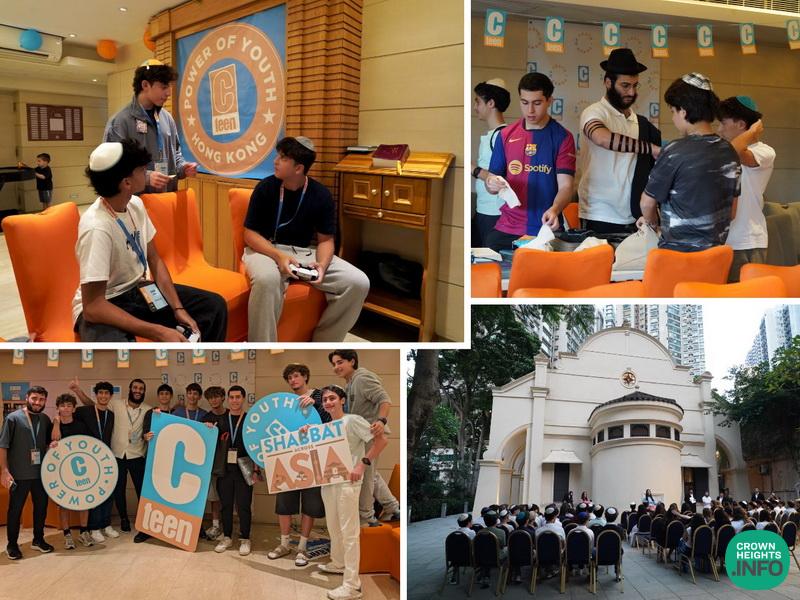 CrownHeights.info9 days ago
From Mumbai to Shanghai and Bangkok to Singapore, Jewish teens across Asia are on their way to Hong Kong this week for the CTeen Asia Shabbaton, held October 15–18.
The city will be transformed into the nerve center for Jewish teen life across Asia, as 100 teen leaders representing 17 CTeen chapters in the CTeen Asia network, are taking part in this historic weekend, including new chapters Hong Kong, Singapore, Mumbai, Shanghai, Phuket, Koh Samui, Bangkok and Nichada Thani.
Many of the teens come from small, far-flung Jewish communities where the local Chabad House is the sole infrastructure of Jewish life, and where a teen may be one of only a handful of Jewish kids in their city and the only ones in their class. Facing tremendous misinformation, they are the sole representatives of Judaism to their peers. This weekend they’ll spend Shabbos with peers from across the continent, knowing they aren’t alone. Gaining knowledge and skills to bring back home to their communities and CTeen clubs they lead.
“This weekend is a milestone in the growth of Jewish life across the region,” said Rabbi Mendy Kotlarsky, Executive Director of Merkos 302. “We hope the friendships and initiatives these teens create here will have a ripple effect. They will return to their communities as proud ambassadors, bringing Jewish life and vibrancy wherever they go.”
Hosted by the CTeen Hong Kong Chapter led by Rabbi Mendy and Mushka Rabinowitz, as well as the first Shluchim to South-East Asia, Rabbi Mordechai and Goldie Avtzon, the summit marks 40 years of Chabad in Asia.
The Shabbaton opened Thursday night with a welcome dinner. Over these four days, the teens will learn about the history of Hong Kong’s Jewish community, study with Shluchim, hear from local community members, and lead talks and roundtable discussions on what it means to be a Jew. The goal is to give each teen the knowledge, skills and inspiration to go home and take a bigger role in Jewish life in their own community.
After Shabbos, the group will climb Victoria Peak for a Havdalah ceremony overlooking the Hong Kong skyline. They will then cross the harbor to Chabad of Kowloon for a Motzei Shabbos gathering.
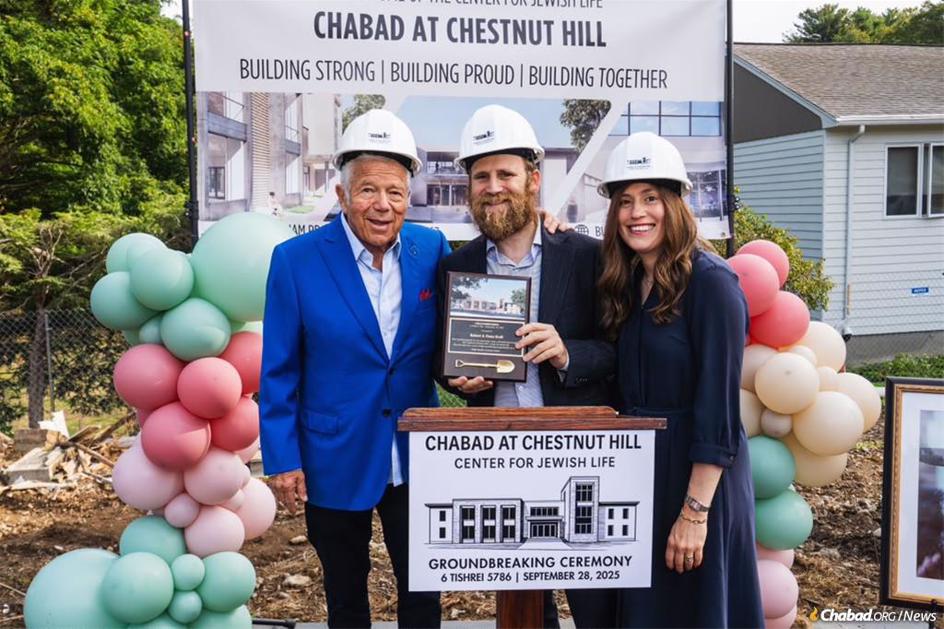 CrownHeights.info9 days ago
by Tzali Reicher – chabad.org
On Monday, the Columbus Day holiday, philanthropist Robert Kraft drove to Chestnut Hill, Mass., to see for himself the building rising at the corner of Bellingham Road and Grove Street.
He had attended the building’s groundbreaking the year before, and had been following the project’s progress closely since. The next day, on Oct. 14, he and Chabad-Lubavitch at Chestnut Hill announced that the new center would carry his family’s name.
Kraft, owner of the New England Patriots, together with the Kraft family, has given $5 million toward the three-story Jewish center, which will be known as the Kraft Family Chabad Center of Chestnut Hill. The center is scheduled to open for the High Holidays in 2027, and will include a beautiful sanctuary, social hall seating 300, classrooms, teen center and a preschool.
A rendering of The Kraft Family Chabad Center of Chestnut Hill. The center is scheduled to open for the High Holidays in 2027, with a beautiful sanctuary, a social hall seating 300, classrooms, a teen center and a preschool.
Rabbi Mendy and Grunie Uminer established Chabad of Chestnut Hill in 2001, which over the past two decades has grown into a vibrant center of Jewish life in the area.
“Spirituality and ruach are in such short supply in today’s world, and you all provide so much of it through your work, inspiration, warmth, and commitment to Jewish life,” Kraft explained in a video statement announcing the gift. “We are making this gift because we believe deeply in what you have built over the past 25 years and the positive impact you and Chabad have had on so many people’s lives.
“Chestnut Hill is my home. It is where I raised my family, and having a vibrant Chabad center right here in my hometown means a great deal to me and the Kraft family. “Knowing it will serve Jewish families for generations to come makes it even more meaningful.”
The friendship between the Kraft family and the Uminers has grown over many years. Rabbi Uminer officiated at the wedding of Kraft’s granddaughter, led the bris of his two great-grandsons and a baby naming for great granddaughter at the center.
Kraft grew up nearby in Brookline, in a home where Torah values were taught at the table; his father studied Pirkei Avot, Ethics of the Fathers, with him.
“We didn’t have a car. We lived in a rental apartment,” Kraft recalled in a video tribute last year, when he was honored with the L’Dor V’Dor award at Chabad of Chestnut Hill’s 25th Year Gala Dinner. “But I was very rich, because I had amazing parents.” He has often emphasized that his Judaism, instilled during his formative years, is central to who he is.
On his 83rd birthday in 2025, Kraft celebrated a second bar mitzvah at the Chabad center, chanting the haftarah of the Torah portion of Behaalotecha. He has put tefillin there, and has joined the community for Simchat Torah and other Jewish holidays.
“Much more than the dollar amount, seeing the Kraft family’s Jewish pride and public backing of Chabad and the work of the Rebbe, Rabbi Menachem M. Schneerson, of righteous memory, is very gratifying,” says Rabbi Uminer. “Mr. Kraft is one of the most visible Jews in the country. A lot of people look up to him. His active investment in a vibrant Jewish future, both on a financial and personal level, is a powerful statement of who he is.”
Robert Kraft is called up to the Torah at Chabad of Chestnut Hill.
The Uminers arrived in the Boston area in 2001 with their newborn baby, Mushkie, starting their Chabad center in their home with a handful of local Jewish families.
The community rapidly grew, with services and events being held in various homes. For High Holiday services, when Chabad would draw some 500 people, they would rent space at a nearby public school. Despite the struggle for space, the Uminers kept adding programs, including opening a small Gan Israel day camp; this past summer, 350 children attended Gan Israel of Chestnut Hill, the largest enrollment in its history.
Chabad’s search for a permanent home took a decade, and Eitan and Debra Milgram made the first pledge of one million dollars towards the building at the 13 Year Anniversary dinner which paved the way. When a suitable property finally came up, it was David and Tracey Frankel who provided the seed gift that made the purchase possible, and have led the Building Committee since. The plans then faced nearly a year of opposition from neighbors and a town board before the courts cleared construction to proceed.
The Frankels, who first encountered Chabad in South Africa, where they both grew up, received Chabad’s Visionary Award at the 25th anniversary gala. True to form, they turned the tribute toward the community.
“I remember coming to Chabad of Chestnut Hill, this little shtiebel,” David Frankel said that night, “and it felt very comfortable.”
“Coming to Chabad, and Mendy and Grunie, was something that felt much more familiar,” explained Tracey Frankel. “It felt like home.”
“They came with nothing and seeded this beautiful community,” David continued, “which we in some ways inherited and have been lucky enough to play a small, tiny role in strengthening.”
Several individuals have made seven-figure gifts to Chabad at Chestnut Hill’s current building campaign, and many more have given $18. The Kraft family’s gift brings the total raised to $20 million, leaving about $5 million to go.
“You have built an extraordinary community filled with wonderful people and families that are deeply passionate about their Yiddishkei, their love of Israel, and where Jewish pride is so alive,” Kraft said, addressing the Uminers and their family. “We look forward to seeing the Kraft Center continue to be a place of Jewish life, learning, community, and spirituality for many, many more years.”
For his part, Rabbi Uminer traces the community’s remarkable growth to the guidance and inspiration of the Rebbe.
In particular he remembers the time when, as a boy of 9 or 10, he was sitting on the floor next to the Rebbe’s seat during a farbrengen gathering at 770 Eastern Parkway. Moments earlier, he had wished l’chaim to the Rebbe and was now toying with his empty cup. All of a sudden, the Rebbe turned to him and asked him to say l’chaim again. The boy showed the Rebbe his empty cup. At that, the Rebbe poured the boy a little wine from his own kiddush cup and, with a broad smile, wished him l’chaim.
“I feel that blessing was for the entire Jewish community of Chestnut Hill,” says the rabbi. “The Rebbe’s wine of blessing has never stopped filling our cup.”
CrownHeights.info9 days agoIn the week of Parshas Noach, we present a letter where the Rebbe explains the obligation of Jews to promote the Seven Noachide Laws and makes a point of the Rambam’s emphasis that these laws are based on Divine authority and not as laws legislated by humans.
By the Grace of G-d
28th of Iyar, 5745
Brooklyn, N.Y.
Mr.
Larchmont, N.Y. 10538
Greeting and blessing:
This is to acknowledge receipt of your letter. As requested, I will remember you and your wife and daughter in prayer and may G-d grant the fulfillment of your heart’s desires for good in the matter about which you wrote.
Receipt is enclosed for you tzedoko and may it bring you and yours additional Divine blessings.
In the present days, approaching Shavuos, the Festival of Mattan Torah, I take this opportunity of sharing a timely thought with you in connection with an area which is sometimes overlooked. I refer to the requirement of the Torah that Jews should not only observe all its commandments in their own life, but should also promote the so-called Seven Noahite Laws among the gentiles, for the betterment of human society and human life in general.
These well known Seven Laws, with all their ramifications, are the basic moral laws upon which every decent society must be founded, if it is not to become a jungle of inhumanity and lawlessness. As the Rambam emphasizes, the observance of these Seven Categories of Laws has to be based on Divine authority, as the imperatives of the Supreme Being, the Creator of all mankind, and not a laws legislated by humans, which are often ignored or circumvented. History has shown clearly, and in our times in a most horrifying way, that man made laws, as such, are no guarantee of civilization. Indeed, the Holocaust was conceived and carried out by a country and nation which has long boasted of great philosophers and moralists, etc. – which need not be elaborated upon.
Needless to say that a Jew who occupies a special position in society, has even a greater obligation to spread the light of the Torah and mitzvos not only among fellow Jews, but also promote the above-mentioned basic laws of the society at large.
While the adherence to the Torah and mitzvos is a “must” for its own sake, it is well to remember that this is also the channel to receive Hashem’s blessings in all needs, and every increased effort in this direction, widens these channels.
I extend to you and yours prayerful wishes for a joyous and inspiring Yom Tov of Shavuos and the traditional blessing to “receive the Torah with joy and inwardness.”
With esteem and blessing,
 CrownHeights.info9 days ago
Fifty years ago today, on 4 Cheshvan 5737, the Rebbe held an unexpected weekday farbrengen. The Rebbe explained that recent advances in technology had broken down barriers that once seemed permanent: a voice in one place could be heard around the world at the very same moment. These developments had a purpose—to bring Torah, and especially Chassidus, to every person, in preparation for Moshiach.
Today, marking that anniversary, the leading Chabad publishers are launching Chabad.AI, a platform that brings together a vast treasury of Chassidus with new tools for learning and research. Where earlier technologies overcame distance, artificial intelligence offers new ways to navigate the seforim themselves: to find sources, understand difficult passages and discover connections across the teachings of the Rebbeim.
The platform’s library contains a vast collection of seforim in their original Hebrew, alongside many English translations and adaptations. At its heart is Daiah, an AI chat built to discuss and elucidate topics in Chassidus and offer Torah perspectives on questions of everyday life. Its responses are accurate and drawn from the authentic teachings of the Rebbeim, with clear explanations and citations that allow learners to consult the original sources. The platform also offers AI features for study and research, helping users locate sources, explore ideas and trace connections across seforim.
Chabad.AI is a joint initiative of the leading Chabad publishing houses: Kehot Publication Society, Vaad Hanachos B’Lahak, Chabad.org, and Sichos In English (SIE), with SIE serving as the managing operator. Behind the platform is a dedicated content, technical and AI team working to make the authentic teachings of the Rebbeim accessible through advanced technology.
Rabbi Yosef B. Friedman, director of Kehot Publication Society, sees the initiative as the next chapter in Kehot’s work.
“Kehot’s mission is to publish the teachings of Chassidus and make them accessible to an ever-wider circle of learners,” he says. “Chabad.AI marks a quantum leap forward in that work, opening new ways for people to explore and deepen their understanding of these teachings.
“There is also something astonishing in the medium itself. Behind all this wonder are silicon chips and electrical circuits—physical matter belonging to what Chassidus calls domem, the inanimate level of creation. The human being, endowed with intellect, can now receive through the inanimate something that deepens his own understanding of Torah. The lowest level of creation becomes a means of reaching higher.”
For Rabbi Chaim Shaul Brook, director of Vaad Hanachos B’Lahak, the platform takes the use of technology in learning a step further.
“Earlier technologies enabled us to hear and see teachings transmitted from afar, as the Rebbe describes in the sicha,” he says. “This technology adds a deeper dimension of understanding: the learner can ask questions, seek clarification and explore connections. It offers another way to help a person understand what he is learning.”
How, then, does the Rebbe’s sicha about the technology of that time speak to the possibilities of AI today?
Rabbi Shmuly Avtzon, director of Sichos In English, who initiated the project, explains: “The Rebbe describes the revelation of Chassidus and the growth of technology as an ongoing, dynamic process. Each generation brings new depths of Chassidus and new discoveries in technology. That means we must always be at the forefront, using every new breakthrough for hafatzas hamaayanos. Fifty years ago, that meant radio and television. Today it includes artificial intelligence, and with Chabad.AI, the wellsprings of Chassidus can reach further than ever before.”
Rabbi Hertzel Pewzner, mashpia at YTTL Morristown and team lead of Chabad.AI, describes what this will mean for learners. “Some initiatives move us forward incrementally, but this is a turning point in hafatzas hamaayanos,” he says. “Thanks to our exceptional team and an extraordinary collaboration of mosdos, the wellsprings of Chassidus are now available in an unprecedented way. So often people have questions, yet lack the opportunity to have them answered. Here, anyone can ask, learn and grow through a personal exchange grounded in the original sources. Even scholars can locate sources in seconds and trace connections that once took hours.”
“Just as the Rebbe foretold and catalyzed all those years ago, the ‘explosion’ of science and technology is becoming ever more symbiotic with the revolutionary ‘explosion’ of Torah’s deepest secrets and the world’s thirst for them,” said Rabbi Zalman Shmotkin, executive director of Chabad.org. “For decades, Chabad.org has been privileged to collaborate closely with our extraordinary partners to share the teachings of Chassidus with the world, and to apply the Rebbe’s unique, holistic, and visionary lens of integrated Divine living on earth. This leap forward for hafotzas ha’maayanos is a natural and powerful expansion of that partnership.”
Rabbi Meir Simcha Kogan, Chabad.org’s director, summed up: “We look forward to enriching the learning and living experiences of our tens of millions of users across the globe, as they are empowered to engage with the wellsprings of Chassidus in ever more personal, interactive, and accessible ways.”
This project has been made possible by the vision and generosity of Reb Eliyahu and Inna Kholodenko and family. For Reb Eliyahu, Chabad.AI grew out of a lesson he learned in business, now applied on a far greater scale:
“The greatest opportunities come from recognizing a fundamental shift before the world fully appreciates its significance. Building a technology-driven business that challenged an established industry taught me that the goal isn’t simply to improve what already exists — it’s about seeing an entirely new future and having the determination to make it a reality.
“Chabad.AI represents precisely such a moment, but on a far greater scale. From the outset, we recognized the extraordinary potential of artificial intelligence to transform how Torah and Chassidus are learned and shared — opening the vast treasures of Torah and the Rebbe’s teachings to every Jew, everywhere, in every language. This is not simply another technological innovation. It is a historic breakthrough in hafatzas hamaayanos.
“The Rebbe taught us that technological advances are part of the Divine preparation for the Geulah. I believe that we are standing at a monumental inflection point in that process. Helping bring Chabad.AI to life is an opportunity to prepare the world for complete spiritual and physical harmony, culminating in a state of Divine awareness and universal peace.”
The launch is in honor of the wedding of Rebecca Kholodenko to Raphael Igelman, taking place today.
Many features are live today, with more to come in the weeks and months ahead. Fifty years after the Rebbe spoke, the invitation is simple: go and see for yourself at Chabad.AI.
Try Chabad.AI
____
Join the Chabad.AI WhatsApp Broadcasts for exclusive content and updates: https://Chabad.AI/Community
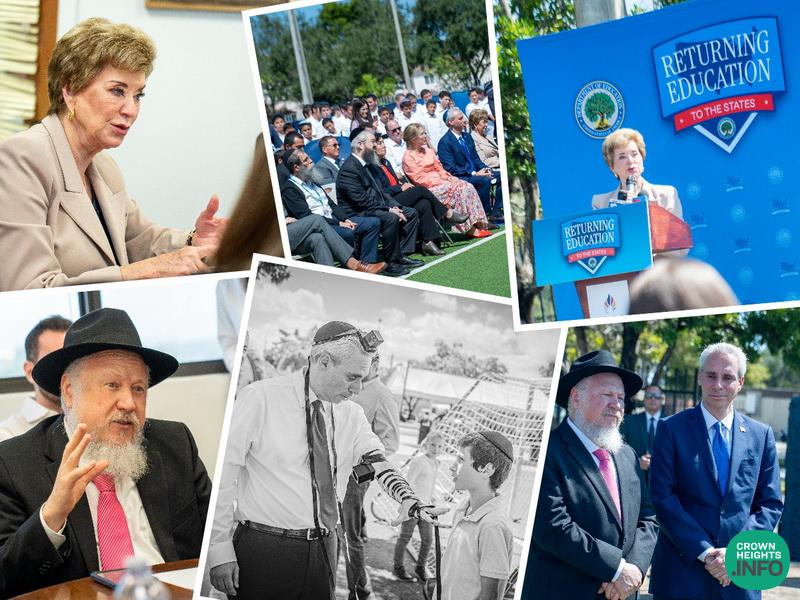 CrownHeights.info9 days ago
U.S. Secretary of Education Linda McMahon held a press conference at Miami’s Lubavitch Educational Center (LEC) to outline the details of the upcoming Federal Scholarship Tax Credit recently signed into law by President Donald Trump. It was her second visit to the school, the first being just two weeks after she took office.
“Education and values begin at home with parents who are teaching their children,” said Ms. McMahon. “Schools like LEC help preserve Jewish faith and traditions for the next generation…A parent’s income should never be the reason a child misses out on an education where he or she could thrive.”
Speaking to school staff, families, and community advocates, McMahon highlighted how the federal policy, the first nation-wide school choice program, will expand educational access for K–12 families when it takes effect this January.
Under the new policy taking effect in January, individual taxpayers can contribute up to $1,700—and married couples filing jointly up to $3,400—to approved non-profit Scholarship Granting Organizations (SGOs) and receive a dollar-for-dollar tax credit in return. SGOs then allocate these private contributions directly to qualifying families to cover tuition, tutoring, and related K–12 educational costs. Florida was one of the first states to officially opt in to the federal program, integrating the federal incentive directly into its existing school choice network.
Florida’s largest SGO, Step Up for Students, already provides scholarships averaging approximately $8,000 per student to over 200,000 Florida families each year. Under this new program, local SGOs like Step Up for Students can tap into a broader stream of private-sector donations and deliver additional scholarship funding to faith-based and independent institutions like LEC.
Former Boca Raton Mayor Scott Singer, congressional candidate for Florida’s 25th District in Congress, said at the event that this legislation comes at a critical time when Jewish organizations are tirelessly working to address the costs of Jewish education. “We need to raise strong proud students who never have to hide or be afraid of their identity,” he said.
“We have a responsibility to address the conditions that shape a child’s life long before a crisis begins,” said Rabbi Benjy Korf, LEC’s Head of School and Regional Director of Chabad of Florida, at the press conference. “That means starting with the child, family, and values that guide them. It means bringing G-d back into education and raising children to be morally productive—to know that there is a Supreme Being Who cares about what we do and we must act accordingly. Education must be rooted in faith and strong academic standards—and it should be within reach for any family who seeks it.”
SGOs like Step Up for Students help partially cover tuition for thousands of LEC students and is one reason the school can deliver a high-quality Jewish education without turning any child away due to financial inability.
“We want our graduates to be knowledgeable, compassionate, and responsible,” said Rabbi Korf. “We want them to be proud of who they are and prepared to contribute to our country, which has been kind to the Jewish people and people of all faiths. Thank you for allowing us to be who we are and practice what we believe in.”
Photos by Dovid Davidsohn
 CrownHeights.info9 days ago
by CrownHeights.info
A new, free app is offering individuals and families in the Chabad-Lubavitch community a practical way to organize their maaser and tzedakah giving, helping users keep track of their charitable contributions and see how much remains to be given.
Called My Maaser, the app was developed by Nehora Apps, a small studio based in Jerusalem and run by a Chabad family. Originally created for the developers’ own use, the app grew out of a desire to make tracking maaser simpler and more manageable. After others expressed interest, the developers made it available to the public at no cost. The app is now available in English, making it accessible to a wider audience.
Maaser, commonly understood as setting aside a portion of one’s income for tzedakah, is an important practice in Jewish life. For many families, keeping accurate records of income and charitable donations can become complicated, particularly when contributions are made throughout the year to multiple organizations, mosdos and individuals.
My Maaser is designed to simplify that process. Users can enter their income and tzedakah contributions, allowing the app to display how much they have given and how much remains toward their maaser goal. Rather than relying on handwritten notes, spreadsheets or memory, users can maintain an ongoing record of their giving in one place.
The app also includes a separate tracker for annual charitable pledges. As users record donations, the pledge tracker updates automatically, helping them monitor their progress toward commitments made to institutions and organizations.
Another feature allows a husband and wife to track their giving together as one household, providing a shared picture of the family’s contributions and remaining balance. The developers say the information remains private.
My Maaser is available for iPhone and Android devices, as well as through a web browser, giving users several ways to access the tracker.
The developers emphasize that the app is intended as a straightforward organizational tool rather than a substitute for halachic guidance. Questions about which income is subject to maaser, which contributions qualify, and how particular circumstances should be handled should be addressed with a qualified rav.
For families looking to bring greater clarity and organization to their tzedakah records, My Maaser offers a simple, free tool developed with the needs of its own Jewish community in mind.
How to get started:
iPhone: https://apps.apple.com/app/id6819245302
Android: https://play.google.com/store/apps/details?id=app.nehora.maaser
Web: https://maaser.nehora.app
Developer: https://nehora.app
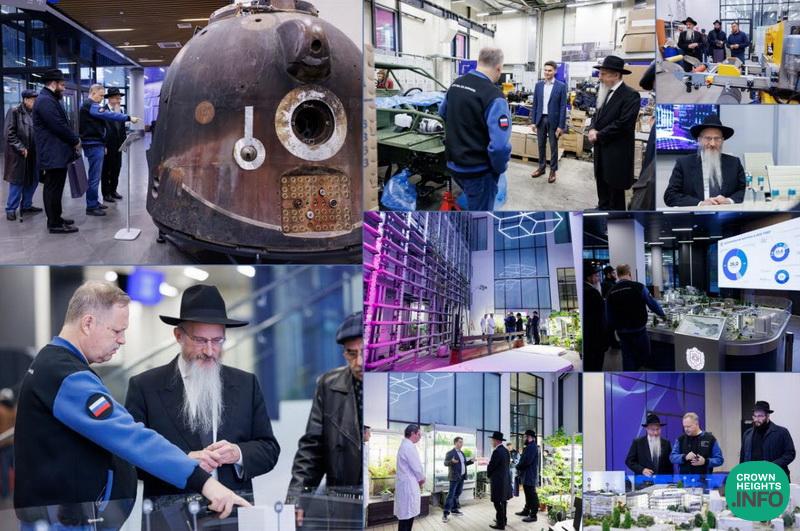 CrownHeights.info9 days ago
Russia’s Chief Rabbi, Rabbi Berel Lazar, visited Bauman Moscow State Technical University (BMSTU) on Tuesday for a special tour exploring the intersection of scientific innovation, Halacha, and Jewish life. The visit included a presentation of advanced agricultural technology designed to grow fruits and vegetables in a controlled, insect-free environment, raising the possibility of future collaboration with Russia’s Kashrus system.
Upon arriving on campus, Rabbi Lazar was welcomed by the university’s rector, Mikhail Gordin, accompanied by a delegation of senior scientists.
The visit focused on the university’s research laboratories and technological developments, including an innovative closed-loop system for growing produce in a sealed environment designed to prevent insect infestation. The technology could have significant implications for Kashrus, potentially helping address the challenges of checking fruits and vegetables for insects while reducing or eliminating the need for chemical pesticides.
Researchers explained that the system incorporates strict controls over the growing process, including the seedlings, as well as a specialized rotating mechanism for the plants designed to reduce lighting and cultivation costs.
The tour continued through several of the university’s advanced research facilities, where Rabbi Lazar was shown a spacecraft landing capsule, industrial 3D printers used to manufacture complex components and furniture, and a robotics department featuring automated metal-melting systems and high-precision laser-welding technology.
Addressing university faculty members during the visit, Rabbi Lazar praised the institution’s commitment to practical scientific research and innovation.
“One can see here a true investment in the future and new approaches,” he said. He noted that the university’s emphasis on hands-on application allows students to see how their studies translate into practical results, providing them with a strong incentive to continue their work.
Rabbi Lazar also met with Jewish students at the university and praised the institution’s educational and moral standards, emphasizing its role in shaping the next generation.
The potential application of the agricultural technology to the Kashrus industry was among the key topics discussed during the visit. Rabbi Lazar said he would consult with the Kashrus department to explore the possibility of cooperation in this field.
“If this technology proves itself, it could pave the way not only here in Russia but also bring great tidings to the entire world,” he said.
The visit concluded with a discussion about manned spaceflight, during which Rabbi Lazar offered a Chassidic perspective on scientific progress and humanity’s responsibilities in the world.
“There is always a horizon to explore and discover, but the question is whether this is the primary mission of our time,” he said. “I believe that today, priorities are different. We have monumental tasks and goals to accomplish right here on Earth, and therefore we must move forward with our work step by step.”
His remarks highlighted the importance of balancing scientific exploration with the responsibility to address the world’s immediate needs, reflecting a Torah perspective on the role of human endeavor and the betterment of creation.
Photo: Svetlana Fadeyeva, Bauman University Spokesperson.
CrownHeights.info9 days agoTomer Ward (Victorville, CA) to Gimel Bentes (Brazil) L’Chaim: Tonight, Thursday, 7:30pm at The Lounge 556 Crown Street, Enter Building Left Turn
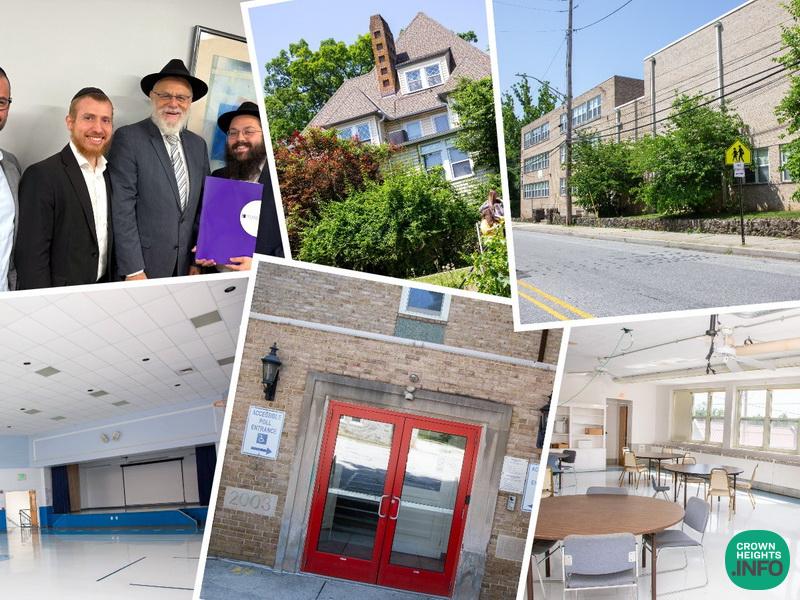 CrownHeights.info10 days ago
Cheder Chabad of Baltimore has closed on the purchase of a new campus at 5800 Smith Avenue and 1701 Regent Road in Mount Washington, a major step for a school that has grown every year and is now at capacity in its Park Heights Avenue building.
Founded in 2007 by Rabbi Elchonon Lisbon, Cheder Chabad of Baltimore is an affiliate of Chabad-Lubavitch of Maryland, under the auspices of Rabbi Shmuel Kaplan. The school began with 12 preschool children and today serves over 430 students in its boys school, girls school and preschool.
Demand for a Cheder Chabad education has grown faster than the school’s space can keep up. The new 3.5-acre campus includes a school building with 11 classrooms, a gymnasium, offices and tutoring spaces; a separate gathering hall; and a large estate home, together totaling approximately 45,000 square feet, with 50 on-site parking spaces. It sits just minutes from the current campus and the neighborhoods its families call home.
“Our community is growing, and our Cheder is growing with it,” said Rabbi Elchonon Chaikin, CEO of Cheder Chabad of Baltimore. “For years our space simply couldn’t keep up with the demand. This campus gives our children room to learn, play and grow b’simcha. We are grateful to Hashem and to every parent and friend who believes in what we’re building.”
The school plans to operate two campuses, one for boys and one for girls. The new building will be renovated and licensed before students move in, and a timeline will be shared as plans develop. Classes continue as usual this school year.
Cheder Chabad extends its deep thanks to Mark Gheiler of MiCasa Title; Yanky Schorr and Aaron Loeb of Tide Realty Capital; Michael Denise of Cushman & Wakefield; and Yossi Abenson, a dear parent of the Cheder, for their help in bringing this purchase to closing.
To fund the purchase and renovation, the Cheder has launched TAKE THE LEAP, a capital campaign: crowdspark.com/chederchabad/taketheleap. A community open house will be announced soon.
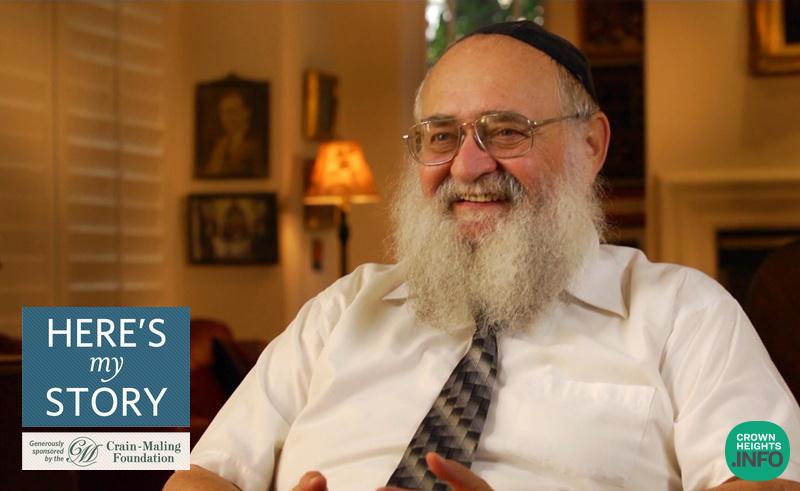 CrownHeights.info10 days ago
Rabbi Moishe Yosef Engel
Click here for a PDF version of this edition of Here’s My Story, or visit the My Encounter Blog.
I was born with a hole in my heart — otherwise known as an atrial septal defect — where a fissure exists in the wall separating the heart’s two upper chambers. This defect was discovered when I was two years old, but it was not life-threatening and the complicated surgery — which would be necessary in the future — could wait until I was a teenager.
The time finally came when I was seventeen. Back then, an operation to repair a hole in the heart was much more rare and risky than it is today and, certainly, “open heart surgery” was very scary to me as a teenage boy. As it turned out, the Rebbe had a great deal to do with putting me at ease.
By way of background, I was raised in a traditional, though not completely Torah-observant, home. Nonetheless, my widowed mother wanted me to get a religious Jewish education, so she sent me to a local Jewish cheder in Montreal where we lived. One day, however, I came home crying because the teacher slapped me for forgetting my tzitzit, so she pulled me out. Fortunately, an uncle persuaded her not to send me to public school, but to the nearby Lubavitcher yeshivah which had a gentler approach to educating little boys.
The yeshivah made an annual trip to New York to meet the Rebbe, and that is how I first met him when I was twelve years old, and then at least once every year thereafter.
All along, I had been getting regular check-ups and my heart condition was stable, but I knew that the operation was necessary and would come soon. My mother took out special insurance for this purpose, and it was decided that I would have the operation right after the insurance kicked in and started providing coverage, which was March 1, 1964.
About a month before this, I went for my annual visit to see the Rebbe and I asked for his blessing. I explained my situation and showed him slides of my heart. At around that time, a new procedure had been introduced, as I explained that to the Rebbe. I also mentioned that I had been told that only about a hundred operations like this had been performed so far in Canada.
In response, the Rebbe recommended that I get a second opinion from a specialist in this field and said that the local Chabad doctor and his personal physician, Dr. Avrohom Seligson, would find the right cardiologist for me to see. Dr. Seligson set up the appointment right away, but after he already did so, I had to tell him that my mother was a poor widow and there was no way I could ask her to pay hundreds of dollars for something like this. “Don’t worry,” he said simply, “the Rebbe has already taken care of the payment.”
So I went to the specialist who confirmed that the operation was needed and reassured me that it would be okay.
Now, when the Rebbe told me to get a second opinion, the operation was already scheduled for a few days after Purim. The Rebbe remarked that this was close to Passover, and I immediately replied that I was certainly happy to postpone it till after.
“Why push it off that far?” the Rebbe asked. “Adar [the month of Purim] is a month of mazal!”
Then the Rebbe gave me a blessing that the operation would be successful and, as a result, instead of being petrified, I went into the hospital with a whole different attitude.
That was not the only time that the Rebbe was instrumental in changing my attitude.
After a number of years in the Lubavitcher yeshivah, I had resolved to become a fully-committed chasid, which in my young mind meant growing a beard and wearing my tzitzit outside my pants so they could be readily seen.
Now, I should mention that both my mother and father were Holocaust survivors — in fact, I had been born in a displaced persons camp in Germany. Once we immigrated to Canada, my parents were concerned that I properly adjust to life in the new country, speak good English, and so forth. After my father passed away when I was ten, my mother was all the more determined that I should be a success in America. Even though she did want me to have a Torah education, going around dressed like a Jew from the Old Country was a step too far for her, and it really disturbed her.
Whenever I was home, she would be nagging at me to tuck the tzitzit inside my pants out of view. And when my beard started growing out, she would be nagging me to shave it off. “Why?” I’d retort, “I am proud to be a Jew!” To which she’d respond, “We don’t do that here!”
We’d get into shouting matches whenever the subject came up, which — at a certain point — was almost every night at dinner.
Afterwards, I’d always feel terrible because I was supposed to be following the Torah commandment to respect my mother. Not only that, she was a widow, and there are many Torah prohibitions against hurting a widow. And I was bringing her to tears.
I very much wanted to be a good Lubavitcher chasid with a beard and tzitzit out, but I also didn’t want to hurt my mother, so I didn’t know what to do.
In the end, I laid out my dilemma in a letter to the Rebbe — asking for his advice and his blessing — and I brought this letter with me to the next audience.
When the Rebbe read what I wrote, he said (and I am paraphrasing because I don’t remember the exact words): “Concerning the issue that you have with your mother, I suggest that the next time she brings up this subject you don’t argue with her, don’t answer back, just let her say what she feels she needs to say. Just listen to her and sit there respectfully.”
I took his advice to heart.
The next time my mother asked at dinner, “Nu, when are you cutting off that beard already?” I just sat there. “Moishele, when?! Come on, you want me to cut off your beard in the middle of the night? You know it bothers me!”
I just sat there. Didn’t say anything, didn’t fight back, and dinner continued. The next night, the same question, the same response from me. And that was it — the issue never came up again.
In retrospect, I realized that the solution was simple — the problem went away when I stopped adding fuel to the fire. As for her part, I think my mother realized that I was going to follow my own path, but that I didn’t want to fight about it, and so she let it go.
In the end, my mother herself became much more religious, and she was very proud of her son being a Lubavitcher chasid and, eventually, an emissary of the Rebbe.
Since 1970, Rabbi Moishe Yosef Engel has served as a Chabad emissary in Long Beach, California. He was interviewed in September 2011.
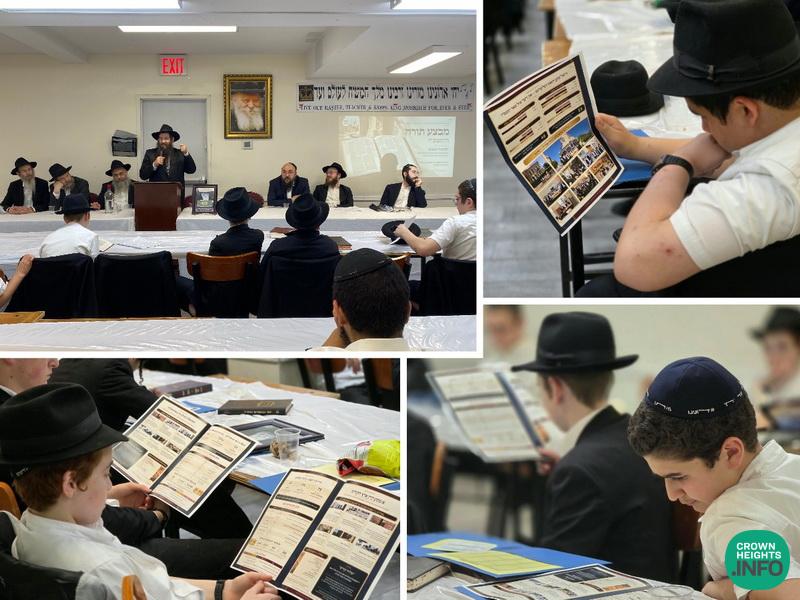 CrownHeights.info10 days ago
On Rosh Chodesh Cheshvan, Yeshivas Tomchei Tmimim Lubavitch Queens held a special gathering in zal, for the launch of Mivtza Torah 5787. Tremendous hislahavus was felt as bochurim rev-up for Zman Choref seizing the opportunity to ‘cash-in’ their Chayud’dike Tishrei into daily hasmada, yegiah, and a geshmak in learning.
The program opened with the Menahel, Rabbi Yossef HaCohen Hendel, who invited Rabbi Mendel Yusewitz to share words of hisorerus. In a fiery address, Rabbi Yusewitz expanded on the tremendous geshmak and ahavah the Rebbe has for Torah, whilst inspiring the bochurim to carry the excitement of Simchas Torah into their daily limud haTorah. He shared anecdotes illustrating the gevaldige Nachas the Rebbe has from watching a bochurs hasmada!
The bochurim were then treated to an exciting address by guest speaker Rabbi Asher Vaaknin, followed by Rabbi Menachem Mendel HaCohen Hendel, Menahel Kloli of the mosdos, who introduced a screening of last year’s successful journey following the footsteps of the Rishonim in France and tracing the Rebbe’s Hatzalah route, including Paris, Vichy, and Nice. The video brought back the special memories of the trip and gave the bochurim a taste of the tremendous ruchniyus and chayus that comes with such an experience.
The highlight of the evening was the launch of this year’s Mivtza Torah by Rabbi Yossef HaCohen Hendel, who unveiled the exciting goal: a special trip together to Eretz Yisroel for the bochurim who meet the mivtza’s goals. To make the mivtza clear, accessible, and easy to follow, Rabbi Hendel presented a new tracking program that allows every bochur to keep track of his points and progress, with all the details laid out in a beautifully prepared brochure.
The bochurim left the zal energized and excited, each with a clear path to success and a renewed drive to grow in Torah, bringing nachas to the Rebbe and preparing for the of Moshiach Tzidkeinu.
CrownHeights.info10 days agoMoishy Goldberg (Georgetown, NY) to Batsheva Gansburg (Coconut Creek, FL) L’Chaim: Tonight, Wednesday, 8:00pm at the JCM Upper Level
 CrownHeights.info10 days ago
by CrownHeights.info
A man was arrested for grand larceny after stealing credit cards from women attending a wedding at the Oholei Torah Ballrom in Crown Heights last night, following a rapid response by Crown Heights Shomrim and the NYPD’s 77th Precinct.
According to reports, Shomrim volunteers responded to the venue after a woman suspected that a server working at the event had stolen her credit card. After she confronted the suspect, multiple credit cards belonging to multiple people at the venue were also discovered in his possession.
Shomrim responded quickly and worked alongside NYPD officers from the 77th Precinct, who arrested the suspect on a charge of grand larceny.
The incident serves as a reminder for event attendees to keep their personal belongings and payment cards secure, particularly at large gatherings where multiple service staff may be present.
Crown Heights Shomrim thanked those who reported the incident and urged community members to remain vigilant and report suspicious activity promptly.
Anyone who witnesses suspicious activity in Crown Heights is encouraged to contact Crown Heights Shomrim at 718-774-3333.
 CrownHeights.info10 days ago
by Leibel Kahan – Lubavitch.com
For many, walking into a synagogue or Chabad House for the first time can be harder than it looks. There is a door, and a room, and people who already know each other.
At Pardess Chabad Farm, there is a driveway, a field, and a goat. “People aren’t even walking into a building,” Rabbi Zalman Sandhaus says. “They just go outside and walk around.”
The children’s programs are where the farm does its most literal work. Hebrew school meets on Sunday; Camp Gan Israel runs in the summer; in both, the children plant, harvest, care for animals and ride the tractor. They have learned to card, clean and spin wool into yarn, and to make cheese from goat milk. This past summer, teens and preteens came every Tuesday to volunteer, learning to mow, plant and harvest.
“They always involve them,” says Shari Spinale, whose three children have all gone to Chabad’s farm programs. “That’s extra special for the kids. They all feel very involved.” Her older two volunteer on the farm now; when a new synagogue went up on the grounds, her husband was asked to build something for it.
And then there’s the market. A weekly kosher market brings in food otherwise unavailable in Dutchess County, and a farmstand at the end of the driveway sells tomatoes, eggplant, peppers, zucchini, cucumbers, garlic, spinach and lettuce — no listed prices, pay what you can. Much of what is grown also goes back onto the Chabad House’s own tables; Rabbi Sandhaus says he has not bought a tomato in months. A good share of the customers are not Jewish, and many are regulars.
“We have someone that comes almost every Shabbos,” Rabbi Sandhaus says, “just from stopping off the street and buying a watermelon five years ago.”
None of this was part of the original plan.
Rabbi Zalman and Goldy Sandhaus, two Brooklyn natives with no experience of rural life, arrived in southern Dutchess County in 2014. With the goal of serving Jewish families scattered across a corner of the Hudson Valley, they started the way most Chabad Houses start: in their own home, hosting whatever they could fit inside it. They outgrew it, and then spent several years failing to find anything that felt right.
Southern Dutchess is full of farms, and the Sandhauses had spent enough Sundays taking their children fruit picking to notice. The idea of running a Chabad House on a farm was, by the rabbi’s own accounting, unrealistic. They went looking anyway.
The property they found belonged to a horse veterinarian: twenty-five acres on Blue Hill Road in Hopewell Junction. They bought it and moved in during the summer of 2019. The maintenance alone — before animals, before a single crop — was more than either of them had anticipated. The first real planting came in 2021, alongside more goats, sheep, and alpacas.
The theory underneath all of it is not sentimental. “Farming and Judaism are synonymous,” Rabbi Sandhaus says, and then runs through the proof: Sukkot’s four species, matzah milled from wheat, the biblical gifts of bikkurim, the shemitah year, the Torah’s numerous laws about grafting and vegetation — the list goes on. A farm makes a Jewish year legible in a way a classroom cannot. It also, he notes, makes a Chabad House approachable to people who would never walk into one.
Dr. Tom Bloom has lived in the area for twenty-five years and witnessed the whole arc, from the rabbi’s first visit to his office through the rental years to the farm. “The Sandhauses bring people together,” Bloom says. “That’s all I can say.”
The driveway is still there, and so is the goat, and every so often someone pulls over.
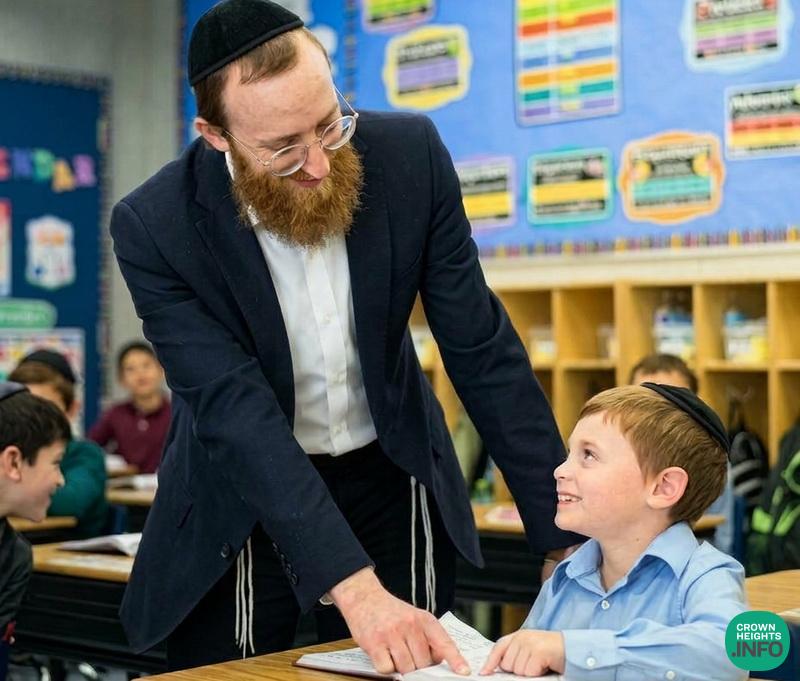 CrownHeights.info10 days ago
By a Lubavitcher Yungerman
I see him on the street and wave hi to him, but as a grown-up, I feel shy to walk over to him and share with him how much I appreciate him and why.
As a child, I faced a lot of pain in my personal life. It wasn’t necessarily noticeable to others, but it was there. A label was given to me: “troublemaker.”
It was so easy for teachers to get upset with me and feel resentment toward me. In general, in a very large school, it can be challenging for a teacher to remain calm and always help a child feel complete dignity.
Yet this Rebbi of mine always gave me eye contact, always shared warmth with me, and always made me feel valued in his presence.
There was one incident that really demonstrated this.
One morning, my teacher noticed that one of my peyos was practically gone. There was no peyos left near my ear.
It was during a break. My teacher could have easily asked me about it in the classroom, but instead, he called me into a separate room and respectfully mentioned it.
He didn’t threaten to throw me out. He simply wanted to bring it to my attention because he wanted me to be the best I could be in general, and the best I could be in my Yiddishkeit.
I believe I told him then that it had been accidentally cut off. My teacher gently nodded his head, and that was the end of it.
The truth was that, that week, I was facing a lot of distress in my life, and I was constantly pulling out my hair as a way to relieve stress.
What struck me most about this Rebbi was that even during my hardest times, he didn’t see me as an enemy. He saw me as a good person.
In every conversation, in every word he spoke to me, I felt that he saw me with dignity. He spoke to me like a person deserving of respect, even when I wasn’t a “popular boy” in the class.
In his eyes, I was valued.
Until today, when I see him, I feel that warmth. I feel more love for Hashem because I love the person who represented Hashem and His Yiddishkeit to me.
My dear teacher, if you are reading this, you may remember this incident, or you may not. But thank you for your kindness and for always seeing me in a good light.
I think all teachers can learn from this:
Children remember your love.
When children are seen in a good light, they may remember it forever. They may carry that feeling with them for years to come.
Thank you, Rebbi!
 CrownHeights.info10 days ago
Starting out as a new teacher comes with plenty of questions.
How do you build a strong classroom culture? How do you handle a challenging situation? How do you balance everything on your plate? And sometimes, simply: Is this normal?
For the second year in a row, as programming continues in honor of 50 years of Mivtza Chinuch, 50 new teachers are receiving extra support as they navigate their first year in the classroom through the MEF Teacher Mentorship Program.
The program pairs new teachers with experienced mechanchim and mechanchos who understand the realities of Chinuch and can offer guidance, perspective, and a listening ear throughout the year.
This year’s group is being guided by 13 mentors, bringing years of experience and knowledge to a new generation of educators. For new Moros, spanning preschool through high school, Limudei Kodesh and Limudei Chol, the dedicated mentors are Mrs. Sarah Chuzhin, Mrs. Batsheva Deren, Mrs. Nami Friedman, Mrs. Chani Stolik, Mrs. Chaya Light, Mrs. Nechama Lapidus, Mrs. Gitty Rosenfeld, Mrs. Lakey Silber, and Mrs. Aviva Wasser. For new melamdim, from Pre1A through Mesivta, the mentors are Rabbi Yanky Goldstein, Rabbi Levke Kaplan, Rabbi Shmuel Shneur, and Rabbi Zelig Silber. Together, they are supporting 50 teachers from across the Chinuch community as they begin their teaching journeys.
The 50 new teachers who have taken on the Shlichus of Chinuch this year are strengthening their skills through weekly mentorship.
Participating Schools:
Bais Chaya Mushka, Toronto; Gan Chayolei Hamelech; Bais Rivkah; Magen Yisrael; Gani, Brazil; Cheder Bay Area; Cheder Chabad; The Hebrew Academy; SJA California; Academy of the Arts, Redondo Beach, California; LGHS; Tamim Pinellas; Cheder Lubavitch Morristown; Cheder Menachem, New Jersey; Cheder Zichron Shmuel; LEC Miami; MMSC Day School; Southern Connecticut Hebrew Academy; Bais Chana Academy; Monsey Beis Chaya Mushka; Chabad Girls High School of Dallas; East Hebrew Academy; Torah Day School; Darchai Menachem; Maimonides Hebrew Day School; Oheli Yosef Yitzchok Lubavitch Cheder, Detroit; Bnos Menachem; Gan Chayolei Hamelech Preschool; Cheder of North Carolina; Camp Gan Israel, Fairfax, VA Preschool; Cheder Minnesota; Cheder Lubavitch Detroit; ULY Crown Heights; Oheli Torah; Ohr Menachem; East Academy High School; Cheder Menachem, Long Island; and Cheder Chabad Toronto.
For these teachers, mentorship means knowing that they don’t have to figure everything out alone.
And already, participating teachers are expressing their appreciation for the support they’re receiving.
“I’m very grateful for the coaching,” shared one participating Rebbe.
Another participating Morah shared, “I have been really enjoying it, B”H! I’m gaining helpful tips and the why behind the way I do things. Thank you for the opportunity.”
Beyond practical tips and guidance, the mentorship is helping new teachers build confidence, understand the reasoning behind effective teaching practices, and feel supported as they grow into their roles.
Over the course of the year, mentors will continue providing a space to ask questions, think through challenges, share successes, and grow as educators.
Because great teachers aren’t expected to have all the answers on day one. They need people who can walk alongside them, share what they’ve learned, and help them grow.
MEF is proud to invest in these 50 new teachers – and in the mentors who are giving their time and experience to help strengthen the next generation of Chinuch.
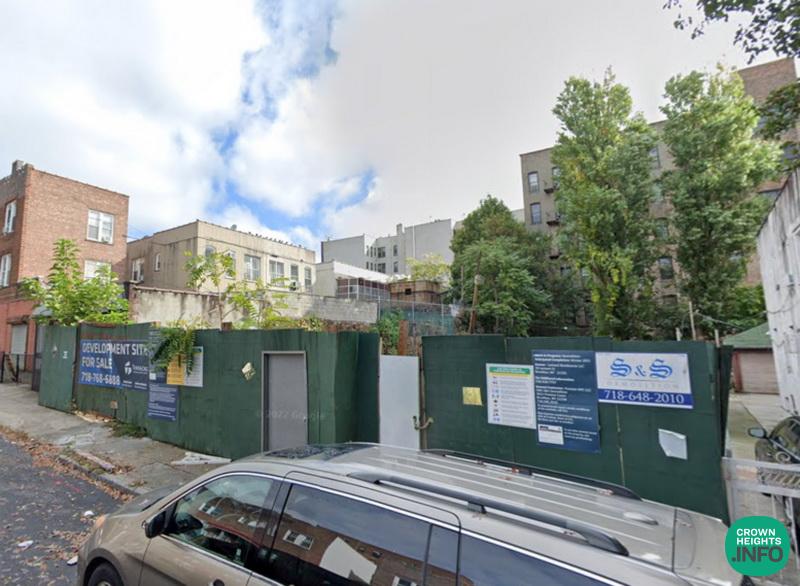 CrownHeights.info11 days ago
by CrownHeights.info
New building permits have been filed for a proposed seven-story residential building at 17 Lamont Court, in Crown Heights.
The proposed development would rise approximately 74 feet and contain 22 residential units across 15,301 square feet of residential space, according to a report by New York YIMBY published Wednesday, October 14.
Moshe Tal is listed as the owner behind the permit applications, while Nataliya Donskoy of ND Architecture & Design PC is listed as the architect of record.
The planned building would have a concrete-based structure and a 33-foot-long rear yard. With an average unit size of approximately 695 square feet, the apartments are expected to be rentals, although the final unit details have not been confirmed.
The property is located between Empire Boulevard and Lefferts Avenue, a short distance from the Sterling Street subway station, served by the 2 and 5 trains.
The site is currently vacant, meaning demolition permits are not expected to be necessary. No construction completion date has been announced.
The latest filing follows an earlier development proposal for the property in 2018, when permits were filed for a six-story residential building with 11 apartments. The newly reported plans call for a larger building with 22 residences.
The project remains in the permitting stage, and the latest filing does not establish when construction will begin.
CrownHeights.info11 days agoMoshe Yisroel Dovid and Estie Wolf from Chicago, IL had a baby girl!
 CrownHeights.info11 days ago
by CrownHeights.info
A man was arrested for indecent exposure at a local park following a swift response by Crown Heights Shomrim and officers from the NYPD’s 71st Precinct.
According to reports, Crown Heights Shomrim was tipped off regarding the man after he exposed himself to multiple people in Crown Heights. The volunteers responded and helped the police bring about the man’s arrest.
Residents who witness suspicious activity or need assistance can contact Crown Heights Shomrim at 718-774-3333.
 CrownHeights.info11 days ago
You know him as the writer of today’s biggest hits, but Hershy Weinberger’s musical journey began many years ago at summer camp. Now, the talented composer and singer joins Benny to revisit the opportunities that opened doors and the songs that established his place in Jewish music.
The conversation takes a few musical turns, exploring Chassidish classics, spontaneous musical creations, and how he went from being a fan to finding himself Backstage with Benny!
 CrownHeights.info11 days ago
Young Shluchim from around the globe will come together for MyShliach’s fifth Shabbos Tzuzamen. Scheduled for 26-27 Adar I for boys and 3-4 Adar II for girls, this year’s global celebration is slated to be the largest yet. What began as a grassroots initiative 5 years ago has become a beloved tradition and after last year’s regional Shabbatons, Shabbos Tzuzamen is back in full force, with over 130 regional Shabbatons expected to take place worldwide.
The global Shabbaton follows a decentralized model, with each host Shliach supplied by MyShliach with all the necessary resources for leading a memorable Shabbaton. A DIY Shabbos Tzuzamen kit filled with engaging games, a structured schedule, souvenirs, and custom Tzuzamen merch is shipped to every location. The young Shluchim and Shluchos are immersed in a program brimming with fun, connection, and meaningful Shabbos experiences from start to finish.
View this post on Instagram A post shared by CrownHeights.info (@chinfo.official)
“The beauty of this shabbos is felt in so many ways; to be part of this Shabbos, make new friends, and feel a part of an amazing family gives my children excitement for a long time,” said Rabbi Eli Reyder, Shliach in Myrtle Beach, South Carolina, reflecting on Shabbos Tzuzamen’s critical importance.
Beyond the action-packed schedule, the regional meet-ups emphasize inspiration, singing together, and learning about the incredible merit of being on Shlichus. “The young Shluchim fulfilling the Rebbe’s Shlichus have so much to be proud of. This Shabbos plays a big part in them feeling that pride,” says Rabbi Moshe Weiss, MyShliach Programming Director at Merkos 302.
Shluchim hosting these Shabbatons describe transformative experiences. “It was truly a blast hosting the Shabbos Tzuzamen at our home and Chabad house. The community, the students, and even the waiter were so impressed,” shared Mrs. Chani Bialo Shlucha in Portland, Oregon.
The significant support from MyShliach HQ at Merkos 302 includes dedicated counselors for larger groups of ten or more, as well as transportation assistance for young Shluchim living very far from their closest Shabbaton location. Rabbi Mendy Hirsch, Shabbos Tzuzamen Coordinator, remarks, “The energy of this Shabbos is palpable. We’re committed to ensuring its impact reaches every corner.”
“These Shabbatons provide a vital feeling of connection amongst young Shluchim, fostering a sense of global community and unity,” says Rabbi Mendy Kotlarsky, Executive Director of Merkos 302. “Even when apart, these events unite us, empowering each participant with a sense of belonging and shared purpose to continue their unique Shlichusin with joy.”
Registration for hosts is now open Shabbos Tzuzamen 5787. This year, Shabbos Tzuzamen will take place over two weekends, one for boys and another for girls.
Young Shluchim:
שבת פרשת ויקהל
March 5-6th – ‘כ”ז אדר א
Young Shluchos:
שבת פרשת פקודי
March 12-13th – ‘ד’ אדר ב
Register as a host today at ShabbosTzuzamen.com.
For any questions or sponsorship opportunities, please email [email protected]
