

We were promised peace, weren’t we?
President Trump’s 20-point plan for peace in Gaza is still moving forward, but many questions about whether it will be successful and who will be involved in the process remain.
On the ground, it appears that there is a level of stasis; the situation is similar to the way things were when the open warfare ended with the ceasefire. The body of one hostage, Ran Gvili, is still in Gaza, but all of the rest have been returned. There were numerous ceasefire violations by Hamas and strikes in return by Israel, but there is no ongoing sustained fighting.
Still, for any real movement, things need to change. The question is whether they will.
Is Hamas disarming?
One of the main sticking points is whether Hamas will do as President Trump has said they must and disarm. So far, there is no sign that this will happen.
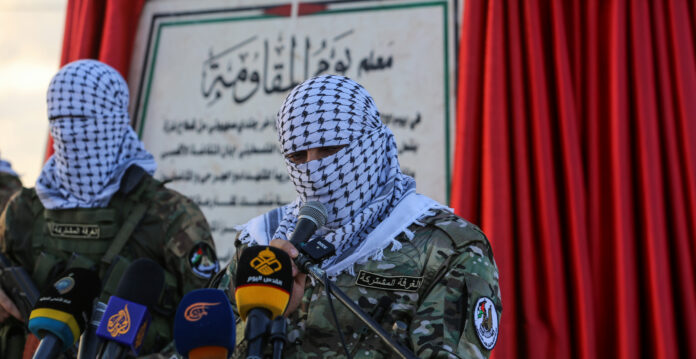
Instead, there are signs that it is trying its best to reconstitute itself. With many of its other financial lifelines gone, the terrorist group has been levying taxes on the food and supplies that aid groups have been sending into the area of Gaza where Hamas is in control. Israeli and Arab officials told The Wall Street Journal that Hamas has been able to start paying its employees again because of the taxes, as well as with money from Iran that can enter Gaza in various ways.
So far, there is no one who seems capable or willing to pressure Hamas into giving up its weapons aside from Israel. Egypt, Qatar and Turkey have told the US that Hamas would be willing to do so in a cash-for-guns scheme, but there has yet to be any movement on that front.
The Board of Peace
According to media reports, President Trump is planning to unveil the new Board of Peace this week in advance of the second phase of his peace plan. Its mission will be to oversee a new technocratic Palestinian government that would administer the part of Gaza not controlled by Hamas (and eventually all of Gaza), as well as to coordinate the rebuilding of the Strip.
Trump said that he himself would be the head of the board. Nickolay Mladenov has been announced as director-general of the Board of Peace. A former Bulgarian defense and foreign minister, he served as the UN’s Mideast peace envoy from 2015 through 2020. He has generally been viewed with respect by both Israelis and Palestinians.
The big question is which governments will have representatives on this body. Israel has been excluded. But it appears that Turkey has been excluded as well, which is a good sign for Israel.
Still, one of the latest lists to be publicized had Qatar on it, along with Egypt, the United Arab Emirates, the United Kingdom, Italy and Germany. We will find out this week who actually makes the cut, which may give us an idea of the direction things will take.
Hamas said this week that it will dissolve its own government in Gaza once the Palestinian technocratic government the Trump plan calls for is in place. As usual, they left any timing and details entirely unexplained.
The International Stabilization Force and the CMCC
Meanwhile, there has been no progress with regard to coming up with soldiers for the International Stabilization Force (ISF) that the Trump plan requires to keep the peace in Gaza. The only country that has said it is willing to contribute troops right now is Turkey, a suggestion that Israel has categorically rejected.
Others, like Spain, have said vaguely that they might contribute in the future. But so far it seems as if these countries aren’t actually willing to do so.
Meanwhile, a different kind of military coordination has been taking place at the Civil-Military Coordination Center, headed by the US, which has been making plans for the rebuilding of Gaza and the deployment of the International Stabilization Force—if it ever materializes. According to a report in The Jerusalem Post, the CMCC has been fast-tracking the clearing of Hamas tunnels in Rafah by the IDF so that buildings can be constructed. Estimates are that they could start going up within six months with the help of the UAE.
Allowing Palestinian civilians to move from the Hamas-controlled areas of Gaza into the Israeli-controlled areas could isolate Hamas further and keep them from using civilians as human shields. That would be one way of dealing with them even if the grander ideas of the Trump plan don’t pan out as hoped.
To read more, subscribe to Ami

