
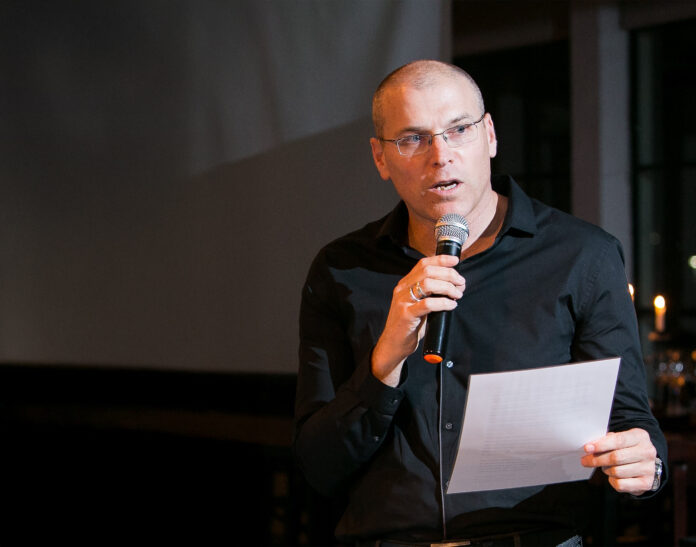

The business side of medicine may seem pedestrian from the outside, but it is often as complex and significant as the therapeutic side. While medical professionals and products save lives, they need a commercially successful firm behind them to get things done on a large scale. Amir London is the CEO of the publicly traded biopharmaceutical company Kamada (NASDAQ: KMDA), which has a portfolio of six FDA-approved specialty plasma-derived products indicated for rare and serious conditions. Founded in Israel, the company has since expanded internationally, with significant business and operations in
the US.
Although Amir partnered in a startup at one point in his career, he has always had an atypical view of entrepreneurship: he sees it through the lens of organizational impact, believing that individual excellence is a catalyst for broader success for the corporate entity.
Before becoming CEO of Kamada, Amir spent ten years at an international consulting firm, served six years as CEO of the Israeli-based pharmaceutical distributor Promedico, and later joined a US-based medical diagnostics startup. Amir has guided Kamada through a decade of continuous growth since assuming the helm of the company.
We discussed his career path, the long-term viability of pharmaceuticals as a career choice, and his unique habits that keep him focused.
Enjoy!
—Nesanel
I was born and raised in Haifa, Israel, but moved back and forth between the US and Israel over the years. My father was born in Israel in 1936. His father came from Ukraine, and my paternal grandmother is from the old city of Tzfat. My mother came to Israel with her parents from Romania in 1950, when she was 14. My parents will both soon be turning 90. I am married to Nurit and have three children: Afik (28), Saar (24) and Gur (20).
“I grew up in a home with two mathematician parents. My father was a professor of mathematics at the Technion, Israel’s Institute of Technology, and my mother, who is a Technion graduate, headed the Math Department at Israel’s leading high school, the Hebrew Reali School in Haifa, which is known for its strong focus on science. That was the high school I attended. I followed in my parents’ footsteps and also graduated from the Technion.
“My wife is an architect. She too is an alumna of the Technion, as is our daughter. When she was accepted, she joked that she had no choice but to go there.
“I have two siblings, a sister and a brother. Growing up, our home was kosher. My father came from a religious background, as did my grandparents. We respect and follow many Jewish traditions, celebrate all the chagim and fast on Yom Kippur.
“The atmosphere I grew up in, both in my home and our community, was very education-oriented and I was surrounded by intelligent people. I wasn’t entrepreneurial at all as a teenager. In middle school and high school, I played basketball all day, every day. I am fairly tall, about 6’3”, and at an early age I played on the Israeli youth team. When I was 16, we won the Israeli National Cup.
“After I finished my military service I spent six months backpacking through the Far East, mainly in India. Upon my return, I studied management and industrial engineering at the Technion. I knew that I wanted to become a senior executive in a mid-size to large organization where I could apply both my analytical and people skills. While I didn’t know which industry I would end up, I figured that if I worked hard and demonstrated my value, I could work my way up to head a company.
“The first company I worked for, Tefen Consulting, developed unique software and methodology to help large semiconductor manufacturing facilities including Intel’s improve their efficiency. Each machine cost over a million dollars, and the production process itself was extremely complex and expensive. Every minute a machine sat idle translated into significant revenue loss.
“Our goal was to pinpoint bottlenecks in the production flow. We developed software and systems to identify those stoppages and devise strategies to eliminate or mitigate them. We built a very methodical approach to help companies resolve their issues, which helped me understand things relatively quickly. We ran these projects repeatedly across dozens of semiconductor facilities in the US and around the world. Over time, we became leaders in the industry.
“A few years later, we decided to take both the software and the business model and apply them to the biopharmaceutical industry. We had noticed many similarities between the two. Both are science and technology driven, yet manufacturing was not their core expertise at the time. Both utilized clean rooms for production, required extremely expensive capital equipment and had a significant need for efficiency improvements.
“The discipline is generally referred to as operational, or business, excellence. Basically, you analyze existing processes and systems with the goal of maximizing their impact on the overall operation. In complex production and supply chain systems, pinpointing the true bottleneck is surprisingly difficult. It’s very easy to become misaligned if you don’t break an operation down into its specific components and analyze them in detail.
“For example, a company might invest heavily in optimizing a specific department, only to realize that the upgrade adds zero value to the overall system. If your product-filling line is the primary tripping point preventing you from meeting market demand, optimizing an earlier step in the process won’t help you ship a single extra vial.
“This is a challenge in almost every industry, even those that are service based. If you go to a major airport, for example, and ask what it is specifically that prevents them from adding 5% more flights, you’ll rarely get a clear answer. Whether it’s a manufacturing plant, a laboratory or a financial institution, without a methodical approach, you risk wasting resources on ‘improvements’ that don’t actually move the needle.
“Our approach was unique and innovative at the time, and it created a domino effect that allowed us to scale rapidly from one major player to the next: Genentech, Amgen, Bayer, Roche, Eli Lilly, Abbott, Pfizer, Sanofi and many other biopharma giants. Within three years, we built a formidable franchise in the US.
“As the firm grew to over 200 employees, with projects all over the world, I was promoted to partner. I was responsible for the global biopharma business, overseeing operations first on the West Coast, then the East Coast, and eventually throughout Europe as well.
“During this period, I led a strategic initiative to establish a consortium of biopharma companies—a forum where industry leaders could exchange key success stories, best practices and benchmarking data. That consortium eventually became the gold standard for operational excellence within the biopharmaceutical industry.
“I first moved to the United States with Tefen when I was 25; I lived in Portland, Oregon, for two years. I then returned to Israel, married Nurit, and moved with her back to the US, spending the next six years in the Bay Area, where our first two children were born. My wife completed her master’s in architecture at UC Berkeley and worked for an architecture firm in San Francisco. After about ten years at Tefen, we returned to Israel, where our third child was born.
“While I was at Tefen, we managed a project for Israel’s Neopharm Group, during which I developed a close working relationship with the owner. Soon after the project ended, the owner acquired a competitor in Israel and needed to expand the management team. He tapped me to lead Promedico, one of the primary subsidiaries within the newly merged company.
“I stayed at Promedico-Neopharm for six years. We were the second-largest pharmaceutical importer and distributor in the Israeli market, serving as a local base for international biopharmaceutical companies such as Pfizer, Wyeth, Abbott, Novartis Vaccines, Gilead and others. We imported the products, worked with Israeli HMOs and health funds on reimbursement, and handled distribution across the local markets.
“Then we returned to the US, where I joined an Israeli-American entrepreneurial team at a startup called Fidelis Diagnostics. We put in place a very interesting business model: while family practices in the US typically refer patients to external labs or specialists for diagnostics, we developed a concierge-style package of specific diagnostic services that could be performed directly in-office, allowing family doctors to offer a broader and more accessible range of services to their patients.
“One example was our approach to home sleep studies. Instead of referring patients to a dedicated sleep lab, we used a technology known as a ‘sleep watch.’ Patients slept in their own beds while the device recorded sleep apnea data. They then returned the device to their physician, who uploaded the data to the cloud, where a remote sleep specialist reviewed the results and provided feedback.
“We didn’t own any of the technologies ourselves; we identified, licensed and consolidated them into a single platform. In addition to sleep studies, we also offered NCV nerve testing and a breath-based technology used to identify H. pylori bacteria in the stomach. In total, we bundled five different technologies and brought them to physicians.
“The company was initially successful, but after two years, reimbursement rates for in-office diagnostics declined significantly and the model was no longer financially viable. We ceased operating in 2014, and I returned to Israel.
To read more, subscribe to Ami

