
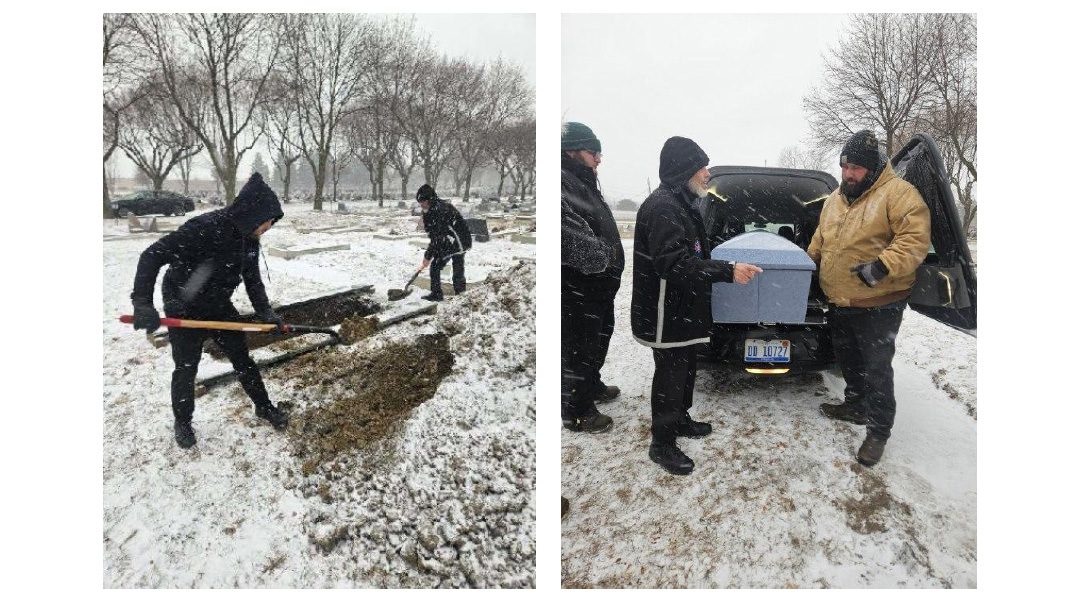

“If the entire burial were paid for, do you think your brother would have wanted a Jewish burial?”
As told to Rabbi Moshe Dov Heber by Shneur Steinberg
I run a hospice in Michigan, and over the years, I’ve seen many moments of pain and many moments of quiet courage. But one recent experience will stay with me forever.
A few months ago, I received a phone call from the sister of one of our patients, Jeremy Hoffman, who was living in a nursing facility but receiving hospice services from us. The woman’s voice trembled as she spoke. She explained that she couldn’t travel to be with her brother, and he had no other family. She’d had no choice but to ask the court to appoint a state guardian for him. From that point on, every decision about his care was out of her hands.
Not long ago, she told me, she’d sent a friend to visit him. The friend’s report was painful. “Jeremy doesn’t look well,” she said. “He hasn’t had a haircut in a long time, and his clothes aren’t clean.”
His sister was crushed. She felt helpless knowing her brother was alone in a nursing facility and she couldn’t be there for him. Now she was turning to me. “Now that he’s in hospice, is there anything you can do to help?”
I called the nursing facility immediately, but they said there was no way for Jeremy to get a haircut. Undeterred, I made several calls and finally found a barber willing to come to the facility. I would need to drive him, wait for him, and drive him home once he was done. I agreed; it didn’t feel like a big thing, just what had to be done.
After the haircut, I texted Jeremy’s sister a picture of him. She was so grateful. We spoke on the phone again, and I asked her for her name. “Helen Adler,” she said.
“That sounds Jewish,” I told her. “I’m Jewish, too.”
She paused and then said, “Yes, I’m Jewish, and so is my brother.”