
 Vos Iz Neias
Israel Braced For US Attack Over Weekend, But Trump’s Strategy May Have Changed
JERUSALEM (VINnews) — After the postponement of its Thursday meeting, the Israeli political-security cabinet is set to convene on Sunday to discuss preparations for a potential American strike on Iran, both defensively and offensively. The working assumption is that Israel will assist the United States, with a division of responsibilities between the countries. In fact, Israel had already prepared for an attack over the recent weekend, but by Thursday it became clear that the operation had been delayed to an unknown, though not distant, future date.
Alongside all this, the possibility of a diplomatic arrangement between the U.S. and Iran still exists on paper, though at this stage the likelihood of military escalation appears far higher. Deep gaps in the parties’ fundamental positions complicate any bridging efforts. In Washington, Iran’s regime is viewed as weakened and under severe economic and political pressure,creating what some see as an opportunity to force far-reaching concessions. In Tehran, by contrast, leaders appear willing to risk military confrontation rather than be perceived as yielding to American dictates.
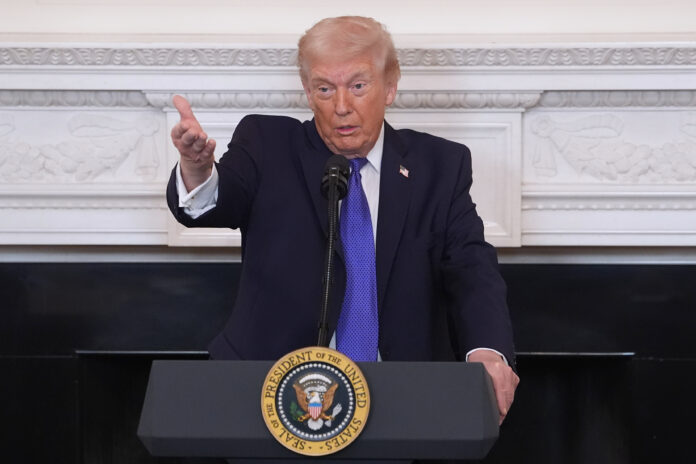
Whether Iranian compromise proposals would be framed as a sufficient achievement to justify avoiding war does not rest solely with professional officials, but largely with one man: U.S. President Donald Trump. If he concludes that the concessions are inadequate, every scenario, from a limited agreement to a broad military strike, remains on the table.
Should military confrontation ultimately occur, Iran’s ability to inflict significant damage on Israel, American forces in the Middle East, and Gulf states cannot be dismissed. Its ballistic missile arsenal, UAV capabilities, and regional proxy networks provide tools for painful retaliation. However, public and security discourse over the past two years has at times tended to amplify the perceived strength of adversaries such as Iran or Hezbollah, while downplaying Israeli and American offensive and defensive advantages.
A military clash, if it occurs, would not necessarily devolve into a prolonged war of attrition. Israel’s and America’s air, intelligence, and technological superiority could enable relatively short and focused campaigns causing severe damage to Iran’s missile and nuclear infrastructure, even if regime change does not immediately follow.
Meanwhile, aspects of American decision-making have raised questions. The process began with public messages of support for protesters in Iran, continued through sustained negotiations, and simultaneously involved military threats and operational preparations, despite the fact that Iran’s nuclear and missile programs were not previously treated as sufficient grounds for a full-scale war.
From Israel’s perspective, however, current developments may represent a strategic window of opportunity. Jerusalem’s concerns extend beyond Iran’s nuclear program to — perhaps primarily — the expansion of Iran’s precision missile capabilities. Close coordination with the United States could enable systematic strikes on production, storage, and launch infrastructure, potentially undermining regime stability by targeting power centers and repression mechanisms.
A prominent indicator of strategic change is the shift from thinking in terms of a “short, decisive blow” to a model resembling a sustained campaign of attrition. The expected arrival of the aircraft carrier USS Gerald R. Ford, capable of generating roughly 150 combat sorties per day, underscores the depth of American preparations. Significant naval and air assets are also expected to operate alongside it.
Unlike a single strike, a prolonged “attrition campaign” would aim at systematically eroding regime assets: nuclear facilities, Revolutionary Guard bases, missile arrays, and command centers. According to this approach, sustained pressure — rather than a one-time blow — might be required to compel Tehran to consider major concessions or at least dramatically reduce its strategic capabilities.
Even so, a large-scale military operation would not guarantee the collapse of Iran’s regime. History shows that ideological governments can survive severe blows. Yet persistent damage to leadership structures, security institutions, and repression tools could weaken regime stability. In this context, some analysts do not rule out the possibility of targeting Iran’s Supreme Leader Ali Khamenei and even his potential successor.
Many observers argue that Iranian society is experiencing unprecedented internal tension since 1979. A combination of heavy external pressure and mounting domestic unrest could trigger new dynamics, though outcomes remain highly unpredictable.
Iranian concerns were also reflected in remarks published by Al-Mayadeen, affiliated with the pro-Iranian axis, quoting a source close to decision-making circles:
“Any war against Iran would mark the beginning of the unavoidable disintegration of the world order. Such a war would open the door for other powers to exploit the shift to advance their geopolitical agendas. It would alter the calculations of China and Russia. Fundamental changes could push them to impose new geographic realities serving their interests. A military confrontation with Iran would not remain confined to its borders but would reshape the entire international balance.”
The timing of a strike depends on the intersection of military readiness with political and regional considerations: religious sensitivities during Ramadan, concerns over a potential closure of the Strait of Hormuz, and pressures from regional actors. There is always the risk of unintended escalation — an Iranian preemptive move or miscalculation igniting conflict.
Some assessments suggest Trump may prefer to wait until mid-March, after Ramadan, though his references to a 10–15 day timeframe leave open the possibility of earlier action. The arrival of the Gerald Ford to the eastern Mediterranean toward the end of the coming week also factors into the equation, symbolizing the near completion of American force buildup, aside from possible deployment of B-2 bombers, which the U.S. could send directly to Iran if desired.
Israel is reportedly preparing to leverage any U.S.–Iran confrontation to deliver decisive blows against Tehran’s missile capabilities and those of its proxies, including Hezbollah and the Houthis. Senior Israeli officials speak of removing existential threats once and for all.
Ultimately, all scenarios remain open: a limited agreement allowing each side to claim success, a constrained military strike, or a broader sustained campaign. The decision will be made in Washington, but its consequences will be felt in Jerusalem, Tehran, and capitals across the region.