
 Yeshiva World News
Hamas Moves to Undercut Trump’s Post-War Gaza Plan as U.S.-Backed Transition Takes Shape
President Donald Trump is pressing ahead with an ambitious plan to remake post-war Gaza under an international framework that excludes Hamas. But newly revealed documents suggest the terrorist group is quietly positioning itself to retain power behind the scenes, raising questions about the durability of U.S.-led stabilization efforts.
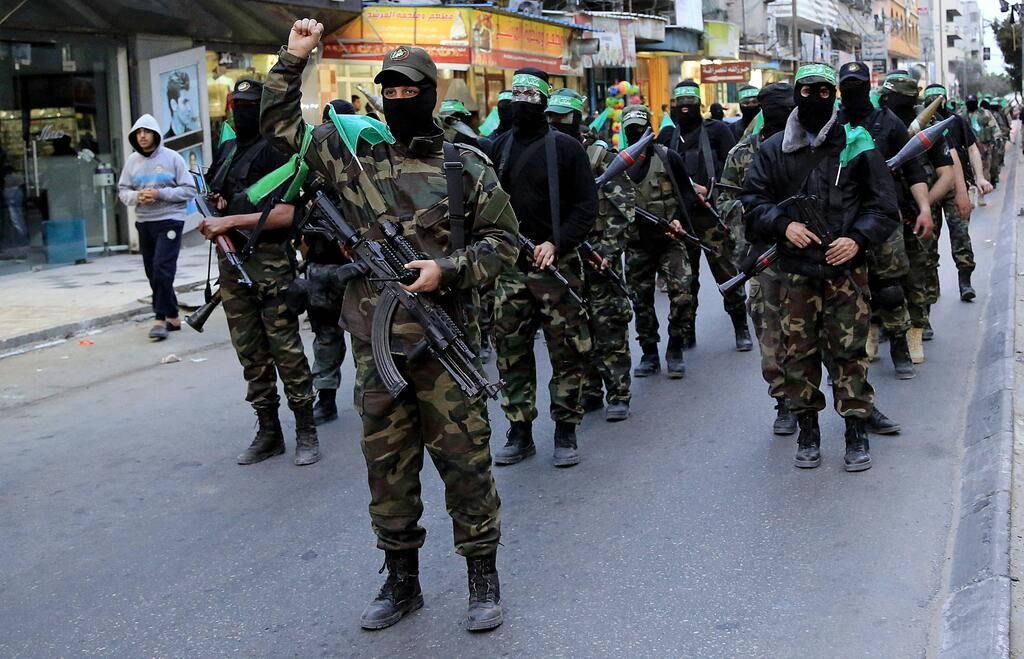
According to evidence reviewed by The Times of Israel, Hamas is preparing a shadow governing structure while embedding loyalists — including military commanders — into civilian institutions expected to operate under a new technocratic administration.
At last week’s Board of Peace meeting in Washington, Trump secured roughly $7 billion in international pledges for Gaza’s reconstruction, along with commitments from five countries to contribute troops to a planned International Stabilization Force intended to replace Israeli forces.
The gathering marked a major diplomatic push to advance a post-war transition. A newly formed body, the National Committee for the Administration of Gaza (NCAG), has begun operating from Cairo, recruiting staff and organizing a transitional police force.
“When you think of Israel, we’ve done the biggest thing of all,” Trump said at the meeting. “We have peace in the Middle East right now.”
But on the ground, progress remains limited. Nearly four months into the ceasefire, Israel still controls more than half of Gaza, while most of the enclave’s roughly 2 million residents live in areas where Hamas remains dominant.
Under the ceasefire framework, Hamas is required to hand civilian governance to the NCAG, a 15-member technocratic body led by former Palestinian Authority official Ali Shaath and overseen by High Representative Nikolay Mladenov.
Publicly, Hamas has portrayed itself as cooperative. Spokesman Hazem Qassem told Agence France-Presse that the group had prepared protocols and files for a full transfer of authority.
Privately, however, internal documents paint a different picture.
The Times of Israel reports that Izz al-Din al-Haddad, who assumed leadership after Muhammad Sinwar was killed in an Israeli strike last year, ordered members to copy government records before transferring them, allowing Hamas to maintain leverage over civil servants.
Israeli military officials warned in January that Hamas is embedding supporters “from the bottom up” in local authorities and security services, according to a briefing submitted to Prime Minister Benjamin Netanyahu.
The documents indicate that commanders from Hamas’s armed wing, the Al-Qassam Brigades, are being shifted into civilian posts. Two Palestinian sources told Reuters that five district governors with militant ties have already been appointed.
“Shaath may have the key to the car, and he may even be allowed to drive, but it is a Hamas car,” one source said.
Despite formal steps toward civilian rule, Hamas’s intelligence and security networks appear largely untouched. Internal orders reviewed by The Times of Israel show commanders directing increased surveillance, including around hospitals and public facilities.
A recently released health ministry video showed a new deputy health minister touring medical centers — an example, analysts say, of how Hamas-linked officials are integrating into emerging institutions.
The IDF has warned that Hamas is rebuilding its underground infrastructure and preserving its operational capacity in violation of ceasefire terms.
“Since the ceasefire came into effect, Hamas has violated the understandings and is working to restore its military capabilities,” an IDF spokesperson said.
Israeli and Hamas officials appear to agree on one point: another major conflict is likely.
Last month, a senior Israeli security official said military action may be unavoidable if Hamas refuses to disarm. Hamas leaders have also said further conflict is likely.
“Criminalizing the resistance and its weapons is something we should not accept,” said senior Hamas figure Khaled Mashaal at a recent conference in Doha.
Israeli sources say Hamas is willing to store heavy weapons under international supervision and share partial tunnel maps, but intends to keep rifles and rocket-propelled grenades. The IDF estimates that at least 60 percent of Hamas’s tunnel network remains intact.
An Israeli security official told The Times of Israel that Israel would permit only handguns for a future Gazan police force — and only if Hamas is excluded.
Israeli officials have intensified lobbying of the Trump administration, arguing that Hamas must be fully disarmed for any lasting peace to emerge.
According to sources familiar with the discussions, Israeli leaders have told the White House that renewed military intervention may be the only way to dismantle Hamas’s remaining capabilities — and that any future operation would be faster and more expansive than previous campaigns.
(YWN World Headquarters – NYC)