
 Yeshiva World News
Former Iran Hostage Warns Regime Will “Stick Together Like Glue” If US Strikes
A former American hostage who endured 444 days of captivity during the 1979 Iran hostage crisis is warning that the Islamic Republic will not collapse easily, even under military assault.
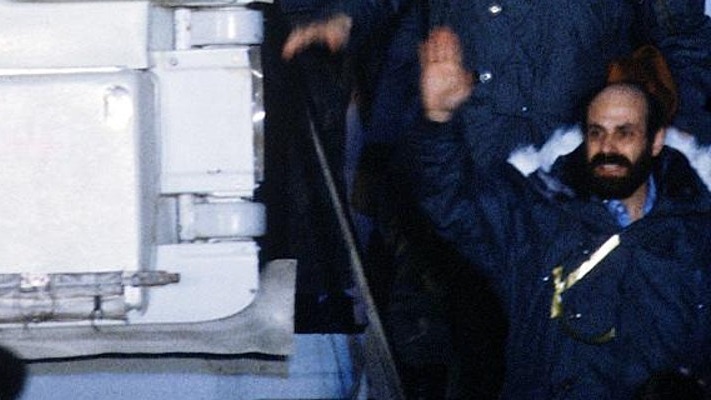
Barry Rosen, now 81, was serving as press attaché at the US Embassy in Tehran when he and 51 other Americans were seized on Nov. 4, 1979, by militants loyal to Ayatollah Ruhollah Khomeini. The hostages were held for 444 days, much of that time in isolation.
“I have seen this regime up close before — this regime will go down fighting. It has everything to lose,” Rosen said. While expressing hope for “a free and open Iran,” he added, “I don’t think we are as close to regime change as it seems.”
Rosen said the regime sees itself as engaged in a moral struggle against Western powers.
“They see themselves as the oppressed,” he said. “The regime believes it represents the moral rebellion of the oppressed against the arrogant powers — the West and the US specifically.”
He cautioned that if confronted militarily, the leadership under Supreme Leader Ayatollah Ali Khamenei would respond aggressively.
“This regime will go down fighting if there is a military operation against Iran brought by the United States,” Rosen said. “It will fight, and it can cause tremendous damage all over the Middle East and really turn the entire region into flames.”
Iran has built a significant arsenal over the past decade, including cruise missiles, hypersonic missiles and domestically produced Shahed drones, some of which have been supplied to Russia. Rosen noted Iranian officials have openly claimed they possess enough missile power to damage US naval forces.
“The regime knows if they don’t have the power of the missiles themselves, they would be destroyed by the United States,” he said.
The warning follows nationwide protests in January sparked by the falling value of the Iranian rial — the largest domestic uprising since the 1979 revolution. Authorities responded with a sweeping crackdown.
Despite public unrest, Rosen said he does not foresee a split within the regime’s core security apparatus.
The Islamic Revolutionary Guard Corps and its Basij militia “will stick up with the regime,” he said. “They’re going to be as aggressive as possible with the Iranian people.”
He added that the Guards are “so ideologically tied to Ayatollah Khamenei that I don’t see any split off from the regime itself.”
Iranian President Masoud Pezeshkian recently vowed that Tehran would not “bow” to foreign pressure, a stance Rosen described as increasingly aggressive.
“It is now very aggressive in its stance toward the United States, which it sees as threatening its very existence,” he said.
Rosen argued that the Islamic Republic’s identity has been shaped by confrontation with the West.
“Iran’s post-revolutionary identity was forged by resistance — against the United States, its sanctions and international isolation,” he said. “It has been living under prolonged pressure, bred by a siege mentality.”
That mindset, he explained, reinforces unity at the top.
“The world is against us, so survival depends on vigilance and unity,” he said, describing a psychology that “justifies security dominance — the suppression of dissent in the name of preservation.”
Despite his grim assessment, Rosen said he hopes the current standoff does not escalate into war.
“I would hope the negotiation option will take place — that is lowering the nuclear situation, lowering the enrichment,” he said.
Rosen, who survived mock executions, physical abuse and months of enforced silence during his captivity, also called on Americans to support ordinary Iranians.
“It is very disappointing for me to see that the American people are not supporting the Iranian people,” he said. “The regime is so oppressive, and any progressive human being should be out there in the streets supporting the Iranian people.”
Nearly five decades after he was held at gunpoint inside the US Embassy in Tehran, Rosen says one lesson remains clear: if confronted militarily, Iran’s leadership will not fracture quietly.
“They will stick together like glue,” he warned.
(YWN World Headquarters – NYC)