
 Yeshiva World News
Strike First or Strike Together? Trump Advisers Weigh Asking Israel To Pull The Trigger First
Senior advisers to President Donald Trump are debating whether Israel should strike Iran before the United States takes direct military action, according to two people familiar with ongoing discussions who spoke to Politico.
The officials, speaking on condition of anonymity to discuss sensitive internal deliberations, said some within the administration believe an Israeli-initiated attack could shift public opinion in favor of U.S. intervention if Tehran retaliates against American assets.
“There’s thinking in and around the administration that the politics are a lot better if the Israelis go first and alone and the Iranians retaliate against us, and give us more reason to take action,” one of the people familiar with the discussions said.
Recent polling suggests Americans — and Republicans in particular — express support for regime change in Iran, but are far less willing to accept U.S. casualties to achieve that outcome.
That dynamic has sparked internal conversations about the optics of military engagement, including how and when a strike would occur, alongside concerns about Iran’s advancing nuclear program.
With hopes for a diplomatic breakthrough dimming in Washington, the debate has shifted toward the timing and scope of potential military action. Even so, the likeliest scenario may ultimately involve a coordinated U.S.-Israel operation rather than Israel acting alone, the two people said.
In response to a request for comment, White House spokesperson Anna Kelly said, “The media may continue to speculate on the president’s thinking all they want, but only President Trump knows what he may or may not do.”
The Israeli Embassy in Washington declined to comment.
Trump’s negotiating team — led by special envoy Steve Witkoff and senior adviser Jared Kushner — is in Geneva to pursue a diplomatic off-ramp with Tehran. One person familiar with the internal discussions described the effort as serious but suggested expectations are low.
“The thinking among those closest to the president is that we’re going to bomb them,” the person said.
Still unresolved is the scale of any potential operation. Two major concerns are shaping the deliberations: the strain prolonged strikes could place on U.S. munitions stockpiles, and the risk of American casualties.
Administration officials have expressed concern that significant depletion of U.S. weapons reserves could leave Washington vulnerable in other theaters — particularly in the Indo-Pacific, where a weakened arsenal might embolden China to test U.S. resolve over Taiwan.
“If we’re talking about a regime-change scale attack, Iran is very likely to retaliate with everything they’ve got,” the person familiar with discussions said. “We have a lot of assets in the region and every one of those is a potential target. And they’re not under the Iron Dome. So there’s a high likelihood of American casualties. And that comes with lots of political risk.”
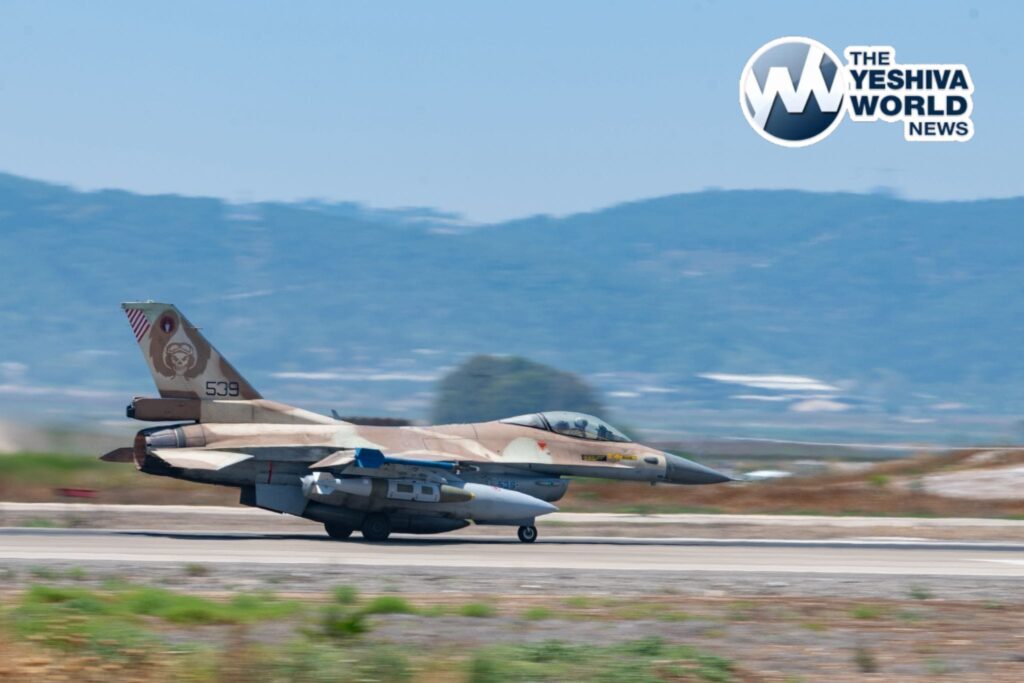
The United States maintains thousands of troops at bases across the Middle East. In recent weeks, Trump has deployed two aircraft carrier strike groups, along with dozens of fighter jets, surveillance aircraft and aerial refuelers — marking the largest buildup of U.S. firepower in the region since the 2003 invasion of Iraq.
Pentagon officials and lawmakers on Capitol Hill have warned that sustained operations against Iran could further strain military stockpiles. A senior U.S. intelligence official said the intelligence community is “concerned and monitoring” the possibility of asymmetric retaliation by Iran against U.S. facilities and personnel in both the Middle East and Europe.
Trump’s military options range from a limited, targeted strike designed to coerce Tehran back to the negotiating table, to a broader campaign aimed at degrading Iran’s military and nuclear capabilities more comprehensively.
According to a U.S. official familiar with the discussions, an initial strike could serve as leverage in diplomatic talks. If negotiations fail, the president could authorize a second, more expansive wave of attacks.
Likely targets would include Iranian nuclear facilities — or remaining infrastructure following U.S. strikes last June — as well as ballistic missile sites that Israel views as a direct threat. More aggressive options under consideration reportedly include a so-called “decapitation strike,” targeting Iran’s supreme leader, Ayatollah Ali Khamenei.
But Iran’s political system is structured to ensure continuity of leadership, with multiple layers of authority prepared to assume power. Even so, U.S. planners could aim at facilities and senior ranks within the Islamic Revolutionary Guard Corps in addition to the country’s nuclear and missile infrastructure.
Such an operation could unfold over days or weeks and would carry significant unpredictability, particularly if the U.S. relies heavily on airpower. During last year’s conflict between Israel and Iran — which saw U.S. involvement — Netanyahu publicly urged Iranians to seize the moment and overthrow their leadership.
Trump has previously asserted that U.S. strikes last June “obliterated” Iran’s nuclear program. More recently, however, he has indicated skepticism that Tehran has abandoned its ambitions.
House Armed Services Committee Chair Mike Rogers (R-Ala.) said he received a classified briefing Wednesday detailing Iran’s efforts to restart aspects of its nuclear program. “They are trying to get that equipment,” Rogers said, describing the intelligence as compelling.
Rep. Don Bacon (R-Neb.) said lawmakers are expected to receive additional classified information soon. Democrats on the committee said they have yet to receive similar briefings and have requested further clarity.
(YWN World Headquarters – NYC)