
 Vos Iz Neias
Iran And US Start 3rd Round Of Talks In Geneva, But Gaps Persist Between Sides
In Geneva, Switzerland, the third round of talks in the negotiations between the United States and Iran began on Thursday morning. Many in the Middle East view this round as the last opportunity to reach a diplomatic solution that would prevent a U.S. attack on the Islamic Republic, an attack that could ignite a regional war. As in previous rounds, the talks are being conducted indirectly, mediated by Oman’s foreign minister, Badr Albusaidi.
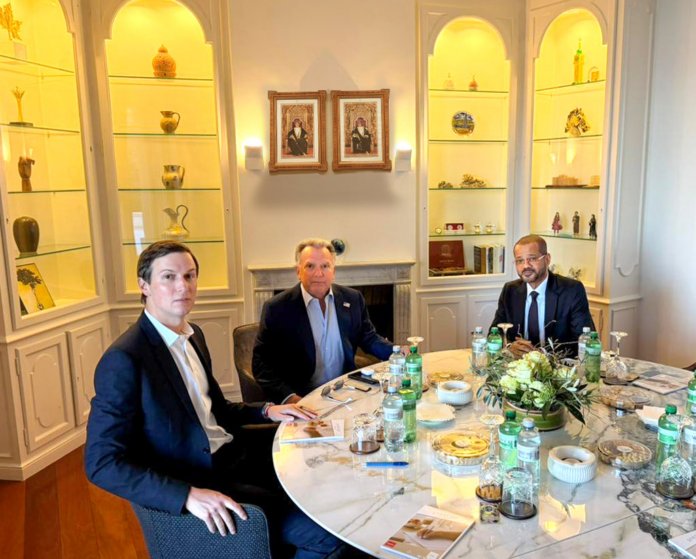
Albusaidi met last night at the Omani consulate in Geneva with Iran’s foreign minister, Abbas Araghchi, and this morning met with the representatives of President Donald Trump, envoys Steve Witkoff and Jared Kushner. Afterward, Albusaidi said the meeting addressed “the Iranian side’s views and proposals, as well as the responses and questions of the American negotiating team regarding the core elements of Iran’s nuclear program and the guarantees required to achieve the desired agreement.”
The Omani foreign minister added that both sides are showing “unprecedented openness to new and creative ideas and solutions,” creating a supportive environment for progress toward a fair agreement. Albusaidi also met this morning with the head of the International Atomic Energy Agency (IAEA), Rafael Grossi, and according to Oman’s Foreign Ministry they discussed “technical issues related to Iran’s nuclear program and the new ideas currently under discussion.” Iranian reports described Grossi as a “technical observer” in the talks.
Iranian media earlier reported that Araghchi delivered Iran’s updated proposal to the Omani mediator, claiming it “refutes all American excuses regarding Iran’s nuclear program.” According to those reports, if the proposal is rejected, it would confirm Washington’s “lack of seriousness.” Iran’s official news agency IRNA described the Geneva talks as “a test of diplomacy over confrontation,” noting that the outcome would affect not only Tehran-Washington relations but also regional stability.
The negotiations began three weeks ago amid Trump’s threat of military action and what has been described as the largest concentration of U.S. forces in the Middle East since the 2003 Iraq invasion, including two aircraft carriers, multiple destroyers, and hundreds of fighter jets. Greek media reported Thursday morning that the aircraft carrier USS Gerald R. Ford, the largest and most advanced in the world, departed Crete and is heading toward Israel.
Trump, who yesterday presented his justifications for a possible strike during his State of the Union address, claimed Iran is working to rebuild its nuclear program and develop intercontinental ballistic missiles capable of reaching the United States. He stressed that he still seeks a diplomatic agreement that would prevent Iran from obtaining nuclear weapons. “We’re negotiating with them. They want a deal, but we haven’t heard the magic words: ‘We will never have nuclear weapons,’” Trump said. He set a February 19 deadline of “10 to 15 days” for reaching an agreement, warning that otherwise “very bad things” would happen to Iran.
Iran, which consistently denies seeking nuclear weapons, responded this morning. President Masoud Pezeshkian stated shortly before the talks: “We are not seeking nuclear weapons.” He referenced the fatwa issued by Supreme Leader Ali Khamenei prohibiting nuclear weapons development, arguing that concerns about Iran’s nuclear ambitions are unjustified, although Western intelligence maintains Iran previously pursued a weapons program.
In Israel, pessimism remains high regarding the chances of a deal. An Israeli official last night assessed that the likelihood of a U.S. strike in the near term is significant. Key disputes persist: Iran rejects Washington’s demand for a complete ban on uranium enrichment, and disagreement remains over the fate of Iran’s existing enriched uranium stockpile. However, recent reports suggest compromise proposals that would allow Iran symbolic, limited enrichment.
Iran also firmly refuses to discuss restrictions on its missile program or its support for regional militias. U.S. Secretary of State Marco Rubio said the Geneva talks would focus primarily on the nuclear issue but described Iran’s refusal to address missile limitations as “a very big problem.”
Republican Senator Lindsey Graham, a prominent Iran hawk, voiced frustration on X over reports that Washington might accept limited Iranian enrichment for medical research purposes. If true, he wrote angrily, “to hell with it,” adding harsh criticism of the Iranian regime and expressing hope for regime change.
Graham concluded by referencing Trump’s earlier pledge to Iranian protesters that “help is on the way” , a promise that has yet to be fulfilled.