
 Vos Iz Neias
At Unusually Crowded, Nearly 10-Hour Hearing, NYC Council Debates Synagogue ‘Buffer Bill’
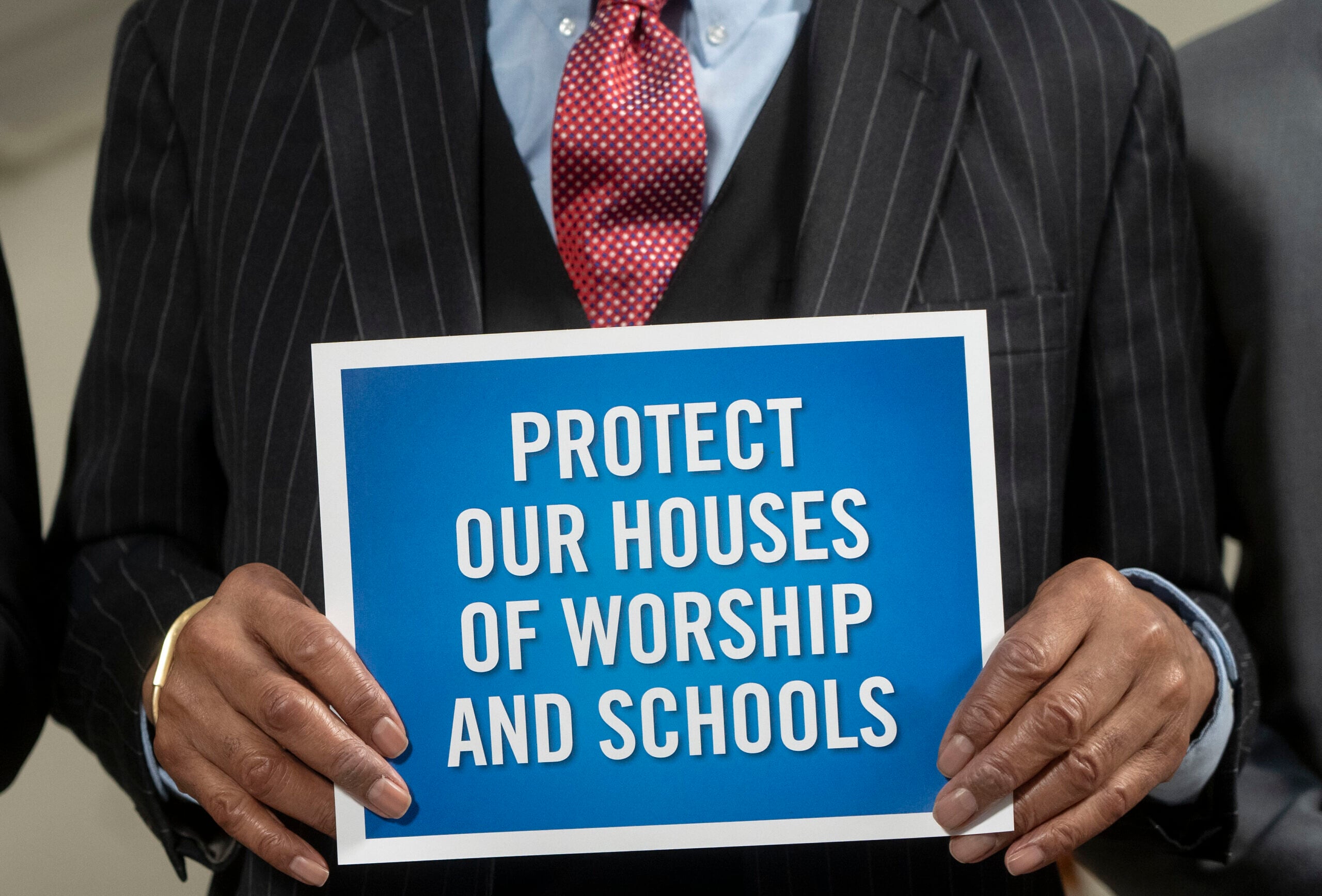
NEW YORK (JNS) – A package of bills intended to fight Jew-hatred in New York City, which was discussed at a New York City Council hearing, turned into an intense, all-day affair revolving largely around whether it was constitutional to institute buffer zones outside houses of worship and schools, including Jewish ones, to keep protesters at a distance from people trying to enter the building.
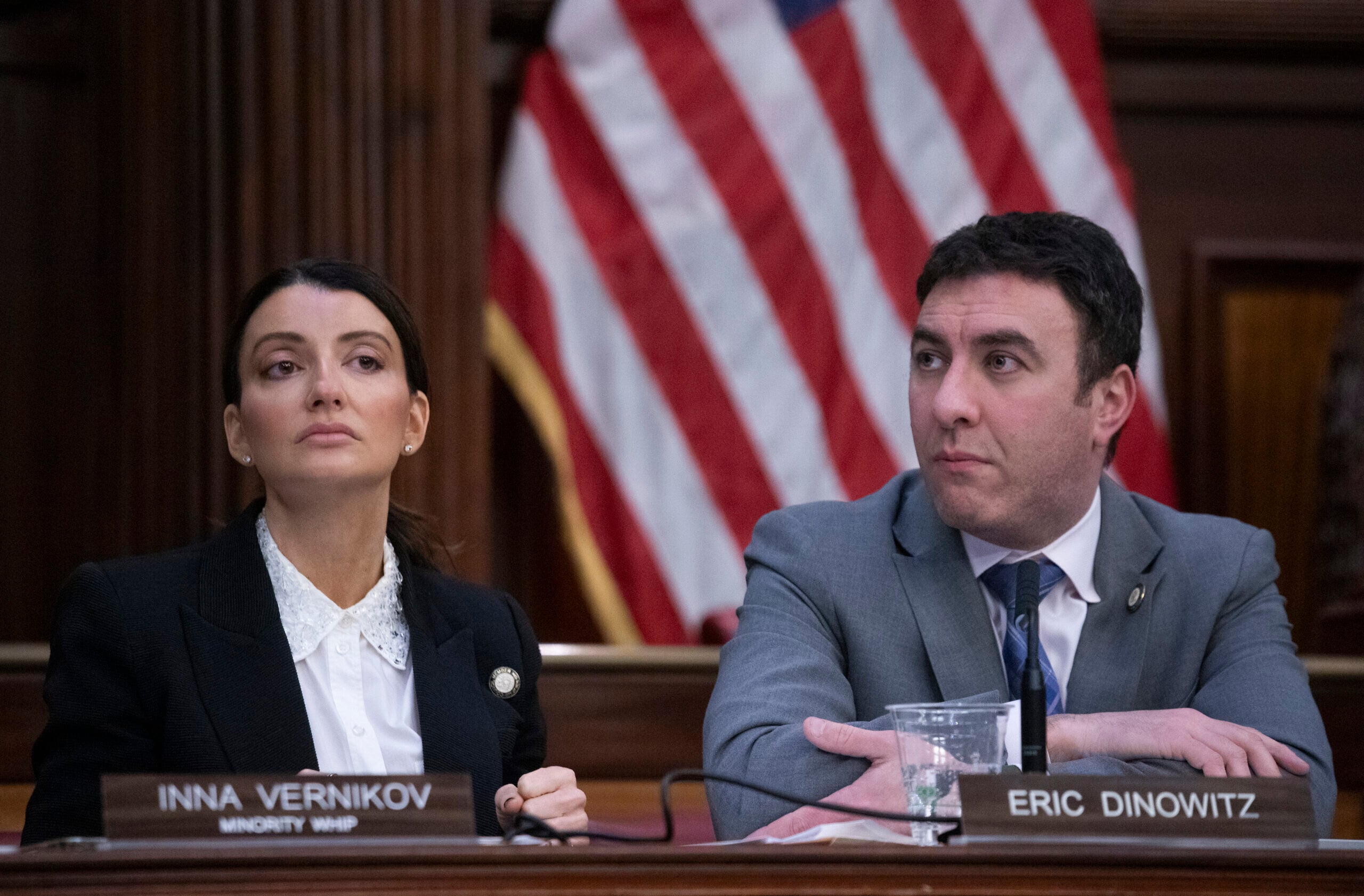
Julie Menin, the council’s first Jewish speaker, introduced the initial draft of the bill, which would have ensured a 100-foot space between protesters and houses of worship and schools. After pushback from some stakeholders, the bill was revised to remove the number of feet, substituting language that leaves the size of the buffer up to the New York City Police Department’s discretion.
The bills “take a comprehensive approach to hate from every angle,” said Lynn Schulman, a Democratic council member who represents part of Queens. “Members of any community should never have to question whether they are safe.”
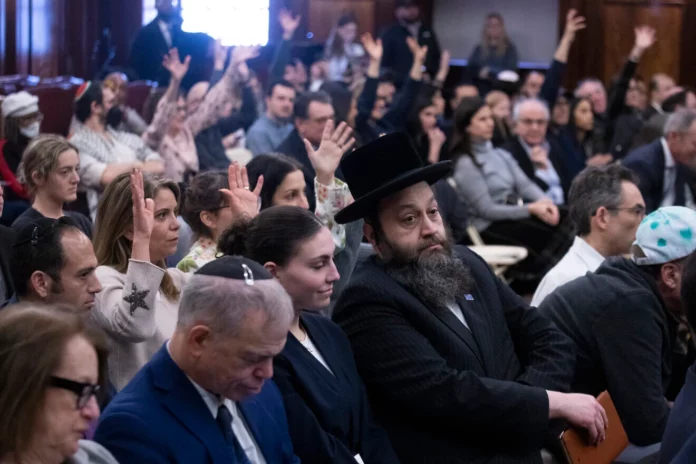
About 200 New Yorkers signed up to testify at the hearing, which was conducted by the newly-created Committee to Combat Hate and lasted nearly 10 hours.
Michael Gerber, the NYPD deputy commissioner for legal matters, testified at the hearing that the size of a buffer, or “frozen zone,” ought to be site and circumstance specific, so it can’t be mandated.
He also warned that people at houses of worship might hear “vicious speech” from protesters that have been kept at a distance.
“They may see signs or banners that are brimming with hate. This can be gut-wrenching and deeply disturbing,” he said. “The first amendment protects the rights of protesters even when their speech is hateful.”
Legal experts have cited the federal 1994 Freedom of Access to Clinic Entrances Act, known as the FACE Act, which bars protesters, in part, from obstructing access to abortion facilities and houses of worship.
Gerber told council members that the NYPD has no objections to the bill as written.
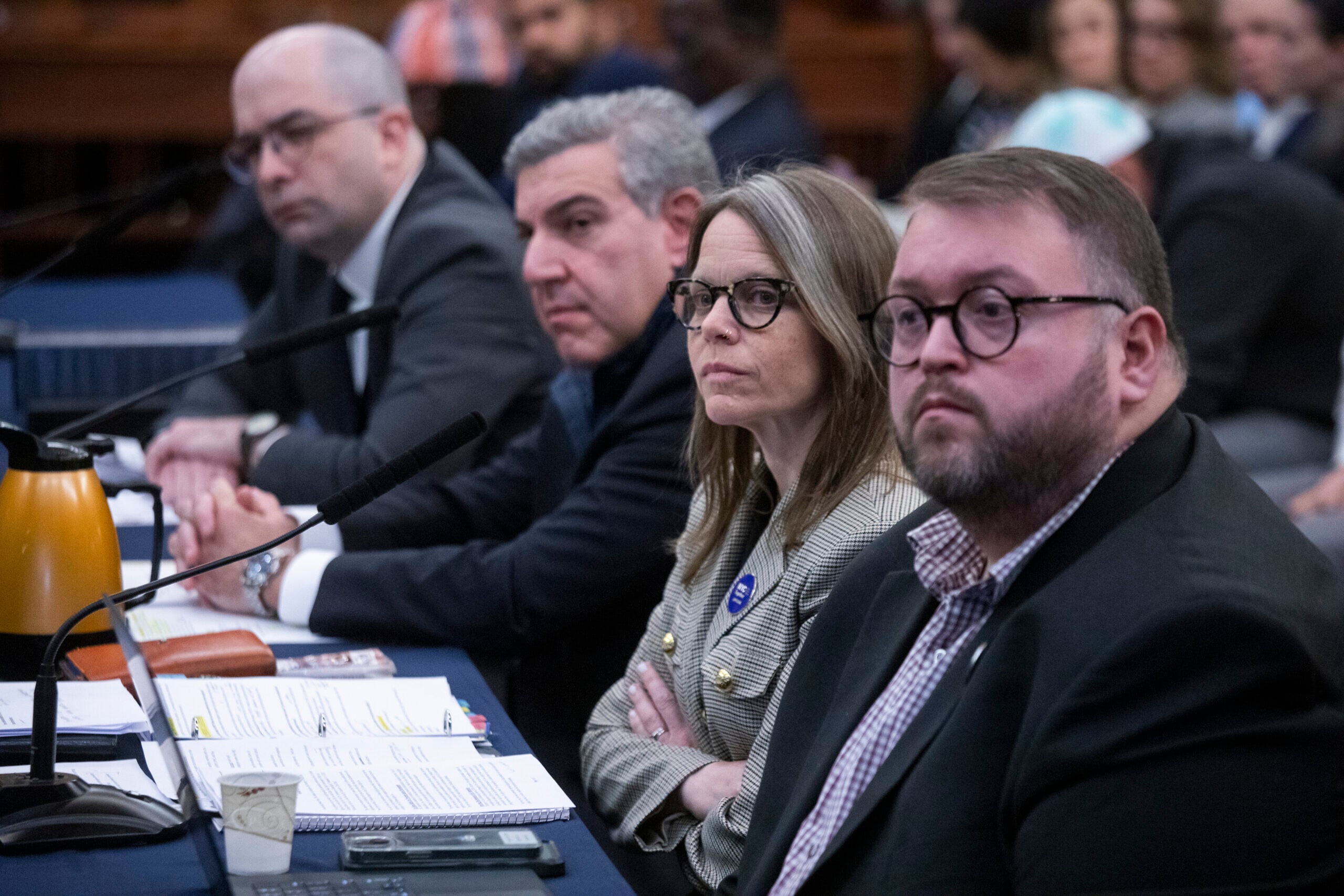
At the hearing, he said that “protesters have a right to sight and sound,” in other words, to do what they can to make sure that those against whom they are protesting see and hear their message.
But if a protester enters a buffer zone, that person can be arrested.
“If individuals choose to protest those entering a house of worship, they will not be permitted to obstruct or impede” the latter’s entrance or exit from the synagogue, church or mosque, Gerber said.
The package of seven bills—of which the buffer zone is the most controversial—comes after several recent anti-Jewish incidents.
On Nov. 21, a crowd of anti-Israel protesters crowded outside of Park East Synagogue, an Orthodox congregation on the Upper East Side, while a pro-aliyah event took place inside. Nefesh B’Nefesh was helping people interested in moving to Israel find housing, and offering potential homes in Judea and Samaria as options. Protesters considered the latter to be stolen from Palestinians.
At Park East, the protesters blew loud horns, shined lights into the eyes of people trying to enter and exit the synagogue and loudly chanted “go to hell” at them, according to footage that the Consulate General of Israel in New York shared.
Dora Pekec, press secretary for Zohran Mamdani, then mayor-elect of New York City, told Jewish Insider at the time that Mamdani “has discouraged” the language that protesters used outside the synagogue, but that “these sacred spaces should not be used to promote activities in violation of international law.”
Bennett Katz testified at the City Council hearing and said he had been at Park East that night.
“I observed a crowd of about 200 people on the sidewalk right up to the synagogue entrance, screaming loudly, ‘Death to Zionists. Why don’t you kill yourselves?’ As I approached the rear of the protest, I was surrounded by 10 to 15 masked protesters who put their fists up. One threw a punch that fortunately just glanced off my shoulder,” Katz told the council. “I was not carrying a flag, not carrying a sign, I was merely a person with a kippah on his head approaching a synagogue.”
At the hearing, Gerber, of the NYPD, admitted that “we got Park East wrong.”
“As a result, we did not have the appropriate frozen zone at the entrance,” he said. Afterward, “we were very clear with all executives in the department that what happened at Park East cannot happen again, and walked everyone through how to do this the right way,” he said.
The NYPD has the ability to institute a frozen zone at any location it deems necessary, but the City Council wants to make those zones more routine, so that synagogue worshippers and Jewish school parents can feel confident that they won’t be verbally assaulted by anti-Israel protesters.
On Feb. 1, anti-Israel protesters harassed and intimidated people entering the 92nd Street Y cultural center on the Upper East Side to hear New York Times columnist Bret Stephens in conversation with Rabbi David Ingber, founding rabbi of Romemu, a nondenominational synagogue with branches in Manhattan and Brooklyn.
At the hearing, Ingber spoke of protesters getting in the faces of his family, scaring them.
“I support the buffer bill,” he said. “We must protect freedom of speech and freedom of religion, which are two pillars of our democracy.”
Ingber also spoke about his experience in a video that he posted to social media shortly after it occurred. Hecklers interrupted Stephens’ talk, although he wasn’t speaking about Israel, and harassed people trying to enter the building to use its gym and other facilities.
Those protests followed a pro-Hamas event outside of Yeshiva of Central Queens in January, a week after Mamdani was sworn in as mayor. In one of his first acts on the job, Mamdani revoked policies that his predecessor had put in place, including one directing the NYPD to explore ways to prohibit such protests near synagogues.
At that pro-Hamas protest, “those people were screaming, ‘We are Hamas and we are here,’” said James Gennaro, a Democratic member of the council who represents that area of Queens and was present outside the synagogue.
What they said “is a direct threat,” Gennaro said at the hearing.
Many of the speakers testifying at the hearing represented Jewish organizations and spoke in favor of the bills, but a significant number of anti-Zionist people spoke as well.
Many of them clad in keffiyahs, they offered testimony at the end of the long hearing and identified themselves as members of Jewish Voice for Peace and Jews for Racial and Economic Justice.
Another voice opposing the bills was Justin Harrison, of the New York Civil Liberties Union, who warned that the buffer bill is “an affront to the Constitution, because it would strip away New Yorkers’ right to free speech.”
But Mark Treyger, CEO of the Jewish Community Relations Council of New York and a former City Council member, said at a press conference before the hearing that “no Jew, no Muslim, no Christian, no Catholic should ever have to calculate risk before entering their house of worship.”
“Folks are protesting right here,” Treyger said, referring to a small group outside of City Hall, “and that is their right.”
“But when you target people by their house of worship door, that is not persuasion,” he said. “That is intimidation.”