
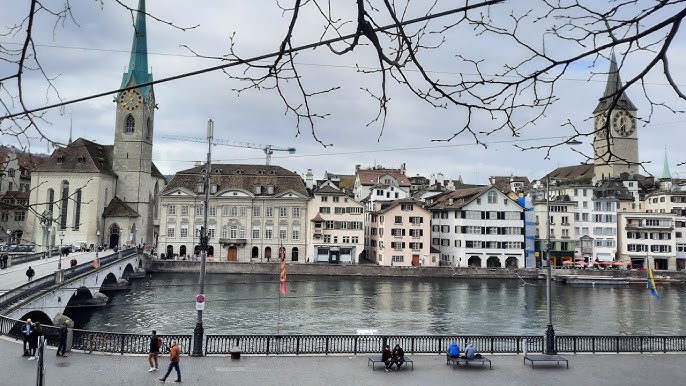

The Jewish community of Zurich has finalized the creation of an eruv following formal discussions with city officials and in accordance with Swiss law, describing the effort as a model of respectful collaboration between a religious minority and municipal authorities.
Community representatives said the halachic arrangement, which allows observant Jews to carry necessary items on the Sabbath within a defined area, received official approval after a structured consultation process. They emphasized that the project was completed transparently and in full compliance with local regulations.
In the wake of Zurich’s initiative, conversations have begun in other Swiss municipalities about implementing similar arrangements. At the same time, the development has sparked criticism from Mauro Poggia, a member of the Swiss Council of States representing the Canton of Geneva, who voiced objections in two separate public statements.
In one statement, Poggia criticized Israel and referenced a series of unrelated events, including the deadly avalanche at the Crans-Montana ski resort, the October 7 massacre, and the war in Gaza. In a separate statement addressing the eruv directly, he said he was “shocked” by the initiative and argued that it might lead to a clearly defined Jewish residential zone, which he characterized as a “voluntary ghetto.”
Jewish organizations throughout Switzerland strongly rejected those remarks, saying that invoking the term “ghetto” in connection with an eruv was both historically inaccurate and deeply offensive. They underscored that an eruv neither segregates residents nor restricts the public, but serves a limited religious function within Jewish law.
Rabbi Noam Hertig, the chief rabbi of Zurich, explained that the eruv was established through constructive dialogue and mutual respect with municipal officials. He clarified that it is a symbolic halachic framework rather than a physical enclosure, and noted that it is especially important for elderly individuals, people with disabilities, and parents of young children who would otherwise be unable to leave their homes on the Sabbath.
Rabbi Michael Ben-Edmon of Geneva said the backlash reflects what he described as a wider tendency to challenge Jewish religious observance under the guise of liberal principles. He cautioned that such rhetoric risks pushing Jewish life out of the public sphere instead of addressing antisemitism.
Rabbi Pinchas Goldschmidt, president of the Conference of European Rabbis and Av Beit Din of Switzerland, said it was inappropriate to connect unrelated tragedies to a local religious accommodation. He added that presenting an eruv as coercive or exclusionary misrepresents both Jewish law and historical fact, and damages efforts to promote mutual respect and peaceful coexistence.
{Matzav.com}