
 Vos Iz Neias
NYT: Trump Ordered Iran Strike Amid Israeli Pressure, Overruling Tucker Carlson’s Warnings
WASHINGTON (VINnews) — President Donald Trump’s decision to launch a large-scale military strike on Iran followed weeks of private deliberations, stalled nuclear diplomacy, and pressure from Israeli leaders, according to a report by The New York Times.
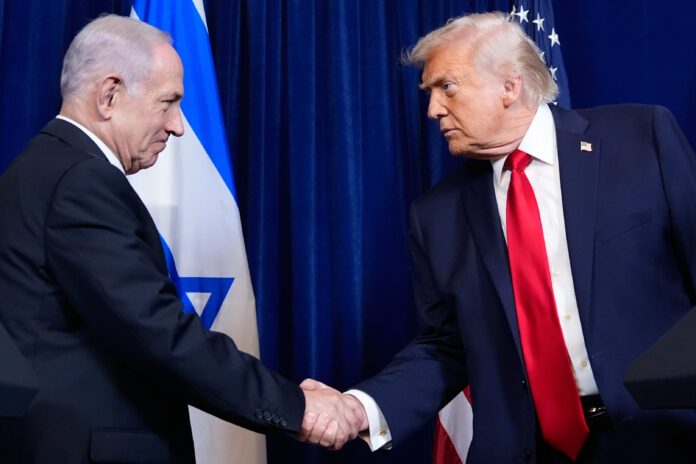
Israeli Prime Minister Benjamin Netanyahu met with Trump in early February, urging the president to maintain a path toward military action even as U.S. officials were negotiating with Iran over its nuclear program. According to the Times, the Oval Office discussions lasted several hours and included possible attack dates and the slim chance of a diplomatic deal.
Days later, Trump publicly expressed skepticism about diplomacy, describing past negotiations with Iran as endless “talking and talking.” Within weeks, he authorized a joint U.S.-Israeli military campaign, which began with the killing of Iran’s supreme leader, Ali Khamenei, and targeted missile sites, nuclear facilities, and senior leadership compounds. The offensive has since led to regional violence, American casualties, and significant civilian deaths in Iran.
Few officials in Trump’s inner circle opposed military action. Vice President JD Vance argued that if the U.S. acted, it should strike decisively and quickly. Secretary of State Marco Rubio briefed congressional leaders on intelligence and timing but reportedly did not discuss regime change.
Right-wing commentator Tucker Carlson met with Trump multiple times in the Oval Office to caution against an attack, warning about the risks to U.S. troops, energy markets, and regional allies. Carlson argued that Israel’s desire to strike was driving U.S. considerations, but Trump indicated he felt compelled to act alongside the Israeli military.
While diplomacy continued behind the scenes, led by envoy Steve Witkoff and adviser Jared Kushner, Iranian negotiators ultimately refused proposals to halt nuclear enrichment. U.S. intelligence then located Khamenei and senior leaders at a Tehran compound, allowing the operation to begin with a leadership-targeted strike.
The Pentagon built up a substantial regional presence, deploying aircraft carriers, fighter jets, bombers, refueling tankers, and air defense systems to sustain a campaign lasting several weeks. Trump told advisers he concluded negotiations could not succeed and proceeded with the assault, which he described as a demonstration of “overwhelming strength and devastating force.”
The White House has defended the campaign as necessary to confront a long-standing threat, while critics in Congress argued that Israel’s influence on U.S. policy was excessive and that lawmakers were insufficiently consulted before the operation.