
 Yeshiva World News
How The U.S. And Israel Are Splitting The Battlefield As Joint War With Iran Intensifies
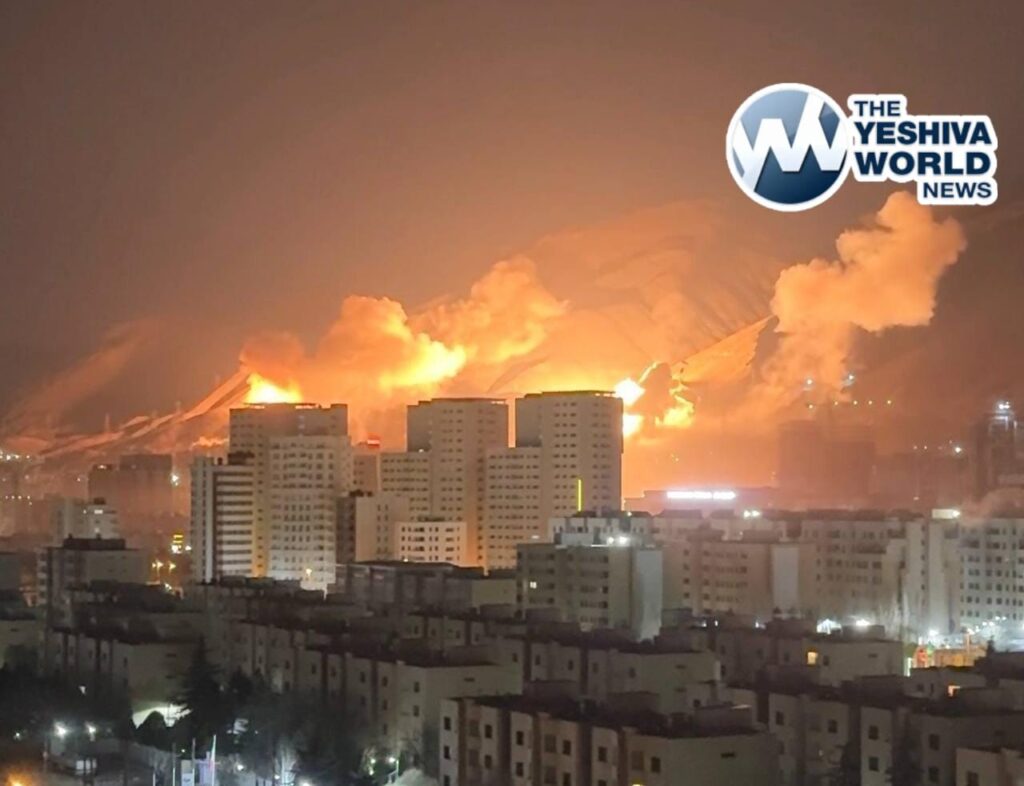
The United States and Israel have effectively divided Iran into separate theaters of war as the two allies wage the first-ever full-scale joint military campaign between the countries.
According to the IDF, the war effort has been carefully structured to leverage the strengths and geographic positioning of each force, with the two militaries splitting responsibilities by region, target type, and operational capability.
Israeli fighter jets have been concentrating their strikes in western and central Iran, areas where Tehran has launched long-range ballistic missiles toward Israel. Those regions contain key missile launchers and supporting military infrastructure that Israeli planners view as the most immediate threat to the country.
Meanwhile, U.S. forces have focused their firepower on southern Iran, where Iranian forces have used shorter-range missile systems to target American military bases scattered across the Persian Gulf. By operating in those sectors, U.S. forces are directly suppressing launch sites used against American troops and installations in the region.
The division of labor extends beyond geography.
American forces have assumed responsibility for neutralizing Iran’s naval power, conducting operations aimed at crippling the Iranian Navy and preventing maritime attacks or disruptions in the Gulf. Israeli forces, by contrast, have concentrated on strategic regime-linked targets, including sensitive sites in and around Tehran that are central to Iran’s military command structure.
Behind the scenes, the campaign is being coordinated through an unprecedented level of military integration.
Israeli officials say joint coordination cells are operating simultaneously in both Israel and the United States, synchronizing intelligence, targeting decisions, and defensive measures. More than 1,000 American troops are currently stationed in Israel, supporting the effort.
The operational partnership is also visible in the air. Israeli aircraft striking deep inside Iran have been relying heavily on U.S. aerial refueling tankers, dramatically extending their reach. The American military operates roughly ten times as many refueling aircraft as Israel, and dozens of U.S. tankers have been deployed to Israel during the conflict to sustain long-range strike missions.
At the strategic level, communication between the two militaries has become nearly constant.
Israeli Defense Forces Chief of Staff Lt. Gen. Eyal Zamir has been holding daily conversations with U.S. Central Command chief Adm. Brad Cooper, according to Israeli officials, as the two sides coordinate operations across thousands of miles of airspace and multiple battlefronts.
Israeli military leaders say the campaign reflects months—if not years—of joint planning between Washington and Jerusalem. Now, with both countries fully engaged in combat operations against Iran, those plans are being tested in real time on one of the most complex battlefields in the world.
(YWN World Headquarters – NYC)