
 Ami Magazine
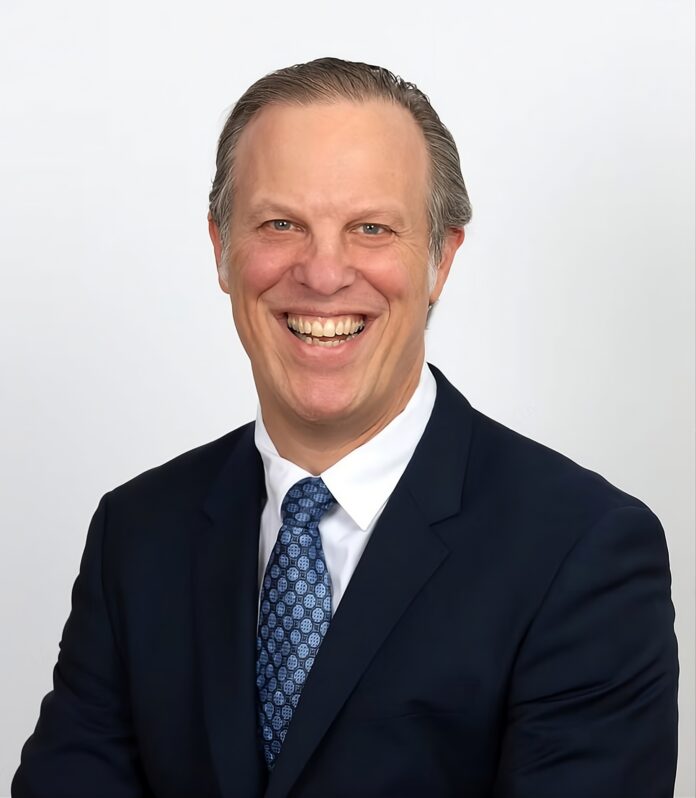
Joseph E. Sarachek // Strategic Liquidity Fund Acquisitions & The Sarachek Firm
Bankruptcy is one of those words people misunderstand. Most assume it means you simply get to wipe the slate clean and don’t owe anyone any money forever, but it’s not that simple. In fact, when a company declares bankruptcy while owing money to many of their vendors, those claims still have value, and even significant value, as they are often later paid either partially or in.
This is where Joseph Sarachek comes in. Joseph is a lawyer who has traded over a billion dollars in bankruptcy claims. He represents creditors, investors, vendors and funds that are trying to recover money from bankrupt companies when others assume it’s gone. He has built a practice focused on enforcing judgments and extracting value from complicated situations.
People who have access to and trade bankruptcy claims are rare, and Joseph is one of the foremost experts in the field.
We discussed several concepts of bankruptcy, how it isn’t the end of the road for many, and he also introduced concepts that most readers will find new and interesting.
Enjoy!
—Nesanel
I was born in New York City, the oldest of three children, with a younger brother and a younger sister.
My grandfather, Rabbi Joseph Sarachek, was president of the Board of Jewish Rabbis during World War II and a scholar of medieval Jewish literature. I never knew him. I was extremely close to my grandmother, though. She was a lawyer and always impressed upon me how noble a profession it was; she told me that as a lawyer you could help people and make a good living. She was also heavily involved with Hadassah and played an active role in the development of Hadassah Hospital, which existed before the State of Israel and became much more significant after its founding.
“My maternal grandparents came from Europe. My grandfather served in World War I, came to the United States and worked as a house painter in Brooklyn.
“My father was a commercial banker who worked at Bank Leumi. He was from Long Beach, Long Island. I grew up in Great Neck, New York, in a Reconstructionist household. I did not attend religious schools. A chance meeting with Rabbi Leibel Baumgarten, the Chabad rabbi in East Hampton, changed the direction of my observance.
“I later moved to Scarsdale, where I still live. I am a member of Young Israel, and most of my kids went to Ramaz. I put on tefillin every day, and I am very involved with Colel Chabad, the charity run by Rabbi Sholom Duchman.
“I was entrepreneurial as a teenager, but I wasn’t a success right away. One of my first ventures was selling bagels on the street outside Penn Station, and it failed. I mainly worked in restaurants and food service, and I was quite good at it. My first job was busing tables at a temple in Great Neck. After that, I worked at the most popular restaurant in Great Neck, doing busing and some light waitering. At the time, my high school ran a service through which people could hire students to work at their party. I got many jobs through them and made good money bartending and cleaning up at parties. That’s what enabled me to buy a car at 17.
“I always wanted to go to Cornell, but I didn’t get in at first. I started at Binghamton and later transferred to Cornell. My grades were very good, and I was also very active in extracurricular activities there: I was on the rowing team and the student newspaper, treasurer of my fraternity, and I ran a campaign for an independent candidate for president.
“I wanted to go to law school, but money was tight. I received a scholarship from New York Law School, so I went there. I excelled in corporate bankruptcy law and soon joined a bankruptcy law firm.
“Bankruptcy law is very entrepreneurial. It’s part business analysis, part legal application. The legal aspect is much more than simply filing a bankruptcy claim. It’s figuring out how to maximize assets for all stakeholders—the shareholders, investors, employees, debt holders and banks. The entrepreneurial part is recognizing patterns. Like everything else, bankruptcies follow a cycle, which ultimately comes down to cash flow. If a company lacks liquidity but carries heavy debt, they often can’t survive.
“I’m a bankruptcy geek. In my spare time, in addition to learning Gemara, I read bankruptcy articles and journals, and post a lot on LinkedIn about things I find interesting, to educate others.
“My first job was at a bankruptcy firm, Kreindler and Relkin (K&R), in the Empire State Building. They focused largely on creditor-side work. We didn’t represent the people filing for bankruptcy; we represented the people who were unhappy they were filing. Creditor-side work involves representing the banks, vendors or investors who are owed money and are trying to recover as much as possible. Debtor-side work, by contrast, means representing the company that has filed for bankruptcy, helping it restructure its debts, negotiate with lenders and attempt to reorganize or sell the business.
“The firm primarily represented lenders to the apparel industry—banks and factors (agents that buy a company’s accounts receivables, less a discount for commission and fees). It was a unique niche; the apparel industry was heavily Jewish, and these businesses often relied on these specialized lenders to survive, despite the high interest they often charged.
“After a year and a half at K&R, I was hired by a major commercial bankruptcy firm, Kelley Drye & Warren, where I handled both debtor and creditor cases. We handled many high-profile cases. We worked on Revco and on Interco, the company that owned Converse sneakers. I enjoyed the debtor-side work, but it requires large teams and significant resources to execute properly. While at Kelley Drye, my boss, Sandy Mayerson, came into my office one day and said we were going to write an article for a premier bankruptcy publication about trading claims. I was 27 years old and had no idea what that meant. I researched it and discovered an entire field of investors who buy bankruptcy claims.
To read more, subscribe to Ami

