
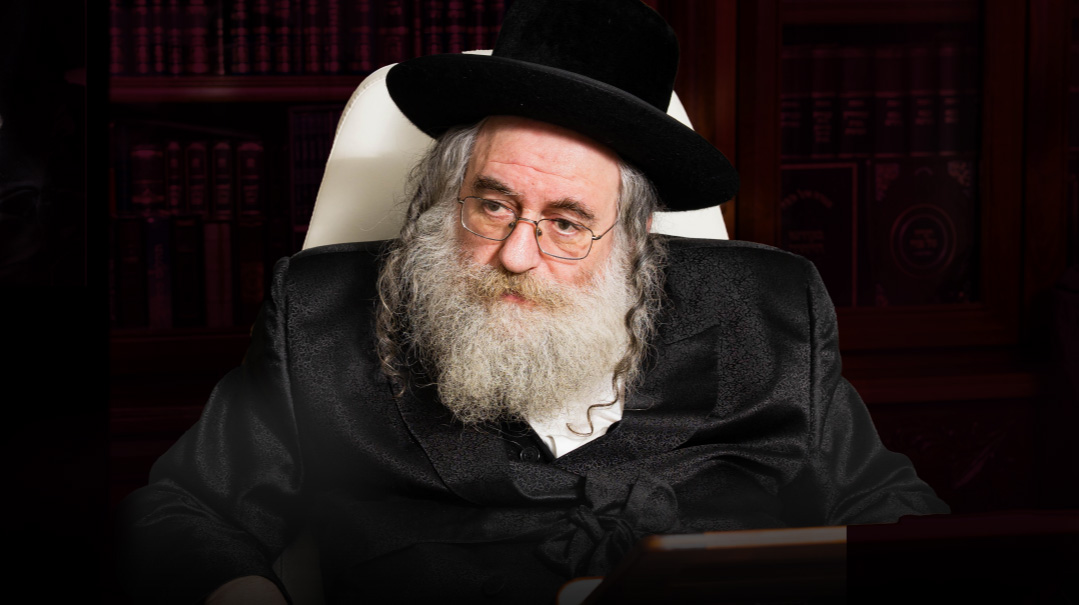

The Pnei Menachem's youngest child opens a rare window into his father’s mesirus nefesh for his chassidim — and for every Yid
Photos: Elchanan Kotler, Machon Or Chadash/Pinchas Borenstein, Yitzchak Rosenthal, Meir Yechezkel Kempinski
When the Pnei Menachem, the ben zekunim of the Imrei Emes, took on the leadership of Gur, there was a question: Could this brilliant rosh yeshivah be a vessel for holding the suffering of another? The Rebbe, it turned out, became an address for the pain of Klal Yisrael. Rav Daniel Alter, the Rebbe’s youngest child, opens a rare window into his father’s mesirus nefesh for his chassidim — and for every Yid
Walk up the hill from Jerusalem’s Geula neighborhood toward the Machaneh Yehudah shuk, and on a narrow road just off Rechov Yaffo, under Yeshivah Sfas Emes, there is a red brick structure. Even though the color and design of the exterior wall is a throwback to the beis medrash in Gora Kalwaria of old, it doesn’t stand out unless you’re looking for it, and some passersby miss it entirely.
This is the ohel eventually built over the kever of the Imrei Emes, Rav Avraham Mordechai Alter of Gur, one of the great rebbes of the last century. The Rebbe had purchased a burial plot on Har Hazeisim, but he was niftar on Shavuos of 1948, during the War of Independence, when the Jordanian Legion surrounded Jerusalem and cut off access to the Old City and the surrounding hills. With no way of reaching Har Hazeisim, the family decided to bury the Rebbe in the courtyard of the Gerrer yeshivah.
Just a decade earlier, the Imrei Emes of Gur had been a leader of tens of thousands of chassidim in Poland and now, he was laid to rest in a hastily arranged post-midnight levayah attended by a few hundred chassidim on Motzaei Yom Tov.
And on a rainy late winter morning in 1996, the day after Purim in Jerusalem — 30 years ago this week — the yeshivah courtyard became the resting place of the Imrei Emes’s ben zekunim as well, Rav Pinchas Menachem Alter, known as the Pnei Menachem.
It’s not your typical rebbishe gravesite — it’s not on the outskirts of a Polish hamlet, on a hill overgrown with tall grass where headstones lean at angles, nor is it located in a grand mausoleum at the peak of one the mountains surrounding the Holy City. It’s right here, smack in middle of town, where the rumble of the light rail and exhaust of buses mingles with the lively shouts of watermelon vendors eager to make a sale.
It is here — tucked into the walls of a yeshivah that the Imrei Emes founded a century ago while still in Poland, a yeshivah that would serve as a refuge for the fragments of a decimated chassidus and world, a yeshivah in which the rebirth would begin.
The two men who lie side by side, father and son, led in similar ways, both of them seeing limud haTorah as the singular source of energy and light, a means of offering illumination and hope. It was within the walls of the beis medrash that they lived, and it is here that they rest.