
 Yeshiva World News
Despite Crushing Blow to Iran’s Missile Arsenal, IDF Warns Barrage on Israel May Continue for Weeks
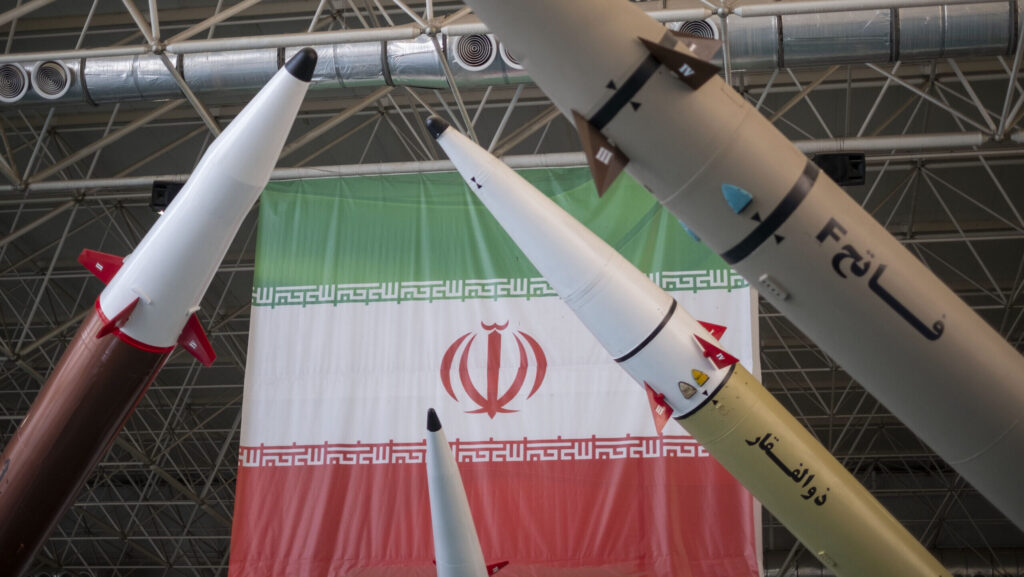
Even after destroying roughly three-quarters of Iran’s ballistic missile launchers, the threat of continued missile fire against Israel is far from over.
According to the IDF, recent operations have eliminated about 75% of Iran’s ballistic missile launch infrastructure, a significant escalation from the 65% figure reported just two days earlier. Yet despite the dramatic degradation of Iran’s missile capabilities, military officials say Tehran still retains enough firepower to keep Israel under threat for an extended period.
At the start of the war, Iran was launching roughly 100 ballistic missiles per day. In recent days, that number had fallen to around 20–25 missiles daily, and in more days, the total dipped to fewer than 20 launches.
For several days, the reduced pace of attacks also coincided with a lull in major damage inside Israel. In contrast to the opening days of the conflict — when multiple missiles struck populated areas — there had been no major impacts reported for several days.
That relative calm, however, proved short-lived.
A significant strike hit Israel on Sunday, followed by another on Monday, underscoring the lingering threat despite the military’s success in dismantling much of Iran’s launch network. Air-raid sirens have continued to sound across large parts of the country as Iranian missiles and fragments reach Israeli territory.
Military officials say the reality of the battlefield is more complicated than the headline numbers might suggest.
While the destruction of major missile bases has dealt a severe blow to Iran’s arsenal, the remaining launchers — estimated at 100 to 150 — may now be scattered across the vast territory of the Islamic Republic, which is several times the size of France. That dispersal makes them far harder to locate and destroy.
Iran is also believed to still possess more than 1,000 ballistic missiles, many of which could be deployed by small, mobile launch teams operating from concealed locations.
That dynamic means the war’s early success in crippling Iran’s missile infrastructure may not translate into an immediate end to the threat.
Israeli officials have drawn comparisons to the war with Hamas following the October 7, 2023 attacks, when Israeli forces quickly reduced the scale of rocket fire from Gaza but were unable to eliminate it entirely for months. Hamas continued launching sporadic rockets into Israel until early January 2024.
A similar pattern could emerge in the current conflict.
Rather than completely eliminating missile launches, Israeli officials say a more realistic near-term goal may be reducing Iran’s attacks to a level that disrupts daily life but rarely causes casualties, similar to the intermittent missile and drone attacks launched by Yemen’s Houthi rebels in recent years.
(YWN World Headquarters – NYC)