
 Vos Iz Neias
IDF Says Campaign Against Iran Ahead of Schedule, Preparing for Weeks of Continued Strikes
JERUSALEM — The Israeli military said its ongoing campaign against Iran, conducted jointly with the United States, is progressing faster than initially expected, though officials are preparing for several more weeks of operations as thousands of additional targets remain.
According to Israeli defense officials, the Israel Defense Forces (IDF) has already struck more than 1,700 assets tied to Iran’s military industry since the war began, and hundreds more targets remain on the list across Tehran and other parts of the country.
Despite the accelerated pace of the operation, the military is planning for at least three more weeks of strikes.
The campaign began with large-scale Israeli strikes on Feb. 28 that killed Iran’s Supreme Leader Ali Khamenei along with more than 40 senior Iranian officials. The opening attacks also targeted ballistic missile launchers and air defense systems, in what Israeli officials described as a “decapitation” strike aimed at crippling Iran’s leadership and command structure.
Since then, the IDF has shifted its focus toward dismantling Iran’s broader defense industry, officials said.
Unlike the brief 12-day war between Israel and Iran in June 2025, the current campaign is significantly more extensive. During the earlier conflict, Israel focused primarily on preventing Iran from rapidly developing a nuclear weapon and countering its expanding ballistic missile program.
Now, Israeli officials say the military is attempting not only to remove what it calls the “existential threat” posed by Iran, but also to neutralize the country’s long-term strategic threat to Israel.
To that end, the IDF is systematically targeting Iran’s defense manufacturing infrastructure, including facilities involved in producing ballistic missiles, air defense systems, naval weapons, cyber capabilities and surveillance satellites.
Officials said the effort spans the entire production chain, including large firms tied to Iran’s Islamic Revolutionary Guard Corps as well as smaller companies that manufacture specialized components.
According to the officials, the strikes have significantly damaged Iran’s missile production capability and have temporarily halted its ability to manufacture new ballistic missiles.
Israeli forces have also continued to strike elements of Iran’s nuclear program, targeting research and development sites and companies believed to be producing components for nuclear weapons.
In parallel, the IDF said it is striking “centers of power” within the Iranian regime, including command centers and headquarters used by internal security forces and the Basij paramilitary organization, which is often deployed to suppress domestic protests.
Israeli officials estimate that between 4,000 and 5,000 Iranian soldiers have been killed in the strikes, with tens of thousands more wounded. Many of the casualties are believed to be members of internal security forces and Basij units.
The military also reported signs of declining morale within Iranian ranks, including instances of refusal to serve and desertion. Officials said the trend has been most noticeable within Iran’s ballistic missile units.
Israel’s air force has continued to target missile launchers across Iran, destroying dozens in recent days, including launchers that were reportedly prepared to fire toward Israel.
Overall, the IDF says it has destroyed or disabled roughly 70 percent of Iran’s estimated 500 ballistic missile launchers. However, officials acknowledged that Iran can relatively easily construct new launchers, as it did following the June 2025 conflict.
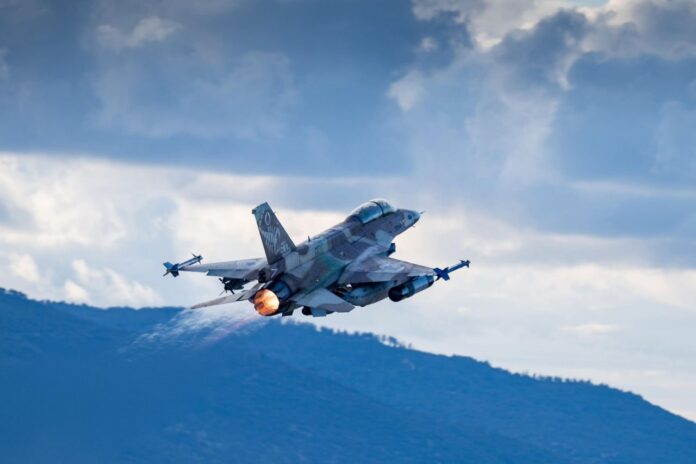
Israeli strikes have also focused heavily on Iran’s air defense network. Within 24 hours of the opening attacks, the IDF said it had achieved aerial superiority in parts of Iran, allowing fighter jets to operate with reduced risk.
Military officials now say the Israeli Air Force holds air supremacy across most of Iran’s airspace after destroying more than 100 air defense systems and about 120 detection and radar systems.
Israel has also continued targeting the Quds Force, the overseas operations arm of Iran’s Islamic Revolutionary Guard Corps, both inside Iran and in neighboring Lebanon.
Israeli leaders say the broader goal of the campaign is to weaken the Iranian regime’s military capabilities while creating conditions that could enable the Iranian people to challenge and potentially topple the government.