
 Yeshiva World News
IDF DENIES SHORTAGE: Military Says Israel Has Enough Interceptors For Ongoing Iran War
The Israel Defense Forces indicated that Israel is not running “critically low” on air defense interceptors amid the ongoing war with Iran, pushing back against recent international reports suggesting the country’s stockpile of interceptor missiles is nearing depletion.
The military emphasized that it is “prepared and ready to handle any scenario,” though it declined to comment publicly on specific details regarding munitions inventories.
Military officials said the current operation against Iran had been planned months in advance and took into account Tehran’s large stockpile of ballistic missiles and drones that could be launched toward Israel.
According to officials, the planning included preparing sufficient interceptor supplies to deal with the expected threats.
The IDF has also prepared for the possibility of a prolonged conflict with Iran that could last several more weeks, during which ballistic missile fire toward Israel may continue.
Officials added that the number of interceptor missiles being used so far during the war has actually been lower than what the military initially anticipated during its planning stages.
Since the war began, Iran has launched approximately 300 ballistic missiles at Israel over the past two weeks. That number is significantly lower than the roughly 500 ballistic missiles fired during the 12-day war between Israel and Iran in June 2025.
During that earlier conflict as well, the IDF repeatedly rejected reports claiming that Israel’s interceptor supplies were running dangerously low.
According to the military, the interception rate against Iranian ballistic missiles remains high and is similar to the success rates seen during the June 2025 conflict.
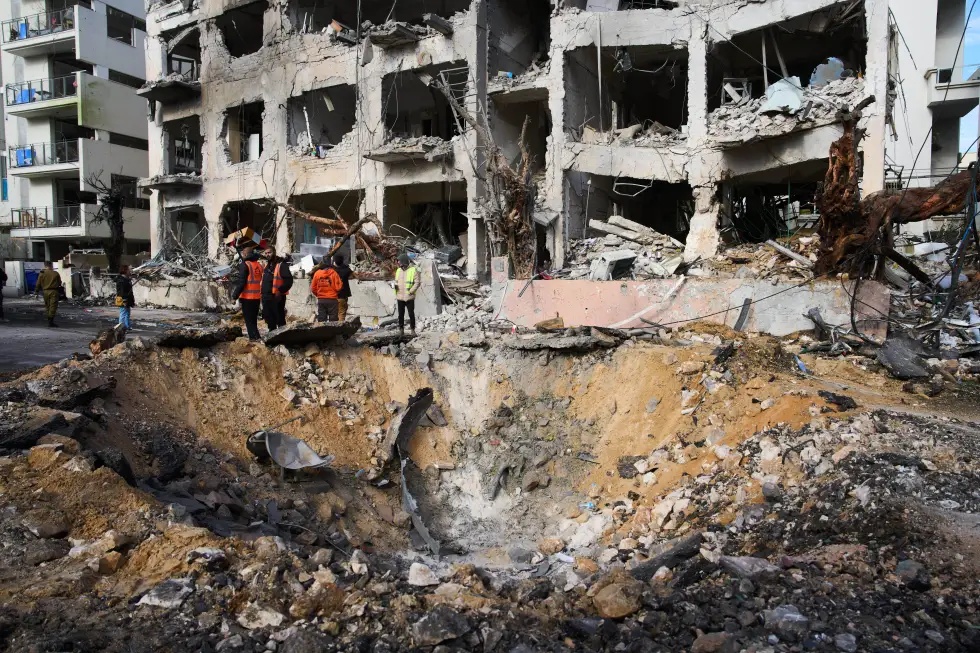
Despite the high interception rate, several missiles have struck residential areas in Israel. The attacks have included three ballistic missiles carrying conventional warheads weighing several hundred kilograms and about a dozen missiles equipped with cluster munitions.
Twelve people have been killed in those attacks.
Israeli officials have repeatedly stressed that while Israel’s multi-layered air defense systems are among the most advanced in the world, they are not hermetic and cannot intercept every incoming projectile.
The latest denial comes after a report citing U.S. officials claimed that Israel had informed Washington that it was running “critically low” on ballistic missile interceptors.
The report suggested the United States had been aware for months that Israel’s interceptor capacity was limited, though it also said the U.S. itself was not facing a similar shortage.
The same report argued that Iran’s use of cluster munitions could accelerate the depletion of Israel’s interceptor stockpile.
However, Israeli defense officials noted that cluster submunitions are typically intercepted using shorter-range defense systems such as Iron Dome and David’s Sling rather than long-range anti-ballistic missile interceptors.
Those systems are also used to defend against rocket attacks launched by Hezbollah from Lebanon.
(YWN World Headquarters – NYC)