
 Vos Iz Neias
Bettors on Prediction Market Threaten Israeli Journalist to Change Iran Missile Report
JERUSALEM — A journalist covering Israel’s war with Iran says he received harassment and death threats from gamblers who tried to pressure him to change a report about a missile strike, highlighting concerns about the influence of online betting markets on news coverage.
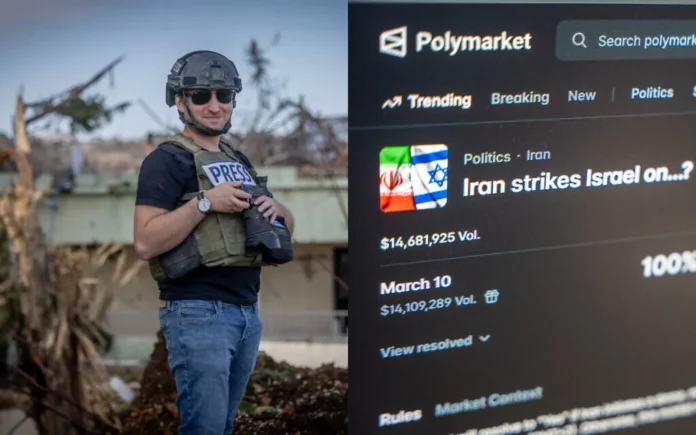
Emanuel Fabian, military correspondent for The Times of Israel, said bettors contacted him repeatedly after he reported that an Iranian ballistic missile struck an open area near Beit Shemesh during an attack earlier this month.
Fabian reported at the time that the missile’s warhead hit a forested area just outside the city, causing a large explosion but no injuries. The report, based on information from rescue services and footage from the scene, appeared in the outlet’s live coverage of the attack.
But according to Fabian’s account published Monday in The Times of Israel, several people began emailing and messaging him demanding he change the report to say the projectile had been intercepted and that only fragments fell to the ground.
Fabian said the requests were tied to wagers placed on the prediction market Polymarket, where users had bet on whether Iran would successfully strike Israel on a specific date.
Under the rules of the bet, an intercepted missile would not count as a successful strike. Fabian said more than $14 million had been wagered on the outcome for that day.
According to his account, some bettors attempted to pressure him with repeated emails, messages on social media and WhatsApp, and even a fabricated screenshot falsely claiming he had admitted the missile was intercepted.
The situation escalated over the weekend when one individual sent a series of threatening messages warning Fabian to change his report or face serious consequences.
In one message cited by Fabian, the sender claimed that gamblers who stood to lose hundreds of thousands of dollars would “invest” similar sums to harm him if he did not alter the story.
Fabian said the individual also referenced details about his neighborhood and family in what he described as an attempt at intimidation.
The journalist said he refused to change his reporting and later filed a complaint with police. Authorities are now investigating the threats, he said.
Fabian warned the episode underscores the potential risks posed by prediction markets intersecting with real-world news events, especially when large sums of money are involved.
“The attempt by these gamblers to pressure me to change my reporting so that they would win their bet did not and will not succeed,” Fabian wrote, adding that he worries other journalists could face similar pressure in the future.
The incident highlights growing scrutiny of prediction markets like Polymarket, which allow users to wager on the outcomes of political events, conflicts and other real-world developments. Critics have raised concerns that such platforms could incentivize manipulation or attempts to influence information that determines the outcome of bets.