
 Vos Iz Neias
Volunteers Help Put Life Back Together in Beit Shemesh After Deadly Iranian Attack
BEIT SHEMESH (JNS) – “I was considered missing. My children—everyone—called me. The police must have called a thousand times. I came home, saw the state of my balcony and passed out,” Miriam Salem, 71, from Beit Shemesh, told JNS on Thursday.
Salem lives in Ramat Lehi, a neighborhood devastated by an Iranian ballistic missile on March 1. Nine people were killed, including three teenage siblings from the same family. Walking through the streets of Ramat Lehi, it is nearly impossible to miss the yellow and red signs posted by the Israel Defense Forces Home Front Command indicating which buildings are safe to enter and which are not.

Salem was not in her apartment when the missile struck, but insisted on returning home. Many residents were evacuated to hotels while renovations are underway.
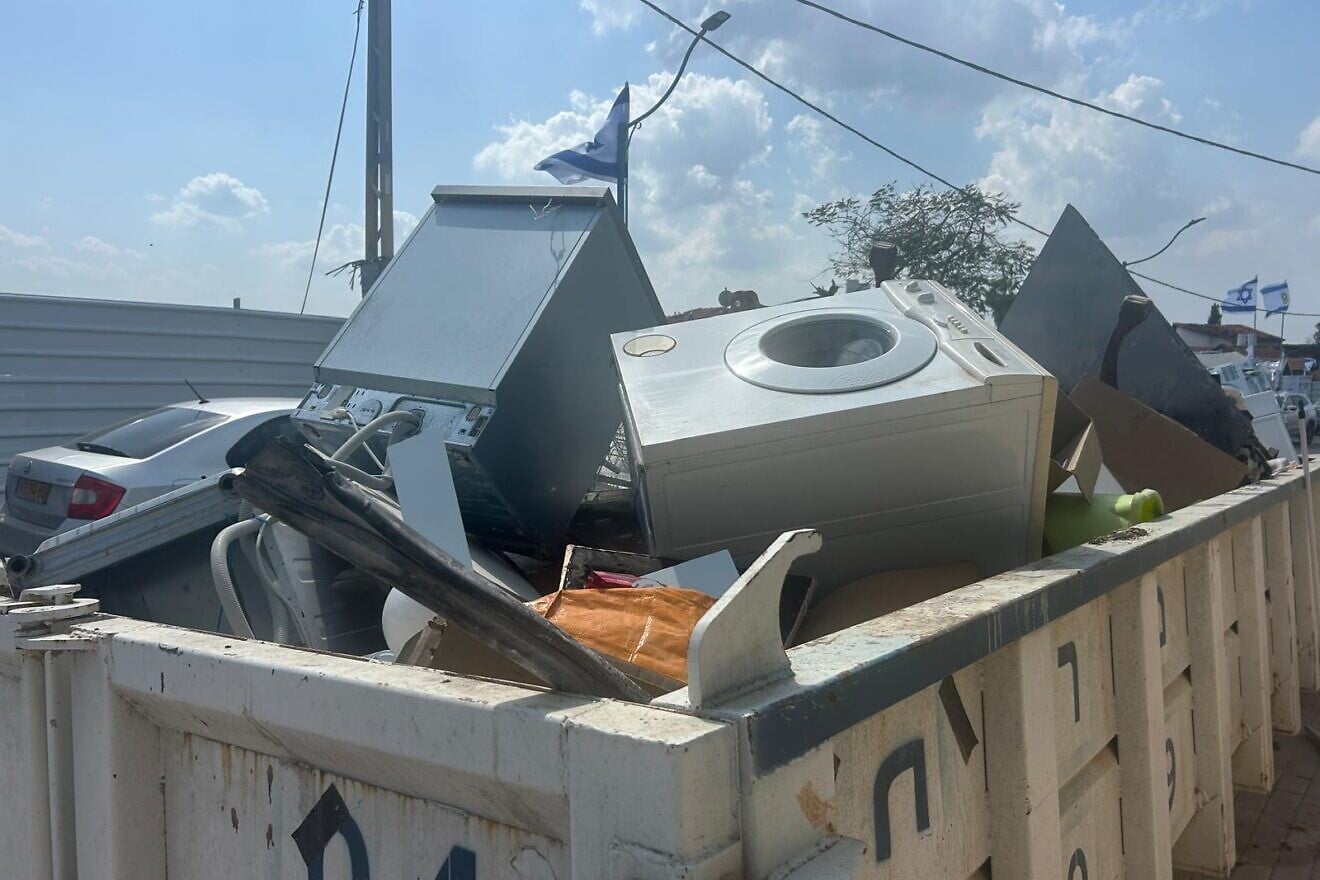
Near the homes that were hit, garbage bins are filled with furniture ruined in the attack. The facades of buildings are now lined with plastic-sealed windows, replacing those shattered by the blast.
As part of an operation launched with support from the Kibbutz Movement Rehabilitation Fund, dozens of volunteers from pre-military preparatory programs and from across the country have come to Beit Shemesh to assist residents whose homes were damaged.
“It is important to us that every family feels they are not alone and that every damaged home receives prompt and proper care. This is our commitment, both as a fund and as a society,” Neri Shotan, CEO of the Kibbutz Movement Rehabilitation Fund, told JNS.
The organization plays a critical role in supporting these activities, including the transportation of volunteers, the provision of work and protective equipment, and other essential resources.
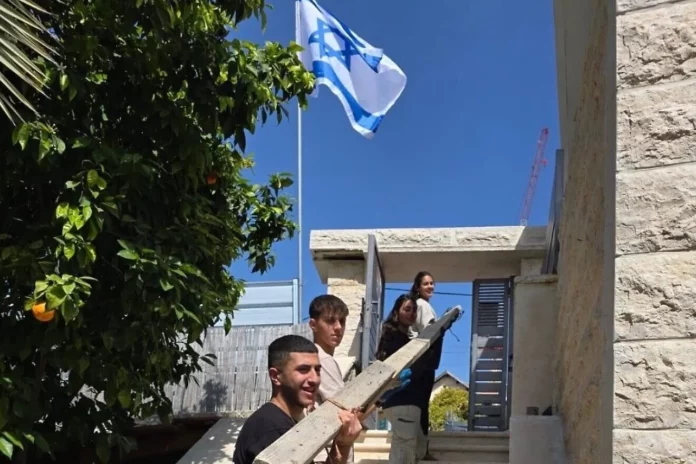
Volunteers help empty homes, clear shattered glass from floors, seal windows and spend time with residents whose lives have been put on hold.

Shir Goren, director of community engagement and volunteer infrastructure at the Kibbutz Movement, accompanies volunteers at sites across Beit Shemesh. The day JNS toured the city, Goren was directing 20 volunteers from the Meitarim Lachish Mechina. Together, they walked to Rachel Sayag’s home, where volunteers had already sealed the windows and cleared away shattered glass.
“It is very important that they come to help because it’s very hard to cope,” said Sayag. “You find yourself in trauma—the living room is full of glass. The volunteers seemed trained, as if they were used to this. I’ve been staying in a hotel until my windows are fixed. As soon as that happens, I will return. I miss my space,” she said.
Throughout the day, Goren operates from Kibbutz Tamuz, a small urban kibbutz in Beit Shemesh where about 50 people live and where the local association helps coordinate the volunteer operations.
“We opened WhatsApp groups at the beginning of the war against Hamas in Gaza. More than 15,000 volunteers joined. It started with the rehabilitation of southern kibbutzim. Then it became need-based,” she said.
After years of war, Goren said that while people are exhausted, every time there is a new operation or another strike, they gather their strength and, in moments of crisis, embrace one another. “Even if it’s hard, people take solace in the fact that they are doing something for someone else, and that is very unique,” she added.
While many of the volunteers are of pre-military age—including some from the southern communities of Mefalsim and Yad Mordechai who say they want to give back for the support they received earlier in the war—others are older, in their 60s and 70s, and come in search of purpose.
“They want to feel that they have an impact. They are looking for ways to contribute as citizens of a country in crisis. It’s amazing to embrace others while you are already out of strength. The warmth that Israeli society puts out there is unique,” Goren said.
Looking at volunteers fresh out of high school and soon to be drafted into the Israel Defense Forces who come to help as part of their pre-army preparation, Goren said it shows the country has a future.
“Good things will continue after us. This is education and the true values of Zionism, and I am happy that the next generation is here to take things into their hands and do what is needed,” she said.
Hili Elfassi, 18, from Netanya and a member of the Meitarim Lachish Mechina, told JNS that it is essential for her and her peers to take part in meaningful volunteer opportunities.
“We are here to fulfill every need, whether it’s babysitting for families with a member on reserve duty or helping empty houses after a blast,” she said.
Elfassi said it is always emotional to enter another damaged home and support a new family.
“Last week we were in Beersheva, where there had been a strike. We entered and the entire house was destroyed. The hit had happened the day before. It’s crazy how urgent and immediate the need is for us to come,” she added.
At Kibbutz Tamuz, many homes were also affected by the blast, including the house of Carmela, 34, whose husband has been serving in the IDF reserves. That day, she had taken shelter at her parents’ home nearby.
“One of my two kids was with my parents—my youngest son—and something told me to go be with him because he would likely be scared. I ran there. My dad hadn’t yet managed to close the door of the safe room when he was pushed away by the blast,” she said.
“My parents’ house started trembling. The entire house was instantly covered in dust and smoke,” she added.
When Carmela returned to her home, she realized she could no longer live there with two young children walking around on a floor covered in glass.
“We went to my sister, who doesn’t live in Beit Shemesh. The volunteers came and did amazing work—from older people to high schoolers. They even put away my children’s games and their Purim costumes,” she said.
“If I could go one by one and thank them and hug them, I would,” she added.