
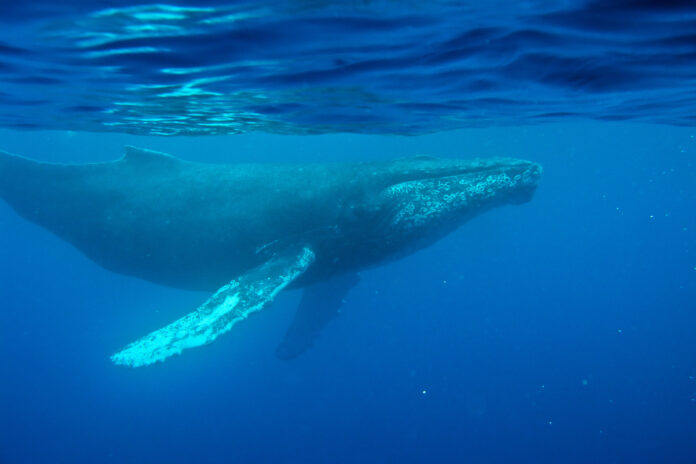

PORTLAND, Maine (AP) — A haunting whale song discovered on decades-old audio equipment could open up a new understanding of how the huge animals communicate, according to researchers who say it’s the oldest such recording known.
The song is that of a humpback whale, a marine giant beloved by whale watchers for its docile nature and spectacular leaps from the water, and was recorded by scientists in March 1949 in Bermuda, said researchers at Woods Hole Oceanographic Institution in Falmouth, Massachusetts.
Just as significant is the sound of the surrounding ocean itself, said Peter Tyack, a marine bioacoustician and emeritus research scholar at Woods Hole. The ocean of the late 1940s was much quieter than the ocean of today, providing a different backdrop than scientists are used to hearing for whale song, he said.
The recovered recordings “not only allow us to follow whale sounds, but they also tell us what the ocean soundscape was like in the late 1940s,” Tyack said. “That’s very difficult to reconstruct otherwise.”
The recording predates scientist Roger Payne’s discovery of whale song by nearly 20 years. Woods Hole scientists on a research vessel at the time were testing sonar systems and performing acoustic experiments along with the U.S. Office of Naval Research when they captured the sound, said Ashley Jester, director of research data and library services at Woods Hole.
The scientists didn’t know what they were hearing, but they decided to record and save the sounds anyway, Jester said.
“And they were curious. And so they kept this recorder running, and they even made time to make recordings where they weren’t making any noise from their ships on purpose just to hear as much as they could,” said Jester. “And they kept these recordings.”
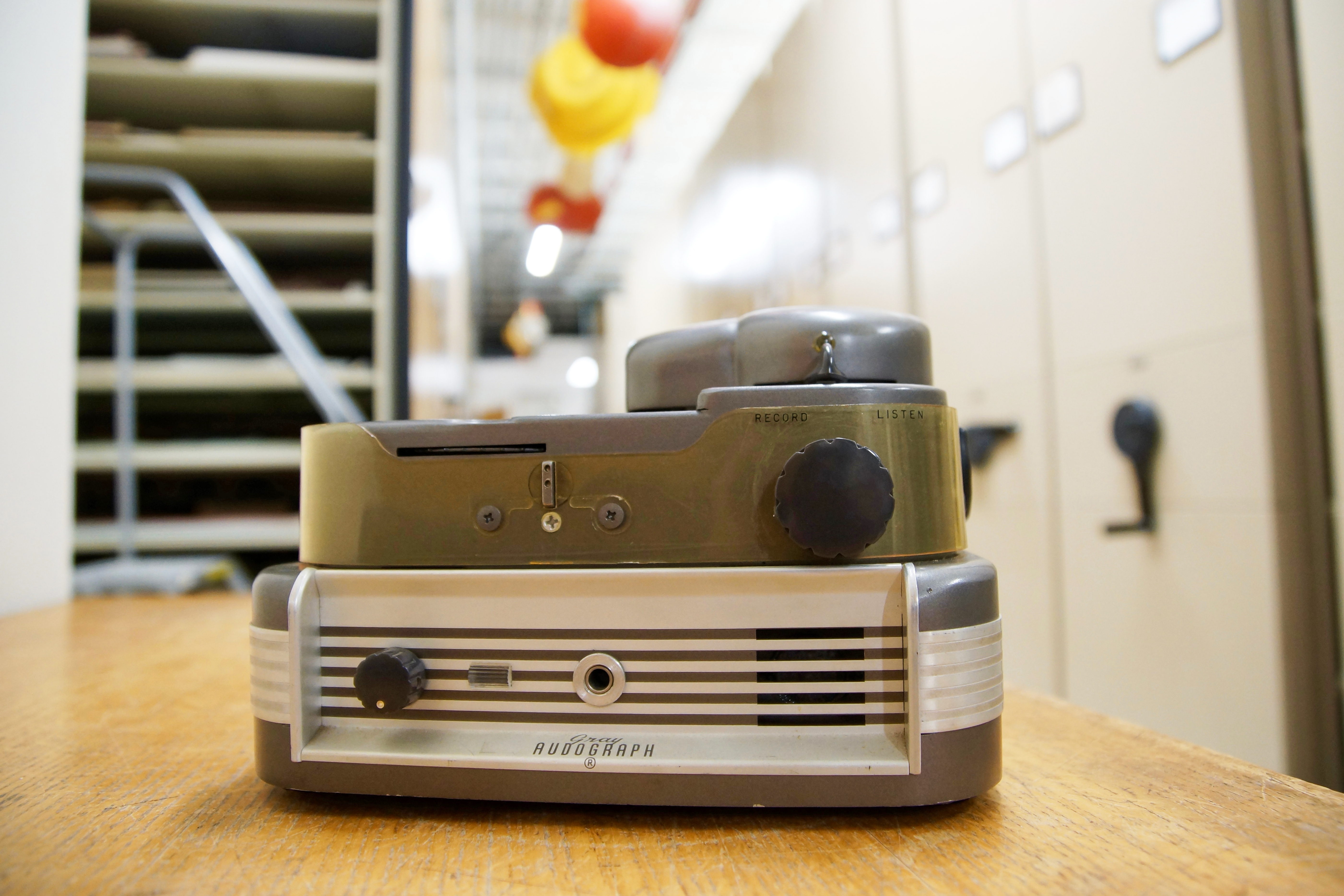
Woods Hole scientists discovered the song while digitizing old audio recordings last year. The recording was on a well-preserved disc created by a Gray Audograph, a kind of dictation machine used in the 1940s. Jester located the disc.
While the early underwater recording equipment used to capture the sound would be considered crude by today’s standards, it was cutting-edge at the time, Jester said. And the fact that the sound is recorded on a plastic disc is significant because most recordings of the time were on tape, which has long since deteriorated, she said.
Whales’ sound-making ability is critical to their survival and key to how they socialize and communicate. The sounds come in the form of clicks, whistles and calls, according to NOAA scientists who study them.
The discovery of long-lost whale song from a quieter ocean could be a jumping-off point to better understanding the sounds the animals make today, said Hansen Johnson, a research scientist at the Anderson Cabot Center for Ocean Life at the New England Aquarium.
“And, you know, it’s just beautiful to listen to and has really inspired a lot of people to be curious about the ocean, and care about ocean life in general,” said Johnson, who was not involved in the research. “It’s pretty special.”