
 Matzav
Kim Jong-un Threatens ‘Tactical’ Nuclear Strikes During Rocket Launch with Daughter
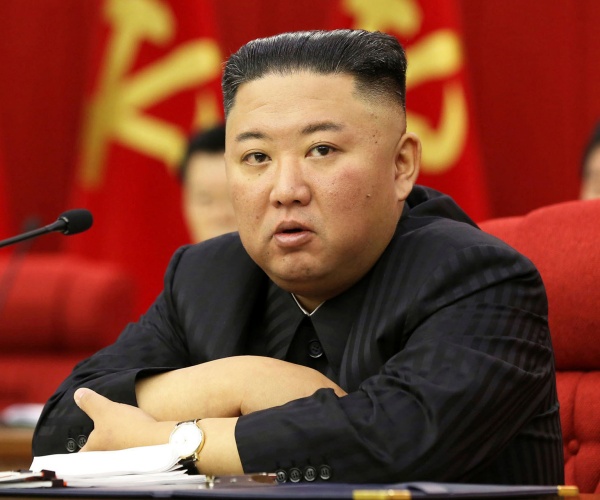
North Korean ruler Kim Jong-un issued a stark warning over the weekend, declaring that the United States and South Korea would soon grasp the “destructive power of tactical nuclear weapon” [sic] following a major rocket test, according to state-run media.
Official outlets in Pyongyang released images from the launch, showing Kim observing the exercise alongside his young daughter, Ju-ae, who is believed to be around 12 years old. In recent months, Kim has repeatedly brought her to high-profile events, including a recent visit to a weapons facility. Intelligence officials in South Korea have assessed that she is being positioned as a future leader of the regime, where the ruling family is treated with near-religious reverence.
While the photographs highlighted the presence of Kim’s daughter, the written report from the Korean Central News Agency (KCNA) focused instead on the weaponry involved and the purpose of the test.
“The drill involved twelve 600mm-calibre ultra-precision multiple rocket launchers and two artillery companies,” KCNA explained, noting that the launch occurred on Saturday. Another government-controlled publication, Rodong Sinmun, reported that the rockets struck a target island in the East Sea (Sea of Japan) with what it described as “100 percent” accuracy. Kim indicated that the system is capable of delivering nuclear warheads.
“He said that the drill would expose the forces hostile to the DPRK, the enemies within the 420-km [about 260 miles] striking range, to uneasiness,” KCNA paraphrased Kim as saying, “making a signaling wave stronger than the aimed, and give them a deep understanding of the destructive power of tactical nuclear weapon.”
Kim characterized the weapon used in the test as both highly lethal and technologically advanced, calling it among the most sophisticated systems of its kind globally. He also signaled that similar exercises would continue on a regular basis.
“As I have already stated, our powerful attacking capability is, in effect, for defending ourselves,” Kim was quoted as saying. “It is because the most powerful attacking capability precisely means a reliable defense capability. It is, in the true sense of the word, a means of deterring war.”
He further warned that American and South Korean military facilities located within the system’s range would be unable to withstand such strikes. Analysts in South Korea echoed those concerns, pointing to the potential threat posed by the weapon system.
“It openly signals that major U.S. military air bases in South Korea, including those in Pyeongtaek, Osan, and Gunsan, fall within the strike range,” researcher Hong Min told the newspaper. “It also showcases North Korea’s ability to conduct ‘tactical nuclear saturation’ strikes to counter the combined air power of South Korea and the United States.”
Observers believe the latest demonstration is partially tied to broader global tensions, particularly the ongoing conflict between the United States and Iran, which began on February 28 when President Donald Trump announced Operation Epic Fury. That campaign has resulted in the deaths of numerous senior Iranian figures, including “supreme leader” Ayatollah Ali Khamenei, and has significantly weakened Iran’s military posture. Although North Koreans are barred from accessing independent news sources, state media has covered developments in Iran, a longtime ally of Pyongyang, and recently issued a statement recognizing Mojtaba Khamenei as the new “supreme leader.”
“Regarding the recent official announcement that the Iranian Assembly of Experts has elected a new leader of the Islamic Revolution, we respect the right and choice of the Iranian people to elect their Supreme Leader,” the Foreign Ministry said.
Though Kim did not explicitly reference Iran during the rocket launch, he stressed the importance of convincing adversaries that any attack on North Korea would carry an unacceptable cost.
At the same time, there are indications of possible diplomatic movement. President Donald Trump reportedly reached out to South Korean officials last week, expressing interest in renewing dialogue with Kim. The two leaders previously met multiple times, including historic encounters that marked the first visit by a sitting American president to North Korea. After the conclusion of Trump’s term, Kim even sent a message of support following an assassination attempt against Trump in 2024.
South Korean Prime Minister Kim Min-seok, who met with Trump at the White House on Friday, said the topic of North Korea featured prominently in their discussions.
“I maintain a good relationship with Kim Jong-un. I am curious whether the chairman wants to engage in dialogue with the U.S. or with me,” Kim Min-seok said that Trump told him during the meeting, which reportedly included in-depth discussions on North Korea.
The prime minister said he encouraged continued engagement, emphasizing the value of maintaining open lines of communication.
“I maintain a good relationship with Kim Jong-un. I am curious whether the chairman wants to engage in dialogue with the U.S. or with me,” Kim Min-seok said that Trump told him during the meeting, which reportedly included in-depth discussions on North Korea.
He added that South Korea’s leadership views Trump as uniquely positioned to advance peace efforts on the peninsula.
“the only leader and peacemaker who can resolve the Korean Peninsula issue is President Trump.”
Trump’s interest in diplomacy comes as he weighs a potential visit to China in the coming weeks. Reports have suggested a possible trip to Beijing between March 31 and April 2, though Chinese officials have not confirmed any such plans. On Sunday, Trump indicated that the visit could be postponed, citing frustration over China’s lack of action in addressing Iran’s threats to commercial shipping in the Strait of Hormuz.
Treasury Secretary Scott Bessent later downplayed those concerns, saying any change in schedule would not be tied to geopolitical demands.
“if the meetings are delayed, it wouldn’t be delayed because the president demanded that China police the Strait of Hormuz.”
“If the meeting, for some reason, is rescheduled, it would be rescheduled because of logistics,” he added.
China’s Foreign Ministry did not directly respond to Trump’s remarks during its regular briefing on Monday. However, officials addressed questions about whether Secretary of State Marco Rubio—who is under Chinese sanctions—would be permitted to join the trip.
“The sanctions target Mr. Rubio’s words and deeds when he served as a U.S. senator concerning China,” Foreign Ministry spokesman Lin Jian said, indicating that Beijing would not prevent Rubio from entering the country.
{Matzav.com}