
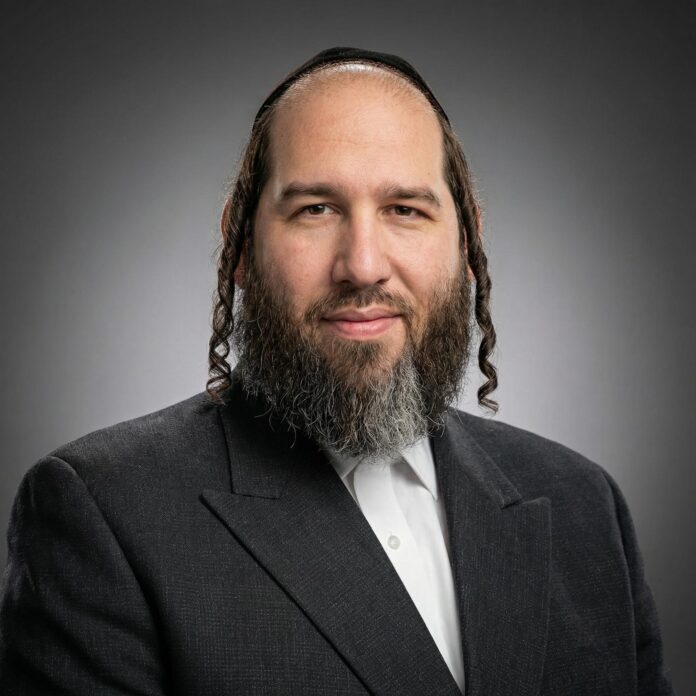

Two weeks ago I received a phone call from Chaim (Charlie) Lefkowitz, introducing himself as a mortgage broker who specializes in LifeCo commercial loans—funded not by traditional banks, but by life insurance companies.
Wanting to help educate investors and other mortgage brokers about the availability and benefits of using LifeCo loans, Chaim had arranged a panel at the then-upcoming ReFinance Real Estate Summit. Though extremely successful as a broker, he was experiencing some stage fright—a common affliction—and requested my help in preparing for actual event. I ended up moderating the panel together with Chaim and a LifeCo correspondent, underwriter and lawyer. Chaim did great.
Afterward, I observed many people at the summit approach Chaim for more information about this relatively unknown side of mortgage lending, and I realized he’d be a natural subject for this column.
After spending almost a decade in his family business, Chaim decided to branch out. He started to work on some minor development projects, which led him to the world of commercial mortgages. He got his start in the mortgage field while securing loans for some of his developments.
What almost nobody knows—and this includes, until recently, some of the most sophisticated commercial investors in our community—is that life insurance companies are one of the largest providers of commercial real estate loans in the entire United States, putting out somewhere between $30 and $40 billion a year, and that getting a loan through them is in many ways faster, cheaper and more reliable than going through a traditional bank.
Today, Chaim is one of the foremost experts in LifeCo lending in the frum world, closing between 70 and 80 deals a year with an execution certainty that no conventional bank can come close to matching.
We spoke about how commercial real estate lending works, why LifeCo has quietly become the superior product for the right deals, and what it takes to figure out something from scratch that nobody around you knew how to do. Enjoy!
—Nesanel
I was born in Brooklyn, New York, the fourth of eight children. I grew up in Williamsburg and went to Satmar until my bar mitzvah, then to a yeshivah in Borough Park called Kavonas Halev, which is associated with Krasna. For yeshivah gedolah, at around 15 or 16, I decided to explore a little, so I went to Rav Henoch Perl’s yeshivah, the first chasidishe yeshivah in Lakewood, which had just opened.
“The learning was completely different from what I was used to. Rather than try to get through a lot of masechtos, they learned two or three blatt Gemara over the entire year, which was very challenging for me. So I moved on to Nitra Yeshiva in Mount Kisco, and from there I got married at 20.
“My mother’s father was Reb Sender Deip, the Satmar rosh hakahal, and we are proud Satmar chasidim. I have a connection to the Rebbe, Rav Zalman Leib, and I go to him before every simchah with a kvittel.
“My father opened a hardware distribution company in the late 1990s. Later, my grandfather (his father) and my uncle joined him, and for close to 30 years, they ran a wholesale hardware and paint supply business together. They supplied hardware stores, plumbing companies and lumber yards throughout New York City with brushes, paint supplies and all related materials. My grandfather worked there until he passed away in 2015 at close to 90 years old.
“I was never really the entrepreneurial type in yeshivah; I was always the arranger. I wasn’t interested in making a few dollars by binding sefarim; I was always thinking about the big picture. I’m a very neat, very organized person, and I like to organize. Whenever something was going on in yeshivah, whether it was Purim, a sheva brachos or an event, I arranged every detail.
“A few months after I got married, I joined my father’s business as a salesman. That’s when I found out that I am not a salesman. I had to do it to make a parnasah, but after a few years I moved inside the company and started growing things. I tried to take the business online to Amazon and Walmart and expand outside of New York City and New York State, but that turned out to be a challenge on both the logistics side and the family side.
“Working with family runs on two separate tracks simultaneously. One track is the family relationships, and the other track is the needs of the business. If a company doesn’t adapt to keep up with new developments, the younger generation eventually hits a ceiling. I hit that ceiling. I also realized that although we’d worked well together for ten years, staying in the business would hurt my relationship with my father.
“I stayed in the company a little while after my grandfather passed away and then I left. I was 32 years old, I had a family, and I wanted to find something that no one in my family had ever done and had significant potential. Real estate was the obvious choice.
“I joined a company that did both property development and management in New York City, and the owner of that company became a genuine mentor. He didn’t just hand me one piece of the business; he brought me in and promised that he was going to show me everything I needed to know to be successful, and that I would get to decide down the road which part of the industry I wanted to pursue. He taught me development, management, lending, fundraising—everything. He took me to the banks and showed me how to represent his deals, how to get them through to closing, and also how to evaluate a property, what to look for, and how to develop from the ground up.
“He also turned me into a numbers person, which I wasn’t yet at the time. Numbers never lie, and you can read them up and down, but you have to actually understand them first. I had to push myself hard to learn how to evaluate a deal, underwrite it, and make it work. It wasn’t easy, but once I got there, it clicked.
“After about two and a half years he told me that I could stay if I wanted, but he’d shown me everything he had and now it was my time. So I left and started doing my own small ground-up constructions in the Bronx. I bought some finished properties in New York, New Jersey and Pennsylvania. During Covid, when you could get loans cheaply, we bought a number of lots and built on them.
“I found my real footing once the construction was done. I went back to the lenders I had already built relationships with and started doing the mortgages myself. The opportunities kept growing. I started helping people in the community find funding for their commercial properties. At a certain point I wanted to do something unique, something that would put me in a completely different category.
To read more, subscribe to Ami

