
 Vos Iz Neias
OP-ED: European Refusal To Help Secure Strait Of Hormuz Is Strategic Opportunity For Israel
JERUSALEM (VINnews) — Eli Klutstein is a researcher at the Misgav center for National Security. In the following Op-Ed, he analyzes the dispute between Trump and European countries over securing the Strait of Hormuz
By its very nature, an alliance is usually a two-sided arrangement. If it does not provide benefits and gains for each of its members, the likelihood that they will maintain it over time decreases. This is true for regional alliances in the Middle East, but also on the broader international stage with institutions such as NATO.
For years, U.S. President Donald Trump has been calling on NATO countries to increase their defense spending and take on a greater share of the burden of the collective security provided by the alliance.
Long before the outbreak of the war in Ukraine, he asked member states to distribute the financial burden more evenly, and in 2018 he demanded they raise defense budgets to about 2% of GDP so that in times of need, the United States would not be the only one supplying weapons against the enemy. After the war dragged on for years, he pushed them to raise that threshold even further, to 5%.
The United States, it should be understood, is NATO’s largest contributor. It pays about one-fifth of the alliance’s operating costs and is responsible for more than 60% of NATO’s total budget. In an organization of 32 countries, the burden-sharing is heavily skewed toward one side.
By December 2025, Washington had also provided Ukraine with total assistance of about $188 billion, roughly one-third of all external aid to Kyiv, and only slightly less than the combined contributions of all European Union countries.
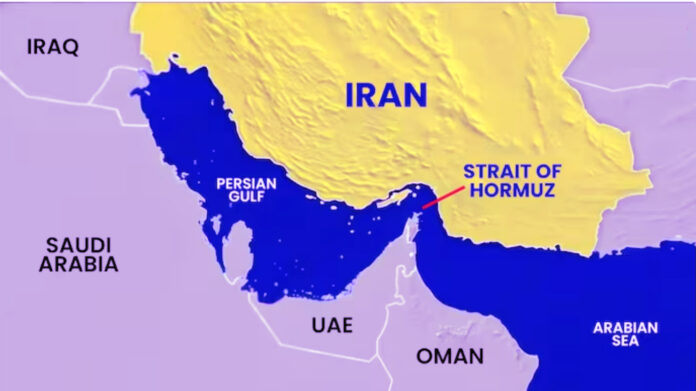
Against this backdrop, Trump’s disappointment this week may be easier to understand, when NATO countries decided not to comply with his request to assist in escorting ships through the Strait of Hormuz. Trump is not acting solely for his own interests: in recent years, the United States has become the world’s largest oil producer and has managed to prevent prices from soaring in the direction Iran had hoped.
After three weeks of war, prices have so far remained relatively stable following an initial spike. It is likely that even if the situation continues for several more months, the United States will be less affected than others.
Roughly 20% of the world’s oil supply passes through the strait, and Iran is pursuing a discriminatory policy: it allows countries it favors, such as Russia and China, to pass, while preventing others, including European nations, from accessing the oil they need.
Those who benefit most from this are the Chinese, the Russians, and ultimately the Americans as well, especially if Trump has indeed secured access to Venezuela’s oil reserves. The Europeans, by contrast, are left with little to gain.
The European refusal is therefore all the more striking. Countries on the continent fear becoming entangled in a prolonged war and prefer to continue preparing patiently for a possible future Russian invasion. However, they may not fully grasp the extent of the damage being done to them.
Trump’s close ally, Senator Lindsey Graham, said he had never seen the president so angry. The two have already begun issuing statements reflecting the depth of the rift: “We don’t need them,” “We will remember this,” “There will be consequences,” and more. It appears that Americans are deeply disappointed with European leaders and what they see as their isolationist policies.
Some of the criticism even became personal: Trump said that the French president would soon leave office; he complained that relations with the British prime minister had been excellent until he took office; and the German chancellor also faced criticism, with Trump arguing—correctly, in his view—that he speaks out of both sides of his mouth: on one hand, he supports action against Iran’s nuclear program, which he says threatens Europe, while on the other hand he refuses to help.
This situation, in many ways, resembles the approach taken by European countries toward Nazi Germany on the eve of World War II, when they preferred to absorb blow after blow rather than act. One could imagine Neville Chamberlain taking pride in his modern-day successors, who remain passive and unwilling to act even in their own interest.
For Israel, however, this situation presents an opportunity. In this war, it has proven its value to Trump not as a junior partner, but as one that carries the offensive and military burden with determination and strength, without hesitation. Its intelligence, air, and defense capabilities have proven highly beneficial to the Americans, and the cooperation between the militaries has been effective.
At a time when Gulf states are also not particularly assertive in responding to the Iranian threat, it can be assumed that the current U.S. administration clearly recognizes who stands by its side in critical moments.
Recent polls in the United States, conducted by several media networks, show overwhelming support, close to 90%, for the war, even among voters identifying with the MAGA movement, which is typically associated with American isolationism. Although Democrats generally oppose the war, the surveys show they still identify with its objectives, including stopping Iran’s nuclear program and countering its proxy organizations.
On the day after the war, Israel should reap the dividends of this partnership with the United States. While European countries may bear the brunt of the administration’s anger, Israel should approach from a position of confidence, as a proven and successful ally, and work to strengthen its political and military standing in Washington. It is not certain that a better opportunity will arise.