

Global energy markets are facing the prospect of a dramatic spike in oil prices, with Saudi officials cautioning that crude could climb to $180 per barrel or beyond if supply disruptions tied to the Iran conflict persist through late April.
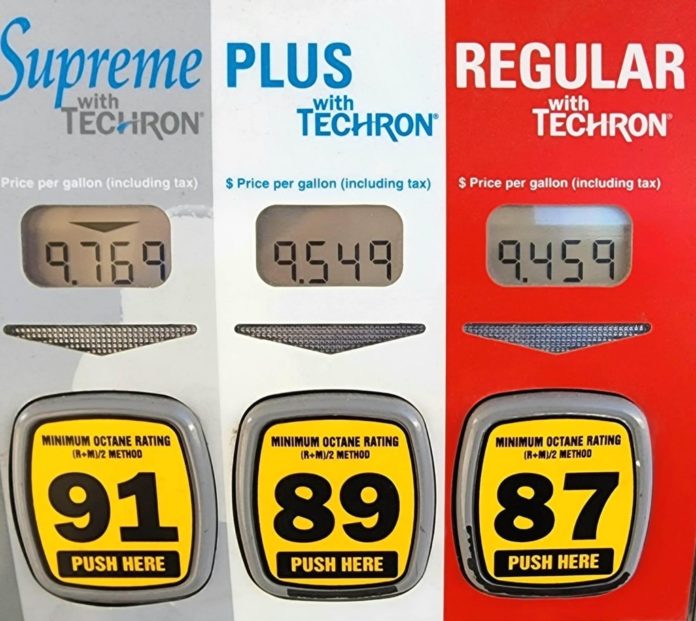
At that level, gasoline prices in the United States could exceed $7 per gallon, based on current estimates.
Energy projections cited by Gulf officials and Saudi Arabia’s national oil company indicate that the kingdom is now preparing for an extended interruption to vital shipping routes and infrastructure, according to a report in The Wall Street Journal.
Despite the financial upside Saudi Arabia could see from higher oil prices, officials are expressing growing concern about the wider economic fallout, warning that such a surge could crush demand and potentially trigger a global downturn.
The warning follows a sharp rise in oil prices, with Brent crude already reaching approximately $119 per barrel after a series of attacks targeting energy infrastructure across the Gulf region.
Market analysts say prices have jumped by about 50 percent since tensions escalated in late February, as significant volumes of oil supply have effectively been taken off the market.
A central factor driving the surge is the near halt of shipping through the Strait of Hormuz, one of the most strategically important oil transit routes in the world.
Prior to the current conflict, Saudi Arabia alone moved as much as 6 million barrels of oil per day through that passage.
With access to the strait now severely restricted, major producers in the region — including Iraq, Kuwait, and the United Arab Emirates — have been forced to scale back exports due to limited alternatives.
Saudi Arabia has attempted to ease the strain by redirecting shipments through its East-West pipeline, which leads to the Red Sea port of Yanbu.
Shipping figures show that exports from Yanbu are expected to hit a record 3.8 million barrels per day this month.
Even so, those alternate routes fall short of replacing the full volume that previously flowed through the Strait of Hormuz.
The situation has been made worse by continued strikes on refining and processing facilities, further tightening supply and increasing concerns about prolonged shortages.
In response, oil traders are increasingly preparing for extreme price scenarios, with options markets reflecting strong expectations that prices could reach $130, $140, or even $150 in the near term.
The crisis is no longer limited to oil. Natural gas markets are also under pressure following attacks linked to Iran on a major liquefied natural gas facility in Qatar, one of the world’s leading exporters.
Any extended disruption to Qatari LNG shipments could have far-reaching consequences, particularly for Europe and Asia, which depend heavily on imported gas.
Taken together, reduced oil flows, damaged infrastructure, and potential gas shortages are raising fears of a broader global energy shock.
Central banks are already sounding alarms. Federal Reserve Chair Jerome Powell noted that sustained increases in energy costs would slow economic growth while pushing inflation higher, creating a challenging environment for policymakers.
Saudi officials themselves are uneasy about where this could lead.
Oil prices approaching $180 per barrel could drive lasting changes in consumer behavior, including reduced fuel consumption, a faster shift toward alternative energy sources, less travel, and greater reliance on remote work.
Over time, such changes could weaken long-term demand for oil and reshape the global energy landscape.
{Matzav.com}