

The Hidden Miracle of Every Person Who Sits Down to Tell the Story
by Rabbi Yair Hoffman
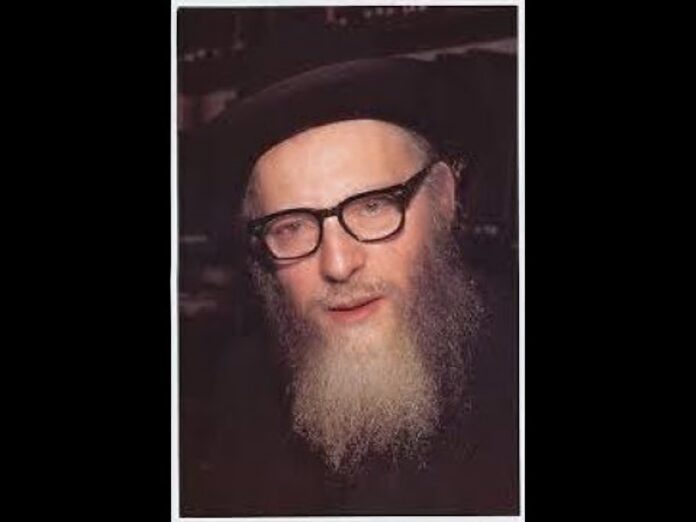
Rav Schneur Kotler zt”l, the illustrious Rosh Yeshiva of Beth Medrash Govoha in Lakewood, once cited a remarkable teaching from the Amudei Ohr — the sefer of responsa authored by the gaon Rav Yechiel Heller zt”l (1814–1862), Rav of Suvalk, and one of the great Lithuanian poskim of the nineteenth century. The teaching was as follows:
When a person sits at the Seder and engages in sipur Yetzias Mitzrayim, he should not merely recount the story of our nation from 3338 years ago. He should also reflect on his own journey — how he arrived at this very seat, at this very table, involved in the great mitzvah of the night. He should tell his own story of redemption.
Every person has his or her own story. And that story, the Amudei Ohr is teaching, is itself part of the larger story of Yetzias Mitzrayim.
The Obligation to Personalize the Exodus
The Mishnah in Pesachim (116b) states: “B’chol dor vador chayav adam liros es atzmo k’ilu hu yatza miMitzrayim” — In every generation, a person is obligated to see himself as though he personally left Egypt. The Rambam (Hilchos Chametz U’Matzah 7:6) rules this as binding halacha: “Chayav adam l’haros es atzmo k’ilu hu b’atzmo yatza hashata miAvdus l’Cheirus” — a person must present himself as if he personally, this very year, went out from slavery to freedom.
But what does it mean to see yourself as having left Egypt? One pshat, of course, is to picture ourselves as there – since we were. But the Amudei Ohr’s pshat seems to add another dimension. The great Maharal of Prague in the Gevuros Hashem (Chapter 62) explains that each Jew carries within himself a spark — a chelek — of that original redemption. And its liberating force is embedded in every Jewish neshama in every era.
The Sfas Emes (Pesach 5636) writes that the word sipur — telling — shares its root with sapir, a gleaming gem. To tell the story is to reveal the hidden gem within it, to draw out its inner light. When we tell the story, we are not merely reciting the history; we are uncovering something alive, something present and personal.
We Live in a Somewhat Orphaned Generation
Rav Schneur Kotler’s invocation of this teaching was framed in a context we recognize acutely today: we live in a generation that is, in many ways, spiritually orphaned. The towering figures of earlier generations — those who could plumb the very depths of Torah and Hashkafas HaTorah with the breadth and clarity of a Rav Moshe Feinstein, a Rav Aharon Kotler, a Rav Yaakov Kamenetzky — are no longer with us in the same way.
The Iggeres HaRamban instructs a son: “V’al titosh Toras imecha” — do not abandon the Torah of your mother. The Torah is transmitted not merely through texts but through a living chain of transmission, from rav to talmid, from parent to child, from generation to generation.
The question is: given where we are — given this somewhat diminished era — how did each of us get here?
The Rambam (Hilchos Chametz U’Matzah 7:1) identifies the five Mitzvos of Pesach night: sipur Yetzias Mitzrayim — the telling of the Exodus; achilas matzah — eating matzah; achilas maror — eating the bitter herbs; arba kosos — the four cups; and Hallel — the songs of praise. Each of these is a distinct mitzvah with its own character and its own source.
A person who sits at the Seder and fulfills these mitzvos is participating in something extraordinary.
The Ramban writes in his commentary to Shemos (13:16): “U’min ha-nisim ha-gedolim u’meforhessim, adam modeh b’niflaos v’tzefunos” — from the great and revealed miracles, a person comes to acknowledge the hidden miracles. The Ramban’s point is breathtaking: the revealed miracles of Yetzias Mitzrayim — the plagues, the splitting of the sea — are meant to open our eyes to the hidden miracles woven through every day of existence. Among the greatest of those hidden miracles is the fact that we are here, at the table, reciting the Haggadah.
Your Own Sippur: The Journey to This Moment
This is what the Amudei Ohr was teaching, as conveyed by Rav Schneur zt”l. When the Torah says “v’higadeta l’vincha” — and you shall tell your son (Shemos 13:8) — it uses the word higadeta, related to haggadah, which Chazal connect to “maggid”, one who declares and reveals. Rashi explains that this is a declaration made specifically in response to a question: “bishvil zeh asah Hashem li” — because of this — the matzah, the maror, the Seder — did Hashem do for me. The pronoun is singular, intimate, and personal.
The Nesivos Shalom writes in one of his essays on Pesach that the great work of the Seder night is an awakening of memory — not only national memory but personal memory. Each person must ask: where was I spiritually, and how did I come to be here? The very word “Mitzrayim” is related to “meitzar”, a narrow place, a constraint. Every person has his own Mitzrayim — his own narrow places, his own constrictions — and the Seder night is the moment to recognize that Hashem brought him out.
And stories abound.
Our family was zoche to meet and befriend an incredible baalas Teshuvah who was formerly an opera singer. How did she come to Torah uMitzvos? She was at Auschwitz visiting. The tour guide said, “You are here at Auschwitz where a million and a half Jews were not allowed to leave and were murdered. They did not have an opportunity to leave Auschwitz and learn about their glorious heritage – their birthright of Sinai. You, however, are here and are different. You can go out and learn more about your true birthright – your Torah heritage. I urge you to do so.”
The words seared into her pintele yid – her neshama, and now she is married to a ben Torah, is involved in kiruv and serves as a shining example of one’s own story of Geulah.
The Chidushei HaRim (Rav Yitzchak Meir Alter of Ger, on Pesach) taught that the Exodus was not completed at the sea. It is completed in each individual when he breaks free of his own constrictions, his own narrow places, and attaches himself to Hashem. The Gemara in Brachos (9b) tells us that the mitzvah of remembering Yetzias Mitzrayim applies every night of the year — not only Pesach. It is a daily obligation because the journey out of Mitzrayim is a daily one.
But Pesach night is the great annual awakening. The Leil HaSeder is the night designated to sit with our story — as a nation, yes, but also as individuals. It is the night to look at the person sitting across the table and recognize: we are both miracles. We both have stories. We are both part of something that began in Egypt and continues until the final redemption.
And so, as Rav Schneur zt”l taught in the name of the Amudei Ohr: take a moment this Pesach night. Before you recite “Avadim hayinu” — we were slaves — ask yourself: where was I? What were my narrow places? What hashgachah, what seemingly small moments brought me to this seat, to this table, to this mitzvah?
Then tell that story. Tell it with gratitude. Tell it with awe. Because your story — your personal sipur Yetzias Mitzrayim — is not separate from the great story of our people. It is woven into it.
PS. As an added bonus, here are seven more teachings of Rav Schneur zatzal:
- The purpose of our life is to take that which is in potential form and bring it into action and fruition– the Divine Image and the light of Torah that are hidden within us.
- Constantly working on improving one’s ruchnius throughout one’s life – is tantamount to Maaseh Bereishis itself.
The Shechinah only dwells in Klal Yisroel when we are k’ish echad – like one person. - The true acquisition of our chailek in Torah can only be obtained after the perfection of our character traits.
Working hard with ameilus in Torah during yissurim – creates a sea-change within the individual. - A person is obligated to constantly grow and to emulate the malachim themselves.
- The value and importance of an action is dependent upon the nature of the intent that one had when the action was first performed.
- The influence of any action is three-fold – it is immediate; it is upon the future; and it is upon countless generations of one’s own descendants.
- Acts of chessed (lovingkindness) have within them the ability to change the very laws that Hashem set forth in Creation itself.
The author can be reached at [email protected]